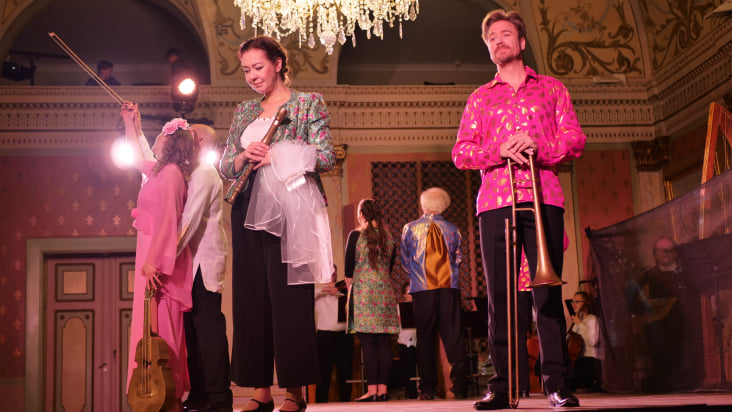
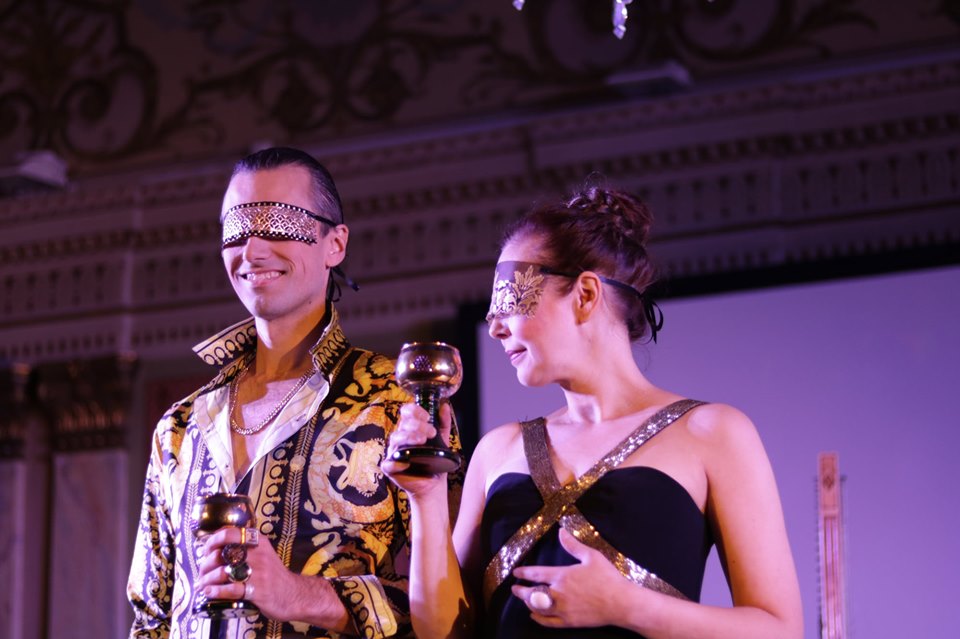
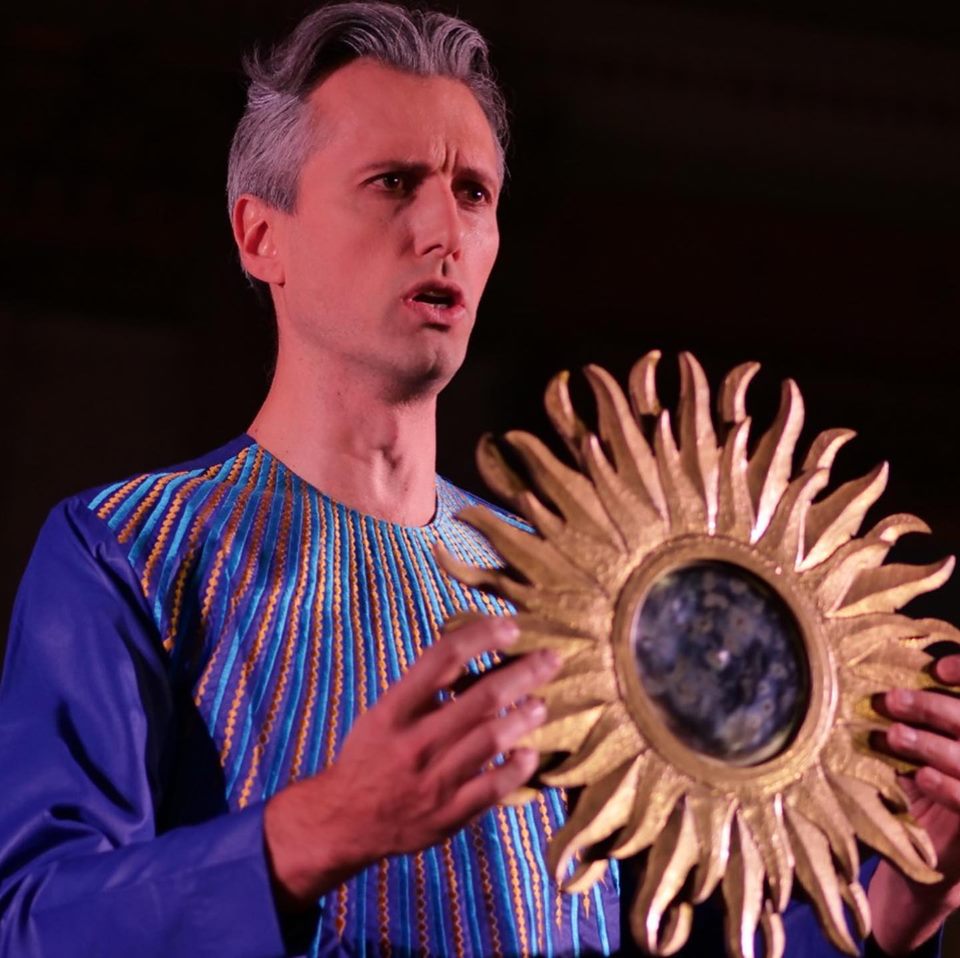
Rhetorical contrasts in Crisis: charm, communicate, console?

This article, published in shorter form as the introduction to a concert streamed online, discusses the current relevance of Baroque affetti [emotions] and the Rhetorical aims of delectare, docere, movere [to delight, to teach, to move the Passions]. 

Concert listings, song texts & translations

Online Concert

The link to the concert may become temporarily unavailable, whilst the recording goes through post-production. And new concerts in the series may appear at the top of the broadcaster’s list. I hope to provide a permanent, direct link, soon.

Scherzi Musicali

Italian Baroque Music: Monteverdi, Vivaldi, Corbetta, Handel

“That smile heals me…”

Monteverdi’s musical fun – scherzi musicali – and beautiful arias – ariose vaghezze – are offered to the public in music-books printed by Bartholomeo Magni in Venice almost four hundred years ago. These are not madrigals requiring an ensemble of singers, but solo songs with basso continuo accompaniment which could be realised on any instrument: harpsichord, lute, guitar, baroque harp. Composed during the time of the very first ‘operas’, these minatures appeal to the emotions as theatrical fragments, instantly recognisable dramatic scenes.


Affetti


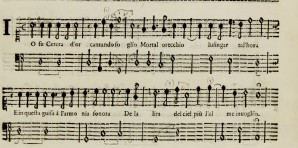
But that emotionality is subtly different from the Romantic ideal of an artistic genius, expressing with ever-greater intensity a sublime feeling, that will impress and even overwhelm his audience. Rather, Baroque music contrasts ever-changing emotions and seeks to move your passions, as La Musica proclaims in Monteverdi’s Orfeo:


Accompanied by the golden harp, my singing
can always charm mortal ears for a while.
And in this way, with the sonorous harmony
Of the lyre of the cosmos, I can even move your souls.

Read more: The Philosophy of La Musica

Read more: contrasts of affetti in the ‘first opera’


The ‘lyre of the cosmos’ represents the mysterious power of music. In metaphors of Cupid’s love-arrows and stormy seas of passion, we see poetic images as depicting real emotions. And no doubt, listeners can find in these verses from Shakespeare’s time words that still speak to us today: sanatemi col riso…

Heal me with a smile…

The renaissance Science of emotions models the Senses (in this case, eyes and ears) taking in the energia (energetic spirit) of a performance (delivered by Rhetorical actio) and the coordinated affetti of music and text (delivered by Rhetorical pronuntiatio), to create ever-changing Visions in the mind. These Visions send energia down into the body, producing the physiological changes associated with changing pyschological emotion. Mind, Body and Spirit exchange energia, so that thoughts, (spiritual) emotions and (physical) feelings are interconnected – ideally, in Harmony.


Rhetoric: structure & contrasts…

For Monteverdi, an aria is not just a nice tune, it is a repeating structure of poetry, rhythm and harmony, on which words and music make elegant rhetorical variations. The dramatic situation is understood: the poet is in love, the beloved is ‘cruel’; the poet is wounded by the arrows of love, but the beloved’s smile can turn his prison into paradise. The rhetorical appeal is to the mind and the heart, as well as to the ears. The emotional power is embedded in contrasts: in Tempro la cetra the poet tunes his lyre to sing of War, but it only resounds with Love.

Tempro la cetra, e per cantar gli onori
di Marte alzo talor lo stil e i carmi.
Ma invan la tento e impossibil parmi
ch’ella già mai risoni altro ch’amore.

Così pur tra l’arene e pur tra’ fiori
note amorose Amor torna a dettarmi,
né vuol ch’io prend’ ancora a cantar d’armi,
se non di quelle, ond’egli impiaga i cori.

Or l’umil plettro e i rozzi accenti indegni,
musa, qual dianzi, accorda, in fin ch’al canto
de la tromba sublime il Ciel ti degni.

Riedi a i teneri scherzi, e dolce intanto
lo Dio guerrier, temprando i feri sdegni,
in grembo a Citerea dorma al tuo canto.

I tune the lyre, and to sing the honour
Of Mars, now I raise my style and my song.
But in vain I try, and it seems impossible
That it will ever resound except with love.

Thus in the arena itself and just amongst flowers
Amorous notes Love returns to dictate to me.
And does not want me to start to sing of arms again,
Unless of those, with which Cupid wounds hearts.

Now, the humble plectrum and the unworthy, broken accents
Muse, as before, tune them, so that to the song
Of the sublime trumpet Heaven honours you.

Come back to tender games, and sweetly for a while
The warrior God, tempering his fierce anger,
In the lap of Venus will be lulled to sleep by your song.


Contrasts of affetti were categorised by the renaissance concept of the Four Humours: Sanguine (love, courage, hope), Choleric (anger, desire), Melancholy (careful thought), Phlegmatic (unemotional). Throughout this poem, Sanguine love is contrasted with Choleric war. Ideally one’s humours would be balanced, tempered. Poetic and musical composition are usually characterised as works of the careful (and care-full) concentrated inward thought processes of Melancholy, whereas performance, directed outward, is often Sanguine. In this poem the Melancholy art conceals itself – ars celare artem – and in the lap of Sanguine Venus, Choleric Mars surrends to the power of music and is lost in Phlegmatic sleep.

This piece, and renaissance Philosophy in general, links period medical science (the Four Humours) with metaphysics (the Music of the Spheres), and to the artistic principle of contrasting affetti. The Science of the Music of the Spheres (musica mondana) connected that perfect movement of the heavens with the harmonious nature of the human being (musica humana) , and with actual music (musica instrumentalis) played or sung. The contrasts of the third stanza are of Earth and Heaven: the humble, unworthy accents of musica instrumentalis will finally find accord with the sublime song of the Last Trumpet – musica mondana.

Supported by this philosophy, classical mythology is made to work as a metaphor for Christian doctrine. The implication is that the poet/singer himself will also be redeemed, as his own nature (musica humana) ‘resounds’ to the music of the Spheres. 



…for mind (docere)

Ohimè, ch’io cado begins with a firmly constructed ‘walking bass’, but the singer crashes in with a downward plunge: the poet has fallen head-over-heels in love, just when everything seemed to be safe. Images and emotions are presented in clever contrasts: ‘the withered flower of fallen hope’ and ‘the water of fresh tears’; the ‘would-be warrior’ is ‘now a coward’ who cannot withstand ‘the gentle impact of a single glance’. The poet’s attempt at Choleric sdegno (anger) is easily diverted to a Sanguine love-paradise.


… heart (movere)

Over a descending bass-line, Si dolce ‘l tormento juxtaposes contrasts even more closely, to sway the listener’s emotions line by line: sweet torment, happy, cruel, beauty, ferocity, mercy, a wave-swept rock – all this in the first strophe alone!  As the momentary affetti swirl around, the minor mode, tender dissonances and descending bass communicate a pervasive sense of Melancholy.


…and ears (delectare)

That glance from the lover’s eyes – Quel sguardo sdegnosetto – is no real threat: we might paraphrase the first line as “You’re so cute when you’re angry!” And the bass-line variations on the ciacona dance reveals that the lovers are fooling around, playing risqué party-games: “When I die, your lips will quickly revive me”.

In this song, contrasts of affetti are perhaps less cerebral, less melancholic, but rather charming and delightful, and the pervasive mood is Sanguine. There is little doubt that the poet is confident that his hopes of love will be enjoyed!
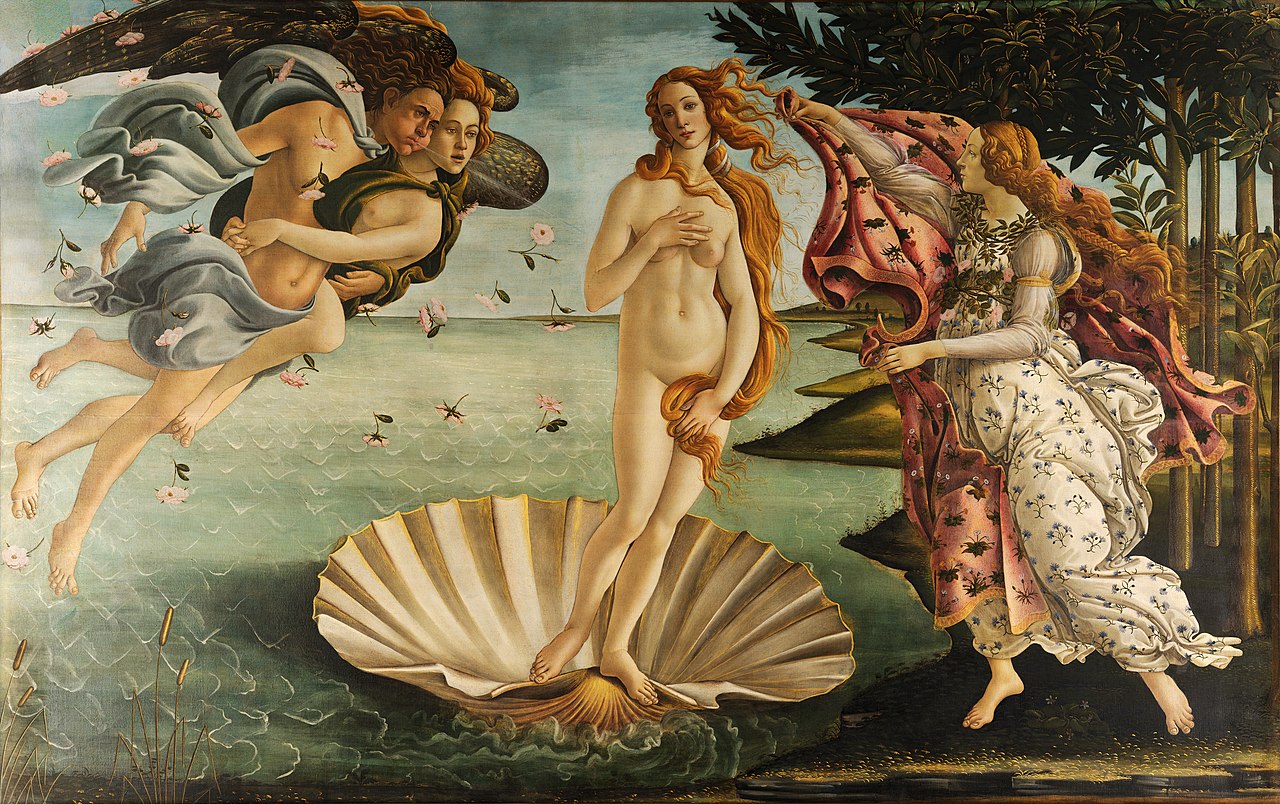


Come Hell or High Water
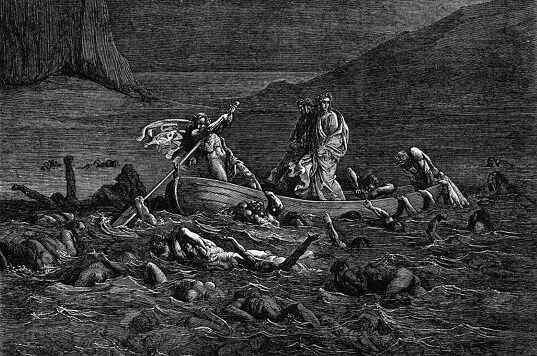
 

Fury in the Fifth Circle of Dante’s Inferno


Baroque contrasts can be extreme: In the Ballo delle Ingrate women emerge from the ‘wild, hot prison’ of Hell, to take a brief respite in the ‘serene, pure air’ of the upper world.

The furore of divine anger provides an excuse for Vivaldi’s favourite seasonal storms, tempered by the calm of clemency, but returning with the delicious inevitability and ornamental surprises of the Da Capo Aria. A Recitative makes it personal: “Spare me, sad and languishing”. The central Aria, with its contrasts of fletus… laetus (weeping… happy), corresponds to the slow movement of a violin concerto, with an Alleluia as the virtuosic finale.
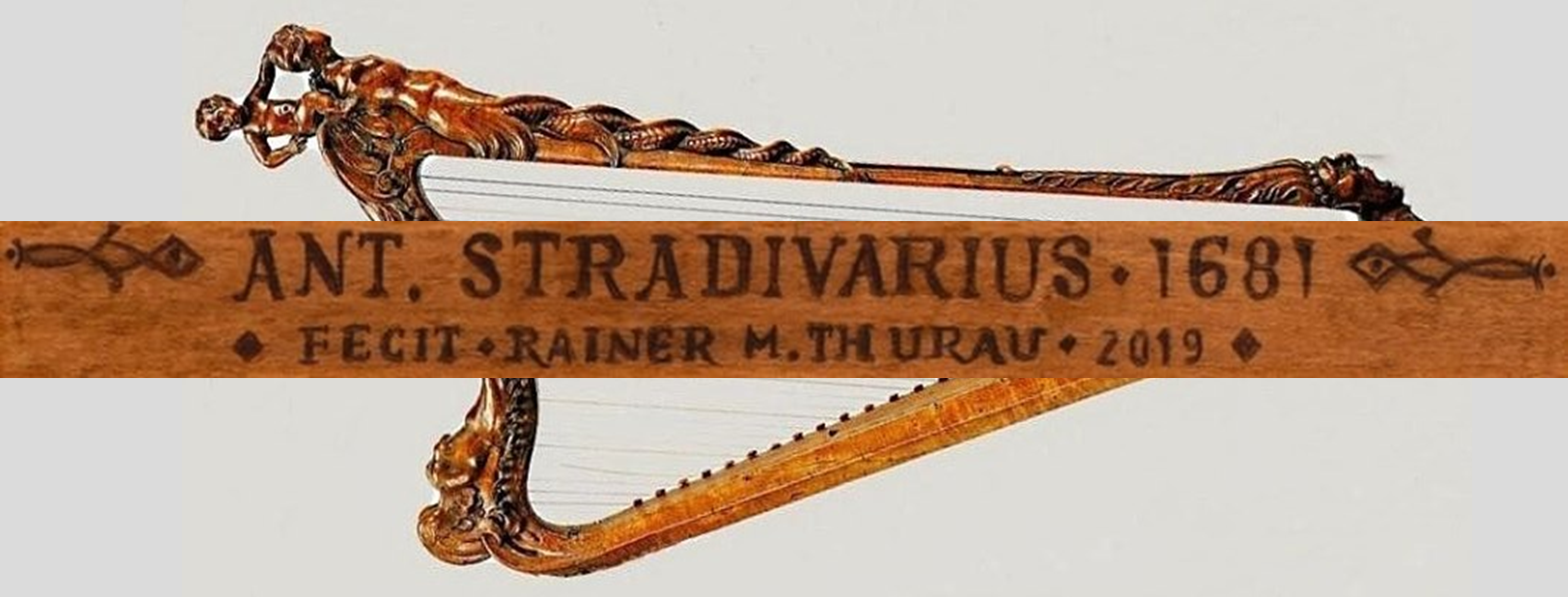


The instrumental compositions that follow are variations on descending bass-lines. The fun of Corbetta’s Caprice, played on a modern copy of the Stradivarius Harp (1681, the year of Corbetta’s death) more about Rainer Thurau’s Strad Harp here, lies in its contrast of the gentle nobility of the French chaconne with the more energetic celebrations of an Italian ciacona.


Handel’s Organ, Whitchurch; Bushey Museum and Art Gallery;


Handel’s Andante, with its variations on a walking-bass, was published posthumously as an Organ Concerto. A Baroque listener described how the composer would improvise an introduction to the concerto, with a polyphonic fantasia “which stole on the ear in a slow and solemn progression.”

A fine and delicate touch, a volant finger, and a ready delivery of passages the most difficult, are the praise of inferior artists: they were not noticed in Handel, whose excellencies were of a far superior kind; and his amazing command of the instrument, the fullness of his harmony, the grandeur and dignity of his style, the copiousness of his imagination, and the fertility of his invention were qualities that absorbed every inferior attainment.

When he gave a concerto, his method in general was to introduce it with a voluntary movement on the diapasons, which stole on the ear in a slow and solemn progression; the harmony close wrought, and as full as could possibly be expressed; the passage   s concatenated with stupendous art, the whole at the same time being perfectly intelligible, and carrying the appearance of great simplicity. This kind of prelude was succeeded by the concerto itself, which he executed with a degree of spirit and firmness that no one ever pretended to equal.

Sir John Hawkins General History of the Science and Practice of Music (1776)
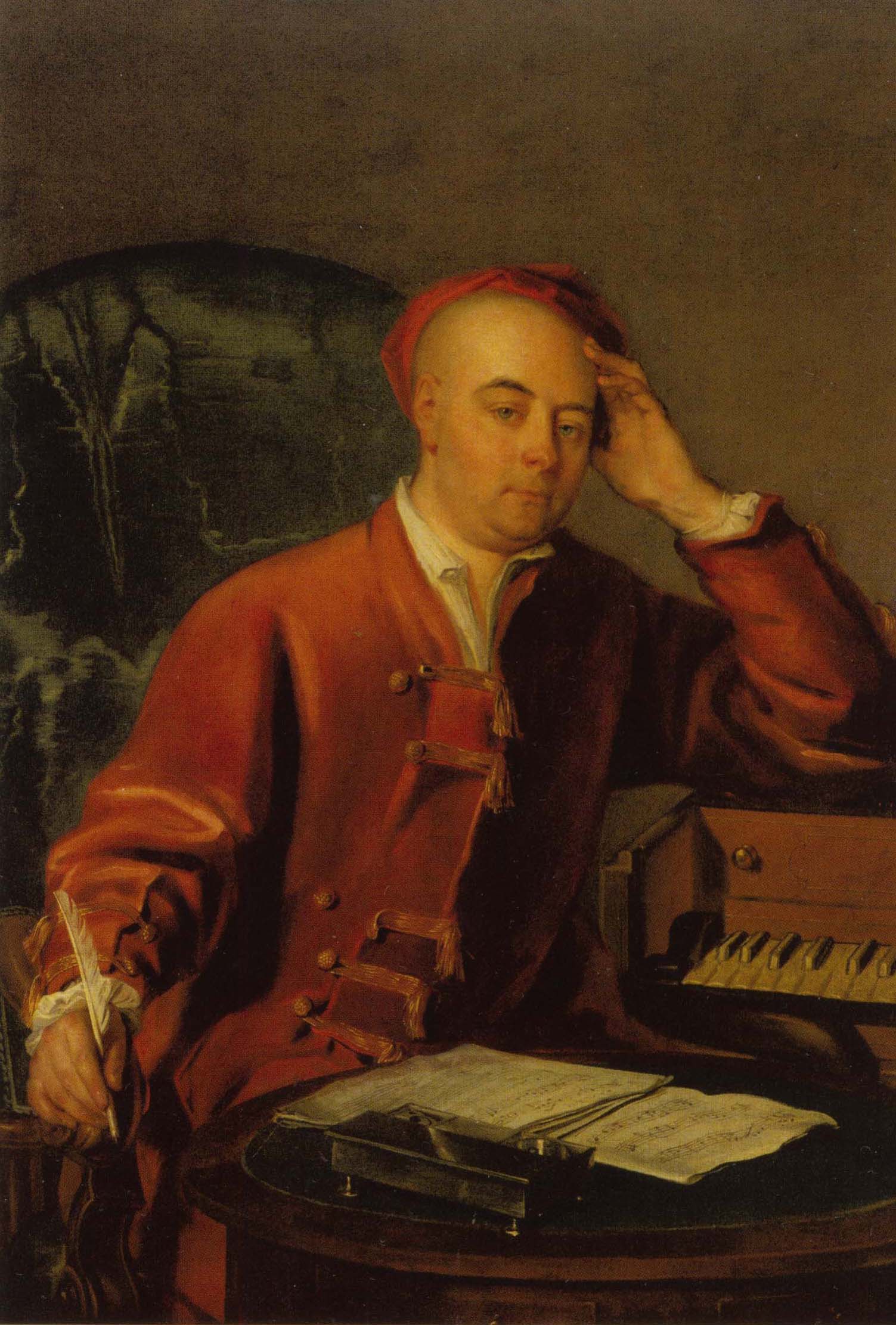
 

Iconographical coding characterises Handel as composer (pen and scores), performer (keyboard) and – unmistakeably – as Melancholy (head leaning on left hand).


Handel’s Messiah and that glorious Aria of Sanguine hope, Rejoice greatly, need no introduction. But in Jennens’ carefully chosen biblical excerpts the characters of the Daughter of Sion and the Heathen are also coded symbols for the politics of the Hannoverian monarchy, of another King who “cometh unto thee”. So whether or not we can identify with the rejoicing daughter, the Messiah offers Peace for those who believe differently.


18th-century London


Rhetorical Structure: architecture & building blocks


From Monteverdi’s and Vivaldi’s Venice to Handel’s London, the grand architecture of Baroque music adopted a variety of fashions. But the building blocks remained similar: the sighing slurs of Vivaldi’s calms also create Handel’s peace; bass-lines still walk steadily; a jump in the melodic line always makes the heart leap, whether falling in love with Monteverdi, or rising to rejoice with Handel. And the ancient power of Music’s rhetoric still charms the ears, communicates between minds, and consoles your hearts.


17th-century Venice

Welcome to Spanish Baroque Opera

We have a tradition in our theatre…


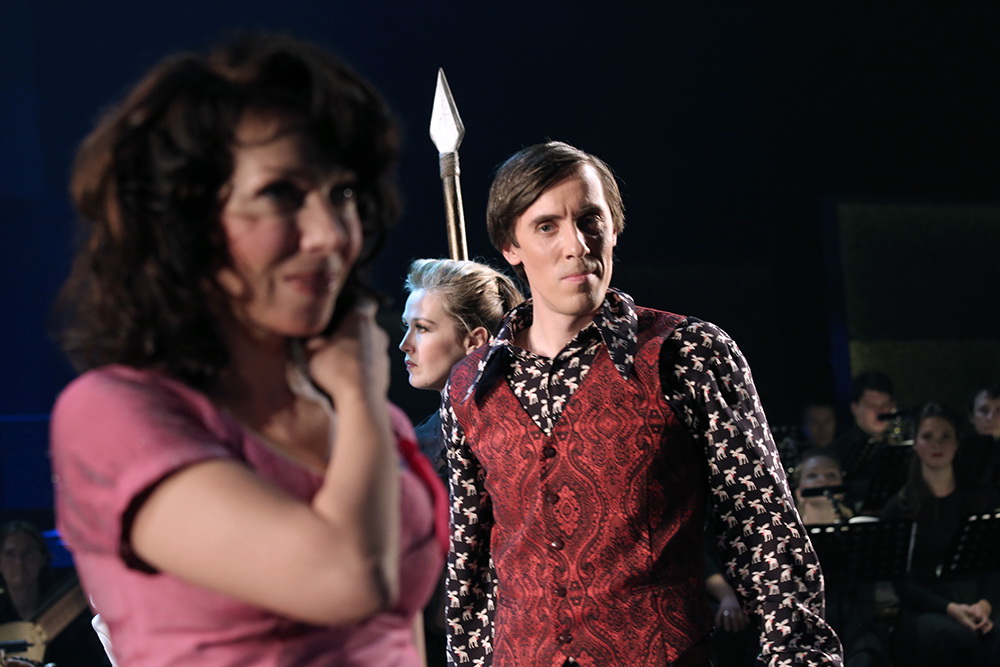
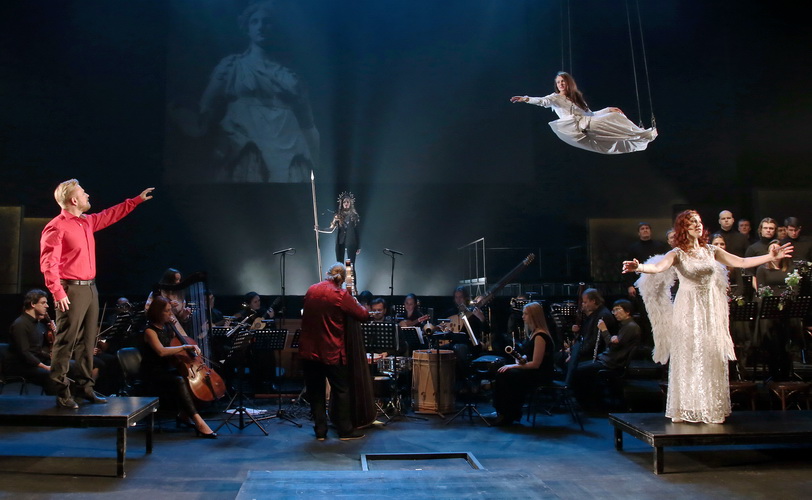
For the last four years, Celos, aun del aire, matan the earliest surviving Spanish Baroque Opera has been running in repertoire at Moscow State Theatre Natalya Sats, with performances each month during the winter season. The performers are the soloists, chorus and orchestra of the Theatre, supported by members of Opera Omnia, the research, training and performance Academy for Baroque Opera and Dance. More about OPERA OMNIA here.

On the eve of the online broadcast – Friday 3rd April 2020, 19.00 Moscow time (5pm UK time: there is no summer time in Russia) on http://www.cultura.com and  direct link to the opera broadcast here – this post is a slightly expanded version of the introduction I have given to live audiences at each show. 

In most theatres, if someone walks on stage to speak before the show starts, it usually means bad news: a singer is indisposed, or whatever. But as a theatre for young people, we always welcome our audience with an informal greeting.


Introduction


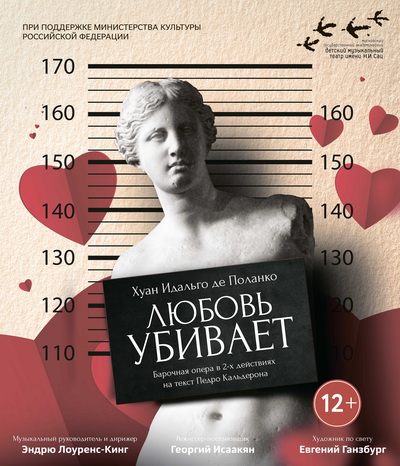
We have a tradition in our theatre to say a few words before the show begins. And so tonight it’s my pleasure to welcome you, on behalf of our Director Georgy Isaakyan, to Theatre Sats and to this performance of Celos, aun del aire matan (1660) translated into Russian by Katerina Antonenko as любовь убиваетLove Kills! 

When we think of Baroque opera, we might first think of Handel and Vivaldi, but ‘opera’ began in Italy a hundred years earlier, and Monteverdi’s (1607) Orfeo and the very first opera, Cavalieri’s Anima & Corpo (1600) both run in regular repertoire in our Theatre – you will be very welcome at those shows too! 

Tonight’s performance is different again – the earliest surviving Spanish Opera.


Drama


Calderón’s verse-drama draws on the strengths of Spanish spoken theatre, with a fast-changing combination of exquisite poetry, complex plot, powerful emotions and hilarious comedy. As in a Shakespeare play, romantic and tragic scenes are parodied by the antics of the comic characters. who also interact with the principal protagonists. Calderón weaves together two mythological stories, which his audience would already have known: the spectators’ pleasure came from appreciating how cleverly, beautifully, passionately and entertainingly those familiar stories were unexpectedly brought together.


Diana


The plot is dominated by the powerful figure of Diana, goddess of hunting and of chastity. One of her nymphs, Aura, has broken the rules by falling in love with Eróstrato.


Erostrato & Chorus of Villagers


His mythological destiny is to burn down the temple of  Diana and – as a punishment – to have his name forgotten forever.

Nymphs of Diana


In the opening scene, another nymph, Pocris presents Aura to be judged and punished. 

Céfalo


The hero of the opera is Céfalo, who arrives in the nick of time to rescue the damsel in distress. His servant, Clarín, is the anti-hero: he would rather flirt with a pretty girl than assist in any rescues. 


Floreta (Pocris) Clarín


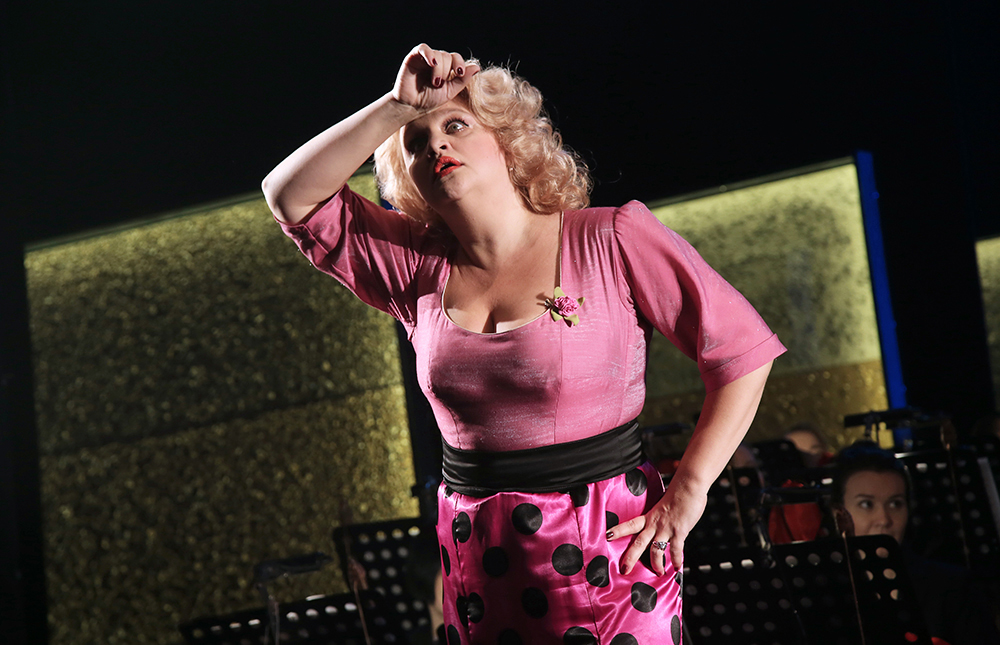
Diana wants to know who left the garden gate open, allowing Aura and Eróstrato to meet. She cross-examines her maid-servant, Floreta, who lets slip that it was her husband, the gardiner Rustico‘s fault. In revenge [and revenge becomes a theme in this drama], Diana transforms Rustico into various different animals.


Rustico


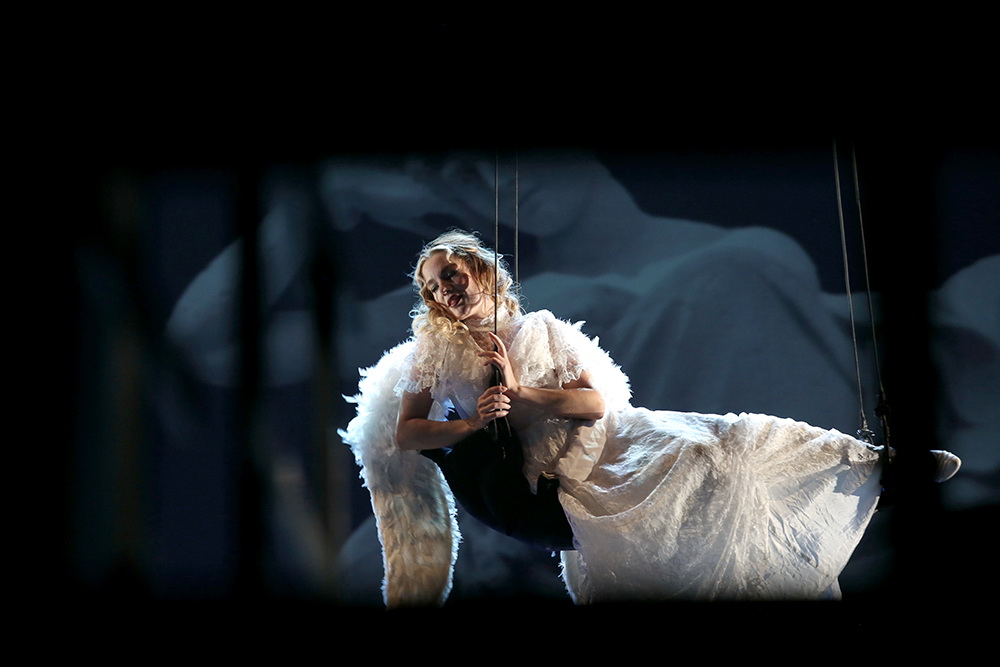
Aura escapes by being magically transformed into an airy spirit. And her revenge on Pocris is to make her fall in love (against Diana’s rules) with Céfalo. But Céfalo’s mythicological destiny is that he will kill his own wife.

Halfway through Act I, and again in Act II, Calderón helps and entertains his audience, by having a comic character – first Rustico, then Clarín – re-tell the story so far, each in their own comically-warped version. The interval in our show comes before Act III.


Diana with the green moon-stone


In that final Act, Diana takes three revenges for the burning down of her temple, despatching three Furies to destroy Eróstrato (who loses his humanity and runs like a hunted beast), Pocris (who loses her trust in Céfalo) and Céfalo (whose spear, stolen from Diana, kills Pocris).


Furies


But at the darkest moment, Aura reappears to avert Tragedy… And meanwhile, just as Rustico has come to understand that he is an animal, he regains human form, to his, Clarín’s and Floreta’s utter confusion, and for the audience’s gleeful delight!


Floreta


Watch out for the motto-refrains that punctuate the action and colour each scene – these were ‘take-home messages’ for the 1660 audience. These are just some of them:

Ah, alas for the girl who makes it true that someone dies of love!

The aura of love softly inspires… 

Hate does not erase love.

If the air causes jealousy, jealousy – even of the air – kills!


Aura


Music


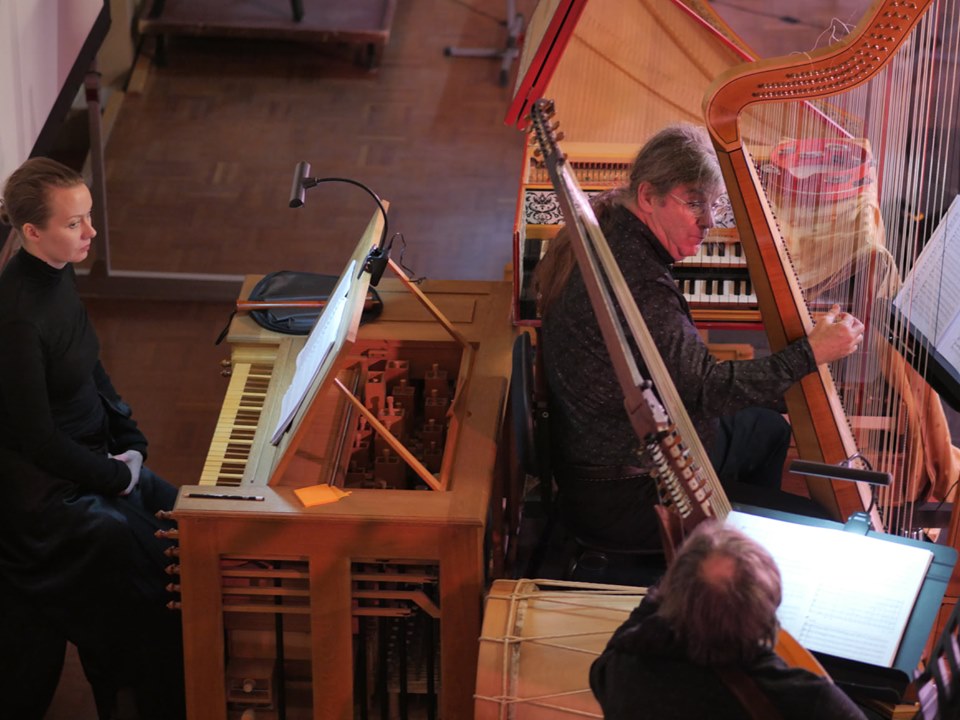
Hidalgo’s music is also characteristically Spanish, with strophic songs and syncopated dance-rhythms. The most important instruments are the continuo section of harps, percussion, organ, regal and baroque guitars. The guitar ensemble of different sizes and pitches  – soprano, alto, tenor, bass – is the essential element of Spanish Baroque theatrical music, and the smallest and largest guitars (tuned an octave apart, in D) were specially built for this production at Theatre Sats. The Spanish Baroque harps are by master luthier Rainer Thurau.

The Theatre orchestra brings together modern strings, woodwind and trumpets with a consort of baroque sackbuts. 

Hidalgo’s score calls for two choruses, who represent the Nymphs of Diana and the local Villagers, respectively. 


Downloads


You can download the original Spanish text (in the version performed in our production) and an English translation. A detailed synopsis of the plot, in English is here. The Theatre’s English language information page is here.

I wish you all a very enjoyable, and very Spanish, Baroque evening! 


A Tai Chi state of mind

To celebrate a personal milestone of 5 years studying Tai Chi Chuan with Master Ding Academy, this article reflects on my understanding of Tai Chi as an intermediate student, in the light of my academic research in Consciousness Studies and my practical experience as an international musician and opera-director.


Zhan Zhuang


Many oriental martial arts value zhan zhuang – Standing like a Tree – as a fundamental practice. In Tai Chi Chuan, Standing Practice trains mind-body balance in stillness; the Form trains balance in movement; Push Hands trains balance in interactions. As an Internal Martial Art, Tai Chi encourages an inner focus, teaching us to find strength in softness. Sometimes called Standing Meditation, zhan zhuang not only aligns our posture, but also prepares the mind for study and for action.

More about zhan zhuang here.

There is a similar linkage of physical and mental conditioning when warming-up for sports or preparing to go on-stage for a concert or theatrical performance, in Mindfulness training, Alexander Technique and many other disciplines. Zhan zhuang and other preparation-rituals create a particular state of mind that optimises highly-skilled physical actions. Psychologists call this state of mind Flow; artists call it Inspiration; elite sportsmen and athletes call it the Zone; it can be analysed as an Alternative State of Consciousness; it could also be called Self-Hypnosis.

Therapeutic hypnotism is a ‘resource state’ similar to the REM-stage of dream-sleep. Modern medical science respects these states as normal and vital for health. As we sink into dreamy relaxation, the Unconscious mind can re-process learning, re-align our spiritual balance and re-integrate conscious awareness. As a student, I may not yet fully understand what it means to ‘stick the qi to the spine’, but if I relax whilst focussing on this phrase, I can enter a special state in which my Unconscious (which understands ‘better than I do’) can work on re-educating the body. Rather than forcing things to happen, we can create suitable conditions (relaxation and focus) and observe what happens. Even if the process remains hard to grasp, over months and years of practice the conscious mind gradually becomes aware of tangible results.

Academics love to reduce broad phenomena to narrow categories, so theorists distinguish between different experiences of the altered consciousness familiar to us all as day-dreaming. Flow is characterised by a fine balance between the challenge you are facing and your level of skill. Too easy, and you are bored; too difficult, and you are discouraged. In Flow, you are utterly focussed on the task at hand, yet at ease with yourself. When you are in the Zone, it seems that your body knows what to do ‘instinctively’, as the movements you trained slowly and gently are released in a flash of smooth, powerful action. You might experience Dissociation, the sensation that you are not ‘doing’ anything, you are just observing your body’s actions with calm attention, as if in a dream or hypnotic trance. As you let go of ego, you feel more connected to the universe: Tai Chi artists use Sticking Hands to  link with their partners; doctors care for their patients with ‘unconditional regard’;  hypnotists and performers create Rapport with their listeners.

These experiences are central to many elite-level skilled activities. Hypnosis research shows that reducing conscious control whilst maintaining calm and concentration allows the Unconscious to guide the body at extraordinary levels of performance. Whether you are landing an airliner on the Hudson river, playing a harp concerto, or competing in a fencing championship, focused calmness links your Unconscious to the surrounding energy field so that your body does it ‘better than you could do it yourself’. The mind-body connection can be re-aligned to powerful effect: a hypno-therapist colleague of mine assists during surgical operations by inducing a special, pain-preventing state of mind for patients who are allergic to conventional anaesthetics.

Words have power

By subtle choice of language, a poet or an expert in neuro-linguistic programming can sway your emotions; a politician can alter public opinion; an advert can influence your choices; a sports coach or opera-director can raise you to the next level of performance; a teacher can shift your conscious understanding and enhance your physical abilities. A mere hint, spoken or recalled, can transform (trance-form?) Standing Practice into a Guided Meditation. In Tai Chi, we encourage Dissociation with such instructions as “Allow the hands to rise”. This is a hypnotic suggestion that your hands ‘have a mind of their own’, encouraging you to observe more, do less. Paradoxes and Nominalisations (unfamiliar words) facilitate the inner focus of trance, as the mind searches within itself for meaning. Tai Chi is full of paradoxical sayings and evocative words – ‘invest in loss’; ‘use the mind, not force’; qi; kwa and dan-tien; peng, liu, ji and an – whose meaning we explore over years of study.  


The choice of terms is personal, and highly significant for practitioners. If a teacher or hypnotist’s vocabulary jars, the listener will resist, and rapport is broken. Hypno-therapists are taught to ‘accept and utilise’ a client’s resistance. If the first choice of imagery and terminology doesn’t work, it’s time to try another approach. Tai Chi practitioners will recognise the principle: don’t fight force with force, yield and re-direct your opponent’s energy! Students and teachers should be aware of the power of names, making flexible choices of language to ‘go with the Flow’ of what works for each individual. Some like to talk of the ‘magic’ of Tai Chi; others explain it as Mechanics or applied Psychology; some visualise qi as similar to the Star Wars Force; others analyse body-energy through the concepts of Chinese Medicine. Since the true Tao cannot be spoken, ‘correct’ nomenclature doesn’t matter. Language is only a path towards an internalised mind-body understanding.

In another way, choice of terminology is vital, because your Unconscious can respond to the most subtle distinctions. In hypno-anaesthesia, some patients receive the suggestion that they will feel no pain; others are told that they might feel pain, but it will not bother them. Neurological scans show that these contrasting instructions produce different interactions between brain and nervous system. Words can change your mind.


Going with the Flow


The state of Flow is often associated with time- distortion, when we are so absorbed in our study that we don’t realise how much time has passed. But in the Zone, time is distorted the other way, so that our perception is speeded up, and we can successfully manage complex techniques within the briefest instant of time.

Elite performers of all kinds use Flow for optimal learning, working slowly over a long time, and the Zone for optimal performance, producing instantaneous results just when it matters most. This is paralleled by the slow study of Tai Chi Forms and the split-second timing of combat applications. The Feldenkrais Method similarly improves proprioception and body flexibility by slow, gentle movements. The calm acceptance and subtle suggestions typical of a Feldenkrais session could be appropriate to zhan zhuang: “That’s good….”; “Don’t do anything, just notice.” Engineer/healer Moshe Feldenkrais was also a judo black belt and one of the first to bring judo to the West.

The Trager Approach uses repetitive, relaxed movements and a special state of consciousness called Hook-Up to teach and heal. The imagery of a ‘sky-hook’ is sometimes used in Standing Practice to intensify the suggestion that the ‘head is suspended from above’. This is not just good posture, it is also a recognised route into trance, meditation or what we might choose to call a ‘Tai Chi state of mind’. If sometimes it’s difficult to be relaxed, we can just pretend to relax, and imagine that we begin to feel relaxation: ‘fake it till you make it’. Regular practice of zhan zhuang will re-calibrate our ability to relax, as ting-listening reveals tensions we never knew we had, which are gradually dissolved into song-release.

Like Pavlov’s dogs, our minds and bodies can be conditioned by training so that we respond ‘automatically’. Tai Chi Forms guide our body-movements into highly specific pathways, whilst Standing Practice focuses our concentration inwards, calming the mind. Those Russian dogs learnt to associate a bell with dinner-time, and the meditation timer on your phone can ring a Chinese bell to induce inner peace!

To enter Flow, the Zone, or hypnotic trance, i.e. a Tai Chi state of mind, you just relax and focus – song and ting. We learn this from Standing Practice, and try to maintain it in the Forms, Push Hands and applications training. As a musician, I must relax and focus whilst I’m playing, always listening attentively to my own instrument and to the other performers. I tell my students, “It’s 80% listening, 20% playing”. As Tai Chi students, we can try to be more aware of our own body and that of our partner/opponent by ‘doing’ less, and ‘listening’ more. In life, we can adopt a Tai Chi state of mind, becoming calmer ourselves and more open to others. Lift the Spirit and sink the qi; relax and focus, song and ting. That’s good…


Read More…


Master Ding Tai Chi Academy

Knowledge is a treasure, but practice is the key

Zhan Zhuang:

Zhan Zhuang

Stand like a Tree

Feeling the feet (comic-book style illustrations)

Foundation of Internal Martial Arts

Wuji Standing Posture

The most powerful exercise in the Tai Chi curriculum (video)

Flow and The Zone

Flow: What’s in a name?

Flow & Creativity

Flow: The Cambridge Talks

Flow Connections

The Flow Zone  

Self-Hypnosis

Uncommon Knowledge (mp3)

Introduction

Reference: The Oxford Handbook of Hypnosis

Hypnosis in 17th-century Opera

Opera director and internationally recognised academic Prof Dr Andrew Lawrence-King is the world’s leading exponent of historical harps. He investigates Historical Rhythm, Baroque Gesture and Music & Consciousness. He studies Tai Chi with Master Ding Academy and 17th-century rapier with the Helsinki Swordschool. He is a qualified hypnotist.


Baroque Opera then and now: 1600 & 1607, 1970-2020

How did Baroque ‘opera’ develop in the first decade of the 1600s?

And how have our modern-day performances of early music-drama advanced in a half-century of Historically Informed Performances?

This post is based on an interview for Radio Orpheus (Moscow)  in which the presenter, Russian poet, novelist and dramaturg, Alexey Parin asked me to compare and contrast two of the earliest surviving baroque operas: Cavalieri’s Anima & Corpo (1600) and Monteverdi’s Orfeo (1607). Both operas can be seen in regular repertoire at Moscow State Theatre ‘Natalya Sats’, in award-winning productions by Georgy Isaakyan, and in collaboration with OPERA OMNIA, the Academy for Early Opera & Dance.. My thanks to Alexey for his profound enthusiasm for opera, for his translation of the libretto of Anima & Corpo, and for his provocative questions in this interview.


With his long experience of opera in Russia, Alexey Parin finds the audience’s experience of the two works very different from one another.  Both productions succeed admirably, but why are they musically so different?


I think the first thing that strikes us, looking at the scores and listening to the music, is the similarity between the two works. Both composers are starting from the text, as if they were setting a spoken play to music.

But Monteverdi’s subject gives him the possibility for a lot more music, arising ‘realistically’ out of the drama. Since the protaganist is Orpheus, the great musician, the famous singer, of course we want to hear him sing and make music. And so he sings a magnificent Aria in Hell, accompanied by all the latest instruments of the early 17th-century Italian baroque. These are actually the same instruments that we hear in Cavalieri – violins, cornetti and the double-harp – but what’s now very different, is that with the excuse of Orpheus, Monteverdi writes virtuosi solos for these instruments. So although we have similar instruments, the sound of Monteverdi’s music begins to change.

Also in the earlier scenes, we are in pastoral Arcadia, and the shepherds of Arcadia all sing. They invite the Muses to descend from Parnassus to play instruments. So once again, Monteverdi has the chance to bring in a lot more ensemble music, proceeding ‘realistically’ from the mythological story.

Comparing the libretti

Another difference between the two works comes also from the text. With Orfeo, we are following one protagonist, we could almost say that the other characters are two-dimensional, only Orfeo is truly ‘there’. So while earlier operas exist on the same story, called Euridice, this drama is really the story of Orpheus. Eurydice has only two lines in the whole opera, but nevertheless what she says is extremely important, and perhaps her lines are the clue for understanding the whole opera. More about Eurydice here.

At the beginning when Orpheus sings beautifully of all his love for Euridice, her reply is that she cannot speak, and we should just ask Love, in order to know her feelings. And so we realise that Orpheus is perhaps speaking too much.

And this suspicion is reinfored with Eurydice’s second speech at the crucial moment in the drama, when Orpheus fatally turns to look at her. She says that the sight of him is too sweet, but also too bitter, and for the sake of too much love, he is going to lose her. And so in this very short speech, the word troppo, too much, comes three times. The poet is making it very clear for us here: this is the message. Orpheus was ‘too much’: too happy, too sad, too much love, too excessive in every way.

And so the message of the opera is then to look for the golden mean, for the perfect balance. But nevertheless, I think that Striggio as librettist and Monteverdi as composer both know that the audience enjoy the excesses. More about the message of Orfeo here.

And this brings us right back to Cavalieri again, because in his Preface, Emilio de’ Cavalieri says that the emotions in this kind of music come from rapid contrasts of opposites. More about Cavalieri’s Preface here.

Comparing the scores

It’s important to realise that a score in the early 17th-century had a very different purpose. It was not there for musicians like me to create a performance four hundred years later. More than anything, it was a souvenir for the public who had been to the performance and wanted to study the work further.

This reminds us how new this style of music-drama was. Cavalieri’s religious music-drama was so different from what had gone before, that he wanted to give his audience a chance to look at it again.

Nowadays, if we go to an opera we like, we might listen to the CD afterwards, as a nice memory of the real theatrical experience. So in Cavalieri’s score there is a lot of detail to help the reader remember the whole experience. He prints the music and the libretto and cross-references one to the other with numbers, number 1 in the music corresponds to number 1 in the libretto.
But, from the performers point of view, other information is missing. Many musical details are not specified in the score, and must be decided by the performers. In particular, the score provides no information about the orchestration of the instrumental parts, which instruments should play where.

In contrast, Monteverdi working at the Ducal court, wants to show off not only the opera, but also the court orchestra. So in his score, which is also a kind of souvenir-edition, he includes not only details of the drama but also a lot of information about the instruments. Especially at very strong dramatic moments…

This focus on moments of high drama shows us the purpose of publication. It’s not a score for musicians to work from. It’s to help audience members remember the show they saw. And so the score makes a kind of ‘close-up shot’ of the orchestra when it comes to the most dramatic moments. This gives us today, as musicians working with this historical material, vital information.

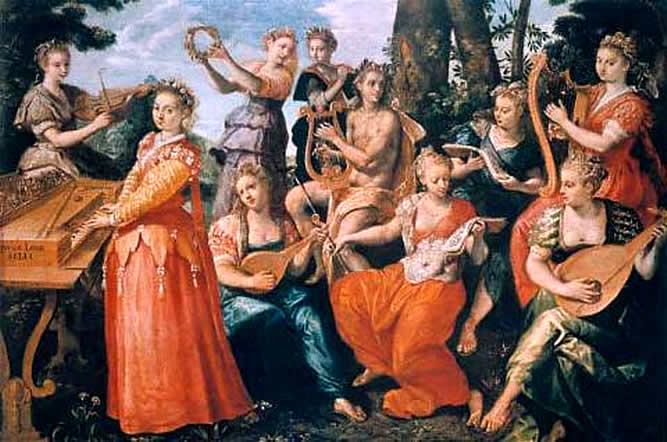
From the score, we know that in the original production of Orfeo, the instrumentalists appeared in different positions around the stage. We know that sometimes the instruments were part of the stage action. In a new piece of research, part of my investigation reveals that in one particular scene, when the Muses appear and the character La Ninfa says “you Muses have come with your instruments, so we’ll sing and you play, and everyone’s happy”, the score describes precisely which instruments play, and there are 10 of them – Apollo and the 9 Muses. So here the instruments are not just the accompaniment, they are part of the stage picture, and essential to the poetic concept.


Combining the information

But these differing levels of information in the two scores make today’s artistic process different for historically informed performers. Often Monteverdi writes details about the instrumentation that we don’t know from Cavalieri. For example, at the beginning of Act III, Monteverdi is extremely clear: the scene changes to Hell, the violins, the theorbos, the harp and the beautiful organs stop playing, and instead we have the cornetti, trombones and the regal. And so we can understand the two worlds, Hell and Arcadia, in Monteverdi’s opera. And this gives us a suggestion for the two worlds of Cavalieri’s opera, again Hell, and (now) Heaven. So from the point of view of a researcher and music director working with the score, it’s good to combine the information from both scores, to help us understand the cultural context of the period.

We don’t know if the Maenad ending was ever composed or not, but for sure it’s now lost. There’s a hint of  how the lost music might have been, in the Moresca that survives as the finale of the happy ending with Apollo. This Moresca starts in the score without time signature – there is no 3/2. This is very strange, and perhaps it’s because this Moresca was the continuation of something else, and that something else, whatever it was,is now lost. A Moresca, which is a danced battle, would also be an appropriate finale after the Bacchic ending with the Maenads. On the other hand, we should remember that often they would put a dance at the end that had no relation to the rest of the drama. After one of Shakespeare’s tragedies, the actors – including characters who had died – would all stand up and dance a jig. Cavalieri says that you can put whatever dance at the end of a show, but then what he actually writes is the perfect dance finale, actually, yes, very connected to the show. More about dancing in Orfeo and Anima & Corpo here.

Personally, I’m fascinated by this question of the end of Orfeo. In another production, in Helsinki, we showed both endings (with my reconstruction of the Maenad scene from the 1607 libretto), and I’m intrigued by the idea of letting the audience vote: should the final triumph be for Apollo, or for Bacchus?

Here in Moscow, in this production, in Georgy Isaakyan’s particular style, it seems to me that he doesn’t tell the audience what happens, he encourages them to ask themselves: does Orpheus live or die?

7 years of Early Opera, half a century of Historically Informed Performance

As we work on Orfeo at OPERA OMNIA, we now have the advantage of 7 years of work together in Theatre Sats on the baroque style of Cavalieri. More about how to study early operatic roles here. No doubt 17th-century musicians also developed their ideas in the 7 years between Anima & Corpo and Orfeo. And I think it’s also fair to say that Monteverdi is musically more difficult than Cavalieri. In our production of Orfeo, we have the opportunity to sing in the Italian language, which makes some things easier for the music, but challenges the actors to make that direct contact with the audience that we have when we sing Anima & Corpo in Russian. More about OPERA OMNIA here,

Perhaps the most unusual thing about the musical approach for the Orfeo production is that we have effectively two musical directors, in the same way that Monteverdi effectively had  two orchestras: the orchestra of the violins and wind instruments who play written parts; and the orchestra of the continuo who improvise their parts. And just as Georgy Isaakyan’s staging is an encounter between Monteverdi’s 17th-century story, and Russia of the 1970s and 1980s; so there is a similar contrast within the musical realisation. Amongst the continuo and soloists, we share the latest ideas of Monteverdi’s baroque style; whilst in the orchestra and chorus the audience are presented with the Russian way to play baroque from the 1970s.


This juxtaposition of fundamentally differing approaches to early opera within one production has led to me reflect on how Historically Performed Performance of Monteverdi has changed in my own lifetime. In the table below, I attempt to identify some key topics and trail-blazing pioneers associated with significant re-discoveries. Any serious early opera production should at least consider these topics. Nevertheless, even decades later, some findings are still considered too “radical”, whilst others are routinely ignored, even by ‘historically informed’ ensembles.


How HIP is your Monteverdi?


  • Chitarrone  1960s Robert Spencer


  • Cornetto  1970s Bruce Dickey
  • Vocal ornamentation    1970s Nigel Rogers
  • Quarter-comma meantone   1970s Mark Lindley
  • Negri/Caroso dance  1970s Julia Sutton
  • Renaissance recorders  1970s Bob Marvin, Martin Skowroneck


  • No conductor  1980s Roger Norrrington
  • Recit without bowed bass  1980s Graham Dixon
  • Baroque harp  1980s Frances Kelly, ALK
  • Led from continuo  1980s Ensemble Tragicomedia
  • Renaissance violin band  1980s David Douglass, Peter Holman
  • Count recit in minims  1980s Ensemble Tragicomedia
  • Metre in Music  1980s George Houle
  • Baroque Gesture  1980s Dene Barnett
  • Il Corago  1980s Fabbris & Pompilio
  • Chiavette  1980s Andrew Parrot
  • Vibrato  1980s Greta Moens-Haenen


  • Proportions  1990s Roger Bowers
  • Pitch  1990s  Bruce Haynes


  • Monteverdi’s Musical Theatre  2002 Tim Carter
  • 1615 print free online  2009 IMSLP


  • Tactus throughout  2010 ALK
  • Historical swordsmanship  2012 Guy Windsor
  • 1609 print free online  2013 IMSLP
  • Beating time & measuring music  2014 Roger Mathew Grant
  • Arianna a la recherche  2017 ALK


  • Violini alla francese  ?
  • 5 trumpets  ?

Of course, this list reflects my own personal experiences and fortunate encounters with individual experts. So I look forward to your comments, corrections and additions. And most importantly, I look forward to new research findings in the 2020s, which will provide new impetus for re-thinking, re-imagining and re-working Monteverdi’s theatrical music.


Musing allowed – Reflecting on Music, Time & Play

This article reports on my work-in-progress to create an Explorer’s Guide to Early Opera, under the title The Play of Music & Time. More about the project here. Written within the discipline of Reflective Practice, this post simultaneously documents the on-going process and is itself part of that process, a considered “thinking-aloud” that helps establish a blue-print for continuing the design. And no doubt, that blue print will be adapted, along the way…

Listening again to Peter & the Wolf (1936) – score herevideo with animations here – and The Young Person’s Guide to the Orchestra (1945) – sound with animated score here – was an experience both inspiring and somewhat daunting. I feel a palpable sense of awe at the achievements of Prokofiev and Britten in creating these expertly crafted and artistically powerful works.

These two models are of course, very different. Peter would fit into Monteverdi’s concept of favola in musica, a story in music. More about Monteverdi’s Orfeo here. Prokofiev’s fable resembles the Grimm brothers’ Kinder- und Hausmärchen: underneath the charming fairy tale of a young boy, his grandad and various animals there is an undercurrent of danger and violence. As in an opera, music and action are united, the spoken narration is like recitatives that link the instrumental ‘arias’ and duos, the final tutti is a rousing chorus.

Although by 1946 Britten had already written two operas, Paul Bunyan and Peter Grimes, as well as many settings of thought-provoking poetry, his Guide is presented not as a story, but as a set of Variations, creating a certain abstract quality, in contrast to Prokofiev’s naïve, but vivid realism. Britten seems to write for more sophisticated listeners, and formal construction is part of his educational message. Not only are we introduced to the instruments of a much larger orchestra, but those instruments are categorised into sections (strings, woodwind, brass, percussion), individually itemised, and then re-assembled in – who else would have dared to aim such a thing at Young Persons? – a thrilling double-fugue.

The power of Prokofiev’s art is hidden underneath what seems to be innocent pastoral: Peter is a wolf in sheep’s clothing. Britten’s intellectual explorations proclaim both the seriousness and the fun of symphonic writing: his large orchestra with its close-knit team of elite soloists becomes a playground of the mind, a space-time for rhythmic and colourful music-games.

“La Joie de Vivre” by Picasso (1946)

The Play’s the Thing

We play music. And opera is also a play: a theatrical drama in music, and an act of playfulness that romps across multiple media. The first baroque ‘operas’ were often called rappresentatione: a show, a Play.

So I still like my title The Play of Music & Time, with its echo of the very first baroque music-drama, Cavalieri’s Rappresentatione di Anima & Corpo (1600) – introduction to the first opera hereCavalieri’s Preface here. Following Monteverdi and Cavalieri, my two protagonists are La Musica and Il Tempo, the personifications of Music and Time – female and male. Soul and Body are united in a third character, Life, also embodied onstage in many early operas.

But I’m puzzling over how to reconcile 17th-century aesthetics with a design that will speak to young audiences and to listeners unfamiliar with Orfeo, Celos, Le Bourgeois Gentilhomme or even Dido & Aeneas. What is the appropriate Rhetorical Decorum, an artistic structure of what is suitable? What compositorial Voice will by its Nature be understood by all, at once charming the senses and captivating their minds?
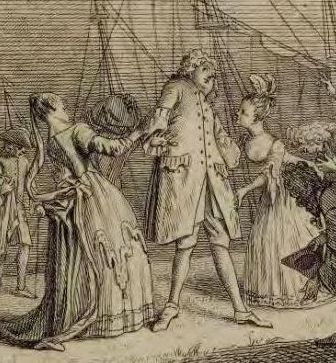
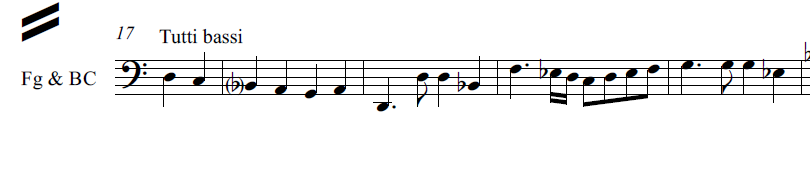
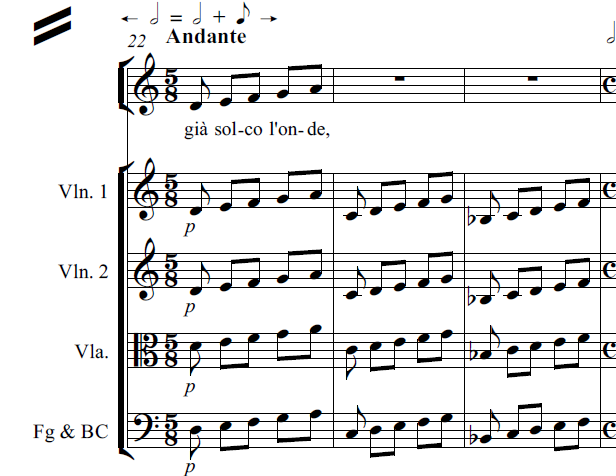
Music & Time in the models

The common features of Peter and the Guide are extreme economy of material, tight control of the balance between unity and variety, and masterful orchestration.

Britten confines himself to variations on an eight-bar theme taken from Purcell’s music for the play, Abdelazar (1695): the only new material is the pair of fugue subjects, introduced just before the final recapitulation of the Purcellian theme. Each variation lasts about a minute, there is strong contrast between successive variations, and though the theme is hard to perceive in some variations, it reappears triumphantly at the end. Within each variation, the sequence-structure of Purcell’s melody encourages Britten to use many short-term repeats.

Prokofiev works with different time-scales, inventing many themes (one for each character in the story), and with many (and more obvious) reappearances of those themes. Variation is mostly confined to changes of tonality and accompaniment, allowing the original melody to shine through clearly. Each thematic statement lasts fifteen seconds or less; often there is an immediate repeat before moving on another theme, but each melody returns every time the corresponding character re-appears in the story. There is some directly descriptive music for various action-scenes, and a new march-tune is introduced for the finale, which also reprises the character-melodies with touches of light counterpoint.

In operatic terms, we meet most of the dramatis personae in what might be thought of as Act I. This concludes with Grandad shutting the garden gate to protect Peter from the Wolf lurking nearby in the forest. Act II is all action, as the Wolf attacks and is captured by Peter, with help from the Bird. New characters enter for Act III, the Huntsmen. Exposition – action – new characters and resolution: this is a schema that could fit many three-act operas.

Both composers have superlatively keen ears for orchestral colour, matching varied orchestrations with appropriate musical material to offer young listeners memorable examples of just how each instrument sounds at its best. What could be more perfect than Prokofiev’s chalumeau-register clarinet-cat, or his quacking oboe-duck? And then Britten’s exchanges of gravity-defying two-octave arpeggios turn a pair of cats into acrobats who always land on their feet. Meanwhile both composers effortlessly loop the loop with flute-bird aerobatics.

One can be equally enthusiastic about both treatments of bassoon-grandad, wolf-horns, and hunter-timpani. Trumpets are used to good effect in both scores, and one might even wish that Prokofiev had invented a character-role for his solo trumpet.


Rhetoric at Play

For my own piece, I have some ideas about orchestration of 17th-century continuo-instruments. But the challenges I am grappling with are the balance of unity/variety and the question of how to introduce repeats of material previously heard – this seems essential for my audience – whilst remaining true to the early baroque aesthetic.

The first ‘operas’ were verse-plays set to music in a text-based style that imitated the declamation of a fine actor in spoken theatre. The poet’s choice of strophic or refrain structures might lead to some short-term musical repeats; dance-songs will repeat each phrase and instrumental ritornelli unify an entire scene. But since the same lines of poetry are unlikely to be repeated frequently from scene to scene, so the music also avoids long-term repeating structures. In Monteverdi’s Orfeo, the first pastoral ritornello reappears to identify scenes in Arcadia, but no other melody is carried forward from one of the five Acts to any other. Listening to the Rhetoric of Orfeo here. The leitmotifs heard (repeatedly, and very effectively) throughout Peter and also in Prokofiev’s (1919) Love of Three Oranges are not part of the seicento style.

I’m planning to use ground basses to give unity within each scene as well as contrast between one scene and another. Grounds are certainly an essential, and very attractive, feature of baroque music. But I haven’t yet decided on an appropriate solution for creating a sense of familiarity for a first-time listener and unity from one scene to another, i.e. some kind of long-term repeating structure.

Meanwhile, in my search for baroque models, my Facebook survey

What are your top ten 17th-century operas?

the survey results are here – has provided an embarrassment of riches beyond my wildest nightmares. I already knew that it was an impossible task, to introduce new listeners to all the early music-dramas I know and love, within a suitable duration for a children’s opera. Now I have a list of many more baroque operas to listen to, learn from, and learn to love!

Britten’s dedication of the Guide to the four Maud children “for their edification and enjoyment” reminded me of two of the three aims of Rhetoric. Perhaps Prokofiev goes even further in hitting all three rhetorical targets – docere, delectare, movere – to teach, to delight and to move the emotions. Even as a composer sets out to teach, he can only touch his audience’s hearts if he first captures their ears with delightful sounds.

La Musica declaims in the Prologue to Orfeo:

With a golden continuo-instrument
My singing usually
Beguiles mortal ears for a while;
And in this way
With the structured harmony
of the Music of the Spheres,
I can even move your souls.

More about the Philosophy of La Musica here.

So how might those heavenly orbits circle round in ear-charming repeats? That’s what I want to know….

Facebook: @PlayMusicTime

The Young Person’s Guide to Early Opera – What are the Top Ten 17th-century operas?

The Play of Music & Time

I’m working on a new project, inspired by Peter & the Wolf and The Young Person’s Guide to the Orchestra, to introduce young audiences to Early Opera. The working title is The Play of Music & Time. So in the search for expert opinions and enthusiastic recommendations, I posted a question on Facebook, which was shared widely in Baroque and Operatic chat-groups.

WHAT ARE THE TOP TEN 17th-century OPERAS?

I received many replies, from performers, academics, baroque opera fans, CD-listeners, You-Tube viewers, audience members from staged productions, and (most importantly) some reports of the preferences of young persons aged 5 to 10.  Many agreed on the favourite works in this repertoire, and counting the votes was for me something like watching the Eurovision Song Contest (except with better music), as two front runners (one by Purcell, one by Monteverdi) took an initial sprint away from the peloton and then fought it out every inch of the way to the chequered flag (have I mixed enough metaphors here?)…

But there were also many lesser-known suggestions, including several works that I haven’t heard. So I now have a substantial reading/listening list to work through, as well as welcome reminders of some fine operas that had slipped my memory.

The aim of my project is both to introduce the accepted canon of Early Operas to new listeners, and to expand the repertoire for those who already have knowledge and experience of 17th-century music-drama. So I’m very grateful to everyone who commented. Thanks to your expertise and enthusiasm, I now have a much wider knowledge-base from which to assess what is essential and what might be fascinating, but as yet little-known.

And as a thank you in return, I now present the results of this online survey, so that you can see how the votes came in.

And the winner is…

Methodology

The posted question was informal, designed to provoke enthusiastic answers. It is not a scientific survey, and should be read in the spirit of fun with which it was carried out. The sample group was self-selecting (those who chose to reply) from within an online community of over 15,000 FB readers (my own Friends and members of the Historical Performance Practice group were the two largest targets for the initial post).

Although I asked for a ‘top 10’, some responders gave fewer, or more than ten suggestions: I counted all these votes equally. For this reason, it isn’t possible to give a clear indication of the sample size, but over 50 operas are listed and some 140 votes were cast.

Some suggested “anything by such-and-such a composer”: for this response, I gave an extra vote to each work by that composer that was mentioned by another respondent.

Quite a few allowed their enthusiasm to carry them beyond the 17th-century: I allowed the first decade of the 18th century, and include here in this commentary Handel’s Acis & Galatea (1718), about which two respondents were very enthusiastic, as especially suitable for young audiences. Handel’s Alcina (1735) was also warmly supported. But I have not recorded the many 18th-century operas that were suggested by only one person: to do so would have been misleading.

I did not define ‘opera’ more specifically, and there was some discussion as to whether English Semi-Opera, Masques and Oratorios could be included. I accepted a vote for any kind of music-drama, and one might well consider that some famous works that do not fit neatly into the ‘opera’ category might have received more votes if my question had been worded more inclusively: Monteverdi Combattimento and Cavalieri Anima & Corpo come to mind.

I did not ask for specific arias.

One respondent argued that the 17th-century opera that was most famous in its own time was Cesti’s Il Pomo d’Oro (1668), a huge production that is little known today. But there are other candidates for that position, not least Monteverdi’s Arianna (1608).

Although some respondents strayed into the 1700s, no-one mentioned the most famous ‘opera’ prior to the 17th-century, the multi-composer spectacular Florentine Intermedi (1589), which is usually considered an essential element of what we now call The History of Opera.

Results

Arias

Although I did not ask for specific 17th-century arias, three music-drama excerpts aroused so much enthusiasm that respondents mentioned them anyway:

Pur ti miro  (Poppea ) – this is not the moment to discuss whether this is by Monteverdi or Cavalli.

Purcell Music for a While (1692, Oedipus) – which my respondent compared to a rock anthem!

Lamento d’Arianna (1608) – In 2017, I wrote what might be called ‘the fourth opera in the Monteverdi trilogy’, composing a setting of the complete 1608 libretto ‘in Claudio’s voice’, around the sole surviving fragment of the famous Lament. Read about Arianna a la recherche here.

Music Dramas

I present the list of works grouped by how many votes they received. Within each group, the ordering is chronological, from the earliest to the later. Some dates are disputed, this is not the place to argue about them!

In the best traditions of such ‘contests’,

I shall present the results in reverse order…

Your Top Ten 17th-century Operas

Many heartfelt thanks to all who took part!

Orlando Orlando: Drama and dance-rhythms

1st November 2019:
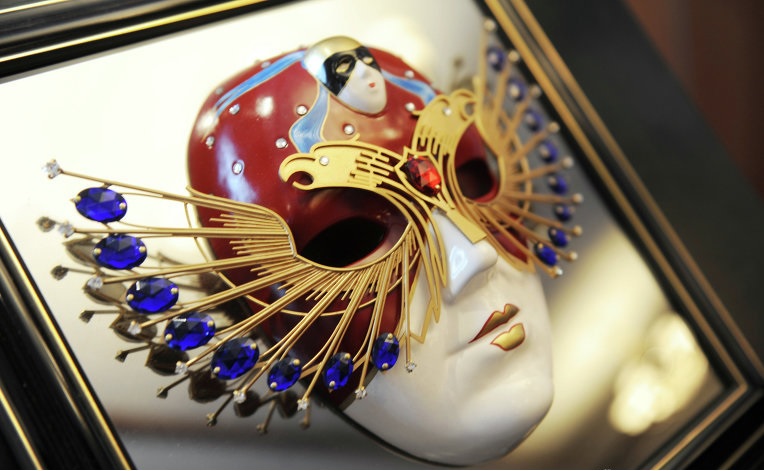
To celebrate Orlando Orlando‘s being nominated for Russia’s highest theatrical award, the Golden Mask, in 6 categories – best production Georgij Isaakyan, best design Hartmut Schörghofer, best musical direction Andrew Lawrence-King, best lighting design Alexey Nikolaev , best female soloist Maria Mashulia, best male soloist Kiril Novakhatko – this article has been updated with additional commentary on Handel’s techniques of Drama & Dance-rhythms.

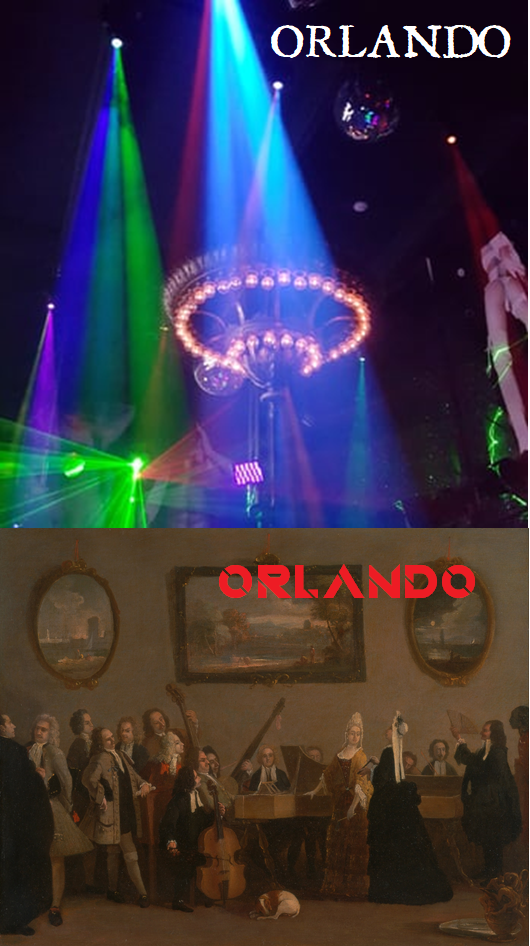
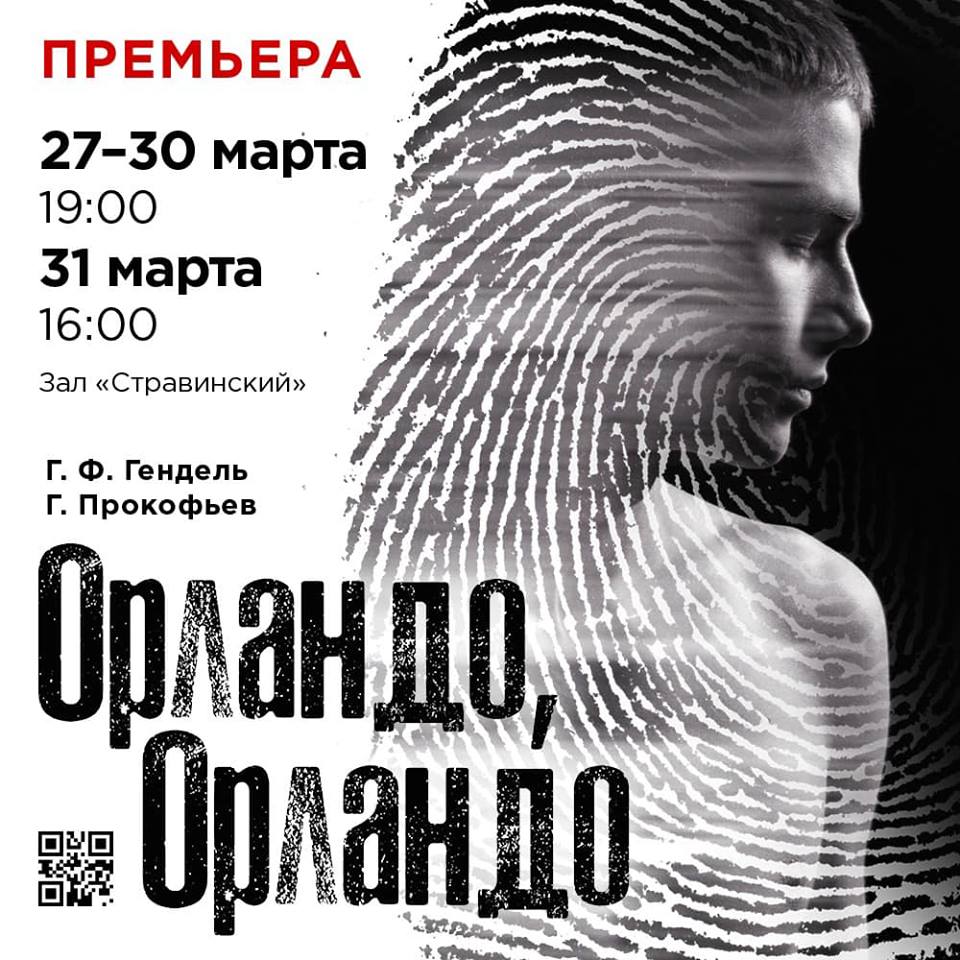
This article was first posted in connection with the premiere of Handel’s Orlando at the Helikon Theatre in Moscow, 27th March 2019, entitled Orlando, Orlando: Handel’s Orlando (1733) in memory of the victims of the shooting at the Pulse nightclub in Orlando, Florida (2016). Music by George Frideric Handel, Libretto adapted from Carlo Sigismondo Capece L’Orlando (1711) after Ludovico Ariosto Orlando Furioso (1516/1532). Concept & Adaptation by Georgij Isaakyan (Director), Edition by Andrew Lawrence-King (Musical Director), Techno episodes by Gabriel Prokofiev, Design by Hartmut Schörghofer.

Synopsis of Georgy Isaakyan’s version (read online and/or download pdf)

Orlando Orlando libretto (includes English translation: read online and/or download pdf)

This production is not an ‘authentic’ reconstruction of baroque opera, but a new work of music-theatrical creativity in which 18th-century music tells a 21st-century story, bringing together Gabriel Prokofiev’s specially composed electronic music and the most modern understanding of how George Frideric’s score would have sounded at the King’s Theatre, London in 1733.

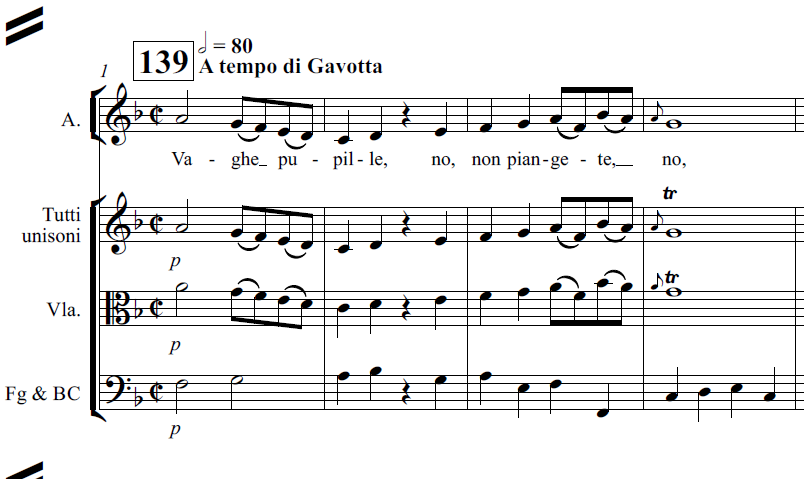
For Orlando, Handel assembled an unusually large orchestra with a powerful bass-section, and the dance-rhythm of the fashionable Gavotte is heard several times, representing Orlando’s fury.

In his madness, Orlando identifies Angelica as the mythological godess Persephone: “Beautiful eyes, no, do not weep, no”

In his madness, Orlando mistakes Dorinda for the goddess Venus, or an enemy warrior: “Already, I wrestle him; already I embrace him  with the force of my arm”

In the extraordinary mad-scene created for the famous Italian castrato Senesino, bass instruments play alone as the protagonist descends into a hell of jealous rage.

“I am my own spirit, cut off from myself. I am a ghost, and like a ghost I want to make the journey down there to the kingdom of sorrow!”

And the full orchestra lurches into 5/8 metre as Orlando imagines himself rowing Charon’s boat into the underworld.

“There is boat across the river Styx! In spite of Charon, already I’m rowing over the waves”

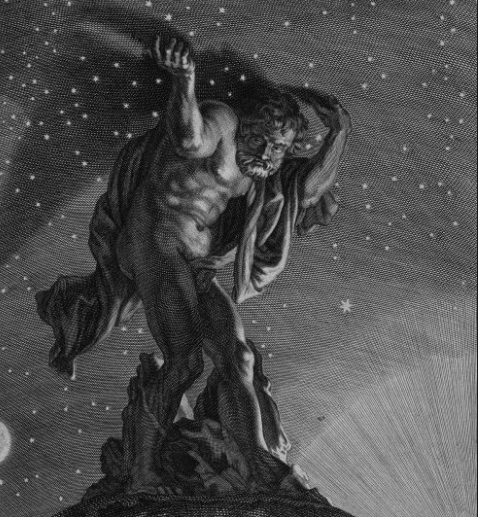
Handel freely borrowed from other composers’ (and his own) work, and the previous season he re-wrote two earlier dramas, expanding the chamber-opera Acis & Galatea and transforming a one-act staged masque into the first English oratorio, Esther, performed as a three-act concert with the addition of solo harp, trumpets, drums and a chorus. For Orlando, Handel adapted Carlo Sigismondo Capece’s (1711) story of mad jealousy, itself a re-working of episodes from Ariosto’s 16th-century classic, Orlando furioso. Bernard Picart’s (1710) engraving of the giant Atlas, republished in 1733 as Le Temple des Muses, was re-interpreted as the stage set for the opening scene with the magician Zoroastro.

Perhaps this 1731 print inspired the first scene of Handel’s ‘Orlando’

Handel’s audience were thrilled by several spectacular stage transformations, utilising the full resources of period stage machinery and dramatically presented as the result of Zoroastro’s magic, assisted by his demons. In our production, Schörghofer’s design employs modern stage technology to offer the audience surprise and spectacle, whilst clarifying the subtly interwoven stories as characters from medieval romances (Chanson de Roland, 11th cent) are re-drawn by Boiardo (Orlando innamorato, 1495) Capece, Handel and Isaakyan.

“Orlando Orlando” at Helikon Theatre

A German musician producing Italian opera in England, Handel writes a conventional French-style overture, but surprises the audience with up-to-date dance-music, a fast Italian giga.

This Italian giga has characteristically continuous movement in the melody line, with a driving bass.

Listen to how Gabriel Prokofiev transforms Handel’s giga, the height of fashion in 1733, into 21st-century electronic dance-music.


The rhythmic drive of the giga is disrupted with broken phrases to depict Dorinda’s misplaced faith in ‘sweet little lies’.

In spite of trills and rests, this Aria still shows the characteristics of an Italian giga: “Oh dear little words, sweet glances; even if you are lies, how I will believe you!”

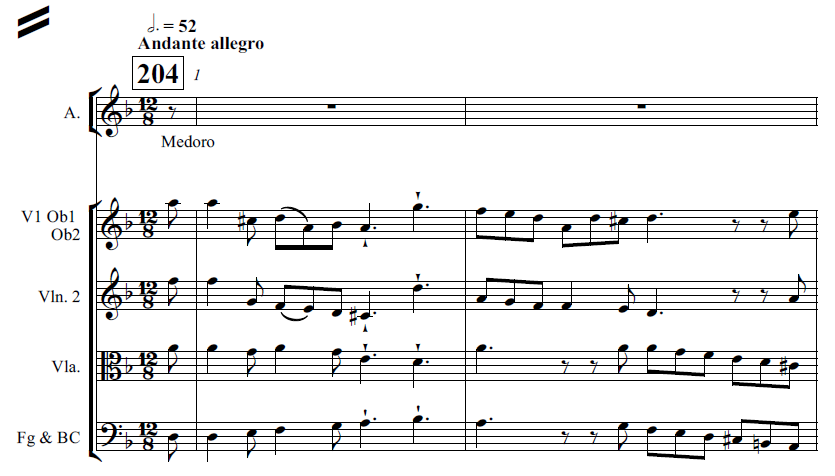
The step-and-jump rhythms of a French gigue are heard in Medoro’s second Act aria;

The restrained movement of a French gigue characterises Medoro’s hesitation: “I would like to be able to love you, but…”

the slow swing of an Italian folk-dance, the  siciliano characterises Dorinda’s wistful longing;

More gentle than a giga, the tender siciliano characterises Dorinda’s nostalgia for a love that never was: “If I return to the meadow, I am made to see my Medoro in every flower”

Orlando’s lament in hell is sung to a French passacaille.

In French operas the descending bass of the minor-mode passacaille suggests tragic passions and creates opportunities for expressive dissonances and chromatic variations: “For from tears even in the kingdom of Hell, pity can be aroused in everyone”. The audience come to realise that this text is ironic: in his madness, Orlando shows no pity for Angelica, and changes his Gavotte-refrain to “Yes, eyes, weep, yes, yes!”

The composer’s bold strokes of dramaturgical re-designing and contrasting musical styles were further transformed by unwritten baroque performance practices. Continuo-players spontaneously realised the written bass-line with rich harmonies and strong rhythms; singers added their own variations to the repeated section of a da capo aria; sometimes time would stop whilst singers  or instrumentalists improvised a final cadenza. Handel did not conduct, but directed by playing the harpsichord, alongside the theorbo (bass lute). The expression of the vocal line was not indicated with markings of piano and forte, but follows from the accentuation and emotions of the words.

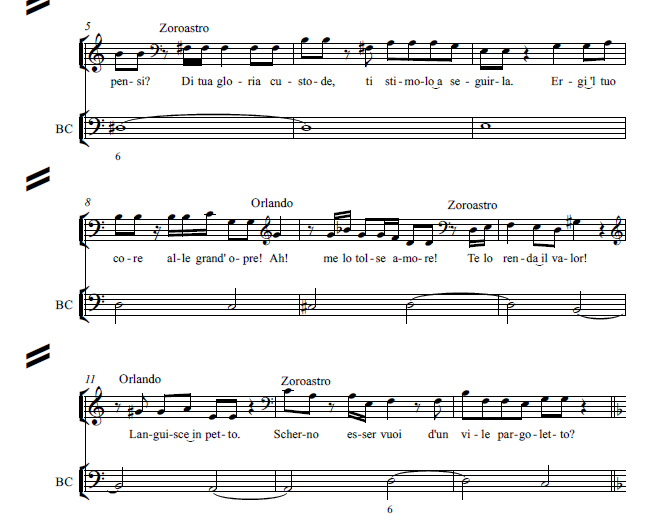
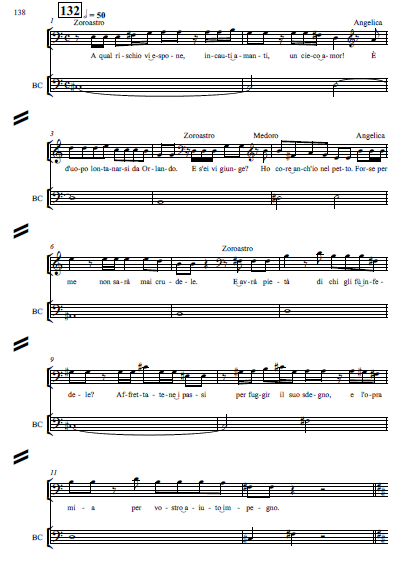
This Recitative is not just rapid patter, look at all the rhetorical detail: A long note and glorious high notes for “As custodian of your glory…”. Strong dissonance for “I stimulate you to follow it”. Another long note for “Urge.. ” and the highest notes and thrilling contrasts of short notes for “…your heart to great works!”. A long sigh “Ah!” with an intake of breath afterwards, dissonance and Orlando’s voice dropping “love takes it all away from me”. Zoroastro’s voice rises with long notes and an unexpected sharp in the melody-line for “It will be given back to you by valour!”. Orlando’s falling phrase (which would be given the conventional drooping appoggiatura) “It languishes in my breast”. Zoroastro’s strong retort with high notes “Scorned…”, snappily broken phrases “is that what you want to be…” and a suitably horrible melodic tritone “by a vile little boy?”. The “little boy” is Cupid as the flute’s flapping wings show in the following bars.

Instrumentalists similarly have few written phrasing-marks, but imitate the crisp articulation of the Italian language with a great variety of bow-strokes.

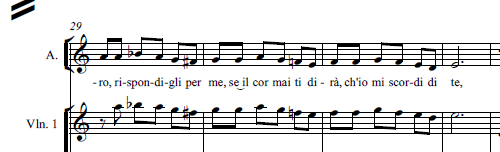
What might appear to be just a series of equal quavers acquires subtle rhythmic patterning from the long/short, accented/un-accented syllables of the Italian text, imitated in this English-language metrical paraphrase: “Respond to it for me; your heart might tell you that.. I discard all your love”. Today’s performers might usefully channel a jazz-singer’s approach to text and rhythm, rather than classical training.

For the eerie calm of Orlando’s final aria we added baroque harp, which in Handel’s dramatic works suggests a vision of heavenly peace. Trumpets and drums represent royal authority and military power; horns and oboes a pastoral idyll; the flute an amorous nightingale or Cupid’s fluttering wings. Modern scholarship has revealed the subtle structure of Handel’s recitatives, which imitate the pitch contours and speech rhythms of a great actor in the baroque theatre.

Studying the text as dramatic speech in the grandiose style of baroque spoken theatre reveals how accurately Handel notates [what Il Corago first described c1630 as] ‘the declamation of a fine actor’, in the generation between Thomas Betterton and David Garrick. As shown in my English-language metrical paraphrase: Zoroastro barks out his anger with the urgency of poetic anapests followed by the characteristic contrast of short and long notes “To what risks you’re exposed now, you reckless lovers, by blinded love!”. Angelica’s reply is a languid drawl “We only have to get free from Orlando.” Zoroastro barks again with the upward intonation of an abrupt question “And if he comes here?” – singers can appropriately add an upward appoggiatura. Medoro tries to assert himself, but Handel’s downward inflections betray the character’s weakness “My heart is also valiant!” and Angelica interrupts with powerful rhythm and a strong upward leap “P’haps for my sake, he would not be so cruel” – the conventional appoggiatura makes a harsh dissonance here. Zoroastro mimics her phrase with the slow tempo of bitter sarcasm “And he’ll be nice… to his unfaithful lover?”. With a wonderfully dramatic contrast, he switches back to fast anapests “Hurry up and get running, fly away from his anger…”. The notated rhythms of Handel’s music work perfectly as dramatic speech.

See my previous article on tempo and rhythm for Handel, here.

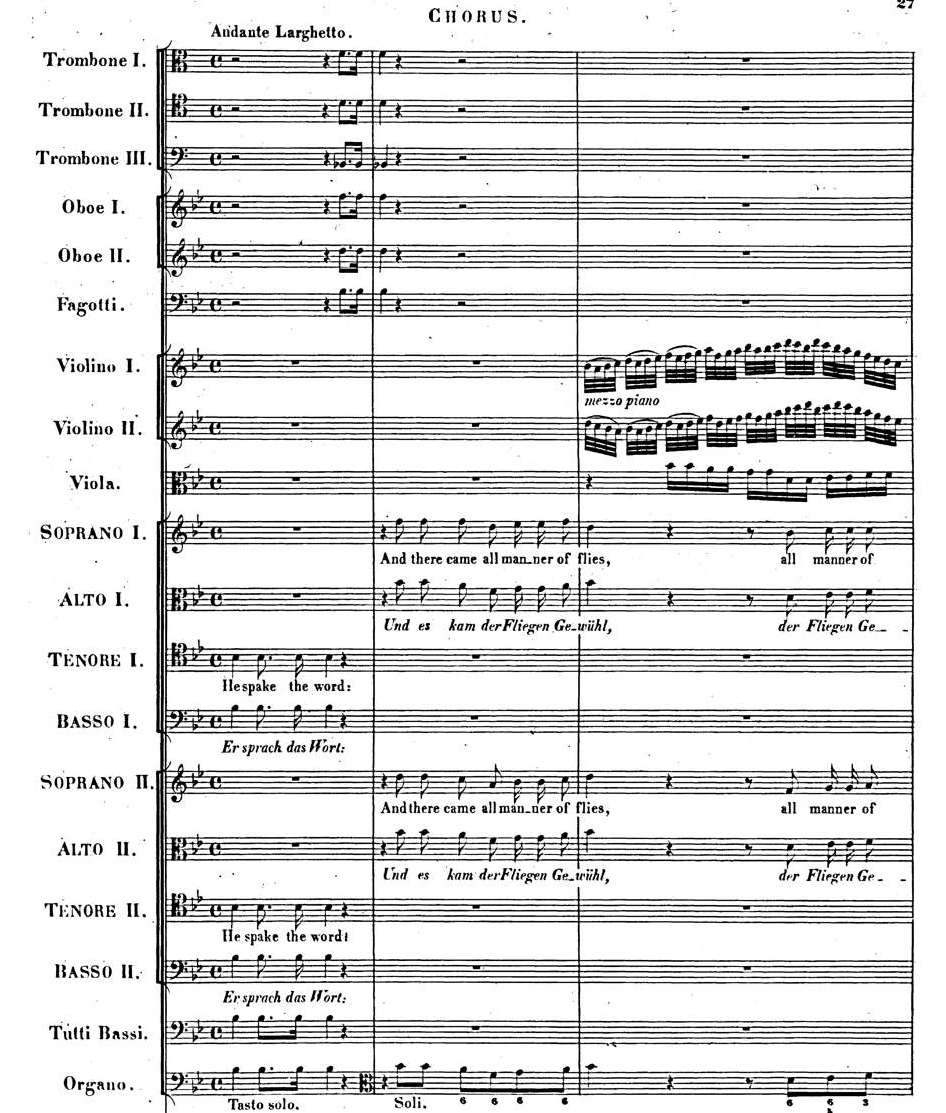
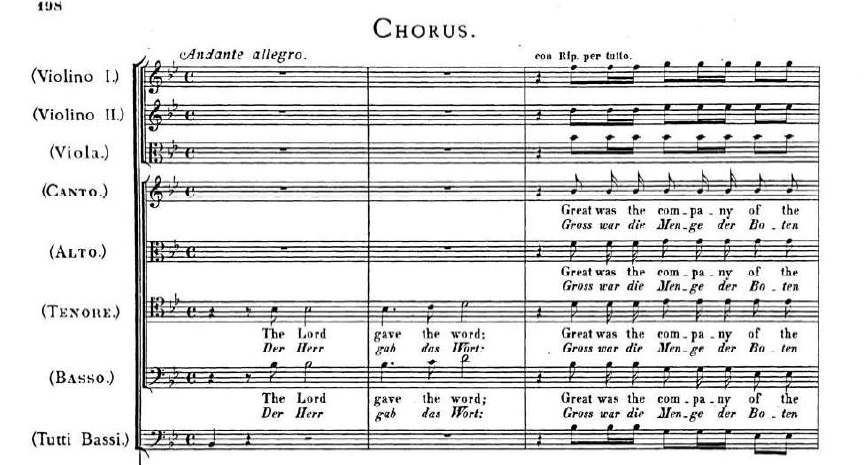
We added a chorus, whose members (in the manner of Handel’s oratorios or Bach’s Passions) comment on and drive forward the events of which, in the end, they are the victims. Their music is borrowed from Handel’s drama of cultural identity and religious conflict, Israel in Egypt (1739): Handel himself re-worked one of these choruses for Messiah (1741).

In Isaakyan’s reworking of the story, the magician Zoroastro appears in different guises, always as an authority figure: a star news-presenter, a domineering father, a bible-preacher, a populist politician. The choruses I selected show the public’s various reactions: unchallenging acceptance “Great was the company of the preachers”; anxious forboding “The people shall hear and be afraid… they shall be as still as a stone”; belated understanding “There came a thick darkness”; and a fascination with destructive power “He gave them hailstones for rain, fire mingled with the hail”.

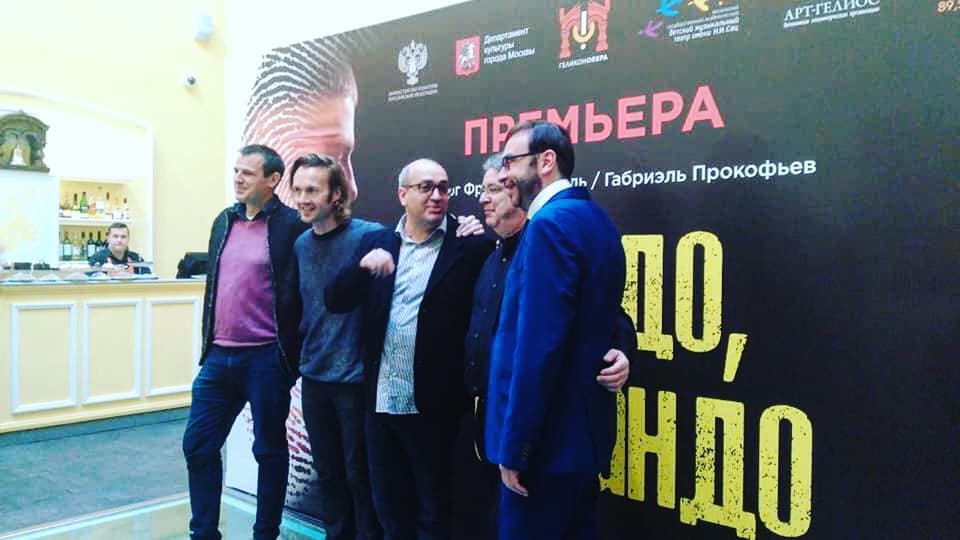
“Orlando Orlando” Premiere Left to right: Hartmut Schörghofer, Gabriel Prokofiev, Georgy Isaakyan, Andrew Lawrence-King, Dmitry Bertman

Orlando, Orlando: Nominated  for the Golden Mask in 6 categories (2019)


Understand, enjoy and be moved! Listening to the Rhetoric of Orfeo

This article is based on a pre-performance talk for the production of Monteverdi’s Orfeo at the Vaasa Baroque Festival and in Helsinki, October 2019.

Many audience members seeing performances of Orfeo in 2019 will encounter a more-or-less familiar situation: a baroque opera with Historically Informed Performance of the music, shown in a thoughtful and sympathetic modern production. Nevertheless, a staged production of Monteverdi’s 1607 music-drama is a special event. This beautiful and moving work is justly famous as one of the very first operas, admired by Early Music fans for its varied ensembles and rich instrumental writing. But it is not often staged: Opera Houses tend to favour more the austere scoring and stark psychodrama of Poppea (1643).

What’s different now?

In this particular production, some features that are different from mainstream opera reflect the situation at the first performance in Mantua. The venue is a hall (originally a room within the Ducal Palace) not a purpose-built theatre. The performing space is small, there is no stage machinery. The cast is just 9 singers, some of them doubling roles, and all of them combining to form various vocal ensembles – there is no separate chorus.

Other features of this project reflect the latest research findings in Historical Performance Practice. The instruments are distributed in contrasting ensembles (strings, flutes, continuo, cornetti & sackbuts) across various positions behind and to the sides of the stage. Cello and violone play with the string ensemble, not with the continuo. The default scoring for continuo is organ & theorbo. Singers and continuo alike avoid ornamentation in this stilo rappresentativo – theatrical style.

There is no conductor, not even someone waving their hands whilst using a harpsichord as a very expensive music-stand!  The anonymous writer of a c1630 manuscript for a Baroque Opera Director, Il Corago, rules out even the Tactus-beating that would be usual in madrigals and religious music. Nevertheless, as Frescobaldi describes in 1615, the whole performance is ‘facilitated by Tactus‘, a slow, steady pulse around one beat per second, which changes slightly according to the emotional affetto from one movement to another.

What was different in 1607?

But if the concept of Baroque Opera is familiar to us, then we might question how today’s situation differs from the experience of the audience in 1607. Certainly, they would not have viewed Orfeo as the beginning of a ‘History of Opera’. They could not know the future, but they were well informed about the recent past and excited at the on-going development of new genres of music-drama.

These were not yet called opera. Orfeo is favola in musica, a story in music. That music was only rarely called recitativo: the usual word (as for Orfeo) was rappresentata, a show, a theatre-piece. In the following year, 1608, librettist Ottavio Rinuccini made the bold move to claim for Monteverdi’s lost masterpiece Arianna the grand status of Tragedia (Tragedy) rappresentata in musica.

There was not yet any specific training for opera-singers. The 1607 cast were court and chapel musicians, all male, who brought to the stage their rhetorical skills of presenting poetry, of narrating stories, of expressive gestures and court decorum – how to stand, where to position oneself, how to behave in the presence of a Prince, or (in this case) in the presence of the demi-god Orpheus, or of Pluto, King of the Underworld. This all changed the following year, when professional actresss Virginia Ramponi-Andreini, known as La Florinda, brought her stage-skills to Arianna, performing the famous Lament to great acclaim.

But even though there was no word for it, by 1607 opera was already a ‘thing’. Peri describes in the Preface to Euridice (1600) how to turn theatrical speech into music; Cavalieri gives detailed instructions for opera-composers and performers in the Preface to Anima & Corpo (1600), the earliest surviving such work. In 1601, Caccini proclaims the priorities of the nuove musiche – new music – as Text and Rhythm.

Research into ancient Greek drama and experiments with new genres were supported by renaissance Academies, including the Mantuan  Accademia degli Invaghiti (music-lovers) who promoted Orfeo. The aristocratic and artistic membership of the Academy would have regarded the work as Striggio’s verse-drama set to music by Monteverdi. And much of what we might today analyse as Musical Forms comes from the poetical of the libretto. But Monteverdi sometimes chooses to disregard Striggio’s blue-print, tending to prefer expressive Monody even where the design of the verses suggests Aria.

As Tim Carter writes in his survey of Monteverdi’s Musical Theatre (2002), Academy members’ chief delight was in a show of Rhetoric.  Rhetoric is the use of persuasive speech to explain, to entertain and to stir up the emotions. This focus on words might surprise us, as a way of listening to Monteverdi’s music, but if we think of Shakespeare’s plays (e.g. Anthony and Cleopatra, also in 1607), then we can understand such delight in the powerful use of heightened language.

So in the Prologue to Orfeo, as La Musica tells the story of Orfeo, the sound of instruments tickles your ears, and the supernatural power of Music moves your soul. At the gates of Hell, Orpheus’ song delights Charon’s heart, but does not arouse any emotion of pity in this tough male. Several decades before Descartes, period Medical Science did not consider a mind/body dualism, but more complex models with mind, spirit, soul, heart and lower-body emotions all interacting.

Academicians admired ancient Greek drama for its capacity to move the audience’s passions ‘to tears or laughter’. And Monteverdi’s reputation as ‘the divine Claudio’ was precisely for his ability to compose music that profoundly affected listeners, even if such contemporaries as Artusi complained about technical breaches of the rules of counterpoint.

As music, Monteverdi’s Orfeo was rappresentata – staged, a show. As literature, Striggio’s Favola d’Orfeo was rappresentata in musica. And according to the new concept of Personation – the ‘realistic’ embodiment of a character on stage, for example in Shakespeare’s Hamlet (c1600) – Orpheus himself is ‘represented’ in this drama. We listen to the words, we hear the music, we watch the action, and we are moved also by seeing Orpheus’ reactions.

But the decorum of Greek drama would not allow death to be enacted, and in Classical Theatre the most dramatic events were presented as Narration. This tradition of stage Messengers suited baroque singers’ skills in presenting Rhetorical speech in music: telling a story, delighting in detail, moving the listeners’ passions.

We tend to hear baroque opera as Recitative and Aria, in which Recitative is the ‘boring bit between the nice tunes’. This is problematic, since Monteverdi writes only a few ‘nice tunes’. His audience was – of course – unaware of Mozart, Handel and Vivaldi’s operatic recitative, or the story-telling Evangelist in Bach’s Passions. The words Recitative and Aria were used. but around 1600 they had different meanings. New scholarship on this subject is crucial for a better understanding, not only of how to perform, but also of how the 1607 audience would have heard Orfeo.

Recitare means ‘to act’. According to Doni’s (1640) Annotazioni it is incorrect to apply this word to dramatic Monody.  Il Corago explains that there are three ways to act – recitare: with music, with plain speech, and in silent mime. So musica recitativa simply means ‘music for acting’, everything that is delivered by a soloist. including Aria. Aria in this period is any repeated structure in music, rhythm or words. So in period terms, Shakespeare’s ‘A horse, a horse, my kingdom for a horse!’ [Richard III (c1593)] is an Aria within the Recitative of the whole speech.

In the 20th century, it was assumed that expressive recitative required romantic rubato. But Monteverdi’s rhetorical purpose is not to express the performer’s emotions, but to move the audience’s passions. He does this with subtly composed and carefully notated contrasts of pitch, harmony, rhythm and speed of declamation, controlled by the steady pulse of the Tactus beat.


How to listen?

Concentrate on the words.

Let the poetic imagery create Visions in your imagination, as if the events were happening before your very eyes.

Let the power of your own imaginative Visions be supported and enhanced by what you see on stage and what you hear in the music.

What does it mean?

In Monteverdi’s dramatic Monody – music for acting – contrasts in pitch represent the impassioned speech of a great actor. Speaking on a monotone is code for ‘Let me tell you a story’ – if there is no music, concentrate on the words.

Contrasts of syllabic speed indicate heightened passion. Crescendo on a single note carries the emotion to the listener. Speaking on the Tactus beat suggests stability, whilst being off the beat or syncopated shows agitation.

The continuo bass is structured to convey emotions: a sustained pedal-point signifies seriousness; slow movement of the bass accompanies a serious or sad subject; fast movement creates the lightness of happiness and dancing. Dissonances of many different types show varied emotions.

Typically, there are many changes of emotions, often with rapid contrasts between opposites.

Ensemble music, vocal or instrumental, on stage represents diegetic, ‘real life’ music. The string ensemble symbolises the mythical Lyre, associated with boh Orpheus and Apollo. Strings, flute and harp are played by the nine Muses. A pair of flutes suggest pastoral pan-pipes. The snarling Regal is the organ from Hell. Cornetti and sackbuts evoke the horror of Hell or the power of sacred music.

In a humanist opera, we might well ask, to Whom is music sacred? To Apollo? Apollo and Orpheus were understood as allegorising God and Christ. Or to Bacchus? Whilst the 1609 and 1615 prints of Monteverdi’s music have a happy ending in which Apollo rescues Orpheus from despair, Striggio’s 1607 libretto ends with a glorious triumph for the opposing team, Bacchus and his hard-drinking, hot-loving Maenads. Andrew Lawrence-King has reconstructed music for the original ending, and you will have to wait till the end of the show to find out who triumphs in the end.

So, in the best traditions of Rhetoric, I hope that this Explanation helps the music move your Emotions, and that you Enjoy the show!

Read more at the ORFEO Page by Il Corago

Challenge your assumptions


This motivational text popped up in my FB feed. Not withstanding the split infinitive, this is what high-quality academic research should be about… and it’s not a bad motto for political opinions either.


Learning from errors

The realisation “Aha, I made a mistake” is the first step towards self-improvement. We musicians do this all the time when we practise, athletes and martial artists do this when they train… but it’s harder to do in the academic or personal context.

In the context of Historical Performance Practice, “I don’t know” is the first step towards becoming more Historically Informed. Whereas “I can’t be bothered to find out” is a step backwards, in any context.

In a leadership role, it can feel awkward to admit to errors. But whatever respect you lose or gain from declaring an honest mistake, it cannot compare to how foolish you look when your colleagues know that you are bluffing.

I can’t pretend I manage 100% compliance with this ideal. But I do try… And I think this principle is so important for intellectual research, that I’ve devoted this entire post to it.


Accept the challenge

I’m well aware of the phenomenon of ‘researcher bias’, whereby investigators subconsiously select evidence that will support their pet theory. To combat this inevitable tendency, I have made a point of following up citations posted by my academic opponents, and investigating their chosen sources in detail. This allows me to use their researcher bias to counter-balance my own, and has been a most fruitful way to extend my reading list. In academic research as in martial arts, your fiercest opponent can be your best training partner!

If we consider that Musicology – in German Musikwissenschaft – is a science, then the scientific method demands that we constantly test our hypotheses experimentally, and that we re-test frequently, to find out if our initial findings hold consistently.

In this sense, every rehearsal, every practice session, as well as each performance is a new experiment. We should hope that we learnt something from the previous experiment, so we are already in a new situation, even if we tread what might seem to be a well-worn path.

For this reason, I consider it very worth while to re-read familiar and “obvious” historical sources, just as often as I look for a “new” source to read.  Those familiar texts, which were perhaps our first steps into Early Music, can reveal startling new insights, if we approach them with an updated understanding of the context, and with the readiness to re-consider, to challenge our assumptions.


Challenge the accepted

Scientific scepticism is the aittitude that everything should be experimentally tested, and verified as replicable. The musicalogical equivalent in Historical Performance Pract ice is being ready to question the ‘standard operating procedures’ of today’s Early Music, whilst constantly challanging our own assumptions. What is even more difficult is to become aware of assumptions that we didn’t even know we had made, until some piece of period evidence proves them false…


The past is a foreign country; they do things differently there.

L. P. Hartley The Go-Between (1953)


The past is a foreign country; there is very little we can say about it until we have learned its language and understood its assumptions.

Michael Howard The Lessons of History (1991)


One of the challenges of Historically Informed Performance is to try to catch a glimpse of our own assumptions, to notice where something seems so ‘obvious’ and ‘absolute’ that we don’t even question it. The worst decisions in Early Music are the decisions that we don’t even realise we are making, because we don’t even notice there is a question to be addressed. But as soon as we become aware of an assumption, we can look for evidence of whether the same assumption held good in the past, or if attitudes might have changed with the centuries.

Andrew Lawrence-King A Baroque History of Time (2014)

Rhetoric, Rhythm & Passions: Monteverdi’s Orfeo in 2019

This article is posted in connection with the production of Orfeo in Vaasa and Helsinki, October 2019.

With the golden harp I charm mortal ears,
With the powerful harmony of the cosmos I touch your soul.

La Musica, Prologue to L’Orfeo

More about the Philosophy of La Musica here…

The Theatre of Dreams: La Musica hypnotises the Heroes here…

Monteverdi’s music is Rhetoric that tells a story, delights the senses and stirs your emotions. Although it is one of the earliest music-dramas to be presented in today’s Opera Houses, L’Orfeo was not the ‘first opera’. The designation in Striggio’s (1607)  libretto here… as favella in musica… (a story in music) …rappresentata ( a theatrical show) in Mantua, associates this music-drama with Cavalieri’s (1600) Rappresentatione di Anima e di Corpo in Rome, and with Peri and Caccini’s Euridice,  performed in Florence later that same year.


Monteverdi’s Score was printed in 1609 here…, not to facilitate future performances, but as a souvenir of the original production, with many details of instrumentation and staging not often found in early baroque sources. There were three groups of instruments distributed around the stage: strings and flutes, cornetti and sackbuts, and the Basso Continuo who ‘supported and guided the whole ensemble of voices and instruments’ (Agazzari, 1607). There was no conductor: rhythmic precision was based on the steady pulse of Baroque Tactus more about Monteverdi’s rhythm here…; rehearsals were led by the Corago (opera director) more about Il Corago here… 

For this new genre of music-drama, the performers were not theatre actors but court singers, with star tenor Francesco Rasi in the title-role. And the first performance was not in a purpose-built theatre, but in a small hall inside the Ducal Palace, without the grandiose stage-machinery used in the 1589 Florentine Intermedi. Nevertheless, the show was a great success, and the following year the spirit of this music led to the birth of the Tragedy, Arianna, Monteverdi’s  lost masterpiece (reconstructed by Lawrence-King in 2017 from the surviving Lamento). More about Arianna a la Recherche here…

Libretto and Score offer alternative endings, in which Orpheus either encounters a gang of Bacchus’ followers, or is rescued by Apollo. In the 2019 staging in Finland, you must wait and see who triumphs in the end: Apollo (Monteverdi’s original setting) or Bacchus (in Lawrence-King’s reconstruction for this production)?


Whilst we might today view L ‘Orfeo as a symbolic journey, 17th-century audiences appreciated it as an allegory of music-drama’s power ‘move the passions’. They experienced the emotional impact of hearing the story narrated by La Musica and the Messaggiera, watching the same story dramatised  by actors on stage, whilst both seeing and hearing how Orpheus himself reacts to each new  event. As courtiers, the Mantuan spectators were accustomed to watching their Duke, in order to gauge his reaction to any happening. On stage, Orpheus’ Shepherds represent a pastoral ‘court’ surrounding the semi-divine singer.


A stage court, a dramatised wedding more about the Ballo for Orpheus’ wedding here…, and a mythical singer as protagonist all serve to make music ‘realistic’ within this story. The Muses themselves appear from Parnassus, and baroque audiences were thrilled by the horrors of Hell. Striggio’s inferno is deliberately modelled on Dante. Ordinary speech is represented not by the Recitative more about Recitative here… that we know from Handel and Vivaldi, but by earlier modulatione, Monody, in which Monteverdi’s precisely notated rhythms and pitch-contours imitate the rhetorical delivery of a fine actor in the spoken theatre (Peri, 1600, Il Corago c1630). More about Peri’s monody here…

Tim Carter’s survey of Monteverdi’s Musical Theatre here…


Caccini defines this ‘new music’ (1601) as “words and rhythm, with sound last of all, and not the other way around”.  More about Caccini here…  Monteverdi, Caccini and Jazz here… Cavalieri (1600) alerts us to abrupt contrasts in emotion. More about Cavalieri here… Monteverdi declares (1638) that his purpose was to bring narration, action and music together into ‘a unified representation’. In this Gesamtkunstwerk, centuries before Nietzsche and Wagner, Apollo and Bacchus contend to charm your ears and touch your soul.

The Orfeo page by Il Corago here…