Updated May 25th 2016 – please revisit this page for further updates, or LIKE our Facebook page here to receive updates automatically.
Art, crown, refreshment, heavenly language, pleasure of gods and men – all these speak to me in words!
The Perfect Musical Director
No, before I’m drowned out with howls of derision, that’s not me! Rather it’s Johann Mattheson’s Der vollkommene Capellmeister (Hamburg, 1739). Mattheson’s weighty tome is a key source for baroque performance practice, pre-dating the three great Essays of the 1750s (CPE Bach, Quantz & Leopold Mozart).
The book is famous, famously long, and famously long-winded: how many of us have read it all through? I confess that I hadn’t, and so now I’ve started. My personal selection and summary of Mattheson’s ideas will be posted in progressively updated versions of this post, with extended commentary in future postings.
Opera, orchestra, vocal & ensemble director and early harpist, Andrew Lawrence-King is director of The Harp Consort and of Il Corago, Principal Guest Director of Concerto Copenhagen, and visiting director for modern and baroque orchestras throughout Europe and Scandinavia. Awards include the Golden Masque (Russia’s highest music-theatre prize) for baroque opera, the USA Handel Society Prize for best opera CD, and the German Echo Prize for baroque orchestral concertos. He is also Director of Baroque Opera and Historical Action at the Moscow State Theatre ‘Natalya Satz’.
From 2011 to 2015 he was Senior Visiting Research Fellow at the Australian Research Council Centre for the History of Emotions. He is now preparing a translation of Bonifacio’s (1616) Art of Gesture and a book on The Theatre of Dreams: The Science of Historical Action.
In this article the focus is on the Tactus Hand itself, on the practicalities of embodying a mystic concept that links everyday music-making with the divine power of the cosmos. And we should not underestimate that power, since, for renaissance and baroque musicians, the Tactus Hand was the Hand of God made visible in microcosm.
Tactus in the 1980s
Since the 1980s, as co-director of ensemble Tragicomedia and in my own teaching and directing, I have frequently used a simple arm-waving exercise to give participants a practical experience of Tactus. I emphasise the significance of a two-way motion with a sense of ‘swing’, as opposed to the hammering effect of a one-way beat. I recommend using the entire arm, a long pendulum for a slow swing. And already in those days, I noticed that this kind of Tactus work brought to the group a special atmosphere of calm and concentration. After just a minute or so of beating Tactus, the room seems quieter, each of us more aware of small sounds and as a group, better able to find a united sense of rhythm and timing.
In my own playing, I notice that keeping my mind on the Tactus allows me to stay calm, even in demanding fast passage-work. No matter how fast my fingers need to move, my inner focus is on that slow swing: even the fast bits still feel slow and steady. Working with singers, I encourage them to feel the embodied power of the Tactus, to realise that they could hold the entire ensemble in their own hands, and to feel (like a physical weight) the responsibility that this entails. The Tactus-movement can’t be a trivial flip of the wrist, it needs the gravity of a long, weighty pendulum.
George Houle’s most useful survey of Metre in Music: 1600-1800 was published in 1987, though I didn’t come across it until many years later. Houle wondered what a tactus-directed ensemble would sound like: my work ever since has been devoted to answering that question.
Since the 1990s, with my own ensemble, The Harp Consort, we continue to apply Tactus to many different repertoires, to Spanish dances in Luz y Norte, to German high baroque in Italian Concerto, to the medieval Ludus Danielis and the first South American opera, La púpura de la rosa, to folk-music from Guernsey, Les Travailleurs de la Mer, to Purcell’s theatrical and chamber music in Musick’s Hand-Maid, to medieval popular songs Les Miracles de Notre Dame and Latin-American religious music, Missa Mexicana. In these and many other projects, Tactus is the organising principle that unites the whole ensemble in music, dance and improvisation.
Tactus in the 2010s
In this current decade, with my renewed focus on early opera, Tactus has been a key concept in the award-winning Text, Rhythm, Action!program of international research, experiment, training and performance. I’ve re-opened the investigation of Tactus in the context of the Historical Science of Time itself, and applied the latest research findings to my work on Baroque Gesture and Historical Action. Fascinating connections have emerged: the 18th-century love of fermata and cadenza seems to match the contemporaneous fashion for striking Attitudes on the theatrical stage.
David Garrick as Richard III in 1759
Some findings would seem glaringly obvious, but have previously escaped attention. Monteverdi, Shakespeare and their contemporaries circa 1600 did not share our present-day intuitive understanding of Absolute Time: that idea was introduced in Newton’s Principia (1687). The seicento concept of Time was Aristotelian, depending on movement to define ‘before’ and ‘after’. In music, that movement is embodied in the Tactus Hand.
Gradually, I’ve been able to reach a more refined understanding of Tactus as Time, Tactus as Movement, with the goal of applying all that pre-Newtonian philosophy to down-to-earth practicalities. How do we move our hands to create Tactus, and what does it mean?
For Italian music around the year 1600, the Tactus hand is indeed like a pendulum, swinging for about one second each way (i.e. two seconds for the complete there-and-back-again). The complete (reciprocal) movement corresponds to a semibreve, so each individual (one-way) beat corresponds to a minim, at approximately minim = 60. Of course, in Monteverdi’s day, although there were clocks that ticked approximate seconds accurate to about 15 minutes per day, clocks were not capable of defining those seconds accurately. So Tactus Time is only as accurate as you can humanly make it.
The precise Quantity of Time therefore can’t be defined: rather Tactus relies on each musician to remember how it feels, to recall the Quality of Time. So try these tests: can you remember the sound of a ticking clock? How fast does it tick (according to your memory)? Can you recall the speed of some particular piece of music that you’ve often performed with the same team? How accurately can you estimate a one-second pulse? If you hear a church clock strike noon, how good is your estimate of 1215?
Of course, nowadays, you can check your estimates against Absolute Time (well, at least against a digital stopwatch!). But the point of these experiments is to get used to the idea that
You are trying to feel the right Time
This is very different from the modern musical practice of performers choosing their own time. Seicento tempo is not a matter of personal choice!. You would not get much sympathy if you turned up late for rehearsal, saying “Although most people take it faster, in my interpretation, it is not yet 10 o’clock.” Toby Belch, in Shakespeare’s As you like it (1603) makes a similar connection between good time-keeping in everyday life (‘to go to bed betimes’) and keeping time in music. In reply to Malvolio’s accusation that he shows no respect of time, he retorts that ‘we did keep time, sir, in our catches’ (witty part-songs).
Your estimate of time will naturally be influenced by your surroundings and your own state of mind: if you are in a hectic mood, you might err on the fast side; if you are feeling particularly relaxed, you might err on the slow side. If you play a piece of music in a generous acoustic, you might play it slower; in a dry acoustic, you might play it faster to get the same feeling.
The precise Quantity cannot be defined – you are trying to find the right Quality
Fixing Tactus at the order of magnitude of one second (for C time in Italian seicento: in other repertoires, there are significant pulse-rates somewhat faster at approx 80 beats per minute or somewhat slower at around 45 bpm) does not imply a ‘metronomic’ performance. There is room inside that slow, steady minim beat for the subtle difference between Good and Bad syllables (in crotchets) or the dance-like swing of French inegalite (in quavers). There are also symmetries on longer time-scales, and good musicians will be sensitive to these too. Nevertheless, Tactus provides a particular time-scale, a calibration that synchronises musical notation with real-world time, with physical movement, and with the human body. That time-scale is approximately one second, corresponding to a pendulum-length of approximately one metre, which is approximately the length of an outstretched arm (measured to the centre of the body).
Narrowing down the historical sense of musical time to an order of magnitude might not seem like much progress towards the question of “what is the historical tempo for Monteverdi’s Orfeo?”. But even this very approximate measure can help unify an ensemble, by ensuring that everyone is feeling the same beat (as opposed to some counting in crotchets, others counting in minims). There has been some discussion along the lines that if a slow Tactus beat is good, then feeling a super-slow pulse (say 30, or even just 15 beats per minute) might be even better. But whilst there is evidence for very slow pulse in some medieval music, around the year 1600 ensemble unity was definitely organised on the Tactus time-scale at around 60 bpm.
Establishing an approximate calibration of real-world time to the speed of a minim in common time is also a vital first step towards understanding seicento Proportions. Whether or not a certain interpretation of the relationship between common and triple time is plausible, depends crucially on the starting tempo in common time. Somewhat illogically, current debate on Proportions recognises that historical notation was intended to fix the speed of triple metres (even if we do not yet have a consensus agreement about how to understand that notation), but resists the idea that the speed of common time was also fixed (as precisely as humanly possible). But Roger Mathew Grant’s Beating Time and Measuring Music shows how the entire system of Proportional notation depends crucially on common-time Tactus. The various Proportions are linked, like cog-wheels in a 17th-century clock, and calibrated to real-world time by setting common-time Tactus at the rate of one minim = one second (as precisely as humanly possible).
The pendulum effect, discovered by Galileo in the late 16-century but not built into a clock until 1656, was used to measure musical time by means of Loulié’s chronomètre (1696) and as late as 1840, in Bunting’s transcriptions of ancient Irish harp-music. With students from the Historical Harp Society of Ireland, we tried playing to a pendulum beat at Scoil na gClairseach: the experience is nothing like playing to a metronome click. Try it for yourself, and you’ll immediately appreciate the differences.
The movement of a pendulum, pausing momentarily at the end of each swing, leaves musicians a certain margin for subtle choice of where to ‘place’ the beat. To use the vocabulary of jazz, you can be ‘on the front of the beat’ or ‘laid back’. In this sense, a pendulum feels more ‘human’, less ‘mechanical’. However, the pendulum does not allow those subtle choices to pile up cumulatively: it checks any general tendency to rush or drag. Meanwhile, the strong but gentle movement of a pendulum has the same mesmeric effect of inducing relaxed concentration that we notice with the Tactus hand itself.
Down & Up
Re-reading seicento treatises reminded me that the Tactus movement is always described as down-up. So when using the Tactus hand as a rehearsal exercise, or in performances of Cavalieri’s (1600) Anima e Corpo at the Theatre Natalya Sats in Moscow, we abandoned the side-to-side swing in favour of the historical, vertical movement. This creates a subtle distinction between the two directions of movement, with Down having added significance, and facilitates awareness of the complete Tactus cycle, from Down to Down.
From my studies of historical swordsmanship, modern Feldenkrais Method and ancient Tai Chi, I can now appreciate that the sensation of ‘soft strength’ appropriate to beating musical time can be found by connecting the Tactus Hand down through the whole body. This requires a body-posture that maintains structural integrity with minimal tension. We can see such postures in period paintings and sculptures: a good posture for Tactus is also the starting point for Baroque Gesture, and for historically informed instrumental playing.
My training as a Hypnotist provides an explanation for the special sense of relaxation and concentration that focus on the Tactus can evoke. Following the lead of Milton H. Erickson (the father of modern hypnotism) and of Joe Griffin (theorist of the Origin of Dreams), it is now recognised that any experience of calm concentration can induce a particular state of mind. We can call this an Altered State of Consciousness, we can call it Flow or being in the Zone, we can call it Mindfulness or Meditatation: the labels don’t really matter. This phenomenon of heightened awareness is the key to optimal performance not only in music, but also in many other creative and sporting activities.
Preparing for the first performance in Russia of Monteverdi’s 1610 Vespers, we encountered many instances of slow triple-metre, notated as 3 Sesquialtera semibreves in the time of the 2 common-time minims. This can be a tricky Proportional change, but Tactus helps us manage it, especially with a vertical motion of the hand. The duration of the complete cycle from Down to Down continues unchanged: the only adjustment is that Down now lasts longer than Up.
Sesquialtera: Down – Up becomes Down – 2 – Up
In Spanish baroque music, the same adjustment happens even more frequently, whenever we find the cross-rhythm of Hemiola amongst a regular metre of Tripla. A well-known modern example is I wanna live in America: two units of Tripla, I wanna / live in A- / (Down Up) have the same duration as one unit of Hemiola me-ri-ca (Down – 2- Up).
One way to negotiate such shifts is to de-emphasise the Up stroke so that it simply doesn’t matter whether it is equal (Down Up) or unequal (Down – 2- Up). Instead, the focus is on preserving the equality of measure in the complete cycle, a consistent time between Down strokes. This focus on the complete Tactus-cycle, on the common-time semibreve rather than on the minim of each stroke, is mentioned in some period treatises, and works well for us in practice.
Towards the end of last year, working with multiple Tactus-beaters for polychoral music, I suddenly noticed a small detail of Tactus-beating that had previously escaped my attention. In the three-choir piece illustrated on the frontispiece of Praetorius’ Theatrum Instrumentorum, the Tactus Hands are shown palm outwards.
I immediately searched through other period images and consulted with colleagues. Though no-one else had noticed it before either, it became apparent that Tactus-beating was usually, perhaps always, palm-outwards. (Do let me know if you find evidence to the contrary, or if you would like to add to the mountain of evidence in favour of palm-out).
The historical movement of the Tactus Hand, down-up with the palm outwards, feels different, and subtly alters the relationship between the two strokes. And the connections to Baroque Gesture are highly significant. The starting position of Tactus (hand high, palm outwards) corresponds to the orator’s preparatory gesture, commanding the audience to be silent and listen. The powerful Down movement of the Tactus stroke corresponds to a gesture of authority, quelling and directing subordinates.
The period philosophy of the Music of the Spheres connects the perfect movement of the cosmos with the harmonious nature of the human body and with practical music-making. Similarly, heavenly Time directed by the Hand of God is reflected in the microcosm of the Human hand beating Tactus and in the perfection (to the limits of human ability) of musical rhythm. That rhythm is found by dividing the slow Tactus beat in various Proportions, just as the movement of the stars and planets are derived from the Primum Mobile. This concept is beautifully described in Dante’s Paradiso, Canto XXVII. Here is the classic Longfellow translation:
The nature of the universe, which holds the center still and moves all else around it, begins here as if from its turning-post.
This heaven has no other where than this: the mind of God, in which are kindled both the love that turns it and the force it rains.
No other heaven measures this sphere’s motion, but it serves as the measure for the rest, even as half and fifth determine ten;
and now it can be evident to you how time has roots within this vessel and, within the other vessels, has its leaves.
The Tactus Hand embodies the divine Hand of God; maintaining Tactus symbolises the turning of the cosmos; the movements of the Tactus Hand embody earthly authority and command listeners’ attention. However, the authority of Tactus is not located in the whims and fancies of an individual Tactus-beater: Tactus-beating is utterly different from modern conducting. The responsibility of a Tactus-beater is to recall and preserve the perfection of heavenly time, not to make personal choices. So it is that multiple Tactus-beaters can collaborate simultaneously, as Praetorius showed.
No-one is trying to make a personal interpretation of Time: everyone is trying to unite in finding the right time.
Some musicians feel a deep sense of responsibility to arrive at rehearsal on time. This is part of the respect we owe to the beauty and ineffable nature of Music itself. If you can understand such respect, then you might begin to understand the sense of high duty and precise timeliness that renaissance musicians felt about rhythm.
Music and other arts offer us earth-born creatures a glimpse of a world beyond the everyday. In period philosophy, the Tactus Hand allows musicians to touch the stars. We all know that Early Music was directed not by conductors, but by Tactus beaters. So why not try the Power of Tactus for yourself! I’m sure you’ll have a Good Time.
Opera, orchestra, vocal & ensemble director and early harpist, Andrew Lawrence-King is director of The Harp Consort and of Il Corago. From 2011 to 2015 he was Senior Visiting Research Fellow at the Australian Research Council Centre for the History of Emotions. He is now preparing a translation of Bonifacio’s (1616) Art of Gesture and a book on The Theatre of Dreams: The Science of Historical Action.
At the seaward end of Barcelona’s Ramblas, Colombus points the way not only to America, but also towards good Baroque Gesture: weight on the back foot, front leg elegantly bent (more about historical posture here). Head erect, eyes focused in coordination with a strong pointing gesture, other fingers held in by the thumb (as shown by Bulwer, see below). The arm is not locked straight, but has a nice curve at the elbow, the shoulders are nicely dropped, the left hand lower than the right and relaxed.
Notice that he holds his music/script in his left hand, leaving the right hand free to gesture. The Historical Action workshop is THIS way!
This is the third in a series of posts on Historical Action and Baroque Gesture, following on from Start Here: How to studyand How to Act: Preliminary Exercises. For this post, I will use examples from Monteverdi’s Orfeo (1607): the first edition (1609) is here, together with the second (1615) print, which corrects some errors from 1609 but also introduces new mistakes.
In an excellent article on Monteverdi’s parole sceniche for the journal of the Society of Seventeenth-Century music here, Mauro Calcagno studies text/music relationships in Orfeo from the perspective of Deixis, the “pointing” function of language analysed in Karl Bühler’s 1934 Sprachtheorie. Die Darstellungsfunktion der Sprache. Bühler is translated into English asTheory of Language. The Representational Function of Language, trans. Donald Fraser Goodwin (Amsterdam-Philadelphia: J. Benjamins, 1990).
Deictics are words that indicate person, time and place. They are prominent in Striggio’s libretto for Orfeo and, Calcagno argues, are musically highlighted by Monteverdi. Deixis (Greek) or demonstratio (Latin) can be
Spatial: this, that, here, there
Temporal: now, then
Personal: I, you, my, yours
Three deictics are quite literally central in space-time and for each character personated: here, now, I
Pointing is the first and most fundamental human gesture,
which connects body and mind to the external world
In the theatre, pointing gestures connect the actor’s body with the spectators’ minds, and create a illusion of a mind/body connection with the imaginary world of the drama. Perhaps for this reason, early opera libretti often include visual descriptions that correspond with the real-life external world, just outside the theatre. Pointing to queste rive ‘these shores’ in lakeside Mantua takes poetic imagery and visions of the dramatic scene conjured up in actors’ and audience’s minds, and connects those imaginary visions to an external world that the courtiers knew as real and close at hand.
Renaissance Enargeia (the emotional power of detailed visual description) was often energised (Energia is the spirit of passion communicated via the eyes) by the powerful word Ecco (look!).
Calcagno introduces his argument with a discussion of oratory, and briefly mentions the link between pointing words and physical gestures. He then demonstrates the prominence of deictics in Striggio’s libretto, and points out the significance of deictics in Monteverdi’s musical setting. Around 1600, gesture was a key element of oratory, of rhetorical delivery. We can therefore be confident that pointing gestures should be a prominent and significant part of the Historical Action. Prominent, in that there will be many pointing gestures, and audiences should notice them. Significant, in that these pointing gestures should carry meaning and weight, so that the imaginary vision is convincing.
According to Quintilian, it is these visiones – ‘fantastic… daydreams… whereby things absent are presented to our imagination with such extreme vividness that they seem actually to be before our very eyes’ – that move the audience’s passions. Calcagno shows that Deictics draw attention to movement, physical movement across the stage and within the imaginary field of view of the dramatic scene, and the to-and-fro of emotional communication between actor and audience. Deictic words connect with pointing gestures to create visiones and muovere gli affetti (to move the passions).
So it is no surprise that John Bulwer’s (1644) survey of gesture, Chironomia, includes many pointing gestures. In my approach to Historical Action, I encourage actors to begin with these simple but powerful gestures, not only because they are so prominent and significant in circa-1600 theatre, but also because pointing is
the first and most fundamental human gesture, which connects body and mind
There are two challenges for modern-day performers of Baroque Gesture. One is to root a historical gesture in the full-body structure (that body-structure founded on period posture of course): otherwise the gesture seems disembodied. The other is to connect each specific gesture to the concept in mind (inspired by each word of the text, in real time): otherwise the gesture seems mindless. The difficulty is that learning unfamiliar gestures from a historical treatise tends to focus attention on the arm and hand, disconnecting the gesture from body and mind. This misplaced attention on the gesture itself, rather than on the embodied action and mental vision it signs, is a potential danger for actors and spectators alike.
Training Exercise for Pointing Gestures
The remedy is to connect each gesture to body and mind. The exercises in my two previous articles are designed to wire-up connections to posture and text, ready to empower the pointing gestures below. Pointing is indeed a fundamental, instinctive action, so once a specific hand-shape has been learnt, an excellent way for a training partner or rehearsal coach to call forth a well-connected gesture is to ask (with assumed innocence):
Where is that?
When is that?
Who is that?
as appropriate, for Spatial, Temporal or Personal deictics.
If you can make the question seem spontaneous, it has a good chance of triggering a spontaneous response from the actor, who will point with a gesture that is both historical and also mind/body connected. The observer should now check for technical errors in the historicity of the gesture (too high, too low, wrong hand-shape) or for tell-tale signs of lack of connection (gesture looks weak, eyes are not appropriately directed and focused, gesture seems ‘artificial’, wrong timing of eye-movement and hand-gesture) and give feedback.
If the actor did well, the observer should say so, and add a gesture of approval, why not!. After all, if we believe that baroque gestures can move the passions, then shouldn’t we use them in real life too? Or at least, in that transitional space between real life and dramatic fantasy, the rehearsal room!
Pointing gestures in Monteverdi’s Orfeo
As Calcagno points out (did you get that?), Deictics are prominent right from the beginning of the Prologue. “Striggio strategically places the three most primitive deictics (Io, qui[nci], and ora) at the beginning of strophes 2 to 5. But the first strophe also emphasizes the function of the “pointing words.” The deictics mio and voi, appearing in the first line … [establish] a channel of communication with the public.”
In that very first line, Monteverdi extends the word mio (my)for more than one second, giving time and prominence to the significant ‘refer to self’ pointing gesture.
This is how to refer to oneself
As we would expect, this fundamental and central gesture is seen frequently in period iconography and in modern-day life.
‘From MY beloved Permesso’ a VOI ne vegno ‘to YOU I come’, La Musica continues. ‘You’ refers to the audience, ‘great heroes, noble blood of Kings’. To point directly with the index finger would not show the respect such an audience deserves; a more elegant pointing gesture is required.
Bulwer shows a gesture ‘suitable for pointing’, which is a simple variation on the Default Gesture studied in the first article of this series, here. Starting with your hand in the default rest position, close to the body and between chest and belly, middle two fingers together, little finger curved in, index curved out somewhat…
let the thumb fall into the hand slightly, in order to give slightly more prominence to the extended index finger. Now extend your arm outwards, in an elegant pointing gesture. You could time the Stroke of this gesture to give added significance to ‘you’ or to the movement of ‘I come’: try both options. A voi ne vegno.
Suitable for pointing
Contrary to Dene Barnett and other directors who have actors learn a fixed ‘choreography’ of gesture for each speech, I believe strongly that some element of improvisation can be of great help in giving performers a sense of ‘ownership’ of the gestures they make, in connecting the gesture more securely to the actor’s body and to a mental vision of the text. Yes, improvisation does entail the danger of a loss of historicity in precise details of the gesture, but I consider that the gain in credibility far outweighs the risk. And ‘improvisation’ need not be a daunting challenge: a good first step is to give the actor a spontaneous choice between two well rehearsed options, as with the two options for timing the gesture described above.
Bulwer’s Ad Monstrandum way of pointing is also convenient when you want to indicate a wider field of reference, for which the direct point with the index finger would be too narrowly focused. So you can use this pointing hand to indicate an area of the dramatic scene – in queste rive (on these shores) – an extended interval of time – in questo lieto e fortunato giorno (on this happy and auspicious day) – or a group of people – Muse, honor di parnasso (Muses, honour of Parnassus). In the Prologue, gestures connected La Musica and the audience. In Act I, the to-and-fro words discussed by Calcagno call forth gestures that connect musicians (the Muses have cetre sonore, sonorous lyres) and singers (sia il NOSTRO canto al VOSTRO suon concorde, may OUR song and YOUR instrumental sound meet in concord).
But I have a minor disagreement with one detail of Calcagno’s article. Simple logic and the theatrical necessities of the original production with just a few singers dictate that it is the actors who are singing and the musicians who represent the muses with their instruments. Nostro and vostro must be this way around (the music editions and printed libretti are inconsistent). As proof, the 1609 print calls for an string-ensemble suono of a 5-part violin-band, violone, 3 theorboes and harp: presumably these represent Apollo (harp) with the 9 muses.
(In this scene we also see a very small flute, representing the earthly Shepherds’ response to the Muses’s Music of the Spheres, and hear two harpsichords, ‘rude mechanicals’ [Shakespeare] that perform the practical function of ‘guiding and supporting the whole ensemble of instruments and voices’ [Agazzari 1608], since there was no visible Tactus-beating in theatrical music, and certainly no modern conducting in the 17th-century.)
This small point of difference (got it?) with Calcagno illustrates a vital rule for pointing gestures. You have to know what you are pointing at. This calls for some decisions, which should ideally be consistent for the whole production. Where is the temple? Where are the woods? Who are the Muses? Which way leads to Hell? A vaguely outstretched arm pointing at nothing in particular shows a disconnect between mind and body that will undermine any attempt to move the audience’s passions.
So whilst there is room for academic debate about vostro and nostro in this phrase, on stage a decision needs to be made. All the actors and musicians involved need to know who’s who, and where’s what, so that they can point with confidence and conviction.
Another way of pointing seems to show an elegant casualness, a sprezzatura in gesture, by pointing with the thumb.
This is convenient for pointing to the right side or behind, less suited for something central or left. Bulwer classes this as a Rhetorical (rather than ‘natural’) gesture, but his only comment is that this ‘act of Demonstration’ is a ‘received custom’.
As a Rhetorical gesture, the pointing index finger is ‘most demonstrative’. If the other fingers are compressed in by the thumb, ‘and the Index displayed in full length’ this gesture ‘upbraides’ (reprimands, rebukes, scolds).
For more respectful pointing, the turned-over default position of the hand should be used, with the index still slightly curved, and the other fingers not held in too much. In this way, Art refines a Natural gesture into the elegance that we observe in period iconography.
Pointing gestures become stronger as the arm is extended more. This extends the gesture for more distant objects (on stage, or imagined as part of the envisioned scene), or makes the gesture more forceful for an object in the middle distance. Nearly always, the arm remains somewhat bent, as if it remains relaxed in its own weight whilst being lifted from the wrist. A rigid, straight arm lacks elegance.
As the speaker points, fellow-actors may well react by pointing too. At any time, non-speaking actors may also point to the speaker, or to the object under discussion. Many period paintings show pointing gestures of all kinds, and it’s well worth studying and imitating these. Notice the long-range and short-range pointing in Caravaggio’s St Matthew.
In Rhetoric, the index finger pointing downwards (with the rest of the hand as a fist) is very strong, used to ‘urge’ and ‘drive the point into the heads’ of the listeners. It might be used for an emphatic ‘here’ or ‘now’.
The index finger pointing upwards is a most useful gesture, calling for the audience’s Attention. The same principles apply: the gesture is strengthened by compressing in the other fingers and by extending the arm; it is made more elegant by retaining some curvature in fingers and arm. The emotional power of visual detail, the force of Enargeia is often invoked with Ecco! (behold, look): this attracts the listeners attention, which can then be directed to the object of discussion with one or other pointing gesture.
An upward pointing gesture is also called for if the text mentions God or Heaven (as seicento texts often do). This is one of the exceptions to the general rule of decorous gesture that the hand should not rise higher than the shoulder. Here Régnier demonstrates the divine inspiration of Music: the arm is strongly extended, yet elegantly curved.
Pointing can be a convenient way to start using baroque gesture in rehearsal and performance. The actual movements are quite intuitive, so there is less chance of getting distracted by the mechanics of the gesture and ‘losing sight’ of the significance of the text. Neither the actor nor the audience should be looking at the pointing arm, attention should be fixed on what is being pointed out. Pointing is indeed a fundamental gesture, but it is not necessarily simple. A good pointing gesture will be rooted in whole-body posture, and will recruit the face and (especially) the eyes.
As Bühler reminds us, pointing words connect the speaker to the object under discussion. A pointing gesture does not merely show what the actor is talking about, it also demonstrates the nature of the relationship between pointer and object.
Consider how the shepherds in Monteverdi’s Orfeo might point at Silvia, as they first recognise her (‘elegant Silvia, the sweetest companion of beautiful Euridice’), as they react in shock to her demeanour (‘Oh, how sad her face is!’), during her narration of Euridice’s death, and as she departs to exile (like an ‘ill-omened bat, hateful to the shepherds and the nymphs’). Period conventions discourage actors from moving around the stage whilst they are singing, so the direction of the shepherds’ pointing might not change at all, but the affetto certainly will. And how will this Messaggiera’s Refer to Self gesture be transformed at the words odiosa a me stessa, ‘hateful to myself’?
Calcagno draws his readers attention to the to-and-fro between actor and audience. Period texts often set up contrasts between stage left and right: “on one hand …. on the other hand”. The historical convention is that anything good is to the actor’s right, everything bad is to the left. This convention dictates the relative positions of the actors on-stage, as well as the imagined locations of everything that is mentioned in the play-text or operatic libretto. The next post in this series, on my Ut Pictura technique for applying historical gesture in modern-day performance, continues from this point…
Click on the pointing hand, or here, to read more.
Opera, orchestra, vocal & ensemble director and early harpist, Andrew Lawrence-King is director of The Harp Consort and of Il Corago. From 2011 to 2015 he was Senior Visiting Research Fellow at the Australian Research Council Centre for the History of Emotions. He is now preparing a translation of Bonifacio’s (1616) Art of Gesture and a book on The Theatre of Dreams: The Science of Historical Action.
Opera, orchestra, vocal & ensemble director and early harpist, Andrew Lawrence-King is director of The Harp Consort and of Il Corago. From 2011 to 2015 he was Senior Visiting Research Fellow at the Australian Research Council Centre for the History of Emotions. He is now preparing a translation of Bonifacio’s (1616) Art of Gesture and a book on The Theatre of Dreams: The Science of Historical Action.
Bach’s Prelude & Sarabande performed on baroque triple harp, against the background of a year of research, training and performance; publications, research findings; operas and concerts around the world.
Thanks to all co-researchers and musicians, friends, colleagues, participants and audiences!
Opera, orchestra, vocal & ensemble director and early harpist, Andrew Lawrence-King is director of The Harp Consort and of Il Corago. From 2011 to 2015 he was Senior Visiting Research Fellow at the Australian Research Council Centre for the History of Emotions. He is now preparing a translation of Bonifacio’s (1616) Art of Gesture and a book on The Theatre of Dreams: The Science of Historical Action.
This article is Part 2 of a series on Historical Action, following on from Start Here: How to study Baroque Gesture and Historical Action here.
The rehearsal and training exercises I describe in this article are ‘stepping stones’ towards historical gestures that you can use in performance. They are also designed to bring specific benefits to the music/speech. So the exercises are well worth trying in rehearsal, even if you choose not to use gesture in the final performance. The exercises are designed for 17th-century recitar cantando – the first Italian operas, English masquing airs, declamatory songs, recitative songs by Lawes, Purcell, etc. – but can of course be adapted for other repertoires, or for spoken drama, including Shakespearian blank verse.
Before starting these exercises, choose a song (or opera excerpt) that you already know well, written in duple time. I will take as my working examples two solos from Monteverdi’s 1610 Vespers: Nigra sum and the opening solo of Pulchra es, but it should be clear how you can apply these exercises to whatever piece you want to work on.
To start with, keep things simple with a song in duple time. I’ll cover Tactus-beating for triple meters in a future post, but you can read my suggestions about Proportions in general here, and about Proportions in Monteverdi’s Orfeo here.
For a song lasting, say, three minutes, I’d recommend trying each of these exercises for the whole text, perhaps twice through for each exercise. The idea is to build up general familiarity with and fluency in these hand movements, rather than to perfect any one particular moment within the song. But it can be helpful to have a training partner or rehearsal director to observe and give you feedback about anything that could be improved. If you don’t have an observer, then use a mirror, and/or video yourself and watch the playback.
Click the START HEREimage above to revise the fundamentals of Historical Stance (contrapposto), Hand Position, and Visions (Ut Pictura: creating an imagined vision of what you are talking about in the text to be performed). If the text includes any kind of visual description, plan ahead where in your field of (imaginary) vision each element of the picture will be situated.
So now you are standing diagonally on to your audience, weight on one leg, the other leg elegantly bent. You are holding your music in your left hand, and your right hand rests palm upwards, midway between your belly button and your chin. Fingers gently curved, middle two fingers brought close together, little finger curved more inwards, index finger less curved. Imagine you are holding a tennis ball in your hand – that gives a feeling for the right amount of curve and strength (just enough, no excess tension) in the fingers.
Exercise I: TACTUS
Lift up your hand, palm outwards. Now let your arm swing gently and slowly down-up, about one second in each direction, i.e. two seconds for the complete down-up movement. This is how 17th-century musicians understood the measurement of rhythm: down for one minim, up for another, so that the complete down-up cycle last a semibreve. Your best human estimate of the duration of one second will be sufficiently precise: they didn’t have stop-watches and digital metronomes in Monteverdi’s time!
The quality of the movement should be smooth and ’rounded’, like a pendulum swing, rather than jerky or “pointed”, like a modern conductor’s beat. There is a subtle difference between down and up strokes, arsis and thesis. (Which is which is a knotty question, see the introduction here.)
As you move your hand, consider that musical rhythm (musica instrumentalis) was a symbol also for the harmonious nature of the human body (musica humana): let your arm swing with the quiet constancy of a heart-beat. Rhythm also symbolised the perfect motion of the stars and planets (musica mondana), moved by the hand of God: let your hand move gently, but with the profound significance of cosmic force, and with divinely-ordained authority.
This period philosophy of Music does not make you, the Tactus-beater, a demi-god who can alter Time and divert the sun on its course, at your whim. Rather, it gives you a weighty responsibility, to maintain a steady beat so that the heavens do not collapse, to sustain the pulse for the sake of the health of all humanity.
Now sing your song through, paying attention to keeping the Tactus beat as constant as you possibly can. Don’t let your hand follow the voice! Rather, use the gentle power of Tactus to keep your singing in rhythm. It should feel rather like singing jazz, in that there is a strong, steady swing as the foundation for whatever longer or shorter notes you actually sing.
What to check for
Your observer (or you yourself, watching the mirror or video playback) should check for steady, smooth hand movements, and for a clear sense that the ‘hand of God’ is in command, with the human voice conforming to the Tactus pulse.
Purpose of the exercise
Even with a song you know well, it is quite possible that this exercise might reveal some places where your rhythm was not steady, as measured by the Tactus beat. You may well find that the composer’s note-values are more varied than you had realised. Without the discipline of a steady Tactus, most ‘free’ performances tend to reduce contrast: long notes are cut short, short notes are not fast enough, rests are disregarded.
As a preliminary exercise for Baroque Gesture, Tactus-beating gets you accustomed to moving your right hand, and breaks the connection between hand-movement and voice-production, a connection which is often created by modern singing teachers or by gestural practices in romantic music, but which is unhelpful for Early Music.
Advanced use of Tactus
Nevertheless, there are certain freedoms, inside this slow Tactus beat. If the music is set syllable by syllable, then note-values notated equally can be subtly varied, according to the weight of each syllable. Where note-values are unequal, it is often good to emphasise that difference: make the long notes extra-long, the short notes extra-short. If there is a melisma (several notes on one syllable), you are free to play around with the note-values: see Caccini’s Le Nuove Musiche (original print here, my translation and commentary here) for examples of how to do this. All of these freedoms operate within the bounds of the steady Tactus.
Finally, there is a stylish special effect, which is to maintain the Tactus pulse, but deliberately to sing off the beat, like a jazz singer making syncopations. Read more about Monteverdi, Caccini & Jazz here. I recommend strongly that you leave this for later, concentrating to begin with on establishing and maintaining the steady Tactus.
Tactus in Historical Performance
The images above show a recorder-player using Tactus-beating to study a piece, and singers using Tactus-beating for songs and ensembles. In his seventh (1619) book of Madrigals, entitled Concerto and full of varied ensembles here, Monteverdi marks the dramatic solo recitatives as ‘in theatrical style’ in genere rappresentativo and ‘to be sung without beating Tactus ‘& si canta senza battuta’. The implication, of course, is that conventional madrigals and other ensemble-pieces would have Tactus-beating.
The anonymous c1630 MS Il Corago here agrees that Tactus-beating was not used in dramatic recitative, but that in a staged show, the principle continuo-player might beat Tactus for large-scale ensemble music. Music with ‘divided choirs’ (Gabrieli, Schütz, the Monteverdi Vespers etc) would have multiple Tactus-beaters to unify the Tactus across large spaces.
So this Tactus-exercise is something that can also be used in performance, but would not be used in a dramatic solo recitative, especially not on stage. For Nigra sum and Pulchra es, it would not be wrong to beat Tactus, but there are probably better and more beautiful things to do with your hands. Read on….
Exercise II: Good & Bad
Early Music is Rhetorical – it is based upon words. Those words should be clear, delightful and passionately moving. As an element of Historical Action, Baroque Gesture is also Rhetorical – it springs from the words. Shakespeare has Hamlet instruct the Players to:
Suit the Action to the Word
Word-based musical phrasing, and word-based baroque gesture starts at the fundamental level of syllables, accented and unaccented – or to use the period terminology, Good and Bad. Read about The Good, the Bad and the Early Music phrasehere.
The idea of this exercise is very simple: move your hand on the Good syllable, not on the Bad. It is more difficult to do, than you might think. Most singers find it easy to move the hand on a Good syllable, but harder to do nothing on the Bad syllable.
The hand movement, with the Right hand, begins from the Start Here neutral position, with the hand resting palm upwards, midway between your belly button and your chin, holding that imaginary tennis ball. On the good syllable, move your hand outwards, and slightly upwards, as if offering the tennis-ball to another player, standing in front of you and slightly to your right.
On the Bad syllables, let your hand remain still. Not tense, as if the tennis-ball has become a lead weight, and you are desperate for your partner to take it from you! Just relaxed and still, with nothing happening. This is perhaps the hardest element of the exercise, to learn how to do nothing.
On the next Good syllable, let your hand move again, either a little further outwards, or back towards the central resting position. Whatever feels natural – you don’t want your arm to end up too extended, but if there are several Good syllables in quick succession, you might not want to reverse the movement for every one.
At the end of a strophe, or at the end of the whole piece, let your hand fall gently to your side. This shows the end of a section.
Try this exercise several times, just speaking the text.
Good syllables are marked in RED
Then try with singing. Particularly when singing, the temptation to move on a Bad syllable can be hard to resist. Practise until it is easy and natural to move your hand appropriately.
Good syllables are marked in RED
What to check for
It’s fairly easy to make a movement on each Good syllable. Check for false movements (or attempted movements) on Bad syllables, in particular small unaccented words (e.g. et) or final syllables (e.g. fi-li-A). Check also for unnecessary tension during Bad syllables, when the hand should be resting.
Singers will find it helpful to shorten unaccented final syllables, rather than sustaining them for the full written value of the note. This is anyway good style.
Purpose of the Exercise
I invented this exercise as an aid to the musical performance, to help singers establish a clear sense of Good and Bad syllables. In that context, the hand-movement is merely an outward and visible sign of the inward thought-processes. Using a hand-movement helps singers concentrate on this question, and allows both singers and directors to observe the level of success.
But Gesture was itself described in period treatises as ‘an outward and visible sign’ of the inward movements of the passions of the spirit. So this exercise is also useful preliminary training for gesture, establishing the connection between Word and Action, between a Good syllable and the Stroke (the well-timed focus of movement) of a gesture. By doing the exercise first whilst speaking, the non-period connection between hand-movements and vocal production are broken, and a new connection made between Text and Action. Make sure that the gestures remain text-based, even when you start to sing.
Advanced Good & Bad
This next variation of the exercise develops the ability to ‘shape’ long notes with a messa di voce, as well as increasing one’s awareness of subtle shaping and the Stroke of gestures.
Plain note (with messa da voce), Waived note (with messa da voice and late-arriving vibrato)
Roger North (1695) cited in Greta Moens-Hanen “Das Vibrato in der Musick des Barock”
Sing your song once again, moving your right hand on the Good syllables (and not on the Bad). But now, move your hand slowly and further, making a long gesture for a long note; move your hand less and somewhat faster, for a short note. For a very long note, the gesture should match the ‘shape’ of the note by starting slowly, and moving to a Stroke at the moment where the bloom of the crescendo and vibrato happens.
Good and Bad in Performance
Although this is not yet completely historical gesture, I suggest that it can already be effective in performance, helping the performers focus on Good syllables and beautifully-shaped long notes. But if you can incorporate the results of the next exercise, so much the better. Read on….
Exercise III: Meaning
Try this exercise several times, speaking, before attempting to combine everything at once with singing as well.
As you pronounce the Good syllable of each word, focus your mind on the meaning of that particular word. This soon becomes a Mindfulness exercise, in which you seek to keep focussed on each particular word in that very moment, without being distracted by what happened previously, or what is about to happen next.
Two historical concepts can help you with this: Enargeia (the emotional power of detailed visual description) and Visions (an imagined picture of what you are describing in the performed Text). As you sing formosa filia, imagine how the the ‘beautiful daughter’ looks, and locate this imagined figure precisely in your field of vision. An appropriate place, keeping in mind the etiquette of a renaissance court, which carried over into the conventions of theatrical practice, would be in front and to your right side. Similarly for amica mea: you can locate your imaginary ‘friend’ forward right.
Ut Pictura
The combination of all these elements is what I call the Ut Pictura technique, borrowing from a favourite period expression, ut pictura musica (music is like a picture). As you sing the Good syllable of each word, you concentrate on the meaning of that particular word, and you imagine, with as much detail and precision as you can, how the resulting ‘scene’ looks, with a specific location for the particular elements you are currently describing.
What to check for
For an attentive observer, it quickly becomes very obvious, whether the singer has a specific meaning and a detailed picture in mind as they pronounce a certain word, or not. Sometimes singers have the translation of the text written into the score, or buried somewhere in their memory, but not available to them in the moment of performance. Sometimes, under pressure, one can be distracted away from the particular word at hand, perhaps thinking about a difficult note in the next bar, or whatever. Sometimes, singers will pronounce a word meaningfully, but have no specific visual imagination of it, or no particular location for it.
It’s worth considering that attentive audience members will also be able to notice whether or not you are fully committed to the meaning of each word, and have an inspiring Vision of it. This applies even when singing in your native language.
Purpose of the Exercise
This exercise too was invented as an aid to musical delivery, attaching deep meaning to each word being sung. As singers start to acquire the skill to do this, you will notice the enormous difference focus on Meaning makes for passionate performance, and you will probably be unwilling to accept anything less, in the future!
As an exercise for Gesture, establishing connections to the Meaning of each word is an obvious pre-requisite for satisfying Shakespeare’s demand, Suit the Action to the Word. But the resulting hand-movements are more than just a well-completed exercise, they are themselves a basic, Default Gesture, that is thoroughly historical and can be used in performance.
Default Gesture in Performance
Although the actual hand-movement is just a basic to and fro, this is now ‘real’ baroque gesture, and can be used with confidence in performance. Of course, there are other specific gestures to be learnt and added later, but this basic movement of the hand gently back and forth every few words, is a Default Gesture described by Quintilian (1st cent AD), Shakespeare (Hamlet c1600) and Bulwer (1644).
Default Gesture demonstrated by Moliere: initial position. From here, the right hand moves outwards.
However, what makes this Default Gesture work is not what you do with your hand, but what you do with your mind. If you fill your concentration with the meaning of the word and an imaginary vision of the scene, all that Enargeia (the emotional power of detailed visual description) will turn to Energia (the spirit of passion) transmitted from your eyes and hands to your audience. The force of your own concentration and imagination will change your facial expression, the look in your eyes, and (in indescribably subtle ways) the movement of the hand gesture.
Default Gesture (2) Moliere again: the right hand has moved outwards, and is now ready to return again to the initial position.
Advanced Default Gesture
For total success, you need to synchronise all these elements – pronunciation, meaning and vision, the gaze of your eyes and the movement of your hand – with the music, i.e. with the steady beat of the Tactus.
So try the song again, with a partner to beat Tactus for you. Or you could ask your accompanist to play in absolutely steady Tactus, to keep you in time. According to Agazzari in 1607 (original here, my commentary here), the role of the continuo is to direct the entire ensemble. If you can synchronise all of this, you really have unlocked the secrets of early Baroque performance, and you are ready to go on to more advanced gestures.
Just for Fun
This last variation is really only a party-trick, but it might help you realise that combining all these elements is quite a challenge, a challenge which deserves sustained practice over months and years. Try beating Tactus with left hand, and doing Default Gesture (Good syllables only, coordinated with the length of the note, synchronised with the meaning of the word and supported by a precise Vision of the scene) with your right hand.
This would not be done in historical performance, but it is a (very demanding) drill that combines everything you should have learnt from the exercises in this post.
Good luck!
The next article in this series, Baroque Gesture: What’s the Point? is here.
Opera, orchestra, vocal & ensemble director and early harpist, Andrew Lawrence-King is director of The Harp Consort and of Il Corago. From 2011 to 2015 he was Senior Visiting Research Fellow at the Australian Research Council Centre for the History of Emotions. He is now preparing a translation of Bonifacio’s (1616) Art of Gesture and a book on The Theatre of Dreams: The Science of Historical Action.
A thoughtful article by Seconda Pratica on The Limits of Literalism, here, identified the need for
making our practice — what we do — coherent with our discourse — what we say we are doing and why we are doing it
In plain language, we historically informed performers (whether we are singers, musicians, dancers, actors or sword-fighters) should practise what we preach.
Going further, our ideal should be to “join the dots” all the way from historical research through private study, training and rehearsal to performance, contact with the audience and post-performance reflective analysis.
Academic musicologists, and even some critics (see Brian Robins’ article Whatever happened to HIP? here) frequently point out what Christopher Brown, writing about Performing 19th-century chamber music, calls
The yawning chasm between contemporary practice and historical evidence
Perhaps an even more insidious gap is the all-too-frequently encountered disconnect between the beautifully artistic words of a director’s program note, and the harsher reality of what is said and done in rehearsal. All too often, the beautiful ideas are simply not discussed in the rehearsal room. When rehearsal time is limited – as it nearly always is – then directors have to make tough choices about how to prioritise between different concerns, all of which may well be valid.
Then there are the inevitable differences between what we would like to “say” in our performance, what we think we manage to say, and what the audience hears us say. Closing those gaps is a life-long search for the crock of artistic gold at the end of the rehearsal rainbow.
Of course, even when we can follow a consistent thread from research through artistic preparations to performance, we need to share the story in different ways, with different vocabularies (for academics, with colleagues in the rehearsal room, for audiences) and in different modes: rigorous articles and thought-provoking blog-posts; efficient and inspiring leadership in rehearsal; diligent persistence in private study; clarity and passion in the act of performance itself; as well as in the many ways we “address” the audience. As theatre-directors and actors know, everything we do is part of how we address the audience: posters and flyers, media interviews and the program-booklet of course; but also how we dress, how we walk onto the stage, the group dynamic that is presented to spectators; as well as speaking directly to the audience between musical items, and informally after the show.
There is no one correct way to go about all this, even within the narrowest parameters of Historically Informed Performance. But I would argue that an effective and principled approach is one that unites the grand artistic vision with the careful realisation of nitty-gritty details, as far as is possible. Historically speaking, this is the principle of rhetorical Decorum, that every element of the work should correspond to its place in the overall design.
Since time and resources are usually limited, directors are rarely able to do everything they might want to, in a particular project. Difficult choices have to be made. But this principle of Decorum also provides a basis for such choices – the way you select priorities should be consistent with the overall aims, as revealed by your research and as proclaimed to your audience. Historical texts (taking the concept of text in the wide sense, as explained well in Seconda Pratica’s article) inform about detail, but can also guide a choice of period priorities from amongst all that historical detail.
This is the approach I took with the five-year Text, Rhythm, Action! program of research, training and performance that I directed for the Australian Centre for the History of Emotions, reported here. Early 17th-century texts determined those priorities of Text, Rhythm and Action; priorities which then guided our research, structured our rehearsals, and characterised our performances.
This might not be the only set of priorities that could be argued for, even within this specific repertoire. But I do commend the methodology, of interrogating historical texts to find the questions to be asked, before going back to those (and other) texts, to look for answers.
In the kind of debate that Robins and Seconda Pratica have opened up, perhaps one of the major stumbling blocks is the attempt to reduce the rich texture of historical information and artistic choice to binaries: EITHER this, OR that. This tendency shaped our thinking in the 1960s, when Donnington’s influential book on The Interpretation of Early Music implied that there were two ways to play, main-stream and ‘early’. That binary persists within many conservatoires, and perhaps in the thinking of some ‘mainstream’ performers. Most HIPsters realise that there are many different historical approaches, and indeed significant differences amongst ‘modern’ schools of thought. And the interchange of influences has been much discussed.
It might be more appropriate to think of a spectrum, from an approach that considers and applies great amounts of historical detail, to one that approaches a work without any historical context whatsoever. But is such a context-less approach even possible? If one decides to ‘ignore the whole early music thing’ and play resolutely in a ‘mainstream’ manner, that ‘mainstream’ style is itself a historically-influenced construct, and that bold decision is also something rooted in the artistic debates of the last few decades. Also, even for very historically-minded performers, there are different views about which elements of historicity are relevant: must we perform in costume? What about gesture? What message do we send the audience if we choose to perform by candlelight?
So even the notion of a spectrum does not sufficiently describe the complexity of choices facing us. I like the analogy of a jigsaw puzzle, in which we hope to assemble enough pieces to produce a coherent picture. Each director is free to choose their own way to assemble the puzzle (start with the edges, start from the middle, try to solve the boring bits of sky, leap straight for easily recognised parts etc), and (since completing the puzzle to create a fully ‘Authentic’ performance is impossible) each set of choices will produce a different view-point.
Of course, you can also force pieces into the ‘wrong’ place, and create a new picture of your own. And this is not bad, it’s just a different way to play the puzzle-game. Daniel Leech-Wilkinson argues strongly for abandoning all ‘rules’ of performance – any rule is just an artistic construct, and another rule, or even total anarchy, will produce a new performance, to be evaluated on its own merits.
But I particularly like the way that the puzzle-analogy fits with the rhetorical idea of Decorum and the scientific concept of empiricism. A well-solved puzzle will present a picture that, whilst inevitably ‘imperfect’, is satisfyingly self-consistent. And we can choose whether to begin with historical data, with individual pieces of the puzzle, and see what big picture emerges; or we can start with a grand artistic scheme, and force the pieces to fit our pre-determined ideas.
And yes, even though I’m trying to be even-handed, I imagine my personal preferences show through quite clearly here!
But what about those pieces of the jigsaw puzzle that we choose to ignore, or even reject? Robins’ criticism, as I read it, is not that today’s HIP performers do not know the difference between a French and an Italian baroque violin, or between 17th- and 18th-century orchestral forces. Rather, he is dismayed that these differences have been (apparently deliberately) ignored, by ensembles who position themselves as ‘historically informed’.
I don’t believe that this concern shows a dinosaur-like mentality, or a return to the bad old days of the 1970s and dusty old debates about “Authenticity”. Certainly, we can quickly agree nowadays that total historical authenticity is impossible, but that some level of historical information can be a valuable aid to almost any performance. The questions then become:
Which elements of historical practice would you like to use in a certain performance?
How will you put them into effect?
How will you present them to your audience?
Each performer, each ensemble, each project is free to determine their own answers to these questions. Most of us develop a set of answers that we apply broadly to many projects, with some variations for specific repertoires.
In this 21st century, it is easy to argue that there are elements of historical practice which we do not wish to revisit.
See also Baroque violinist gets off without vibrator here, for another irreverent spoof of this subject.
For example, many HIP musicians choose not to perform in period costume, unless they are part of a complete stage-production using historical dress. That is a choice I would support, but I can also appreciate the position of ensembles who make a different choice. Whilst not performing regularly in period dress, I do value the learning experience of experiments with historical costume – the physicality of music-making is greatly altered.
Many directors take the decision to conduct performances of music before 1800. For most repertoires, this is a glaring anachronism, even though it is widely accepted in today’s Early Music scene. I believe that this is an important choice, that significantly effects the audience’s experience: my own choice is not to conduct. That one choice leads to many other artistic decisions: this is a single piece of the jigsaw puzzle that will have a large-scale effect on the ‘big picture’.
Like any modern-day HIP performer, I cannot pretend that everything I do is 100% historical. I have to make choices, and I must be ready to defend any decision I make that presents the audience with a significant anachronism. And, if I wish to position myself as a historically informed performer, I should not present my anachronisms to the audience as if they were ‘authentic’: rather, I should admit to them, and be open about why they are necessary and/or desirable.
But – and here, I suggest, is the deep value of Robins’ article and the debate it has provoked – I believe that we HIP musicians should regularly re-visit our deliberately ‘in-authentic’ choices and review our decisions. Perhaps some small piece of the puzzle that we previously considered unimportant might have deep significance in today’s context. Perhaps a stone that most builders rejected might become the chief corner-stone of a new approach to a certain historical repertoire.
Standard operating procedure in the modern Early Music scene need not dictate bad choices for any individual performer. And – ideally – we should all try to become aware of those choices which we have not even noticed ourselves making, those decisions that seem to be “instinctive musicality”.
Opera, orchestra, vocal & ensemble director and early harpist, Andrew Lawrence-King is director of The Harp Consort and of Il Corago. From 2011 to 2015 he was Senior Visiting Research Fellow at the Australian Research Council Centre for the History of Emotions. He is now preparing a translation of Bonifacio’s (1616) Art of Gesture and a book on The Theatre of Dreams: The Science of Historical Action.
Heinrich Schütz (1585-1672) is justly celebrated as the greatest German composer of the generation before Johann Sebastian Bach. Apart from his first book of madrigals, he left almost no secular music; no score for his (1627) opera, Dafne has survived. Even though he was an outstanding organist, he published no instrumental music. Nearly all his surviving compositions are settings of sacred texts, many of them in the grand style of divided choirs he learnt from Gabrieli, others in the new, dramatic style of Monteverdi.
Schütz was born in Bad Köstritz, near Leipzig, and grew up in nearby Weißenfels. He sang as a choir-boy for the Landgrave of Kassel, before travelling to Venice to study with Giovanni Gabrieli. He then spent most of his life in Dresden, creating an impressive body of work including settings of the Psalms, Historia (story-telling oratorios) of Christmas and the Resurrection, Passions (according to Matthew, Luke & John) and the Seven Last Words. The Italianate splendour of his style is proclaimed in the titles of his publications: Geistliche Concerte (two books) and Symphoniae Sacrae (three books) – spiritual concertos and sacred symphonies! Schütz returned to Venice in 1628 to study with Monteverdi, and travelled twice to work in Denmark.
Schütz was master of a great variety of 17th-century styles, from Flemish polyphony to the block harmonies of Italianate music for two, three or four choirs, from dance rhythms and folk melodies to the dramatic style of oratorios and opera. In all these styles, the music responds directly to the words, to the speech-patterns of language, to the poetry of the psalms, and to the drama of bible-stories. Even the most elaborate instrumental writing (violin double-stops, sound-effects of battle, rhythmic dances, thrilling fanfares and virtuosic passage-work) proceeds from imagery in the sacred texts.
It is sometimes suggested that Schütz reacted to Gabrieli’s teaching by imitating Monteverdi, whereas after studying with Monteverdi, he returned to a Gabrieli-like style with multiple choirs. Though there is a grain of truth in this, it misses the point that much of the later polychoral music is designed for flexible performance; during and after the 30-years war (1618-1648), German establishments could not always provide the full complement of musicians required for four-choir settings. Monteverdi’s influence as madrigalist and opera-composer is seen more subtly in Schütz’s response to Enargeia, the emotional power of detailed visual description. His favourite Psalm-texts display vivid poetic imagery; Bible-stories are represented as dramatic scenes in which voices and instruments take on character roles.
Psalm 150 invites ‘everything that hath breath’ to praise the Lord with songs and instruments. This ‘breath’ is renaissance Pneuma, the divine breath of life, the mind/body energy of human beings, and the mysterious Spirit of Passion that communicates emotions through poetry and music. Accordingly, King David’s musical instruments and dancing are heard in the grand harmonies of the Responsory and the slow Sesquialtera dance-rhythms of this Psalm. Similarly in Psalm 33, the words ‘sing to the Lord a new song’ call forth a fashionable instrumental effect: violin double-stops with tremolo. After this, the ‘string-playing with harp’ is set just as King David describes.
The cetra is the mythical lyre of Orpheus – in Monteverdi’s opera Orfeo a golden cetra played by La Musica not only flatters the ear but, as the lyre of heaven, it can move souls. Schütz sets Psalm 70, Eile mich Gott zu eretten, in the dramatic style of Italianate opera and his own oratorios. In contrast, the simple faith of Von Gott will ich nicht lassen is set to vocal and instrumental variations on a popular folk-melody known in Germany as the Christmas carol Nun helft mir Gottes Güte schon preisen, in France as the dance-song Une jeune fillette and in England and Scandinavia as The Queen’s Alman.
Episodes from the story of Christmas inspired many of Schütz’s compositions. A high tenor represents the Angel Gabriel in the Annunciation scene, leading to Mary’s great song of joy, the Magnificat. Schütz set this text many times; the setting in Symphoniae Sacrae II (1647) casts Mary as a solo soprano and recalls Monteverdi’s Vespers with its elaborate instrumental writing. As the scene changes to the fields where the Shepherds watch over their flocks, Schütz depicts the angel choir’s concerto with the serene harmonies of Andrea Gabrieli’s (1576) motet Angelus ad Pastores ait, brought to the German congregation as Der Engel sprach zu den Hirten. The choral melody Veni, Sancte Spiritus is ornamented in dance-rhythms, with glorious moments of Giovanni Gabrieli-like tutti at the sacred words O lux beatissima (O most blessed light)and sacrum septenarium (the sacred sevenfold gifts of the Holy Spirit).
Later, the angel appears again to Joseph, warning him to take Mary and the Baby to Egypt, in order to avoid Herod’s wrath. Schütz casts King David as a bass, lamenting the death of his son, Absalon, amidst the solemn sonority of four sackbuts. In Psalm 68, paying homage to Monteverdi’s Combattimento, violins imitate the sounds of battle as God arises to destroy his enemies: but the righteous rejoice with the party-music of ciacona, citing Monteverdi’s Zefiro torna. Pharaoh’s army are drowned in the Red Sea (Psalm 136), but God’s goodness endures forever. Schütz depicts divine eternity with seemingly endless repetitions of the psalmist’s refrain, culminating in a final fanfare. No score is provided for this, since each Prince would have his own fanfare, which his trumpeters would play (from memory, of course) whenever required.
Baroque composers were utterly practical. Schütz explains how his music is scored flexibly, and can be adapted for various combinations of voices and instruments, for larger or smaller ensembles. In that period, the art of contrafactum, the skilful re-arrangement of pre-extant material, was greatly admired, and several of Schütz’s compositions adapt or refer to Italian originals. In general, 17th-century music was not conducted: one of the great ironies of today’s Early Music is to see an ensemble of period instruments or renaissance singers directed in 19th/20th-century manner by a conductor standing in front! However, in polychoral music it was customary to have several conductors simultaneously, one for each choir, relaying the Tactus around the building. Praetorius’ (1620) Theatrum Instrumentorum shows how German ensembles managed this (for us today, unfamiliar) practice.
Large-scale performances would of course have an artistic director, known in early 17th-century Italy as the Corago, who would take directorial decisions and coordinate rehearsals, but who would NOT conduct the performance.
With no conductor to warp time with romantic rubato or rallentando, each musician shares responsibility for maintaining the Tactus, that earthly microcosm of the hand of God directing the perfect rhythm of the heavens. Tactus also represents the human pulse, which should not falter or stop. So, if the time was kept steadily, where is the expression in 17th-century music? Schutz inherited the Flemish polyphonic style, in which individual voices clash in emotionally-laden dissonances, then resolve into gentle consonance. And he studied the Italian seconda prattica, in which Enargeia in the imagery of the text powers dramatic effects in the music, and the force of Pneuma transmits emotions to performers and listeners. Modern audiences, like a baroque congregation, are invited to apply the force of their own imagination to create a Theatre of Instruments, transforming Schütz’s music into dramatic scenes of Angels and Shepherds, King David, holy Mary, and Biblical battles.
Opera, orchestra, vocal & ensemble director and early harpist, Andrew Lawrence-King is director of The Harp Consort and of Il Corago. From 2011 to 2015 he was Senior Visiting Research Fellow at the Australian Research Council Centre for the History of Emotions. He is now preparing a translation of Bonifacio’s (1616) Art of Gesture and a book on The Theatre of Dreams: The Science of Historical Action.
We must not break forth at once into speech, but should allow ourselves a few moments for reflection… In this preliminary delay there are certain pauses, as the actors call them, which are not unbecoming. We may stroke our head, look at our hand, wring the fingers, pretend to summon all our energies for the effort.
Homer describes Ulysses as having stood for a while with eyes fixed on the ground and staff held motionless, before he poured forth his whirlwind of eloquence. And these recommendations for how to start a speech (or an aria, or an instrumental solo, or for that matter, a corporate or academic presentation) come from Quintilian Institutio Oratoria (c95 AD) complete text here, in English translation.
So should we start by reading all 12 volumes of Quintilian (in the original Latin, of course)? Well, you could do worse, but there are perhaps quicker ways to get started. Read on…
In 2010, when I began to investigate baroque gesture seriously, in preparation for a production of Monteverdi’s Orfeo (see the documentary film here and below), I started as any academic researcher might do, by reading key primary and secondary sources: Bonifaccio’s L’Arte dei Cenni (The Art of Gesture, 1616) here; John Bulwer’s 1644 Chironomia here; and that magnificent pioneering study, Dene Barnett’s (1987) The Art of Gesture: The Practices and Principles of 18th-century Acting. [Available on-line in 5 parts here, but charges may apply. Thank you to Brian Robins for informing me of this link]
Of course, this was not at all the way to start! Well, yes and no. These three books, along with Quintilian and other such publications are indispensable sources of historical information of what to do with your hands. But those hand-movements depend (physically) on whole-body structure and mental/spiritual connections, and they depend (rhetorically) on the text. And Baroque Gesture is only one element (and perhaps not the most significant) of the discipline of Historical Action.
Baroque Gesture requires holistic study
Physically, gestural practices circa 1600 were enabled by the general embodied habitus of Early Modern performers. In an age before motor-cars and lifts, they walked and took the stairs, they rode horses. They were fit and more connected to their bodies than many of us today. They had better balance, they were more ‘centred’. Courtiers spent many hours every day dancing and practising swordsmanship.
So any modern study of baroque gesture requires a grounding in academic knowledge and practical experience of period posture, early dance and historical swordsmanship. Speaking for myself, an academic appreciation can be more quickly acquired than an embodied understanding. It takes years of daily practice to assimilate ‘new’, healthy and historical ways of standing and moving. Experience with early dance is a great help, and sword-school is enormous fun. Although it is from another culture, I have found Tai Chi very helpful too in improving balance, establishing a sense of “centre” and facilitating mind/body/spirit connections.
Suit the Action to the Word
This is the advice for would-be Players in Shakespeare’s c1600 Hamlet. Baroque Gesture is only one element of Historical Action, which includes positioning on the stage (and even stage design), full-body acting, facial expressions etc.
For a list of possible gestures, see Bonifacio’s chapter headings, which examine the whole body from head to toe, not omitting ‘gestures of the genitals’. I’m currently working on a translation and commentary, to be published in 2016.
For an overview of all the various disciplines pertaining to Historical Action, see the opening chapter of that anonymous c1630 guide for a theatre’s artistic director, Il Corago, edited here.
By far the greatest influence is exercised by the glance. For it is by this that we express supplication, threats, flattery, sorrow, joy, pride or submission. It is on this that our audience hang, on this that they rivet their attention and their gaze, even before we begin to speak. It is this that inspires the hearer with affection or dislike, this that conveys a world of meaning and is often more eloquent than all our words.
Quintilian
And all this Action is dependent on the Text. It is not a modern “production” that has its own values, nor is it some kind of ancient hand-ballet, however visually pleasing that might be when done well. Action flows from the Text. Not only is the choice and timing of each gesture dictated by the play-text or opera-libretto, but the actor’s motivation, the mental and spiritual energy that empowers the physical movement, comes from the meaning and emotional force of the particular word being pronounced in that very moment.
This demands intense concentration on the text, not only in rehearsal, but right in the moment of performance. It should not be necessary to point out that performers (singers and their instrumental colleagues) need to understand the meaning and deeper significance of every word that is spoken or sung. But that understanding needs to be accessed in real time. It is not enough to have the translation written into the score, or buried somewhere in one’s memory. The complete implications of every word need to be fully present, in the exact moment that you pronounce it.
‘Staying with the text’ like this can function as a Mindfulness exercise, keeping the performer ‘in the moment’ and focussed, creating a special state of consciousness that enables relaxed concentration and flow. From this optimised mind-set, a great performance can emerge.
Of the various elements that go to form the expression, the eyes are the most important, since they, more than anything else, reveal the temper of the mind, and without actual movement will twinkle with merriment or be clouded with grief. And further, nature has given them tears to serve as interpreters of our feelings, tears that will break forth sorrow or stream for very joy. But, when the eyes move, they become intent, indifferent, proud, fierce, mild, or angry; and they will assume all these characters according as the [text] may demand.
Quintilian
Most challenging of all, all of these elements – posture, movement, gesture, full-body acting and facial expressions, deep appreciation of the text – have to function simultaneously and in co-ordination. This does not come quickly or easily: one has to acquire the skill-set and musculature over years of study, hone the application to a particular text over hours of rehearsal, then give it that essential lift of spontaneity (for example, by choosing spontaneously from several well-rehearsed options, or by adding little touches of ‘ornamentation’ to the performance). Finally, you have to concentrate all this preparation into the one tiny instant of execution.
So Baroque Gesture is not something that we can master in a 90-minute workshop or condense into a short blog-post. It is a life-long study, that (for any true artist) will never be ‘perfected’. There is always something new to learn, something to understand more deeply, something to execute better in performance.
But there are some first steps that will get you started quickly. More quickly than me! So, whilst you are putting in the time to internalise the collected wisdom of Quintilian, Bulwer & Bonifacio, to memorise the complete works of Shakespeare and/or to translate all the ‘opera’ libretti from Anima e Corpo (1600) to Poppea (1643), to learn all of Negri’s courtly dances, and to become a rapier-master according to Capo Ferro, here are some quick and easy short-cuts, literally from the ground up.
1. Historical Stance
Whenever you stand to sing/speak, practising at home, in the rehearsal room or on stage, adopt a historical stance. You can also practise this whilst waiting for a bus, an airport security check, or to pay for your coffee. Renaissance courtiers had to stand like this all day, so it became second nature to them. The aim is to minimise body tension, whilst still looking cool: ideal for standing around at court, waiting for your opportunity to shine. The technical term for this is contrapposto, an elegantly assymmetrical stance:
Stand diagonally-on to your audience.
With your weight on one leg.
The other (unweighted) leg is your ‘ornamental leg’. It is elegantly bent. Let the audience see how good it looks.
Relax, and let the weight fall through the weighted leg into the floor.
When you need to shift position, just change the weight into the other leg.
There is much more, as you can read in any history of art study of the contrapposto, but this is a good start. Practise it whenever you have half a chance!
2. Hands
Hold your script, or your musical score, in your LEFT hand. Now your right hand is free to gesture. This simple trick allows you to integrate gesture with your artistic preparation right from the beginning and throughout the rehearsal period, even into non-memorised performance. Let your RIGHT hand assume the default historical shape, as illustrated by Barnett.
Imagine your right hand is holding a tennis ball. Relax, so that you are not using any more strength than is needed for that tennis ball’s weight.
Bring your middle and ring fingers together.
Let your index finger open outwards, and bring your little finger inwards a little.
If you turn this hand-shape over, it becomes an elegantly curved pointing gesture.
Try it!
3. Eyes
This is what I call the Ut Pictura (like a picture) technique. As you study your text, create a detailed imaginary vision of precisely what everything looks like, with period iconography as a guide to keep your vision historically focussed. As you deliver the text, look at what you are talking about. Let your eyes and face show how you feel about what you ‘see’.
You will quickly notice how often baroque texts employ detailed visual imagery and such pointing words as “Look”, “Here”, “Now” etc. The more specific, detailed and precise your imagined vision, the more specific and interesting your eye-movements will be for the audience.
Further Study
No, these three first steps will not make you a master of Baroque Gesture. But they will create the conditions in which you can study and practise further. See my upcoming posts on what you might do next. And meanwhile, you have plenty of reading to do, in between those dance and swordsmanship classes!
Part 2 of this series, Modus Agendi, or How to Act is here.
Opera, orchestra, vocal & ensemble director and early harpist, Andrew Lawrence-King is director of The Harp Consort and of Il Corago. From 2011 to 2015 he was Senior Visiting Research Fellow at the Australian Research Council Centre for the History of Emotions. He is now preparing a translation of Bonifacio’s (1616) Art of Gesture and a book on The Theatre of Dreams: The Science of Historical Action.
This is a slide-show introduction, based on lecture given to celebrate the 50th anniversary of Theatre Natalya Satz, Moscow (the original home of Peter and the Wolf), following the 45th performance of the theatre’s award-winning production of Anima & Corpo. Nevertheless, this post draws on the latest research findings, and there may be some surprises, even for seasoned baroque fans!
Emilio de Cavalieri’s Rappresentatione di Anima e di Corpo (1600) is indeed the ‘first opera’. Jacopo Peri, whose Euridice was performed later the same year, acknowledges Cavalieri’s role as originator of the style. (Earlier music-dramas by these two composers, notably Peri’s Dafne, have not survived.) So why would Cavalieri and his contemporaries seek to develop a new theatrical genre of fully-sung plays?
17th-century writers were still re-telling a story going back via Quintilian and Cicero to Demosthenes (4th cent. BC). The question was posed:
What are the three secrets of great performance?
Demosthenes’ first answer was “Action!”. And his second answer was “Action!”, And his third answer was also “Action”.
Meanwhile, in the decades before the year 1600, philosophers of performance were impressed by the emotional power of the ancient Greek and Roman dramas, which (they believed) had been fully sung. So Cavalieri and his colleagues wanted Action in their music, and Music in their dramas: fully-sung music-drama was the epitome of their beliefs in the power of performance.
The modern label ‘first opera’ encourages us to consider all that came after Cavalieri. But to understand his work, we need to view it in its own historical context. And we should be cautious: even though this is sophisticated, dramatically powerful, fully-sung music-theatre, Cavalieri did not call it ‘opera’. It is a Rappresentatione, a ‘show’. It is not ‘primitive’, but it certainly is different from our modern expectations.
Not ‘primitive’ but DIFFERENT…
… might well be our motto, as we climb into our time-machine in order to explore Planet Earth, circa 1600.
This was an age of impressive architecture: as assistant to Michelangelo, Cavalieri’s father Tommaso was closely involved with the building of St Peter’s Rome. Painting became ever more dramatic, culminating in the chiaroscuro of Caravaggio. Even religious subjects were depicted with theatrical bravura: Tommaso de Cavalieri was the model for Adam in Michelangelo’s frescos for the Sistine Chapel.
The exploration of the Americas continued, charted by sophisticated world maps. Galileo trained his telescope on the moons of Jupiter, and also experimented with gravity at the tower of Pisa.
Italian ladies and gentleman at court would spend much of their time making music in madrigal groups or consorts of viols. Several hours each day would be spent learning and performing new social dances. And a couple more hours daily were devoted to practising swordsmanship, with the fashionable rapier, well over 1 metre long, with a needle point and razor-sharp edges.
There was plenty of new music. Cavalieri’s opera was quickly followed by Caccini’s Le nuove musiche (1601/2), the first collection of songs with continuo-bass accompaniment, which includes the famous Amarilli, mia bella. In 1607, Monteverdi’s ‘story in music’ Orfeo was performed: Aggazzari’s treatise from that year, Del sonare sopra’ l basso explains how many different kinds of instrument could improvise accompaniments from the same continuo-bass notation. In 1610, Monteverdi’s magnificent Vespers mixed old-style polyphony with the new techniques of continuo-song; Capo Ferro’s survey of rapier swordsmanship is from the same year. In England, this was the age of Shakespeare’s plays (full of music, of course) and Dowland’s melancholic lute-music.
In 1609 Dowland also translated into English an influential book on singing, Ornithoparcus’ Micrologus, in which he emphasises the particular importance of rhythm.
Instruments
Violin-family instruments from the late 16th century are still regarded today as the finest ever made. Praetorius’ 1619 diagram shows violin, viola, cello and related instruments, together with a surviving cello by Amati. Nowadays, these wonderful instruments have been altered, by changing the angle of the fingerboard to increase the string tension. But around 1600, violins were held in a relaxed way on the shoulder, were strung more lightly, and were not encumbered by chin-rests, tuning screws and shoulder rests. With its original set-up, the instrument is not as loud as a modern violin, but is more direct and responsive. If a modern violin is like a big, luxurious limousine, then a baroque violin is like a sports-car: lighter, more manoeuvrable, and (I would say), more fun to drive!
The early-17th-century predecessor of the oboe was the Shawm, which was made in various sizes from soprano to bass. The double-reed is surrounded by a wooden ‘pirouette’ to support the player’s lips. The Dulcian is the ancestor of the bassoon, and also came in various sizes from bass to soprano. Whereas nowadays we consider oboes to be the high register and bassoons the low register of a single ‘family’ of instruments, in Cavalieri’s time they were two distinct consorts, each with a complete range from treble to bass.
Baroque trombones, known in English as Sackbuts, have a narrower bore than their modern descendants. Like baroque strings, they are not as loud as modern instruments, but more precise and flexible in their sound. Praetorius shows the trombone family from bass to alto. The upper register of this consort is represented by the Cornetto, made from wood, with leather wrapped around it. It has a wooden mouth-piece similar to a trumpet’s, and finger-holes in the tube similar to a flute. The sound is somewhere in-between a trumpet and a flute, and was considered in this period to be the closest to the sound of the human voice. That gives us a clue to the sound-world of circa-1600 singing: not as loud as modern opera singers, but clear, precise and very flexible.
Trumpets and drums were originally military instruments, and are still today associated with royalty. Baroque trumpets have no valves; the different pitches, including extreme high notes, are created with sophisticated lip-technique.
We can recognise the descendants of these early baroque consorts in the various sections of a modern orchestra. But around 1600, large groups of instruments were not formed into a single ensemble, but were rather distributed around the available space in groups of 4 to 7. Each group was considered to be a ‘choir’, that might mix instruments and voices, or might be homogenous, e.g. contrasting a string ‘choir’ with a wind ‘choir’.
Continuo
You can view and download for free a full-size version of this poster here.
The most important instrumental section in the first operas has no equivalent in a modern orchestra. The Continuo section brings together a variety of instruments with the common purpose of providing harmonic support and rhythmic direction, guiding the entire company of instruments and voices. Like the rhythm section of a jazz-band, Continuo-players define the rhythmic structure, respond to the various soloists and add decorative touches of their own. Agazzari’s 1607 treatise Del Sonare sopra’l basso hereexplains how each type of instrument contributes to the Continuo.
The organo di legno, or chamber Organ, has wooden pipes, and plays sustained harmonies in the low register, to support the voices and melodic instruments.
The Harpsichord has metal strings; when you press a key, a wooden jack rises past the string, so that a small plectrum (shaped from a bird-quill) can pluck the string upwards. As you release the key, the jack descends and a piece of felt is lowered onto the string to stop the sound. The sound is not as loud as a modern piano, but is clear and rhythmically precise. In this style, the Harpsichord also plays simple harmonies in the low register, defining the essential harmonic and rhythmic foundation.
The Regal, or reed-organ, has metal pipes; when air enters the pipe, a metal tongue vibrates against a metal half-tube, and this vibration is amplified by the metal resonator. The sound is strong and rather nasal. If the wooden Organ suits scenes of heaven, or pastoral idylls on earth, then the Regal is ‘the organ from Hell’!
The most essential instrument in an early Italian continuo-section is the Theorbo, also known as Chitarrone. This is the double-bass instrument of the lute family, with two necks. The strings on the first neck run over a fingerboard, and produce a strong melodic bass, with chords in the tenor/alto register. The second neck is much longer, and these strings have no fingerboard; they give another octave of sub-bass notes, that provide a powerful rhythmic impulse and a long sustain that supports the harmonic arpeggio of the upper strings.
Around 1600, the harp doubled in size in order to create a strong sub-bass register comparable to the Theorbo’s. The Italian arpa doppia (double harp) has multiple rows of strings, arranged like the black and white notes of a keyboard, so that all harmonies and chromatic changes are available, just as on the harpsichord or organ.
The harp also has a full soprano register, so that it plays a unique role in the continuo section, defining fundamental structure alongside keyboards and theorbo, and also providing decorative touches in the higher register.
The baroque guitar has a plucking technique for solo repertoire, but in the Continuo section it usually provides rhythmic energy and decorative colour by strumming.
Read more about Agazzari’s categories of fundamental and decorative instruments here.
The combination of harpsichord and cello is typical of 18th-century music. In the early 17th-century, the usual pair is theorbo and organ.
All the different instruments of the Continuo section play from the same bass-line, which may (or may not) have additional information about the harmonies indicated by figures above or below each note. But whilst they read from the same part, each player improvises the harmonies and any decorative touches according to the role and capabilities of each instrument: this is referred to as ‘realising’ the continuo.
No conducting!
One prominent figure in modern opera, the conductor who moulds the rhythm and guides the orchestra with his hand or baton, was not seen in the 17th century. Early Music was not conducted. The role of guiding the rhythm belonged to the Continuo section, as Agazzari tells us.
Of course, there would be someone to coordinate the rehearsals and make whatever decisions were needed. This job was done by Il Corago, who was usually the Artistic Director of the entire production, responsible not only for musical coordination, but also for guiding the actors, dancers, scene-builders, lighting technicians (sophisticated lighting effects were obtained from massed candles), and stuntmen (acrobats and sword-fighters). Cavalieri himself was a Corago, with a working knowledge of all of these disciplines, so that he could co-ordinate the contributions of each specialist.
When there was a large musical ensemble, it would be spatially divided into several groups, each of which would have a time-beater to synchronise the rhythm within the group and between one group and the others. The frontispiece of Praetorius’ Theatre of Instruments shows this practice in action, with a large ensemble divided into three ‘choirs’ of instruments and voices. Each choir has its own time-beater, and the three time-beaters watch each other to synchronise the beat.
Priorities
Today, discussions about Early Music often focus on the question of Vibrato. Period diagrams show the typical shape of long notes: a ‘plain note’ begins softly and then swells out (there is no vibrato); a ‘waved note’ similarly begins softly, and adds vibrato as the sound swells out.
Another topic of modern debate is the question of pitch. Around 1600, in the south of Italy, the pitch was lower than today’s standard of A440; in the north it was higher. In central Italy, it was somewhere in between. Bruce Haynes’ The Story of A here tells the History of Performing Pitch in great detail.
Subtle choices of precisely how to tune each note of a keyboard instrument or harp are studied as Temperament. Whereas on the modern piano, Eb and D# sound the same and are played from the same key, in historical Temperaments these are two subtly different pitches. Some keyboards have double keys for the black notes, baroque harps have extra strings, in order to facilitate this fine distinction. The typical Temperament circa 1600 is known as Quarter-Comma Meantone: it produces beautifully pure major thirds, making consonances sweeter and dissonances sharper.
These are the hot topics amongst many of todays’ Early Music practitioners. But what were the priorities for musicians and singers performing Anima & Corpo in the year 1600? The original print is here, and Caccini’s Le Nuove Musiche tells us how to approach it:
Music is Text + Rhythm, and sound last of all.
“And not the other way around”, Caccini emphasises.
These historical priorities guided my international research program into Text, Rhythm, Action! over the last five years, reported here, and I apply them in all my practical work, training musicians and directing performances for audiences today.
Text
Period sources insist on the importance of communicating the text to the audience, so for the production at Theatre Natalya Satz, we wanted to speak to the audience directly in their own Russian language. Great care was taken to synchronise the translation with the ‘word-painting’ of Cavalieri’s music, in which every single word is individually set to music. Poet Alexey Parin worked together with specialist musicians Ivan Velikanov, Katerina Antonenko and myself, to preserve the close links between text and music.
At the beginning of the drama, the first notes are immediately repeated – not because a series of repeated Fs makes a wonderful melody, but in order to repeat the word for emphasis, just as a fine orator would do: “Time… Time”.
In this period, the term Aria has a different meaning; it signifies any repeated structure in words, rhythm, harmony or melody. The metric patterning of the verses Hoggi vien fore, Doman si more, Hoggi n’appare, Doman dispare [Today Life comes forth, tomorrow it dies; today it appears, tomorrow it disappears] is matched by similar patterns in the melodic contours, rhythms and harmonies of Cavalieri’s music. This, in early-17th-century terms, is another Aria, just like the repetition of the single word Tempo, along with its carefully set music.
If the text refers to Heaven above, ciel soprano, the singer will pitch his voice high. If the text mentions a party, festa, the music swings into fast triple-time. Just as an actor in a spoken play will raise his voice to indicate a question, so Cavalieri sets questions on rising pitches.
Text and music are so closely linked that many musical features are not Cavalieri’s compositorial choices, but rather his sensitive responses to the demands of the poetry. Similarly, many performance practices are not the performers’ artistic inspiration, but rather their sensitive responses to the demands of the text and the historical expectations of this musical style.
Many explanatory texts survive to inform us of those historical expectations, including a Preface with Cavalieri’s own indications how to perform this kind of music-drama, Agazzari’s treatise on Continuo already mentioned, and the anonymous c1630 guide for a music-theatre’s artistic director, Il Corago.
Rhythm
Although there were no conductors in this period, musicians, whether soloists,or in duet, trio and larger ensembles, would beat time with their hand, palm downwards, down for about one second, up for one second. This slow, steady beat was known as the Tactus. Read more about Tactus here.
Music itself was understood to be the Music of the Spheres – mysteriously produced by the perfect motion of the stars and planets; the harmonious nature of the human body; and – last of all – actual sounds sung and played on earth. So musical rhythm represents that perfect heavenly movement, rhythm is life itself.
Just as clockwork produces various speeds of rotation from one fundamental movement, so 17th-century musicians perceived the different orbits of the planets to be meshed together and turned by the hand of God. This philosophy is imitated in musical Proportions, by which the constant slow Tactus beat is divided into 2, 3 or 6, to create duple, tripla and sestupla metres. A Proportion of 3:2 creates Sesquialtera metre.
Time, like Music, was celestial and embodied, measured by the cosmos and the human pulse, better than by clocks. The sun shows the time of day and fixes the moment of noon, the stars show the changes of the seasons. Our pulse measures shorter time-spans, of the order of seconds.
Galileo discovered the pendulum effect in 1582, observing a chandelier in Pisa cathedral, but the first pendulum clock was not built until 1656. So Galileo’s observations were timed against his own pulse – there was no more accurate clock.
For his experiments on gravity in 1607, Galileo had to time a ball rolling down an inclined plane to an accuracy of fractions of a second. This was far beyond the capabilities of any period clock, and required finer gradations than a pulse-beat. The solution was found in the precision of musical rhythm – if a minim is about one second, then semi-quavers define an eighth of a second.
You can try for yourself an on-line simulation of Galileo’s experiment, precision-timed by lute-music, here.
For most of us, our intuitive understanding of Time is based on Newton’s model of Absolute Time: Time itself continues ever-onward, independent of other variables. We we can measure the accuracy of a clock, or the daily changes in the precise time of solar noon, against the fixed scale of Newton’s Time. But Newton published in 1687, and it was many decades before his concepts gained general acceptance. In the year 1600, the accepted model of Time was Aristotle’s:
Time is a number of change/movement, in respect of before and after.
Without an Absolute scale to measure by, without the assurance that Time would march independently onwards, “change/movement” was required to create a “before and after” that would allow Time to be numbered. So musical Time, i.e. rhythm, was not only indicated by the hand-movement of the Tactus, it required such movement (at least as a concept) in order to exist at all. The movement of the cosmos, driven by the hand of God, not only measured time, but created it. Just as the heart-beat sustains life, so the steadiness of the musical Tactus was necessary for human health and indeed, for the preservation of the entire universe.
Read more about the philosophy of Time and musical Rhythm here.
Action!
The first character to appear in the first opera is Old Father Time, and his first words (repeated) are Il Tempo. Time is a crucial topic in this drama, understood within Platonic philosophy. The fleeting present moment is a moving image of Eternity, the point of contact between human life and infinite destiny, between earthly actions and the eternal struggle of Good and Evil.
There are two Greek words that we translate as ‘Time’ or in Italian, tempo. Chronological time, clock time, is Greek kronos, whereas kairos signifies the moment of opportunity. For a swordsman, kairos is the crucial instant of time when you must defend yourself to save your life, or when you might safely attack your opponent.
Monteverdi wrote a one-act opera entitled Combattimento, a music-drama of sword-fighting. Opera-singer Julie d’Aubigny, known as La Maupin, was the best duellist of her age. Many dancing-masters were also fencing instructors, and the anonymous sword-master of Bologna declared that swordsmen needed the same precision timing as singers!
Capo Ferro’s 1610 Gran Simulacrum teaches the Art of the Sword, as applied to the long, needle-point, razor-sharp Italian rapier. If your opponent points his sword at your heart, you turn your (right) sword-hand palm-up and leftwards, so that your sword crosses his and protects you. His likely response is to dip his sword-point underneath your blade, and threaten your right shoulder instead. Now you will have to turn your sword-hand palm down and rightwards, pushing his sword aside so that you can lunge forwards and strike with the point of your sword.
Act with the hand, act with the heart!
As we are told in the first scene of Anima & Corpo, historical acting linked emotional force to expressive hand-gestures. All the Action is founded on the poetic text, of course, as Shakespeare’s Hamlet instructs the Players:
Suit the Action to the Word
John Bulwer’s Chironomia (1644) shows gestures for Attention, for stylish Action, and for Antitheses (opposites): ‘on one hand…. on the other hand…’. Another way to Distinguish Contraries rotates the right hand palm-up and leftwards, then palm-down and out to the right.
We could imagine such gestures being performed in Shakespeare’s most famous line from Hamlet:
To be or not to be, that’s the question
First we Distinguish Contraries (to be, or not to be), and then we direct the audience’s Attention (the question). So To be (right hand palm-up and leftwards), or not to be (palm-down and out to the right), that’s (with index finger raised and the hand sent forwards, step forward to command the audience’s attention) the question.
If you try it for yourself, this sequence of movements might seem familiar to you: it is very similar to the sequence that we studied as a sword-drill, opposing to the left, turning the hand to close the line on the right, and then lunging forwards to strike.
Both Hamlet and Anima & Corpo are full of the language of sword-play. In Cavalieri’s masterpiece, the Guardian Angel would traditionally carry a sword, and the composer provides suitably martial music with G major harmonies and battle rhythms – the same harmonies and rhythms encountered a quarter-century later in Monteverdi’s Combattimento.
Like Shakespeare’s Hamlet, Cavalieri’s Anima & Corpo explores timeless questions of life and death by means of a fashionable vocabulary of sword-action. The English Play and the Italian Rappresentatione are each monuments of cultural achievement and artistic innovation: certainly not ‘primitive’, but endlessly fascinating and thought-provokingly different.


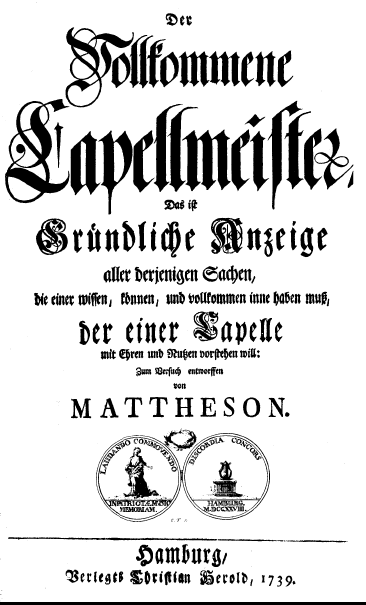



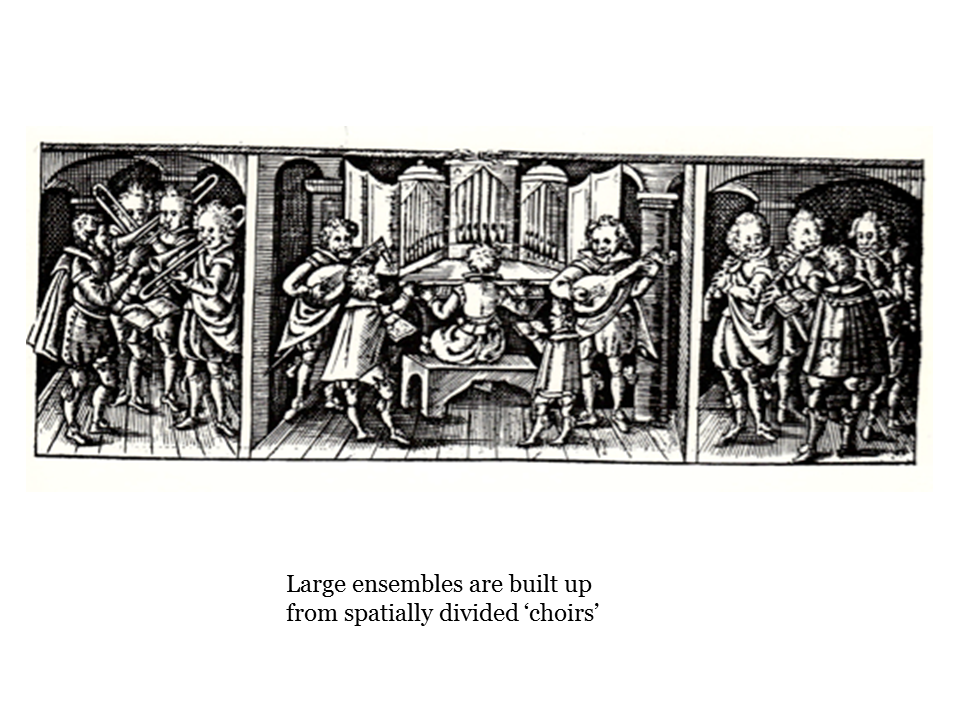


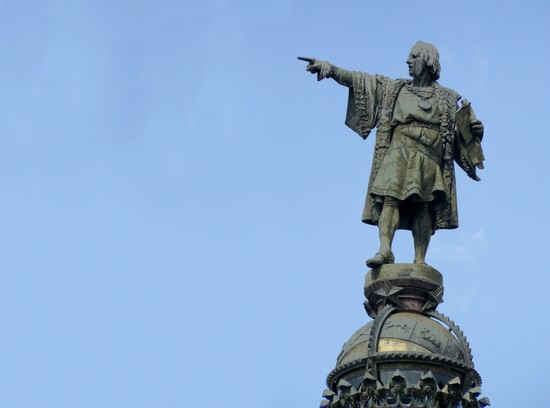
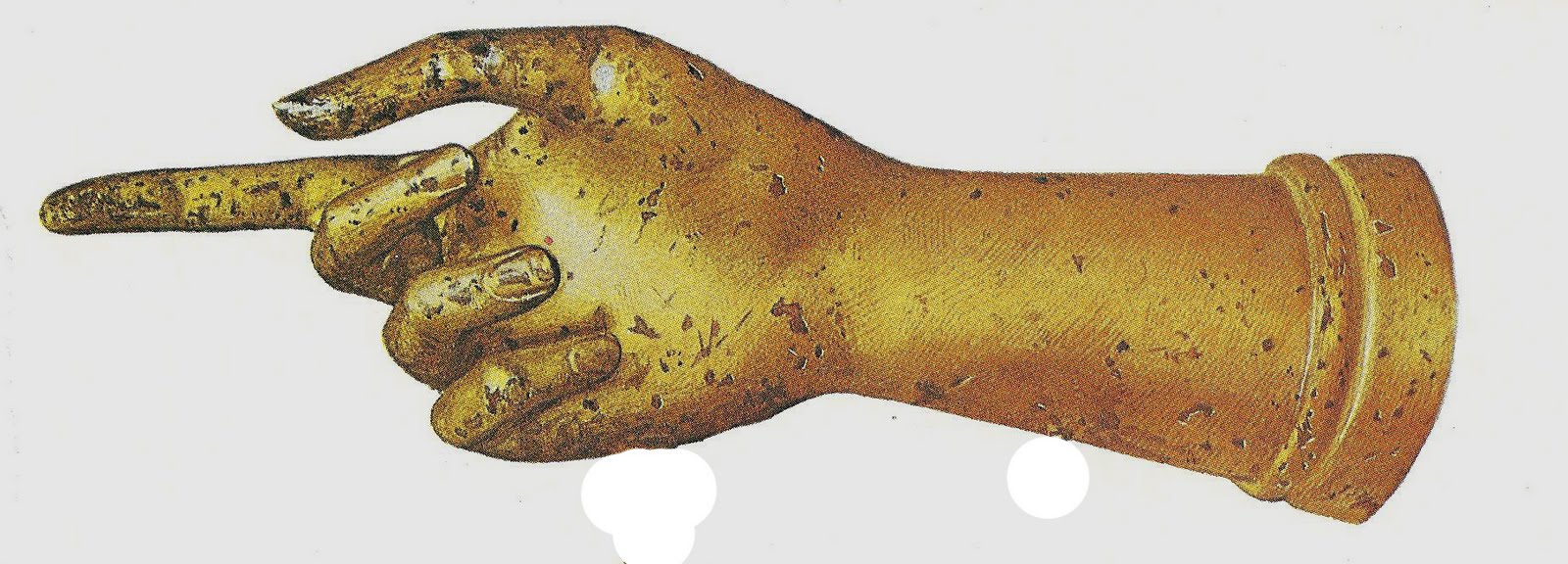


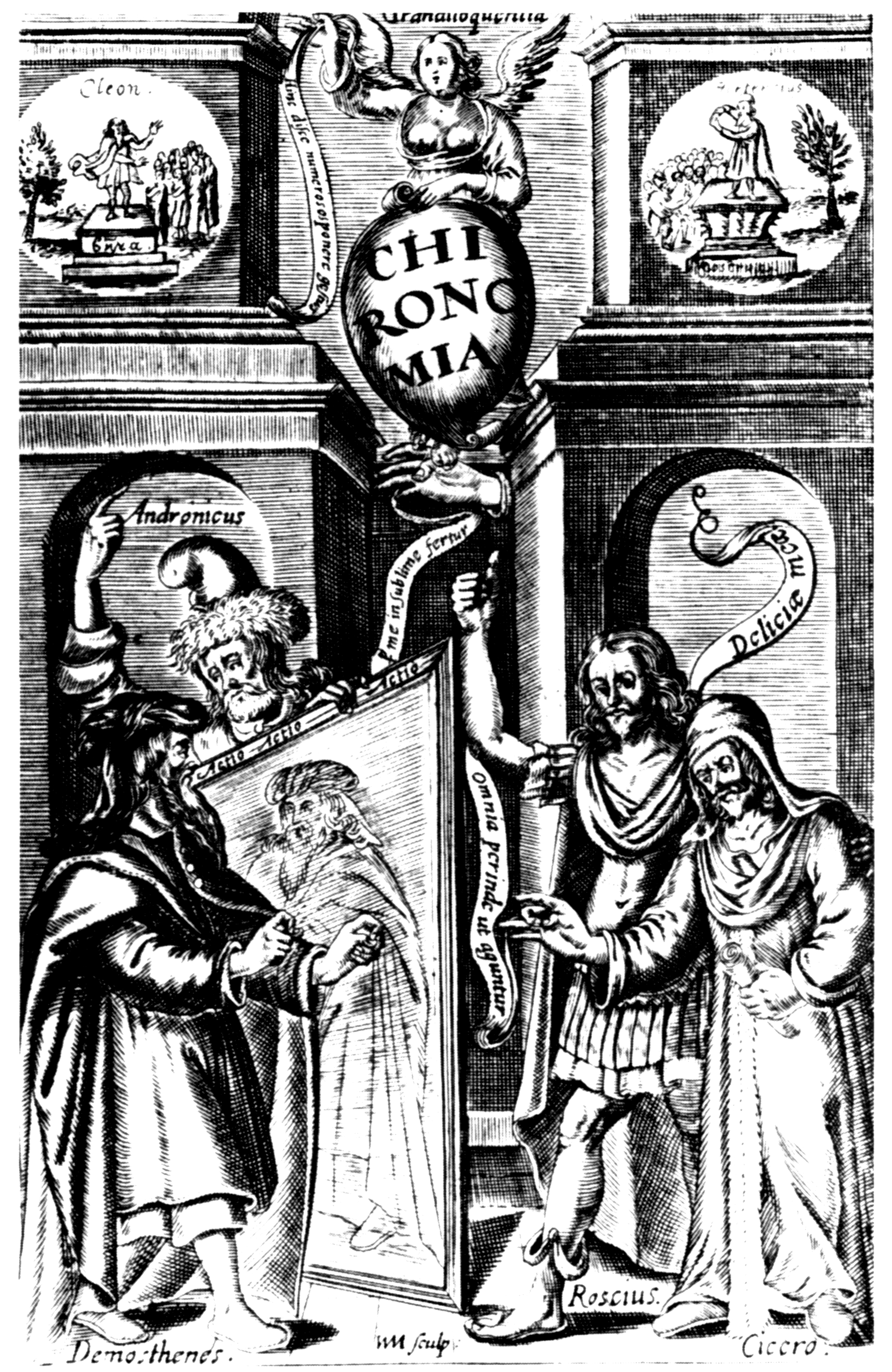
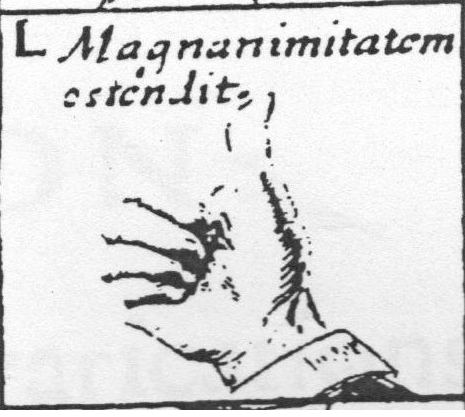
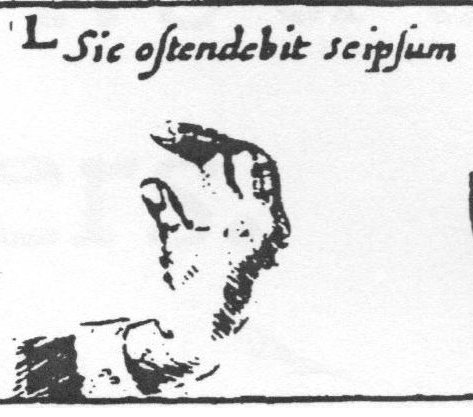
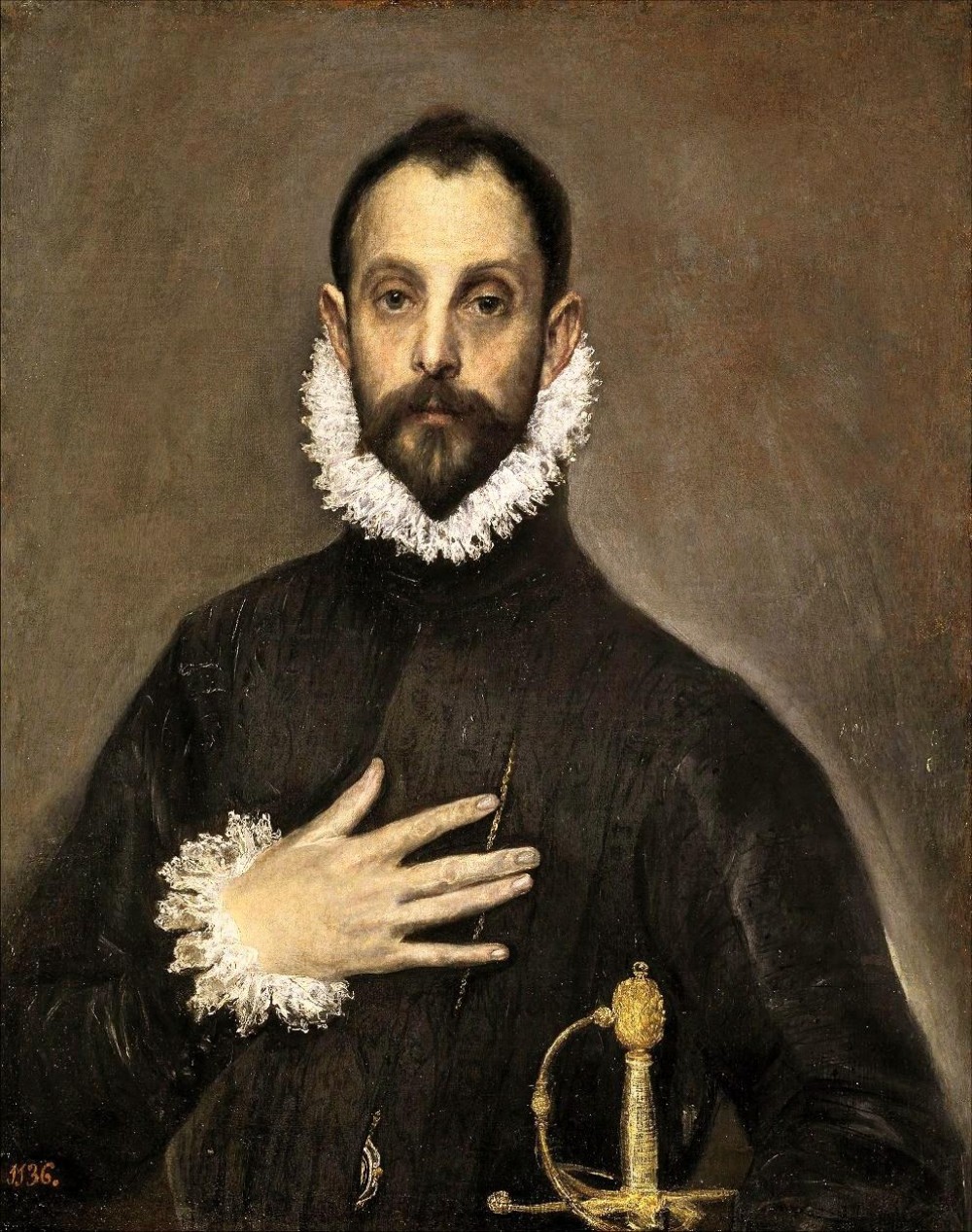


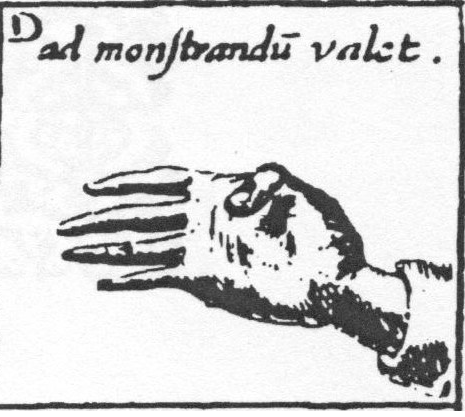
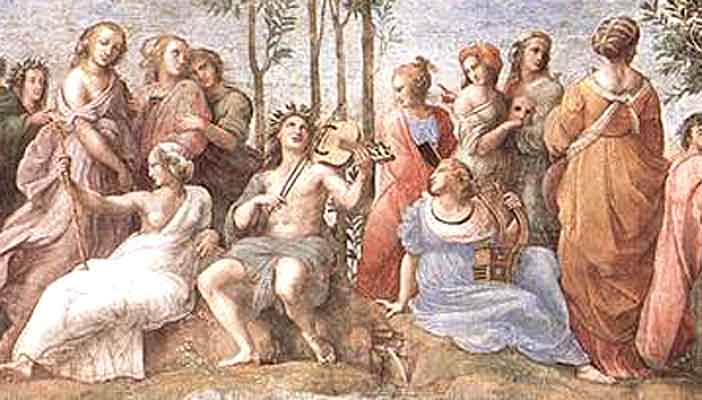

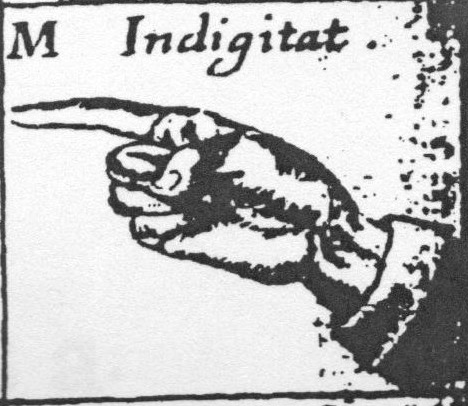

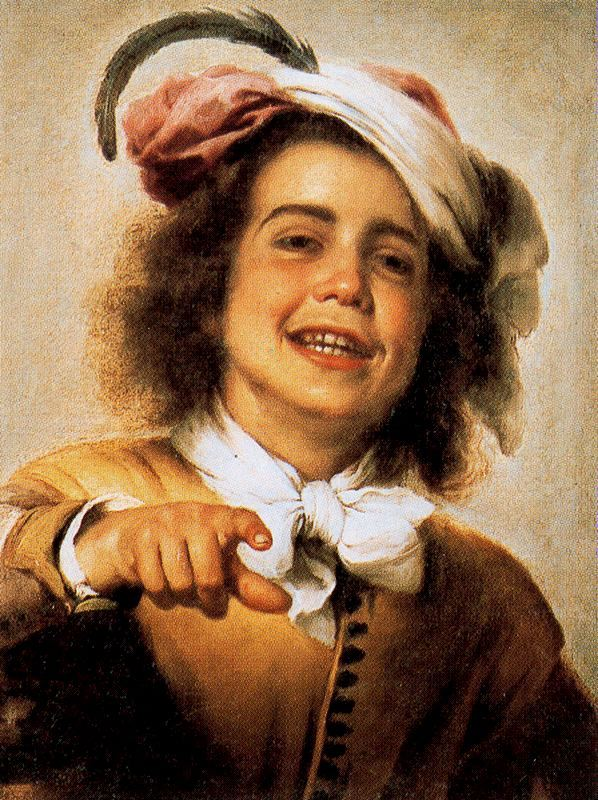


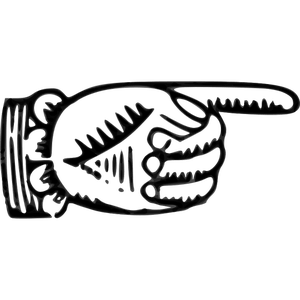
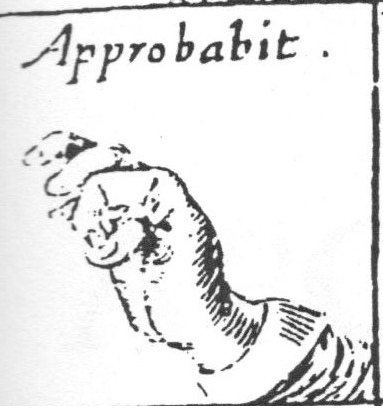



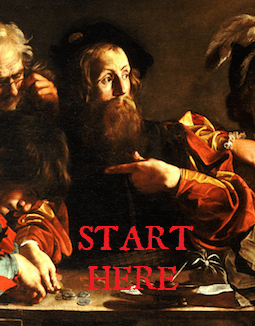


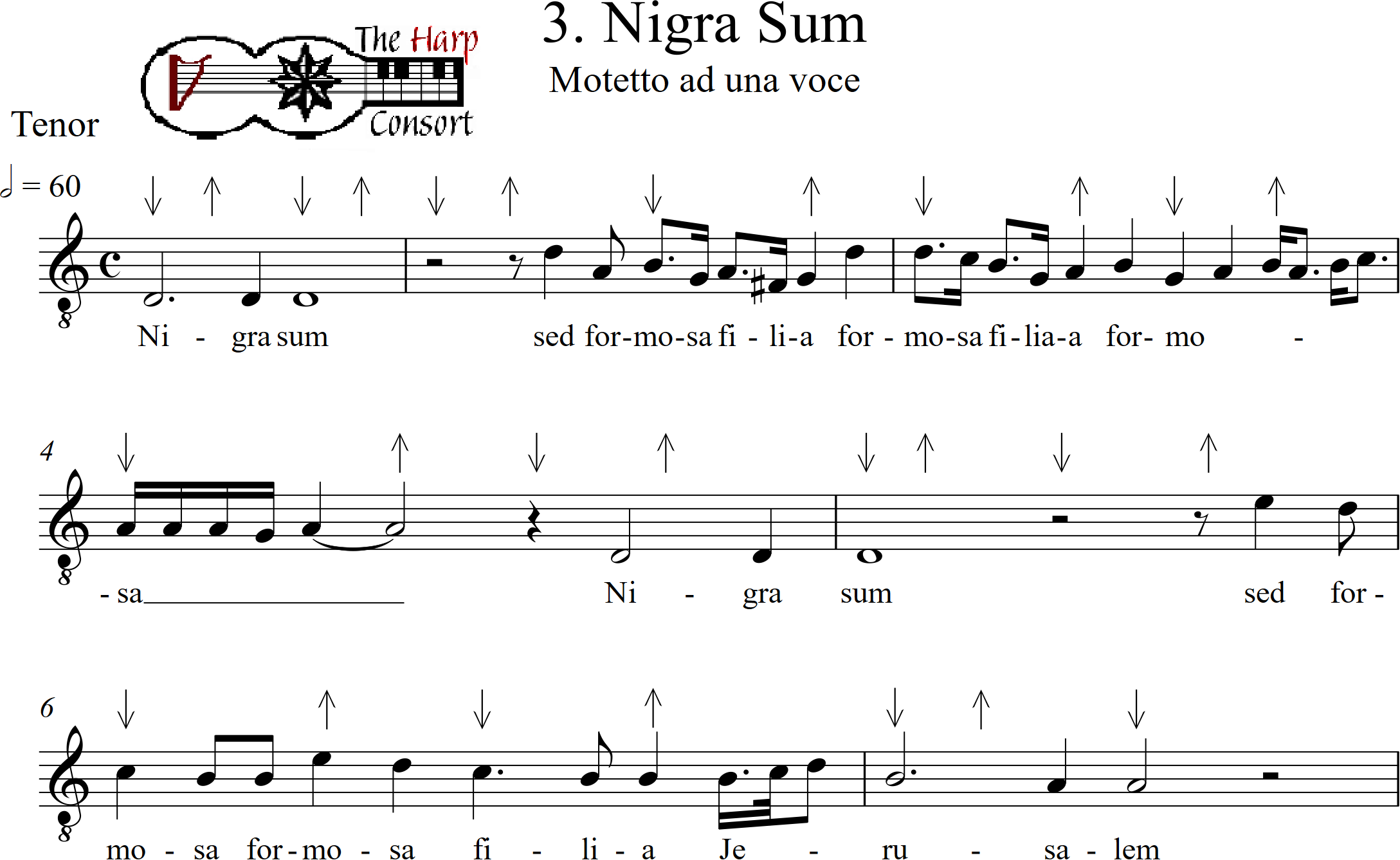



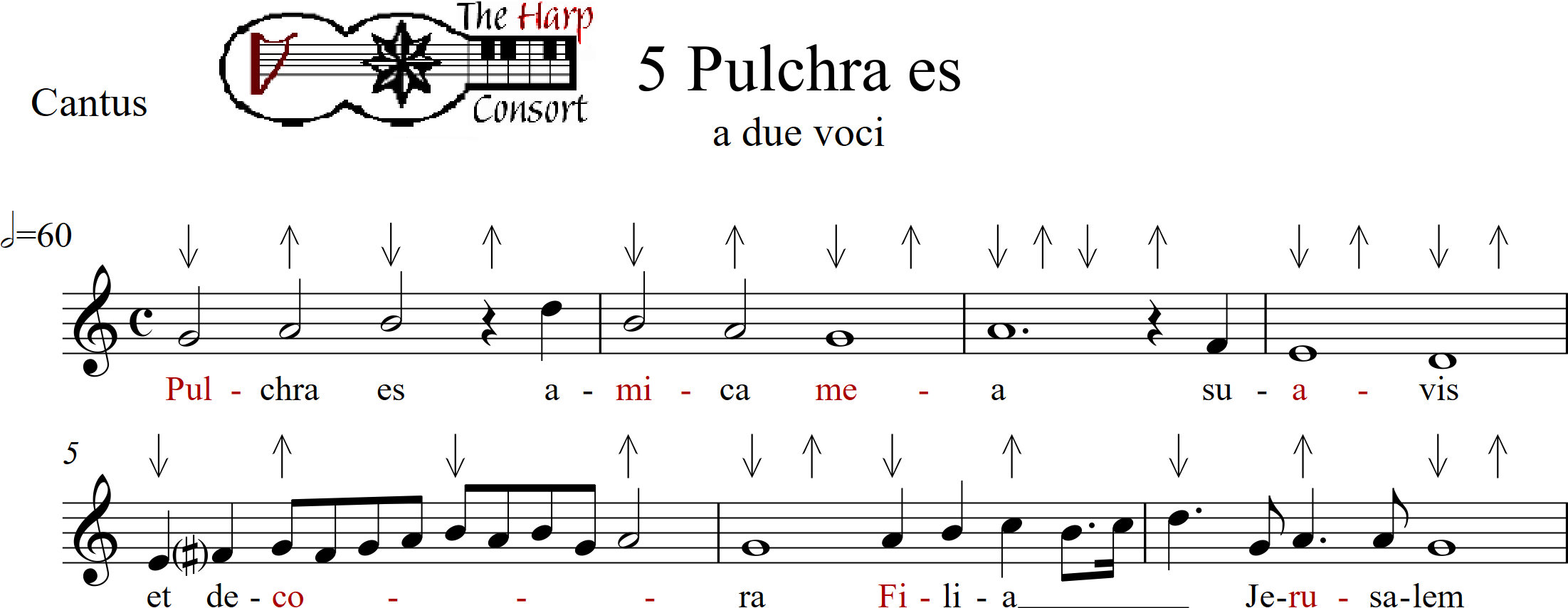








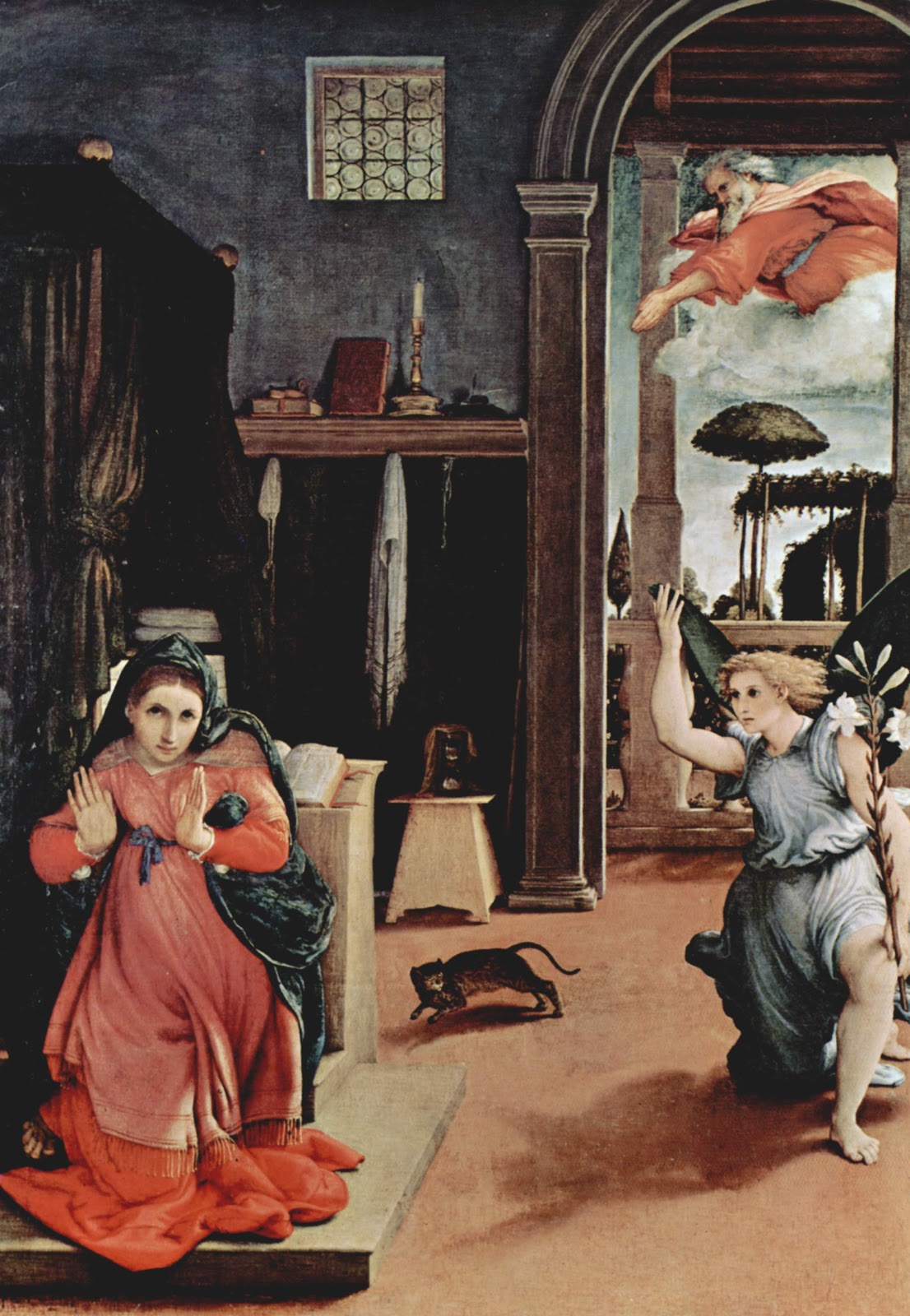
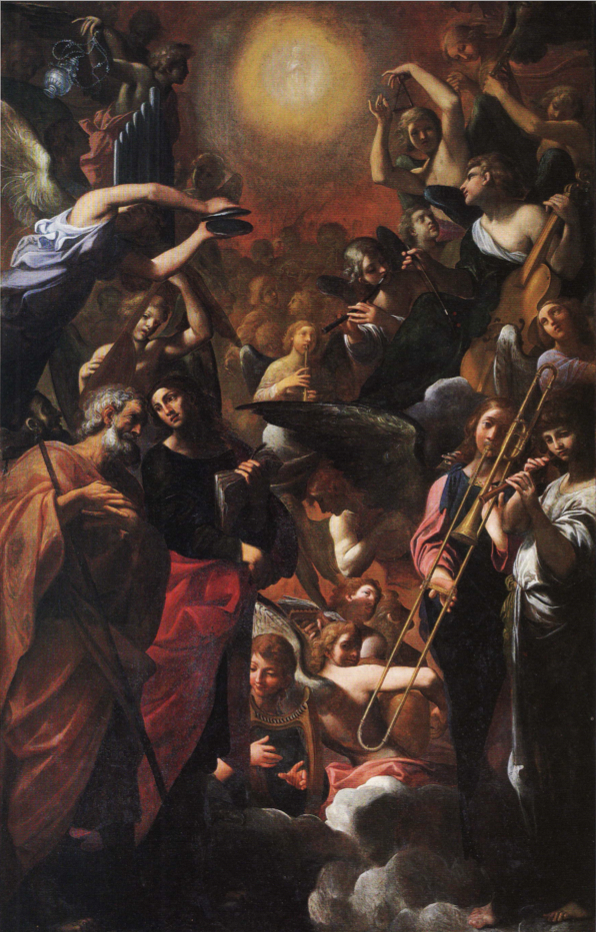
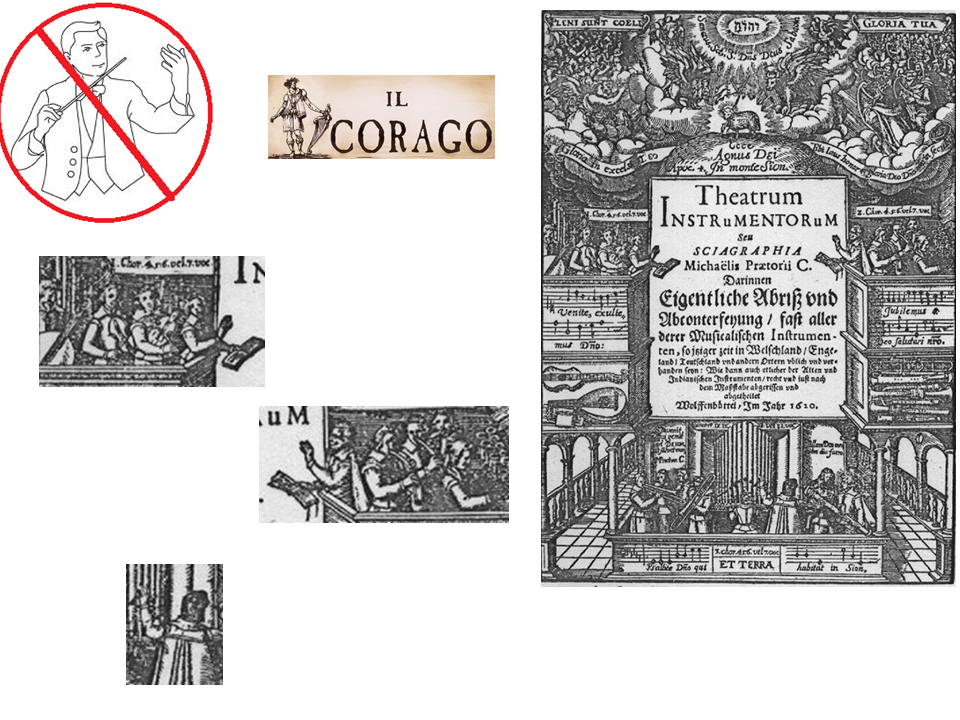
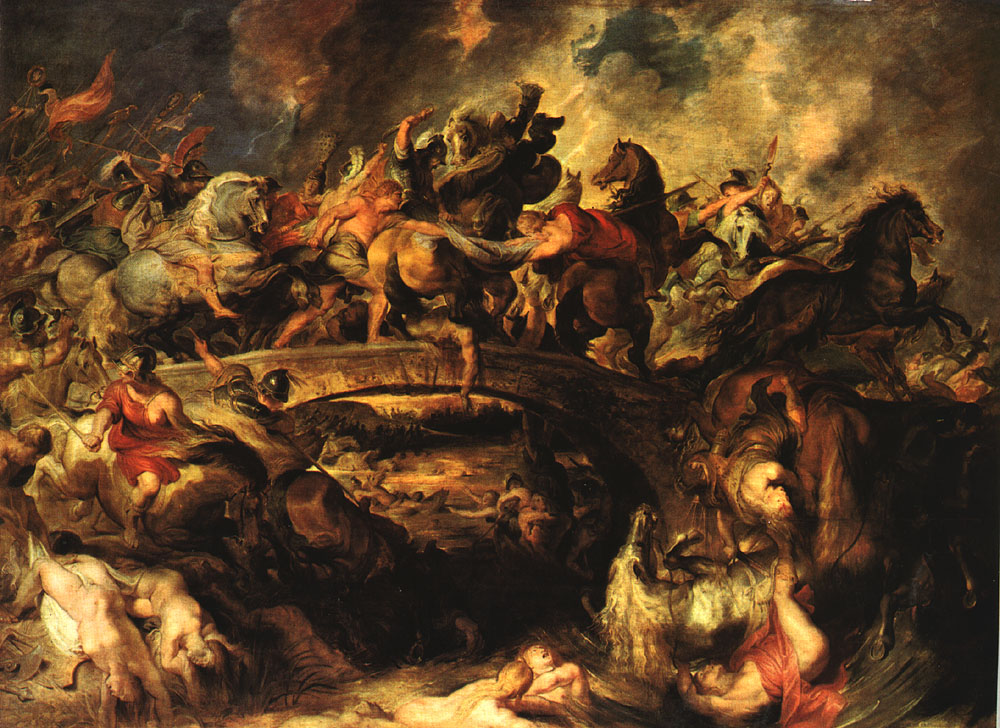

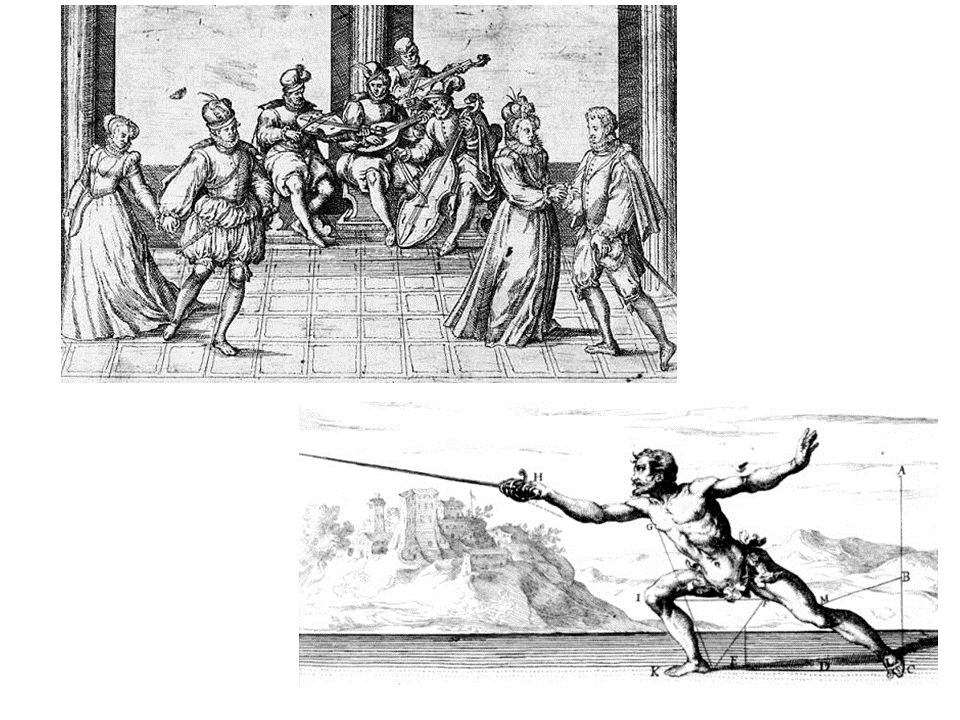
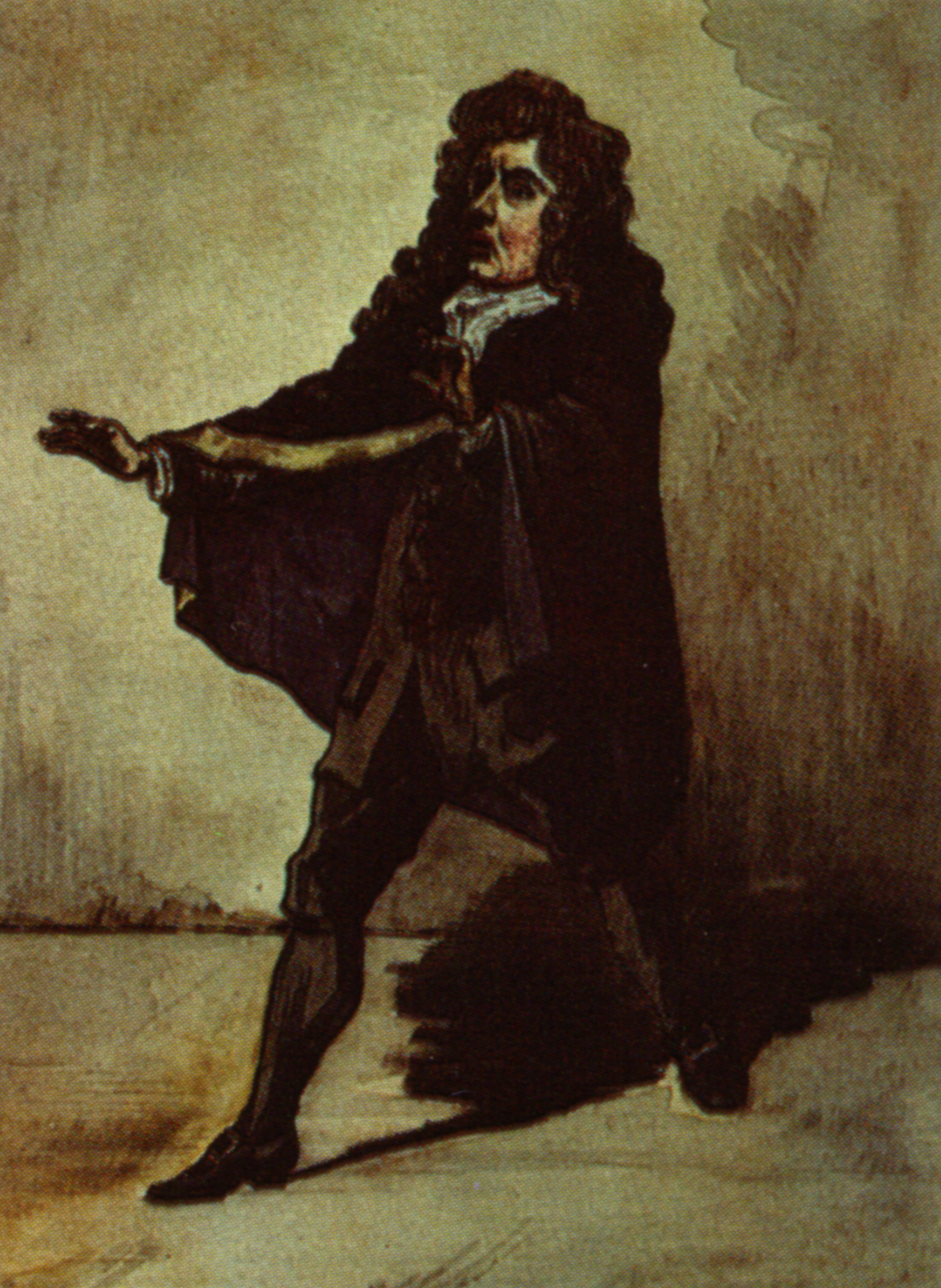
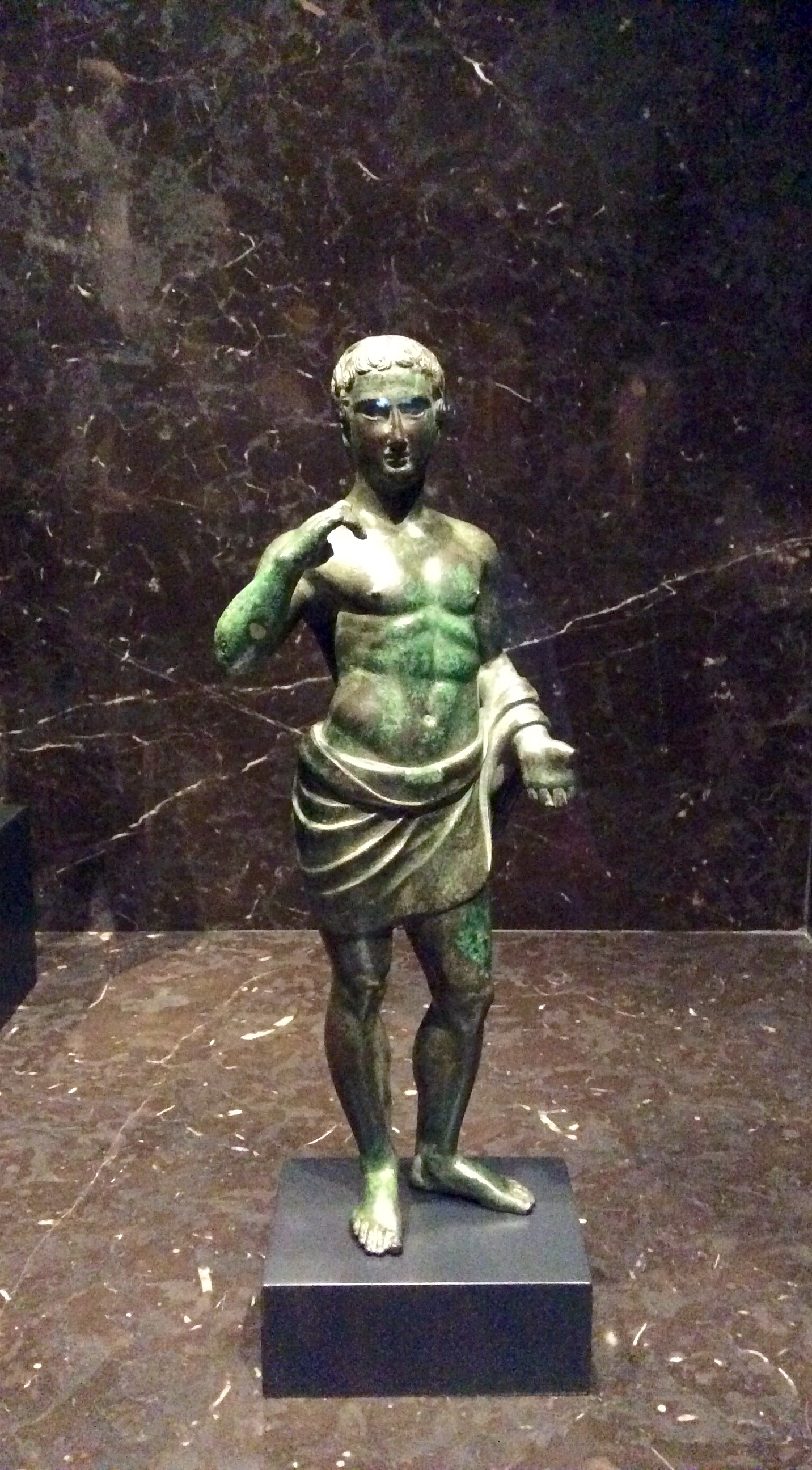


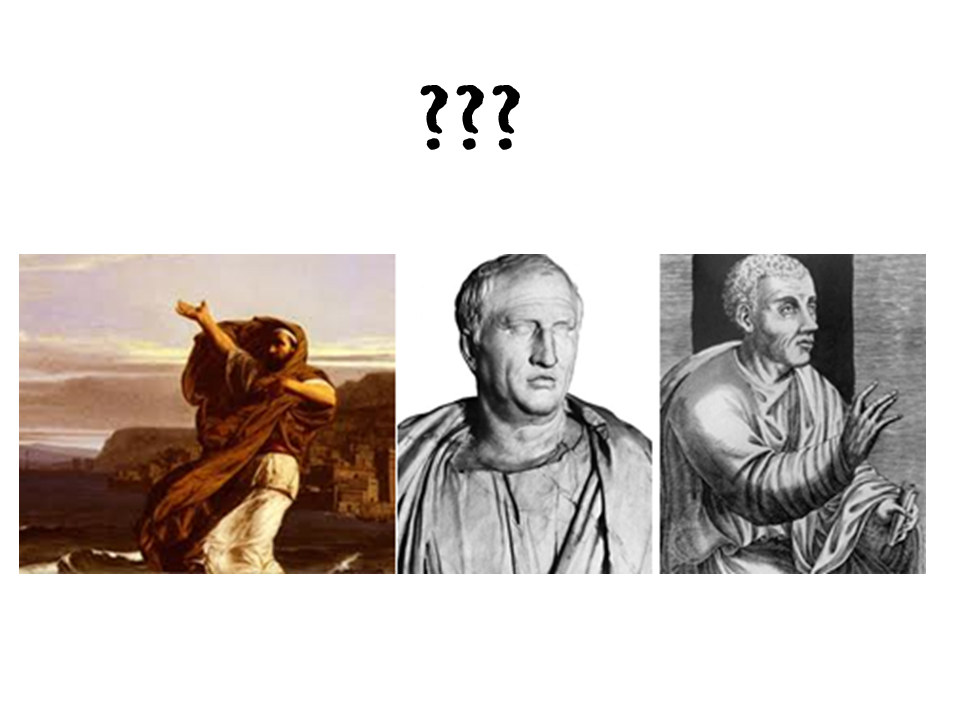
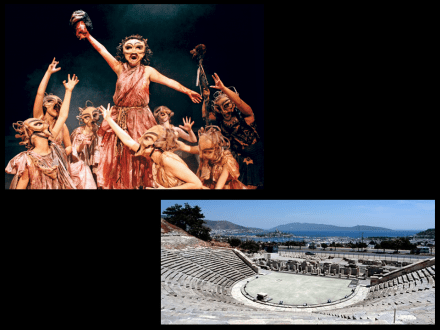



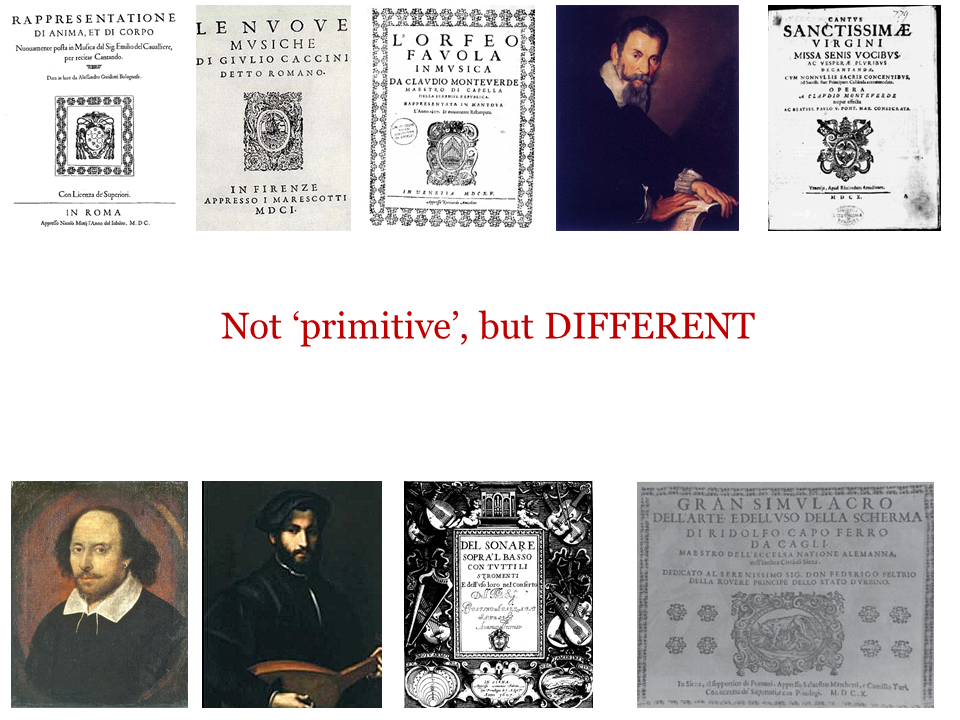


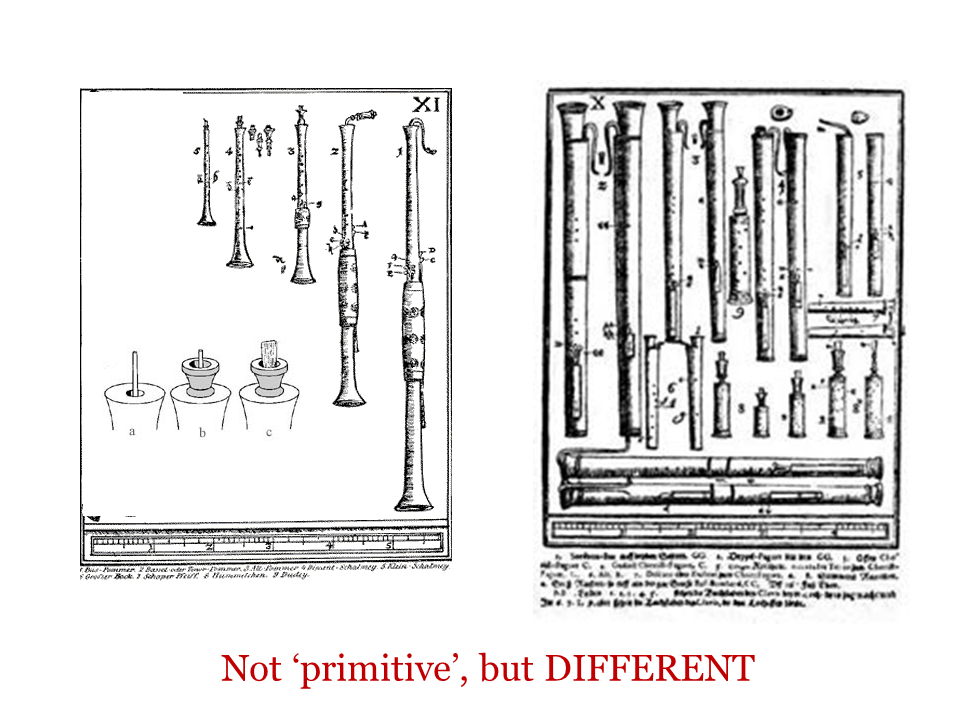
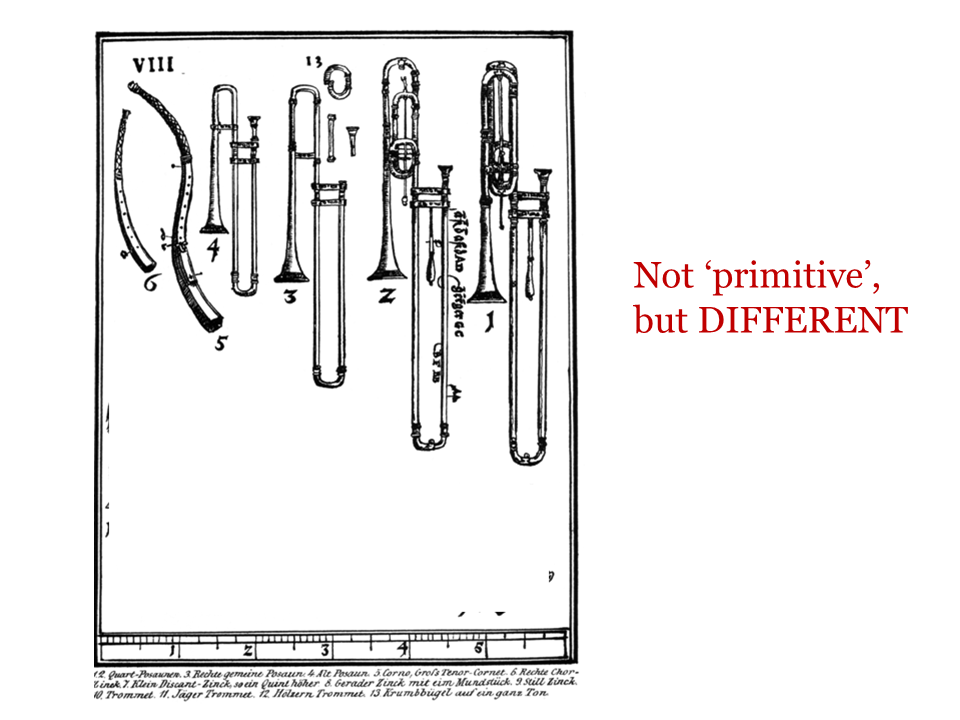

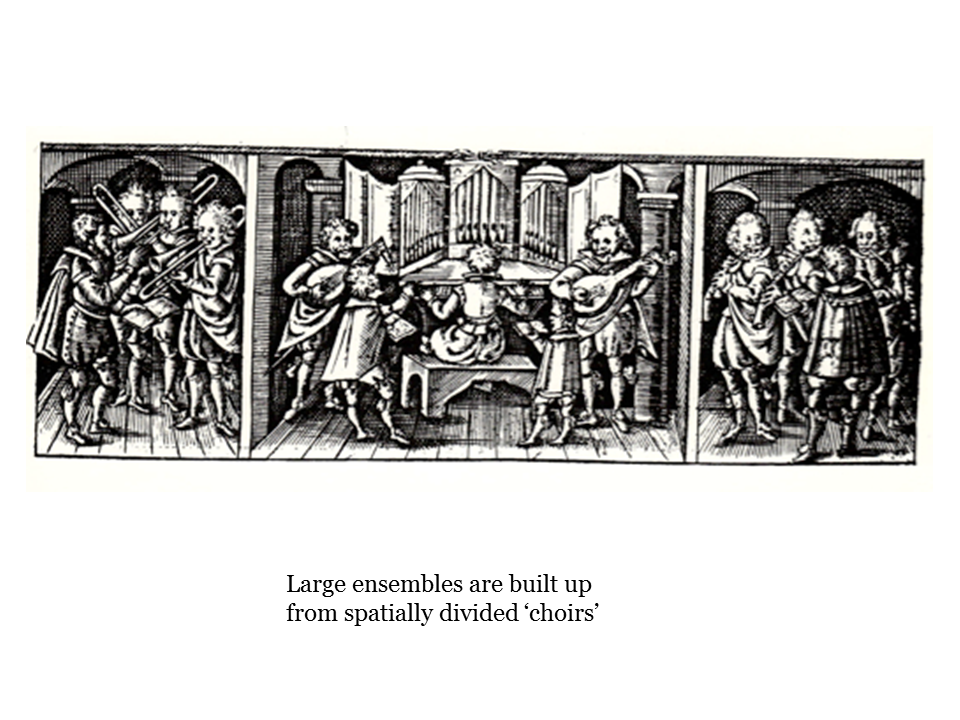
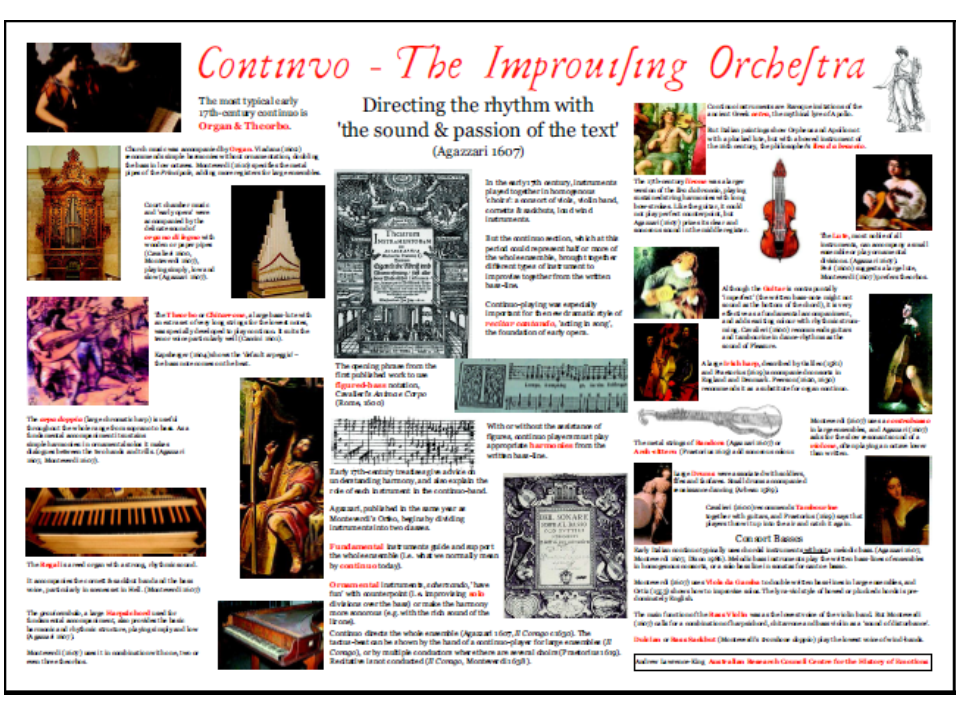


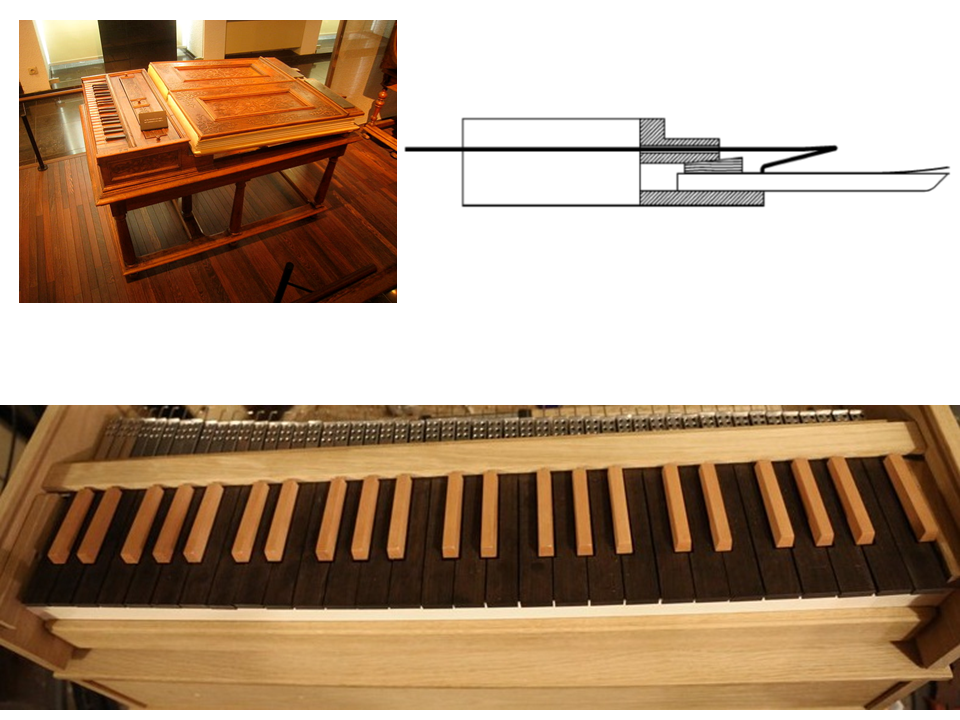
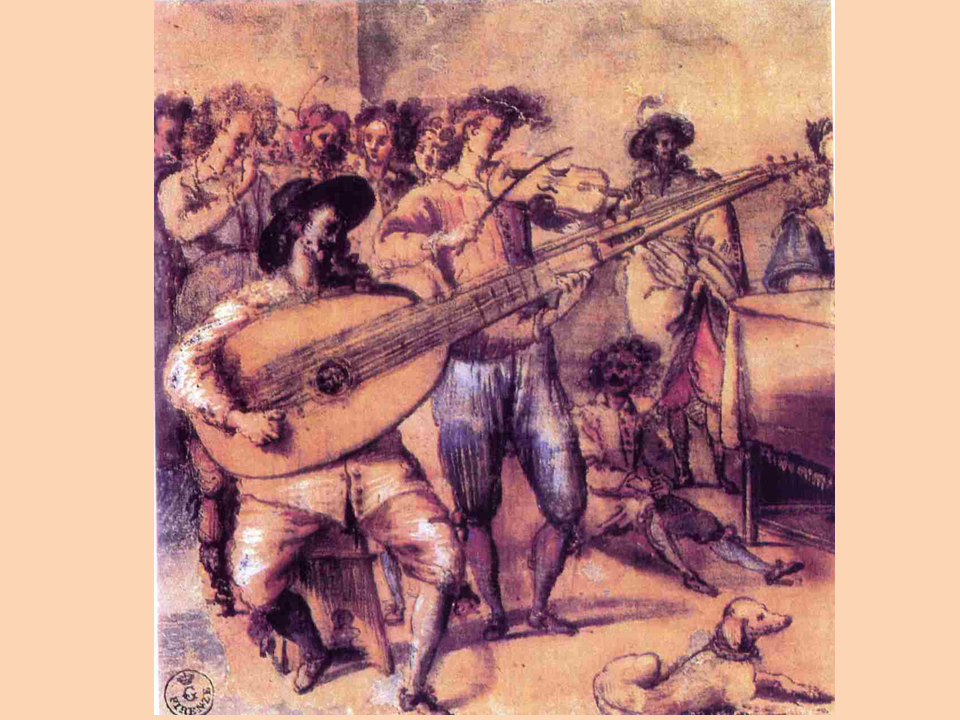


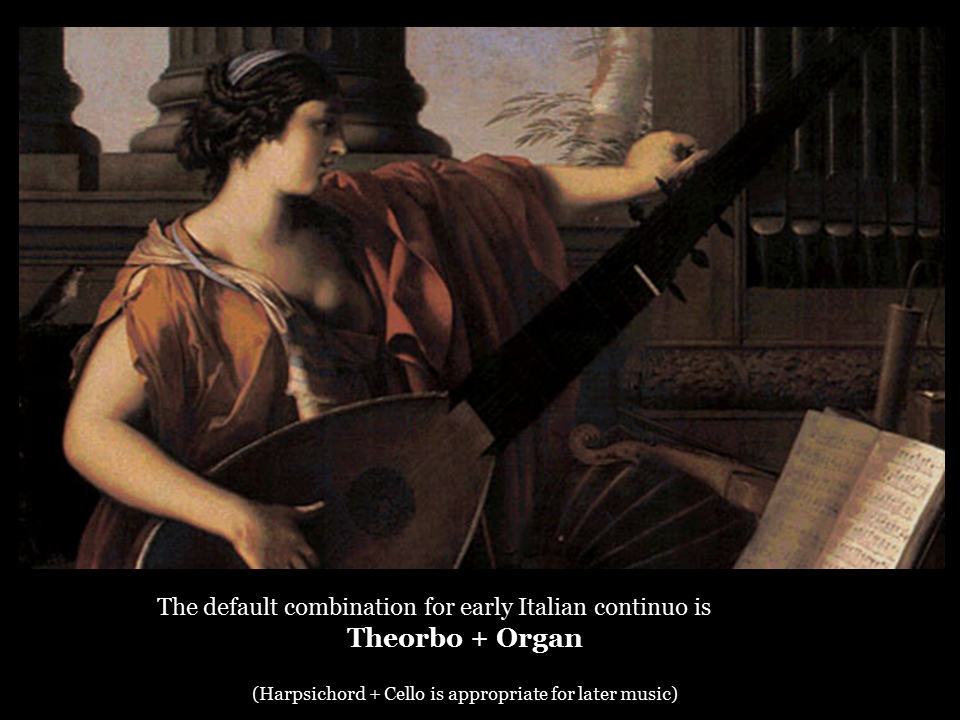
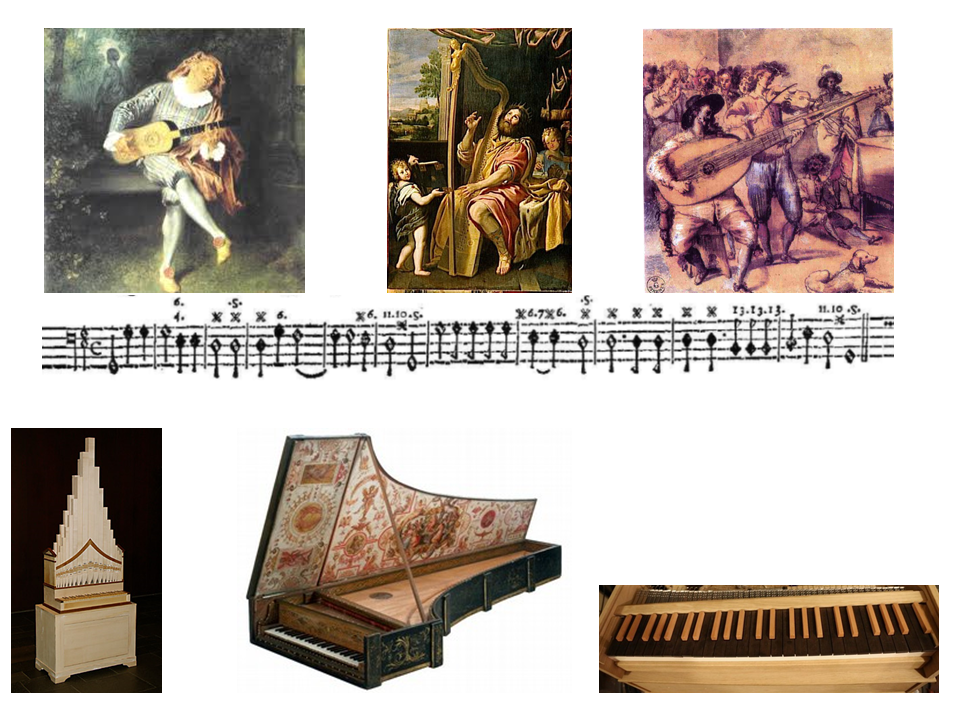

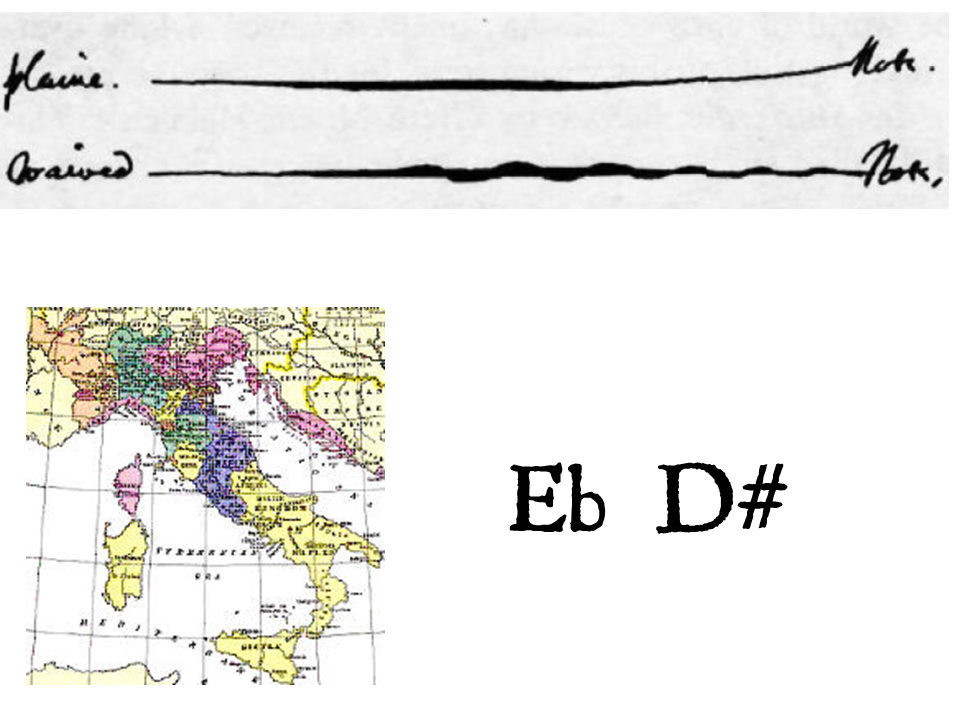
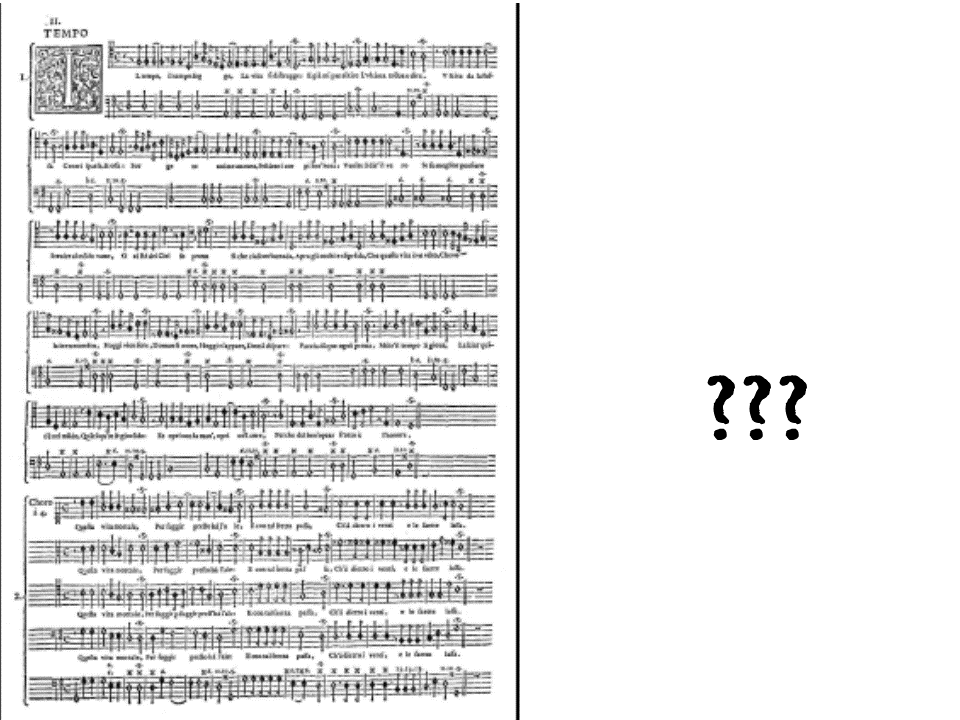
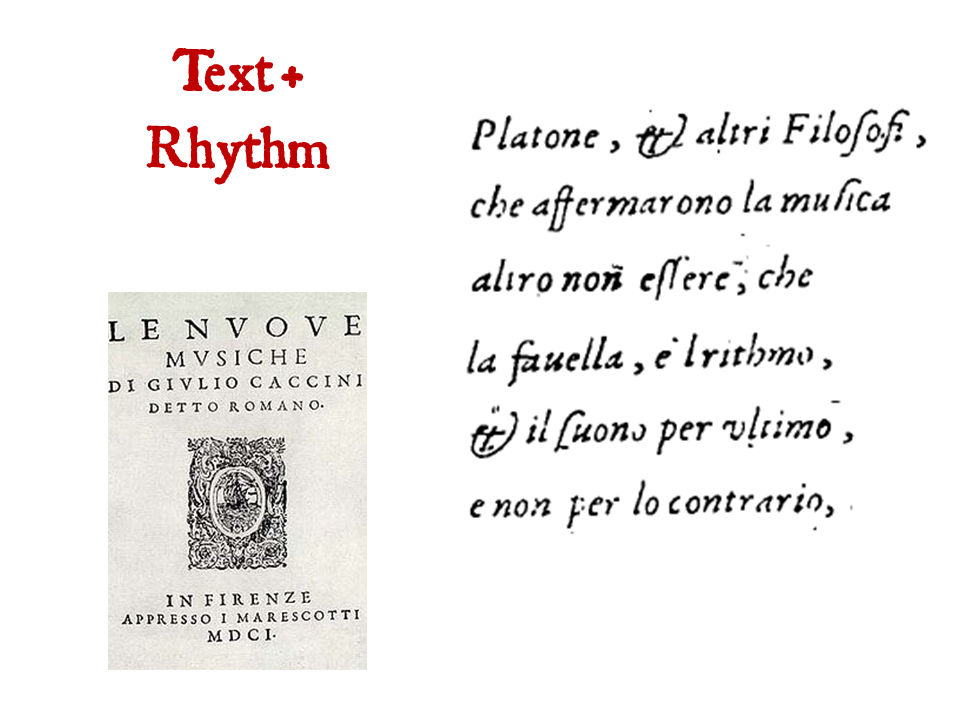
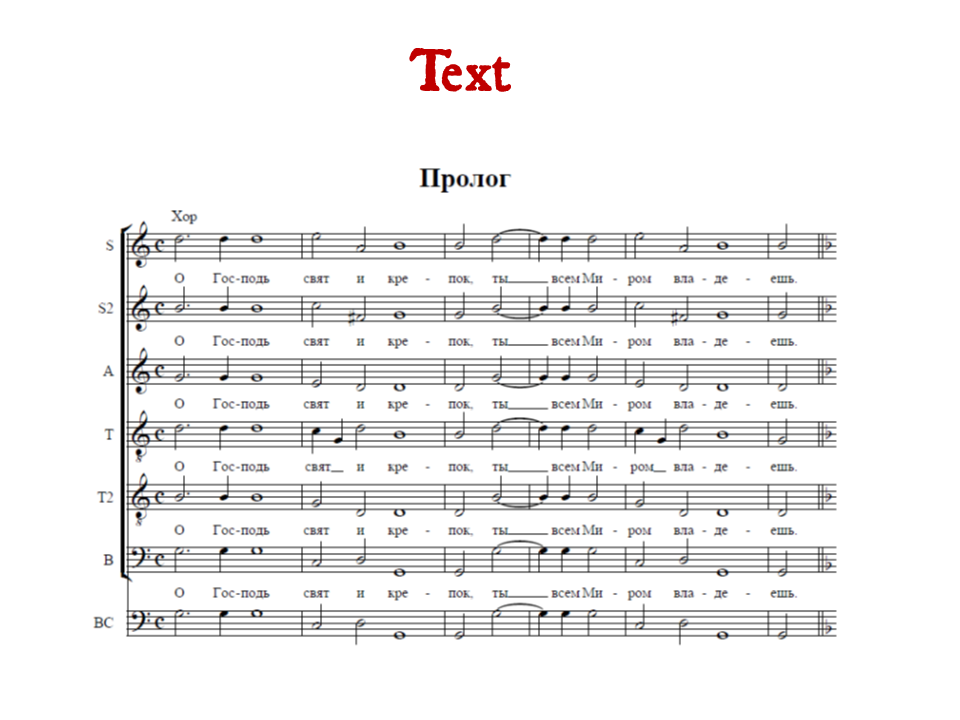


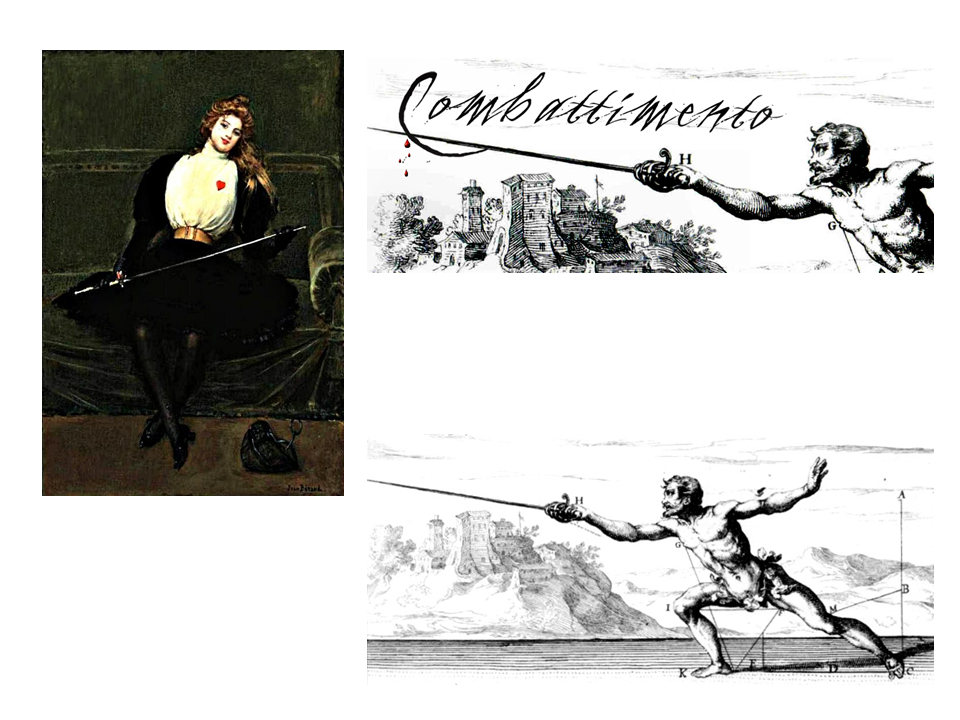

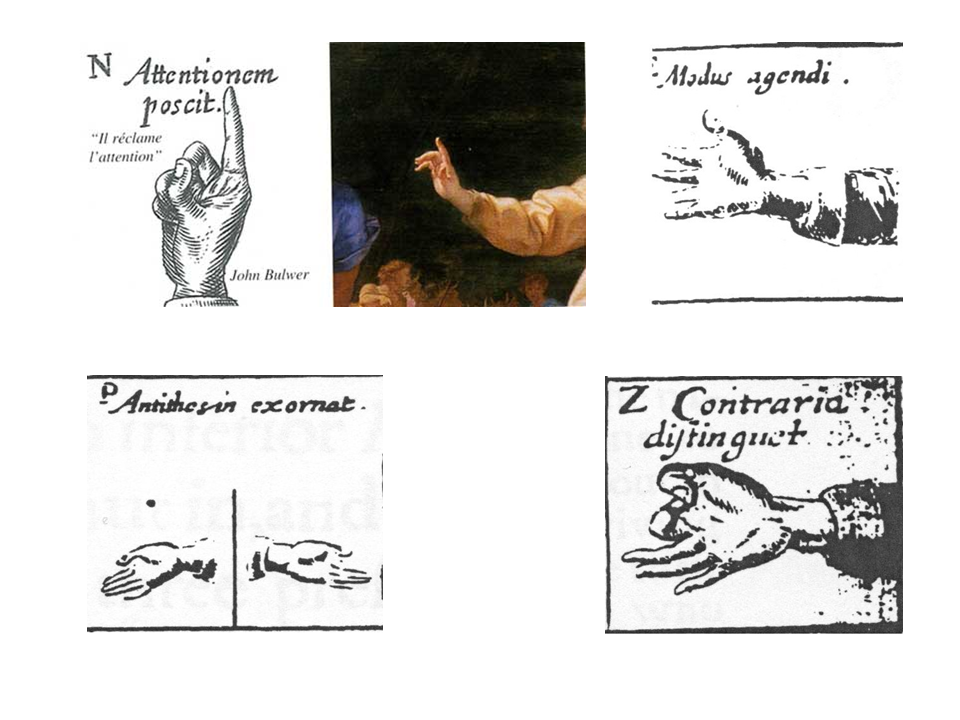


 Andrew Lawrence-King