The Theatre of Dreams: La Musica hypnotises the Heroes

La Musica Hypnotises the Heroes

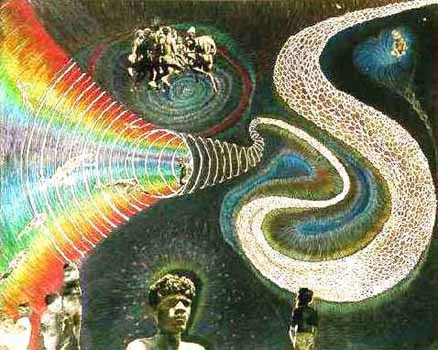
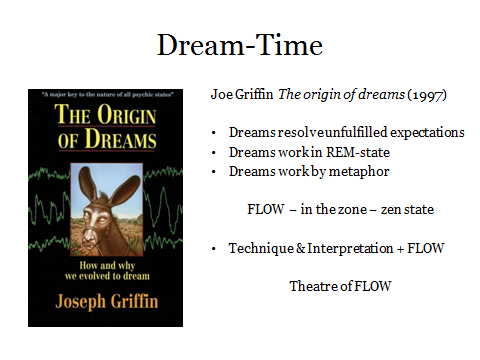
The Theatre of Dreams is Joe Griffin’s metaphor for the REM-state, that part of the sleep pattern characterised by Rapid Eye Movement and associated with dreaming. See Such stuff as dreams are made on, here.

Griffin’s Theory of Dreams suggests that an evolutionary breakthrough gave humans access to the REM-state whilst waking, in day-dreams and in hypnotic trance. Griffin and his co-writer, Ivan Tyrrel characterise this development, ‘the Mind’s Big Bang’, as the origin of consciousness, language and creativity. Their work also explains the often-noted connection between high creativity and mental illness.

My OPERA research project studies Operatic Performance as an Early-modern REM-state Activator. I hypothesise that around the year 1600, the first operas and Shakespeare’s plays ‘moved the passions’ of their audience by means of what we would now call Hypnosis. More about Music & Consciousness research strands here.

Of course, every fine performer somehow ‘casts a spell’ over their audience, but my research explores exactly how that spell functions. The aim of early opera was muovere gli affetti, to move the audience’s passions. Although present-day researchers are properly sceptical about period reports of audiences ‘laughing and weeping’, we know that music and drama does sometimes produce such emotional responses, even today.

I argue that the emotional response to music-drama might be heightened by hypnosis. And I hope to show that performance practices circa-1600 were particularly closely aligned with trance-induction processes, in order to create the psychological conditions in which the audience’s passions could indeed be moved.

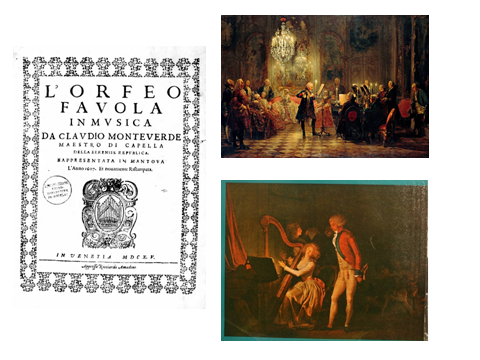
In this post, I analyse one of early opera’s most famous Arias, La Musica (the Prologue to Monteverdi’s Orfeo, 1607), in terms of Neuro-Linguistic Programming and as an Induction into Hypnotic Trance.

The Theatre of Dreams

There is still considerable debate amongst researchers as to what Hypnotism actually is, and there is no single accepted scientific definition. The traditional view (shared by many academics) considers someone to have been hypnotised only if they have received a formal induction including the word “Hypnosis” after which they pass specific tests, for example arm levitation.

The modern view (shared by most practitioners, and largely derived from the practice of Milton Erickson in the late 20th century) considers that trance is a naturally-occurring state that we all enter and leave many times every day. Different people can reach different levels of trance in a variety of circumstances.  In this view, self-hypnotism is easily achievable, and can be highly beneficial. Erickson’s methods were developed into the science of Neuro-Linguistic Programming (NLP), which studies how subtle use of language can alter the listener’s mental processes.

In spite of the lack of a formal definition, there is general agreement that Hypnotism involves heightened attention, absorption (being so concentrated on the focus of attention as to be unaware of other stimuli), and an imaginative experience so vivid that the boundary between internally generated perceptions and external reality becomes blurred. Hypnotism is often (but not always) linked to deep relaxation and an experience of inner calm and well-being.

As reported in the Oxford Handbook of Hypnosis, neuro-scientific observation has confirmed activation of specific areas of the brain in Hypnosis, consistent with an increase in focussed attention, a decrease in automatic vigilance (i.e. less watching out in case a sabre-tooth tiger should suddenly attack), and dissociation of the brain’s control and/or monitoring systems. It is this dissociation that leads to the subjective experience of things happening ‘by themselves’.  Low-level unconscious processes instruct your arm to lift, and if those processes are dissociated from the normal conscious monitoring and/or control systems, you may have no conscious awareness of how or why your arm moved.

The intensification of inwardly generated experience together with reduced awareness of external stimuli outside a narrow focus of attention can lead to increased intensity of emotional reactions in Hypnosis.

Orfeus Party

Are you sitting comfortably? Then I’ll begin…

There are many ways to induce Hypnosis, but most Inductions mimic one or more of the characteristics of trance, in order to facilitate some kind of dissociation and direct the mind inward. Ericksonian hypnotists would say that ‘Once upon a time…’  can be considered an Induction, since these words tend to relax the listener, dissociate attention from the present moment and invite an imaginative response to whatever story follows. Temporal and spatial dissociation – ‘A long time ago in a galaxy far, far away’ – also encourages the mind to turn inwards and imagine whatever details are missing from the information stream of external reality.

Academic researchers are encouraged to use a Standard Induction, a prescribed script read in a monotone, often recorded so that the same Induction can be administered to a large group of experimental subjects. If the Induction is ineffective, the subject is presumed to be non-hypnotisable.

In contrast, most practitioners use different Inductions for different clients, observing that individuals vary greatly in what they respond to best. Someone whose primary sensory system is visual may respond very well to an Induction involving Guided Imagery, whereas someone more kinaesthetic might respond better to Progressive Relaxation. A logical thinker might readily dissociate when confronted with Confusing Language, a deep thinker might turn inwards to search for missing meaning in what he is told.

Many practitioners do not accept the validity of hypnotisability tests based on Standard Inductions. Richard Bandler, co-founder of NLP, is particularly scathing about such tests, which – he opines – only measure the ineffectiveness of the standard induction, and say nothing useful about the hypnotic abilities of the subject. Bandler believes that anyone can be hypnotised, if they permit it, and if the hypnotist has the necessary skills.

The core strategy of Ericksonian Hypnotism is ‘accept and utilise’. If at first the Induction does not work, then rather than labelling the failure as ‘Client Resistance’, the Hypnotist should accept the response as genuine, and utilise any information gathered to guide the choice of a new approach. For example, if the subject responds to an invitation to relax by getting more tense, the Hypnotist would be well advised to abandon an ineffective Progressive Relaxation Induction, and try something different, perhaps attention-locking and ‘sleight of mouth’ (see below).

Many Hypnotic Inductions have been published (there is an online selection here) and recorded on audio media. There is a large Hypnotism industry selling Inductions over the internet as mp3 files for download (I think Hypnotism Downloads are good, here). Once you understand the principles, you can easily write or improvise Inductions, for yourself or your friends. There is a list of books and links for further information, here.

In my research generally, and for this post in particular, I’m considering Hypnosis in practice, from the viewpoints of the Hypnotist and of the Subject, the person going into Trance. In academic language, this is a phenomenological and experiential approach: what happens, what is experienced? I take Trance to be an everyday, natural state. I consider that hypnosis is entered into willingly, as a collaborative process permitted, often actively encouraged by the Subject, within a safe environment created by a sense of mutual rapport. In NLP, it’s assumed that Hypnotist and Subject will both enter trance, each of them in a (subtly different) altered state of consciousness that optimises unconscious communication, deep learning, heightened emotions and hypnotic suggestibility.

In the special case of a performer entrancing an audience (or at least, those audience-members who are willing to ‘suspend their disbelief’ and become absorbed in the on-going drama), the performer’s altered state of consciousness is a particular type of Flow (also known as the ‘Zone’, an optimal state for elite, highly-skilled performance whether in the arts, sports or any other challenging situation). More about Flow here. More about connections between Flow and Hypnosis here.

Hypnotic Inductions are related to the typical phenomena experienced in Trance. Often, an Induction creates that characteristic blend of relaxation and concentration, or evokes specific physiological responses are evoked, so as to mimic the Trance state. Then the two-way nature of the mind-body link does the rest. [In a similar way, if you put a big smile on your face, you naturally feel happier and more relaxed. In fact, it’s sufficient to use electrodes to stimulate the smile-muscles, producing an utterly artificial smile on your face – you’ll still feel happier and more relaxed.]

So the traditional cliché of hypnosis, “follow the movement of this swinging pocket-watch” creates attention, focus, rapid eye movement and also a relaxing steady rhythm, all of which mimic the sensations of trance.

swinging watch

The rhythm of music circa-1600 is directed by Tactus, a slow beat at around one pulse per second. This steady pulse mimics the slow heart-beat of someone who is thoroughly relaxed. More about Tactus, here.

Now, as the Subject begins to slip into trance, it’s the moment for a Suggestion that encourages Dissociation , perhaps an invitation to imagine some far-away place. If that place is pleasantly dreamy, so much the better. ‘Imagine yourself lying on the beach, with the warm water lapping gently on the sand …’

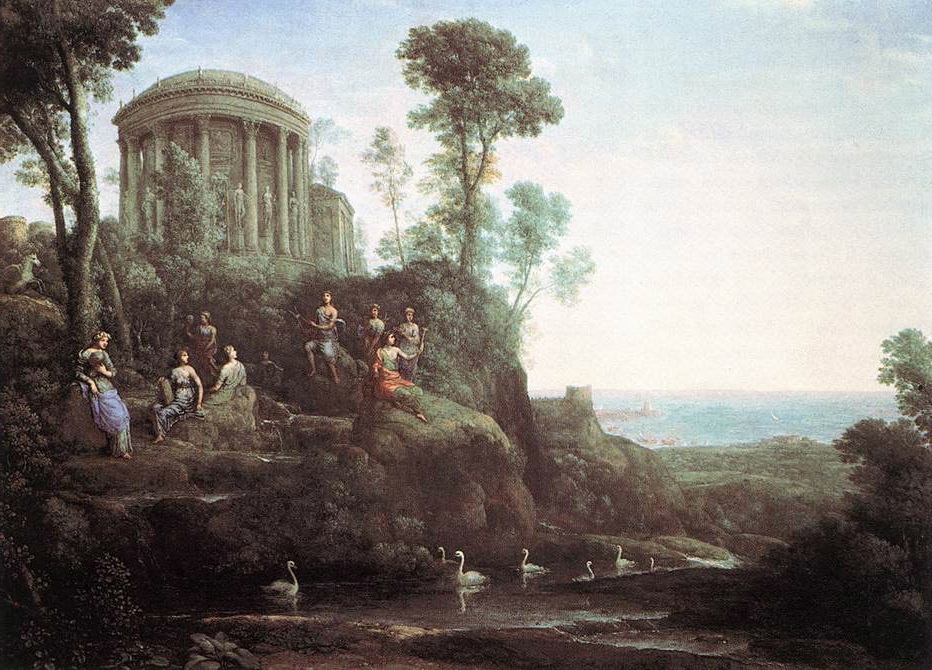
Of course, TV adverts for tourist destinations use hypnotic techniques. And perhaps now you can appreciate why so many early operas are set in Arcadia.
Arcadia

According to NLP-guru, Richard Bandler, the most important elements of a successful Induction are:

  • Rate of speech
  • Timbre of voice
  • Intonation (the ‘melody’ of speech)
  • Breathing

Good Hypnotic speech employs a slower-than-normal rate of speaking, a soft tone of voice with downward inflections at the end of phrases. That downward inflection can transform the grammatical construction of a question – “You’d like to go into trance now, wouldn’t you?” – into a plausible statement. If the speaker emphasises certain words with an altered tone of voice, the phrase even becomes a command: “You’d like to go into trance now, wouldn’t you.”

Around the year 1600, the first opera-singers sang softly, in the intimate spaces where such court ‘operas’ as Monteverdi’s Orfeo were staged.

“One sings in one way in churches and public chapels and in another way in private chambers. In [church-music] one sings in a full voice … and in chamber-music one sings with a lower and gentler voice, without any shouting.”

Zarlino (Le institutioni harmoniche, Venice, 1558)

The pace of operatic Recitative varies with the drama of the moment, but (as we read in an anonymous c1630 guide for an opera theatre’s Artistic Director, Il Corago) in general it is somewhat slower than everyday speech. At the end of each short phrase, the last accented syllable is often considerably lengthened, and the most frequently used cadence has the melody descend to the final note. Il Corago and Jacopo Peri (in the preface to Euridice, 1600) agree that the modulazione of the voice, the melodic contour of recitative, is modelled on the ‘course of speech’ of a ‘fine speaking actor’.

Singers have to control the out-breath as they sing, and breathe in quickly between phrases. For audience members, exhaling more slowly than you inhale creates relaxation. For this reason, Hypnotists speak in short phrases, with frequent pauses in between, in a rhythm aligned with the Subject’s slow breathing.

These short phrases are chained together into long, flowing streams with few full stops. “Each time you breathe out … you feel more relaxed … and the more you relax… the more you feel… that you’d like to go into trance now… wouldn’t you.” We see the same structure in 17th-century sentence construction; many phrases are linked together; those phrases are separated by semi-colons; there are few full stops.

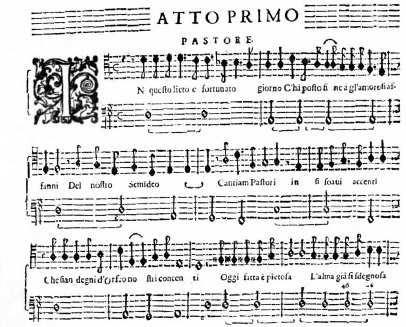
In operatic recitative, the composer similarly breaks up long sentences into short phrases: In questo lieto e fortunato giorno … ch’a posto fine a gl’amorosi affanni … del nostro semideo … cantiam, Pastori … in si soavi accenti … che sian degni d’Orfeo …. nostri concenti. [On this happy and lucky day …. which has put a stop to the relationship problems … of our godlike hero … lets sing, shepherds …. in such soft tones … that we honour Orfeo … with our music.] Notice again the ‘soft tones’. And by the end of this article, you’ll be able to recognise many more hypnotic techniques in this speech.
Monteverdi 'Orfeo' Act I

Monteverdi ‘Orfeo’ Act I


There are many Hypnotic techniques for obtaining compliance by means of subtle encouragement, as well as direct commands.

  • Universal Quantifiers

General statements that “People find that music takes them naturally into trance”, or “Every dramatic performance alters the spectator’s state of consciousness” normalise the expected response and reassure the Subject.

  • Implied Compliment

A more subtle approach informs that “intelligent and highly-creative people find it particularly easy to enter trance”. The implied compliment lowers resistance and encourages the Subject to align themselves with the complimented group.

A lot of advertising works on these hypnotic principles of implied compliments and universal statements. Buy this product and belong to the group of beautiful people shown in the advert. “Things go better with Coke”.

  • Double Bind

This seems to offer a choice, but any choice produces the desired result:

“You can go into trance immediately, or you can take a few moments to relax gently before you go into a deep trance”.

  • Embedded Commands

Subtle emphasis can create Embedded Commands, within such Generalities and Binds.  “You can go into trance immediately, or you can take a few moments to relax gently before you go into a deep trance”.

  • Analogue Marking

This emphasis, marked by changes in tone of voice, in the speaker’s gestures or position, can communicate directly to the unconscious mind by suggesting alternative meanings. “Now, your unconscious ( = now you’re unconscious) can deepen the transformation ( = deepen the trance)”

  • Confusing Language & Trans-Derivational Search (TDS)

Unfamiliar words or confusing constructions lead the Subject to turn the mind inwards, in a search for hidden or ambiguous meanings. The technical term for this is Trans-Derivational Search. Confusing language, or confused emotions, might be delivered with unusually fast rate of speaking, or a silence might be left after a strange word: either way, the conscious mind is baffled, so that the unconscious takes over the search for meaning.

Suggestions for relaxation are often effective, but it’s even more effective to direct the mind inwards with subtle questions. “Close your eyes, and focus your attention on your hands. Notice if the right hand is more relaxed than the left. Or is the left more relaxed?” And every time the Subject breathes out slowly, or when the Hypnotist observes some small reduction in tension, this can be reinforced with an encouraging “Good. That’s right”. Feldenkrais Method uses these hypnotic techniques to optimise the mind/body link for effective learning of posture and movement.

As the conscious mind begins to let go, you can mix all this up with Confusing Language: “If the relaxed hand is right, you only have the other hand left, right? So right now, with your eyes left closed right up, see if you can write with the left, so the right is left to relax, and the left is right because it’s already relaxed, right? What’s left now is to go right into trance, right now, that’s right, you’ve left it all right behind you.”

  • Silence

A good Hypnotist is not afraid of silence. Once there is relaxation and concentration, a long silence can be powerfully hypnotic.

  • Attention Fixing & Eye Rapid Movement

Many Inductions relying on Attention Fixing, and/or creation of Rapid Eye-Movement. Experts use such methods for Speed Induction, with impressive results. See Richard Nongard’s demonstrations of Speed Induction, here.

Transit of Venus

Sleight of Mouth

A conjurer’s sleight of hand focuses your attention in a certain way, whilst he carries out the trick right in front of your eyes. In NLP, ‘sleight of mouth’ similarly dissociates the mind’s conscious attention on the actual words, away from the unconscious attention on the underlying meaning. Whilst the conscious mind deals with the surface details, the Hypnotist’s underlying message goes direct to the Subject’s unconscious. We’ve already seen examples of sleight of mouth: Universals, Binds, Embedded Commands, Analogue Marking, Confusing Language.  Here is a quick check-list of some more techniques:

  • Cause & Effect

It helps if the statement of cause is plausible, but the link to effect does not have be genuine. “Because you are reading this …” [that much is obviously true] “you will find it easy to learn self-hypnosis” [since the conscious mind accepted the first part, the unconscious is primed to accept the second part too].

“Because music is so charming to the ear, it can entrance your unconscious mind.”

  • Links

Cause & Effect can be suggested more subtly, by replacing ‘because’ with another, less obvious link:

“Music usually charms your ears, and in that way it uses spiritual power to entrance your mind”

Whilst I am singing, nothing moves”

  • Sugar

A pleasant-sounding word works like the spoonful of sugar that helps the medicine go down.

Happily, most people find it easy to relax into a gentle Trance.”

  • Pacing

This links an obvious statement about the Subject’s current experience to a Suggestion.

“Every time you breathe out, you become more relaxed”.

  • Presupposition

Rather than giving a command, the choice of words assumes the desired response:

“Whilst I am singing, nothing else will be heard.”

  • Guided imagery

The Subject is encouraged to imagine that they are in some especially peaceful place. The idyllic surroundings support relaxation; relaxation and imaginative dissociation bring about hypnosis. A good Hypnotist will be artfully vague with his guidance, to leave maximum space for the Subject’s imaginative response, and to avoid jarring the subject out of trance with an over-specific suggestion that conflicts with the Subject’s inner experience.

I prefer radio to TV, because the pictures are better.

Similarly, the bare stage of a Shakespearian theatre leaves space for the audience’s imaginative response.

“Think when we talk of horses, that you see them

Printing their proud hoofs i’ the receiving earth;

For ’tis your thoughts that now must deck our kings…”

 Shakespeare Henry V Prologue
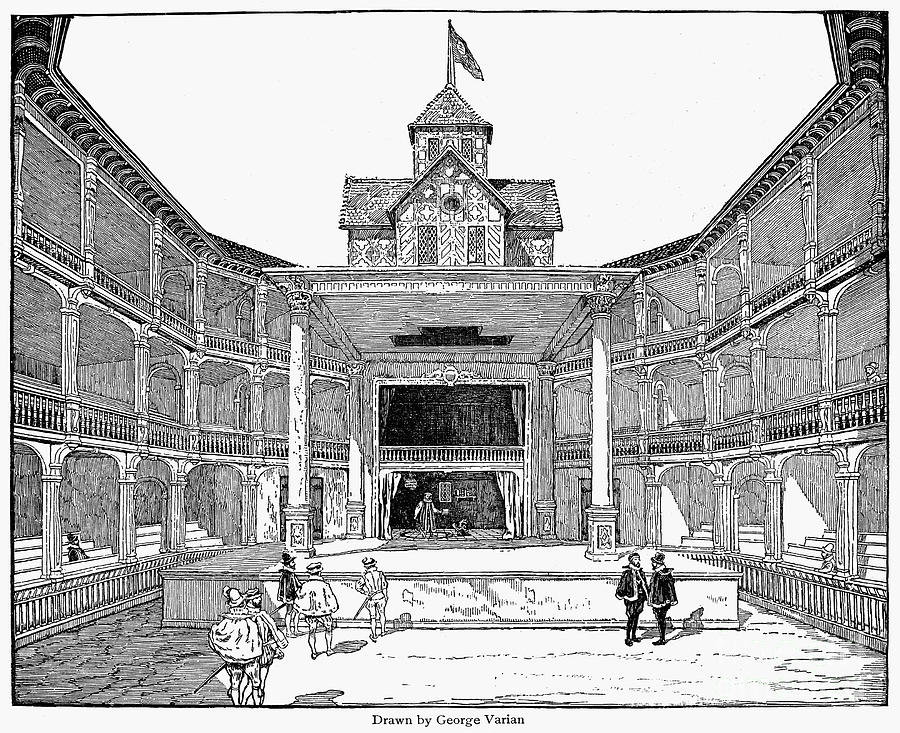
Globe Theatre

  • Multi-Sensory Absorption

Guided imagining that involves all the senses offers a rich and absorbing experience for the Subject. Absorption encourages hypnosis. Appealing to several senses also allows for individual differences between Subjects: some people are more creative with images, others with sounds, others with taste, smell or physical sensations (touch, or the position of the body).

  • Sensory Confusion

Confusing sensory information and synaesthesia (crossed-over senses: a warm colour, a blue note) create a surreal, dream-like experience and direct the mind inwards in the search for meaning.

  • Emotional confusion

“I can calm every troubled heart, and now with noble anger, now with love, I can enflame even the most frozen mind”

  • Nominalisation

Nominalisation is an NLP term for replacing active verbs – to love, to understand – with abstract, semantically complex nouns – Love, Understandings. Abstraction, ambiguity and complexity send the mind inwards in a search for meaning.

Compare the active language of  ‘Many people know about you and praise you. But they still underestimate you, because you are so cool!’ with these nominalisations:

Fame narrates heavenly Praises about you, but does not reach the Truth, because the Sign is too high.”

  • Selectional restriction violation

This is the NLP-term for re-attributing the Hypnotist’s Suggestion to some abstract concept or inanimate object:

“Your chair wants you to go into trance”.

  • Now

This one word is very powerful. ‘Now’ focusses attention and suggests an immediate response.

“Now, you can identify these Induction techniques at work in La Musica’s Prologue.”
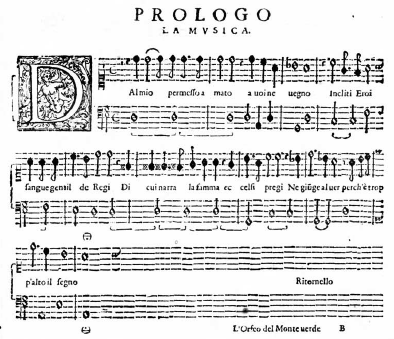
Prologo La Musica


In the first strophe, La Musica introduces mild spatial Dissociation with the mention of far-away Permesso (a river sacred to the Muses – a more thought-provoking name than the expected Parnassus, the sacred mountain-home of the Muses). The actor Relaxes the audience with generous compliments, and fixes their Attention with varied gestures. High gestures are particularly hypnotic: rolling the eyes upwards is itself a marker of trance, and fixing the gaze a little above the horizon is often used to begin an Induction.
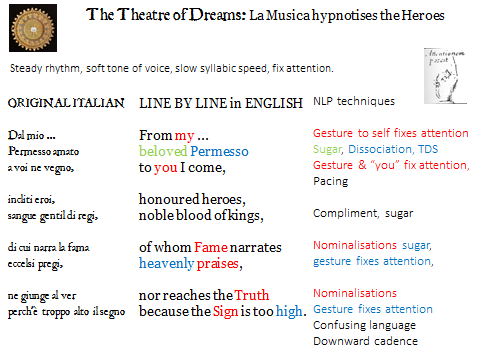
 

La Musica hypnotises the Heroes: Strophe 1

La Musica hypnotises the Heroes: Strophe 1


The Ritornello gives about 12 seconds pause, in which the listeners might come out of their developing trance. This is another hypnotic technique, known as Fractionation, in which letting the Subject come partially out of trance helps them go deeper in again, afterwards. Strophe 2 introduces Emotional Confusion and a Post-Hypnotic Suggestion: in the next hour or so, your emotions will be moved by a ‘story in music’.


La Musica hypnotises the Heroes: Strophe 2

La Musica hypnotises the Heroes: Strophe 2


The next strophe Suggests much more profound influence, by means of a subtle Link and Selectional Restriction Violation: some special kind of musical instrument takes you into the deepest part of your unconscious. “The more…. the more” is another NLP technique: the more you listen to La Musica, the more you will go into trance.


La Musica hypnotises the Heroes: Strophe 3

La Musica hypnotises the Heroes: Strophe 3


In the penultimate strophe, the intensity of the Induction is temporarily reduced (Fractionation), but the language of ‘desire spurs me’ holds the Attention. La Musica starts to tell a story (story-telling is a favourite method for hypnotherapists to deliver Suggestions) with vivid imagery, super-natural events and locations. Mention of far-off, idyllic places – the mountains of Pindus and Helicon, both homes of the Muses – Relaxes again, and encourages spatial Dissociation.


La Musica hypnotises the Heroes: Strophe 4

La Musica hypnotises the Heroes: Strophe 4


The final strophe is the most powerfully hypnotic, taking the audience deep into trance just before the drama itself begins. Attention is fixed three times with ‘Now!’, several sleight of mouth techniques are interwoven, with a strong Embedded Command: “Don’t move!”, which creates the catalepsy characteristic of profound hypnotism. Pastoral imagery simultaneously suggests Relaxation.

The line “and it’s not heard” is particularly subtle. Italian ne (= and not) makes a confusing link. And once you are told “it’s not heard”, you strain your ears to listen for whatever it is (we are not told what it is, until after a hypnotic pause).

“Sounding wave” would have been more unusual, more synaesthetic, to a 17th-century audience than it is to us: we are accustomed to the scientific concept of Sound as a Wave, they were not. This strophe mixes sensory channels, imagery and emotion, and then suddenly …. stops!


La Musica hypnotises the Heroes: Strophe V

La Musica hypnotises the Heroes: Strophe V


And as La Musica holds all the audience in trance with a commanding gesture, Monteverdi notates an 8-seconds silence before the orchestra plays again. The Prologue is ended, La Musica leaves, and the favola in musica (story in music) begins.

theatre-palais-cardinal Louis XIII

This kind of hypnotism is not authoritarian, it cannot be forced; it needs the listener to collaborate. It relies on the audience suspending their disbelief, engaging their imagination, and voluntarily relinquishing some control to La Musica. And if you let her ‘influence your soul’, her story of Orpheus can make you laugh and cry. You don’t make yourself cry, the drama does it. But you could have stopped yourself, if you had chosen to, especially if you had decided at the beginning of the show to resist becoming involved.

La Musica’s Induction is an invitation to participate deeply in an imaginative experience.
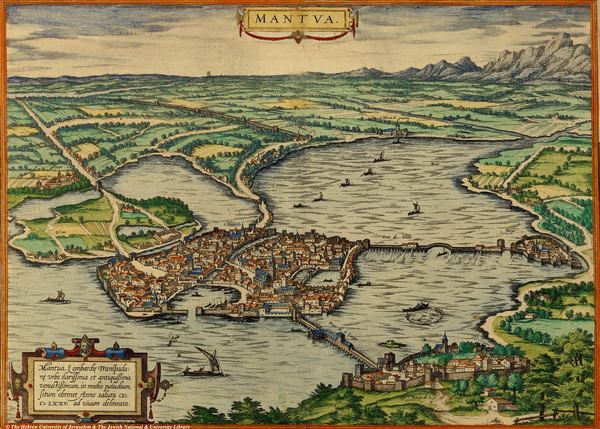
01 Mantua 1575

When this hypothesis of seicento hypnosis first came to me, I was concerned at the apparent anachronism: after all, the word ‘hypnosis’ was invented by James Braid around 1841. But the knowledge and practice of hypnosis is much older, of course; there is evidence of it in shamanic traditions and other ancient cultures. And there is a 17th-century word for the persuasive use of unusual, image-laden, semantically dense, sometimes confusing language, in order to sway the listeners’ emotions, the study that today we call NLP: Rhetoric.

Rhetoric is the Neuro-Linguistic Programming of the Renaissance

Remember you are dreaming


Please join me on Facebook https://www.facebook.com/andrew.lawrenceking.9 and visit our website www.TheHarpConsort.com . Further details of original sources are on the website, click on “New Priorities in Historically Informed Performance”

Opera, orchestra, vocal & ensemble director and early harpist, Andrew Lawrence-King is director of The Harp Consort and of Il Corago, and Senior Visiting Research Fellow at the Australian Research Council Centre for the History of Emotions.
www.historyofemotions.org.au

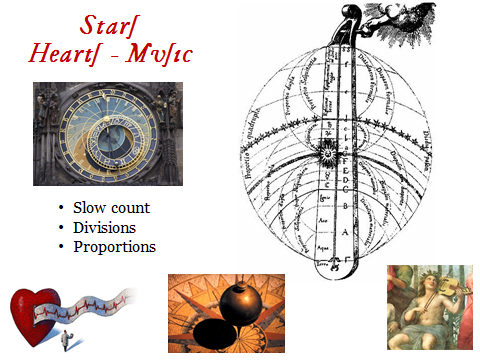
A Baroque History of Time: Stars, Hearts and Music

A Baroque History of Time

The past is a foreign country,

they do things differently there.

L. P. Hartley The Go-Between (1953)

The past is a foreign country;

there is very little we can say about it until we have learned its language

and understood its assumptions.

Michael Howard The Lessons of History (1991)

One of the challenges of Historically Informed Performance is to try to catch a glimpse of our own assumptions, to notice where something seems so ‘obvious’ and ‘absolute’ that we  don’t even question it. The worst decisions in Early Music are the decisions that we don’t even realise we are making, because we don’t even notice there is a question to be addressed. But as soon as we become aware of an assumption, we can look for evidence of whether the same assumption held good in the past, or if attitudes might have changed with the centuries.

In this post, I’m exploring the subject of musical Rhythm by examining period concepts of Time: historical belief-systems at both cosmic and human levels; the grand philosophy and naive assumptions that underpin pragmatic performance decisions; the changing views of science; and the various practices of artists as they performed their passions. The assumption that I’m challenging is that we today understand Time itself in the same way that Monteverdi and Shakespeare did.


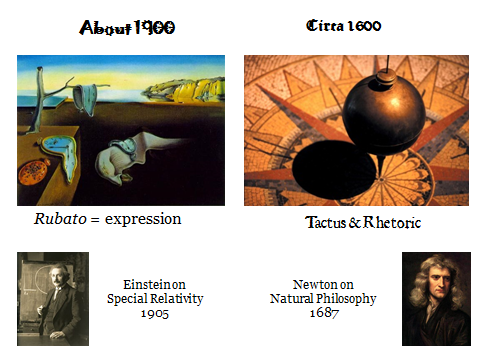
1900 and 1600

The question I’m posing to Renaissance Man, in order to understand his ways of thought, is the same question we can pose to ourselves, in order reveal the assumptions of our own age:

What is Time?

Modern Time

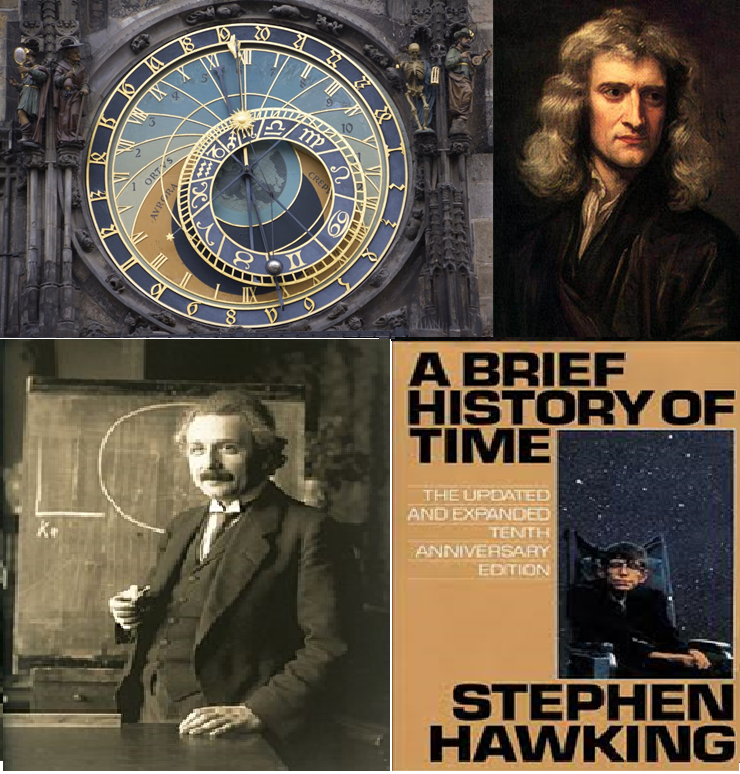
Now, it’s almost a century since the London newspaper, the Times, declared that Newton’s ideas had been ‘overthrown’ by Einstein (7th November, 1919). One might say that this ‘Revolution in Science’  which led to a ‘New Theory of the Universe’ began with a paper written by an official in the French Bureau of Longitude, mathematician Henri Poincaré. In The Measure of Time (1898), he asked two deep questions:

1. Is it meaningful to say that one second today is equal to one second tomorrow?

2. Is it meaningful to say that two events which are separated in space occurred at the same time?


A century later, the answers are: (1) we still don’t know, and (2) No. That resounding “No” came  from the work of Albert Einstein, who in his annus mirabilis of 1905 published four papers, on the Photoelectric Effect (establishing the Quantum nature of light), on Brownian Motion (addressing the methodology of statistical physics that Quantum Theory would come to rely on), on Special Relativity (overthrowing Newton’s concept of Absolute Time) and on Matter-Energy Equivalence (formulating that most famous equation, E=mc2). He also submitted his PhD thesis.

Perhaps relativistic effects helped him get so much done in just one year!


Poincaré and Einstein

The predicted and observed effects of all this new science still seem ‘paradoxical’ to most of us. Schrodinger’s Cat is neither alive nor dead, until the act of observation collapses the quantum dynamical waveform one way or another. There’s no certain answer, only statistical Probability.

Schrodingers Cat


Even Einstein himself didn’t want to believe that ‘God plays dice with the universe’ like that. Whatever the science told him, Einstein’s own assumptions were inevitably conditioned by the thinking of previous generations. Before the 20th century, religious beliefs and traditional assumptions led most people to expect Cosmic Power to control the everyday scale. Like Einstein, many of us find it hard to grasp that tiny particles might dictate the fate of the universe.

20th-century Science presents many more paradoxes. Heisenberg’s Principle means that we are forced to balance knowledge with uncertainty in pairs of values, for example mass and momentum. The more precisely we establish Time, the less we can know about Energy. Einstein’s Theory of Relativity predicts that a man who travels to Mars and back will return slightly younger than his twin brother, who waits for him on Earth.

Time itself might be reversed, if the arrow of entropy changes, in some future contracting state of the universe. Meanwhile, Quantum effects in the brain allow our nervous system to respond to stimuli measurably before the stimulus is received. The mathematics of Quantum Theory predict the existence of Wormholes, opening up the possibility of travel through time. This raises the question of what might happen if you went back in time and killed your Grandfather, forestalling your own birth. The Bootstrap Paradox refers to creating something out of nothing by complex loops of time-travel, like pulling yourself up by your own bootstraps.


Tardis

In Heinlein’s novel All you Zombies, kidnapping, love-affairs and gender-change surgery leave us with a time-travelling character who is his own mother, father, son, daughter, long-lost lover and kidnapper. Scientists are struggling too: Quantum Theory and Relativity do not mesh well, so that a Grand Unified Theory of Life, the Universe and Everything is currently out of reach.

But for most of us, the paradoxes of Einstein’s science, let alone more recent findings, do not affect our daily lives. We find Relativity counter-intuitive, because we do not see it at work in the everyday world. For us, Newton’s Philosophiae Naturalis Principia Mathematica (1687) works just fine. If I drop an apple it will hit the ground more or less when I expect. Our intuitive assumptions about Time are more than 300 years behind the cutting edge of scientific theory.

Newton Principia 1687


We are very comfortable with Newton’s concept of Absolute Time, with its one direction ‘like an ever-rolling stream’, Time that exists independent of any other quantities. We are very accustomed to measuring the accuracy of a clock, the movement of a star, or the beating of a heart, against the absolute scale of Newton’s Time. So accustomed are we,  that as well as ignoring what we know from Stephen Hawking about post-Einsteinian Time, we also overlook the fact that Peri and Monteverdi did not know about Newton’s Time.

Early baroque musicians, around the year 1600, did not feel about Time the same way we do. They could not have had the same assumptions. Even after Newton’s 1687 publication, it would have taken some years for his ideas to gain acceptance amongst fellow-specialists, and many decades for those ideas to become part of the instinctive assumptions of the population at large.

Monteverdi’s Time

The Early Modern philosophy of Time was founded on Aristotle and Plato. Aristotle’s Physics characterises Time as

A Number of Motion in respect of Before and After

Time is only meaningful in the context of Motion or Stillness, of observable Change before/after.

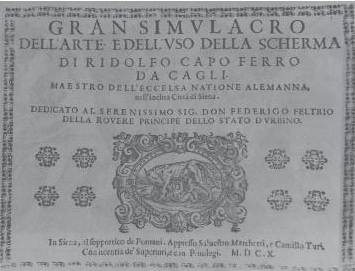
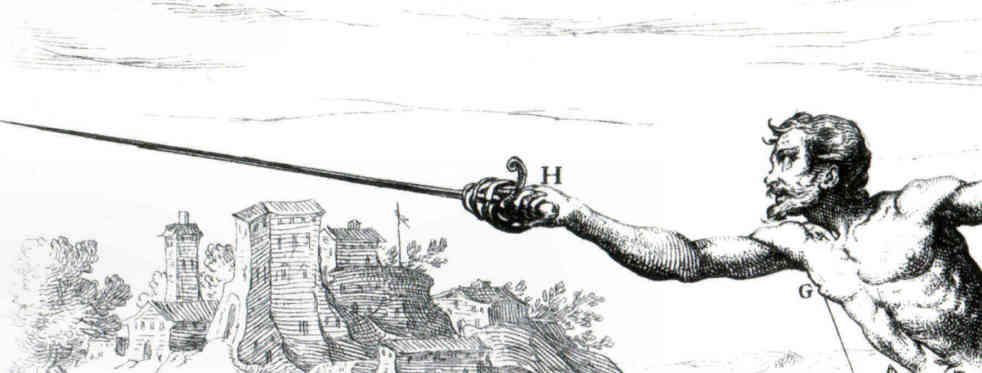
In the year 1610, this was no mere philosophising: swordfighters bet their lives on it. Capo Ferro describes a swordfighting tempo as ‘measuring the Motion of my opponent by the Stillness of my sword’. Such a tempo could be long and slow, when the duellers were far apart and reluctant to come to close combat, or terrifyingly fast, as the sword-master parries and ripostes in a single lightning-strike of tempo, driving his rapier through his opponent’s left eye.

 Capo Ferro Plate 7

Viggiani’s sword treatise specifically refers to Aristotle. Agrippa’s fighting manual shows the period theory of Light, beams that come from your eyes, as he demonstrates how to save your life with a timely turn, the scanso della vita.

Agrippa rays of light

Tasso, whose poetry Monteverdi set as  the Combattimento di Tancredi e Clorinda, owned a copy of Agrippa’s book, and that music-drama is full of swordsmanship jargon: schivar (deceiving the blade), parar (parry), ritrarse (step back), destrezza (sword-skills).

Cavalieri’s musical morality play, Anima e Corpo (the earliest surviving ‘opera’, the first oratorio; Rome, 1600) presents Plato’s philosophy of Time. Past and Future are divided by the moving point of the Present, which is an instantaneous image of all Eternity. As Soul and Body battle against worldly temptations, this libretto too is full of swordsmanship jargon, but the first character to sing is Il Tempo, Old Father Time.

Old Father Time

Cavalieri tells us that Time flies, does not last, wears us away, measures us, that Time is short. We are told to do good works – act with the hand, act with the heart –there is a clear parallel to an actor’s performance, linking baroque gestures and heartfelt emotions.

But 17th-century texts use the word Time (in Italian, tempo) to translate from Greek two different words, conveying two distinct concepts. Kronos is Aristotle’s numbered Time of Before and After: kairos is a timely opportunity. In Rhetoric, kairos is when the time is ripe to press home logical arguments – I hope that as you read these words, there is kairos now.

For a swordfighter, tempo  is not only motion and stillness, but also the moment of opportunity, the crucial instant in which you must strike to defend yourself and wound your opponent.

In the Christian New Testament, the Messiah comes in the fullness of time – at the moment of kairos. And the Apostle Paul frequently exhorts his followers to seize the chance of their own instant of kairos.

In life, in debate, in a fight, or on stage, kairos is the moment to act. The anonymous 16th-century Bologna sword-master said that swordsmen need the same skills of timing as a fine singer: this gives an idea of the level of sharp rhythmic precision singers must have had back then. As one voice-student said to me ruefully of today’s early music singers: ‘we’d all be dead!’.

Hierarchy of Disciplines


Since Aristotle links Time to Number and to motion in Space, the Renaissance recognised an intellectual hierarchy relating Arithmetic (the study of Number), Geometry (Number and Space) and Music (Number and Time). At the top of this hierarchy is Astronomy (Number, Time and Space), the study of the heavens. That lofty position is shared by Dancing and Sword-fighting, which (in contrast to today’s devaluing of ballet, let alone martial arts) outrank absolute music.

Both philosophically and practically, sword-fighting and renaissance dancing are related, and ballets of the stars are a 17th-century cliché. In Monteverdi’s Orfeo, Nymphs ‘leave the mountains, leave the fountains’ to dance a ballo ‘even more beautiful than those danced to the moon on a dark night by the heavenly stars’. The first opera from the New World, Torrejón’s La púrpura de la rosa (Lima, Peru 1701) begins with Urania, the Muse of Astronomy, sighting a new planet.

So here are the Stars of my sub-title. For period musicians, swordsmen, even for baroque sailors, Time is a matter of Astronomy. Around 1600, it is defined by the stars and planets (on the largest, cosmic scale) and followed here on earth (on a smaller, human scale).

Three kinds of Music

Time & Music

Continuing to examine the assumptions of the past, what about practical music-making? For Cavalieri, Peri and Monteverdi, what is Music? Again, period thought was based on ancient authorities, and there is a consistent view that differs from modern assumptions.

The most significant type of music was musica mondana, the Music of the Spheres, the perfect music (inaudible to human ears) created by the heavenly  dance of the stars and planets. Musica humana is the harmonious nature of the human body, the divine image incarnate, the Word that was ‘in the beginning’ set to the soul-music of embodied Creation. Musica instrumentalis is what we mean by the word ‘Music’ today, the actual sounds we make with our voices and instruments.

These then are the three categories of my subtitle: music of the stars, of human hearts, and music as performed by 17th-century musicians. The structure of the cosmos, the beating of the human heart and musical rhythm are also the interlinked ideas that illustrate the period concept of Time. They are interconnected in philosophical theory and also in practical use.

What is Time

Slow Time (years, months, days and hours) is measured by Celestial movement. A brief moment is measured by the heartbeat, which is both a symbol and a practical measurement of musical rhythm.

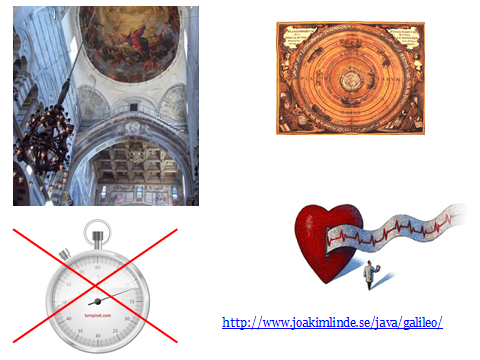
Galileo discovered the pendulum effect in the late 16th century, but the first pendulum clock was not built until the 1630s. In this period, the most accurate clocks could just about count the seconds. This begs the question, how did Galileo measure the pendulum effect?

The most accurate clock available to him was his own, human pulse. This was sufficiently reliable to establish the constancy of period, around 7 seconds, for a chandelier hung on a very long cable from the roof of Pisa cathedral.


Galileo Pendulum


But Galileo also did high-precision experiments to determine the acceleration due to gravity, which required split-second timing. How could he do this? Circa-1600 clocks were hopelessly imprecise. His pulse (about one per second, when relaxed) was better, but still insufficient for such high-precision work.

History of Science researcher Stillman Drake realised that the Galilei family’s expertise in music would have solved the problem. Musical rhythm provides a reliable way to divide a one-second pulse into eight equal parts: in period notation, this is the equivalent of dividing a minim (half note) into semiquavers (sixteenth notes).

Joakim Linde has created an online simulation that allows you to repeat Galileo’s experiment with gravity and music, here.

What we need to understand today, is that Galileo was using Music to measure Time. Music was more precise than the very best clocks of his period. Music had the regular, heavenly equality of measure, that Time itself did not yet possess, since Newton’s idea of absolute time had not yet been formulated.


Measurement of Time


Hierarchy of Time

There is a definite hierarchy in this philosophy, in this period Science of Time. Celestial Time is the ideal, imitated on earth. As we look up to the heavens, to the musical spheres, the highest sphere is the primum mobile. It is God’s hand that winds the Clock of the Cosmos. This is imitated on earth, in that musical rhythm is determined by a long, slow count; in that we divide up those slow, long notes into faster notes (by division, or diminution); in that these faster notes must fit inside the rhythm pre-determined by the slow count; and in that we divide up the slow count in various proportions, in precise, whole-number ratios.


Hierarchy of Time


Ha, ha, keep time! How sour sweet music is/ when time is broke and no proportion kept!

warns Richard II.

Clocks had religious significance. Just as Protestants and Catholics argued about calendar reform, so musical rhythm is a moral imperative. As Dowland thunders in 1609 (translating Ornithoparcus from 1535) “above all things… “ (the language itself is hierarchical) …

Above all things, keep the equality of measure, lest you offend God himself!

To attempt to change Time (the modern practices of rubato, rallentando, accelerando; even the 19th-century concept that the performer can decide the tempo of a particular movement) is to risk the stability of the cosmos, to threaten your own bodily health.

When Phaeton seized the reins of Apollo’s sun-chariot, he could not control the movement of the sun through the heavens. He crashed and burned.

Sun Chariot


If your pulse stops, the music also dies.

 The take-home message from all of this period Philosophy, or History of Science, is that Newton’s 1687 concept of Absolute Time did not apply around the year 1600. Time does not measure music, because there is no Absolute Scale of Time.

It’s the other way around: Music measures Time. Time is determined by divine, cosmic forces that we see also at work in the human body and in music itself.

This helps us understand what seem to be needlessly complicated statements about musical notation, like Carissimi’s here:

The triple-metres all agree with regard to quantity, division and proportion, as is easily understood, but in the slow or fast quality, known by the Italians as tempo and by the French as mouvement, they are utterly different.

Carissimi lacks the vocabulary and the very concept of Newton’s Absolute time, and he flounders as he tries to explain something we can today express more clearly, more simply.

The triple-metres all agree with regard to the quantity, the duration of musical note-values in absolute time [a semibreve lasts 0.66 seconds, a minim 0.33 seconds, etc].

This is easily understood [but it is different from 19th-century practice, where the performer can choose the speed of a piece of music].

In the slow or fast quality [how it feels to the listener] the triple-metres are utterly different [3/1 feels slow, 3/2  feels medium fast, 6/4 feels very fast].

‘What the Italians call tempo’ can mean Time itself, or the subjective feeling of how fast a piece of music is going. Carissimi has no vocabulary to separate these concepts, except for his idea of Absolute quantity and subjective quality.

The difficulty for Carissimi’s generation is that they do not have a concept, or a vocabulary for Absolute Time. Their best measure of Time is Music. So it’s extremely difficult for them to explain how different pieces of music can have consistent note-values, yet still produce such different subjective impressions of speed.

The French language is  bit more helpful: Mouvement for a piece of music helps us appreciate that music can seem to ‘move’ faster or slower, whilst we measure time steadily. But in the 17th-century they still measure Time with Music (so one can’t establish an objective description of how music moves in time), and (looking back to Aristotle) Time itself needs movement (i.e. change) in order to be measured. Without Newton’s concept of Absolute Time, it is very difficult to talk about the subjective speed of music!

Towards the modern assumptions of Time


As the 17th century progresses, the idea of an Absolute measurement of Time emerges. Clocks become more accurate, and the clock itself becomes a metaphor of time, and of music.

Thus Playford can advise music students to learn rhythm by listening to the tick-tock of a clock. Musicians’ modifying words, such as tarde, velociter, adagio, presto function like subtle adjustments to a clock, so that it ticks somewhat slower or faster. Similarly, Frescobaldi, Caccini and others allow the Tactus beat to go faster or slower according to the affetto, just as the human heart beats faster or slower under the influence of differing emotions. Gradually, music becomes a clock that can be adjusted by emotions to count Time faster or slower.

Nevertheless, this is still far removed from Newton’s concept of Absolute Time, and from our modern ideas that music can move freely whilst time itself is regular.

We need to think carefully, we need to understand the language and assumptions of the 17th century, before we rush to conclusions about rhythmic freedom. Rather than starting from the modern assumption of Absolute Time and musical rubato, we would do better to start from the period assumption that steady time is a religious imperative; that the heavens, our hearts and our music are inter-connected.


If the rhythm breaks, the cosmos will collapse!

If your heart stops, the music also dies.


 No rubato, no conducting


Please join me on Facebook https://www.facebook.com/andrew.lawrenceking.9 and visit our website www.TheHarpConsort.com . Further details of original sources are on the website, click on “New Priorities in Historically Informed Performance”

Opera, orchestra, vocal & ensemble director and early harpist, Andrew Lawrence-King is director of The Harp Consort and of Il Corago, and Senior Visiting Research Fellow at the Australian Research Council Centre for the History of Emotions.

www.historyofemotions.org.au

Flow (Accessing Super-Creativity): Making Connections

Neurons

Mihaly Csikszentmihalyi’s concept of Flow was enthusiastically taken up by musicians, sportsmen, businesswomen, creative types, indeed by anyone interested in learning, training and high-level performance. It’s that wonderful feeling when one is ‘in the zone’, simultaneously relaxed and concentrated, where one’s actions proceed effortlessly from a deep understanding of the situation. Whatever your particular application (arts, sports, business, creativity) Flow is the optimal state for efficient learning, effective training, and maximising one’s performance.

As part of my research (read more here) for the Australian Centre for the History of Emotions (CHE, read more here), I’m investigating Flow in the context of various related disciplines. My approach is phenomenological, experiential, based on my personal experience and on observations reported to me by colleagues, teachers and students from their own individual experiences. My aim is to reach a deeper understanding of how Flow works on a pragmatic level, so that I can offer practical hints to anyone who wants to access Flow in their own activities.

In this Introduction, I will summarise the classic description of Flow according to Csikszentmihalyi, and set out various connections which I’ll explore one-by-one and in greater depth in later posts: Griffin’s Dream Theory, Ericksonian Hypnosis, Ericsson’s Deliberate Practice, Neuroplasticity & Myelination, Neuro-Linguistic Programming, Feldenkrais Method, Positive Psychology, Historically Informed Performance.

Also in this post, I’ll identify one crucial element of Flow which has not so far received the attention it deserves. I’ll connect this to the background theory, and suggest why this might be the missing link between Csikszentmihalyi’s Flow, and the high-level, elite performance skills that so many coaches and performers are searching for.   

Chain Missing Link Question


MIHALY CSIKSZENTMIHALYI’S FLOW

In Flow: The Psychology of Optimal Experience – Steps towards enhancing the quality of life (New York 1990, on Google Books here), Csikszentmihalyi identifies various elements that characterise Flow. If you experience several of these (not necessarily all of them), you are probably experiencing Flow. These elements can be present in any activity – sport, music, creative writing, business negotiations, public speaking etc.

  • Challenge

The activity is challenging, but not impossible. You are pushing the limit of your skills, but you are nevertheless confident in your abilities.

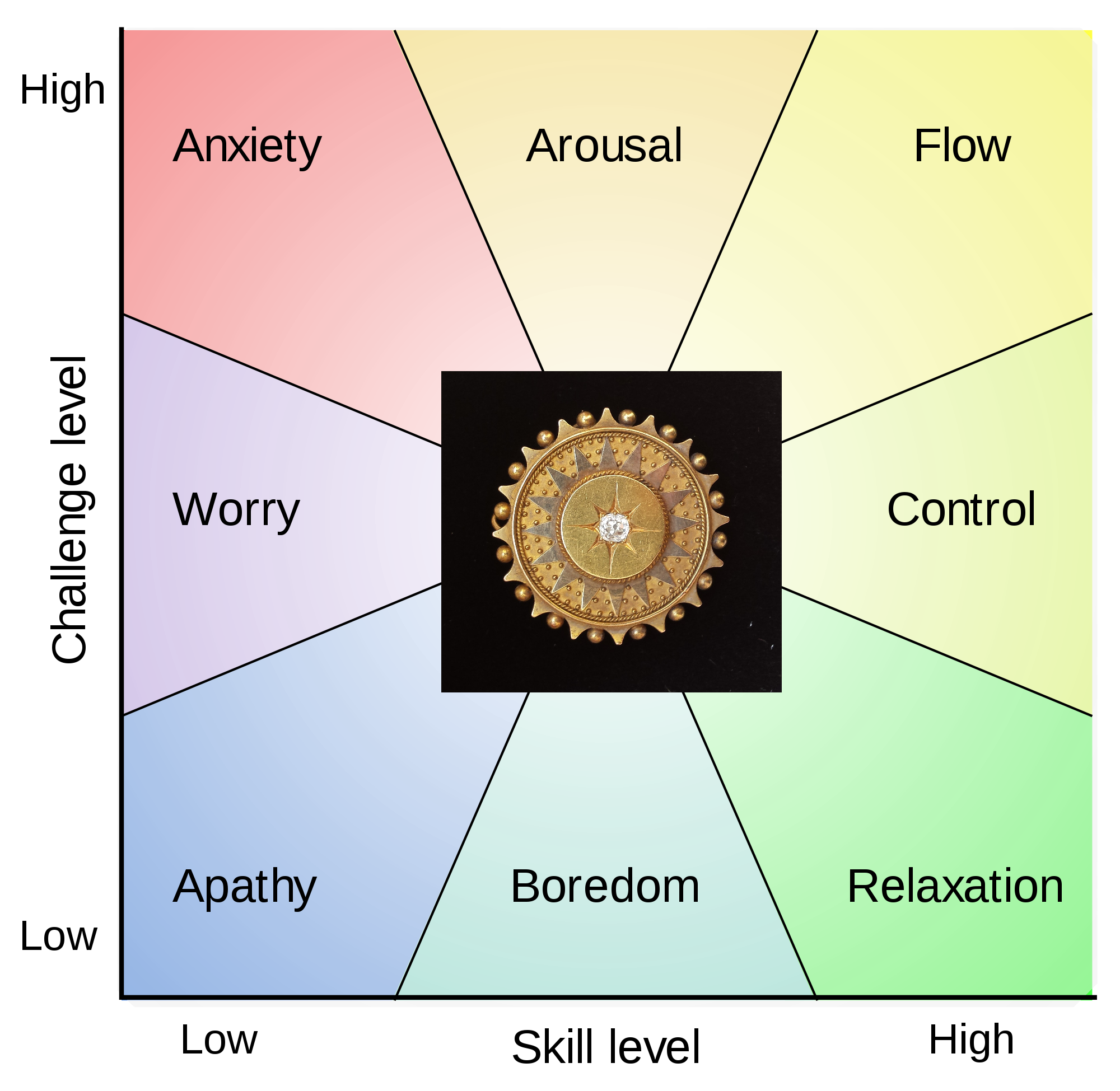
Csikszentmihalyi developed and gradually refined a diagram relating challenge and skill, with the flow-zone in the area of high-challenge, high-skill.

Flow diagram transit of Venus


  • Merging of Awareness & Action

Your intense awareness of crucial aspects of the activity leads immediately and effortlessly  to your actions, perhaps without any intervening conscious decision-process. You notice the situation, and your actions flow from that awareness.

  • Absorbtion

Your awareness is so intense that you are fully absorbed in the activity. Incoming information entirely fills the “bandwidth” of your attention.

  • Goals / feedback

The activity has clear goals, and you receive clear feedback on your progress towards those goals.

  • Concentration

You are fully concentrated so that nothing distracts you from the activity. Your focus does not shift here and there. Your concentration does not flicker off and on again. Potential distractions (e.g. background noises) do not disturb your focus and concentration.

This maintaining of a narrow focus is subtly different from the intensity of concentration described above as Absorbtion.

  • Control

You have a sufficient sense of control. As with Challenge, the optimal level of control presumably balances the thrill of unpredictability against the stability of control.

  • Lack of self-consciousness

Whilst the activity is in process, you are not aware of yourself, you are not concerned with how others see you, you are fully immersed in the activity itself. Typically, there is a strong feeling of pleasure after the activity is completed.

Csikszentmihalyi gives the example of a mountain climber, for whom the activity itself is physically demanding and requires total concentration. When the climber reaches the summit, only then do the feelings of elation kick in.

  • Time Distortion

You may not be aware of the passage of time, whilst you continue the activity in Flow. Only afterwards do you notice how late it is, that you might be hungry, thirsty, or need sleep.

As the saying goes, time flies when you are having fun! I’ll return to this question of Time Distortion, which I consider to be highly significant.

Mihaly Csikszentmihalyi

Mihaly Csikszentmihalyi


The Autotelic Personality

Csikszentmihalyi considers that having an Autotelic Personality makes it easier for one to enter Flow. Autotelic people (from the Greek words for Self and Purpose) are self-motivated, they can find a sense of purpose in doing an activity for it’s own sake. Here are Csikszentmihalyi’s characteristics of Autotelics, which he derives from the corresponding elements of Flow:

  • Taking charge of your own destiny

You believe that what you are doing makes a difference.

  • Outward focus

You are focussed on your activities, on the outside world, not introspecting about your own situation

  • Goal setting

You set goals and monitor your progress towards them.

  • Absorbed

You get absorbed by the activities you undertake

  • Ability to concentrate

You can maintain a sharp focus over time, without being distracted

  • Enjoyment

You enjoy the immediate experience of the activity at hand.

I would add these two further characteristics, corresponding to Challenge and Merging of Awareness & Action

  • Have a go!

You enjoy taking on (new) challenges

  • Go for it!

You don’t procrastinate.


Flow notes

JOE GRIFFIN’S THEORY OF DREAMS

My investigation into Learning, Training and Performance rests on the theoretical foundation of Joe Griffin’s theory of Dreams and the REM state. In his later writings, together with Ivan Tyrrell, Griffin explores wide and deep implications of his theory, particularly in relation to mental health and creativity. (More here.)

The Expectation-Fulfilment Theory of Dreams offers a psychological, biological and evolutionary explanation that is consistent with neuroscientific data and has already led to measurable clinical success. It amounts to a new Organising Idea, a simple fundamental concept that underpins many observed complexities. In essence, Griffin claims that:
  •  Dreams are associated with the Rapid-Eye-Movement (REM) state during sleep


  • The biological function of Dreams is to resolve unfulfilled expectations (positive or negative), generated whilst awake


  • Dreams re-present unfulfilled expectations in Metaphors, so that they can be resolved by pattern-matching to recalled memories.


  • Some 40,000 years ago, humans evolved the ability to access the REM-state whilst awake: this facilitated learning, language, tool-making and higher culture.

Griffin’s metaphor for the REM-state is the Theatre of Dreams.

Waking access to the REM-state allows us to day-dream, to relive the past, to envision the future, to watch a play in the Theatre of Dreams.

In hypnosis, the hypnotist “hijacks” the theatre machinery, changing the scenery, producing special effects, sending on various characters, directing a play for you to watch (even to act in) within the Theatre of Dreams.

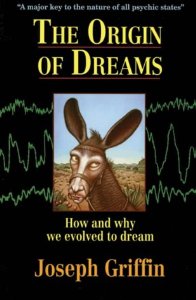
The Origin of Dreams

ERICKSONIAN HYPNOSIS

Milton H. Erickson is widely recognised as the founder of modern hypnotherapy. In contrast to the myth that hypnotism is ‘magic’; in contrast to the traditional view of the hypnotist as an authority figure who imposes his will on his client; in contrast to the cliche of watching as the hypnotist swings a pocket-watch and counts down from 10 to 1 whilst instructing you to sleep; in contrast to the Freudian concept of the unconscious as a dark cavern of negativity; in contrast to the caricature of the all-knowing therapist and the helpless client, the Milton method assumes:

  • Trance is a natural state that we all experience several times each day


  •  The hypnotist creates conditions in which the client can feel permitted and able to enter trance.


  • Different people enter trance in different ways and have different experiences within trance.


  • The unconscious mind can be a powerful and positive resource.


  • The client can be helped to access solutions from within their own unconscious resources.


One aspect of Ericksonian Hypnosis is that therapists don’t feel the need to rush through their Pre-Talk and Induction, in order to get the client into trance and ‘start doing something useful’. Rather, the Pre-Talk is seen as an essential and highly significant part of the therapeutic intervention, and there may be no formal Induction as such.

In the Ericksonian view, hypnosis is at work in many everyday situations, including conventional (supposedly non-hypnotic) talking therapies, and teaching/learning. I would also add the performer/audience interaction to this list.

Erickson made a particular study of Time Distortion effects in Hypnosis, where the client’s subjective experience of time, under trance, was either much slower, or much faster, than real time. I will return to this subject, which I consider highly significant for Flow.


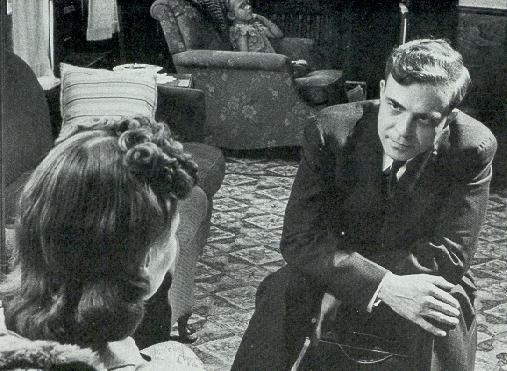
Erickson

Erickson at work. Notice the characteristic SOLER posture: S = Sit down with your client; O = Open, friendly posture; L = Lean forwards, be attentive; E = make Eye contact; R = Relax.


Accept & Utilise

Perhaps the most important characteristic of Erickson’s approach was his response to Client Resistance. Rather than struggling to overcome resistance or to ‘correct’ the client’s behaviour, his solution was to accept whatever the client presented, and utilise even the most difficult behaviour as part of the therapy. For example, when treating a delusional client who believed that he was Jesus Christ, Erickson’s approach was not to attack the delusion, but to accept it. “I understand that you have a background in carpentry, would you like to build some bookshelves for me?”. The occupational therapy of woodworking became a crucial component of a successful treatment.

There are many stories from Erickson’s cases, which have inspired succeeding generations of hypnotherapists. My favourite is one particularly difficult case, where Erickson himself was unable to find a successful angle from which to direct his therapeutic intervention. Finally, he put the client into trance, and progressed him into the future, to a time when his problem had been successfully treated. “How was it done?” Erickson asked. Having obtained the answer (under hypnosis, direct from the client’s unconscious), Erickson gave the instruction (by hypnotic suggestion of amnesia) for the client to forget about this exchange, and brought the client back to the present, and out of trance. He then began a successful line of treatment, from the angle that the client himself had described in trance.

For an easy-to-read practical introduction to Ericksonian Hypnosis, I recommend Bill O’Hanlon Guide to Tranceland (2009). Richard Nongard Speak Ericksonian (2014) draws on his rich experience as a stage and speed hypnotist, clinical therapist and religious minister, and introduces techniques of NLP (see below). Michael Yapko Trancework: An Introduction to the Practice of Clinical Hypnosis (2012) is a thorough guide to essential theory and current practice, an excellently compiled textbook for serious students. Nash & Barnier (editors) The Oxford Handbook of Hypnosis is for researchers.  


CPD


As part of my investigations, I have been studying the theory and training in the practice of Hypnosis. I am not qualified as a Hypnotherapist, but I am competent to use Hypnosis as part of my work on Flow, in consensual and informed interactions. This training also gives me a better understanding of how hypnosis is at work in many everyday (supposedly non-hypnotic) situations.


ALK TRA

ERICSSON’S DELIBERATE PRACTICE

Psychologist Anders Ericsson researches the cognitive structures that underpin high-level training and expert performance. His work shows the importance of sustained, intensely concentrated practice that challenges one’s current skill-levels, deliberately and precisely pushing the envelope, always just outside the comfort zone. As the title of one of his editions – Towards a General Theory of Expertise (Cambridge University Press, 1991) – suggests, although expert skills are specific to a particular domain, the processes underlying the acquisition of those skills are common across a wide range of applications: music, sports, chess, business negotiations etc.

Ericsson’s work has led to a reassessment of the nature of Talent. The modern consensus places much less emphasis on ‘natural giftedness’, even on helpful genetic traits (runners born with long limbs), recognising the importance of environmental factors (in particular, access to training opportunities) and the decisive factor of many, many hours of Deliberate Practice.

These ideas have been popularised and extended in a number of books linking elite performance in sports to effective training regimes on the Ericsson model: Malcolm Gladwell’s Outliers (2008) presents the 10,000 rule (i.e. the need for about 10 years dedicated training to reach elite levels of performance); Josh Waitzkin’s The Art of Learning: An Inner Journey to Optimal Performance (2008) looks at the acquisition of high-level skills in two apparently unrelated areas, chess and martial arts; Daniel Coyle’s The Talent Code (2009) examines a biological mechanism underlying the beneficial effects of skills training; Matthew Syad’s Bounce (2011) discounts genetic factors, even useful physical attributes, in favour of Deliberate Practice.

Johan Harmenberg’s Epee 2.0 (2007) follows a similar line to Waitzkin in advocating a narrow focus during training – what Waitzkin calls ‘making smaller circles’. Harmenberg considers performance under intense stress, the ‘Olympic hit’: in such circumstances, even highly trained performers are sometimes unable to access their elite skills. Waitzkin also considers high-stress performance, and draws attention to Time Distortion – ‘slowing down time’ within a particular state of consciousness that he calls ‘the soft zone’.  I’ll return to these ideas below and in later posts.

NEUROPLASTICITY

My focus is phenomenological and practical – what is the experience of Flow, and how can we access it? Nevertheless, it’s inspiring and illuminating to examine the findings of Neuroscientists, as they try to understand the biological processes that support the expert skills we wish to learn, train and perform. The metaphor of treating your brain as you would a muscle – use it well, train it deliberately, and it will strengthen and grow – is apt.

Deliberate Practice (targeting precise skill elements, pushing the envelope) carried out in a state of Flow (optimal transfer of information between conscious and unconscious mind) builds new pathways, activates neural networks inside the brain. Think of this as installing new software into your computer.

After a couple of days of Deliberate Practice, your brain starts to grow, physically. You are growing new hardware, bolted-on so as to increase your capacity for the specific skills you are training. The results will show in two to three weeks.

On a similar time-scale (2 or 3 days for activation, 2 or 3 weeks for measurable results), training switches on or off certain genes, optimising your inherited DNA according to the demands your training makes. (This is one reason why identical twins, who share the same DNA, show differences in genetic activity: genes are switched on or off according to the experiences you have.)

Neurons

MYELINATION

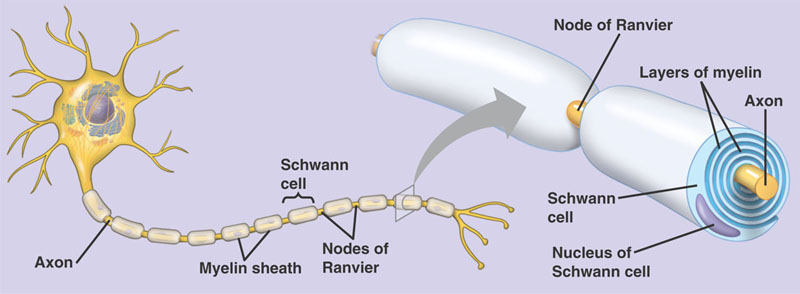
If neurons are like wires, transmitting and processing signals through the brain, you can connect them up better, and even add new circuits, with Deliberate Practice. Practising a particular skill under challenging conditions (pushing the envelope) also wraps layers of Myelin around the particular neurons that are working hardest. Myelin is like the insulation around a wire, it stops the charge leaking out and makes transmission more efficient. The more Deliberate Practice you do, the more Myelin you can wrap. You get better, sharper, faster.

And of course, to stay in Flow, as you continue to train, you must continually raise the bar, up the Challenge. As you continue to push the envelope, you assemble more neurons, connect up more neuro-circuits, and wrap them all in Myelin. The skill becomes effortless, awareness and action merge, and you might well start to have some serious fun!


Myelin


POSITIVE PSYCHOLOGY

Csikszentmihlayi’s concept Flow is part of a general trend to move away from researching only pathological conditions, mental illness, psychological trauma, and investigate well-being, happiness, positive psychology. Performance Studies can also benefit from a positive approach, with Solution Oriented interventions, learning to acquire confidence and access Flow,  rather than wallowing in the pathology of Performance Anxiety.

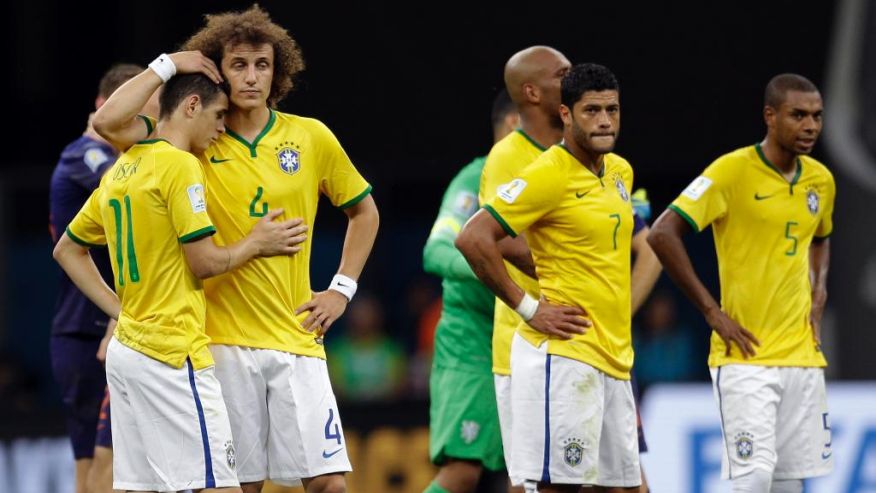
Nevertheless, musicians and sportsmen know all too well the phenomenon of ‘choking’. Just when it matters the most, the stress of the moment is too much, and one loses access to all those hard-won elite skills. In bad cases, one loses even basic competence, and reverts to crude bungling. This is what happened to the Brazil football team in the last World Cup: after they had Flowed through all the heats, in the semi-final they failed to Flow, and were not so much beaten as annihilated by Germany, 7-1. Brazil choked.


Brazil world cup defeat


How can we learn to use the stress of a highly significant moment as a spur towards our finest, most Flowing performance, rather than being knocked out of Flow into hopeless incompetence? I’ll explore some ideas in future posts.

NEURO-LINGUISTIC PROGRAMMING

NLP takes many ideas from Ericksonian Hypnosis, especially the subtle use of language to influence modes of thought, and distills them into their most concentrated form. Although NLP has become associated with covert hypnotism and unfair manipulation, its powerful techniques can be used beneficially, for teaching and even for self-improvement.


As well as subtleties of language, NLP examines directions of gaze and other outward indications of inner processes. I am interested to explore how this link might be reversed, to use deliberately directed gaze to re-order modes of thought and unconscious processes. Some work has already been done in this area by Feldenkrais practitioners and researchers into Performance Anxiety.


FELDENKRAIS METHOD

Moshe Feldenkrais was a martial arts expert and engineer who developed a method for learning and teaching efficient, effortless use of the body. Although its aim is similar to that of Alexander Technique, Feldenkrais Method teaches by different means. An ‘Awareness Through Movement’ class invites participants to notice subtle feedback from the body, as they carry out simple, undemanding movements in a relaxed environment. The use of non-habitual positions (e.g. crossing your legs with the other leg on top), or the introduction of a twist into a movement (direct your eyes to the right, turn your head to the left) produces a kind of alienation effect, sharpening one’s proprioception.

Classes include frequent moments of rest, not because the exercises are physically demanding (on the contrary, teachers repeatedly warn not to use too much effort), but in order to let the unconscious and conscious mind exchange and assimilate information. Many elements of Feldenkrais teaching look very familiar to the Ericksonian Hypnotist.

The results of Feldenkrais teaching can be amazing. The Method manages to link up conscious/unconscious learning, mind and body. A good session engages the participants in Flow, and the body Flows beautifully afterwards.

Feldenkrais Method

AREAS OF EXPERTISE

Csikszentmihalyi, Milton Erickson and Anders Ericsson all considered that their findings were valid across a wide-range of cases – music, arts, sports, business, any creative and challenging activity.

My experiential approach inevitably draws on my personal experience as an elite musician and teacher (part of my work as a Historical Informed Performer has included acquiring and teaching the related, but distinct techniques for different types of historical harp, Italian, Irish, Spanish, French etc, and the study of such related skills as directing, continuo, and baroque gesture); as a professionally qualified sailor (sailing is  favourite example of Csikszentmihalyi’s); as a novice fencer (modern epée and historical rapier) and as a keen student of the Feldenkrais Method.

I’m also consulting colleagues, teachers and students in each of these disciplines.

I hypothesise that certain aspects of Historically Informed Performance of music may be particularly suited for facilitating access into Flow.

QUESTIONS OF TIME 

Csikszentmihalyi considers Flow on the time-scale of an entire life-time’s search for happiness. But the Flow many of us are looking for is a transitory state, a temporary heightened consciousness that allows us to perform at our very best, just when it matters most.

Csikszentmihalyi characterises the Time Distortion of Flow as the perception that one has worked only for a short period, whilst in the real world, a long time has passed. This is a useful Time Distortion for training.

But in performance, we are looking for the other type of Time Distortion. The tennis ball comes flying over the net, but for the skilled player time seems to slow down: there is plenty of time to assess the incoming ball, position one’s body and the tennis racquet, and execute a perfect return that will severely challenge one’s opponent. In the Time Distortion of Performance, subjective time seems to slow down so that Awareness and Action can merge, effortlessly.

Erickson wrote about various Time Distortion effects under hypnosis, and about how this relates to the phenomenon of people responding to emergencies with cool, effective action: such people report a Time Distortion of Performance in which subjective time seems to slow down. Waitzkin links ‘slowing down time’ to the extreme stress of what Harmenberg calls ‘Olympic hits’, the most crucial, decisive moments.

swinging watch


TWO KINDS OF FLOW


Having proposed many connections, I’d like to conclude this introduction by suggesting a separation. I consider that there are actually two kinds of Flow, crucially distinguished by two types of Time Distortion. In Flow-T (ideal for training), the subjective impression is that a short time passed, whereas in the real world many hours went by. In Flow-P (ideal for performance), the subjective impression is that time slows down, so that one can effortlessly observe the situation and merge that awareness into action at elite skill-levels.

The two types are distinct but related. I hypothesise that long-term use of Flow-T can prepare the way for short-term access to Flow-P.


In the fluid mechanical phenomenon known as a Hydraulic Jump, a narrow zone of intense Flow contrasts with an extended region with different Flow characteristics.

In the fluid-mechanical phenomenon known as a Hydraulic Jump, a narrow zone of intense Flow contrasts with an extended region with slower Flow characteristics.


Please join me on Facebook https://www.facebook.com/andrew.lawrenceking.9 and visit our website www.TheHarpConsort.com .

Opera, orchestra, vocal & ensemble director and early harpist, Andrew Lawrence-King is director of The Harp Consort and of Il Corago, and Senior Visiting Research Fellow at the Australian Research Council Centre for the History of Emotions.

Flow connections

Flow 2014 – The Cambridge Talks

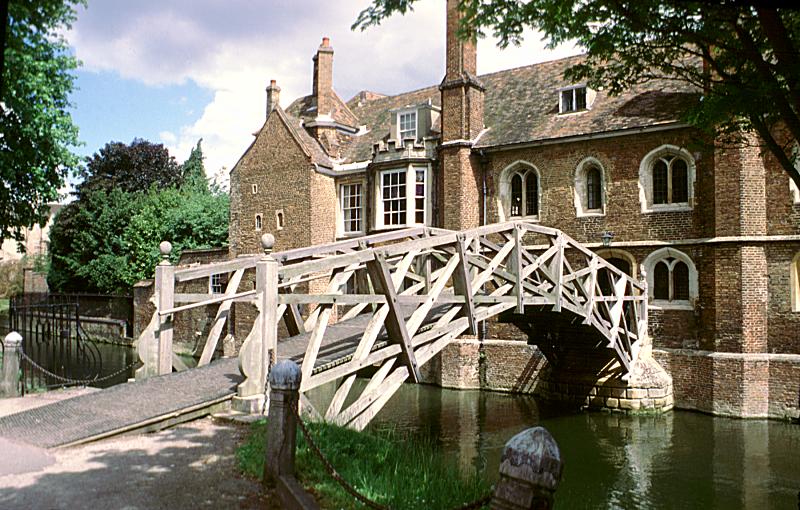
Cambridge bridge of sighs

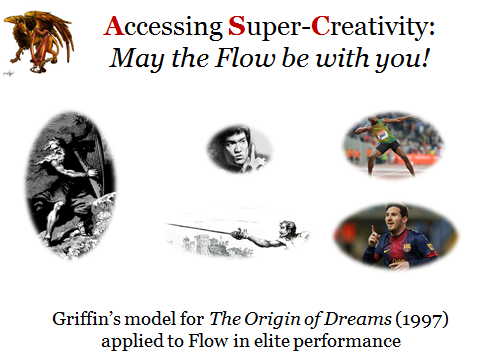
Csikszentmihalyi defined Flow, being ‘in the zone’, that ‘Zen feeling’, you’re relaxed, but wonderfully concentrated, quietly confident, feel calmly exhilarated at the challenge in front of you. [Read ALK’s introduction to Flow, Accessing Super-Creativity: May the Flow be with you!  here.]

This posting summarises and comments on papers and discussions related to Flow at the recent CMPCP conference at Cambridge University. [More about the Centre for Musical Performance as Creative Practice here.]

SELF-REGULATED PRACTICE PROCEDURES AND FLOW STATES

Marcus Araújó, who investigates Performance Studies and Psychology of Music & Education at the Department of Communication and Art at the University of Aveiro, is interested in Flow, the cognitive processes underlying performance and practice of music, musical expertise, and expert musicians’ preparation for performance.

Abstract

The aim of his study is to explore self-regulatory practice behaviours and Flow in highly-skilled musicians. A sample of 212 musicians answered a developed questionnaire about practice behaviours and Flow state. Results show that the skilled musicians were highly self-regulated. Most of the Flow characteristics were experienced whilst practising, but ‘action-awareness merging’ and ‘sense of control’ were less reported. Self-regulated behaviours, ‘metacognitive awareness’ and ‘self-efficacy’ were correlated with Flow dimensions, suggesting that these may contribute to the Flow experience whilst practising. ‘Goal setting’ negatively correlated with the ‘action-awareness merging’ dimension of Flow. No positive associations were found between the ‘action-awareness merging’ dimension and any or the self-regulated behaviours.

ALK summary 

Marcus is looking at the relationship between Flow and efficient practising. In particular, he has devised a questionnaire to measure various aspects of musicians’ experience. He has taken well-agreed indicators of Flow (from Csikszentmihalyi  and others):

  • a good balance between challenge/skills
  • clear goals
  • clear feedback
  • intense concentration
  • loss of self-consciousness
  • merging of action and awareness
  • sense of control and agency
  • losing track of the passing of time
  • a sense of deep satisfaction

Flow improves creativity and combats performance anxiety. But there is a lack of research on positive experiences whilst practising. This is why Marcus is looking at positive experiences, and at experiences during practising (as opposed to performance).

The experience of the ‘Merging of action and awareness’ is the Flow-indicator that is most beneficial for musicians.

Self-regulation and the optimal use of one’s own personal resources is the key to finding Flow and practising efficiently.

Marcus’ results show a negative correlation between Practice Organisation and Merging. Practice Organisation may inhibit Flow.

ALK comments

Marcus’ advance title was more ambitious “Entering into Flow-state through self-regulated behaviour: an explanatory study”. This is of course what we are all looking for, reliable ways to enter Flow  that we can use for ourselves, that don’t require the presence of a teacher. I can understand that with his revised title, Marcus wanted to avoid claiming more than he could deliver, but his study is already on a good path towards identifying possible gateways into Flow. And he has also noticed along the way some potential blocks to be avoided.  

The particular importance of Marcus’ work is that he is measuring experience. It is very useful to have data on, as well as descriptions of, Flow. Of course, there are limitations inherent in his methodology. Participants are reporting their own experiences, after the practice-session is over. There might perhaps be a tendency for self-reporting to be over-optimistic, but the strength of Marcus’ questionnaire is that it asks about many different aspects of experience. We don’t have to make any judgement about how successful or not these musicians were at entering Flow, rather (as Marcus has done) we can examine correlations between those different elements.

There might well be differences between how a practice-session feels whilst it is going on, and how one feels about it just afterwards – obviously, questionnaires cannot give real-time data on the on-going experience. Indeed, Csikszentmihalyi has already shown that the satisfaction associated with Flow is not felt during the process (which may require hard work,    Csikszentmihalyi  gives the example of rock-climbers making a difficult ascent), but afterwards, when one looks back on the completed task. And it seems to me that, since Flow is associated with an absence of self-consciousness, real-time testing carries a strong risk of Observer Effect (the process of measuring will change the activity that is being measured), even of disrupting Flow entirely. It is very difficult to devise real-time testing that would be ‘invisible’ to the participant.

Marcus is measuring subjective experience. This positions him somewhere in-between those of us who are investigating experience qualitatively (i.e. phenomenology) , and the ‘hard science’ approach of measuring objective variables. Such an in-between position might be particularly advantageous for establishing connections between subjective experience and more objective measurements from neuroscience and other disciplines.

Questionnaires are low-tech, low-budget and easy to administer. Collating the data is also straightforward. These are all significant advantages.

For all these reasons, I think Marcus’ approach has much to commend it. Other studies are producing descriptive material, but lack measured data. It would be very useful if other researchers could take up Marcus’ questionnaire and apply it to their own studies, so that large data-sets could be built up for comparative studies and meta-analysis.

From his data, Marcus pulls out some interesting ideas. I agree that the Merging of Action and Awareness is a key benefit of being in Flow, not only for musicians but also for sportsmen. It’s not the only such benefit, and in a future posting I will argue that it is not the most important one for elite performance. However, Marcus is looking at practising, and my next post will present my hypothesis that performance-Flow and practice-Flow are significantly different.

Marcus observed that goal-setting and practice organisation correlated negatively with Flow.  Can this be explained as conscious, Left-Brain processes interfering with subconscious Right-Brain Flow?  Or does referring back (during the practice session) to goals and practice-plans (established before the session started) disrupt the focus on the present moment, the Mindfulness that is needed for Flow? These are important questions, because Ericsson’s concept of Deliberate Practice suggests that conscious organisation of practice-sessions is highly beneficial. How can we organise practice efficiently without disrupting Flow?

My own investigation examines Flow within the Griffin model of the REM-state, and in connection with Ericsson’s Deliberate Practice and Ericksonian Hypnosis. [Read more here] Learning (in lessons or in self-regulated practising) is regarded as a Post-Hypnotic process, guided by Suggestions which can come from the teacher or from one’s own self-regulation. In a future posting, I’ll discuss how established knowledge from Hypnosis might contribute to our understanding of gateways into Flow and of how to manage blocks that prevent or disrupt Flow. Marcus observes that Self-Regulation is a key factor: I will propose that Self-Hypnosis could be a highly effective gateway into Flow.


Cambridge river flowing

 THE ABILITY OF REAL-TIME NAVIGATION IN THE MUSICAL FLOW: THEORY AND PEDAGOGY

László Stachó is a musicologist, psychologist and musician working as senior lecturer at the Liszt Academy of Music in Budapest ad at the University of Szeged. He is a CMPCP Visiting Fellow. His research focuses on Bartok analysis, 20th-century performance practice, emotional communication in musical performance and enhancement of attention skills involved in music performance.

Abstract

Laszlo argues that a true sign of musical giftedness is the ability to uncover meanings from musical materials – grounded in feelings – and to position into them in the act of performing with full concentration. Full concentration is fostered through the ability to navigate cognitively in the musical Flow, i.e. the ability to ‘be’ in  (i.e. to position into) the future, in the past and in the present – phenomenologically very often at the same moment.

In a forthcoming book, he presents the outline of a new, detailed pedagogical methodology for enhancing in musicians (regardless of their instrument and including singers) the ability of real-time navigating in the musical Flow, including the sub-abilities to imagine the upcoming structural units (i.e. to estimate by feeling their durations through forming a mental image of them), to form a clear mental image of the past musical units to which the upcoming ones are to be measured, and to feel deeply the present moment.

ALK summary 

Laszlo contrasted two viewpoints: technical, logical, looking for the end-result and content-centred, emotional,  focussed on the on-going process. In Music, these viewpoints can be contrasted as  Mathesis (i.e. science/learning/mathematics) versus Emotions. Today’s conservatoire methodologies are strongly rooted in 19th-century attitudes to technique. However, Emotion and Mathesis need not be mutually exclusive.

What is missing in theories of musical ability is the consideration of Affekt, and Time. What is missing in pedagogy is teaching how or what to feel, teaching how music happens in real time (as opposed to detached analysis).

Laszlo showed videos of master-classes with elite performer-teachers. Teaching how to play Chopin in 1961, Alfred Cortot said that the performers interpretation “should be transposed to the plan of a kind of intimate reverie”. “You need to dream the piece, not play”. Flow is compared to dreaming.  In another master-class, Maria Peres said “We have to believe that miracles can happen, and then they happen more and more often”.

Lazlo argues that imagery is strongly connected to feeling. Mindfulness is also important: Laszlo sees it as a short-term phenomenon, linked to particularly significant musical moments.

Laszlo drew attention to the performer-teacher’s Gaze. A certain characteristic direction and focus of the eyes reveals the cognitive process of reflection.

Another video showed high-tech analysis of Gaze, contrasting two footballers, an elite international (Ronaldo, popularly dubbed “the phenomenon”, and considered by experts and fans to be one of the greatest football players of all time) and a competent amateur. Analysis showed Ronaldo’s very precise direction of his eyes, switching very rapidly and precisely from the ball to opponent’s feet, hips (for predicting the opponent’s next movement), looking for empty space to move into.

For musicians, Laszlo recommends that the mental image should appear in your mind just before you play. This ability is a core ability, appearing in sports as well.

Three skills must be operated simultaneously:

  • Goal setting – being in the future
  • Mindfulness – being in the present
  • Reflection – being in the past

The quality of performance depends on thoughts and feelings in your mind during performance.

Real-time navigation of musical flow requires learning “how to let go”. We learn this by visualisation exercises involving imagined movement (e.g. the trajectory of a thrown ball).

ALK comments

This was a fascinating paper, even if Laszlo’s detailed methodology for entering into Flow was not presented here. We’ll have to wait for his forthcoming book (in Hungarian!).

It could be very productive for Laszlo and Marcus to collaborate, since Laszlo has methods for helping musicians enter Flow, and Marcus can measure the experience they have as a result.

Ericsson’s concept of Deliberate Practice argues against the idea of inherited talent. I would re-phrase Laszlo’s opening claim to avoid the notion of “giftedness” and re-prioritise for the audience rather than for the performer: a true sign of musical success is the ability to reveal meanings to the audience. The performer must extract those meanings from musical materials – grounded in feelings – concentrate on them fully during the act of performing.

Laszlo is grappling with a difficult but vital concept as he tries to help performers ‘be in’ the Past, Present and Future, all at once. Perhaps this happens in different ways on different time-scales. As we speak (whether formally or in casual conversation) we are able to link the words we just said, the word we are pronouncing now, and the words that will follow immediately afterwards, in order to create a sentence. Whilst we remain more-or-less aware of our previous sentences, and of the sentence we are saying now, we might or might not have a conscious intention concerning the next sentence. Only an experienced speaker can maintain a coherent structure for an entire speech or lecture, navigating sentence by sentence through the current paragraph, whilst keeping in mind what was said in previous paragraphs and what must be said in subsequent paragraphs. Most people would memorise or write down some kind of plan (an outline, or an entire script) for such a speech. All of these examples are shorter-term than and different from Laszlo’s triad of Goal Setting, Mindfulness, and Reflection.

In Early Music, we can side-step these complications by equating Music with Rhetorical Speech. Past-Present-Future relationships in Music can then be linked to similar progressions through Time in prose or poetry (as I just did, above). I’m strongly convinced that such a Metaphorical understanding of the Past-Present-Future relationships is more useful in the practical situation than abstract theorising. Other Metaphors are also valid (walking, dancing, visual imagery) and indeed Laszlo recommends visual imaging as a practical way to manage Past-Present-Future awareness.

In Early Music, we can think about Passions (affetti) that change across measured Time. Time is measured with a slower beat (Tactus, read more here), affetti change more frequently, than in later music.  This results in a different experience of passions/time, that may be more effective in facilitating Flow. My own research into Enargeia links changing affetti to the emotional power of detailed visual imagery. (More about Enargeia: Visions in Performance here).  Positive imaging is frequently used in sports training and in Hypnotherapy.

Early Musicians are very aware of the bias of Conservatoires towards 19th-century models of performance and pedagogy. One aspect of this bias is the conventional divide between Technique and Interpretation. Historically Informed Performance (HIP) does not accept this binary, but follows earlier models in which technical means are more closely interconnected with musical ends (e.g. keyboard fingering and phrasing). Nevertheless, the most recent research relates HIP to Emotions Studies, so that performance, passion and the audience’s perception are also all interconnected. [Read more about How did it feel? here.]

I suggest that Laszlo is seeing from his pedagogical and Flow-oriented viewpoint similar limitations of the standard Conservatoire approach that we see also from the HIP viewpoint. Certainly most Conservatoires are uncertain how to teach Emotions in music, whether in standard repertoire or in HIP. There are programs that address the problem of performance anxiety, but (as Marcus observed in the context of practising) there is less teaching of precisely how to work positively with emotions.

Laszlo’s plea for a holistic approach that unifies interpretation, technique, and emotions should be heeded. This is the same triad that we see in the historical concept of Music as Musica Mondana (the Music of the Spheres, that Otherworld of magic, myth and mystery that makes a musical interpretation deeply meaningful, somehow spiritual), Musica Humana (the harmonious nature of humanity, unifying body, mind, spirit and emotions) and Musica Instrumentalis (actual music, i.e. techique, whether instrumental or vocal).

My first reaction to the videos of master-classes was to remind myself that a master-class is a very asymmetric situation, in which everything favours the teacher. The student is not only processing new information & new instructions, and changing their whole performance, but they are doing all this in full view of the audience. It is highly likely that the student will not be in Flow. At worst, a master-class can become a vehicle for the teacher to demonstrate their own superiority, their own Flow, at the expense of the student. But these problems for the student in a master-class are advantages for the researcher studying Flow, since we can expect to observe crucial differences between the master in Flow and the student not in Flow.

Cortot’s idea of a performance with Flow as similar to dreaming relates to the theoretical underpinning of my own research into Flow within Joe Griffin’s theory of Dreams. (more about Griffin’s theory, such stuff as Dreams are made on: Representing Emotions in Metaphor here).

As soon as I saw Cortot’s face, with the characteristic Gaze to which Laszlo drew attention, I recognised a look that can be found in many historical paintings of musicians. The eyes are directed forwards, upwards and into the remote distance.

Zampieri eyes

This Gaze is associated in Neuro-Linguistic Programming with inner focus (accessing visual memory or invented imagery). In Hypnosis this eye movement is part of a standard test, and is considered to be a reliable sole indicator of a hypnotic trance. In Historical Action, it is associated with the hand gestures for Awe or Wonder: the complete set of Awe/Wonder indicators are seen in many religious paintings (saints receiving visions, calling forth or witnessing a miracle).


Admiror

In 2013, I made a case-study of John Bulwer’s 17th-century gesture of awe-struck worship for performances of the earliest surviving Spanish Oratorio, which tells the Christmas story of the Shepherds witnessing the appearance of the Angel and worshipping the Christ-child in the Bethlehem stable. Another, highly detailed case-study of medieval Awe by Javier Diaz-Vera of the University of Castille La Mancha was reported at the recent CHE conference on “Languages of Emotion”. I observed a startling strong connection between this Gaze and Flow in a class at Scoil na gCláirseach, the summer school of the Historical Harp Society of Ireland, in August 2014.

The Feldenkrais Method advises re-setting ones habitual Gaze by placing the head lower, and lifting the eyes. This releases neck vertebrae, with beneficial effects for wellbeing, confidence and voice-production. Similar adjustments are recommended in Alexander Technique.  I am experimenting with Gaze and Self-Hypnosis in my own investigations of Flow.

Gaze and historical performance are related in the study of Enargeia and baroque gesture – you point at what you see, which can be far off in the distance, within your imagined vision of the words you are singing. 17th-century texts frequently evoke distant mountains or the heavens.

Laszlo identifies Gaze as an indicator of Flow. I hypothesise that control of Gaze can facilitate access into Flow. In discussions at Cambridge, some delegates were concerned that such a Gaze might just be created deliberately: I don’t think this is a problem. “Fake it till you make it” applies – imitating the outward appearance of the Flow-Gaze can be expected to produce the genuine Flow-state within.

Peres’ comment “We have to believe that miracles can happen, and then they happen more and more often” can be appreciated in the context of Hypnotic Suggestion for confidence, suggesting that the ‘miracle’ of Flow happens more frequently as one gains confidence in it. The comment also makes sense in the context of Deliberate Practice: the harder you practice, the luckier you get. Flow can lift you to the very peak of your ability, but it cannot create abilities you do not have.

The Gaze analysis of footballers supports a finding in Matthew Syed’s Bounce [here] that elite sports performance is not necessarily associated with fast physical reactions, but rather with very fast subconscious processing of information coming in from visual observation. That visual observation is facilitated by rapid, accurate, but subconsciously directed eye movements. All this fits perfectly within the Griffin model of dreaming and the REM-state (Rapid Eye Movement). Eye Movement is another route into hypnotic trance (see Richard Nongard’s “butterfly” rapid induction here). I hypothesise that REM is not only an indicator of Flow in elite performance, but could be a gateway into such Flow 

Laszlo talks about “letting go” in order to enter the Flow-state for performance. I think this is a crucial building block for a better understanding of how Flow differs between training/practice and performance. At Scoil 2014 I deliberately asked students to ‘change gear’, to ‘let go’ as they transitioned from establishing technical skills with detailed slow practice into full-speed trials of the new skill. I combined this with deliberate re-direction of Gaze, in order to enter a particular Flow-state for the full-speed trial. I used the imagery of a young bird learning to fly: flap the wings slowly, learn how they work; then jump off and fly. In this context, Yoda’s advice also holds good:

Yoda do or do not

Conscious doubt of whether or not one can succeed is a strong inhibitor of the subconscious Flow needed for that success.

I like Laszlo’s formulation that “The quality of performance depends on thoughts and feelings in your mind during performance.” When I was a student at the London Early Music Centre, tenor Edgar Fleet taught me that “Early Music is transparent. The audience can see through to what you are thinking about. If you are thinking about fish-and-chips, that’s what they’ll get. If you are thinking of something more meaningful, they’ll get that instead”. If we think about technique, audiences may appreciate our skill, but their passions will not be moved.

As Laszlo said in his opening remarks, we need to focus on Content and Meaning. I would add that such focus does not ‘distract us from our technique’, rather it helps us ‘let go’, and enter Flow. Let your subconscious handle technique, give your conscious mind something more interesting to think about, communicate better with your audience and also enter Flow. Win-win-win-win!

In private conversations, conference delegates reported to me that Laszlo’s coaching musicians to enter Flow has wonderful effects. I’m sure this is true, and I’m looking forward to reading his book (yep, it’s time to study Hungarian!) And what is the significance of Hungary’s position as a world-leader in pedagogy for Music (Kodaly method) and Fencing?

Other conversations dwelt on Laszlo’s personal conviction that discussion of Flow should include the language of magic. This was resisted by scientifically-minded delegates at the Cambridge conference, and it might not play well for Laszlo in academia generally. But here are my reasons for supporting Laszlo’s position. Flow is not a modern phenomenon, even though it has been named only recently. Our ancestors, right back to the first cave-painters experienced Flow, even if they did not name or analyse what they were experiencing. [More on the REM-state and evolution here] Flow and Hypnotism are clearly related to ancient traditions of folk-magic and shamanism.

Meanwhile, modern practitioners of Hypnosis recognise that different clients require different types of language. The word ‘sleep’ is used less today in Clinical Hypnosis, though it is still highly effective in Rapid Inductions. ‘Hypnosis’ or ‘Trance’ can be used with clients who are confident and comfortable with the idea of being hypnotised. For other clients, it’s better to invite them to a ‘resource state’ or ‘your own special state’. When I work with students on Flow, I take my cue from Ericksonian Hypnosis and adapt my vocabulary to match the student’s preferred language.  For an Early Music fan, I’ll talk about musica mondana and musica humana; for a new-age enthusiast, I’ll rephrase this in terms of Cosmic Harmony. For the nerd (yes, there are some Early Music nerds!), the Star Wars ‘Force’ may be the best metaphor. The Celtic Otherworld or Shamanism could be very powerful metaphors for someone who responds to such imagery. For someone with a science background, the metaphor of a computer, with its memory banks, operating system, keyboard inputs and background functions can be helpful.

From an Ericksonian perspective, it is the client/student, not the therapist/teacher, who chooses the vocabulary. From a historical perspective, ancient beliefs in music and magic are indeed related to the modern experience of music and Flow.  From my own, practical point of view, I’d recommend widening the vocabulary as much as possible, so as to offer Flow to students from all kinds of backgrounds. “Accept and utilise” is the Ericksonian mantra.

Thinking of the Historical priority that privileges the audience over the performer (in contrast to the 19th-century glorification of the ‘artistic genius’ and ‘expressive performer’), I raised the question at the Cambridge conference: is there any correlation between the Performer being in Flow, and audience members having a Strong Experience (shivers down your spine, the tingle factor, those powerfully emotional reactions to music)? The research project I’ve now begun on The Theatre of Dreams: Operatic Performance as an Early-Modern REM-state Activator assumes that around the year 1600 there was such a correlation, and draws on Ericksonian Hypnotism as an explanation. [More here]


Cambridge Mathematicians Bridge

WHAT COULD BE UNIVERSAL ABOUT MUSICAL IMPROVISATION? SITUATING THE COGNITIVE APPROACH

Andrew Goldman is a PhD student at the Centre for Music and Science, University of Cambridge. In addition to his scholarly research, he is a pianist and composer. Recently, his musical entitled Science! The Musical was premiered in Cambridge.

Abstract

Andrew Goldman reviewed trends in ethnomusicological and critical research on improvisation, showing how they challenge cognitive-scientific approaches and also how they share certain motivations (such as exploring performers’ creative processes). With specific reference to his own experimental research paradigms working with jazz musicians, he shows how such sensitivity can be an important check on the universalising tendency of scientific theorising, but also a way to demonstrate the broader validity of such scientific theories. This is accomplished through exploring modes of performance in terms of cognitive-scientific theoretical frameworks – such as motor theories of perception – in order to expand the explanatory scope of scientific conclusions beyond a particular musical tradition.

ALK summary

Andrew Goldman showed how daunting a task the serious, cognitive-scientific researcher faces, in attempting to establish solid,  reliable data for such richly complex activities as music-making and improvisation. His carefully designed and executed experiment established that time-delayed Feedback disrupted the performance of jazz pianists significantly more when they were improvising. From this, we can deduce that improvising (whatever that means: for this experiment the pianists were just instructed to improvise, and the results were accepted) is indeed different, and that the difference is somehow related to Feedback and to Time.

ALK comments

I admired this paper precisely because Andrew G’s conclusion was so carefully limited, precise in what it did not attempt to claim. Painstaking and sustained effort was needed to reach even this modest conclusion. This encourages great respect for those who are investigating complex phenomenon within the ‘hard’ scientific disciplines. We do need this check and balance on the tendency to universalise individual experience to general theory. Even if we can discover more, more quickly, through an experiential, phenomenological approach, we must constantly test the assumption that such experiences have any more general significance. A rounded view of complex phenomenon is likely to come about from a multi-disciplinary combination of various approaches, both “hard” and “soft”. [Andrew G tells me that he doesn’t like these labels, but I use them as a convenient shorthand, and with proper respect for both sides].

This paper was not about Flow. But I was interested in the topic of Improvisation anyway. I improvise a lot (in HIP styles) in performance; I direct The Harp Consort, an ensemble renowned for its HIP-improvisation; I’m a teacher of HIP-improvisation and I’m personally convinced that Improvisation is a valuable skill for any musician. Andrew Goldman gives us solid evidence that “improvising” [whatever that means] is “different”.

I suspect that scientific investigation of precisely how Improvisation is “different” will run into similar difficulties as scientific investigation of  Hypnosis, which has a much longer history. Neuroscientific observations of Hypnosis identify the characteristics of the activity happening (hallucinated or suggested under Hypnosis, or actually happening in a normal conscious state) rather than particular characteristics of Hypnosis itself. I suspect we will find the same is true for Flow. But in the face of this serious difficulty, Andrew G has established one clear difference, relating Improvisation [whatever that means] to Feedback. And we know from Csikszentmihalyi that Feedback is related to Flow. I have hypothesised that Improvisation may be related to Flow, and that Improvisation may be a gateway into Flow.

One possible explanation could be that Improvisation requires an Altered State of Consciousness, an inner focus that facilitates the calling up of material either from the memory, or from the imagination, or from the imaginative re-combination of memorised and imagined fragments. In ensemble improvisation, this inner focus must be combined with the processing of external information, the material improvised by other musicians. In any improvisation, this inner focus must be combined with the processing of the sound of the music one is creating, i.e. with Feedback. Improvising may self-induce a trance. In trance states, Suggestions can have particularly powerful effect. When improvising, it is the sound of this note that Suggests what note might follow. If that Feedback/Suggestion process is disrupted, the effect would be stronger in trance than in normal consciousness.

In one way, that explanation of mine is useless. It replaces one word we can’t define, Improvisation, with another word we can’t define, Hypnosis. In spite of all the years of investigation, there is still no accepted definition of Hypnosis, and no accepted scientific indicator of trance. Just as with Flow, there is a list of typical indicators: if someone experiences enough of these indicators, they are probably in that state. But the benefit of linking Improvisation, Flow and Hypnosis (no doubt there are distinctions to be made, alongside those links) would be that we could take the knowledge of Hypnosis acquired through many decades of practical investigation and scientific study, and quickly apply that knowledge (mutatis  mutandis) to Flow and/or Improvisation.  

Certainly, we should not be ashamed that we don’t really know what Improvisation or Flow is, in the strict scientific sense. In that sense, we don’t yet know what Hypnosis is, but we do know that it works, and that in certain circumstances, it can work magic, wreak miracles. An phenomenological approach might open up ways to extend good experiences of Hypnosis, Improvisation and Flow to the benefit of more people, more often. A ‘hard’ scientific approach can provide necessary balance by searching out chinks in the links, establishing how these related phenomena differ from each other. Ericksonian Hypnosis emphasises how one person’s experience can differ from another’s, and searches for ways to accept and utilise those differences. Can hard science establish what is universal, beyond such individual differences?

water drops

In the meantime, my own experiential investigations into the phenomenology of Flow and the Theatre of Dreams continue. More posts on these subjects soon. In particular, I will propose that Time Distortion effects (much studied in Hypnosis) are crucial to the understanding of two different kinds of Flow, in practice and in performance.

May the FLOW be with you

Please join me on Facebook https://www.facebook.com/andrew.lawrenceking.9 and visit our website www.TheHarpConsort.com .

Opera, orchestra, vocal & ensemble director and early harpist, Andrew Lawrence-King is director of The Harp Consort and of Il Corago, and Senior Visiting Research Fellow at the Australian Research Council Centre for the History of Emotions.

Accessing Super-Creativity: May the FLOW be with you!


May the FLOW be with you

Many musicians, sportsmen and women, creative writers and composers know the special state of consciousness described by Mihaly Csikszentmihalyi as Flow. It’s being ‘in the zone’, that ‘Zen feeling’. It’s related to Mindfulness. You’re relaxed, but wonderfully concentrated on the task at hand; you feel quietly confident that you can manage it, you feel calmly exhilarated at the challenge it presents to you; you don’t feel self-conscious, you are just ‘there’, in the moment, in the groove; somehow, Time seems to slow down, so that you can effortlessly take in all the incoming information, calmly make an elegant decision, and execute your response perfectly; your artistic intentions and your physical actions unite perfectly; you are working at high efficiency, but you could continue for hours without getting tired; you feel happy, even elated, yet somehow also calm.

Flow notes

It’s a great feeling, and it is the ability to find Flow just when it matters most that makes the crucial difference between an elite performer, musician, martial arts practitioner or sportsman, and one who is merely average. But when Flow is blocked by performance anxiety, ‘stage-fright’ for actors or musicians, ‘choking’ for sportsmen, the effect can be devastating. Under the blocking conditions of high pressure and no Flow, elite performers find themselves unable to carry out basic techniques, experienced airline pilots make elementary, disastrous errors; international sportsmen’s competence plunges to rock-bottom. Just think of the Brazil football team in the World Cup semifinal: something happened to disrupt the Flow of their previous performances, and they crashed into incompetence and embarrassing defeat.

Brazil world cup defeat

But Flow is not only for elite perfomers. Accessing Flow can lift any of us beyond the limits of our normal abilities, so that we perform at our very best, ‘better than we know’. Flow is the ideal state not only for high performance, but also for the most effective learning. Flow seems to access something beyond the ‘here and now’, and may also be communicable between members of a team, between performers and audience. Perhaps the Star Wars metaphor of a mysterious Force uniting us all is not so far-fetched.

Access Flow you can

I suggest that in many disciplines we could teach Flow from the very first lessons, allowing students to make faster, deeper and more satisfying progress. Not just (for classical musicians) Technique and Interpretation or (for sportsmen) techniques and tactics, but (for anyone) how to get into Flow at whatever level of technical competence and interpretative insight.

Cellist

There is exciting work already in progress about teaching Flow to musicians, some of which was discussed in a flurry of papers at the recent CMPCP conference at Cambridge Univeristy. Lazlo Stacho (Liszt Academy, Budapest) is developing exercises to help classical musicians enter Flow. Marcus Araujo (University of Aveiro) is measuring whether or not musicians are indeed experiencing Flow, according to criteria based on Csikszentmihalyi’s work. In a properly cautious initial study, Andrew Goldman (Centre for Music & Science, Cambridge) has established measurable differences in cognitive processes when musicians are instructed to ‘improvise’.  Henrice Vonk is looking at Flow and Mindfulness.  I’ll summarise and comment on these CMPCP papers in a future post.

Zampieri eyes

 Elsewhere, Frank Heckman is working with Flow with both elite sportsmen and music students in the Netherlands. In Bremen, violinist and psychotherapist Andreas Burzik works on Flow for orchestral musicians, drawing parallels for businessmen. I’ll comment on Burzik’s approach in another future post.

Accessing Super-Creativity

My own research for the Australian Centre for the History of Emotions investigates Flow as an Altered State of Consciousness, within Joe Griffin’s model of the REM-state. Read more about Griffin’s Dream Theory here.


My aim is to build on existing work, and on my own personal experience of Flow as an elite performer (music), competent practitioner (sailing, a favourite example of Czikszentmihalyi’s) and elementary student (fencing), in order to develop exercises, teaching techniques, training conditions and rehearsal methodologies that facilitate entry into Flow.

My approach is therefore experiential, phenomenological and practical. Ethical considerations dictate that my first experiments are personal: observing, tweaking and testing my own experiences of Flow. When I’m teaching Flow to students, concern for their progress must outweigh the demands of pure research. My practical purpose is to help them access Flow. I can observe and monitor their work, and/or ask them to self-report on their personal experience, only in so far as this does not negatively impact their learning.

How far might that be? Lack of (negative) self-consciousness is one of the characteristics of the Flow state. This should serve to warn us that awareness of being observed will tend to work against Flow. We should expect to find the Observer Effect (familiar from quantum physics) at work: attempts to observe and measure sensitive processes will certainly effect the process itself, and that effect will probably be negative. In the worst case, trying to observe Flow (perhaps with an elementary student), might disrupt the Flow state we are trying to access and observe.

Schrodingers Cat

Neuroscience offers some fascinating data, and some understandings that can be applied to this search for Flow. But in the search for descriptions, explanations and recommendations that can be meaningful for students, metaphors and physical processes are likely to be more useful than neuroscience. It is more effective to ask a student to “focus inward” (a metaphor) or to “notice whether you have more weight on the right foot, or on the left” (directing attention to a physical process), than to “de-activate the anterior cingulate”, even if all three instructions are in some way equivalent, associated with switching conscious awareness away from externals.

cingulate

Another difficulty with a ‘hard science’ approach is that playing music, let alone finding Flow whilst playing music, is a complex activity full of rich detail. Reducing the experience to one variable may not be possible, or may be so distorting that any observations are invalid. It must be assumed that the music, one’s emotions and Flow itself will be affected by the intrusion of measuring equipment and the implied presence of an Observer.

Observer Effect

Looking for pathways into Flow, we first need to explore the territory, see the forest not the trees. Putting individual leaves under the microscope can come later, when we have learnt by experience and practice how to navigate the zone confidently.

A good parallel might be the scientific investigation of Hypnosis in the last half-century, where the phenomenological approach has led the way. Clinicians have discovered what works – experientially and practically – for them and for their clients, blazing a trail along which empirical verification and neuroscientific measurement can follow. Indeed the experience of Flow seems to have much in common with (self) hypnosis, and this will be one of the main lines of my enquiry.

Accessing Super-Creativity

My idea is to unite Csikszentmihalyi’s Flow with Ericksonian Hypnosis and Ericsson’s concept of Deliberate Practice (the importance of many hours of effective practice, rather than innate talent, in creating elite performance), all within the framework of Griffin’s work on the REM-state. I am confident that this will offer a better understanding of the experience of Flow, improved success in accessing Flow, and greater efficacy in practice and performance. Watch out for more posts on Flow, soon.

Locking Attention

Please join me on Facebook https://www.facebook.com/andrew.lawrenceking.9 and visit our website www.TheHarpConsort.com .

Opera, orchestra, vocal & ensemble director and early harpist, Andrew Lawrence-King is director of The Harp Consort and of Il Corago, and Senior Visiting Research Fellow at the Australian Research Council Centre for the History of Emotions.
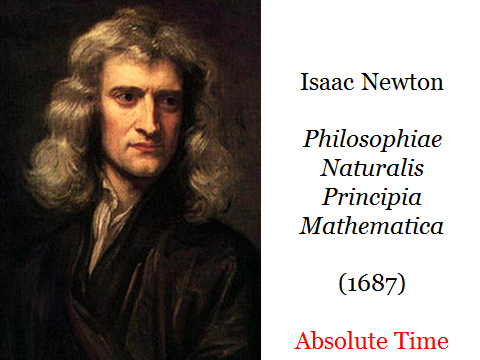
“such stuff as Dreams are made on”: Representing Emotions in Metaphors

Griffin Harp

A groundbreaking new theory that puts dreaming at the heart of our emotional well-being…


Why do we dream? What do dreams mean? Why is the content of our dreams so very often bizarre? Why do our dreams seem so intense and significant when we experience them, and yet are usually forgotten afterwards?

How do dreams connect with emotions? What is the link between learning and dreaming? Why does everyone love a good story?

In what has been described as

One of the most important scientific breakthroughs of the last hundred years

Dr Farouk Okhai (consultant psychiatrist and psychotherapist at the Milton Keynes Primary Care NHS Trust)

Joe Griffin discovered how and why dreaming evolved in mammals and helped unravel what dreams actually mean. Thanks to Griffin’s work, we now know what dreams are doing for us: they keep us sane, or, in certain circumstances, can drive us mad. The explanation turns out to be strikingly simple and satisfying. And this knowledge opens up wonderful new possibilities for humanity: greater creativity, improved mental health and deeper understanding of who we are.

Griffin and Tyrrell convincingly show that dreaming is vital for mental health and that the brain state we associate with dreaming (the REM state) also has crucial importance for when we are awake. This understanding of the REM state explains not only how our brains construct a model of reality, but also explains hypnosis, how creative behaviour works, and why we develop mental illnesses such as depression and psychosis.

The conclusions arrived at in Dreaming Reality are breathtaking, and considering the freedom the reader has to apply them to his or herself, they prove to be astonishing. This book gives such rational explanations that the culminative effect is like turning a light on in a room of shadows.

Mental Health Practice (the UK’s leading practice-based journal and e-resource for professionals)

Dreaming Reality

Those introductory paragraphs come from the publishers’ blurb to  Griffin and Tyrell’s 2004 book Dreaming Reality.

In my own words, I’ll now attempt to summarise Griffin’s model and show why it is so significant for music, drama and History of Emotions studies in general, as well as for the Australian Research Council’s Centre for the History of Emotions (CHE, to which I am attached) in particular. More about CHE here. 

Joe Griffin is a research and clinical psychologist based in Ireland. His work was initially published in The Therapist magazine from 1993, and brought together as a monograph The Origin of Dreams (1997).

The Origin of Dreams

This was updated and revised in non-technical language with co-author Ivan Tyrell (psychotherapist and Principal of MindFields College, which trains over 12,000 NHS and social welfare staff each year) as Dreaming Reality (2004). A further update has just been published, Why we Dream: the definitive answer (2014).

Why we dream

Griffin’s theory of Dreams suggests a new Organising Idea with wide applications across many fields, and has led to the founding of a new school of Psychotherapy, based on the  Human Givens (Griffin & Tyrell 2003). More about the Human Givens College here.

Human Givens

The Expectation-Fulfiment Theory of Dreams

Joe Griffin’s Expectation-Fulfilment Theory of Dreams offers a psychological, biological and evolutionary explanation that is consistent with neuroscientific data and has already led to measurable clinical success. It amounts to a new Organising Idea, a simple fundamental concept that underpins many observed complexities. In essence, Griffin claims that:
  • Dreams are associated with the Rapid-Eye-Movement (REM) state during sleep
  • The biological function of Dreams is to resolve unfulfilled expectations (positive or negative), generated whilst awake
  • Dreams re-present unfulfilled expectations in Metaphors, so that they can be resolved by pattern-matching to recalled memories.
  • Some 40,000 years ago, humans evolved the ability to access the REM-state whilst awake: this facilitated learning, language, tool-making and higher culture.

Griffin’s metaphor for the REM-state is the Theatre of Dreams.

Griffin suggests that the evolutionary moment when human beings achieved waking access to the REM-state was associated with the development of language, and with conscious awareness of past, present and future. This idea, connecting dreams with creativity, emotional expression and high culture, is explored in more detail in Godhead: The Brain’s Big Bang (Griffin & Tyrell, 2011).  

Godhead

Application to mental health


Griffin’s theory offers an explanation of the observed links between creativity and mental illness. It also offers a new model for the treatment of Depression, one that has proved highly effective in clinical work.

The model predicts that anti-depressant drugs will be largely ineffective (except in so far as they reduce the amount of REM-sleep in sufferers), that Freudian therapy involving deep introspection about negative events in the past will have a negative effect, and that the Cognitive Behaviour Therapy and other talking therapies will be more effective if re-aligned in accordance with the Griffin model. These predictions seem to be borne out in practice.

The practical application of the model and clinical results are reported in Griffin & Tyrell How to lift depression – fast (2005) This book is written in non-technical language, and is intended to help sufferers and their families.

How to lift depression ... Fast

Applications to History of Emotions studies


Emotions drive our lives – in Tyrell’s words, “Emotions motivate behaviour change, so that emotional needs can be met” (private communication). The Human Givens concept compares the psychological resources evolution has given us to the basic human needs. Those needs, Tyrell points out, are hierarchical: food & shelter are fundamental to basic survival; security, control, status, privacy and attention are necessary for mental well-being. Once these lower needs are met, higher needs emerge: intimacy, achievement, a sense of meaning, learning, exploring. These higher requirements satisfy the needs of the spirit.

Thus Human Givens presents “a clear framework of what all human beings need to live mentally healthy and fulfilling lives – based on a solid understanding of the essentials needs and resources we are all born with, whatever our circumstances or cultural background… Because this knowledge about human psychology, emotional health and behaviour is so fundamental to every human interaction and endeavour, the skills and knowledge encompassed in this approach are widely applicable to a wealth of other fields.” Tyrell seeks to provide “a shared language – a lingua franca – that also allows clear and jargon-free communication between practitioners of different disciplines”.  [Human Givens College]

It would seem that the Griffin & Tyrell’s Human Givens approach might have much to offer Emotions studies of historical Change, as well as for improving understandings of mental and spiritual well-being within many different cultures and social groups, both historical and modern.

Dream Theory & the creative arts


But let’s now look at that area of History of Emotions studies that is concerned with the creative arts, whether literary, visual or aural, crafted or performed. Griffin’s theory of Dreams and the REM-state explains how the mind’s capacity to pattern-match, to resolve emotionally charged expectations by means of Metaphors, is the fundamental human resource that enables the power of music, drama and art-works of all kinds. Griffin’s model places Metaphor and Story-telling at the centre of human processing of intense emotions. It therefore offers an evolutionary, biological and psychological underpinning to the creative arts, as well as to emotional engagement with daily life, social interactions and major events throughout history.

Waking access to the REM-state offers a scientific model for religious visions, artistic creativity, historical events that appear to evidence mass-emotions etc. Specific historical phenomena featuring in CHE’s investigations (histories of religion, witchcraft, historical attitudes towards soul/mind/body, emotional connections that shape the modern) would appear to be case studies for which Griffin’s model may offer a theoretical framework.

With its explanation of the fundamental significance of Dreams and Metaphors, Griffin’s work offers a theoretical underpinning for literature, music, fine art and indeed almost any human cultural expression, as well as for experiences of religious visions or demonic voices. It links metaphors and emotions to mental well-being. It also explains the observed susceptibility of highly creative individuals to mental illness. I suggest that it is highly relevant, indeed that it could become a keystone for History of Emotions studies.

Dream Theory & the Australian Centre for the History of Emotions

For CHE in particular, there are two additional features of the theory that are highly attractive. The theory offers a profound and subtly different understanding of mental illness, in particular Depression, in which sleep disturbance (typically, greatly increased amounts of REM sleep) is not merely a symptom, but rather is the major cause of loss of energy, drive and enthusiasm whilst awake. It explains why Depression is increasingly prevalent in modern societies. It explains why treatment with anti-depressant drugs is only slightly more effective than placebos, and shows how to re-focus talking therapies most effectively.
 Dreamtime Ku-ring-gai_Chase_-_petroglyph
And of course, Dream-Time is where history, religion, arts, performance and social well-being meet in Australian native culture.
I believe that Griffin’s work might provide a framework that could allow CHE to tell a compelling story, a story that could be relevant to Australians from all walks of life, and appreciated even by politicians and fund-holders.
A new, profound yet elegantly simple scientific theory supports all kinds of varied, detailed historical research across many humanities disciplines. New insights relate Early Modern History to modern life, offering simple and inexpensive ways to improve the mental well-being and quality of life of the entire population. There is a special connection to Australia and to native Australians, whose culture preserves a beautiful metaphor of the modern theory in their ancestral Dreaming.
I think CHE could be proud to tell such a story.
Dreamtime

New Investigations with Dream Theory

Meanwhile, in practical terms, I’m confident that Griffin’s work can provide illuminating insights for many investigators. It certainly has for me. Dream Theory has meshed perfectly with my current CHE investigation into Enargeia (the emotional power of detailed visual descriptions, linked to so-called ‘word-painting’ in early operas, and to Shakespeare’s spoken evocations of imagined scenes, performed on the bare stage of the Globe Theatre).
Enargeia
And Griffin’s ideas about the REM-state have sparked off two new projects:

Accessing Super-Creativity: May the Flow be with you!


I hypothesise that Flow, as described by Csikzentmihalyi, is an Altered State of Consciousness, which can be understood within the Griffin model of the REM-state. I link Flow also to Eriksonian hypnosis and Ericsson’s Deliberate Practice.

My aim is to build on existing work, and draw on my differing personal experiences of Flow as an elite performer (music), professionally competent sailor, and elementary student (fencing), in order to develop exercises, teaching techniques, training conditions and rehearsal methodologies that facilitate entry into Flow.

Accessing Super-Creativity

The Theatre of Dreams: 

Operatic Performance as an Early-modern REM-state Activator


Period performance practices around the year 1600 show a strikingly close correlation to known gateways into trance (e.g. Ericksonian hypnosis).

Working from Griffin’s model of the REM-state as the “theatre of dreams”, I hypothesise that singers in the first operas were inducing their audiences into an Altered State of Consciousness by means of regular rhythm, particular patterns of speech, persuasive suggestion and authoritative commands, in which deep relaxation in slow rhythm was mixed with sharp calls for attention.

In the REM-state, audience members would be highly susceptible to the metaphors and story-telling of 17th-century drama, which might well then succeed in ‘moving the passions’.

The Theatre of Dreams

You can read more about all these research strands within my investigations for CHE here. 

Please join me on Facebook https://www.facebook.com/andrew.lawrenceking.9 and visit our website www.TheHarpConsort.com .

Opera, orchestra, vocal & ensemble director and early harpist, Andrew Lawrence-King is director of The Harp Consort and of Il Corago, and Senior Visiting Research Fellow at the Australian Research Council Centre for the History of Emotions.
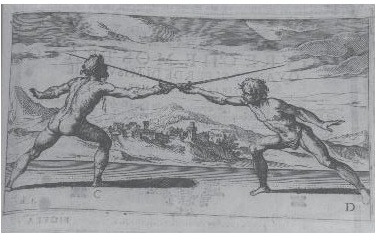
How did it feel? A History of Heaven, Hearts & Harps

HISTORY OF EMOTIONS

We can imagine a time-travelling Arts journalist asking: “You just heard the first opera… you played continuo next to Claudio Monteverdi… you fought a duel  with Rudolfo Capo Ferro… you danced with Louis XIV … you acted for William Shakespeare … you went drinking with Henry Purcell … you built a pendulum clock according to Galileo’s theories … you can see with your own eyes that the sun goes around the earth… Domenichino Zampieri made you a harp with three rows of strings… How did it feel?”


How did it feel


This question – easy to ask, but rich in potential for surprising answers and further, more profound investigations – might well be the unofficial motto of the Australian Research Council’s Centre for the History of Emotions. From nodes at major universities and conservatories across Australia, in research and performance projects around the world, and across a wide range of humanities disciplines, CHE’s investigators not only look at Emotions in History, but also use Emotions studies as a lens by which to view a broad field of historical themes, and to understand how Emotions and History continue to Shape the Modern.

I am a Senior Visiting Research Fellow for the Centre, attached to the University of Western Australia, and this post was first presented at a joint event of the World Harp Congress and the Centre for the History of Emotions in Sydney,  Australia in July 2014.

CHEWHC Sydney 2014 logo


At the beginning of the baroque, around the year 1600, the period aim to muovere gli affetti – move the passions – gives us confidence that Emotions studies are historically appropriate, as we try to understand the role of the harp within the music and culture of the time.

So whose passions are we trying to move? Simply to ask the question re-locates the focus onto the audience, a much-needed counter-balance to the academic tradition of studying composers and works, and to the conservatoire habit of concentrating on what performers do.

Audience Studies are a vital new area of musicological investigation – what makes music meaningful for the listener? How can we attract new listeners? Why are we losing touch with some listeners?  I’m privileged to collaborate on such research with Prof John Sloboda at the Guildhall School of Music & Drama. And studies of Historical Audiences are an important part of our work at CHE, led by Dr Penelope Woods.

theatre-palais-cardinal Louis XIII

EARLY MUSIC & THE HARP

This harp-flavoured post introduces some general ideas concerning Early Music, and connects these ideas to the aesthetics of two particular cultures: Italy around 1600, the period of Monteverdi’s first opera, Orfeo, in which the harp plays a major solo, as well as within the continuo ensemble; and the late 18th-century, where we have the Mozart Concerto for traverse flute and single-action harp, and CPE Bach’s Sonata (it’s debated whether this is for Italian triple harp or French single-action harp). Orfeo, CPE Bach, Mozart

One of my tasks here is to do some myth-busting, correcting some favourite misunderstandings of what Early Music is about, and pointing out some alarming discrepancies between what we see in historical sources and the standard operating procedures of today’s Early Music. So I have some images to help identify a popular myth, and to show when we’ve bust it. But since I wasn’t quite sure what a myth should look like, and I didn’t want to start exploding sacred cows, I’ve chosen the metaphor of Vampires, both modern and pseudo-old, which (like mistaken ideas) hang around half-dead, until someone arrives to slay them.  And according to the principles of the baroque opera stage, the good guys will be on my right, the bad guys on my left.

myth busting

And I have this genuinely 17th-century image to draw your attention to important historical information that you might want to follow up for yourselves later. You can read more on my website: www.TheHarpConsort.com  as well as elsewhere in this blog.

Attentionem poscit and art


Right side… Good Doggy.

Not Authentic

Over the last half-century, recording companies helped to create an audience for Early Music by promoting performances that were advertised as “on authentic instruments”, “on period (or original) instruments”. Of course, this was just a shorthand way to label what was meant to be a fundamentally different approach to music-making, but it left a misleading impression that the instruments themselves, whether original or modern reproductions in period style, were the most important ingredient for achieving Authenticity.

HIP not Authentic

Nowadays, we tend not to use the A-word, since we all recognise that complete historical Authenticity is impossible. And taking the other meaning of that word, Authentic in the sense of true to one’s personal beliefs, we also recognise that every musician assembles their musical identity from many influences, that historical information as well as inspiring teaching or convincing performance can shape what each of us feels to be “true” to our personal values. So let’s leave behind us the rather negative concept of Authentic Instruments, and use the modern phrase, Historically Informed Performance, abbreviated as HIP. After all, the only alternative to being Historically Informed is to be Historically Uninformed!

A more recent attempt to describe what we mean by Early Music (that term is still frequently used, informally and amongst performers, but its more hip to say “HIP” in academic circles), was that the musicians would seek to respect ‘the composer’s intentions’. This phrase has also been rejected, because it plays into the old-fashioned, Romantic idea of idolising the Master Composer, and because baroque composers didn’t want you to play what they wrote. Like a modern singer-song-writer, or a jazz-composer, baroque composers expected you to take their idea and make it your own, with improvised variations, your own touches of arrangement, even wholesale re-writing.

Respecting the composer's intentions

LOOKING BACKWARDS THROUGH HISTORY?

Looking backwards through history

Another, more subtle danger is that we find ourselves looking back into the past, from our modern perspective. The recent past (that fun CD released last year) looms large; close behind are ghostly shadows of our early musical education, and of the education that shaped our first teachers. We might be smart enough to avert our gaze from all those Romantic geniuses who clog the middle distance, and there at the far end of a dark tunnel we can just make out Mozart, Handel, Bach and (very far off now) Monteverdi. The problem here is that we are looking the wrong way down a telescope – the object of our study appears very distant and small – and we are looking the wrong way through time.

The way to understand Monteverdi is not via Mozart, Handel and Bach. Even if we know those later guys better, Monteverdi didn’t know them at all. We need to approach Monteverdi from inside the culture of his own time, not looking backwards into the past, but looking around us in his historical present.  We need to look sideways, not only at the harp, but at other kinds of music, at other performing arts, at literature and paintings, at period science, at dancing and swordsmanship. To understand his culture fully, we need to start a bit earlier – perhaps with the generation of his teachers – and move forwards through time with him. Then we might have a better idea of “how does it feel”.

Looking sideways inside history


Otherwise, if we view old music only from our modern perspective, we may end up trying to squeeze an ancient culture into an utterly different framework, a round peg into a square hole.

As we begin to read what period writers themselves considered important, we quickly realise that our modern concepts of Technique and Interpretation, and of Conservatoire teaching in general are inappropriate. But much of the discussion amongst today’s Early Musicians is also dominated by topics that are hardly mentioned by 17th-century writers. The pages of Early Music Magazine, and online discussion groups give a lot of space to arguments about pitch, temperament and vibrato.

Today's priorities


But there is nothing about any of these subjects in the most important documents describing the performance practices of the early seicento: the preface to the first opera, Cavalieri’s Anima e Corpo (1600), the preface to the second opera, Peri’s Euridice (also 1600), Caccini’s Le Nuove Musiche (1601), Viadana’s figured-bass motets of 1602, Monteverdi’s Orfeo and Agazzari’s guide to continuo-playing, Dal Sonare Sopra’l Basso (both 1607) and the preface to Gagliano’s Dafne (1608), Monteverdi’s Vesperae (1610), his prefaces to Combattimento and the Lamento della Ninfa (1636), Shakespeare’s advice to the players in Hamlet (1600) and the anonymous circa-1630 guide for a music-theatre’s artistic director, Il Corago.

Sources circa 1600


Meanwhile, we know that renaissance courtiers spent several hours every day for most of their lives, practising dancing and training with swords. If we want to know how did that feel, how such training affects posture, musculature, and modes of thought, we can read and try out the recommendations of the Book of the Courtier, Castiglione’s Il Cortegiano (1528 and many reprints across 20 European cities and six languages, it was one of the most widely-read books of the time), Negri’s dance-treatises (1602 & 1604) and Capo Ferro’s Gran Simulacro of the Art of Swordfighting (1610).

Sources circa 1600 list

FALSE FRIENDS

The past is a foreign country Hartley and Howard

When learning a foreign language, we have to take care with so-called ‘false friends’, words that sound familiar but have quite a different meaning in the other language. For example, if you are new to Australia, it might help you to to know that a hot Barbie is not a blonde doll.Smiley

So it is with the language of the past – familiar-sounding words mean something quite different, and we need to understand a different set of assumptions.

Hexachord


There were only six notes in the 17th-century scale, the Hexachord, so that ascending above A-la imposes a choice between B- fa and B-mi. This choice is guided by different rules in different periods, and it’s often left to the performer to make an appropriate decision: the notation may leave the question open. We absolutely cannot assume that What You See Is What  You Get. The meaning of the notation itself has changed, over the centuries.

And when we move out from tiny details to the big picture, we see utterly different use of language, showing that the underlying assumptions are also utterly different. Around the year 1600, what is Music? First, and most importantly, it was the Music of the Spheres, musica mondana, the perfect music made by the movement of the stars and planets as they danced in their circular orbits around the earth, turned by the motion of the highest sphere, the primum mobile. This is the music of the cosmos, turned by the hand of God. Secondly, we have musica humana, the harmonious nature of the human body. Last of all comes musica instrumentalis, actual sounds made down here on earth, with our voices and harps.

Three kinds of Music

Some other 17-century ‘false friends’ to beware of are Harmony (which just means, organised sound; the most significant organisation is usually rhythmic rather than chordal harmony in the modern sense); and  Tempo (which just means time, measured in semibreves, whole notes, which last about two seconds).

False friends

ASSUMPTIONS

So much for language. Let’s explore some basic assumptions.

What is important? In his  Preface to Le Nuove Musiche (the book containing that famous song, Amarilli mia bella), Caccini prioritises Text and Rhythm, with Sound last of all. And not the other way around! This contrasts strongly with modern conservatoire teaching, which focusses on sound-production, and even with the concentration of today’s Early Music Movement on vibrato, pitch and temperament, certainly with the tendency to focus on ‘original instruments’. All those questions of Sound came “last of all” to the 17th-century mind. Rather, they were thinking about Text and Rhythm.

Text, Rhythm and Sound

Who is important? We should try to clear from our minds the Romantic image of the genius performer, expressing his (and in the 19th-century it was mostly his) sublime emotions in front of the reverent, silent audience of nobodies, sitting in the dark, worshipping at the temple of culture. 17th-century music privileges the Audience. As La Musica says at the very beginning of Monteverdi’s Orfeo, “I’ve come from by beloved Permesso to you, great heroes, noble race of Kings, to narrate whose fame even heavenly praise would not reach the truth, since your reputation is so high”. Only in verse two does she introduce herself, “I am Music”.

Audience, not Performer

What is music for? As a Rhetorical Art, music seeks to persuade the mind, delight the senses, and move the emotions. The period language muovere gli affetti, to move the passions, reminds us that multiple, contrasting emotions are at play – not just the intensification of a single emotion, as in Romantic music. The audience’s feelings are engaged by the movement of the passions. And so we performers might well want to explore a History of Emotions.

Docere Delectare Movere

RHYTHM

So let’s consider those historical priorities of Text and Rhythm. I’ll come to Text in due course, but in order to understand musical Rhythm, we first have to ask What is Time?  Our assumption today is that musical rhythm sits, with various degrees of freedom, within Time itself, which is Absolute. We can measure this Time rather accurately, with our digital watches, and we can impose it on our music with metronomes, although we feel that the higher art is to bend time into something more ‘musical’, with rubato. All of that is an essentially 20th-century view of Time, even though it has now been updated by Einstein’s relativity,. But that 20th-century view is utterly irrelevant to the period before Isaac Newton.

What is Time

17th-century Time is cosmic, measured by the perfect, but very slow-moving, clock of the sun and stars. Time is human, measured by the body-rhythm of our pulse or heartbeat, at about one per second when we are relaxed. In the lowest, practical sense, Time is measured by Music, since around the year 1600 a minim (half-note) is one second, as close as human beings can make it.

The best clocks could just about count the seconds. So when Galileo discovered the pendulum effect, observing a swinging chandelier in Pisa Cathedral, he checked it against his own pulse. When he needed split-second timing, to measure the acceleration due to gravity, he used the highest precision timing system in the known world: music. He got his lute-player to play fast variations (divisions, as they were called back then), which literally divided up the minims/seconds into crotches, quavers and semi-quavers, giving him precision measurement down to 1/8 of a second.

You can try the experiment for yourself in an online simulation, here.

What is Time

Just as the movement of the cosmos is driven by the most divine, outermost, slowest sphere, so musical time is organised by a constant slow beat, and the faster notes fit inside this. So baroque musical rhythm is defined by Tactus, a slow steady beat, like a perfect clock, like the clock of the cosmos, or the steady beat of the human pulse.  If your pulse falters, you are sick: if your heart stops, the music also dies.

Guidar il tempo

But early 17th-century sources describe certain, highly specific ways to Drive the Time in passionate music. This is dangerous stuff – if you lose control of the Time Chariot, the sun will crash into the sea. But just as you can raise your pulse rate by exercise or emotion, or lower it by relaxation (adagio means ‘at ease’, ‘take it easy’), so Frescobaldi (1615) explains how to change the time between sections in different rhythms, or how to suspend the beat in the air, momentarily. And Caccini talks about sprezzatura, nonchalant or ‘cool’ rhythm, in which the singer floats freely above a steady tactus in the continuo bass.

Music of this period was not conducted, although we often see conductors in today’s Early Music. That is a gross anachronism. Agazzari and Il Corago tell us clearly that the entire ensemble is guided by the continuo, Dowland tells us that it is Tactus itself that “directs a song in measure”. Peri expects that singers will “dance to the rhythm of the bass”, so for recitative (where speech-like rhythms are needed on the level of individual syllables) he reduces the continuo activity to semibreves and minims, just enough to maintain the Tactus.

Continuo not conductor

One of the consequences of this historical view of Time, of organising Rhythm by the slow count of Tactus, is that melodies have to fit inside the tactus. And it’s the accompaniment that maintains the Tactus. So accompanists do not follow soloists, rather soloists must fit with the accompaniment. Peri expects that singers will dance to the rhythm of the bass.

This is a big shock to modern classical musicians, and even today’s Early Musicians mostly ignore the clear historical evidence. Playing continuo today can be like a fairground game: you wait there with your triple harp or theorbo, until a little yellow duck (the tenor) waddles into your sights, and then you fire off a chord, and hope to hit him in root position.

Duck shoot

The take-home message is that music pre-1800 has a slow steady pulse (even if the actual notes are going fast), and the melody is guided by the bass. No rubato, no conductors.


 Tactus

TEXT

Agazzari writes that instruments should play with the affetto e somiglianza delle parole, with the emotion and the semblance of words. For singers, the sung text shows the emotional changes from one word to the next. Notice that, in this style, there are many different, changing, contrasted affetti. Frequently there is an abrupt change in text and music to the contrary emotion – an opposto – signalled by the word ma (but), or by images and gestures that point to opposite sides of the stage: here and there, heaven and hell, you and me.

Text and Rhythm

In this period, instrumental pieces are often taken from vocal originals. So we can take the emotional changes from the original words, just as Agazzari instructs. In a piece where there are no words, we can still recognise emotional changes from characteristic melodic figures, so that an early Sonata shows the same strong contrasts and abruptly changing opposti that we’ve learnt to expect in vocal music.

But what about Agazzari’s somiglianza, semblance of, similitude to words? To imitate on the harp the effect of speech, we need to think about the sound of language. In Italian, many common words have two syllables, accented-unaccented, or (in period terminology) Good-Bad: piano, forte, dolce, arpa, pasta, pizza, Roma. Three syllables can be accented Bad-Good-Bad allegro adagio sonata Caccini Firenze, Milano, spaghetti; or Good-Bad-Bad: table is tavola, the last one, ultimate, is ultimo, Claudio Monteverdi worked in Mantua.

Articulation Good & Bad syllables

These common words form the typical patterns of the language, two or three syllables, more or less alternating Good and Bad. Where the syllables are joined together, the join can be smooth with single consonants, as in the word legato, or it can be a bumpy join with a double consonant, as in the word staccato. And of course, the consonant that starts each syllable has its own colour su, giu (up & down), no, si (no & yes) ma (but). All of this joining and separating between syllables is what Early Musicians mean by ‘articulation’. Just we ‘articulate’ our words, in order to speak articulately, on an early instrument we ‘articulate’ the notes, in order to sound as if we are speaking.

So baroque harps, baroque flutes, baroque violins, harpsichords all aim to imitate the sound and emotions of speech. This fundamental consideration is much stronger than the subtle differences between one instrument and another. In this period, musical style and passionate rhetoric are not instrument-specific. That’s good news for us harpists, since much of our best-known early repertoire is shared with, or stolen from other instruments: the Luduvico fantasia was published for vihuela in imitation of the Spanish harp; Handel’s concerto was published for Organ, even if first played on Welsh harp; the CPE Bach sonata might have had a second instrument to play continuo, and we don’t know for sure which kind of harp he meant; the Mozart concerto is shared with the flute.

But in each of these periods, the local aesthetic is derived from text and vocal music, common to all instruments, and unified across all the arts.

Unified aesthetic

In contrast to a modern opera production, in which the text, the music and the staging tell three different stories, in baroque opera everything tells the same story, all directed by the artistic director Il Corago, who has ‘universal command’ over every element of the production, but who is subject to the structures, sounds and emotions of the poetic text.

THE TRUE ART

This unity of aesthetic means that baroque harpists can learn from other instruments, and that we can expect to find a high level of agreement about essential priorities as we compare different sources. In the second half of the 18th century, our guides to the CPE Bach sonata and Mozart concerto are the three great treatises of the 1750s, as well as the harp methods of the 1760s, 70s and 80s; their fundamental agreement far outweighs their subtle differences.

Of course, historical teaching books have plenty of detailed information to offer, but we can also come to understand the underlying assumptions of period aesthetics by studying the big picture of how writers organise their material, from Milán in the 16th century, and Ribayaz in the 17th; to Quantz, CPE Bach and Leopold Mozart in the mid-18th; Meyer, Cousineau and Ragué in the following decades. We can follow a chronological story, as the broad consensus gradually changes.

The True Art

All these writers deal very quickly with sound-production: hold the instrument the right way up, and tune it like this. Of course, there are further subtleties, but we won’t find them in period teaching books. We have to reverse-engineer the technical means from our knowledge of the aesthetic end-goals, from iconography, from information about other instruments etc.

Milan teaches how to compose renaissance polyphony, Ribayaz how to play baroque dances.

All the 18th-century books are structured in the same order, to teach Articulation, Ornamentation and Good Delivery.

18th-century teaching books

Articulation (as we have just seen) is how to make the instrument ‘speak’.

Ornamentation is not only decoration but also a kind of musical grammar, just as those funny marks on French words are not just typographic decoration, but a basic requirement of the language. café, garçon, fête, naïf, près. In language and in music, these small marks are mentally added even if the writer forgets them; they change the sound and the meaning.

Good Delivery is not quite the same as modern ‘interpretation’. A baroque musician is not an ‘interpreter’ who translates the music into a new language, or comes up with his own explanation of it. Rather, the baroque musician is like a fine speaker, who delivers poetic lines well, who communicates to an audience the sound of the words, the meaning of the words and the emotions of the words. The term Expression is another ‘false friend’: the performer’s aim is not to express his own emotions, but to convey the emotions of the music to the audience, just as an actor does not express his own feelings, but conveys to the audience the emotions of his character. Peri and Il Corago emphasise that baroque music is modelled on the speech of a fine actor.

Some baroque books include a section on accompaniment – filling out the left hand with improvised harmonies (Ribayaz) or improvising harmonies to accompany a soloist or orchestra (CPE Bach). In the CPE Bach sonata, the continuo might be realised by the same harpist who plays the right hand, or perhaps by a second instrument. We don’t know the composer’s original intention.

So let’s take the period organisation of Articulation, Ornamentation, Good Delivery and Continuo, and apply some of the detailed historical information to the baroque harp. Articulation is produced in different ways on different instruments – with tonguing syllables tiri liri or diddle diddle on the flute; with bow strokes on the violin; with choice of fingers on harps, lutes and keyboards – but the common aim is to imitate the sound of speech. So we need Good and Bad syllables, and for Monteverdi we need to link them in the patterns of typical Italian words piano, forte, dolce, pizza, pasta, arpa. Good links to Bad.

On the harp, we match Good and Bad syllables, Good and Bad notes, to Good and Bad fingers. For 17th-century Italian harp, 1 is Good, 2 is Bad, 3 is Good. Just as the word-accents mostly alternate Good and Bad, so the scale fingerings alternate. 3-2 ascending, and 1-2 descending. With this fingering, scales are not homogenous – dadadada – but are articulated. Think of Frank Sinatra – dooby-dooby-doo. The technical procedure matches the sound of the language also by joining together Good-Bad. Piano, forte, dolce, pizza, pasta.

The whole shape of the Early Music phrase is not like the long curved lines we see engraved into 19th-century scores. Rather it alternates Good and Bad, and has the principal accent almost at the end of the line.

To be or not to be, that’s the Question.

But the last syllable is unaccented, a Bad. This leads to a general practice in HIP of not arriving triumphantly on the last note, with a massive false accent. Rather, the assumption is that the last note is a Bad syllable, unaccented.

However, today’s Early Music performers mostly ignore clear period advice not to slow down or break before the last note. At cadences, we often hear a rallentando and a hesitation before the final note – whereas Caccini and many other 17th-century sources ask for ornaments to accelerate and run smoothly into the last, unaccented note.

Metre and Accent

Those most famous words of Shakespeare To  be or not to be, that’s the Question have a very similar pattern to the famous first line of Dante’s Inferno: Nel mezzo del camin di nostra vita. The subtle difference is that Italian has more two-syllable words joined Good-Bad mezzo, nostra, vita whereas English has many monosyllables grouped into iambics Bad-Good, to be / or not / to be. So we can play the harp in the historical accents of different languages. Monteverdi should sound Italian. Bach should sound German. But what about Mozart in Paris: does his music speak Italian, French or German?

We can play Continuo also with Good and Bad chords; more notes and a quick roll on the Good, fewer notes and plaque on the Bad. With carefully use of resonance and damping, we can join Good and Bad, Italian-style. Piano forte dolce pizza pasta  Or Bad-Good, to be / or not  / to be. This is how continuo-players can imitate the somiglianza, the semblance of words described by Agazzari.

In his theorbo-book, Kapsberger shows how to make the arpeggio commune – ‘default arpeggio’ across two beats. This is how continuo-players can maintain the Tactus, so that they direct the song in measure, as Agazzari and Dowland recommend.

Text and Rhythm work together in music in the same way that word-accent and metre do in poetry. Tactus corresponds to poetic metre, it is like a clock that counts the time steadily. The music itself follows the patterns of word accents, which may, or may not, coincide with the ticking of the tactus clock. Sometimes the Good syllables match the Tactus: “When /I do /count the /clock that /tells the /time“. But sometimes they are subtly syncopated: “If /Music /and sweet /Poe/try a/gree“. Similarly in baroque music: there is a steady count (the Tactus), but the accents don’t always fall on the downbeat.

Early Musicians are often asked to be ‘free from the tyranny of the bar-line’. This phrase is helpful, if we understand it to mean that the word-accent does not have to coincide with the first beat of the bar, i.e. with the Tactus beat. But some modern players think that they should completely ignore the Tactus and play in free rhythm. Period sources make it clear: the Tactus is kept, slow and steady, like an old clock; but you don’t necessarily put the word-accents on the Tactus beats. This concept, of measured rhythm and independent accents (rather than accentual rhythm), is perhaps the most significant difference between modern and pre-1800 approaches. You can read more in George Houle’s excellent survey of Performance, Perception and Notation 1600-1800, Metre in Music, here.

OTHER TECHNICAL QUESTIONS

Other technical questions are not answered in the teaching books, but have to be investigated through historical images, via other instruments, or reconstructed on a pragmatic basis, once we understand the end-goal. So we see that the historical position for the Italian triple harp is with the instrument high, the player seated low; the low-tension strings require less strength, more relaxation in the hand; the hands rest on the soundboard (surviving instruments show wear-marks), the thumb crosses underneath the fingers (as with the lute), the finger-strokes are slow.

ORNAMENTS

This is a huge subject, but the take-home message about 18th-century Ornaments comes from combining the information in Quantz’s CPE Bach’s and Leopold Mozart’s treatises. Play ornaments on the beat, with a long upper auxiliary, and with decrescendo (the so-called Abzug, phrasing off). On the harp, don’t try to make too many iterations, rather concentrate on being on the beat and getting that Abzug. There are fingerings for trills in the 18th-century harp methods.

You need the Abzug also for appoggiaturas; Leopold Mozart says that you should ‘ooze’ into the second note, hineinschleifen in the original German. The 18th-century harp methods also focus on the appoggiatura.


Ornaments


EMOTIONS

But in a historical style that does not rely on Rubato, constant Vibrato, constant Legato, nor Conductors, where can we find the Emotions?  Singers move the passions with the changing meaning of each word, alternating happy and sad, as Monteverdi’s La Musica explains:

I am Music: with my sweet phrases I can make tranquil any troubled heart;

And now with noble anger, now with Love, I can inflame the most frozen mind.

For sustaining instruments like the flute or violin, long notes are highly sensual, drawn-out with a slow bow or a languid breath, releasing the long suspense with a touch of vibrato at the end of the note. Whitney Houston demonstrates baroque long notes perfectly in And I will always love you, here.

But what about us harpists, with neither text nor sustain to play with? Quantz explains in detail the Good Delivery for dissonance and resolution. The dissonance is played loud, the resolution soft (another Abzug), and the more intense the dissonance, the louder it is played, and the softer the following resolution. On the harp, we can also move down even more près de la table to make a more painful sound on the dissonance, and then up the string for a soothing resolution. Most importantly, we can feel the effect of the dissonance as an increase in tension, with a relaxation at the resolution.

Where is the emotion

DREAM-TIME

Just before I finish, I’d like to let you know about a completely new area of research that is opening up right now, one that may revolutionise our ideas about Emotions in Music and in History, and about musical pedagogy for any repertoire.

Over the last twenty years, clinical and research psychologist Joe Griffin has developed a new theory of Dreams, which offers a convincing biological, evolutionary and psychological model, replacing the outworn ideas of Freud and Jung.

Dream Time


Griffin shows that Dreams are the mind’s way of dealing with those powerful emotions of the previous day which were not dealt with at the time. Dreams resolve unfulfilled expectations (whether good or bad). But what we experience in our dreams is not the actual situation that brought on the unresolved emotion; rather the dream is a metaphor, a mix of memories that matches the pattern of the unresolved situation.

Dreams operate in a particular mode of sleep, characterised by rapid eye movement. The dream state is therefore known as the REM-state. There are other altered states of consciousness that allow us to enter REM-state whilst we are awake, such as day-dreaming or hypnosis. Griffin calls the REM-state the Theatre of Dreams. A signal from the lower brain, a so-called PGO-spike, calls attention to the beginning of the dream.

Many musicians, sportsmen and women, creative writers and composers know the special state of consciousness known as Flow, or being ‘in the zone’. It’s that Zen thing. It’s related to Mindfulness. You’re relaxed, but wonderfully concentrated on the task at hand; you feel quietly confident that you can manage it, you feel calmly exhilarated at the challenge it presents to you; you don’t feel self-conscious, you are just ‘there’, in the moment, in the groove; in a certain way, Time seems to slow down, so that you can calmly take in all the incoming information, and calmly make an elegant decision and execute your reponse perfectly; your artistic intentions and your manual actions unite perfectly; you are working at high efficiency, but you could continue for hours without getting tired; you feel happy, even elated.

It’s a great feeling, and it is being in Flow that makes the difference between an elite performer, musician, martial arts practitioner or sportsman and one who is merely ok. It is being in Flow that can lift any of us beyond the limits of our normal abilities. There is exciting work going on in Hungary and Holland about teaching Flow to musicians. Not just Technique and Interpretation, but how to get into Flow.

My own research project hypothesises that Flow is another REM-state. I’m suggesting that such elements of Historically Informed Performance  as the slow, steady count of Tactus, a kind of meditation on rhythm, and baroque gesture with its frequent calls for attention, might function as gateways into Flow. And not only for the performer, but also for the audience. Specific features of baroque stage-practice – Historical Action – support the hypothesis that Baroque Operas (and Shakespeare’s dramas) are a Theatre of Flow, where performers and audiences share an REM-state, the mind’s Theatre of Dreams, in which emotions can be communicated powerfully through the metaphors of poetry and music.

REM-state allows us to reach something beyond our everyday experience – that spiritual dimension to art that every music-lover believes in, whatever we choose to call it. In 17th-century philosophy, music connects us humans to the cosmos. Many of you will know about so-called Dreamtime, in which indigenous Australians connect to their family’s homeland and traditional beliefs through a spiritual state of music, art and story-telling. The Star Wars idea of a Force that we all share, that we can all learn to use, is perhaps not so far off.

Super-human instruments

And it’s around the year 1600, just as opera is being invented, that we see the invention of larger-than-life, super-human instruments like the theorbo and arpa doppia, with super low-notes and uber-chromaticism. With such an instrument, a super-hero like Orpheus can travel to Hell and back, and use his super-powers to persuade Charon into a magic sleep – another REM-state, of course.

We could almost imagine Monteverdi’s T-shirt: my super-power is Flow, what’s yours?

My super-power is FLOW

CONCLUSION

Leaving aside these dreamy speculations, as we study the emotional language of historical music, we can view that history from the inside if we adopt period priorities and appreciate ‘foreign’ assumptions. We can consider what we would like the audience to receive, rather than what we performers want to send out. We can concentrate on Text and Rhythm, not Sound. We can search for the shared aesthetic that unifies many arts within one culture, one region, one period; as well as for the contrasts between one culture and another.

HIP summary

Our harps will speak eloquently, if we focus on short-term phrasing, two or three notes at a time, articulating them with Good and Bad, giving them the semblance and emotions of words. As harpists speaking the language of historical music, we are like actors playing a role, and like actors we want to present our lines with Good Delivery, which will include all the skills of Rhetoric and Historical Action: what we do with our bodies, hand gestures and facial expressions. One of the hot areas of current Early Music research is baroque gesture, or (as it was called at the time) historical Action.

The 17th-century writer John Bulwer quotes the great orator Quintilian, quoting Cicero, quoting the Greek rhetorician Demosthenes, who was asked: What are the three secrets of Good Delivery?

Demosthenes Cicero Quintilian


 What are the three secrets of Good Delivery?

Action! Action! Action!


Please join me on Facebook https://www.facebook.com/andrew.lawrenceking.9 and visit our website www.TheHarpConsort.com .

Opera, orchestra, vocal & ensemble director and early harpist, Andrew Lawrence-King is director of The Harp Consort and of Il Corago, and Senior Visiting Research Fellow at the Australian Research Council Centre for the History of Emotions.
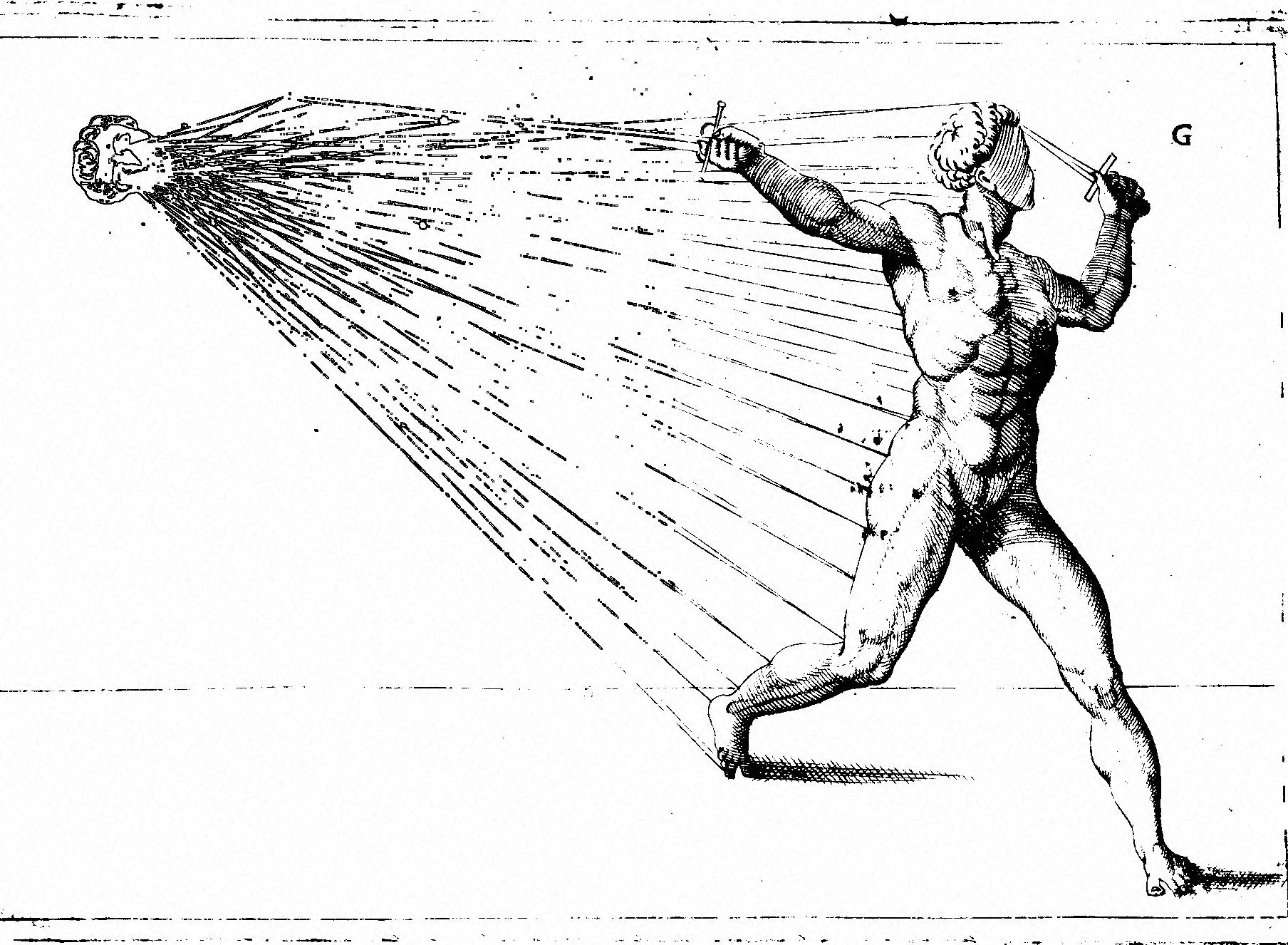
 

The times they are a-changin’

We think that water has no taste, because we were born with it in our mouths.

Most performers of art-music, even many Early Music specialists, believe that the subtle manipulation of rhythm for expressive effect – so-called tempo rubato – is an essential element of fundamental musicianship. To play in strict time is derided as mechanical, the work of “a poor block-head who hammers away in strict time without … artistic expression”. Teachers are advised that “a Metronome is apt to kill the finer Time-sense implied by Rubato”. “Variations of Tempo, the ritardando, accelerando, and tempo rubato, are all legitimate aids demanded by Expression. […] use is determined by sound judgment and correct musicianly taste”. Control of Rubato lies with the conductor, or in chamber music, with the soloist. It is expected that the accompaniment will yield to the melody.

Image

But is Rubato really an Absolute, a fundamental quality of good musicianship that has never changed over the years? Scientific scepticism would encourage us to doubt this: after all, historical pitch standards, temperaments, tempi, and musical notation itself all show significant differences from current mainstream practice. Why should we expect Rubato alone not to have changed over the years?

Happily, solid evidence is available, from detailed analysis of historical gramophone recordings by elite performers throughout the 20th century. Much of our present knowledge comes from the wonderfully-named CHARM project in the UK (the Centre for the History and Analysis of Recorded Music, lots of materials available here), and Dorottya Fabian’s investigations into rhythm perception, expressiveness and emotion in music, and the Early Music movement & Bach performance, at the University of New South Wales in Australia.

[By the way, the current assumption that expressiveness is connected with Rubato is so strong, that I have suggested that researchers avoid the word ‘expressive’ in their questionnaires to listeners, since it will probably elicit responses about Rubato. A more searching set of questions might ask if the performance showed ‘signs of emotions’, whether the listener had detected the use of particular techniques (e.g. vibrato, rubato, tonal or dynamic contrasts) and (most tellingly) whether listeners themselves felt they had been touched by those emotions?]

Commenting on some results from the CHARM investigations at a recent conference of the Australian Centre for the History of Emotions, Nicholas Cook, 1684 Professor of Music at Cambridge University, described a significant change in the use of Rubato around the middle of the 20th century. Before the Second World War, performers followed what Prof Cook calls the ‘tent-pole’ model: the tempo slows down as the music approaches the important point, and speeds up again afterwards, just as the canvas of a tent rises to the point where the pole supports it, and then falls away again.

In the post-War period, a different model emerges, which I have christened the ‘tube-train’. Each phrase begins slowly, accelerates to the middle, and then slows again towards the end. The tracks for London’s Underground Railway, the ‘Tube’, descend out of each station, and ascend again to the next, to help trains accelerate away and slow down again.

There are some famous international Early Music ensembles that apply this Tube-Train Rubato to renaissance and baroque music. I speculate that this approach might be particularly favoured by directors whose formative years of high-level music education were in the 1950s.

Early Music ensembles with younger directors show other models of Rubato. The “Go-To” model, much in vogue amongst baroque orchestras in Germany and elsewhere is almost the opposite of the ‘Tent Pole’: the tempo accelerates towards the important point and dwells on this one note somewhat. This approach is associated with directorial comments and group discussion about ‘where does this phrase go to?’.

Another approach, which I’ve seen at work in renaissance polyphony, is what I call the “Smoothie”. Notated contrasts in note-values are reduced: long notes are cut short, short notes are taken more slowly. Or if the composer writes notes of equal length, the music generally slows down (from moderate tempo) or speeds up (from slow tempo, because the long notes are shortened). The Smoothie is sometimes the result of laziness in observing the written rhythms, or of sloppy bowing from string-players. But at higher levels, it is associated with performers who make sound-quality, fine tone-production, a high priority. Such performers elongate short notes, to make sure that even the little notes have the best possible sound quality.

Other genres of music favour different approaches. Most fans would agree that the emotional power of Heavy Rock is not lessened by that music’s strong rhythm in strict tempo. Mainstream jazz allows a degree of rhythmic flexibility (swing) within a steady underlying beat. In this style, soloists may float freely over a regular accompaniment in the rhythm section.

Such ‘cool rhythm’ might remind us of 19th-century descriptions of Chopin’s Rubato as “timeless melody over a timed bass”, which I shorten to TLM/TB. (I avoid terms like Chopinesque, since TLM/TB clearly pre-dates Chopin). In his book Stolen Time: The History of Rubato (Oxford 1996 details here) Richard Hudson “identifies and traces the development of two main types of rubato: an earlier one in which note values in a melody are altered while the accompaniment keeps strict time, and a later, more familiar, one in which the tempo of the entire musical substance fluctuates.”

Hudson’s book very usefully charts the recent history of Rubato, though his terminology of “Early Rubato” and “Late Rubato” has been criticised. I don’t claim that my own terminology is perfect, but to clarify my intentions, I will use the term ‘TLM/TB’ for melodic freedom controlled by a regular bass, keeping ‘Tempo Rubato’ for entirely Stolen Time. Notice Hudson’s characterisation of the ‘fluctuation of the entire musical substance’ in Tempo Rubato as ‘familiar’.

But what are the artistic and emotional results of this ‘fluctuation’ of musical Time? Assuming it is done deliberately and skillfully, what is its purpose? 

Tempo rubato softens the sharpness of lines, blunts the structural angles… idealises the rhythm…. It converts energy into languor, crispness into elasticity, steadiness into capriciousness.

Wait a moment! Shouldn’t this ring alarm-bells for Early Music performers? Surely baroque music should have clear lines, strong structures, energy and crispness!! Why should we want to soften, blunt, make rubbery, unsteady and capricious a Bach fugue, a Lully overture or a Palestrina mass??? Perhaps things might have been different, before the year 1800…

The past is a foreign country, they do things differently there.

L. P. Hartley The Go-Between (1953)

 At the very least, the blind assumption that Rubato is an unchanging, fundamental absolute is demonstrably unsound. Since we now know that our ‘familiar’ Tempo Rubato has a history of change across the 19th and 20th centuries, we should begin to enquire what approaches were taken to Tempo and Rhythm before 1800. But I’ll come to this Another Time.

Galileo and the Philosophers

.

PS

The three quotations in the first paragraph are from Constantin von Sternberg Tempo Rubato and other essays (c. 1920) available here; Tobias Matthay Musical interpretation: its laws and principles, and their application in teaching and performing (c. 1913) details here ; and W.E. Haslam Style in Singig (1911) here. The remarks that Tempo Rubato softens, blunts etc were made by Paderewski c. 1909, published here. All these are cited – together with the general opinions summarised by my first paragraph – in the Wikipedia article on Tempo Rubato here.

I present Wikipedia not as an academic authority, but as a reliable indication of the consensus view amongst its self-selecting editorial group. Wikipedia is also a powerful influence on students seeking basic information.

My claim is that Wikipedia’s presentation of Tempo Rubato,  with its bundle of early-20th-century citations (most of them pre-World War I), not only demonstrates the consensus view, but shows that consensus to be lacking in historical perspective (there is no suggestion that use of Rubato may be a changeable element of Period Performance Practice) and somewhat closed-minded (Chopin’s use of TLM/TB, also heard in 20th-century jazz, is rejected, even ridiculed).  Yet in ‘the free encyclopedia anyone can edit’ that consensus view remains unchallenged. The article has not changed significantly over the last three years (accessed March 2011 and February 2014). Elsewhere in Wikipedia, debates rage between standard repertoire musicians and Early Music specialists, articles are aggressively edited back and forth between opposing camps, and moderators are kept busy damping down the flame-wars.

But Tempo Rubato circa 1910 is accepted as a universal truth. No-one even cares enough to debate it, even though the arguments are fierce over a few Herz up and down in historical pitch, or even for a few cents this way or that in historical temperaments. Get the flavour from the FaceBook Anti-Vallotti page here.

All this supports my claim that most musicians, even many HIP specialists, consider Rubato to be an essential element of basic musicianship, in spite of clear evidence that it is a historical and cultural variable.

But I urge readers of this Blog NOT to go and edit Wiki’s Tempo Rubato. Let’s leave it there, as a gloriously fossilised dinosaur, and (more seriously) as an indicator of the consensus view, so that we can see if there is any change over the next three years!

fossil dinosaur

Please join me on Facebook https://www.facebook.com/andrew.lawrenceking.9 and visit our website www.TheHarpConsort.com .

Opera, orchestra, vocal & ensemble director and early harpist, Andrew Lawrence-King is director of The Harp Consort and of Il Corago, and Senior Visiting Research Fellow at the Australian Research Council Centre for the History of Emotions.
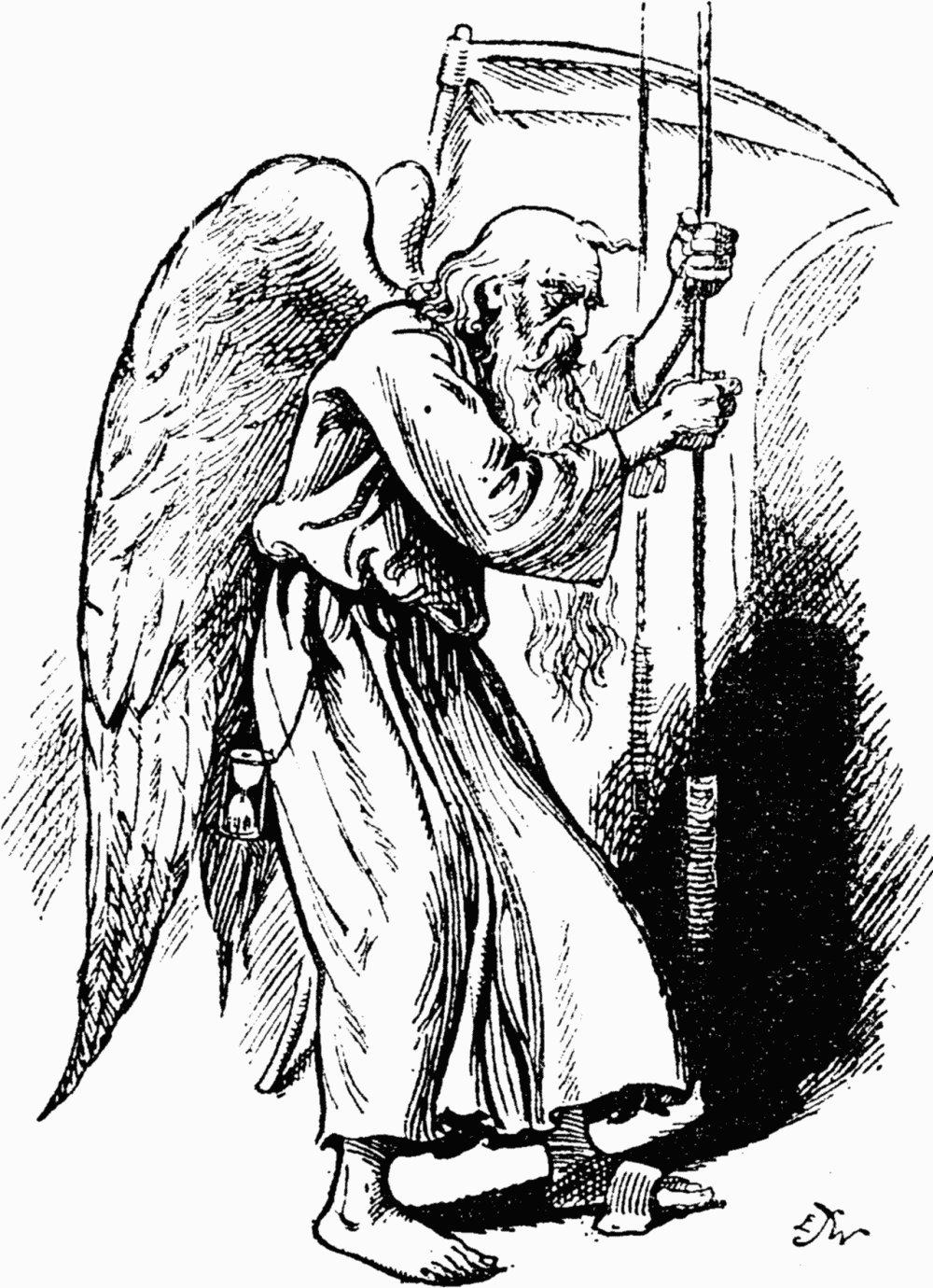
 

What is Music?

A Master of Arms, as the opening words of a discussion on early music, might seem inappropriate…

Agazzari dedication

What is Music? Is it an Art, a Science, a Practice, or just something that comes naturally? How would musicians have thought about this question in earlier periods? And how have the meanings of all these words changed over the years?

Nowadays, we admire a performance that strikes us as ‘natural’, and we shun ‘artificiality’. It’s assumed that a great Artist should not be subject to petty rules. And that the subtleties of Art transcend the limits of Science. In academic circles, Musicology (in German, Musikwissenschaft, music-science) outranks Performance Studies. And those who might wish to call themselves Artists are often looked down upon as mere Practitioners. So how did all this play out around the year 1600?

Agazzari’s treatise Del sonare sopra’l basso is one of the most-studied sources for early seicento performance practice. Many of us got to know it through Gloria Rose’s pioneering 1965 article, Agazarri and the Improvising Orchestra, but now both the original (Siena, 1607) and Bernhard Lang’s most helpful 2003 transcription (with parallel translations into English and German) are now available free online.

Original

Lang’s transcriptions

Rose’s commentary (fee or subscription to access)

Del sonare sopra’l basso is a key text that I shall certainly return to in future postings on the practical details of ensemble direction and continuo-playing. But first let’s look more closely at the preliminary dedication. It’s all too tempting to skip over this, in the rush to get to Agazzari’s main text, but it hints at answers to my question: What is Music? – answers that are significantly different from those most musicians would give today.

Agazzari’s treatise is dedicated to Cosimo Berlingucci, and the printer, Domenico Falcini, begins with the words A Professor d’armi

“A Master of Arms, as the dedicatee for teachings on liberal sciences, might well appear inappropriate – if it were true, that Sciences and Arms do not belong together.”

The myriad connections between early music and historical swordsmanship are a fascinating topic in themselves, but Falcini’s words strike to the heart of my question. He takes it for granted that music is one of the ‘liberal sciences’. His more subtle point is that Arms are also Science. Music and Arms are both scienze liberali, worthy to be studied by every free citizen.

Just a few years later, in the same city of Siena, Ridolfo Capo Ferro published his Gran Simulacro dell’ Arte e dell Uso della Scherma (1610), one of the most famous  texts on period swordsmanship. Tom Leoni’s excellent 2011 English translation and commentary is currently out of print, but the original and Swanger & Wilson’s 1999 English translation are free to download:

Original

English

This ‘Great Representation… of Swordfighting’ refers to ‘the Art and Practice’, and although Capo Ferro does refer to the discipline as a Science, he formally defines it as “Art, and not Science”.  “The term Science, in its strict definition”, he explains, “treats of eternal and divine things that surpass human judgement.” Capo Ferro’s main purpose is to teach the Art and the Practice, not the Philosophy, of swordsmanship.

In modern terms, renaissance ‘Science’ includes Philosophy, Astro-Physics, Mathematics and Theology: Astrology and Alchemy also are not excluded. Returning to 17th-century ways of thinking, the Science of Geometry studies Number and Space. The higher Science of Astronomy unites the studies of Number, Space and Movement. Swordsmanship  and historical Dance are thus related to Astronomy, the study of the perfect movement of the heavenly spheres. As a Science, Music is only a little lower, combining the two disciplines of Number (pitch ratios and rhythmic subdivisions) and Movement (ie, Time).

capoferro title page

Capo Ferro also neatly summarises the period view of Nature, Art and Practice. “Art regulates Nature, and with the more secure guidance directs us by the infallible truth and by the organisation of its precepts to the true Science of our [discipline].” This places Nature, Art and Science in a hierarchy: Art is a means of organising Nature according to rational precepts, in order to approach the ‘eternal and divine’.

Capo Ferro is very clear about the relation between Art and Nature. Nature’s material receives the “ultimate form and perfection of Art”. “Art… in the guise of Architect, takes it [Nature] and makes some beautiful construction, and thus refines and sculpts… bringing it little by little to the summit of perfection.”

And what then is Art? “Art… is a system of perpetually true and well-organised precepts”. A renaissance ‘Art’ is thus a set of rules that bring disorderly nature towards heavenly perfection. But are such rule-sets really ‘perpetually true’?

I suggest that we can accept that they are perpetual, if we understand them not as abstract rules, “you must always do this”, but as precepts that guide Nature and your Practice towards the high perfection of a desired result. Different Arts will desire different results, and have different rules. Thus Capo Ferro’s set of rules still work very well indeed, providing that your intention is to defend yourself in a duel to the death with long, sharp rapiers. If you are trying to score points in a modern fencing competition using lightweight foils, without needing to kill your opponent, you need another set of rules.

Similarly, we can trust Agazzari’s rules if we are playing seicento music on early instruments, with the period intention of ‘moving the passions’ of our audience. But if we are playing say Romantic repertoire, with the 19th-century intention of expressing the performer’s genius and sublime depth of feeling, we probably need another set of rules.

Historical treatises on Swordsmanship also deal with down and dirty questions of uso, Practice, as opposed to Art. However well you understand the precepts of the Art as an intellectual construct, you still need to practice assiduously to acquire physical skills. Musicians can certainly relate to that.

And some of what one does in Practice falls a little short of the divine perfection that Art would have us aspire to. A swordsman might stab you with his dagger, rather than with his sword, the Queen of Weapons, if it would save his life. Continuo-players might accept less-than-perfect contrapuntal move, if it preserved their concentration on the vital priorities of text and rhythm. Many historical treatises leave space for practical subtleties which cannot be written down, within the limitations (and rules) of period notation.

Now we can understand how the word ‘artificial’, in its 17th-century sense of ‘full of Art’, is one of the highest compliments awarded to fine music, both in composition and performance. In the original sense, ‘artificial’ music takes something Natural, subjects it to the Precepts of that particular Art (since of course, Monteverdi’s Art is not quite the same as Purcell’s), in order to bring it as close as possible to the summit of heavenly perfection.

In this period view, Nature, Art, Practice and Science all have their place. But those philosophical terms, and their respective places in a hierarchical value-system, differ from our modern understanding. Is this just a quirky detail of historical philosophy, or might it change how we approach the Practice of playing old music today?

capo ferro lunge detail

Study the Art of Historical Swordsmanship here

Please join me on Facebook https://www.facebook.com/andrew.lawrenceking.9 and visit our website www.TheHarpConsort.com . Further details of original sources are on the website, click on “New Priorities in Historically Informed Performance”

Opera, orchestra, vocal & ensemble director and early harpist, Andrew Lawrence-King is director of The Harp Consort and of Il Corago, and Senior Visiting Research Fellow at the Australian Research Council Centre for the History of Emotions.
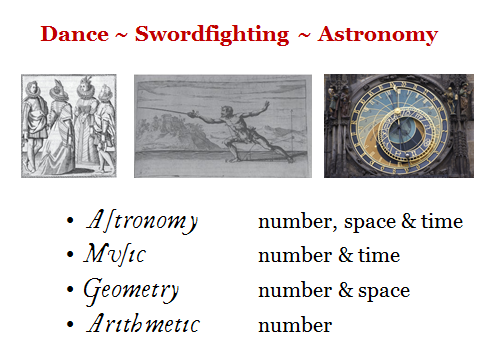
www.historyofemotions.org.au