Text, Rhythm, Action! Research, Training & Performance

In the field of Early Opera, do you think it might be good to integrate academic research with continuing professional development,  advanced training and international-level performance?

Read more…

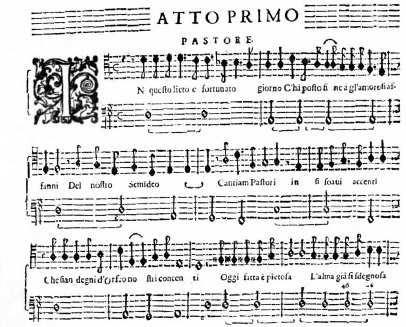
Jacopo Peri

PERFORMANCE PRIORITIES

Amongst all the myriad details of performance that have fascinated actors, musicians and audiences over the ages, in the 17th century, the age of Shakespeare, Dowland & Purcell, of Monteverdi and the first Italian operas, what were the highest priorities?
Caccini (1601) defines Music as:

Text and Rhythm, with Sound last of all. And not the other way around!

Text, Rhythm and Sound

Bulwer (1644), via Quintilian and Cicero, cites Demosthenes’ three points of Eloquence:

Action! Action! Action!

Demosthenes Cicero Quintilian

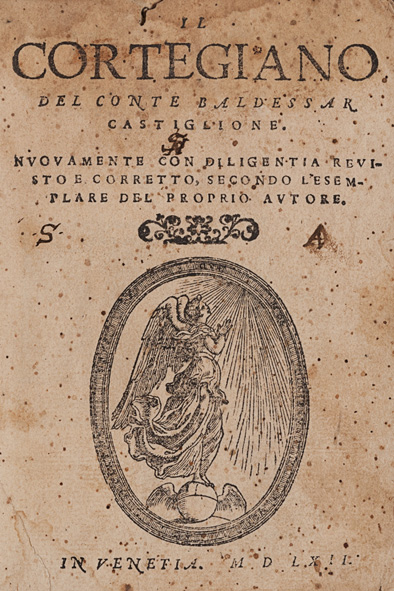
These historical priorities guided Andrew Lawrence-King’s 5-year investigation of Text, Rhythm, Action! at the Australian Research Council’s Centre of Excellence for the History of Emotions and with Il Corago, the production company for historical staging. You can download a full illustrated report from the Il Corago website, here.

In this post, scroll down for Research, Training, Performance, Publications  & (lots of) Links.

A UNIQUE INTERNATIONAL PROGRAM OF RESEARCH, TRAINING & PERFORMANCE

With a unique combination of academic rigour, unified focus, practitioner expertise and international scope, this program applied historical research to the development of new training methods for modern performers in some 2 dozen award-winning staged productions of Early Modern music-dramas and Historical Action worldwide.

AWARDS & PUBLICATIONS

Lawrence-King’s musical direction of the ‘first opera’, Cavalieri’s Anima & Corpo, won Russia’s highest theatrical award, the Golden Mask. During the period of this investigation, he also received the U.S. Grammy, Australian Helpmann and two Spanish Premios de la Música for collaborations with Jordi Savall.

Two documentary-films, a mini-documentary and many video clips have already been released. Research insights are debated on the TRA blog here at http://www.AndrewLawrenceKing.com. Now Professor Lawrence-King has begun to write up his findings formally in book chapters, articles for academic journals and in several forthcoming books.

Golden Mask

RESEARCH

Our initial Question was almost naïve: how can baroque gesture be convincing for modern audiences? This opened up two paths, which both led back to the dramatic Text via investigations of Rhythm (in poetry, music and movement) and of Embodiment (posture, gesture, mind/body interactions). Whereas the romantic tradition glorifies performers’ genius, 17th-century philosophy respects the poetic text (which, nevertheless, is realised with improvised creativity) and privileges the audience.


Musical Rhythm is understood within period concepts of Time itself. As an element of Rhetoric, the Art of Gesture is embedded in the Science of Historical Action. In this ancient, intuitive model of how poetry, music & drama induce psychological and physiological changes amongst performers and audiences, Enargeia (the emotional power of detail) creates imaginary Visions that use the mind-body force of Pneuma to stir up the Four Humours.

Our research Aim is to develop rehearsal methodologies that empower modern-day performers to Use the historical principles of the 17th-century Art of Rhetoric within the framework of period Science. Andrew Lawrence-King’s Method is grounded on close reading of such key historical sources as
Cavalieri & Peri (1600), Bonifacio (1616) & Bulwer (1644), the anonymous Il Corago (c1630). These well-known texts are re-evaluated in the light of period Philosophy, in which Time, Pneuma & Music all exhibit a complex, threefold structure that connects mondana – the heavenly & mysterious, with humana – the human & embodied, and instrumentalis – the practical and interactive.

New understandings were debated in seminars and conferences, applied in workshops and rehearsals, and tested in the real world of live performance with a wide range of modern audiences. Interim Findings – on Pre-Newtonian Time, Musical Tactus, No Conducting!, Medieval music-drama, Commencing Continuo, Redefining Recitative, Pepys’ Shakespeare Speech, Pneuma, Enargeia, Music & Consciousness, 17th-century Hypnosis, Baroque Gesture:
What’s the Point? – have been reported at conferences & public lectures at Cambridge, Oxford, Yale, Vienna, Sydney, Adelaide, Perth, Singapore, Moscow, St Petersburg, Novosibirsk, Barcelona, Copenhagen, Ghent, Basel, Helsinki, Galway, Kilkenny, Budapest, London etc.


Alessandro Turchi 'Bacchus & Ariadne' (c1630). Historical Action is more than just Baroque Gesture.

Alessandro Turchi ‘Bacchus & Ariadne’ (c1630). Historical Action is more than just Baroque Gesture.


TRAINING

17th-century writers present Art as a set of principles, a coherent collection of rules which we can study and apply to today’s Historically Informed Performance. The period concept of Use refers to the nitty-gritty of practical experience: a key element of Andrew Lawrence-King’s work is to devise new
training methodologies that facilitate modern-day performers’ acquiring the skill-sets needed to apply rules of historical Art. The study of profoundly spiritual, cosmic matters beyond the everyday and mundane, the mysterious power of emotions, the magic of the theatre, is the realm of renaissance
Science.

The training focus is historical expertise rather than romantic character analysis or the 20th-century search for motivation: first acquire Thomas Betterton’s (or La Florinda’s) skill-set, then play Hamlet (or Arianna)! Accordingly, we do not rehearse a particular interpretation; rather we teach principles that empower performers to improvise collectively a stylish realisation of text, music & action. Participants do not just memorise a production; we help them develop baroque skills which they can re-apply throughout their careers.

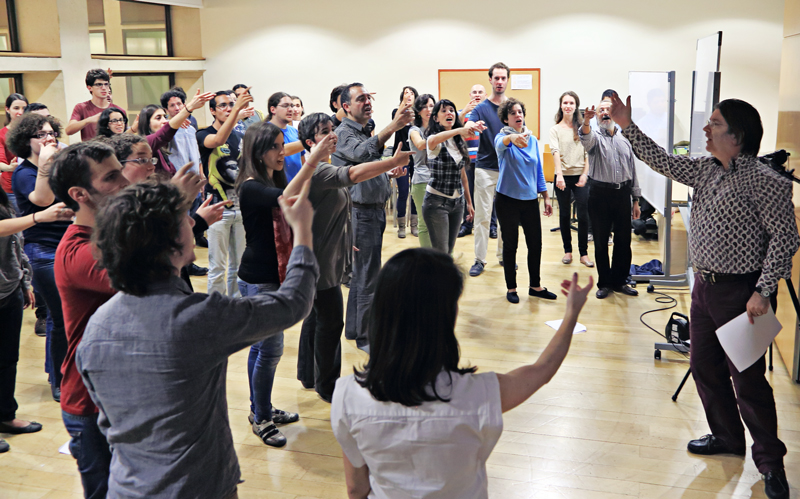
We practice what we preach. The priorities established by historical research are put into effect in professional training: Text – for each hour of rehearsal, 50 minutes are devoted to detailed text-work; Tactus – every performer shares responsibility for maintaining the rhythmic pulse; there is, of course, no conductor; Gesture – supported by period posture and the force of Pneuma; the emotional power of Enargeia – detailed visual description; Visions – mindful attention to the Text creates imagined visions that stir up emotions for performers and spectators; Deictics – the fundamental importance of ‘pointing words’; Ut pictura – how to make historical gesture ‘work’ for modern audiences.

Professional standards – well-structured rehearsals, directorial competence, clarity and consistency of coaching, respect for participants and audiences; state-of-the-art Early Music, Historical Dance and period Swordsmanship; cutting-edge modern understandings of the mind/body interactions of Flow, the Zone, Feldenkrais Method and Neuro-Learning – brain plasticity, myelination, hypnosis; the Structure of Magic – Neuro-linguistic Programming and 17th-century Rhetoric, the modern & historical arts of persuasive language.
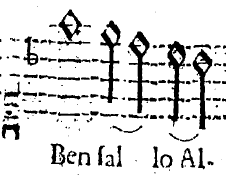
Lasciate i monti

PERFORMANCE

Scroll down for Publications  & (lots of) Links.

HISTORICALLY INFORMED STAGED PRODUCTIONS OF EARLY MODERN MUSIC-DRAMAS

Monteverdi Orfeo (1607) ALK (stage & music), SP (movement), JD, KA (assistants); Royal Danish Academy of Music, Copenhagen Christianskerke: Tactus, Art of Gesture. New edition. Handbook on Baroque Gesture. Conference Ghent Orpheus Centre, Full-length documentary film.


Cavalieri Anima & Corpo (1600) GI (modern staging), ALK (music), KA, IV (assistants); Natalya Satz Theatre, Moscow. Word-painting, Tactus, Continuo. New edition (Russian translation AP, KA, ALK). First staged performance in Russia. Golden Mask Award. 42 performances (continues in repertoire). TV and radio interviews.


Purcell Dido & Aeneas (1689) ALK (stage & music), SP (dance), KA (assistant); Concerto Copenhagen, Copenhagen Town Hall. Dance & Gesture, training methodologies. New edition (dances & incidental music)


Landi La Morte d’Orfeo (1619) ALK (stage & music), XDL (music), KA (stage), DV (designer) EMS (dance) AS (swordsmanship); International Baroque Opera Studio, St Petersburg Philharmonic. First staged performance in modern times. Tactus, Art of Gesture, Enargeia, Visions, Historical scenery/lighting, Ut Pictura. New edition. Article Musicologial Journal of Moscow Conservatoire. Radio & TV interviews.


Ludus Danielis (c1200) ALK (stage & music), KA (assistant, gestures); The Harp Consort & Ars Nova Denmark, Copenhagen Marmorkirke: Medieval gesture, conductus (rhythm & improvised polyphony), pitch. New edition. Conference Budapest University, mini-documentary film.


Orgambide Oratorio del Nacimiento ALK (music & stage), KA (designer, stage) The Harp Consort, Ourense Cathedral, Festival Portico de Paraiso. First performance in Spain in modern times. Spanish recitado, Art of Gesture, Tactus, Enargeia. Public lecture by Dr Maria Teresa Ferrer. TV & radio interviews. New edition.


Monteverdi Combattimento (1624) ALK (music & stage), GW (swordsmanship consultant), DR (fight director), SP (dance), KA (stage) Guildhall School of Music & Drama, London Wallace Collection. New edition. Public lectures, post-performance panel discussion with Prof John Sloboda. Conference Cambridge University with Prof John Sloboda. BBC Radio interview.


Ludus Danielis (c1200) ALK (stage & music), KA (designer & stage); The Harp Consort & St Michaels Schola Cantorum, Galway Early Music Festival. Emotions in Action, Medieval Gestures. Public lecture National University of Ireland, full-length documentary film. Radio interviews.


Orgambide Oratorio del Nacimiento ALK (music & stage), KA (designer) Insula Magica, Novosibirsk Philharmonic. First performance in Russia. Spanish recitado, Art of Gesture, Tactus, Enargeia. Public lecture. TV & radio interviews.


Orgambide Oratorio del Nacimiento ALK (music & stage), KA (designer) Guildhall School of Music & Drama, London. Spanish recitado, Art of Gesture, Tactus, Enargeia. Presentation by Dr Anthony Trippett.


Cavalieri Anima & Corpo (1600) ALK (music & stage); Durham University Opera Society, Durham Great Hall. Tactus, Continuo, Enargeia, Visions. New edition.


Purcell King Arthur (1691) ALK (music & stage), Poznan Academy of Music. New edition. Continuo, French violin bowing, Gesture, Speech/Song/Recitative, Ut Pictura. Radio interviews.


Hidalgo Celos aun del aire matan (1660) ALK (music) GI (stage) KA (translation) Moscow, Theatre Natalya Satz Text, Tactus, Spanish Continuo New edition (Russian translation).New edition. TV & radio interviews.


Medieval Kalevala ALK (music, stage, concept) KK (stage, text) The Harp Consort, Montalbane Festival Medieval storytelling & gesture


Carissimi Jeptha ALK (music, stage), MB (vocal coach), KA (assistant). St Petersburg. New edition. TV & radio interviews. Art of Gesture, Tactus.


Peri Euridice (1600) ALK (stage & music), SP (movement), KA (assistant); Guildhall School of Music & Drama, London Lumen Centre. Continuo, Art of Gesture, Posture, Visions. New edition (version for 5 singers). Conference Cambridge University, mini-documentary film

Ourense Angel

Nicole Jordan as the Angel in Orgambide’s ‘Oratorio del Nacimiento’

PERFORMANCES WITH TEXT, RHYTHM, ACTION!


Monteverdi Vespers (1610) ALK (music); Alta Capella, Moscow Lutheran Cathedral. Tactus, Continuo, Visions. Radio broadcast, radio & TV interviews. New synoptic edition. Public Lecture. First performance in Russia.

Gibbons, Dowland, Holborne, Morelli Shakespeare’s Music (17th cent) ALK (stage & music), Alta Capella, Moscow Conservatoire of Music. Text, Tactus, Pepys on Shakespeare.Public lecture. Radio & TV interviews.

Gibbons, Dowland, Lawes The Masque of Time (17th cent) ALK (artistic director, script & concept), EB (music), VN (stage) Guildhall School of Music & Drama, Canterbury St Gregory’s Centre and London. Tactus, Gesture, Dance, Philosophy of Music & Time.


Schutz, Schein In Friede (17th cent) ALK (music & gesture), Royal Danish Academy of Music, Copenhagen Chapel Royal Tactus, Art of Gesture New editions.


Lully, D’Anglebert Choregraphie (1700) ALK (music), KM (dance), The Harp Consort, Edinburgh International Harp Festival Tactus, Dance New editions.


Monteverdi, Peri, Caccini, Cavalieri Favola in Musica (c1600) ALK (artistic director, concept) MB (voice) XLD (continuo) SP (dance) The Harp Consort, St Petersburg Early Music Festival, Feldkirchen Festival, Hamburg Bucerius Kunst Forum The First Operas, Tactus, Continuo Radio interview & broadcast.


Dowland, Purcell The Dark Side (17th cent) ALK (music, stage, concept) SP (movement) The Harp Consort, Graz List Halle Text, Tactus, Art of Gesture


Vite e Voce (Vasari 500th anniversary )ALK (music, concept) Ensemble L’Homme Armé, Florence, Museo Sarto. Baroque gesture & Fine Art


Ars Musicae (Vasari 500th anniversary) ALK (music, concept) Florence, Museo Sarto Design & perspective in Art ~ form & proportion in Music


Hebro with head of Orfeo 2

Anton Varentsov as the River Hebro with the head of Orpheus in Landi’s ‘La morte d’Orfeo’


WORKSHOP PERFORMANCES, STUDY PROJECTS ETC

Monteverdi Lamento di Arianna (1614) (ensemble version) ALK (stage & music). Study project at Helsinki Metropolia. Conference London GSMD.


Monteverdi Lamento di Arianna (1608) (solo version) ALK (stage & music). Study project at Sibelius Academy, Finland. Conference Perth WA. Seminar Melbourne.


Monteverdi Madrigali Guerrieri & Amorosi (1638) ALK (music), Melbourne Early Music Studio. Tactus, Swordsmanship, Visions.


Dowland, Purcell, Morelli The Dark Side (17th cent) ALK (music): Melbourne Early Music Studio Melancholy, Speech/Song/Recitative Conference Sydney University


Malvezzi, Cavalieri, Gabrieli etc Rappresentationi (excerpts from 1589 Florentine Intermedi, etc)  St Petersburg. ALK (stage & music), MB (vocal coach), KA (assistant).


Monteverdi Lettera Amorosa (1619) ALK (stage & music). Study project at Royal Danish Academy of Music, Copenhagen. Paper for Letters2 conference, Lisbon; presentation at Books & Music Conference, Newcastle. Enargeia, gendered Gesture


Purcell Dido & Aeneas (1689) ALK & AM (stage & music); Sydney Conservatorium Redefining Recitative, Art of Gesture


Baroque Gesture: What’s the Point?

Workshop for advanced students and professorial staff at ESMUC, Barcelona

Workshop for theatre researchers, Australasian Association for Theatre, Drama & Performance Studies.
Workshop for movement researchers, Dalcroze Conference, Vienna.
Workshop, Edinburgh International Harp Festival
Workshop, Kilkenny


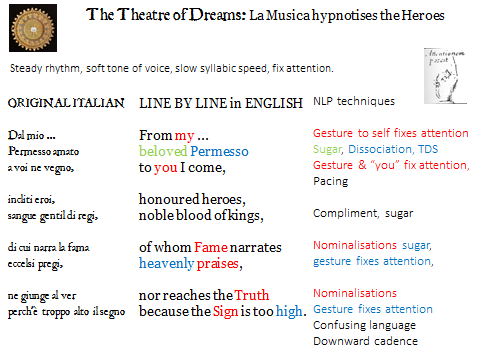
The Theatre of Dreams: La Musica hypnotises the Heroes

Workshop for advanced students and professorial staff at ESMUC, Barcelona.
Workshop for research students at Guildhall School of Music & Drama, London.


Seminar on Historical Action ALK with Dionysios Kyropoulos at New College, Oxford


Redefining Recitative Workshop at Guildhall School of Music & Drama, London.


Landi La Morte d’Orfeo (1619)

Workshop at Theatre Natalya Satz, Moscow.
Workshop at Rimsky-Korsakov College of Music, St Petersburg


Music & Rhetoric Public Lecture & Workshop, Moscow Conservatoire of Music. Radio/TV.


A Baroque History of Time

Public Lecture, St Petersburg Derzhavin Museum.
Public Lecture, University of Adelaide
Public Lecture, Kilkenny


Modes of Emotion Public Lecture, Kilkenny


Empfindsamkeit Workshop, Moscow Theatre Natalya Satz


Landi Sant’ Alessio (1631) ALK (stage, music), Basel Schola Cantorum, workshop performance. Tactus, Continuo
Etc…

MEET THE DIRECTORIAL TEAM


ALK Andrew Lawrence-King, AM Alan Maddox, AS Anton Semenov, DR Dave Rawlings, DV Danil Verdenikov, EB Emily Baines, EMS Ekaterina Mikhailova-Smolnyakova, GI Georgy Isaakian, GW Guy Windsor, JD Jane Davidson, KA Katerina Antonenko, KK Karoliina Kantolinen, KM Karin Modigh, KZ Klim Zhukov, IV Ivan Velikanov, MB Marco Beasley, SP Steven Player, SG Stephen Grant, VN Victoria Newman, XDL Xavier Diaz-Latorre

Marco Scavazza as the Devil in Orgambide's 'Oratorio del nacimiento'

Marco Scavazza as the Devil in Orgambide’s ‘Oratorio del nacimiento’

PUBLICATIONS & LINKS

Book Chapters by Andrew Lawrence-King:

ALK Il palpitar del core: The Heart-Beat of the “First Opera” in Crispin & Gilmore Artistic Experimentation in Music (2015)


ALK ’Tis Master’s Voice: A Seventeenth-Century Shakespeare Recording? in White Shakespeare and Emotions (2015)

Journal Articles by Andrew Lawrence-King:

ALK (with Antonenko & O’Shea) The Irish Harp: Myths Demistified Celto-Slavica Journal (2015)


ALK The Theatre of Dreams: the Science of Historical Action ADSA (Australasian Association for Theatre, Drama & Performance Studies) Journal (2015)


ALK In vino veritas: wine, women & song in Landi’s ‘La Morte d’Orfeo’ Musicological Journal of Moscow Conservatoire (2015)

Historical Prefaces:

Cavalieri Anima e Corpo (1600)

Peri Euridice (1600)

Caccini Le Nuove Musiche (1601)

Gagliano Dafne (1608)

Frescobaldi Toccate (1615)

Introductions


ALK Video: “What are the Three Secrets of Great Performance?https://www.youtube.com/watch?v=j58nwM3nbpE

Anon. Il Corago (Biblioteca Estense, Modena: MS y.F.11, c1630) edited by Fabbri & Pompilio (1983)


Introduction to ALK’s research: http://www.theharpconsort.com/#!research/c1dp3

Index to ALK’s blog: http://www.theharpconsort.com/#!blog-index/cxm4

What is Music?

Music expresses emotions?

Time & Tactus

A Baroque History of Time: Stars, Hearts and Music


Rhythm – what really counts?


Tempus putationis – Getting back to Monteverdi’s Time

Grant Beating Time and Measuring Music (2015)

Houle Meter in Music 1600-1800 (1987)


ALK Video: “What is Time?

Redefining Recitative

Il Corago on ‘the three ways of acting’, Delle Tre Maniere di Recitare (Fabbri & Pompilio, 40)


The Good, the Bad & the Early Music Phrase


http://www.theharpconsort.com/#!research-findings-recitative/c1nz2

Sternfeld ‘A Note on Stile Recitativo’, RMA (1983-1984)


Continuo
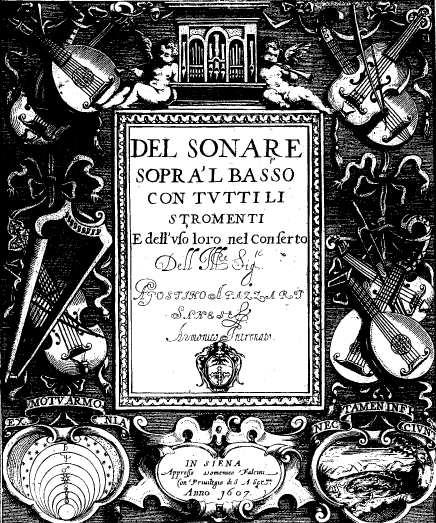
Agazzari Del Sonare sopra’l Basso (1607)


Sparrow-flavoured Soup – or What is Continuo?


ALK Video “What is Continuo?”:


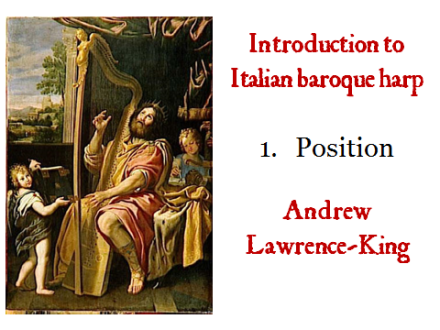
Introduction to Italian Continuo Video:

This is the first of a series of videos, all on the You-Tube channel of The Harp Consort & Il Corago.

Historical Action


www.IlCorago.com


Bonifaccio L’Arte de’ Cenni (1616)

Bulwer Chirologia & Chironomia (1644)


Barnett The Art of Gesture: The Practices and Principles of 18th-century Acting (1987)

Roach The Player’s Passion: Studies in the Science of Acting (1985)


Introduction to Historical Action:

http://www.theharpconsort.com/#!historical-action/c12q3


Flow & The Zone

www.TheFlow.Zone


Flow 2014 – The Cambridge Talks


Flow (Accessing Super-Creativity): Making Connections


Flow (The Oxford papers) Part 1: What’s in a name?


ALK Video: “Accessing Super-Creativity” 


History of Irish Harp

ALK (with Antonenko & O’Shea) The Irish Harp: Myths Demistified Celto-Slavica Journal (2015)


The Researcher’s Otherworld: A Dream of the ancient Irish Harp


Regina Cithararum – the Cloyne, or Dalway Harp


Precision tuning & Early Irish harps


History of Welsh Triple Harp

The Triple, or Modern Welsh Harp

Hypnosis, Rhetoric & Neuro-Linguistic Programming

ALK The Theatre of Dreams: the Science of Historical Action ADSA Journal (2015)


The Theatre of Dreams: La Musica hypnotises the Heroes


Landi La Morte d’Orfeo

ALK In vino veritas: wine, women & song in Landi’s ‘La Morte d’Orfeo’ Musicological Journal of Moscow Conservatoire (2015)


http://www.theharpconsort.com/#!la-morte-dorfeo/c4be

Monteverdi Vespers

The Right Time for a New Vision: Monteverdi’s 1610 Vespers


Laudate Pueri Video:


Dixit Dominus Video:


Harp Technique

Historical technique for Early Irish Harps


The Long Shake (Irish Harp Ornament of the Month #1)

This is the first of a series of articles on this subject, all available on this blog. There is a video to accompany each article, all on the You-Tube channel of The Harp Consort & Il Corago.


Single-Action Harp – making Sensibility of the Méthodes


Introduction to Italian harp Video:

This is the first of a series of 4 videos, all on the You-Tube channel of The Harp Consort & Il Corago.


Introduction to Early Irish harp Video:

This is the first in a series of 4 videos, all on the You-Tube channel of The Harp Consort & Il Corago.


Early Irish harp ornaments Video:

This is the first in a series of 4 videos, all on the You-Tube channel of The Harp Consort & Il Corago.


Monteverdi Orfeo


Documentary Film:


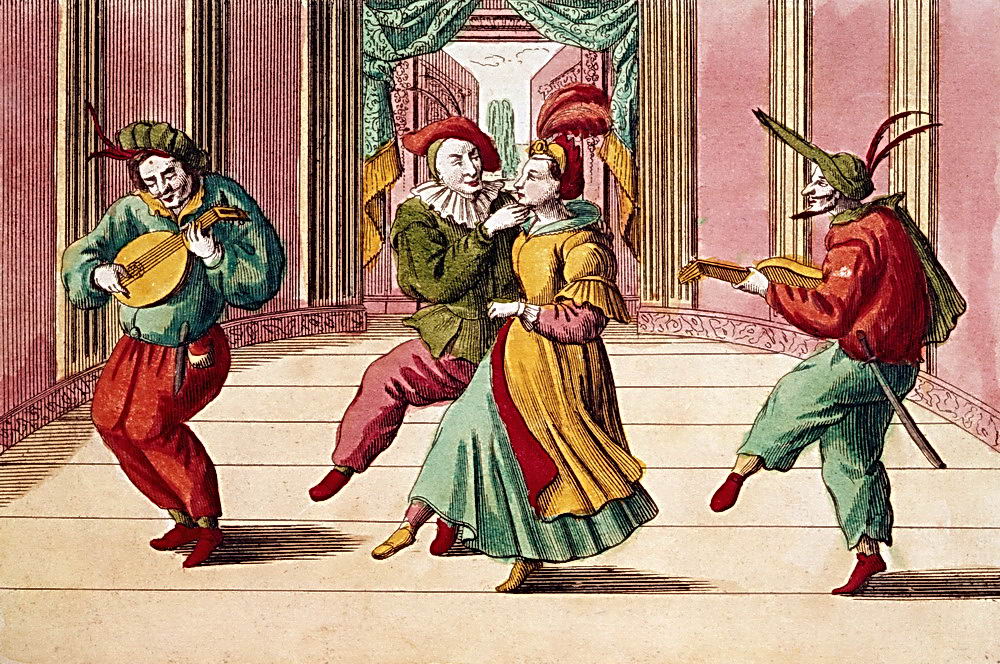
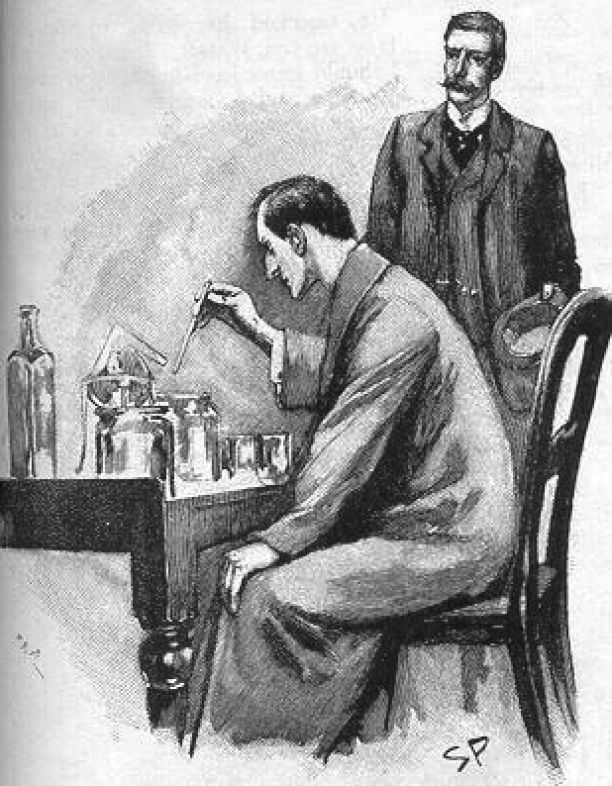
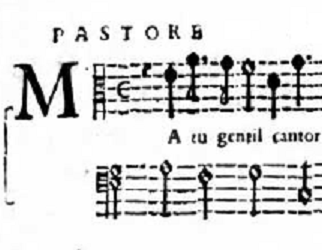
Sherlock Holmes and the Wedding Dance: Tactus & Proportions in Monteverdi’s ‘Lasciate i monti’


Ludus Danielis

Documentary Film:


Peri Euridice

Mini-documentary:


Purcell Dido & Aneas

Dido’s Lament Video:


The Witches Video:


witches-queen

Kristin Mulders as the Sorceress (doubling Dido) and Leif Aruhn-Solén as the Tenor (doubling the Spirit of Mercury) with Leif Meyer (continuo) in Purcell’s ‘Dido & Aneas’


Please join me on Facebook https://www.facebook.com/andrew.lawrenceking.9 and visit our websites www.TheHarpConsort.com

www.IlCorago.com and www.TheFlow.Zone


Opera, orchestra, vocal & ensemble director and early harpist, Andrew Lawrence-King is director of The Harp Consort and of Il Corago. From 2010 to 2015 he was Senior Visiting Research Fellow at the Australian Centre for the History of Emotions.

Monteverdi, Caccini & Jazz

The Rhythm Section by Suzanne Cerny

The Rhythm Section by Suzanne Cerny


Giulio Caccini (1551-1618) would find basic advice for today’s jazz singers rather familiar:

Your jazz singing voice should be a natural extension of your speaking voice.

In Le Nuove Musiche (1601), Caccini asks for una sorte di musica … quasi che in armonia favellare, usando … una certa nobile sprezzatura di canto. [A kind of music, almost like speaking in harmony, using a certain elegantly ‘cool’ vocal production.] Note that, contrary to received opinion, Caccini’s sprezzatura is not to do with rhythm, but with voice-production. See Play it again Sam, the truth about Caccini’s sprezzaturahere.  The complete original text of Le Nuove Musiche is here.

Your aim is to move an audience by conveying the lyrics of a song as if it were a poem.

The aim of music, and all the Rhetorical arts of the 17th century is muovere gli affetti [to move the emotions]. Caccini too searches for the forza di muovere l’affetto dell’animo [the force to move the emotions of the mind], noting that non potevano … muovere l’intelletto senza l’intelligenza delle parole [you can’t move feelings unless the words are understood]. Caccini proclaims la musica altro non essere che la favella e’l ritmo, & il suono per ultimo, e non per lo contrario. [Music is nothing other than Text and Rhythm, with sound last of all. And not the other way around!]

Now sing your song … exactly as it was originally written by the songwriter.

That should prevent you copying a particular interpretation off a recording by an admired artist: rather, you should create your own version of the song. This is very good advice for students of 17th-century song, too. It’s surprising how many interpretative touches have been passed through the Early Music movement, even when they are contradicted by well-known period sources. And all too often, Early Music singers begin introducing random rhythmic changes (in the name of ‘expressiveness’) before learning what the composer actually wrote!

Rhythmic displacement

Nevertheless, the subtle rhythmic displacement that is so important for Jazz is mentioned also by Caccini (but remember, this is not sprezzatura).

The freedom to loosen up the rhythm of a song spontaneously to add intensity is one of the joys of singing jazz. To practise rhythmic displacement, it is a good idea to begin by learning … the song. [Then], start subtly “loosening up” the timing of each phrase. The idea here is to sing the words rather like you might say them. Try shortening and lengthening different notes each time you sing a phrase and notice how playing about with the rhythm changes the emphasis on the words and can help you put your own stamp on a song. Your singing will also sound more like jazz if you leave a short space (about the length of a clap) before launching into every phrase.

For a few bars of one of his three example songs, Caccini applies senza misura [unmeasured, i.e. ‘loosened up’ timing], asking for this particular phrase to be quasi favellando in armonia con la suddetta sprezzatura [almost speaking in harmony with the above-mentioned sprezzatura]. The ‘above-mentioned sprezzatura‘ is a ‘cool’ vocal production.

The jazz citations above are from The Guardian’s online Jazz Singing Advice (2009), full text here, and having dealt with words, the anonymous columnist continues with a paragraph on Swing, paralleling Caccini’s priorities of Text and Rhythm.

Pamelia Phillips similarly mentions Rhythmic Displacement in Singing for Dummies 2nd Edition (2010). [You can read more of Phillips’ Training Requirements for Singing Jazz here.]

Jazz singers … usually change the notes and rhythms from the original music. Jazz singers create their style with rhythmic flexibility, and the singer and pianist don’t always have to be together note for note (called back phrasing).

But this rhythmic flexibility is certainly not anarchic or random. Like Caccini and the Guardian’s jazz expert, Phillips emphasises that

The jazz singer needs a great sense of rhythm.

Just as in renaissance Italy. The Anonymous swordmaster of Bologna writes in L’Arte della Spada [The Art of the Sword, MS Ravenna M-345 & M-346. There is a modern edition by Rubboli & Cesari, who date the treatise to the early 16th century, whilst the consensus view places it c1650] that swordsmen need the same sense of precision rhythm as a good singer!

L'Arte della Spada Anonimo Bolognese

The Hidden Assumption

But the Guardian, Phillips and Caccini all fail to mention (though Phillips hints at it) a vital, hidden assumption. Whilst the singer ‘loosens up the timing’ with rhythmic displacement, rhythmic flexibility or senza misura (whatever you want to call it), the accompaniment maintains a steady swing. We take this for granted in jazz, and the renaissance concept of Tactus similarly requires a steady slow pulse. (For Monteverdi, Caccini etc, evidence suggests a consensus Tactus speed of around minim = 60). The crucial point I’m making is that this concept of Tactus still pertains in the accompaniment, even when the singer is applying Caccini’s senza misura.

Monteverdi notates this practice, for example in the opening phrase of Orpheus’ aria in the underworld, Possente Spirto, from Act III of Orfeo (1607).

Possente Spirto incipit

Just as Phillips describes for jazz, singer and basso continuo are not always together.

Taking Monteverdi as a model, here is my realisation of Caccini’s example of senza misura from Le Nuove Musiche, showing how the singer might loosen up the timing, whilst the continuo maintain the Tactus.

Aure divine, ch'errate peregrine

Such a realisation fundamentally redefines the role of the continuo. Nowadays, continuo-players are asked to follow even the most random, rhythmically anarchic singers. It feels like that fairground game, where you wait, rifle (or theorbo) in hand, until a little yellow duck (the tenor) waddles into your sights, and then you fire off a chord, and hope to hit him in root position.

Duck shoot

But jazz singing, and Monteverdi’s notation of Caccini’s senza misura, require the accompaniment to maintain the swing, or Tactus. In jazz, those accompanists are called the Rhythm Section. In Monteverdi’s time, the continuo group are

Those who guide and sustain the whole body of singers and instruments of the ensemble.

quei, che guidano e sostengono tutto il corpo delle voci  e stromenti di detto concerto [Agazzari Del suonare sopra ‘l basso (1607)]. There is, of course, no conductor, so the continuo are indeed the Rhythm Section of seicento music.

None of this should be shocking to Early Music readers, except that the familiar role of the continuo as Rhythm Section, maintaining the swing of the Tactus, still pertains, even in what  Caccini calls lo nuovo stile [the new style] of what musicologists call early baroque Monody, and most performers (anachronistically) call Recitative.

[See Redefining Recitative here. Circa 1600, recitare just means ‘to act’, whether in spoken drama, opera, or silent pantomime. Musica recitativa is thus ‘acted music’, i.e. dramatic music. The period term for speech-like declamation over a slow-moving bass is modulazione. 18th-century Recitative is something else. In late 17th-century England, what Samuel Pepys calls ‘Recitative Music’ is rhythmically structured, Caccini-style. See Andrew Lawrence-King, ‘’Tis Master’s Voice: A Seventeenth-Century Shakespeare Recording?’ in R.S. White, Mark Houlahan & Katrina O’Loughlin, eds., Shakespeare and Emotions: Inheritances, Enactments, Legacies (Basingstoke: Palgrave Macmillan, 2015).]

Heavenly Tactus or Hellish Duckshoot?

At the foot of the title page of Agazzari’s treatise, there are two Latin mottos. One shows a diagram of the cosmos, a model of armonia [which in this period means not only harmony, but music in general, in particular well-ordered or ‘goodly’ music].

Armonia comes from movement.

Specifically, well-ordered music comes from the perfect movement of the stars and planets, imitated on earth by the regular swing of the Tactus-beater’s arm, conceptualised as the authority of the Tactus itself.

Ex motu armonia

All this refers to the idea of the Harmony of the Spheres, the notion that earthly music-making, musica instrumentalis, is an imitation of the perfect music of the heavens, musica mondana; both of these symbolise musica humana, the harmonious nature of the human body. Well-ordered music is related to healthy well-being. Steady rhythm is a reflection of cosmic perfection.  Thus Dowland, translating Ornithoparcus’ Micrologus, declares that steady Tactus, “Equality of Measure” is a moral imperative.

Dowland Above all things original

Agazzari’s second motto is placed ‘stage left’, rhetorically the ‘bad’ area in contrast to the cosmos diagram placed in the ‘good’ area. It captions an image of the serpent in the pit of hell, and warns ominously:

And they don’t mess up, either!


Nec tamen inficiunt


If we view Caccini’s invitation for singers to apply senza misura and Agazzari’s description of the continuo ‘guiding the voices’ through the lens of these two mottos, we see a practice that today’s jazz-musicians would recognise: a singer is free to sing before or after the beat, whilst (in the Rhythm Section) the continuo-players maintain the Tactus. “And they don’t mess up, either!”.


Conclusion

Modern advice about jazz cannot prove anything, either way, about Early Music. But the parallels I’ve drawn here show the vital significance of underlying assumptions. Today’s performers approach Caccini and Monteverdi with the anachronistic label ‘Recitative’, which encourages them to abandon the period assumption of steady Tactus. Instead, they assume that the way to ‘express emotions’ is to use 20th-century rubato. But jazz and Caccini are not ‘expressing’ what the performer feels, they seek to move the audience‘s passions. Jazz does this by allowing the singer subtle rhythmic flexibility whilst the Rhythm Section maintains the swing; Monteverdi notates precisely this; I suggest this is what Caccini meant by suggesting senza misura for singers.

The underlying assumptions about music in the early 17th century are that Rhythm is a high priority, that there is a steady Tactus, and that this Tactus is maintained by the continuo.

Agazzari frontispiece

Please join me on Facebook https://www.facebook.com/andrew.lawrenceking.9 and visit our websites www.TheHarpConsort.com

www.IlCorago.com and www.TheFlow.Zone

Opera, orchestra, vocal & ensemble director and early harpist, Andrew Lawrence-King is director of The Harp Consort and of Il Corago. From 2010 to 2015 he was Senior Visiting Research Fellow at the Australian Centre for the History of Emotions.


Logical, Captain! The implications of Peri’s Preface

Logical Captain


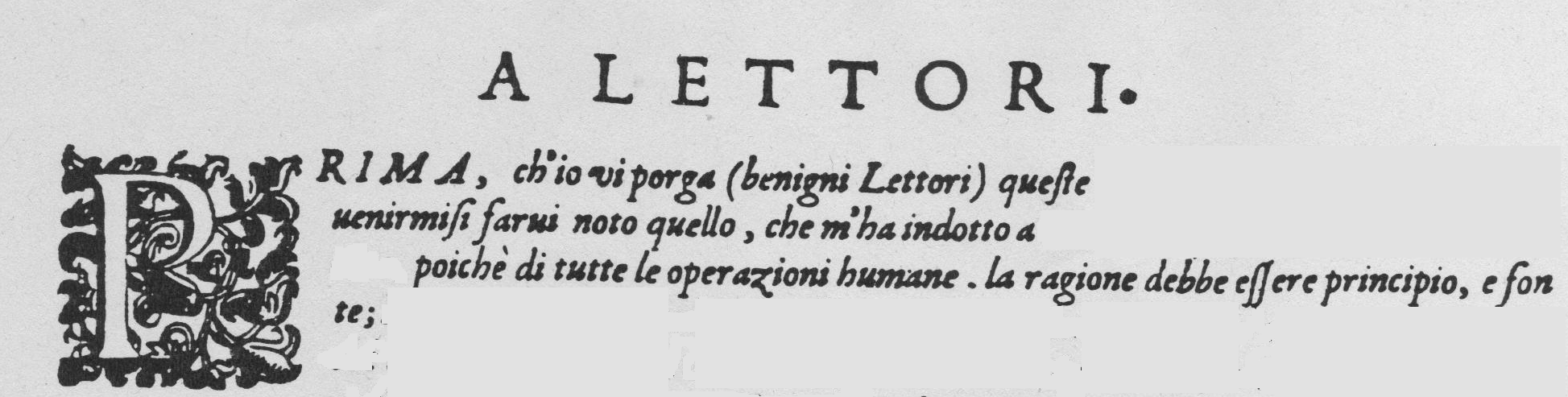
Before I offer you, dear Readers, this analysis of mine, I think I ought to bring to your attention what has led me to re-examine this well-known Preface, for in all human operations logic should be the beginning and source…

Peri Euridice Preface incipit


SUMMARY


Here is a statement of my own, about Jacopo Peri’s Preface to his setting of Euridice (1600), the earliest surviving secular ‘opera’.


I reduced the Preface to its essential point, so that the process of reading should not need (in a kind of way) to ‘plough through’ every sentence. That’s the principle of a summary, whereas the  complete Preface naturally requires detailed examination.


I modelled this statement on Peri’s sentence structures, but working logically through the 17th-century formulations, it should be clear that:


  • I am discussing a summary.
  • There are differences between a summary and the complete Preface.
  • I made the summary by reducing the Preface to its essential argument.
  • The idea is to avoid ‘ploughing’ by means of the reduction of the Preface.


There are two further implications:


  • Normally, with the complete Preface, the attentive reader will indeed ‘plough through’ every sentence.
  • Even in a summary, readers will follow me, though they don’t ‘plough through’.


Now here is a summary of Peri’s most famous statement about the composition of dramatic music, explaining how he imitates ‘the course of speech’ in song [his complete text is below]:


I reduced the Bass to its essential pulse, so that the course of speaking should not seem (in a kind of way) to ‘dance’ to the movement of the Bass. That’s the principle for sad or serious material, whereas happier texts naturally require more movement in the Bass.

Working logically through Peri’s 17th-century formulations, it should be clear that:


  • Peri is discussing music for sad or serious texts.
  • There are differences between sad or serious material, and happier texts.
  • Peri made his serious music by reducing the Bass to its essential pulse.
  • The idea is to remove ‘dancing’ by means of the reduction of the Bass.


There are two further implications:


  • Normally, in happier texts, stylish singing will indeed ‘dance’ to the movement of the Bass.
  • Even in sad or serious material, singers will follow the Bass, though they don’t ‘dance’.


Peri’s Preface has often been misunderstood as an appeal for ‘rhythmic liberty’, and its most famous statement mis-interpreted as ‘singers should not follow the Bass’. Those frequently repeated distortions fit comfortably with the 20th-century notion of rubato and free rhythm as the epitome of expressiveness, and with the modern convention that accompanists must follow the soloist. But period sources from Agazzari to CPE Bach and Leopold Mozart insist that the Bass lays down the Tactus, and that soloists follow this essential pulse (just as in today’s jazz). Sometimes the singing ‘dances’, sometimes it is sad or serious, but it always has the essential pulse of Tactus, led by the Bass. Before the year 1800, soloists follow the accompaniment, because accompanists have particular responsibility for maintaining the Tactus.


Meanwhile, the ‘liberties’ Peri asks for are not to do with rhythm, but relate to musical ‘grammar’ – the rules of dissonance, l’uso delle false. When he does talk about rhythm, he draws attention to the great variety of note values he employs, linked to the emotions of the text. Contrasts in note-values would be destroyed, if there was no underlying pulse to structure all that variety: indeed such destruction of notated contrasts is just what happens in many modern ‘free’ performances of early 17th-century monody.


Throughout  Peri’s Preface, there is nothing to contradict the general (historical) assumptions for all music of this period:


  • There is a regular Tactus pulse.
  • Soloists follow the Bass.

You can read more about Tactus here. And you can read about how Tactus structured early 17th-century music here.


One last observation: Peri never uses the word ‘recitative’. His topic is nuova maniera di canto (a new kind of song, a new way of singing) for Musica su le scene (Theatrical Music). And he refers to even the most poignant speeches of Orpheus, of the lamenting shepherd Arcetro and of Dafne (the Messaggiera) as arie. The word aria in this period does not necessarily mean a ‘tuneful melody’, but rather refers to elements of repeated structure, for example a ground bass, or any repeated rhythmic fragment.


Peri’s complete text with my translation and commentary are below.

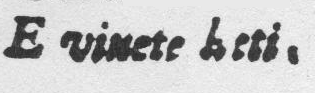
Peri Euridice Preface vale

And may you live happily!

Spock


Annotated translation:

Jacopo Peri Preface to Euridice (Florence, 1600)

The original Italian text is here, along with the music of Euridice (mostly by Peri himself, but with some items contributed by Caccini).


Editorial procedure: I have tried to stay close to Peri’s word-order, and to use English cognates whenever possible, to help the reader follow the Italian text in parallel. Any serious discussion of this key text has to be made using the original Italian text, since translation (and the specific 17th-century meaning) of Peri’s terms is inevitably open to question.

Jacopo Peri 

Before I offer you, dear Readers, this Music of mine, I think I ought to bring to your attention to what has led me to invent this new manner of song, for in all human operations, reason should be the beginning and source; And he who cannot show reason easily leads one to believe that he worked by chance.


Peri offers a Scholastic defence for the Humanist project of creating a new kind of music. Ritrovare, which I have translated as ‘invent’, also means ‘to find out again, or to retrieve’ (Florio Dictionarie of the Italian and English tongues. London, 1611). Although Peri’s ‘manner of song; is ‘new’, the artistic endeavour was to re-discover Ancient music. This suggests interesting comparisons to today’s Early Music!


Although by Signor Emilio del Cavaliere, before any other that I know, with marvellous invention our Music was made to be heard on the Stage; nevertheless it pleased Signori Jacopo Corsi and Ottavio Rinuccini (at the end of the year 1594), that I should apply it [our music] in another guise, setting to notes the fable of Dafne, written by Signor Ottavio, to make a simple test of what singing could do in our era.


Peri properly acknowledges Cavalieri’s achievements, and presents his own previous experience. Corsi was a patron of ‘early opera’, Rinuccini one of the greatest libretto poets. Caccini is not mentioned, in spite of his strong claims to have invented the new style himself, but Peri quietly positions his 1594 Dafne well in advance of the rival settings of Euridice  and Caccini’s Le Nuove Musiche (1601/2). Peri’s Euridice, which includes some music by Caccini, was the first to be performed, but Caccini rushed his own complete setting into print before Peri’s was published.


From this it is seen that we were dealing with dramatic poetry, but if one should imitate in song how one speaks (and without doubt, no one ever actually spoke by singing), I esteem that the ancient Greeks and Romans (who according to the opinion of many sang entire Tragedies on the Stage) used a musical style, which going beyond that of ordinary speaking, descended so much from the melody of singing, that it took the form of something intermediate; And this is the reason by which we see in this Poetry there is a place for the Iambic, which is not exalted like the Hexameter, but merely is said to advance beyond the confines of everyday discourse.


There was no difficulty in setting to music diegetic songs and dances (theatrical scenes which represented the characters making music) and it was accepted as a convention that Prolouges, Choruses, Gods and similar other-worldly figures might sing. The question Peri grapples with here is the theatrical representation of speech. In the Platonic tradition, imitare implies also ‘artistic expression or representation’. Peri admits that people don’t normally sing when they speak, and looks to Ancient Greece and Rome for an intermediate form, something between speech and song. He compares this to blank verse, which is intermediate between prose and poetry..


Armonia can mean ‘harmony’, but often has a wider meaning as any kind of musical organisation, especially rhythmic, as well as melody: here, I translate it as ‘musical style’, for Peri is concerned with the melodic and rhythmic patterns of speech. Peri’s ‘something intermediate’ reminds us of Caccini’s sprezzatura, a nonchalant, ‘cool’  voice-production, something between singing and normal speech.


Contrary to received opinion. Caccini’s sprezzatura is NOT rhythmic freedom.  Read what Caccini actually wrote, here.      


And so, having rejected any other manner of song heard until now, I devoted myself totally to researching the representation needed for these Poems; and I consider that the sort of tones, which the Ancients assigned to singing, and which they called Diastematica (as if drawn out and suspended) could sometimes be taken faster, and take a moderate course between the movements of song (slow and suspended) and speech (speedy and fast), & be adapted to my proposition (as they [the Ancients] also adapted it [Diastematica] when reading Poetry and Epic verses) to approach that other [sort of tone] of speaking, which they called Continuous; This is what our modern people (although perhaps for another end) have already done in their music.


‘Researching’ translates Peri’s ricercare, which – like ritrovare – carries also the suggestion of rediscovering or searching again. The word reminds us of abstract polyphonic music designated ricercar, recalling the concept – of music being ‘found’ rather than invented – at the root of the word Troubador.  


‘Tones’ translates Peri’s voci: his word takes oin the concepts of ‘voice’, ‘note’, ‘syllable’, ‘vowel’.  Again, Peri proposes something ‘intermediate’ between slow singing and fast speech: he also suggests that that the syllable speed would vary.  He makes a parallel with different ways of reading lyric and epic verse. Around 1600, it was already customary, even in polyphonic music, to set text to varied note-values.    

Peri on Recitative

I know similarly that in our speaking some tones are pitched in such a way that there one could lay a musical foundation, and in the course of speech many other [tones] pass by, which are not pitched, until one returns to another [tone] suitable for movement of a new harmony, & having respect for those modes and those accents which are needed in lamenting and rejoicing & in similar matters, I made the Bass move in the time of these, sometimes more, sometimes less, according to the emotions, and kept it unmoving through the dissonances and through the correct consonances, until – running through various notes – the tone of the speaker arrives at that [syllable] which in ordinary speaking would be pitched: [this] opens the way to a new harmony;


Peri takes his inspiration from the sustained syllables of declamatory speech, for which a musical pitch can be assigned, and/or a harmonious accompaniment created. Again, the word ‘tones’ should be read to  include also the concepts of ‘the voice’, ‘syllables’ and ‘vowels’. The word accenti carries the meanings of  ‘expressive words’ and ‘expressive notes’: in this period it also means a particular expressive ornament. Armonia can mean the pitch of the sung note, or a harmony in the accompaniment.


Peri constructs a bass-line according to the musical requirements of varying emotions .Those emotions dictate the rhythm of the bass, which moves ‘sometimes more, sometimes less’. Sometimes he keeps the bass fixed in spite of some dissonances in the voice-part. After many quick, light, ‘unpitched’ syllables, the bass plays a new harmony with the next sustained, pitched syllable.     

Peri Euridice Preface 'dance' to the bass

And this is not only so that the course of speaking should not wound the ear (as if stumbling as it encounters the repeated strings of more frequent harmonies) or that [the course of speaking] should not seem in a kind of way to dance to the movement of the Bass, principally in matters  either sad or serious, other happier [matters] naturally requiring more frequent rhythms:


Peri’s word corde, ‘strings’ implies the notes played by the continuo-bass. The bass should not play too often, because this  would disrupt the proper course of speech. Here I think Peri refers to the pitch-level of the ‘course of speaking’ which would ‘stumble’ upon the dissonances created with an unchanging bass-note, if that note were repeated. It is significant that he associates the continuo-bass with the plucked string of a theorbo, harpsichord or harp (bowed strings and organ can sustain, they would not need to repeat their notes). Nevertheless, the word corda can also refer to a note played on the organ. This first sub-clause refers to problems of harmony, rather than rhythm. 


In the next sub-clause, Peri turns to the question of rhythm. His famous, and oft-quoted phrase that the course of speech should not ‘dance’ to the movement of the Bass needs to be read very closely. The implication is that the singer does follow the bass, and even ‘dances’ in other, happier, music. The singer still follows the bass in ‘sad and serious’ music, but the bass moves less and the singer does not ‘dance’. 


It is precisely because the singer expects to follow the bass that Peri has to reduce the amount of activity in that bass for ‘sad or serious’ music. The effect of ‘dancing’ is avoided, if the singer only has to coincide with the bass on those significant syllables that are properly pitched and accompanied with a new harmony, and when the bass only moves in long notes, i.e. at the Tactus level of minims and semibreves. In happy music, the bass is more active, the Tactus pulse is rhythmically sub-divided, leading to the effect of ‘dancing’.


But also, because the [correct] use of dissonances would either reduce or cover up the advantage we gain from the necessity of pitching every note, which perhaps the ancient Music did not need to do.


Peri’s phrase uso delle false carries the meaning of ‘the correct procedures of dissonance’. Peri knows that his proposed infrequent movement of the bass is contrary to the normal rules of counterpoint. Since, in the voice part, he has to set even light & quick syllables to some specific note, there are passing dissonances between voice and bass that are not properly prepared and resolved. He wonders if ‘ancient music’ didn’t actually pitch every single note!


But (although I do not dare to assert this to have been the song used in Greek and Roman fables), so I believe it to be the only [song] that can be given from our Music to accommodate to our speech.


Conclusion


In this famous description of his composing method, Peri presents several fundamental concepts of early 17th-century music, familiar to academics, but contrary to the standard operating procedures of many today’s early music performers:


  • The voice normally follows the rhythm of the bass
  • The voice follows the rhythm of the bass even in ‘sad or serious’ music
  • The emotion is built into the rhythm of the bass, as well as into harmonies and melodic figures
  • In sad, serious ‘recitative’ the fixed rhythmic points of the bass occur less frequently
  • In light, happy music the fixed rhythmic points of the bass occur more frequently
  • Between these fixed rhythmic points, the ‘song’ follows the ‘natural course of speaking’
  • The  ‘course of speech’ refers to the poetic metre of the syllables, & the approximate pitch of the speaking voice
  • The ‘in-between’ syllables should be passed over quickly and lightly, almost without musical pitch 
  • The ‘freedom Peri asks for in his speech-like music is the freedom to ignore the normal rules of counterpoint.


Peri’s ‘new style for theatrical music’ is ‘intermediate’ in several ways:

  • The syllabic speed is intermediate between normal speech (which is faster) and normal singing (which is slower).

This is exactly what results, if one performs the ‘new style’ music with a consistent Tactus at approximately minim = 60. Many modern performances are too slow, too ‘sung’.

  • The voice production is intermediate between normal speech (which is not pitched) and normal singing (which is fully pitched)

Most modern performances are fully sung: it is hard to re-create this voice production, but try lightening up the unaccented syllables, maintaining the Tactus, and not singing too loud! The early operas were sung softly, compared to contemporary church music.

  • The coordination with the bass is intermediate between normal speech (which has no Tactus) and normal singing (which might even ‘dance’ to the bass-line’s subdivision of the Tactus).

Peri’s ‘reduced’ bass typically moves in semibreves and minims,  corresponding to Tactus and semi-Tactus. So in ‘sad or serious’ music the singer fits ‘the course of speech’ within the framework of steady Tactus, in happy music, the singer ‘dances’ to the more active movement of the Bass.   

Peri describes a kind of music in which the bass moves infrequently, whilst the voice sustains significant syllables, and then passes lightly and rapidly over several less important syllables. We see this kind of music in his setting of Euridice, which follows this Preface. Today, we call this Recitative, but Peri does not use the words recitativo or musica recitativa. According to the anonymous (c1630) MS, Il Corago, what we nowadays call ‘Recitative’ was known as modulazione, and music with any kind of repeating structure (rhythmic, harmonic or melodic) was called aria.  Musica recitativa meant ‘dramatic music’ and it included both modulazione and aria. Recitare meant ‘to act’, whether in spoken drama, music-theatre, or even silent pantomime.


These differences in historical nomenclature remind us that we cannot apply our modern assumptions about ‘Recitative’, nor performance practice for 18th-century recitative, to Peri’s theatrical music. There is nothing to suggest that Peri’s ‘sad or serious’ music was rhythmically free. Rather, it is built on the foundation (Peri’s word is fondare) of a slow-moving bass, whereas happy music ‘dances’ to a fast-moving bass.


Having explained how he composed his modulazione, in the second part of the Preface Peri discusses how it was performed. I’ll translate and comment on that in another post.


Until then, “may you live happily!”

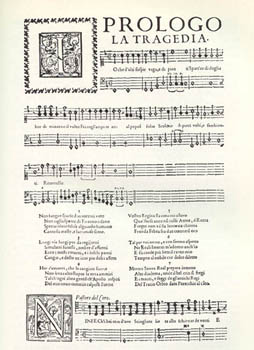
Peri Euridice Prologo

Please join me on Facebook https://www.facebook.com/andrew.lawrenceking.9 and visit our websites www.TheHarpConsort.com

www.IlCorago.com and www.TheFlow.Zone

Opera, orchestra, vocal & ensemble director and early harpist, Andrew Lawrence-King is director of The Harp Consort and of Il Corago. From 2010 to 2o15 he was Senior Visiting Research Fellow at the Australian Research Council Centre for the History of Emotions.


Tempus putationis – Getting back to Monteverdi’s Time

tempus putationis


Monteverdi fans will recognise this snippet as part of the tenor solo, Nigra sum, from the 1610 Vespers. The text is usually given in English as ‘the time of the singing of birds is come’, translating direct from the original Hebrew of the Song of Solomon. Monteverdi’s setting creates a musical picture of the word tempus (time) with a succession of semibreves.

Cranes flock to Israel in early spring

Cranes in Israel in early spring


Around the year 1600, the semibreve is the note-value where Time as musical notation and Time in the real world meet. That meeting is governed by the Tactus, the physical movement of the hand, down-and-up. Down and up again corresponds to a semibreve, and lasts about 2 seconds. [Read more about how 17th-century notation was calibrated against real time in Quality Time, here]. So Monteverdi’s semibreves for tempus putationis are a musical picture of Time itself.

However, the Latin word putatio actually means ‘pruning’, so Monteverdi’s text actually refers to the early spring pruning of the vines [the Song of Solomon has more to say about the ‘vine with the tender grape’]. That might encourage some pruning of any bird-song ornaments from this phrase! And it inspires me to cut away all the excess foliage to show what I believe to be the essential structure of Time, in Monteverdi’s period.


pruning vines

For this ‘pruned down’ post, instead of arguing from original sources towards my personal conclusions, I’m going to begin by setting out (my take on) the starting assumptions of Monteverdi’s generation. Starting from these period assumptions (very different to those of today’s musicians), we’ll see what kind of music-making might grow, as buds from these particular shoots.


Honoro


This post is also inspired by Bill Hunt’s comments and challenges to my article on Proportions in Monteverdi’s Ballo, here. Thank you, Bill for your thought-provoking remarks: my replies and ripostes are below!

So let’s start at the very beginning, with the ut re mi  of seicento Time. But keep in mind: this is not simply a matter of practical music-making. We are dealing here with renaissance ‘Science’, that is to say the Philosophy of splendid, cosmic, divinely-ordained things, the knowledge of what really counts.


Splendidora explicat

MONTEVERDI’S TIME: PHILOSOPHY

  1. Monteverdi understood Time (as a philosophical concept) in Aristotelian terms, as defined by motus (movement, or change). This is very different from Newton’s concept of Absolute Time (1687) that still today underpins our intuitive grasp of Time.
  2. Time in the real world was defined by the heavenly clock of the cosmos. Each day, the sun reaches its zenith and defines noon.
  3. The best clocks of Monteverdi’s period could indicate the passing seconds, but could not measure seconds accurately. They were only accurate to about 15 minutes a day.
  4. Smaller intervals of time could be measured by the human pulse, the heartbeat. Although the heart-beat varies from person to person, and according to the physical state of the individual, it offered higher precision than the best clocks. But there was no means of calibrating this accurately to clock-time, since clock-time itself was insufficiently precise.
  5. Even smaller intervals of time could be measured by musical rhythm, subdividing to, say, 1/8th of a second. This was the highest precision timing known in this period (renaissance swordfighters wished to emulate singers’ sense of precision timing). Again, there was no means of calibrating this accurately to clock-time, since clocks themselves were inadequate.
  6. There was a strong belief in the existence of a single, divinely ordained, correct Time, defined by the cosmos, e.g. by the noon-day sun.

MONTEVERDI’S TIME: MUSIC

  1. Music itself was cosmic [musica mondana, the Music of the Spheres], and human [musica humana, the harmonious nature of the human body], as well as sound [musica instrumentalis, music sung and played here on earth].
  2. Musical Time was measured by the Aristotelean motus of the perfect movement of the cosmos, of the steady beat of the human heart, by the down-and-up movement of the Tactus hand.
  3. Just as citizens tried to regulate their clocks to run steadily (for practical convenience, and as faithful microcosms of solar time), so musicians tried to keep Time as steadily as humanly possible.  This regulation was at the level of about one second of clock-time; in music, it was at the level of the Tactus beat.
  4. Smaller intervals of Musical Time were measured by sub-dividing the Tactus beat.
  5. Just as citizens tried to calibrate their clocks to agree with each other, and with Solar Time, so musicians tried to agree with each other about Musical Time. The various members of a musical ensemble needed to agree on Time, in order to play together, just as citizens had to agree on a time of day, in order to meet each other. From one day to another, from one place to another, citizens and musicians alike tried to keep a consistent sense of Time. However, they had no means of precise calibration: they could only make their best human estimate. Consistent Time was what felt consistent.
  6. There was a strong assumption of a single, heavenly-inspired, correct Musical Time. A musician’s job was to get it right, not to have a personal clock that ran unsteadily, or differently from everyone else’s.

MONTEVERDI’S TIME: TACTUS

  1. All this philosophy was put into practice using the Tactus, the down-up movement of the hand, which calibrated musical notation to real-world Time. The Tactus could be physically enacted, or just kept in mind as an organising concept: either way, it was compared to the heartbeat.
  2. Under mensuration symbol C, the complete Tactus cycle (down-up) corresponds to a semibreve. Down for a minim; up for a minim.
  3.  In Tripla Proportion, down corresponds to three minims, up to another three minims. The Tactus-beat is maintained without change.
  4. In Sestupla Proportion, down corresponds to six semi-minims (these look like crotchets in 6/4); up to another six semi-minims. The Tactus-beat is maintained without change.
  5. In Sesquialtera Proportion, down corresponds to two semibreves; up to one semibreve. The duration of the complete Tactus-cycle does not change, but now the down is longer than the up, the beat is ‘unequal’.

MONTEVERDI’S TIME: QUALITY

  1. Like the Cosmos, like a clock (but better!), like the heartbeat (but slower), the Tactus beats steadily and slowly.
  2. A musician’s job is to get it right, to keep it steady, to make it consistent from day to day and with everyone else’s.
  3. Like the stars in heaven, like a clock at the back of the room, the Tactus (as a concept) existed before the music started, will persist after the music stops, and continues across silences within the music. This Tactus-as-concept directs the music. The Tactus itself is the director, not the human who waves the Tactus-hand.

MONTEVERDI’S TIMES: CALIBRATION

  1. Music was calibrated to the Tactus at the level of semibreve (complete cycle) and minim (down alone, or up alone).
  2. The Tactus shared many vital qualities with the heartbeat, but was not calibrated to it (the heartbeat was generally faster).
  3. The Tactus felt slow and steady, as perceived in the human arm. This sets some limits (a finger could wag faster, the entire body might sway slower), but does not offer precise calibration.
  4. There was no means to calibrate the Tactus accurately to clock-time. The best approximation was about 1 beat (down, or up) per second for minims, i.e. about 2 seconds for the complete down-up cycle, for the semibreve. Tactus was calibrated not by clocks, but by a feeling of consistency.
  5. The Tactus felt the same, whatever the circumstances. We can imagine that in a large resonant building, the Tactus might actually proceed a little slower, in order to get the same feeling as in a small rehearsal room. We can imagine that, at moments of great excitement, or deep, genuine emotion, musicians might feel their Tactus to be consistent with the rehearsal, but this subjective impression would be altered by their human emotions.

MONTEVERDI’S TIME: HUMAN INTERVENTION

  1. Like the Cosmos, like the heartbeat, the Tactus has a conceptual existence and an authority that mere humans should not try to mess with. It is better than any clock, not in the sense of being ‘less mechanical’, but in the quality of being more accurate, more steady.
  2. A musician’s job is to maintain the Tactus steadily, consistently and in agreement with all colleagues.
  3. Within these assumptions, as a daring challenge to the stability of the Cosmos, and at the risk of upsetting one’s own heartbeat, performers began to flirt with the notion that the authority of the Tactus might not be wholly Absolute. In certain, strictly limited, situations, a human musician might intervene to alter (momentarily, minutely, infrequently) the way in which Tactus directs music.
  4. Caccini describes (and Monteverdi notates) a senza misura (out of measure) in which the singer temporarily ignores the Tactus. The Tactus continues as a concept, and in the continuo accompaniment. This is like a jazz singer floating elegantly around a steady beat in the rhythm section. This is a special effect, not to be over-used.
  5. Caccini and Frescobaldi describe (and Frescobaldi links to Monteverdi-type madrigals) ways to guidare il tempo (drive Time), in which the Tactus beats sometimes faster, sometimes slower, and even hesitates (momentarily) on the up-stroke. These changes are between sections (passi, movements), at the boundary of contrasting rhythmic structures and emotional content, not within one section. The alteration is a ‘step-change’, rather than a smooth acceleration/deceleration; it’s like changing gears, rather than using the accelerator/brake; it’s like the way a horse changes pace by changing gait (from walk to trot, canter and gallop), not the smooth acceleration of  jet-plane. This is a special effect, not to be over-used.
  6. When ‘driving the Time’ any change to the Tactus itself is small. The purpose is that the listener should perceive a change of emotion, not simply to turn the speed-dial up or down. When a noticeable change in the speed of the notes is wanted, the composer can notate this with changes in note-values, or changes in Proportion.


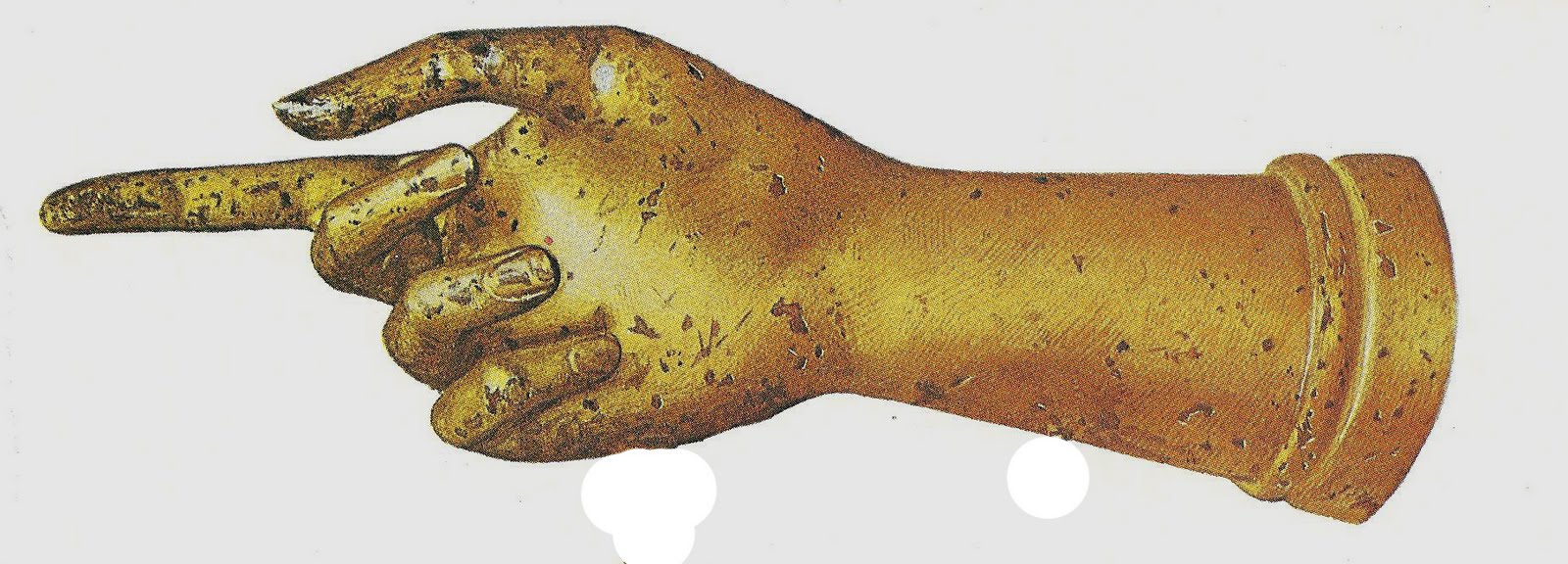
Golden Hand

Source references for these period assumptions can be found in many of my previous postings on Tactus, Time and Rhythm (use the Search button and Tags elsewhere on this page) and in Citations and Sources, below. There’ll be more in future posts, too. Tactus and the Philosophy of Time are discussed in great detail in Roger Matthew Grant Beating Time and Measuring Music in the Early Modern Era, hot off the Oxford University Press, and highly recommended, here.

But since this posting is pruned back to the essentials, I’m now going to apply these starting assumptions to Bill Hunt’s excellent list of  questions.

Galileo and the Philosophers

Galileo challenged by the Philosophers


In the discussion that follows, the challenges come from the eminent English viola-player, William Hunt, profile here. Three articles about the Ballo in Monteverdi’s Orfeo are under discussion: Roger Bowers on proportions here, Virginia Lamothe on dance here, ALK on tactus, proportions and dance here.

WH: I’d like to propose a contrary view. Part of the problem with Andrew’s fascinating discussion is that he sets up a number of straw men in order to arrive at his conclusions. Principal amongst these, in referring to the articles by Lamothe and Bowers on L’Orfeo, is the assertion “Their suggested metronome mark of approximately 50/60 as the Tactus Aequalis is certainly highly plausible. And Bowers agrees that the notation implies the same Tactus for the whole opera”. Bowers makes no such claim. 

ALK: (See ‘Citations and Sources’ below). I should first state clearly that I have great respect for Prof Bowers, and I agree with his points of principle. Indeed, I wish to go even further in the same direction of consistency that he recommends. I set up the assumption of  single Tactus for the whole opera, not as a ‘straw man’ to be cast away, but as a strong principle that I thoroughly agree with. Indeed, I believe that a particular notation implies the same Tactus wherever it is encountered in this entire repertoire (to the limits of subjective, human ability to maintain a single Tactus without any clock to confirm it).

For Orfeo, Bowers argues that the original notation conveys precise information that should be respected in performance. I agree. He argues that proportions are mathematically precise, and I agree. I disagree only on the detail of which mathematical ratio applies in certain instances.

In the Ballo, Bowers argues that there is no change in the meaning of note-values between the two triple-metre sections [3/2 and 6/4]. I agree. I go further to argue for equivalence of note-values between all triple-metre sections within the work [3/2 and 6/4 are the only triple-metre ‘time-signatures’ that occur in the whole of Orfeo]. I go further again, and argue for equivalence of note-values between sections in duple-metre too. Therefore, note-values only change, when the Proportion changes between duple and triple.

Bowers notes that all ‘time-signatures’ are governed by C throughout the whole work. He argues for a consistent Tactus from Sinfonia at the end of Act I to the entrance of the Messagiera. I agree, and I go further: I argue for a consistent Tactus throughout the whole work. I see no indication for a great increase of speed at the end of Act I, as the Sinfonia starts (Bowers’ argument requires a three-fold increase in speed at this moment). I see no evidence for doubling the speed (or more) between a “recitative” in C and the ballo also in C.

Bowers seems to be inconsistent about when he applies the principle of constant tactus, and when he does not. He wishes to apply it during the Ballo and through the Act I-Act II sequence, through many changes of ‘time-signature’, coloration etc. I agree. I go futher, I wish to apply it consistently throughout the work. But Bowers rejects the argument for constant tactus in general (see Bowers ‘footnote 33), without careful argument. Does he mean to say “Tactus is constant when I want it to be, and otherwise not”?

I say that Tactus is always constant, with only small and infrequent exceptions. I note Frescobaldi’s and Caccini’s discussions of when and how to change the tactus. They describe very restricted circumstances when tactus may be changed. And those changes should be small – if a composer wants double speed, he writes shorter note-values or switches to C-slash. [Some sources indicate that even C-slash is less than twice as fast as C]. If a composer wants a gear-shift of 3:2 or 3:1, proportional notation is available.

So I conclude that a performer’s personal choice of tempo-change would be within a small speed-range. And this personal choice would be exercised very infrequently. In his example madrigal, Caccini changes the Tactus only once (in response to an obvious cue from the words). Frescobaldi similarly sets specific conditions for change of Tactus: break between sections, change of rhythmic structure, change of affetto. Since they follow the affetto, these changes in tactus exaggerate what the composer has already notated: long note-values (for a sad affetto, say) are played in slower Tactus, short note-values (for a happy affetto) in faster Tactus. The affetto is determined on the short-scale, “line by line, even word by word” [Il Corago, Monteverdi and many other sources], but the Tactus only changes between sections, if at all.

Finally, when one considers the audience – it is after all their ‘affetti‘ we want to ‘muovere‘ – one realises that doubling or halving the speed has no effect. The listener perceives the same pulse, with different levels of activity. But a small increase in speed, in the context of precisely regular Tactus, has a strong emotional effect. It may even entrain the listener’s heartbeat, which was previously aligned with the regular, slow tactus, and increase it. As Renaissance theory of emotions describes, a performer might move the listener’s ‘affetto‘ and even create physiological changes in the body and blood (the doctrine of the Four Humours).

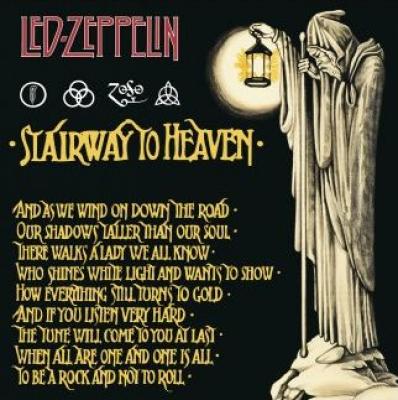
A fine example of this is Led Zeppelin’s “Stairway to Heaven” which accelerates between sections (within the general context, throughout pop music of that period, of steady tactus). There is some fascinating interview material with the performers, where they discuss the general context (“getting faster was absolutely prohibited”) and the emotional effect of a few small, but perceptible changes, in this song. I hear echoes of Caccini and Frescobaldi….


led_zeppelin_stairway_to_heaven


WH: I do firmly believe, as Andrew clearly does, that tactus was an essential structural constant that could unite consecutive and contrasting passages in logically proportionate tempi. On the face of it, the section which Bowers identifies, running from the Sinfonia to Act 2 up to the entrance of Messaggiera, is exactly such an instance, because of the succession of mensural signatures and the absence of intervening double barlines or fermata (the same is not true of the passage from “Lasciate i monti” up to the end of Act 1). Here, if one follows through Bowers’ notational logic, one ends up with a pretty fast tempo for “Vi ricordi boschi ombrosi”, as he says. Personally, I find that persuasive both musically and dramatically, but I have yet to experience it in performance, due to directorial intervention.

ALK: The entire opera (indeed this whole repertoire) offers ‘a succession of mensural signatures’. And I know of no period evidence that a fermata or a double-bar implies a change of Tactus. In Orfeo, Monteverdi sometimes places a fermata in one voice, when simultaneously another voice has no fermata: the fermata sign simply indicates ‘the end of something’, and cannot imply any alteration in the motus of the Tactus. Double-bars are often used to seperate consecutive strains of a single dance-movement, where a change of Tactus would be most implausible.

I don’t accept the argument that the passage from Lasciate i monti up to the end of Act I is somehow ‘different’.. It too has a ‘succession of mensural signatures’. Sure, it has some fermatas and double bar-lines, but so what? If Tactus is ‘an essential structural constant that could unite consecutive and contrasting passages in logically proportionate tempi’ [and it surely is!], then why not for the passage after the Ballo, as well as for the Ballo itself? Why not for the end of Act I, as well as for the bridge from Act I into Act II?

Does WH wish to say that “Tactus is constant when I want it to be, and can be changed when I want”? Or does he know of evidence of a fermata or double-bar as an instruction to change Tactus?

I believe that Tactus is constant, with only small and infrequent changes. Frescobaldi and Caccini list the circumstances in which the Tactus might be changed: neither of them mention fermata or double-bar.

WH: Bowers … analysis of the notation is that … semibreve of the C equates to dotted semibreve of the 3/2.  I suggest a tempo of something like semibreve = 52 for the opening (not a minim tactus, for reasons which I am coming to) becoming dotted semibreve = 52 for the 3/2, and finally bar = 52 (i.e. the ‘new’ semibreve = 52) for the 6/4: in other words a constant tactus.

ALK: I agree with the principle of a pulse that is maintained, and I have no objection to approximately MM52 for that pulse. And this interpretation of the proportions works too, in this place, starting from semibreve = 52 at the beginning of the ballo. But how do we find this tempo at the beginning of the ballo? Semibreve = 52 cannot apply to the whole opera – just try it for the beginning of the opera, for the Toccata or the Ritornello to La Musica or for any recitative: it is about twice as fast as possible. Why pick this fast tempo for this place notated in C, and not for another, also notated in C?

According to modern assumptions, directors can choose their own tempo, whenever there is a reasonable excuse (a fermata, a double-bar, personal inspiration, whatever). But according to period assumptions, the Tactus itself directs the tempo, and that Tactus is as constant as we humans can make it. (Caccini and Frescobaldi list limited circumstances where small and infrequent changes of Tactus might occur). My approach is to take that Tactus (somewhere around minim = 60), apply it at the beginning of the work, and maintain it, as best I can, until the end. And I’ll try to establish and maintain the same Tactus tomorrow, to the limits of my subjective perceptions of musical tempo.

The movement of the hand in beating Tactus is specified in period sources: in C, down for a minim, up for a minim. I find semibreve = MM52, i.e. minim = MM104 inconveniently fast for this mode of time-beating. I also find the resultant motus incompatible with the qualities of slow, steadiness that are associated with Tactus. I’m more convinced by the motus of minim around 60.

My approach starts from a broad principle, of a constant tactus. I apply this general principle first, before I look for solutions to particular problems of Proportions. I then apply the same solution to parallel situations. Following the Ballo under discussion, the next Proportional change in Orfeo is between the recitative (C) Ma se il nostro goir and the Ritornello (3/2), which moves in dotted semibreves and minims. My solution to the Ballo is  C: minim = 60 leads to 3/2: dotted semibreve = 60. My solution to the following, parallel situation is the same.

Bill’s solution to the Ballo [C: semibreve = 52 leads to 3/2: dotted semibreve = 52] does work there. But it does not work for the parallel situation of Recitative & Ritornello. Either the 52 pulse or the proportional relationship (or both) have to be abandoned. Is it Bill’s argument that although the notation is parallel, the second situation allows a personal choice, whereas the first situation indicates the composer’s tempo intentions? Why?

My belief is that the entire concept of personal choice of tempo is foreign to this period and its repertoire. Mensural notation indicates the composer’s intentions.

WH. … treating the central section of the first “Lasciate” as not being repeated. (No repeat is marked, of course, but a second verse of text is underlayed. I subscribe to Andrew Parrott’s view that this is a printer’s error, and that the second text should have been printed in the second “Lasciate”, instead of the repeated underlay of “Qui miri il sole”. This would result in an ABC form for each chorus, though, as Andrew (LK rather than P) points out, the uninformed listener would hear it as AABCC, because of the written-out repeats in the outer sections. This has a perfectly satisfactory symmetry. What is hard to believe is the format as it is printed).

ALK: I agree that the sequence of movements in the Orfeo Ballo is ambiguous – Lamothe has much to say on this. Andrew Parrot’s suggestion of a printing error in the 1609 edition is plausible, though one might have expected the editor of the 1615 edition to have fixed the problem, since much smaller errors were corrected (albeit at the cost of introducing some new errors too!). Lamothe makes a good point that the opening section (with the associated choreography of reverences and passi gravi, slow steps on the ground) would not be repeated in a court social dance. My point is that a similar opening section (which is not danced) is repeated in Cavalieri’s theatrical ballo for Anima & Corpo. We do not know which sections of the Orfeo ballo were danced, though it is sure that the singers themselves could not have danced a galliard, with all its jumps, whilst singing. Consideration of the repeat scheme for the Orfeo ballo has include all these points, together with scholarship on the total number of singers (between 7 and 9), the possibility that dancing masters might have participated (as is specified by Cavalieri), and the prohibition against women acting on stage, still in force in Mantua in 1607.

Good arguments can be made to support several possible solutions.

WH: Having read many of the linked sites here with great interest, particularly the one on “Text, Rhythm, Action / Rhythm: what really counts?”, I am curious to know what Andrew thinks about the semibreve, which so many theorists describe as the fundamental unit of time. There is so much emphasis throughout all his articles on the minim and the fixing to it of a constant tempo, viz “Around 1600, typically the Tactus will be on minims (half-notes), somewhere around MM60. Down for one second, Up for the next second”

Leaving aside the massive nature of this generalisation (is this really supposed to be typical of all music around 1600?), what about the concepts of Thesis and Arsis? It seems to me that these are essential to an understanding of musical structure in this period, especially the setting of text. Unless the semibreve is the unit on which one is principally focussed, not the minim, a whole vocabulary of subtlety is missed, to my mind. But that is a huge subject for another occasion!

ALK: Bill is absolutely right to draw attention to the fundamental significance of the semibreve. The complete Tactus-cycle (down-up) corresponds to a semibreve. I could equally well, perhaps better, express my view as “The Tactus-cycle will last for a semibreve, approximately two seconds, i.e. somewhere around MM30 for the complete down-up.” In duple time, this results in the same “Down for one second, Up for the next second”.

But an advantage of the focus on the semibreve is that it allows you to negotiate the tricky change into Sesquialtera more easily. The complete Tactus-cycle (down-up) still lasts  two seconds, but the Down lasts longer than the Up. This is why triple time is described as ‘unequal’ in this period. I agree with Bill that there are interesting and beautiful subtleties to be found in a heightened focus on the semibreve.

However, period sources specify that the mode of beating time for Tactus is that the semibreve corresponds to the complete down-up cycle. There is no suggestion of beating Down for one semibreve, Up for the next: the Down and Up are on successive minims.  Thus a heightened focus on the semibreve implies a heightened focus on the complete cycle, as opposed to the individual down/up movements: it does not imply a different mode of beating time. The concept of Thesis and Arsis (Down and Up) is therefore located in the alternation of minims (under mensural sign C). See my discussion of ‘The Hobbit problem’ in Quality Time, here.

Of course, there are duple (or other) symmetries at semibreve and longer durations too. It’s very good to be aware of these.

THE MASSIVE GENERALISATION

Returning to the fundamental assumptions with which I began, I agree that it is a massive generalisation to state that musical tempo was consistent throughout the whole repertoire in circa-1600 Italy, to the limits of human perception. It is a generalisation that is hard for us post-Romantics to comprehend. But it fits well with the evidence, not only of musical treatises, but of period philosophy in general. And we can observe the gradual change through the later 17th and 18th centuries; the persistence of notions of tempo giusto or tempo ordinario as late as Beethoven; the developing presumption of personal choice that comes to characterise the 19th-century; the glorification of Rubato circa 1910 that is taken by some today as a musical absolute. Those changes in musical practice follow changes in the scientific and philosophical understanding of Time itself, from Aristotle and Plato via Galileo and then Newton to Einstein and then Hawking.

It helps to keep in mind the 17th-century identification of musical tempo with Time itself, alluded to in Monteverdi’s setting of the word tempus at the beginning of this post. The ideal is to keep Time. A musician does not seek to develop a personal opinion about tempo, just as he does not seek to acquire a clock that runs differently from everyone else’s.

The difficulty is that we tend to read historical treatises on Music in the light of our modern assumptions of Science and Philosophy. If we start by assuming period philosophy, musical treatises reveal new, quite surprising details. To do this, we must be ready to abandon some modern assumptions so familiar that we hardly even notice them.

Most modern directors assume they have the right to choose their own tempo, movement by movement, through a baroque opera:  most of those directors fail even to notice the anachronism of conducting, as a means of imposing those choices. But period sources tell us that music is directed by Tactus itself: not by the whim of a Tactus-beater!. And Il Corago tells us that operas are not conducted.


No conducting


CITATIONS & SOURCES

At the opening of my article on the Orfeo Ballo, I tacitly linked up citations of Bowers and Lamothe with my own assumptions. So here are the individual elements:

Lamothe quotes Bowers on MM 50/60 (but identifies this with the semibreve, which  would not work for the whole opera. I  identify this sort of pulse with the minim). Bowers states that the notation implies the same Tactus for the lengthy excerpt from the end of Act I until the entrance of the Messaggiera halfway through Act II. Bowers remarks that the notation is the same throughout the rest of the opera too. I take the logical step that the same Tactus is implied for the whole opera.

George Houle’s (brief) discussion of constant tactus throughout the repertoire is on pages 3-5 of ‘Metre in Music’, citing Heyden, Mersenne and secondary sources. On page 2, Houle mentions (all too briefly) ‘degrees of change intermediate to those determined by diminution or proportion.’

Constant Tactus for the whole repertoire is supported by Il Corago, page 47 (see future postings on this blog).

Houle cites Dowland’s explanation of Tactus and Semi-Tactus on page 4. This is the ‘Hobbit Question’, aka ‘there and back again’: the semibreve corresponds to the complete down-up cycle. See Quality Time here.

Bowers cites Banchieri’s ‘Conclusioni’ chapter 14 “when there is no numerical sign”, in support of his Sesquialtera interpretation of proportional change. Of course, in Orfeo, there are numerical signs [3/2 and 6/4]. Banchieri addresses this situation in chapter 15, at the end of which he describes the Tripla interpretation that I propose.

I admit that Banchieri describes two interpretations, and does not discuss how to decide between them. But my general point is that we can approach such decisions by requiring consistency, not only of interpretations of Proportional relationships, but also in constancy of the underlying Tactus. If we consistently interpret the same notation the same way, if we apply a consistent tactus (perhaps allowing SMALL changes, but not doubling/halving the speed), we can rule out certain interpretations as impossible. [I try to distinguish carefully between ‘unfamiliar’ and ‘impossible’]. When – as in Orfeo and the Vespers – we have many proportions at work, the accumulated constraints of ‘impossibilities’ gradually reduce the number of possible solutions – ideally to a single answer.


Galileo Pendulum


Please join me on Facebook https://www.facebook.com/andrew.lawrenceking.9 and visit our website www.TheHarpConsort.com . Further details of original sources are on the website, click on “New Priorities in Historically Informed Performance”

Opera, orchestra, vocal & ensemble director and early harpist, Andrew Lawrence-King is director of The Harp Consort and of Il Corago, and Senior Visiting Research Fellow at the Australian Research Council Centre for the History of Emotions.

www.historyofemotions.org.au

Play it again, Sam! The truth about Caccini’s ‘sprezzatura’

Casablanca Poster


Play it again, Sam!

As the well-informed readership of this blog will know already, in the 1942 film Casablanca, nobody ever says that most famous phrase “Play it again, Sam”. They use similar words, but somehow, the whole world has picked up the wrong version. In this post, I’m looking again at what Caccini actually wrote in his famous Preface to Le Nuove Musiche (Florence 1601/2), separating the facts from popular myths.

So let’s be clear from the outset that Caccini never mentions

sprezzatura di ritmo

Actually, he only mentions sprezzatura twice, in the whole Preface. He only uses it once, in all his extensive music examples. Sprezzatura was not his priority. Sprezzatura was applied only to whatever did not matter. In contrast, he talks much more about divisions and   exclamations, and he uses these much more in his example songs. His priorities were text and rhythm.

But there is one other concept that he discusses far more than any other. [You can see my summary of what Caccini did say, at the end of this post.]

If you perform early seicento music, don’t trust what your teacher once told you his teacher told him, don’t even accept what I write here without proper scientific scepticism: you will want to read Caccini for yourself. The standard modern edition (Giulio Caccini, edited by H. Wiley Hitchcock, Le Nuove Musiche, A-R editions, 1970, second edition 2009) is widely available, and includes an English translation of the Preface. That translation has a few questionable moments, but it includes well-researched additional notes. But be careful with Hitchcock’s transcriptions of the songs themselves: not all the printed time-signatures – vital for establishing Proportions – are original.

English translations from the Preface have been printed in many source-book anthologies, beginning with an excerpt in John Playford Introduction to the Skill of Music 1664. This is available free online in the 1683 reprint here. (See Directions for singing after the Italian manner, pages 34-39)

Probably the most influential English translation is Oliver Strunk (editor) Source Readings in Music History (1950), page 370. The 1942 translation by Alfred Ashfield Finch has many editorial additions, and cannot be trusted: I mention it only because it is available online. The extract translated by Zachariah Victor is better (though he mistranslates sprezzatura di canto), it can be downloaded free here.

But best of all, the original print can be downloaded free, with the full Italian text of the Preface, Caccini’s worked examples (in which he applies his own advice to three sample songs), and all the songs themselves, including his greatest hit, Amarilli mia bella. It’s all here.

Caccini Nuove Musiche title page


Re-assessing Le Nuove Musiche

In Baroque Music 1.0, we all learnt that Caccini’s Le Nuove Musiche represents the paradigm-shift that brought about a musical revolution, defined Basso Continuo, ushered in the Baroque Age, and led to the Development of Opera. That over-simplistic view has been re-assessed: Caccini was a clever self-promoter, and in this book as in his hasty publication of his music for the ‘first opera’ Euridice (1602), he was deliberately positioning himself as the hero of a new style. Caccini’s Musiche are not really so nuove (new); in many ways, he was less innovative than his rival, Jacopo Peri, principal composer of the first-performed version Euridice (1600). Similarly, Caccini’s advice on performance practice is a summary of developments over the last decades, rather than an ‘epoch-making’ breakthrough. Again, Peri is more daring, in the Preface to his Euridice, which I will discuss in a future post.


The songs of Le Nuove Musiche include 12 strophic Arias which Caccini calls  canzonette a aria, ‘Canzonets’, and plenty of ‘old-fashioned’ diminutions, even in the 12, supposedly more modern, ‘Madrigals’. These madrigals look very much like the ornamented solo versions of four-voice part-songs heard in the Florentine Intermedi (1589). Indeed, it’s so simple an exercise to construct a four-voice madrigal from the solo and figured bass of Amarilli mia bella, that I suspect Caccini originally wrote the piece as a part-song. As Victor Coelho writes, “we know now through the work of Claude Palisca, Tim Carter, John Walter Hill, Howard Brown, and others, that Caccini’s works were closely connected to earlier and long-standing musical traditions”. Coelho’s article in the Journal of Seventeenth-Century Music here places Le Nuove Musiche in the context of the previous century and of a manuscript containing intabulated accompaniments of works by Caccini, Peri, and Rasi .


Sprezzatura in the 16th century


Caccini’s sprezzatura is also a 16th-century concept, discussed in Baldassare Castiglione’s Libro del Cortegiano (1528), transcribed into modern Italian here Castiglione was translated into English by Sir Thomas Hoby in 1561 as The Courtyer here. It’s known in English today as The Book of the Courtier. In Chapter XXVI, Castiglione introduces the idea:

per dir forse una nova parola, usar in ogni cosa una certa sprezzatura, che nasconda l’arte e dimostri cio che si fa e dice venir senza fatica e quasi senza pensarvi. Da questo credo io che derivi assai la grazia

Here is Hoby’s 1561 translation:

(to speak a new word) to use in every thyng a certain Reckelessness, to cover art withall, and seeme whatsoever he doth and sayeth to do it wythout pain, and (as it were) not myndyng it. And of thys do I beleve grace is muche deryved 

In modern editions, sprezzatura is translated as ‘disdain’ [which is literal, but unhelpful] or ‘nonchalance’ [better]. I like the translation ‘cool’. Castiglione links sprezzatura to grazia (grace, elegance), a word so evocative of the qualities of an ideal Courtier that it occurs 150 times. Sprezzatura occurs a further 8 times, in connection with dancing, as not to be overdone, as praiseworthy in itself, in contrast to attillatura (neatness of dress, also seen as praiseworthy in itself), in contrast to affectation (seen as highly negative), in contrast to ‘pestiferous affectation’ and linked to the ‘extreme grace of simplicity’, and in the context of playing a character role in costume.

This last mention is not often cited in the secondary literature, but it seems especially relevant to Caccini’s use of sprezzatura in the musical context of singing in the period of the first operas, so here it is in full, from Book II Chapter XI:

esser travestito porta seco una certa liberta e licenzia, la quale tra l’altre cose fa che l’omo po piglare forma di quella in che si sente valere, ed usar diligenzia ed attillatura circa la principal intenzione della cosa in che mostrar si vole, ed una certa sprezzatura circa quello che non importa, il che accresce molto la grazia:

Hoby translates this section in 1561 as:

To be in a maske bringeth with it a certaine libertie and lycence, that a man may emong other thinges take uppon him the fourme of that he hath best skill in, and use bente studye and preciseness about the principall drift of the matter wherin he will shewe himselfe, and a certaine Reckelesness aboute that is not of importaunce, whiche augmenteth the grace of the thinge

Hoby’s translation of valere as ‘to have skill’ is doubtful in this context: the principal meaning according to Florio’s 1598 dictionary here reprinted and extended in 1611 is ‘to be worth, to be of value, to be much or greatly esteemed’. So here is my translation:

To wear a character costume brings with it a certain liberty and licence. Amongst other things, it allows a man to take the form of something that he feels to be of great worth, and to exercise careful attention and preciseness about the principal purpose of the event in which he wants to appear, but a certain ‘cool’ about whatever doesn’t matter. This greatly increases his elegance.

Attillatura usually refers to preciseness in dressing, but it seems that Castiglione intends this example to illustrate a more general concept: even when you are doing something very important, you can be attentive and precise about the important things, and show a certain ‘cool’ in whatever does not matter.

Il Cortegiano frontispiece 1562


Caccini’s Preface


Returning to the 17th century and Le Nuove Musiche, we can hear echoes of Castiglione in Caccini’s use of such words as sprezzatura, grazia and nobil (noble, which with its derivatives occurs 122 times in Il Cortegiano). But which words and phrases does Caccini use most often, what is his ‘principal purpose’?

[Square brackets like this separate my commentary from excerpts of Caccini’s text, which I report in the third person, and shorten to focus on Caccini’s discussion of style. My summary is at the end of this post]

Good Style


Caccini calls his practice la nobile maniera di cantare (the noble manner of singing), and says he learnt it from Scipione del Palla, who was active in Naples at the time of Caccini’s birth, 50 years earlier.

He claims for himself the development of lunghi giri di voci semplici, e doppie, cioe raddoppiate, intrecciate l’una nell l’altra (long turns of notes, simple and double, i.e. re-doubled, interwoven one with another). He positions these as the modern alternative to quella antica maniera di passaggi (that old-fashioned manner of divisions), which he considers more suitable for wind or string instruments than for voices.

He associates la buona maniera di cantare (the good way of singing) with crescere e scemare della voce, l’esclamazione, trilli e gruppi (crescendo and diminuendo of the note, exclamation, single-note trills, two-note trills with final turn). As the Preface continues and in the example songs, it becomes clear that crescendo and diminuendo are on one note, not throughout a whole phrase, and precisely what is meant by trillo and gruppo.

He now discusses the advantages of canto per una voce sola (solo songs, as opposed to polyphonic part-songs). He claims that recent times (moderni tempi passati) were not accustomed to musiche da quella intera grazia (music of that complete grace) that he himself hears nel mio animo resonare (resonating in his spirit). Grazia has connotations of divine, spiritual qualities as well as of artistic beauty and sweetness. Animo is the mind or spirit, as opposed to anima (the spirit or soul, in the religious sense), core (heart, fount of emotions), and the lower body, vita. 

Caccini values what he learnt at Bardi’s Florentine Camerata, with its membership of noble amateurs, musicians, intellectuals, poets and philosophers, above his long training in counterpoint. These intendentissimi gentilhuomini (gentlemen of great understanding) convinced him not to prize that kind of music which does not allow the words to be understood well (non lasciando bene intendersi le parole), because it spoilt the meaning and the poetry and distorted the Long and Short syllables. [Long and Short syllables correspond to Good and Bad notes; more about Good and Bad here].

Caccini and the Camerata follow a Platonic, philosophical ideal that:

La musica altro non essere che la favella e’l rithmo, & il suono per ultimo, e non per lo contrario.

Music is text and rhythm, & sound last of all, and not the other way around.

[Hitchcock’s translation is misleading here, ignoring the effect of seicento conventions of punctuation, and disregarding that ultimo is singular. His ‘speech’ is a reasonable translation of favella but since Caccini wishes to distinguish this favella from sound, ‘text’ is probably better. His mangled version –  ‘speech, with rhythm and tone coming after’  – seems to me symptomatic of 20th-century musicians’ refusal to accept the possibility that rhythm could be noble, another mistake resulting from the unquestioning assumption that expression must be linked to 20th-century rubato.]

[Caccini’s bold statement of priorities – text and rhythm – backed up with the full authority of the Florentine Camerata, has received little attention from performance practice scholars, especially compared to all the ink spilled over discussions (often skewed) of sprezzatura. But I find these priorities inspiring and noble, a breath of fresh air amongst all the arguments over vibrato, pitch and temperament that clog today’s Early Music. Caccini’s priorities (combined with the Rhetorical priority of Action, i.e. persuasive, fully embodied delivery with gestures, facial expressions, contrasts of timbre) gave the title and rehearsal methodology for my three-year project Text, Rhythm, Action! within the Performance program of the Australian Centre for the History of Emotions, with 20 staged productions of historical music-dramas, and master-classes, lectures & workshops all over the world.]   

Caccini and the Camerata want music to penetrare nell’ altrui intelletto e fare quei mirabili effetti (penetrate the listener’s mind and create those marvellous effects) described by Classical writers, i.e. moving audiences to tears and laughter. This cannot be done by polyphonic music, not even by solo songs to a string instrument if there are too many diminutions, moltitudine di passaggi, applied indiscriminately to Bad as well as Good syllables [the normal rule is to ornament only the Good syllables]. According to Caccini, only plebs admire such empty vocal display (passaggi … della plebe esaltati). Such music can do no more than titilate the ears. It’s impossible to move the mind, muovere l’intelletto, without an understanding of the words, senza l’intelligenza delle parole.

So Caccini had the idea [he writes, boldly claiming the territory] to introduce a kind of music in which performers could quasi che in armonia favellare – almost speak in harmonies. [This is paralleled in Peri’s more detailed description, in his Preface to Euridice, of taking the pitches of syllables that would be sustained in declamatory speech, and accompanying those pitches with suitable harmonies.] In this music, Caccini uses a certain noble sprezzatura of song, a ‘cool’ way of singing.

una certa nobile sprezzatura di canto

[Musicologists and musicians have leapt to the conclusion that this sprezzatura is some kind of rhythmic freedom. But Caccini does not say this, not at all. Rather, it is canto song itself, that is treated with sprezzatura. We can combine Castiglione’s dictum  – that one should be precise about the priorities, and apply sprezzatura to whatever is less important – with the musical priorities of Caccini and the Camerata – text and rhythm, with sound last of all. The result confirms that we should apply sprezzatura to the sound, to song itself, to the sonic qualities of singing. We should be precise about text and rhythm, and cool about vocal sound-production. As Caccini writes, we should hardly sing, we should ‘almost speak in harmonies’.]

Caccini describes how the voice-part passes through various dissonances whilst the bass stays on the same note – what we today call recitative. [This is a kind of sprezzatura  of composing, a nonchalant way of dealing with the normal rules of counterpoint. These dissonances are not prepared and resolved, as would normally be required.] Sometimes Caccini does use dissonance in the conventional manner, with the polyphonic ‘inner voices’ played on an instrument, to express some emotion, per esprimere qualche affetto.

[I take Caccini’s somewhat ambiguous final clause non essendo buone per altro to mean that the ‘inner voices’ are not useful for anything else, i.e. as another negative comment about polyphony. ‘Dissonances are not good for another kind of emotion’ and other readings are also possible.]

According to Caccini, this was the origin of those modern solo songs which have more power to delight and move, piu forza per dilettare e muovere, than many voices together. [‘Delight and move’ recalls the Rhetorical aims of docere, delectare, muovere in Cicero’s De Oratore.] Caccini gives examples of his work – Perfidissimo volto, Vedro’l mio Sol, and  Dovro dunque morire. [The first of these makes considerable use of the ‘recitative’ technique of a static bass, the second has one brief moment of ‘recitative’: in the third, the bass often moves fast under a sustained note in the voice. The common element of modernity seems to be reduced polyphony, rather than ‘recitative’ as such.] Caccini picks out his setting of the eclogue of Sannazaro [now lost] in particular as in the style of his music for the first Florentine ‘operas’, quello stile proprio … per le favole … rappresentate cantando.

Caccini now name-checks various nobles who had never before heard music for solo voice accompanied by a simple string instrument, which had such force to move the emotions of the spirit tanta forza di muovere l’affetto dell’ animo. He attributes his success to his new style, lo nuovo stile, and also to the superiority of his specially composed solos over arrangements for solo voice of part-songs. By 1601, everyone who writes for solo voice uses this style, especially in Florence, where Caccini claims to have worked for the Medici for 37 years.

In both Madrigals and Arias, Caccini always tries to imitate the ideas of the words,  concetti delle parole, searching out notes that would be more or less emotional according to the sentiments of the words quelle corde piu e meno affettuose secondo i sentimenti. In particular, there will be grazia because he has hidden as much as possible the art of counterpoint. [Here Caccini brings together Castiglione’s idea of the elegance of hidden art with the Camerata’s ideal of reducing polyphony.]


Passaggi

Caccini again mentions the proper distinction between Good and Bad syllables, observed in his harmonies and his ornamentation. When he does ornament a Bad syllable, this doesn’t last long, and can be considered not as a passaggio (which would be inappropriate) but as un certo accrescimento di grazia si possono permettere (a certain increase of grace, that can be permitted). But since he has already complained about the misuse of long turns of notes, malamente adoperati quei lunghi giri di voci he advises that the passaggi are not strictly necessary for the good manner of singing necessarii per la buona maniera di cantare. Rather, they titillate the ears of those who understand less about passionate singing, una certa titillatione a gli orecchi di quelli che meno intendono che cosa sia cantare con affetto. For those who understand, passaggi are hateful, abborriti, there is nothing more contrary to emotion, non essendo cosa piu contraria di loro all’ affetto.

This is why Caccini spoke about ‘misuse’: his own ornaments are introduced only in music that is less passionate, meno affettuose, on the Good syllables not on the Bad, and at final cadences. For these lunghi giri the vowel u is better for sopranos than for tenors; the vowel i is better for tenors. Other vowels are in common use, but open vowels are more sonorous than closed, and therefore more suitable for exercising such vocal agility esercitare la disposizione. Again Caccini tells us to use these giri di voci according to his rules and not just anyhow, e non a caso. 

Whilst others who want to sing solos stylishly, cantar solo e fare maniera think first about the practice of counterpoint, Caccini has better advice about the good manner of composing and singing in this style, la buona maniera di comporre e cantare in questo stile. [This distinction between comporre and cantare supports the interpretation of his sprezzatura di canto as a performance practice of ‘almost speaking’, not as the compositional technique of ‘recitative’.] What is needed much more is l’intelligenza del concetto, e delle parole il gusto (the understanding of the meaning, and the flavour of the words). This flavour should be imitated in passionate notes and also expressed by singing with passion, l’imitazione di esso cosi nelle corde affettuose, come nello esprimerlo con affetto cantando. [Again, Caccini distinguishes between the work of composer and performer].

So counterpoint is not much use, Caccini uses it only to coordinate the two parts, to avoid obvious errors, and to create some dissonances, durezze, more to support the emotion than to employ artistry, piu per accompagnamento dello affetto che per usar arte. Composing according to the gusto del concetto delle parole (flavour of the meaning of the words) and singing with good style, buona maniera di cantare, are more effective and delightful than all the art of counterpoint. This is what brought Caccini to this way of singing maniera di canto for solo voice, and where to use the lunghi giri di voce.

The Passionate style


Now he discusses the use of  crescere e scemare della voce, l’esclamazioni, trilli, gruppi (crescendo and diminuendo on one note, exclamations, single-note and two-note trills).  These are often used indiscriminately, indifferentemente, in passionate music, musiche affettuose, where they are required more, and in light dance-songs canzonette a ballo [where they would be inappropriate]. Some people create an ultra-passionate manner of singing, una maniera di cantare … tutta affettuosa, and with the general rule that crescere e scemare della voce  and esclamazioni are the foundation of that passion (affetto), they apply them in all kinds of music, without noticing whether the words require such passion, se le parole il richieggiono. Those who understand well the meanings and sentiments of the words, che bene intendono i concetti e i sentimenti delle parole, can distinguish where such passion is more necessary or less required, ove piu o meno si richieggia esso affetto.   

[This is excellent advice, which I will summarise as : Don’t pour a rich sauce of fake emotion over an innocent text! Such down-to-earth honesty is all the more necessary, as we approach Caccini’s next quotable quote]

Quest’ arte non patisce la mediocrita

This Art does not admit mediocrity. The more exquisite details there are that are required for excellence in this Art, the more hard work and diligence we who profess the Art must find in all our studies.  [So, stick with it, even if Caccini’s sentences sometimes seem endless!] From written sources [the Italian word scritti  hints at holy scriptures] we receive the light of Science [this word has cosmic, divine significance in the 17th century], and all the Arts. So we need Love too, the kind of love that inspired Caccini to leave a glimmer of light in his music and discussion of the art of singing solo above the harmony of the Chitarrone or other stringed instrument.

For singers, the first and most important fundamental is to be to start the phrase on any note l’intonazione della voce in tutte le cordi , neither too low nor too high, and in good style, la buona maniera. Caccini discusses the ornamental start from a third below, which should be not be sustained but scarcely hinted at, a pena essere accennata. This does not always fit the harmony, and is often over-used. Many singers consider starting with a steady crescendo to be the good style of putting forth the voice with elegance, la buona maniera per mettere la voce con grazia. Caccini prefers this crescere la voce, but he is always seeking novel means to attain the goal of the musician, il fine della musico, cioe dilettare e muovere l’affetto dell’animo.

A musician’s goal is to delight and move the passions of the mind & spirit.

 So Caccini claims that he invented a more passionate way, maniera piu affettuosa, starting the note with the contrary effect of a decrescendo, intonare la prima voce scemandola. [In all this discussion, we have to understand voce as ‘voice’ and/or ‘sung note’, sometimes even as ‘a word’. Similarly, corda can be ‘string’ and/or ‘note’, whether sung or played.]

But the most principal means of moving the passion, mezzo piu principale per muovere l’affetto, is the Exclamation, esclamazione. As you make the decrescendo, nel lassare della voce [this could also mean ‘just before you leave the note’], make a bit of a crescendo, rinforzarla alquanto. Caccini notes that this crescendo can become unbearably harsh in the high part, especially with falsettists. But without doubt, as a passionate ornament (affetto) to move the emotions (per muovere), the effect (effetto) is better starting the note with decrescendo, intonare la voce scemandola, than with crescendo. [Note that Caccini here uses affetto to mean not only a passion, but also an ornament that moves the passions.] Crescendo la voce per far l’esclamazione (crescendo on a note as an Exclamation) requires a further crescendo as you relax/leave (lassar) the note, and this seems forced and harsh, sforzata e cruda. But contrariwise, with decrescendo on a note (scemarla), as you relax/leave it (lassarla) giving it a bit more spirit, il darle un poco piu spirto, makes it more and more passionate, sempre piu affettuosa.

You can also vary one or other intonazione. Variety is most necessary in this art, as long as it is used for the purpose [of delighting and moving the passions].

This is the greatest part of elegance in singing in order to move the passions of the spirit, maggior parte della grazia nel cantare atta a poter muovere l’affetto dell’ animo. It applies to those subjects in the text (concetti) that are more suitable for such passions, ove piu si conviene usare tali affetti. You can learn this most necessary elegance, quella grazia piu necessaria, from written sources, but after studying the theory and the rules, perfection is attained through practice.

This leads Caccini to his music examples, demonstrating two Exclamations, languida (languid) and piu viva (more lively). You can experiment to see which way of starting the note (intonato) produces more or less elegance, maggiore o minor grazia. On the word cor, start (intonare) the first note, make a decrescendo little by little (scemandola a poco a poco), and on the second note crescere la voce con un poco piu spirito (crescendo on the note with a little more spirit). This is the esclamazione assai affettuosa (moderately passionate) for a note descending by step.     

Caccini Nuove Musiche Exclamazione


On the word deh, the exclamation is much more spirited, molto piu spiritosa, because it does not continue by step, but very sweetly with the fall through a sixth. With this Caccini demonstrates the esclamazione, which can be of two qualities, one more passionate (piu affettuosa) than the other.The way the note is started (intonate) is an imitation of the word, imitazione della parole, as long as that word has significant meaning, significato con il concetto

Otherwise, as a general rule esclamationi can be used in any passionate music (tutte le musiche affettuose) on every occurrence of dotted minim plus crotchet [this is my reading of Caccini’s ambiguous phrase, tutte le minime e semiminime col punto]. They will be more passionate (affettuose) if the following note runs fast (corre). Don’t do them on semibreves, where there is more space for crescendo and diminuendo on the note (crescere e scemare della voce) without esclamazioni.

In light music (musiche ariose) or little dance-songs (canzonette a ballo), instead of these passionate ornaments (affetti), just use the liveliness of the voice (vivezza di canto), which usually comes from the rhythm of the song itself [aria in this period has a wide range of meaning: a repeating rhythmic unit, a tuneful song that includes such repeating rhythmic units, or a tuneful strophic song over a repeating ground bass].  If there are some esclamazioni, they should leave the same liveliness (vivezza) and not bring in any languid emotion, affetto alcuno … languido.


Musicians need to exercise their own judgement, beyond the rules of Art. In the example above, there is more elegance, maggior grazia,  in the first setting of the word languire with the second quaver dotted, than in the second setting with all four quavers equal. There are many elements which create maggior grazia  in the good manner of singing la buona maniera di cantare. Although they are written in one way, they make a different effect (effetto) in another way, so some are said to sing with more grace, others with less, cantare con piu grazia o meno grazia.

Trillo & Gruppo

Caccini Trillo & Gruppo

The Trillo is on one note. Caccini taught it this way to his two wives and daughters. It starts with a crotchet, and beats with the throat (ribattere …con la gola) until the final breve. [Note that the trillo gets faster, not slower, and flows directly into the final breve]. Similarly with the Gruppo. Listeners could report how exquisitely, in quanta squisitezza, these were performed by Caccini’s second wife.

Learning the Trillo and Gruppo is a necessary first step towards many things described here, that are effects of that elegance that is most sought after in good singing, effetti di quella grazia, che piu si ricerca per ben cantare. They are written one way, and performed another to make a different effect (contrario effetto) than the usual. Here are all these effects (effetti) written in the same note-values, so that from written examples combined with practice one can learn all the subtleties (squisitezze) of this Art.

Caccini rhythmic alteration examples  

In the examples above, the second version has piu grazia.


Three Sample Songs


The next examples (below) have the words underlayed, a bass for the Chitarrone, and all the most passionate movements, tutti passi affettuosissimi. By practising them you can acquire ever greater perfection, ogni maggior perfezzione.


Caccini Nuove Musiche example 1


Caccini Nuove Musiche example 2


Caccini Nuove Musiche example 3


[It’s worth doing some simple counting. In the three examples immediately above, there are 13 mentions of esclamazione, 11 of trillo, the word gruppi occurs once and the ornament is written out 4 times. Sprezzatura occurs only once.

Senza misura (without measure) also occurs only once, in response to a strong cue from the words errate peregrine (you wander afar, erratically). Punctuation separates that instruction from quasi favellando in armonia con la suddetta sprezzatura (almost speaking in harmonies with the nonchalance mentioned above). In the passage above, that nonchalance applied to voice-production, ‘almost speaking’, and not to rhythm. Text and Rhythm are described above as the two highest priorities, the elements that, according to Castiglione, would receive Attention and Precision.

Monteverdi and others notate how such senza misura works in practice, with the singer floating in a cool way, over a regular bass. There are many descriptions of this practice throughout the baroque period and even as late as Chopin. In the Aria Possente Spirto from Monteverdi’s Orfeo, the singer’s ornaments do not coincide with the tactus beats, nor with the movement of the harmony from G to D.

Possente Spirto incipit

Here is one possible realisation of Caccini’s senza misura, according to Monteverdi’s model, and following Caccini’s instruction (below) to make some notes just half their written length.

Aure divine, ch'errate peregrine

The important points are that this senza misura applies to the voice-part, whilst the continuo continues in measure; that this special effect is used only once in all the examples; that this is not the sprezzatura that Caccini mentions in the next clause.

There is one mention only (in the whole Preface) of con misura piu larga (in rhythm, but with a slower pulse). Again, this is in response to a strong cue from the words ch’io me ne moro (for from this I am dying). The change to a slower Tactus imitates the slower heart-beat of the dying singer.]


Caccini’s commentary on the examples above is that they show all the best passionate ornaments, tutti i migliori affetti, which can be used within the nobility of this way of singing, la nobilita di questa maniera di canti. They show where to crescendo and diminuendo the note, crescere e scemare la voce; where to do esclamazioni, trilli and gruppi, and to sum up, all the treasures of this art, tesori di quest’ arte. These ‘treasures’ are not written into the songs that follow, but the examples above are models to be followed, according to the passions of the words, gli affetti delle parole.

[Now follows Caccini’s only discussion of rhythmic freedom.] The noble way (nobile maniera) is not dominated by strict measure, often reducing the value of notes by half according to the ideas of the words, facendo molte volte il valor delle note la meta meno secondo i concetti delle parole. [See my realisation of Caccini’s example 3, above].

The noble way then gives birth to a song (canto) that’s cool, in sprezzatura as it’s called. There you can use all the effects (effetti) for the excellence of this art, l’eccelenza di essa arte: a good voice (la buona voce), and effective breathing (la respirazione del fiato).  Sing solos to the Chitarrone or other string instrument. Since there are no other singers, choose the pitch that suits you so that you can sing full, natural voice (in voce piena e naturale) and avoid falsetto (isfuggire le voci finti). You waste a lot of breath faking or forcing, trying to ‘cover’ the tone. Rather, you need the breath to give more spirit to the crescendo and diminuendo on the note, per dar maggiore spirito al crescere e scemare della voce, to esclamazioni and all the other effects (effetti). Don’t run out of breath when you need it!

There is no nobility of good singing in falsetto notes. Dalle voci finte non puo nascere nobilita di buon canto. It comes from a natural voice, at ease in all the notes (una voce naturale, comoda per tutte le corde). Use the breath only to show yourself as master of all the best passionate ornaments, padrone di tutti gli affetti migliori, which pertain to this most noble way of singing (nobilissima maniera di cantare).

The love of this style and of all music burns in me by nature, and from years of study. This art is most beautiful (bellissima) and naturally delightful (dilettando naturalmente). By practising and teaching it, it becomes a true semblance of that perpetual motion of the celestial harmony, sembianza vera di quelle inarrestabili armonie celesti, from which all earthly good derives, awakening the minds of listeners to contemplation of the infinite delights of Heaven.

[Notice that in this conventional comparison of fine earthly music to the Harmony of the Spheres, the rhythm of the celestial harmony is unstoppable, inarrestabili.]

In the bass part, where there is a tie, re-strike the harmony but do not restrike the bass note. [This applies particularly to cadences, where the change of harmonies 4 3 on the dominant is notated over tied notes in the bass]. The Chitarrone is especially suitable for accompanying the voice, especially the tenor voice. Use good judgement about where to repeat the bass note in other places. Antonio Naldi, ‘il Bardella’, is credited for inventing this style of accompanying and as the finest Chitarrone-player. Caccini’s final paragraph complains that many people are not prepared to give others due credit for their inventions. [Is he hinting that he himself should receive more credit for his invention of the good manner of singing?]


SUMMARY

Caccini’s text is dominated by the interlinked concepts of affetto (passion, or a passionate ornament) and effetto (a passionate ornament or the effect of such an ornament on the listener’s passions). He mentions affetto and its derivatives 32 times: include the 8 occurrences of effetto, and this interlinked concept has 40 hits. There is also an exclamatione affettuosa in the first of the three example songs.

This suggests that what is really ‘new’ about the nuove musiche is Caccini’s focus on passion (affetto), combined with the linking of such passion to a particular class of ornaments (affetti/effetti) and to the emotional effect on the listener (effetto).

Moving beyond that principal focus, other concepts grazia (14), nobilita (8)buona maniera (7),  crescere (8), scemare (6) esclamazione (12),  trilli (9), giri and passaggi (5) are all mentioned far more often than sprezzatura (2).

In his examples, Caccini has 13 esclamazioni, 11 trilli, 4 gruppi. Sprezzatura occurs only once. Senza misura only once. Con misura piu larga also only once.

Caccini does not equate sprezzatura with free rhythm.

The priorities for Caccini and the Camerata are Text & Rhythm. Sound is the lowest priority. Castiglione indicates that sprezzatura is applied to low-priority elements, suggesting that Caccini’s sprezzatura should be applied to Sound. Caccini’s phrases are sprezzatura di canto and canto in sprezzatura. He associates sprezzatura with ‘almost speaking’.

Caccini’s sprezzatura is a nonchalant voice-production that is ‘almost speaking’.

Caccini emphasises that although plebs might delight in flashy singing, the noble art depends on deep understanding of the words.

The fundamental things apply…

  1. Prioritise text and rhythm.
  2. Don’t sing so much, almost speak.
  3. Move the listener’s passions.


Play it again Sam


Please join me on Facebook https://www.facebook.com/andrew.lawrenceking.9 and visit our website www.TheHarpConsort.com . Further details of original sources are on the website, click on “New Priorities in Historically Informed Performance”

Opera, orchestra, vocal & ensemble director and early harpist, Andrew Lawrence-King is director of The Harp Consort and of Il Corago, and Senior Visiting Research Fellow at the Australian Research Council Centre for the History of Emotions.

www.historyofemotions.org.au

The Theatre of Dreams: La Musica hypnotises the Heroes

La Musica Hypnotises the Heroes

The Theatre of Dreams is Joe Griffin’s metaphor for the REM-state, that part of the sleep pattern characterised by Rapid Eye Movement and associated with dreaming. See Such stuff as dreams are made on, here.

Griffin’s Theory of Dreams suggests that an evolutionary breakthrough gave humans access to the REM-state whilst waking, in day-dreams and in hypnotic trance. Griffin and his co-writer, Ivan Tyrrel characterise this development, ‘the Mind’s Big Bang’, as the origin of consciousness, language and creativity. Their work also explains the often-noted connection between high creativity and mental illness.

My OPERA research project studies Operatic Performance as an Early-modern REM-state Activator. I hypothesise that around the year 1600, the first operas and Shakespeare’s plays ‘moved the passions’ of their audience by means of what we would now call Hypnosis. More about Music & Consciousness research strands here.

Of course, every fine performer somehow ‘casts a spell’ over their audience, but my research explores exactly how that spell functions. The aim of early opera was muovere gli affetti, to move the audience’s passions. Although present-day researchers are properly sceptical about period reports of audiences ‘laughing and weeping’, we know that music and drama does sometimes produce such emotional responses, even today.

I argue that the emotional response to music-drama might be heightened by hypnosis. And I hope to show that performance practices circa-1600 were particularly closely aligned with trance-induction processes, in order to create the psychological conditions in which the audience’s passions could indeed be moved.

In this post, I analyse one of early opera’s most famous Arias, La Musica (the Prologue to Monteverdi’s Orfeo, 1607), in terms of Neuro-Linguistic Programming and as an Induction into Hypnotic Trance.

The Theatre of Dreams

There is still considerable debate amongst researchers as to what Hypnotism actually is, and there is no single accepted scientific definition. The traditional view (shared by many academics) considers someone to have been hypnotised only if they have received a formal induction including the word “Hypnosis” after which they pass specific tests, for example arm levitation.

The modern view (shared by most practitioners, and largely derived from the practice of Milton Erickson in the late 20th century) considers that trance is a naturally-occurring state that we all enter and leave many times every day. Different people can reach different levels of trance in a variety of circumstances.  In this view, self-hypnotism is easily achievable, and can be highly beneficial. Erickson’s methods were developed into the science of Neuro-Linguistic Programming (NLP), which studies how subtle use of language can alter the listener’s mental processes.

In spite of the lack of a formal definition, there is general agreement that Hypnotism involves heightened attention, absorption (being so concentrated on the focus of attention as to be unaware of other stimuli), and an imaginative experience so vivid that the boundary between internally generated perceptions and external reality becomes blurred. Hypnotism is often (but not always) linked to deep relaxation and an experience of inner calm and well-being.

As reported in the Oxford Handbook of Hypnosis, neuro-scientific observation has confirmed activation of specific areas of the brain in Hypnosis, consistent with an increase in focussed attention, a decrease in automatic vigilance (i.e. less watching out in case a sabre-tooth tiger should suddenly attack), and dissociation of the brain’s control and/or monitoring systems. It is this dissociation that leads to the subjective experience of things happening ‘by themselves’.  Low-level unconscious processes instruct your arm to lift, and if those processes are dissociated from the normal conscious monitoring and/or control systems, you may have no conscious awareness of how or why your arm moved.

The intensification of inwardly generated experience together with reduced awareness of external stimuli outside a narrow focus of attention can lead to increased intensity of emotional reactions in Hypnosis.

Orfeus Party

Are you sitting comfortably? Then I’ll begin…

There are many ways to induce Hypnosis, but most Inductions mimic one or more of the characteristics of trance, in order to facilitate some kind of dissociation and direct the mind inward. Ericksonian hypnotists would say that ‘Once upon a time…’  can be considered an Induction, since these words tend to relax the listener, dissociate attention from the present moment and invite an imaginative response to whatever story follows. Temporal and spatial dissociation – ‘A long time ago in a galaxy far, far away’ – also encourages the mind to turn inwards and imagine whatever details are missing from the information stream of external reality.

Academic researchers are encouraged to use a Standard Induction, a prescribed script read in a monotone, often recorded so that the same Induction can be administered to a large group of experimental subjects. If the Induction is ineffective, the subject is presumed to be non-hypnotisable.

In contrast, most practitioners use different Inductions for different clients, observing that individuals vary greatly in what they respond to best. Someone whose primary sensory system is visual may respond very well to an Induction involving Guided Imagery, whereas someone more kinaesthetic might respond better to Progressive Relaxation. A logical thinker might readily dissociate when confronted with Confusing Language, a deep thinker might turn inwards to search for missing meaning in what he is told.

Many practitioners do not accept the validity of hypnotisability tests based on Standard Inductions. Richard Bandler, co-founder of NLP, is particularly scathing about such tests, which – he opines – only measure the ineffectiveness of the standard induction, and say nothing useful about the hypnotic abilities of the subject. Bandler believes that anyone can be hypnotised, if they permit it, and if the hypnotist has the necessary skills.

The core strategy of Ericksonian Hypnotism is ‘accept and utilise’. If at first the Induction does not work, then rather than labelling the failure as ‘Client Resistance’, the Hypnotist should accept the response as genuine, and utilise any information gathered to guide the choice of a new approach. For example, if the subject responds to an invitation to relax by getting more tense, the Hypnotist would be well advised to abandon an ineffective Progressive Relaxation Induction, and try something different, perhaps attention-locking and ‘sleight of mouth’ (see below).

Many Hypnotic Inductions have been published (there is an online selection here) and recorded on audio media. There is a large Hypnotism industry selling Inductions over the internet as mp3 files for download (I think Hypnotism Downloads are good, here). Once you understand the principles, you can easily write or improvise Inductions, for yourself or your friends. There is a list of books and links for further information, here.

In my research generally, and for this post in particular, I’m considering Hypnosis in practice, from the viewpoints of the Hypnotist and of the Subject, the person going into Trance. In academic language, this is a phenomenological and experiential approach: what happens, what is experienced? I take Trance to be an everyday, natural state. I consider that hypnosis is entered into willingly, as a collaborative process permitted, often actively encouraged by the Subject, within a safe environment created by a sense of mutual rapport. In NLP, it’s assumed that Hypnotist and Subject will both enter trance, each of them in a (subtly different) altered state of consciousness that optimises unconscious communication, deep learning, heightened emotions and hypnotic suggestibility.

In the special case of a performer entrancing an audience (or at least, those audience-members who are willing to ‘suspend their disbelief’ and become absorbed in the on-going drama), the performer’s altered state of consciousness is a particular type of Flow (also known as the ‘Zone’, an optimal state for elite, highly-skilled performance whether in the arts, sports or any other challenging situation). More about Flow here. More about connections between Flow and Hypnosis here.

Hypnotic Inductions are related to the typical phenomena experienced in Trance. Often, an Induction creates that characteristic blend of relaxation and concentration, or evokes specific physiological responses are evoked, so as to mimic the Trance state. Then the two-way nature of the mind-body link does the rest. [In a similar way, if you put a big smile on your face, you naturally feel happier and more relaxed. In fact, it’s sufficient to use electrodes to stimulate the smile-muscles, producing an utterly artificial smile on your face – you’ll still feel happier and more relaxed.]

So the traditional cliché of hypnosis, “follow the movement of this swinging pocket-watch” creates attention, focus, rapid eye movement and also a relaxing steady rhythm, all of which mimic the sensations of trance.

swinging watch

The rhythm of music circa-1600 is directed by Tactus, a slow beat at around one pulse per second. This steady pulse mimics the slow heart-beat of someone who is thoroughly relaxed. More about Tactus, here.

Now, as the Subject begins to slip into trance, it’s the moment for a Suggestion that encourages Dissociation , perhaps an invitation to imagine some far-away place. If that place is pleasantly dreamy, so much the better. ‘Imagine yourself lying on the beach, with the warm water lapping gently on the sand …’

Of course, TV adverts for tourist destinations use hypnotic techniques. And perhaps now you can appreciate why so many early operas are set in Arcadia.

Arcadia

According to NLP-guru, Richard Bandler, the most important elements of a successful Induction are:

  • Rate of speech
  • Timbre of voice
  • Intonation (the ‘melody’ of speech)
  • Breathing

Good Hypnotic speech employs a slower-than-normal rate of speaking, a soft tone of voice with downward inflections at the end of phrases. That downward inflection can transform the grammatical construction of a question – “You’d like to go into trance now, wouldn’t you?” – into a plausible statement. If the speaker emphasises certain words with an altered tone of voice, the phrase even becomes a command: “You’d like to go into trance now, wouldn’t you.”

Around the year 1600, the first opera-singers sang softly, in the intimate spaces where such court ‘operas’ as Monteverdi’s Orfeo were staged.

“One sings in one way in churches and public chapels and in another way in private chambers. In [church-music] one sings in a full voice … and in chamber-music one sings with a lower and gentler voice, without any shouting.”

Zarlino (Le institutioni harmoniche, Venice, 1558)

The pace of operatic Recitative varies with the drama of the moment, but (as we read in an anonymous c1630 guide for an opera theatre’s Artistic Director, Il Corago) in general it is somewhat slower than everyday speech. At the end of each short phrase, the last accented syllable is often considerably lengthened, and the most frequently used cadence has the melody descend to the final note. Il Corago and Jacopo Peri (in the preface to Euridice, 1600) agree that the modulazione of the voice, the melodic contour of recitative, is modelled on the ‘course of speech’ of a ‘fine speaking actor’.

Singers have to control the out-breath as they sing, and breathe in quickly between phrases. For audience members, exhaling more slowly than you inhale creates relaxation. For this reason, Hypnotists speak in short phrases, with frequent pauses in between, in a rhythm aligned with the Subject’s slow breathing.

These short phrases are chained together into long, flowing streams with few full stops. “Each time you breathe out … you feel more relaxed … and the more you relax… the more you feel… that you’d like to go into trance now… wouldn’t you.” We see the same structure in 17th-century sentence construction; many phrases are linked together; those phrases are separated by semi-colons; there are few full stops.

In operatic recitative, the composer similarly breaks up long sentences into short phrases: In questo lieto e fortunato giorno … ch’a posto fine a gl’amorosi affanni … del nostro semideo … cantiam, Pastori … in si soavi accenti … che sian degni d’Orfeo …. nostri concenti. [On this happy and lucky day …. which has put a stop to the relationship problems … of our godlike hero … lets sing, shepherds …. in such soft tones … that we honour Orfeo … with our music.] Notice again the ‘soft tones’. And by the end of this article, you’ll be able to recognise many more hypnotic techniques in this speech.

Monteverdi 'Orfeo' Act I

Monteverdi ‘Orfeo’ Act I


There are many Hypnotic techniques for obtaining compliance by means of subtle encouragement, as well as direct commands.

  • Universal Quantifiers

General statements that “People find that music takes them naturally into trance”, or “Every dramatic performance alters the spectator’s state of consciousness” normalise the expected response and reassure the Subject.

  • Implied Compliment

A more subtle approach informs that “intelligent and highly-creative people find it particularly easy to enter trance”. The implied compliment lowers resistance and encourages the Subject to align themselves with the complimented group.

A lot of advertising works on these hypnotic principles of implied compliments and universal statements. Buy this product and belong to the group of beautiful people shown in the advert. “Things go better with Coke”.

  • Double Bind

This seems to offer a choice, but any choice produces the desired result:

“You can go into trance immediately, or you can take a few moments to relax gently before you go into a deep trance”.

  • Embedded Commands

Subtle emphasis can create Embedded Commands, within such Generalities and Binds.  “You can go into trance immediately, or you can take a few moments to relax gently before you go into a deep trance”.

  • Analogue Marking

This emphasis, marked by changes in tone of voice, in the speaker’s gestures or position, can communicate directly to the unconscious mind by suggesting alternative meanings. “Now, your unconscious ( = now you’re unconscious) can deepen the transformation ( = deepen the trance)”

  • Confusing Language & Trans-Derivational Search (TDS)

Unfamiliar words or confusing constructions lead the Subject to turn the mind inwards, in a search for hidden or ambiguous meanings. The technical term for this is Trans-Derivational Search. Confusing language, or confused emotions, might be delivered with unusually fast rate of speaking, or a silence might be left after a strange word: either way, the conscious mind is baffled, so that the unconscious takes over the search for meaning.

Suggestions for relaxation are often effective, but it’s even more effective to direct the mind inwards with subtle questions. “Close your eyes, and focus your attention on your hands. Notice if the right hand is more relaxed than the left. Or is the left more relaxed?” And every time the Subject breathes out slowly, or when the Hypnotist observes some small reduction in tension, this can be reinforced with an encouraging “Good. That’s right”. Feldenkrais Method uses these hypnotic techniques to optimise the mind/body link for effective learning of posture and movement.

As the conscious mind begins to let go, you can mix all this up with Confusing Language: “If the relaxed hand is right, you only have the other hand left, right? So right now, with your eyes left closed right up, see if you can write with the left, so the right is left to relax, and the left is right because it’s already relaxed, right? What’s left now is to go right into trance, right now, that’s right, you’ve left it all right behind you.”

  • Silence

A good Hypnotist is not afraid of silence. Once there is relaxation and concentration, a long silence can be powerfully hypnotic.

  • Attention Fixing & Eye Rapid Movement

Many Inductions relying on Attention Fixing, and/or creation of Rapid Eye-Movement. Experts use such methods for Speed Induction, with impressive results. See Richard Nongard’s demonstrations of Speed Induction, here.

Transit of Venus

Sleight of Mouth

A conjurer’s sleight of hand focuses your attention in a certain way, whilst he carries out the trick right in front of your eyes. In NLP, ‘sleight of mouth’ similarly dissociates the mind’s conscious attention on the actual words, away from the unconscious attention on the underlying meaning. Whilst the conscious mind deals with the surface details, the Hypnotist’s underlying message goes direct to the Subject’s unconscious. We’ve already seen examples of sleight of mouth: Universals, Binds, Embedded Commands, Analogue Marking, Confusing Language.  Here is a quick check-list of some more techniques:

  • Cause & Effect

It helps if the statement of cause is plausible, but the link to effect does not have be genuine. “Because you are reading this …” [that much is obviously true] “you will find it easy to learn self-hypnosis” [since the conscious mind accepted the first part, the unconscious is primed to accept the second part too].

“Because music is so charming to the ear, it can entrance your unconscious mind.”

  • Links

Cause & Effect can be suggested more subtly, by replacing ‘because’ with another, less obvious link:

“Music usually charms your ears, and in that way it uses spiritual power to entrance your mind”

Whilst I am singing, nothing moves”

  • Sugar

A pleasant-sounding word works like the spoonful of sugar that helps the medicine go down.

Happily, most people find it easy to relax into a gentle Trance.”

  • Pacing

This links an obvious statement about the Subject’s current experience to a Suggestion.

“Every time you breathe out, you become more relaxed”.

  • Presupposition

Rather than giving a command, the choice of words assumes the desired response:

“Whilst I am singing, nothing else will be heard.”

  • Guided imagery

The Subject is encouraged to imagine that they are in some especially peaceful place. The idyllic surroundings support relaxation; relaxation and imaginative dissociation bring about hypnosis. A good Hypnotist will be artfully vague with his guidance, to leave maximum space for the Subject’s imaginative response, and to avoid jarring the subject out of trance with an over-specific suggestion that conflicts with the Subject’s inner experience.

I prefer radio to TV, because the pictures are better.

Similarly, the bare stage of a Shakespearian theatre leaves space for the audience’s imaginative response.

“Think when we talk of horses, that you see them

Printing their proud hoofs i’ the receiving earth;

For ’tis your thoughts that now must deck our kings…”

 Shakespeare Henry V Prologue

Globe Theatre

  • Multi-Sensory Absorption

Guided imagining that involves all the senses offers a rich and absorbing experience for the Subject. Absorption encourages hypnosis. Appealing to several senses also allows for individual differences between Subjects: some people are more creative with images, others with sounds, others with taste, smell or physical sensations (touch, or the position of the body).

  • Sensory Confusion

Confusing sensory information and synaesthesia (crossed-over senses: a warm colour, a blue note) create a surreal, dream-like experience and direct the mind inwards in the search for meaning.

  • Emotional confusion

“I can calm every troubled heart, and now with noble anger, now with love, I can enflame even the most frozen mind”

  • Nominalisation

Nominalisation is an NLP term for replacing active verbs – to love, to understand – with abstract, semantically complex nouns – Love, Understandings. Abstraction, ambiguity and complexity send the mind inwards in a search for meaning.

Compare the active language of  ‘Many people know about you and praise you. But they still underestimate you, because you are so cool!’ with these nominalisations:

Fame narrates heavenly Praises about you, but does not reach the Truth, because the Sign is too high.”

  • Selectional restriction violation

This is the NLP-term for re-attributing the Hypnotist’s Suggestion to some abstract concept or inanimate object:

“Your chair wants you to go into trance”.

  • Now

This one word is very powerful. ‘Now’ focusses attention and suggests an immediate response.

“Now, you can identify these Induction techniques at work in La Musica’s Prologue.”

Prologo La Musica


In the first strophe, La Musica introduces mild spatial Dissociation with the mention of far-away Permesso (a river sacred to the Muses – a more thought-provoking name than the expected Parnassus, the sacred mountain-home of the Muses). The actor Relaxes the audience with generous compliments, and fixes their Attention with varied gestures. High gestures are particularly hypnotic: rolling the eyes upwards is itself a marker of trance, and fixing the gaze a little above the horizon is often used to begin an Induction.


La Musica hypnotises the Heroes: Strophe 1

La Musica hypnotises the Heroes: Strophe 1


The Ritornello gives about 12 seconds pause, in which the listeners might come out of their developing trance. This is another hypnotic technique, known as Fractionation, in which letting the Subject come partially out of trance helps them go deeper in again, afterwards. Strophe 2 introduces Emotional Confusion and a Post-Hypnotic Suggestion: in the next hour or so, your emotions will be moved by a ‘story in music’.


La Musica hypnotises the Heroes: Strophe 2

La Musica hypnotises the Heroes: Strophe 2


The next strophe Suggests much more profound influence, by means of a subtle Link and Selectional Restriction Violation: some special kind of musical instrument takes you into the deepest part of your unconscious. “The more…. the more” is another NLP technique: the more you listen to La Musica, the more you will go into trance.


La Musica hypnotises the Heroes: Strophe 3

La Musica hypnotises the Heroes: Strophe 3


In the penultimate strophe, the intensity of the Induction is temporarily reduced (Fractionation), but the language of ‘desire spurs me’ holds the Attention. La Musica starts to tell a story (story-telling is a favourite method for hypnotherapists to deliver Suggestions) with vivid imagery, super-natural events and locations. Mention of far-off, idyllic places – the mountains of Pindus and Helicon, both homes of the Muses – Relaxes again, and encourages spatial Dissociation.


La Musica hypnotises the Heroes: Strophe 4

La Musica hypnotises the Heroes: Strophe 4


The final strophe is the most powerfully hypnotic, taking the audience deep into trance just before the drama itself begins. Attention is fixed three times with ‘Now!’, several sleight of mouth techniques are interwoven, with a strong Embedded Command: “Don’t move!”, which creates the catalepsy characteristic of profound hypnotism. Pastoral imagery simultaneously suggests Relaxation.

The line “and it’s not heard” is particularly subtle. Italian ne (= and not) makes a confusing link. And once you are told “it’s not heard”, you strain your ears to listen for whatever it is (we are not told what it is, until after a hypnotic pause).

“Sounding wave” would have been more unusual, more synaesthetic, to a 17th-century audience than it is to us: we are accustomed to the scientific concept of Sound as a Wave, they were not. This strophe mixes sensory channels, imagery and emotion, and then suddenly …. stops!


La Musica hypnotises the Heroes: Strophe V

La Musica hypnotises the Heroes: Strophe V


And as La Musica holds all the audience in trance with a commanding gesture, Monteverdi notates an 8-seconds silence before the orchestra plays again. The Prologue is ended, La Musica leaves, and the favola in musica (story in music) begins.

theatre-palais-cardinal Louis XIII

This kind of hypnotism is not authoritarian, it cannot be forced; it needs the listener to collaborate. It relies on the audience suspending their disbelief, engaging their imagination, and voluntarily relinquishing some control to La Musica. And if you let her ‘influence your soul’, her story of Orpheus can make you laugh and cry. You don’t make yourself cry, the drama does it. But you could have stopped yourself, if you had chosen to, especially if you had decided at the beginning of the show to resist becoming involved.

La Musica’s Induction is an invitation to participate deeply in an imaginative experience.

01 Mantua 1575

When this hypothesis of seicento hypnosis first came to me, I was concerned at the apparent anachronism: after all, the word ‘hypnosis’ was invented by James Braid around 1841. But the knowledge and practice of hypnosis is much older, of course; there is evidence of it in shamanic traditions and other ancient cultures. And there is a 17th-century word for the persuasive use of unusual, image-laden, semantically dense, sometimes confusing language, in order to sway the listeners’ emotions, the study that today we call NLP: Rhetoric.

Rhetoric is the Neuro-Linguistic Programming of the Renaissance

Remember you are dreaming


Please join me on Facebook https://www.facebook.com/andrew.lawrenceking.9 and visit our website www.TheHarpConsort.com . Further details of original sources are on the website, click on “New Priorities in Historically Informed Performance”

Opera, orchestra, vocal & ensemble director and early harpist, Andrew Lawrence-King is director of The Harp Consort and of Il Corago, and Senior Visiting Research Fellow at the Australian Research Council Centre for the History of Emotions.

www.historyofemotions.org.au

Sherlock Holmes and the Wedding Dance: Tactus & Proportions in Monteverdi’s ‘Lasciate i monti’

Sherlock Holmes

“We must look for consistency. Where there is a want of it we must suspect deception.”


In a fine article, Dancing at a Wedding (Early Music magazine 2008 here) Virginia Christy Lamothe offers “some thoughts on performance issues in Monteverdi’s ‘Lasciate i monti’ (Orfeo, 1607) from her particular viewpoint as a musicologist and dancer. In a chapter for the multi-authored book edited by Timothy Watkins, Performance Practice: Issues and Approaches (Ann Arbor, 2009) she applies her expertise to Monteverdi’s Ballo delle Ingrate.

Lamothe examines these staged dances in the light of Roger Bowers’ theories of highly conservative, ‘medieval’ notation of Proportions (Bowers on Proportions in Orfeo here). Her own contribution is to place these dances in the context of period manuals for social dancing, Caroso Il Ballarino (1581) here  and Negri Le Gratie d’Amore (1600) and Nuovi Inventioni di Balli (1604) here.

There is certainly much to be learnt from Lamothe’s approach, to which we should add information specifically about theatrical dancing, in particular the Preface to Cavalieri Anima e Corpo (1600) here  and the anonymous c1630 treatise Il Corago (edited by Fabbri & Pompilio here). Both recommend that a ballo should be choreographed by an expert dancing-master, both mention specific dance-steps, continenze, gagliarda, canario that we see also in choregraphies for social dancing.

Il corago

Theatrical Dances

Cavalieri identifies slow steps such as riverenze, continenze and other passi gravi which are performed by the whole company con gravita. He suggests that singers might dance with instruments in their hands, and reminds us of his famous all-singing, all-dancing finale to the 1589 Florentine Intermedi, the Ballo del Gran Duca. But he distinguishes these slow, walking steps from the kind of ballo saltato (jumping steps) with gagliarda, canario, capriole (capers) etc, that would be performed by dance soloists (either two or four, depending on the size of the stage) without singing.

Listen to a duet version of Cavalieri’s Ballo del Gran Duca with Andrew Lawrence-King & Xavier Diaz Latorre here:


Monteverdi’s Balletto (Orfeo)


Lasciate i Monti scoring


The stage directions in the original print of Monteverdi’s Orfeo describe Lasciate i Monti as a balletto (diminuitive), and indeed it is small-scale compared to Cavalieri’s 1589 spectacular. It is shorter than many choregraphies for social dances. But nevertheless, the ensemble is larger than for Monteverdi’s Tirsi & Clori, designated a ballo.  Here, in Orfeo, we have 5 voices and 13 instruments. I will write about the instrumental ensemble in another post.

This balletto has three sections, in three time-signatures: C, 3/2, and 6/4.

Lasciate C

C: Lasciate i monti


Lasciate 3.2

3/2 Qui miri il Sole


Lasciate 6.4

6/4 Ritornello


Lamothe equates these with three movements commonly encountered in social dances: a opening section of riverenze, continenze and other passi gravi; a central gagliarda; a final salterello (jumping dance). The dotted rhythms of the final section of Lasciate i monti strongly suggest one particularly vigorous dance, the canario.

Galliard?

I agree with these identifications of the first and third sections. But I am not convinced that the central section is a gagliarda. It’s not a problem that the first phrase starts with an upbeat qui | miri il sole – Lamothe’s gagliarda example from Caroso does this.

Caroso gagliarda

Caroso gagliarda


But Monteverdi chose to make every phrase start this way, even when the word-accents suggest something different vos- | tre carole. In contrast, galliard phrases normally start on the first beat of the bar, even if the second note takes the word accent.

My thoughts are winged incipit

Dowland Galliard: My thoughts are winged with hopes, my hopes with love,


As Lamothe writes, “Specific types of dances followed particular rhythmic patterns.”. “Each galliard step requires six counts”, including gettati in aria, throwing yourself into the air, on the fourth count.

But the phrasing of qui miri il sole consistently contradicts the phrasing of the galliard step. If Monteverdi had wanted a galliard here, he could have written it like this.

Qui miri galliard

How ‘Qui miri il Sole’ could have been a galliard


Not everything in 3/2 is a galliard. Many of Negri and Caroso’s social dances include movements in 3/2 that are not galliards. Cavalieri tells us that theatrical galliards are danced without singing.  I conclude that Monteverdi’s sung 3/2 movement, Qui miri il sole, is not a galliard.

Monteverdi’s balletto and Cavalieri’s ballo

As we try to identify the three sections of Monteverdi’s 1607 balletto, there is an excellent match with Cavalieri’s 1600 ballo, the grand finale of Anima e Corpo, This is a larger-scale piece, with six strophes and many singers (Cavalieri asks the whole cast, whether on or off-stage, to sing). But the essential structure is the same: C (sung, major mode); 3/2 (sung, minor mode); jumping dance (major mode, instrumental). The texts of both link the movement of celestial bodies to earthly dancing. Cavalieri’s central movement also begins before the beat, in this case with two upbeats – it too, is not a galliard.

Cavalieri’s galliard comes as the jumping dance at the end of the first strophe, with perfectly regular phrases beginning on the beat, and obvious galliard rhythm. And – just as we read in his Preface – after the second strophe, the final dance is varied: now it’s a canario, with dotted rhythms in 6/4, and beginning (like Monteverdi’s canario) after the downbeat. The even-numbered strophes of Cavalieri’s ballo exactly match Monteverdi’s balletto:

  1. C (sung, major mode, could be danced by singers, riverenze, continenze etc) This section is con gravita.
  2. 3/2 (sung, minor mode, starts with upbeat, could be danced by singers but not with jumping steps, definitely not a galliard)
  3. 6/4 (instrumental, major mode, starts after the downbeat, canario, vigorous dance for the dancing-masters)

Cavalieri’s ballo has six strophes, so this particular sequence of three movements comes three times. Monteverdi’s balletto seems also to come three times: the sequence is two iterations of the balletto , some dialogue, and a final reprise of the balletto.

Repeats?

One of the challenges in reconstructing choreographies of this period is figuring out the precise repeat schemes. Lamothe problematises the repeats of the various sections of Monteverdi’s balletto. The music of the C section is written out twice, with a new text the second time;  the 3/2 has the music written out only once, with two strophes of text underlayed; the 6/4 is written out twice, but when the whole ballo is reprised a few minutes later, the repeat of the final section is indicated by repeat marks.

Whilst period choreographies show many different repeat schemes for different dances, the ABC ABC form usually adopted for modern performances of  Lasciate is not typical of Negri and Caroso’s social dances. However, we’ve seen that Monteverdi’s balletto is closer to Cavalieri’s staged ballo than to social dances.

I agree with Lamothe that the question of repeats is problematic. There is much to be said for her suggestion of ABB*C.   (B* means the B music with a new text). The effect for the listener is logical, since Monteverdi’s music has writtten-out repeats for A and C sections, but not for B. So the listener (unaware of how the music was notated) would hear an effect of AA*BB*CC. (The C section is untexted, of course). If one agrees with this logic, then the reprise of the ballo (a few minutes later) could be taken the same way.

I recommend this solution. But I do not rule out (as Lamothe does) the ABC AB*C …. ABC that we hear in many performances today. Her example of a social dance by Caroso is an arrangement of Cavalieri’s Ballo del Gran Duca (1589). Tellingly, the original theatrical ballo and the social dance arrangement have different repeat schemes. Theatrical and social dances were related, but not identical.

Galliard tempi

Lamothe draws attention to particular features of the Galliard movement in social dances, in particular that it is often specifically marked as gagliarda. She suggests that this implies the tempo of the galliard could be specific to that dance (i.e. not in proportion), or variable. Certainly it is true that the physical demands of this jumping dance require that the dancing master has just the tempo he needs. In The Harp Consort, our standard operating procedure for galliards (when performed as a single item, i.e. not as part of a larger ballo ) is to allow the dancer to set the tempo.

Contrary to what one might at first suppose, a slow galliard is physically more demanding than a fast one. At a slow tempo, the dancer must remain in the air longer – this allows more time for capriole, leg-beats in the air – which inevitably requires a higher jump. So slow galliards are more ornamented (just as with musical ornamentation in madrigali passegiati, where a slower Tactus may be taken). And slower, ornamental galliards with their extreme physicality were particularly for men.

Lamothe cites Yvonne Kendall, a scholar of early dance and music, who “reminds us that … the rhythm associated with a particular dance may not be tied to a particular metre signature.” Monteverdi notates galliard sometimes in 3/2 minims (which I take to be tripla, i.e.   three minims to one tactus at about MM60). This is a fast tempo, and we find it for example in Ballo delle Ingrate, which was danced not by singers, nor by the dancing-masters, but by the aristocratic ladies of the court.

Ballo delle Ingrate gagliarda

Ballo delle Ingrate gagliarda


But in the ballo ‘De la bellezza le dovute lodi’ the galliard is in 3/2 semibreves (which I take to be sesquialtera, i.e. three semibreves to two tactus beats). This is a slow tempo, and is set to the words Ben fallo Alcide il forte referring to that mythical strongman, Hercules.

De la bellezza galliard (bass)

De la bellezza galliard (bass)


The agreement of fast/slow tempi with the physicality of fast/slow galliards and with texts associated with women/men seems to support my interpretation of proportions, in which the note-values (minims or semibreves) give us the information we need, to choose between tripla and sesquialtera proportions.

De la bellezza galliard (cantus 1)

De la bellezza galliard (cantus 1)


By the way,  in the cantus primus part for ‘De la bellezza’, there is no time-signature for that same galliard at Ben fallo Alcide. According to Roger Bowers’ theory, this would be a fatal error, a singer would not be able to interpret the notation. According to my theory, the absence of a time-signature is a minor problem; the time signature doesn’t tell the singer anything they didn’t already know.

"What do you make of it, Holmes?" "It is obviously an attempt to convey secret information."

“What do you make of it, Holmes?” “It is obviously an attempt to convey secret information.” “But what is the use of a cipher message without the cipher?”


Since dance movements in 3/2 may or may not be galliards, I suggest that the marking gagliarda in Caroso and Negri indicates not so much the tempo of the movement but rather the particular rhythmic pattern, the characteristic  ‘groove’ of this specific dance. Lamothe again: “specific types of dances followed particular rhythmic patterns.”

We see the same idea with her example from Caroso’s social dance, where the final jumping dance is specifically identified as a salterello. The fast tempo and dotted rhythms might otherwise have suggested a canario (although there are other rhythmic clues in Caroso’s salterello that would contradict an initial diagnosis of canario). 

Caroso saltarello

Caroso saltarello

Who were the dancers?

We should move away from the conventions of Grand Opera in the Romantic period, away from the modern categories of soloists, chorus and corps de ballet. The first ‘operas’ were performed with small casts, who doubled several roles. Soloists often sang as the chorus, too. Chorus members, even soloists might dance.

Lamothe takes into account Tim Carter’s calculations of a company of 9 or 10 singers, a typical size for early ‘opera’, that could have performed Orfeo. But there is strong argument that the first performance in 1607 involved only 8 singers, SSATTBB plus Francesco Rasi as Orfeo. Either way, the singers for the balletto will be mostly, if not entirely, one-to-a-part.

It is possible that singers might sing one-to-a-part and simultaneously dance. This was done by the three female soloists in the 1589 Ballo del Gran Duca – they even played instruments too! But castrato Giovanni Gualberto Magli, who sang three roles (plus chorus parts) in Orfeo, arrived in Mantua eight days before the performance, knowing only the Prologue, and much concerned about ‘so many notes’ that he had to learn. I find it implausible that he would have learnt a dance too, although period commentators report that he performed well when it came to the show.

Certainly, singers could not have sung Qui miri il Sole one-to-a-part and simultaneously danced a galliard, with its combination of three low jumps and one high jump every two seconds. (Try it for yourself!) At most, they could have done some passi gravi during this section. This supports my argument that this section is not a galliard. 

In Mantua in 1607, female courtiers were not allowed to appear on stage – that is why castrato Magli had to be brought in from Pisa. I assume that this prohibition would apply to dancing just as much as to singing. The courtly ladies who danced the Ballo delle Ingrate in 1608 (that year saw a change of policy, which also allowed La Florinda to sing the title role in Arianna), could not have represented the ninfe who are invited to leave the mountains and dance the balletto in 1607.

The most likely explanation is that the dancers were the court dancing-masters. On the model of social dances, they could have danced all three sections. Or ,on the model of Cavalieri’s theatrical ballo, the singers could have done simple movements (riverenze, continenze etc) in the slow C movement, and other passi gravi  in the sung 3/2 (but not a jumping galliard). The instrumental Ritornello then featured a jumping dance, almost certainly a canario, performed by the (male) court dancing masters. Maybe four, or perhaps just two of them, since the performing space for Orfeo was small, and there are already 13 musicians and 5 singers on stage.

One of the court castrati, Issachino Massarini, was also a dancing-master (though he was elderly by 1607). Lamothe speculates that this singer might have sung the role of Euridice, and also danced the balletto. In this interpretation, Rasi as Orfeo would also have to dance the balletto. I haven’t found anything about Rasi’s dancing skills (he was a singer, theorbo player and composer), but I’m sceptical that he would find dancing a vigorous canario the ideal preparation for his great song, Rosa del Ciel, which comes about half a minute afterwards, even if he was not needed for the chorus parts of the balletto. I also find it hard to believe that old Issachino would have managed the sequence of ballo choruses, galliard dancing, and Euridice’s recitative, followed by more chorus-singing, another galliard and the chorus Vieni Imeneo, all in the space of a few minutes.

Nevertheless, Lamothe’s suggestion reminds us that a male dancing master might have danced this balletto as a female character, just as the castrati singers sang female roles.

Another possibility is that some of the 13 on-stage instrumentalists could have danced and played – more plausibly in the passi gravi of the first two movements, than in the canario. But since Stephen Player of The Harp Consort has often played guitar whilst simultaneously dancing a canario, perhaps there was a dancing-master or two amongst Monteverdi’s players. Perhaps not the bass-violinist, harpsichordists or the harpist, but what about the three chitarrone-players? We do have period images of dancers with lutes and long-necked instruments.

Eighteenth-century Engraving of Commedia dell'arte Actors on Stage


Riciulina and Metzetin


Consistency

Part of Lamothe’s argument is that Proportions might not apply to dancers. Dancers (and many conductors) are sometimes reluctant to struggle with the intellectual and practical challenges of Proportions, but period philosophy and historical musicology combine to emphasise that they are essential.

Ha, ha, keep time! How sour sweet music is / When time is broke and no proportion kept!

William Shakespeare Richard II (c1595) Act V scene v

To support the argument for inconsistency, Lamothe cites musicologist Jeffrey Kurtzman, who is certainly correct to draw attention to the complexity of evidence from period theorists. Working within the scholastic method, theorists had to reconcile the new practices of the 17th century – Monteverdi’s seconda prattica,  the novelty of continuo-notation and (I argue) a simplified use of proportional notation – with the conservative traditions of previous generations. As George Houle observes in Meter in Music 1600-1800, changing usages were fundamentally incompatible with older notation systems, and the theorists’ attempts to unite the irreconcilable were confused, confusing, and in vain.

I do not see that inconsistent realisations could work, in a period when there was often no rehearsal at all. And I do not agree with Bowers’ position, that musicians of Monteverdi’s generation were still putting into practice highly conservative, ‘medieval’ systems – Bowers’ theories are too complicated to work in real time, when sight-reading. Yes, something of the old ways was conserved in the notation, and period theorists struggled to make sense of this. But the actual Use had moved on, and (as just continuo notation replaced intabulated accompaniments) the practice (as opposed to the theory) of Proportions had been simplified, made more practical.

We can be sure that practising musicians found pragmatic solutions that worked, that provided consistent and unambiguous realisations of proportions for ensembles sight-reading together. For, unlike opera, most 17th-century ensemble performances had very little or no rehearsal. I argue:

Practical musicians must have found workable, consistent solutions.

You can examine my theory of proportions here.

Holmes theories

“The theories which I have expressed there, and which appear to you to be so chimerical, are really extremely practical — so practical that I depend upon them for my bread and cheese.”


In addition to arguing that period musicians realised Proportions consistently, I also reject the suggestion that 17th-century dancers had a different way of thinking. Such a divergence may happen today, but the familiar concept of the Renaissance Man reminds us that historically there was an aesthetic unity across many artistic disciplines, guided by high philosophy, i.e. period Science.

In Mantua, Massarini danced and sang; Rasi composed, sang and played theorbo; Monteverdi sang, composed and played the viol. Elsewhere we know of dancer/swordsmen, swordsman/vihuelists, and many dancing violinists, and continuo-playing singers.

It’s clear that there must have been a consistent approach across all these disciplines. We must therefore synthesise all the available information.

It is a capital mistake to theorize before one has data. Insensibly one begins to twist facts to suit theories, instead of theories to suit facts.

“It is a capital mistake to theorize before one has data. Insensibly one begins to twist facts to suit theories, instead of theories to suit facts.”


I suggest that the missing links in Lamothe’s and Bowers’ arguments about Lasciate i Monti are the links: the link from the previous speech, the link to the next speech. Their suggested metronome mark of approximately 50/60 as  the Tactus Aequalis is certainly highly plausible. And Bowers agrees that the notation implies the same Tactus for the whole opera:

There thus appears to be every indication of the prevalence of a single tempo for the entirety of these pages, the fundamental durations of the unblackened semibreve, minim and semiminim remaining constant throughout.

Houle goes further, showing  considerable evidence of the same Tactus for the entire repertory, within this period.

But this ‘single tempo for the entirety’ must be minim = approx 60, not semibreve.

The confusion here is one that we find in period sources too, between Tactus (which strictly means the complete down-up movement) and Semi-Tactus (which is the proper name for the down-movement alone, or the up-movement alone). Many sources use the word Tactus for both, which leads to some theoretical confusion.

But in practice, there is no confusion. Just try the recitative Ma tu gentil cantor  that follows the first part of the balletto,  

Minim = 60? Maybe. Semibreve = 60? Impossible!

Minim = 60? Maybe.
Semibreve = 60? Impossible!


or Euridice’s speech Io non diro qual sia before the reprise,

Minim = 60? Maybe. Semibreve = 60? Impossible!

Minim = 60? Maybe.
Semibreve = 60? Impossible!


or the chorus afterwards, Vieni Imeneo.

Minim = 60? Maybe. Semibreve = 60? Impossible!

Minim = 60? Maybe.
Semibreve = 60? Impossible!


All work well at around minim = 60, none could be imagined at semibreve = 60!


Chain Missing Link Question

When considering Proportions, Tactus supplies the missing link


So, according to the well-agreed principle that the whole work has a unified Tactus, around MM 60,  I’m convinced that the C section of  Lasciate goes at approximately minim = 60. This is slower than many modern performances, but corresponds to the period description of this kind of movement as con gravita, with passi gravi.

Combining Tactus & Proportions

And here is perhaps the most powerful tool for the scholar of Proportions. If we combine the period principle of Proportions with the period principle of Tactus, we can eliminate many theoretical options as impossible. Starting with minim ~ 60 for Lasciate i monti (unfamiliar to our modern ears but certainly possible), the big question is what proportional relationship to apply at Qui miri il sole.

Eliminating the impossible I – Sesquialtera

If we follow Bowers’ theory and apply Sesquialtera to Qui miri il Sole, we would have dotted semibreve (three minims) = 30, i.e. minim = 90. I find this too slow for Qui miri, but not necessarily impossible.  (Bowers himself arrives at a faster tempo, by applying Sesquialtera, but starting impossibly fast in the previous C section). But what about the Ritornello after the balletto reprise?

Minim = 90? Impossible!

Minim = 90? Impossible!


Or (killer example) the final Moresca at minim = 90? Impossible!

Moresca from Orfeo

Minim = 90? Impossible!


Eliminating the impossible II – Sextupla

Alternatively, if we apply the very fast (Sextupla) proportion to 3/2 Qui miri il Sole, we would get dotted semibreve (three minims) = 120..  I find this too fast, but not necessarily impossible. But now the 6/4 canario would be dotted minim (three crotchets) = 240. Impossible!

Dotted minim = 240? Impossible!

Dotted minim = 240? Impossible!


What remains?

My practical theory of proportions (here again) indicates Tripla, dotted semibreve = 60 for Qui miri il Sole. (This would work as a fast galliard tempo, but I don’t think this is relevant, since the movement is not a galliard.) Then the canario comes out at dotted minim = 120 (i.e. the same dotted semibreve = 60 as in the previous movement). This (as Latrophe agrees) is a good canario tempo.

As Sherlock Holmes said:

When you have eliminated the impossible, whatever remains, however improbable, must be the truth.

[Sir Arthur Conan Doyle, The Sign of the Four (1890), page 111]

Livanov as Holmes

Holmes never said, “Elementary, my dear Watson”


I find this balletto an interesting and significant test-case, for which my theory of Proportions provides a plausible solution.

But I’m certainly not so arrogant as to insist that anyone else should accept my theory. And I’m just having some fun by quoting Conan Doyle, even if investigating period performance practice can be something like Holmes’ Detective Science. However, I do suggest that you might apply my methods to test your own theory of Proportions. A good theory should be consistent, unambiguous, and easily applied for quick decisions in the real world of practical music-making.

So, as Sherlock Holmes said on the next page of The Sign of the Four:

You know my methods, apply them!


Please join me on Facebook https://www.facebook.com/andrew.lawrenceking.9 and visit our website www.TheHarpConsort.com . Further details of original sources are on the website, click on “New Priorities in Historically Informed Performance”

Opera, orchestra, vocal & ensemble director and early harpist, Andrew Lawrence-King is director of The Harp Consort and of Il Corago, and Senior Visiting Research Fellow at the Australian Research Council Centre for the History of Emotions.

www.historyofemotions.org.au


Proportions – in search of a practical theory

Lantern_gear_-_Turret_clock_from_1608


It’s well-known that in music from around the year 1600, changes of metre are associated with Proportional notation. But how does this work in practice?

Proportions are like gear wheels – whilst the Tactus turns at a steady, slow pace (about one beat per second, as we will see), Proportional changes create fast notes: three times as fast, six times as fast, one and half times as fast. But how does the original notation show us how to select the correct gear?

George Houle’s Meter in Music 1600-1800 (Indiana, 1987) brings together evidence from many primary sources. The 17th century is a period of change, and there are differences between different decades, different countries. There are also contradictions between different writers within the same period and country. Part of the difficulty is that musicians were trying to reconcile contemporary usage with older authorities.

Nowadays, there is considerable debate about proportions amongst musicologists, with Roger Bowers (Emeritus Professor of Music at Cambridge) leading the arguments for a very conservative (almost ‘medieval’) interpretation of Monteverdi’s proportional notation.  In Bowers’ view, Monteverdi’s “time-signatures” give detailed information which can be decoded to reveal the intended proportion, applying rules that go back at least into the previous century.

Given the lack of consensus, most musicologists would agree that we do not have a complete understanding of proportions today. But I suggest that the situation is comparable to that of high-energy physics. We do not have a complete understanding, a Grand Unified Theory that brings together quantum mechanics and general relativity, uniting the various fundamental forces. But we do have a good idea of what such a theory would look like.

Grand Unified Theory

In this post, I’ll suggest what a practical understanding of Proportions should look like, and propose some tests that you can use to examine your theories. And yes, I’ll set out my own theory and explain why, with great respect, I disagree with Professor Bowers. That disagreement probably reflects the difference between my practical approach and his theoretical viewpoint, a difference that we see also in period sources.

But, just as with basso continuo, Proportions are not only theory, they are crucially necessary for practical music-making. So let’s begin our search for a ‘practical theory’.

einstein-relativity1


GUIDING PRINCIPLES

I suggest that a practical theory of proportions should satisfy certain principles.

  • Proportions should be consistent, so that the same input produces the same result in whatever circumstances.

Of course, there are limits: for one composer, or for a certain period/place, perhaps as narrow as “within this one piece”. But even that most limited version of the Consistency principle is broken in many modern editions and performances (e.g. Monteverdi Vespers or Orfeo).

  • Proportions should be unambiguous, so that different people can reach the same answer.

Remember that most music circa 1600 was performed from part-books (not score), without conductor, and with minimal (if any) rehearsal. Each performer had to reach their own decision about each proportional change, and would not know what other parts were doing, until they heard the result.

  • Proportions should be simple, so that performers can reach an instantaneous decision

Since most music circa 1600 had minimal (if any) rehearsal, sight-reading performers should be able to turn a page, see a proportional change, and make an instantaneous decision. This is a comparable situation to continuo-playing, where performers similarly have to make instantaneous decisions of which harmony to play.

  • Proportions should be consistent with dance-types

Monteverdi’s balli, including the ballo and moresca within Orfeo, provide good examples. It’s worth remembering that Monteverdi recommended just 30 minutes of rehearsal for the Ballo di Tirsi & Clori. It’s a difficult piece, as he admits – most pieces would not have even this much rehearsal, whatever proportional challenges they might contain.

  • Proportions should be consistent with Tactus

Here musicologists have additional information, not taken into account by many of today’s performers. There is a very strong historical argument for assuming a consistent Tactus, around one beat per second, throughout a large-scale work, and indeed, across the entire repertoire in this period. The model is the pendulum swing, the limit of precision is human memory. This Tactus beat corresponds to a minim in C time. (Read more about Tactus here.)

  • Proportions should be consistent with the affetto of the text.

Such large-scale pieces as Monteverdi’s Vespers and Orfeo are good testing-grounds for any theory, since they provide a large number of cases, in full score, partial score, and part-books. In particular, the Magnificat from the Vespers has one set of proportional signs in the voice partbooks and a different set in the basso continuo book – obviously the result has to match between the two sets of notations. This hard case can test many a promising theory to destruction! There are many Proportional changes to consider in the Sonata, including one very hard case of black notation, discussed by Bowers here (and yes, once again I have to disagree. I’ll present my arguments in a later post).

The large-scale madrigals Altri canti di Marte and Altri canti d’Amor also provide challenging examples to consider.

One warning: be aware of the notation that creates triple-metre rhythms under a C time-signature, as in the first aria of Orfeo Act II: Ecco pur a voi ritorno (see below for the original notation). The minims here go at the same speed as in the preceding madrigal, Ecco Orfeo. 

And another warning: even supposedly reputable editions sometimes change original time-signatures without informing you. If you are not looking at the original notation, you are liable to be misled.

So at this point, I encourage you to consider your own theory of Proportions, and to test it against the principles and examples I’ve listed.

Grand unified theory 2

ALK’s PRACTICAL THEORY

For anyone interested, here is my personal theory, which I have applied successfully across a wide selection of repertoire around the year 1600. You are welcome to use this, all the more so if you are polite enough to credit me for it in your writings or program notes. And if you disagree, I’d love to hear your counter-arguments, and to examine your theory in the light of my principles and test-pieces!

In common time, minims go with the Tactus, approx minim = 60.

In triple metre under a common time sign, there is no proportion, no change of speed, crotchet = crotchet. Dotted minim works out as ~ 40, but you still count the regular tactus  of minim = 60, even though the word-accents will not always coincide with the Tactus count. (This is rather like modern dancers, who count a Waltz in eight: ONE two three FOUR five six SEVEN eight one TWO three four… etc)

For proportional changes, you don’t have to worry about the time-signatures, which I consider to be obsolete remnants of an ancient system, now lost, and soon (i.e. in the second half of the 17th century) to be abandoned altogether. (Here is the crux of my disagreement with Bowers, who interprets proportional signs according to medieval principles). My approach is simple: just look at the note-values, whether in white or black notation.

In triple time,

minims represent Tripla, three minims to the Tactus, i.e. dotted semibreve = 60.

semibreves represent Sesquialtera, three semibreves to two Tactus, i.e. dotted breve = 30. Notice that dotted semibreve = 60 again, and minims have the same value as in tripla.

semi-minims (looking like crotchets) go very quickly, six to the Tactus. The default grouping is three groups of two, i.e. Tripla. Under a 6/4 mark, or with 3 marked over small groups of notes, the grouping becomes two groups of three (i.e. compound duple). Notice that minims, dotted minims, semibreves and dotted semibreves have consistent in any triple time notation.

This simple consistency ensures that different voices fit together in all situations, as well as allowing quick and unambiguous solving of proportion puzzles.

BLACK NOTATION

In triple time, semibreves can be white  or black. In certain circumstances (beyond the scope of this post, but the wiki article on mensural notation here  is a good introduction), white semibreves get “perfected” to contain three minims. What we regard today as the dot of prolongation (a dotted semibreve is worth three minims), the 17th century saw as the dot of perfection. Black semibreves do not get perfected.

Similarly, breves can be white or black.

In practice, black notation either shows a switch to triple proportion (easily noticeable, since in common time all semibreves and breves are white) or draws attention to a syncopation within triple proportion. (e.g. the rhythm short-long, rather than the customary long-short).

Minims can also be white or black. The problem is that a black minim (triple proportion, black notation) looks identical to a crotchet (common time). It also looks like a semi-minim (triple proportion, white notation). A black semi-minim (triple proportion, black notation) looks like a quaver (common time). We also see white semi-minims (triple proportion, white notation), which look strange to us, like white quavers.

But don’t worry too much. In most situations, it’s abundantly clear whether or not you are in triple proportion, and if the notation is generally white or black.

Changes in colouration draw attention to changes of metre and/or of short-time rhythm.

THE THEORY IN PRACTICE

We end up with these five possible speeds of triple time (three different proportions, and two non-proportional notations):

Non-proportional triple metre

Very Slow & Steady: Three beats in 3 seconds (not proportional, minims under common-time sign)


Sesquialtera

Slow proportion: three beats in 2 seconds (semibreves in proportional notation, Sesquialtera)


Non-proportional triple metre 2

Medium Steady:  Three beats in 1.5 seconds, crotchets under duple-time sign


Tripla

Medium proportion: three beats in 1 second (minims in proportional notation, Tripla)


In principle, there could be a fast steady notation, with groups of three quavers under common-time sign (non-proportional). These would go at three beats in three-quarters of a second. But I can’t think of an example from this period. Can anyone provide an example?


6 4 proportion

Fast proportion: compound duple, counting six beats in 1 second This example from “Altri canti d’amor” sets the text “le battaglie audaci” (‘daring battles’, hence the very fast declamation)


In any triple proportion, a semibreve lasts about two-thirds of a second. A minim lasts one-third of a second. A semi-minim lasts one-sixth of a second.

But whilst the notation, the metre and the short-term rhythms change, the Tactus remains constant.

Whatever the notation says, you maintain the same Tactus beat (around MM 60, i.e. one beat per second). But before a change into Sesquialtera, it helps to focus only on the Down-stroke of the Tactus (i.e. thinking semibreve = 30 rather than minim = 60), so that you can mentally subdivide the Down-strokes into three as the change to slow triple proportion takes effect.

Some period sources discuss this in terms of Tactus (semibreve = 30) and Semitactus (minim = 60), but most use Tactus interchangeably for the full Down-Up, or just for the Down stroke.

Of course, you need to avoid anachronistic rallentando as you approach a proportional change. Don’t use the brake and accelerator, just use the gears!

In a later post, I’ll discuss the application of this theory to balli in operas, in particular Anima e Corpo and Orfeo.

But one last thought… My theory is that the “time signatures” don’t matter, you can see everything from the note values. Roger Bowers believes the opposite is true, i.e. that the vital information is conveyed by Proportional signs. So what about the moresca that ends Monteverdi’s Orfeo? It is printed under a “time signature” of C. But clearly it must be proportional notation, you couldn’t continue in common time with minim = 60.

Obviously, this was a printer’s error, and the proportional signs were omitted. But – and here’s my point – if this error were highly significant (as for Professor Bowers’ theory, it would be), surely the printers would have restored the missing signs, perhaps during the print run (other errors were fixed along the way, as can be seen by comparing different copies of the 1609 edition), and certainly for the second edition (which fixes many errors, and introduces many new readings, some erroneous) of 1615.

But they didn’t fix it, not in 1609, not in 1615. I suggest that no-one (then or now) is confused by the lack of proportional signs, and there is broad agreement today that this lively dance goes at three minims to the Tactus. QED.

Moresca from Orfeo


PS Don’t forget to add this last killer example to the challenge tests for your own alternative theory!

Robot wars

Competing Theories of Historical Performance Practice?


Please join me on Facebook https://www.facebook.com/andrew.lawrenceking.9 and visit our website www.TheHarpConsort.com .

Opera, orchestra, vocal & ensemble director and early harpist, Andrew Lawrence-King is director of The Harp Consort and of Il Corago, and Senior Visiting Research Fellow at the Australian Research Council Centre for the History of Emotions.


Flow 2014 – The Cambridge Talks

Cambridge bridge of sighs

Csikszentmihalyi defined Flow, being ‘in the zone’, that ‘Zen feeling’, you’re relaxed, but wonderfully concentrated, quietly confident, feel calmly exhilarated at the challenge in front of you. [Read ALK’s introduction to Flow, Accessing Super-Creativity: May the Flow be with you!  here.]

This posting summarises and comments on papers and discussions related to Flow at the recent CMPCP conference at Cambridge University. [More about the Centre for Musical Performance as Creative Practice here.]

SELF-REGULATED PRACTICE PROCEDURES AND FLOW STATES

Marcus Araújó, who investigates Performance Studies and Psychology of Music & Education at the Department of Communication and Art at the University of Aveiro, is interested in Flow, the cognitive processes underlying performance and practice of music, musical expertise, and expert musicians’ preparation for performance.

Abstract

The aim of his study is to explore self-regulatory practice behaviours and Flow in highly-skilled musicians. A sample of 212 musicians answered a developed questionnaire about practice behaviours and Flow state. Results show that the skilled musicians were highly self-regulated. Most of the Flow characteristics were experienced whilst practising, but ‘action-awareness merging’ and ‘sense of control’ were less reported. Self-regulated behaviours, ‘metacognitive awareness’ and ‘self-efficacy’ were correlated with Flow dimensions, suggesting that these may contribute to the Flow experience whilst practising. ‘Goal setting’ negatively correlated with the ‘action-awareness merging’ dimension of Flow. No positive associations were found between the ‘action-awareness merging’ dimension and any or the self-regulated behaviours.

ALK summary 

Marcus is looking at the relationship between Flow and efficient practising. In particular, he has devised a questionnaire to measure various aspects of musicians’ experience. He has taken well-agreed indicators of Flow (from Csikszentmihalyi  and others):

  • a good balance between challenge/skills
  • clear goals
  • clear feedback
  • intense concentration
  • loss of self-consciousness
  • merging of action and awareness
  • sense of control and agency
  • losing track of the passing of time
  • a sense of deep satisfaction

Flow improves creativity and combats performance anxiety. But there is a lack of research on positive experiences whilst practising. This is why Marcus is looking at positive experiences, and at experiences during practising (as opposed to performance).

The experience of the ‘Merging of action and awareness’ is the Flow-indicator that is most beneficial for musicians.

Self-regulation and the optimal use of one’s own personal resources is the key to finding Flow and practising efficiently.

Marcus’ results show a negative correlation between Practice Organisation and Merging. Practice Organisation may inhibit Flow.

ALK comments

Marcus’ advance title was more ambitious “Entering into Flow-state through self-regulated behaviour: an explanatory study”. This is of course what we are all looking for, reliable ways to enter Flow  that we can use for ourselves, that don’t require the presence of a teacher. I can understand that with his revised title, Marcus wanted to avoid claiming more than he could deliver, but his study is already on a good path towards identifying possible gateways into Flow. And he has also noticed along the way some potential blocks to be avoided.  

The particular importance of Marcus’ work is that he is measuring experience. It is very useful to have data on, as well as descriptions of, Flow. Of course, there are limitations inherent in his methodology. Participants are reporting their own experiences, after the practice-session is over. There might perhaps be a tendency for self-reporting to be over-optimistic, but the strength of Marcus’ questionnaire is that it asks about many different aspects of experience. We don’t have to make any judgement about how successful or not these musicians were at entering Flow, rather (as Marcus has done) we can examine correlations between those different elements.

There might well be differences between how a practice-session feels whilst it is going on, and how one feels about it just afterwards – obviously, questionnaires cannot give real-time data on the on-going experience. Indeed, Csikszentmihalyi has already shown that the satisfaction associated with Flow is not felt during the process (which may require hard work,    Csikszentmihalyi  gives the example of rock-climbers making a difficult ascent), but afterwards, when one looks back on the completed task. And it seems to me that, since Flow is associated with an absence of self-consciousness, real-time testing carries a strong risk of Observer Effect (the process of measuring will change the activity that is being measured), even of disrupting Flow entirely. It is very difficult to devise real-time testing that would be ‘invisible’ to the participant.

Marcus is measuring subjective experience. This positions him somewhere in-between those of us who are investigating experience qualitatively (i.e. phenomenology) , and the ‘hard science’ approach of measuring objective variables. Such an in-between position might be particularly advantageous for establishing connections between subjective experience and more objective measurements from neuroscience and other disciplines.

Questionnaires are low-tech, low-budget and easy to administer. Collating the data is also straightforward. These are all significant advantages.

For all these reasons, I think Marcus’ approach has much to commend it. Other studies are producing descriptive material, but lack measured data. It would be very useful if other researchers could take up Marcus’ questionnaire and apply it to their own studies, so that large data-sets could be built up for comparative studies and meta-analysis.

From his data, Marcus pulls out some interesting ideas. I agree that the Merging of Action and Awareness is a key benefit of being in Flow, not only for musicians but also for sportsmen. It’s not the only such benefit, and in a future posting I will argue that it is not the most important one for elite performance. However, Marcus is looking at practising, and my next post will present my hypothesis that performance-Flow and practice-Flow are significantly different.

Marcus observed that goal-setting and practice organisation correlated negatively with Flow.  Can this be explained as conscious, Left-Brain processes interfering with subconscious Right-Brain Flow?  Or does referring back (during the practice session) to goals and practice-plans (established before the session started) disrupt the focus on the present moment, the Mindfulness that is needed for Flow? These are important questions, because Ericsson’s concept of Deliberate Practice suggests that conscious organisation of practice-sessions is highly beneficial. How can we organise practice efficiently without disrupting Flow?

My own investigation examines Flow within the Griffin model of the REM-state, and in connection with Ericsson’s Deliberate Practice and Ericksonian Hypnosis. [Read more here] Learning (in lessons or in self-regulated practising) is regarded as a Post-Hypnotic process, guided by Suggestions which can come from the teacher or from one’s own self-regulation. In a future posting, I’ll discuss how established knowledge from Hypnosis might contribute to our understanding of gateways into Flow and of how to manage blocks that prevent or disrupt Flow. Marcus observes that Self-Regulation is a key factor: I will propose that Self-Hypnosis could be a highly effective gateway into Flow.


Cambridge river flowing

 THE ABILITY OF REAL-TIME NAVIGATION IN THE MUSICAL FLOW: THEORY AND PEDAGOGY

László Stachó is a musicologist, psychologist and musician working as senior lecturer at the Liszt Academy of Music in Budapest ad at the University of Szeged. He is a CMPCP Visiting Fellow. His research focuses on Bartok analysis, 20th-century performance practice, emotional communication in musical performance and enhancement of attention skills involved in music performance.

Abstract

Laszlo argues that a true sign of musical giftedness is the ability to uncover meanings from musical materials – grounded in feelings – and to position into them in the act of performing with full concentration. Full concentration is fostered through the ability to navigate cognitively in the musical Flow, i.e. the ability to ‘be’ in  (i.e. to position into) the future, in the past and in the present – phenomenologically very often at the same moment.

In a forthcoming book, he presents the outline of a new, detailed pedagogical methodology for enhancing in musicians (regardless of their instrument and including singers) the ability of real-time navigating in the musical Flow, including the sub-abilities to imagine the upcoming structural units (i.e. to estimate by feeling their durations through forming a mental image of them), to form a clear mental image of the past musical units to which the upcoming ones are to be measured, and to feel deeply the present moment.

ALK summary 

Laszlo contrasted two viewpoints: technical, logical, looking for the end-result and content-centred, emotional,  focussed on the on-going process. In Music, these viewpoints can be contrasted as  Mathesis (i.e. science/learning/mathematics) versus Emotions. Today’s conservatoire methodologies are strongly rooted in 19th-century attitudes to technique. However, Emotion and Mathesis need not be mutually exclusive.

What is missing in theories of musical ability is the consideration of Affekt, and Time. What is missing in pedagogy is teaching how or what to feel, teaching how music happens in real time (as opposed to detached analysis).

Laszlo showed videos of master-classes with elite performer-teachers. Teaching how to play Chopin in 1961, Alfred Cortot said that the performers interpretation “should be transposed to the plan of a kind of intimate reverie”. “You need to dream the piece, not play”. Flow is compared to dreaming.  In another master-class, Maria Peres said “We have to believe that miracles can happen, and then they happen more and more often”.

Lazlo argues that imagery is strongly connected to feeling. Mindfulness is also important: Laszlo sees it as a short-term phenomenon, linked to particularly significant musical moments.

Laszlo drew attention to the performer-teacher’s Gaze. A certain characteristic direction and focus of the eyes reveals the cognitive process of reflection.

Another video showed high-tech analysis of Gaze, contrasting two footballers, an elite international (Ronaldo, popularly dubbed “the phenomenon”, and considered by experts and fans to be one of the greatest football players of all time) and a competent amateur. Analysis showed Ronaldo’s very precise direction of his eyes, switching very rapidly and precisely from the ball to opponent’s feet, hips (for predicting the opponent’s next movement), looking for empty space to move into.

For musicians, Laszlo recommends that the mental image should appear in your mind just before you play. This ability is a core ability, appearing in sports as well.

Three skills must be operated simultaneously:

  • Goal setting – being in the future
  • Mindfulness – being in the present
  • Reflection – being in the past

The quality of performance depends on thoughts and feelings in your mind during performance.

Real-time navigation of musical flow requires learning “how to let go”. We learn this by visualisation exercises involving imagined movement (e.g. the trajectory of a thrown ball).

ALK comments

This was a fascinating paper, even if Laszlo’s detailed methodology for entering into Flow was not presented here. We’ll have to wait for his forthcoming book (in Hungarian!).

It could be very productive for Laszlo and Marcus to collaborate, since Laszlo has methods for helping musicians enter Flow, and Marcus can measure the experience they have as a result.

Ericsson’s concept of Deliberate Practice argues against the idea of inherited talent. I would re-phrase Laszlo’s opening claim to avoid the notion of “giftedness” and re-prioritise for the audience rather than for the performer: a true sign of musical success is the ability to reveal meanings to the audience. The performer must extract those meanings from musical materials – grounded in feelings – concentrate on them fully during the act of performing.

Laszlo is grappling with a difficult but vital concept as he tries to help performers ‘be in’ the Past, Present and Future, all at once. Perhaps this happens in different ways on different time-scales. As we speak (whether formally or in casual conversation) we are able to link the words we just said, the word we are pronouncing now, and the words that will follow immediately afterwards, in order to create a sentence. Whilst we remain more-or-less aware of our previous sentences, and of the sentence we are saying now, we might or might not have a conscious intention concerning the next sentence. Only an experienced speaker can maintain a coherent structure for an entire speech or lecture, navigating sentence by sentence through the current paragraph, whilst keeping in mind what was said in previous paragraphs and what must be said in subsequent paragraphs. Most people would memorise or write down some kind of plan (an outline, or an entire script) for such a speech. All of these examples are shorter-term than and different from Laszlo’s triad of Goal Setting, Mindfulness, and Reflection.

In Early Music, we can side-step these complications by equating Music with Rhetorical Speech. Past-Present-Future relationships in Music can then be linked to similar progressions through Time in prose or poetry (as I just did, above). I’m strongly convinced that such a Metaphorical understanding of the Past-Present-Future relationships is more useful in the practical situation than abstract theorising. Other Metaphors are also valid (walking, dancing, visual imagery) and indeed Laszlo recommends visual imaging as a practical way to manage Past-Present-Future awareness.

In Early Music, we can think about Passions (affetti) that change across measured Time. Time is measured with a slower beat (Tactus, read more here), affetti change more frequently, than in later music.  This results in a different experience of passions/time, that may be more effective in facilitating Flow. My own research into Enargeia links changing affetti to the emotional power of detailed visual imagery. (More about Enargeia: Visions in Performance here).  Positive imaging is frequently used in sports training and in Hypnotherapy.

Early Musicians are very aware of the bias of Conservatoires towards 19th-century models of performance and pedagogy. One aspect of this bias is the conventional divide between Technique and Interpretation. Historically Informed Performance (HIP) does not accept this binary, but follows earlier models in which technical means are more closely interconnected with musical ends (e.g. keyboard fingering and phrasing). Nevertheless, the most recent research relates HIP to Emotions Studies, so that performance, passion and the audience’s perception are also all interconnected. [Read more about How did it feel? here.]

I suggest that Laszlo is seeing from his pedagogical and Flow-oriented viewpoint similar limitations of the standard Conservatoire approach that we see also from the HIP viewpoint. Certainly most Conservatoires are uncertain how to teach Emotions in music, whether in standard repertoire or in HIP. There are programs that address the problem of performance anxiety, but (as Marcus observed in the context of practising) there is less teaching of precisely how to work positively with emotions.

Laszlo’s plea for a holistic approach that unifies interpretation, technique, and emotions should be heeded. This is the same triad that we see in the historical concept of Music as Musica Mondana (the Music of the Spheres, that Otherworld of magic, myth and mystery that makes a musical interpretation deeply meaningful, somehow spiritual), Musica Humana (the harmonious nature of humanity, unifying body, mind, spirit and emotions) and Musica Instrumentalis (actual music, i.e. techique, whether instrumental or vocal).

My first reaction to the videos of master-classes was to remind myself that a master-class is a very asymmetric situation, in which everything favours the teacher. The student is not only processing new information & new instructions, and changing their whole performance, but they are doing all this in full view of the audience. It is highly likely that the student will not be in Flow. At worst, a master-class can become a vehicle for the teacher to demonstrate their own superiority, their own Flow, at the expense of the student. But these problems for the student in a master-class are advantages for the researcher studying Flow, since we can expect to observe crucial differences between the master in Flow and the student not in Flow.

Cortot’s idea of a performance with Flow as similar to dreaming relates to the theoretical underpinning of my own research into Flow within Joe Griffin’s theory of Dreams. (more about Griffin’s theory, such stuff as Dreams are made on: Representing Emotions in Metaphor here).

As soon as I saw Cortot’s face, with the characteristic Gaze to which Laszlo drew attention, I recognised a look that can be found in many historical paintings of musicians. The eyes are directed forwards, upwards and into the remote distance.

Zampieri eyes

This Gaze is associated in Neuro-Linguistic Programming with inner focus (accessing visual memory or invented imagery). In Hypnosis this eye movement is part of a standard test, and is considered to be a reliable sole indicator of a hypnotic trance. In Historical Action, it is associated with the hand gestures for Awe or Wonder: the complete set of Awe/Wonder indicators are seen in many religious paintings (saints receiving visions, calling forth or witnessing a miracle).


Admiror

In 2013, I made a case-study of John Bulwer’s 17th-century gesture of awe-struck worship for performances of the earliest surviving Spanish Oratorio, which tells the Christmas story of the Shepherds witnessing the appearance of the Angel and worshipping the Christ-child in the Bethlehem stable. Another, highly detailed case-study of medieval Awe by Javier Diaz-Vera of the University of Castille La Mancha was reported at the recent CHE conference on “Languages of Emotion”. I observed a startling strong connection between this Gaze and Flow in a class at Scoil na gCláirseach, the summer school of the Historical Harp Society of Ireland, in August 2014.

The Feldenkrais Method advises re-setting ones habitual Gaze by placing the head lower, and lifting the eyes. This releases neck vertebrae, with beneficial effects for wellbeing, confidence and voice-production. Similar adjustments are recommended in Alexander Technique.  I am experimenting with Gaze and Self-Hypnosis in my own investigations of Flow.

Gaze and historical performance are related in the study of Enargeia and baroque gesture – you point at what you see, which can be far off in the distance, within your imagined vision of the words you are singing. 17th-century texts frequently evoke distant mountains or the heavens.

Laszlo identifies Gaze as an indicator of Flow. I hypothesise that control of Gaze can facilitate access into Flow. In discussions at Cambridge, some delegates were concerned that such a Gaze might just be created deliberately: I don’t think this is a problem. “Fake it till you make it” applies – imitating the outward appearance of the Flow-Gaze can be expected to produce the genuine Flow-state within.

Peres’ comment “We have to believe that miracles can happen, and then they happen more and more often” can be appreciated in the context of Hypnotic Suggestion for confidence, suggesting that the ‘miracle’ of Flow happens more frequently as one gains confidence in it. The comment also makes sense in the context of Deliberate Practice: the harder you practice, the luckier you get. Flow can lift you to the very peak of your ability, but it cannot create abilities you do not have.

The Gaze analysis of footballers supports a finding in Matthew Syed’s Bounce [here] that elite sports performance is not necessarily associated with fast physical reactions, but rather with very fast subconscious processing of information coming in from visual observation. That visual observation is facilitated by rapid, accurate, but subconsciously directed eye movements. All this fits perfectly within the Griffin model of dreaming and the REM-state (Rapid Eye Movement). Eye Movement is another route into hypnotic trance (see Richard Nongard’s “butterfly” rapid induction here). I hypothesise that REM is not only an indicator of Flow in elite performance, but could be a gateway into such Flow 

Laszlo talks about “letting go” in order to enter the Flow-state for performance. I think this is a crucial building block for a better understanding of how Flow differs between training/practice and performance. At Scoil 2014 I deliberately asked students to ‘change gear’, to ‘let go’ as they transitioned from establishing technical skills with detailed slow practice into full-speed trials of the new skill. I combined this with deliberate re-direction of Gaze, in order to enter a particular Flow-state for the full-speed trial. I used the imagery of a young bird learning to fly: flap the wings slowly, learn how they work; then jump off and fly. In this context, Yoda’s advice also holds good:

Yoda do or do not

Conscious doubt of whether or not one can succeed is a strong inhibitor of the subconscious Flow needed for that success.

I like Laszlo’s formulation that “The quality of performance depends on thoughts and feelings in your mind during performance.” When I was a student at the London Early Music Centre, tenor Edgar Fleet taught me that “Early Music is transparent. The audience can see through to what you are thinking about. If you are thinking about fish-and-chips, that’s what they’ll get. If you are thinking of something more meaningful, they’ll get that instead”. If we think about technique, audiences may appreciate our skill, but their passions will not be moved.

As Laszlo said in his opening remarks, we need to focus on Content and Meaning. I would add that such focus does not ‘distract us from our technique’, rather it helps us ‘let go’, and enter Flow. Let your subconscious handle technique, give your conscious mind something more interesting to think about, communicate better with your audience and also enter Flow. Win-win-win-win!

In private conversations, conference delegates reported to me that Laszlo’s coaching musicians to enter Flow has wonderful effects. I’m sure this is true, and I’m looking forward to reading his book (yep, it’s time to study Hungarian!) And what is the significance of Hungary’s position as a world-leader in pedagogy for Music (Kodaly method) and Fencing?

Other conversations dwelt on Laszlo’s personal conviction that discussion of Flow should include the language of magic. This was resisted by scientifically-minded delegates at the Cambridge conference, and it might not play well for Laszlo in academia generally. But here are my reasons for supporting Laszlo’s position. Flow is not a modern phenomenon, even though it has been named only recently. Our ancestors, right back to the first cave-painters experienced Flow, even if they did not name or analyse what they were experiencing. [More on the REM-state and evolution here] Flow and Hypnotism are clearly related to ancient traditions of folk-magic and shamanism.

Meanwhile, modern practitioners of Hypnosis recognise that different clients require different types of language. The word ‘sleep’ is used less today in Clinical Hypnosis, though it is still highly effective in Rapid Inductions. ‘Hypnosis’ or ‘Trance’ can be used with clients who are confident and comfortable with the idea of being hypnotised. For other clients, it’s better to invite them to a ‘resource state’ or ‘your own special state’. When I work with students on Flow, I take my cue from Ericksonian Hypnosis and adapt my vocabulary to match the student’s preferred language.  For an Early Music fan, I’ll talk about musica mondana and musica humana; for a new-age enthusiast, I’ll rephrase this in terms of Cosmic Harmony. For the nerd (yes, there are some Early Music nerds!), the Star Wars ‘Force’ may be the best metaphor. The Celtic Otherworld or Shamanism could be very powerful metaphors for someone who responds to such imagery. For someone with a science background, the metaphor of a computer, with its memory banks, operating system, keyboard inputs and background functions can be helpful.

From an Ericksonian perspective, it is the client/student, not the therapist/teacher, who chooses the vocabulary. From a historical perspective, ancient beliefs in music and magic are indeed related to the modern experience of music and Flow.  From my own, practical point of view, I’d recommend widening the vocabulary as much as possible, so as to offer Flow to students from all kinds of backgrounds. “Accept and utilise” is the Ericksonian mantra.

Thinking of the Historical priority that privileges the audience over the performer (in contrast to the 19th-century glorification of the ‘artistic genius’ and ‘expressive performer’), I raised the question at the Cambridge conference: is there any correlation between the Performer being in Flow, and audience members having a Strong Experience (shivers down your spine, the tingle factor, those powerfully emotional reactions to music)? The research project I’ve now begun on The Theatre of Dreams: Operatic Performance as an Early-Modern REM-state Activator assumes that around the year 1600 there was such a correlation, and draws on Ericksonian Hypnotism as an explanation. [More here]


Cambridge Mathematicians Bridge

WHAT COULD BE UNIVERSAL ABOUT MUSICAL IMPROVISATION? SITUATING THE COGNITIVE APPROACH

Andrew Goldman is a PhD student at the Centre for Music and Science, University of Cambridge. In addition to his scholarly research, he is a pianist and composer. Recently, his musical entitled Science! The Musical was premiered in Cambridge.

Abstract

Andrew Goldman reviewed trends in ethnomusicological and critical research on improvisation, showing how they challenge cognitive-scientific approaches and also how they share certain motivations (such as exploring performers’ creative processes). With specific reference to his own experimental research paradigms working with jazz musicians, he shows how such sensitivity can be an important check on the universalising tendency of scientific theorising, but also a way to demonstrate the broader validity of such scientific theories. This is accomplished through exploring modes of performance in terms of cognitive-scientific theoretical frameworks – such as motor theories of perception – in order to expand the explanatory scope of scientific conclusions beyond a particular musical tradition.

ALK summary

Andrew Goldman showed how daunting a task the serious, cognitive-scientific researcher faces, in attempting to establish solid,  reliable data for such richly complex activities as music-making and improvisation. His carefully designed and executed experiment established that time-delayed Feedback disrupted the performance of jazz pianists significantly more when they were improvising. From this, we can deduce that improvising (whatever that means: for this experiment the pianists were just instructed to improvise, and the results were accepted) is indeed different, and that the difference is somehow related to Feedback and to Time.

ALK comments

I admired this paper precisely because Andrew G’s conclusion was so carefully limited, precise in what it did not attempt to claim. Painstaking and sustained effort was needed to reach even this modest conclusion. This encourages great respect for those who are investigating complex phenomenon within the ‘hard’ scientific disciplines. We do need this check and balance on the tendency to universalise individual experience to general theory. Even if we can discover more, more quickly, through an experiential, phenomenological approach, we must constantly test the assumption that such experiences have any more general significance. A rounded view of complex phenomenon is likely to come about from a multi-disciplinary combination of various approaches, both “hard” and “soft”. [Andrew G tells me that he doesn’t like these labels, but I use them as a convenient shorthand, and with proper respect for both sides].

This paper was not about Flow. But I was interested in the topic of Improvisation anyway. I improvise a lot (in HIP styles) in performance; I direct The Harp Consort, an ensemble renowned for its HIP-improvisation; I’m a teacher of HIP-improvisation and I’m personally convinced that Improvisation is a valuable skill for any musician. Andrew Goldman gives us solid evidence that “improvising” [whatever that means] is “different”.

I suspect that scientific investigation of precisely how Improvisation is “different” will run into similar difficulties as scientific investigation of  Hypnosis, which has a much longer history. Neuroscientific observations of Hypnosis identify the characteristics of the activity happening (hallucinated or suggested under Hypnosis, or actually happening in a normal conscious state) rather than particular characteristics of Hypnosis itself. I suspect we will find the same is true for Flow. But in the face of this serious difficulty, Andrew G has established one clear difference, relating Improvisation [whatever that means] to Feedback. And we know from Csikszentmihalyi that Feedback is related to Flow. I have hypothesised that Improvisation may be related to Flow, and that Improvisation may be a gateway into Flow.

One possible explanation could be that Improvisation requires an Altered State of Consciousness, an inner focus that facilitates the calling up of material either from the memory, or from the imagination, or from the imaginative re-combination of memorised and imagined fragments. In ensemble improvisation, this inner focus must be combined with the processing of external information, the material improvised by other musicians. In any improvisation, this inner focus must be combined with the processing of the sound of the music one is creating, i.e. with Feedback. Improvising may self-induce a trance. In trance states, Suggestions can have particularly powerful effect. When improvising, it is the sound of this note that Suggests what note might follow. If that Feedback/Suggestion process is disrupted, the effect would be stronger in trance than in normal consciousness.

In one way, that explanation of mine is useless. It replaces one word we can’t define, Improvisation, with another word we can’t define, Hypnosis. In spite of all the years of investigation, there is still no accepted definition of Hypnosis, and no accepted scientific indicator of trance. Just as with Flow, there is a list of typical indicators: if someone experiences enough of these indicators, they are probably in that state. But the benefit of linking Improvisation, Flow and Hypnosis (no doubt there are distinctions to be made, alongside those links) would be that we could take the knowledge of Hypnosis acquired through many decades of practical investigation and scientific study, and quickly apply that knowledge (mutatis  mutandis) to Flow and/or Improvisation.  

Certainly, we should not be ashamed that we don’t really know what Improvisation or Flow is, in the strict scientific sense. In that sense, we don’t yet know what Hypnosis is, but we do know that it works, and that in certain circumstances, it can work magic, wreak miracles. An phenomenological approach might open up ways to extend good experiences of Hypnosis, Improvisation and Flow to the benefit of more people, more often. A ‘hard’ scientific approach can provide necessary balance by searching out chinks in the links, establishing how these related phenomena differ from each other. Ericksonian Hypnosis emphasises how one person’s experience can differ from another’s, and searches for ways to accept and utilise those differences. Can hard science establish what is universal, beyond such individual differences?

water drops

In the meantime, my own experiential investigations into the phenomenology of Flow and the Theatre of Dreams continue. More posts on these subjects soon. In particular, I will propose that Time Distortion effects (much studied in Hypnosis) are crucial to the understanding of two different kinds of Flow, in practice and in performance.

May the FLOW be with you

Please join me on Facebook https://www.facebook.com/andrew.lawrenceking.9 and visit our website www.TheHarpConsort.com .

Opera, orchestra, vocal & ensemble director and early harpist, Andrew Lawrence-King is director of The Harp Consort and of Il Corago, and Senior Visiting Research Fellow at the Australian Research Council Centre for the History of Emotions.

In Memoriam Pat O’Brien: Introduction to Italian Baroque harp

 In Memoriam

Pat O’Brien, lute and guitar guru, was also a charismatic influence on the revival of historical harps. In 1986 he contributed to the pioneering Early Harp conference in Basel, and over the next few years taught at the influential Bremen Harps & Lutes events. He was a founder member of The Harp Consort, appearing in many concerts and on the CDs Luz y Norte, Carolan’s Harp and Vivaldi’s Four Seasons. With the New York Continuo Collective he facilitated a creative dialogue between harpists, lutenists and singers. He also taught at the Julliard School.

Most of today’s leading early harpists and lutenists benefitted from Pat’s insightful and authoritative teaching. Many of us are privileged to have known him as a friend, a larger-than-life character whose powerful presence we sadly miss, even whilst the inspiration of his work lives on.

Pat thought a lot about Historical harp technique, and he and I discussed the subject at length over many years. This article owes much to his ideas, and is dedicated to his memory.

Pat O'Brien

INTRODUCTION TO ITALIAN BAROQUE HARP

Part I: History

This instrument is called in Italian arpa doppia, because it is very large [twice the size of the renaissance ‘gothic’ harps that preceded it], and because it has a low bass compass [as we also say ‘double-bass’, ‘double-bassoon’ for instruments with low bass notes]. It has more than one row of strings, providing strings for chromatic and diatonic notes.

Jacopo Peri

Jacopo Peri with a renaissance harp (1589)


The Barberini harp  (17th century)

The Barberini harp
(17th-century)


We see medium-size double-harps in Italy, with two rows of strings, around 1580. The ‘Este’ harp is typical, with the shape of a gothic harp, but rather larger size, and with two rows of strings.

Este harp


In the early 1600s, we see much larger harps with three rows of strings [two diatonic rows, chromatics in the middle row]. These are still called arpa doppia, or sometimes arpa a tre ordini [with three rows].


We do not know the details of the transformation from medium-size & 2 rows to large-size & 3 rows. There is comparable situation with our lack of detailed knowledge of the similar transformation of the renaissance lute to the baroque theorbo, which took place around the same time.

theorbo Confortini

The large 3-row harp was a highly successful design. It, was exported to France, Germany and England. It later interacted with Welsh harps to produce the Anglo-Welsh baroque triple harp [around 1700, more on Welsh harps here].

The primary function of the arpa doppia around 1600 was to accompany, in the new style of continuo. [More on continuo here.] The instrument is designed to play bass, with extreme low bass-notes easily available; and to play harmonies in the tenor/alto register. The playing position is optimised for this function.

In the painting,  Allegory of Music (above), the very large Barberini harp is shown leaning forwards (in contrast to the modern position with the instrument leant backwards). I’ve tried the Barberini position, and I find it plausible. I sometimes use a less extreme version of this position, with the harp leaning forwards just a little: the harp will not fall, because your hands are resting on the soundboard. Most 17th-century paintings show that harp was positioned approximately upright [where it balances], with the player on a chair of normal height.

The player is thus rather low, with the harp high above. If you turn to look at the strings, you will be looking at the “tuning A” [eg A 460/440/415, whatever]. Without turning, your normal focus is on the strings corresponding to the range of the bass-clef – the normal range of baroque bass-lines.

It is easy to reach forward and down with the left hand, to play the extreme bass notes close to the soundboard. It is more difficult to reach up and back with the right hand to play the high treble. This is consistent with the main role of the instrument, to play continuo.

Of course, players did take advantage of the solo possibilities of the arpa doppia. Monteverdi and Trabaci write solos that dramatically exploit the entire compass from d” to GGG, 4½ octaves, sometimes in a single phrase. But the normal 17th-century soprano range remains within the C1 soprano clef [a third below treble clef].

In 18th-century instrumental music, composers often write an octave higher than this. Thus some German 18th-century harps, known as Davidsharfe,  were medium-size with 2 rows [allowing easier access to the high notes]. Italianate triple harps were also played in Germany, and it is not known whether CPE Bach’s Sonata was intended for triple harp, single-action pedal harp, or perhaps even for 2 instruments (one plays the solo, the other realises the continuo). [You can read Mary Oleskiewicz’s article on CPE Bach’s sonatas here Mary Oleskiewicz on CPE Bach. See the first page of her edition here, and consult the complete edition here.]


The 18th-century Anglo-Welsh triple harp is very large, but has a different shape, with very long bass strings, but not extending above the player’s head and shoulders in the treble. Again, this allows easier access to the high notes. [More on Welsh triple harps here.]


Our Italian baroque harp, the 17th-century arpa doppia, is optimised for 17th-century music. It can play very chromatically, but within a narrow range of basic tonalities [a simple piece in a ‘bad’ key is very difficult]. The instrument is designed to play continuo accompaniments, and is also very suitable for 17th-century polyphonic music or for dramatic solos. This is precisely how it was used at the time: this is also the kind of published repertoire that survives.

Agazzari frontispiece

Part II: Technique

The modern binary of Technique/Interpretation is not the best way to consider how to play Early Music. Many teaching books from the baroque period [most famously the three great treatises: Quantz for flute (1752) here, CPE Bach for keyboard (1753 & 1762) here, , Leopold Mozart for violin (1787) here] share a common structure with three or four main sections.

18th-century teaching books

Much of what we would now describe as elementary technique is dealt with very quickly. Hold the instrument like this, play in time (read more about rhythm for Early Music here), and play in tune (for the period of the arpa doppia the default temperament is quarter-comma meantone).

After this short introduction, the first subject to be dealt with at length is Articulation. This means tonguing-syllables for wind instruments, bowing for violin, and fingering for keyboards and harps.  This section therefore links phrasing (especially short-term phrasing) to the basic technique of each instrument.

The second section teaches how to play ornaments (technique), and how to use them (intepretation). Often, certain ornaments are required for the sake of musical ‘grammar’, just as certain words require diacritical marks. What might seem to be a tiny mark, an optional extra, is an essential requirement if you ‘speak the language’ of a particular musical style.

The third section teaches Good Delivery. This is not quite the same as modern Interpretation. There is less emphasis on the performer’s Expression, or on translating the composition into some new form. Rather, the idea is to get the music across to the audience, clearly and effectively. The desired effect is muovere gli affetti to move [the audience’s] passions.

[Read more about How does it feel? A history of heaven, hearts and harps here.]

In this Introduction, I’ll follow the example of those historical teaching books, dealing quickly with the basic playing position, and spending more time considering Articulation, i.e. how musical phrasing (in period style) connects to historical technique (fingering).

2.1 Position

Find the balance-point of the harp, and bring yourself towards the instrument. You will need to sit well forward on the chair. Put your right leg forward, alongside the instrument. Draw your left foot back, so you have easy access to the extreme basses, playing the strings close to the soundboard.

Keep some weight on your feet. You can test this, by seeing if you can stand up without first adjusting your position. Stand up and sit down a few times, until you have found a seated position that still has your feet firmly on the ground.


Charles II, seated in typical 17th century manner. But I have flipped this image horizontally, in order to show the right leg extended, as needed for baroque harp.

Charles II, seated in typical 17th century manner. Note that I have flipped this image horizontally, in order to show the right leg extended, as needed for baroque harp.


For those interested in radical authenticity, you could experiment with having the instrument leaning forwards, held from falling by your hands resting on the soundboard (as we see with the Barberini harp, above.

For anyone coming from modern harp, you might need to remind yourself frequently to re-set the harp upright, since you’ll be used to its leaning backwards.

Your nose will be around the “tuning-A” string. You can easily see the bass-clef register. You can easily reach the extreme low strings. Don’t worry about the high trebles, you won’t need them yet.

It might feel strange to have the instrument ‘so high’: don’t worry! You might find it difficult to focus your eyes on so many strings: don’t look!

Zampieri 

You can watch the video here.

Introduction to Italian Baroque harp 1 Position

2.2 Hands – relaxed for delicate control

With the low-tension strings of an early harp, your fingers don’t need strength, as much as smooth relaxation and delicate control. Excess strength will tend to morph into unwanted tension in the hand. So it’s a useful exercise to re-calibrate the strength in your hands, especially if you are coming from higher-tension pedal harp.

gentle hands

You can do the following exercise with real water-bottles, but it’s even more effective if you just imagine the bottles, and let the learning go direct into your subconscious.


water bottles


1. Hold you hands out, palm upwards, and imagine that you are holding two large, 1-litre, plastic bottles, full of water. As the bottles lie horizontally in your hands, wrap your fingers gently around the bottles. Feel the cool touch of the plastic… are there drops of water on it? Use just enough strength to support the bottles.

2. Now pour out half of the water, and then hold the bottles again. Notice how much less effort is needed, now.

3. Now pour out the rest of the water, and hold just the empty bottles. Notice how your hands feel, now.

4. Turn your right hand so that the thumb is uppermost. Let your index finger wrap inwards a little more, and your little finger ease outwards a bit. Bring the middle and ring fingers close to each other.

Your hand will look like this:

Baroque hand

Default hand position from Burnett: The Art of Gesture

This position, with the fingers delicately curved, is the typical shape of a renaissance/baroque hand, that you will see in thousands of period paintings.

Charles II hands

The historical ideal of graceful posture was to have just enough strength in the hand to maintain an elegantly curved shape, but no excess tension. That’s an ideal starting point for historical harp-playing, too.

renaissance hands

Holding you hands out again, palm-up as before, bring your thumb into the palm, aiming towards the base of the little finger. (It varies from person to person how far the thumb wants to go. Just move it as much as is easy and comfortable for you). Then wrap your fingers around your thumb.

This is a basic human movement that we learn as tiny babies. Don’t think of it as a sophisticated “harp technique”, just keep the movement as easy and smooth as possible.

baby hands

As the last stage of this preparatory exercise, try bringing your thumb into your palm, and then wrapping the fingers around it, one by one: index, middle, ring, little. Gently, smoothly. Imagine your hands are moving through honey, not air, so that the movement is slow and sweet, like a slow-motion film.


1… 2… 3… 4… 5

Keep it simple!

2.3 Hands on harp

Place your hands on the harp, with the weight taken on the soundboard. Hold your fingers in a relaxed curve. As you move your fingers, let your hand remain still.

Hands on baroque harp

Place your hands on the harp, close to (but not touching) the strings. Repeat the wrap-around exercise.

This is especially valuable for modern harpists. Your long experience with the modern instrument has taught your hands an automatic response to being placed on a harp, i.e. to use your modern technique. So you have to give yourself time to learn another, different technique. At first, away from the harp; then on the harp, but not yet on the strings.

When you are comfortable with the wrap-around exercise, not touching the strings, take a short break. During a break like this, the learning you have done consciously is transferred to your unconscious mind.

Locking Attention


Now place your hands on the harp again, with your thumb and fingers on adjacent strings. Push gently on the strings, feel the contact. Rest your hand firmly on the soundboard, really take some weight down into the harp.

Now do the wrap-around exercise again, and let some sounds emerge from the strings. Move your fingers slowly. Focus on the smooth, easy movement, not on the resulting sound.

Most likely, the sound will be pleasant, but rather soft. To get more sound, apply more pressure on the strings, but keep the finger-movement slow.

To improve your sound, apply even more pressure, but keep the finger-movement slow. Let your fingers move through the complete range of movement, slowly. Don’t explode off the string: let your finger (or thumb) move slowly and smoothly.

More pressure. And slower. 

2.4 On the strings

It’s important to position your fingers accurately on the strings. The position is different from that for modern harp.

Place your fingers on the strings, not behind the strings. Your fingers are on the strings, and as you play, they slide across the strings. They slide slowly, with smooth pressure. The secret is to find this controlled sliding, like a violin bow sliding across the strings with enough pressure to make a sound, and with slow speed to sustain the sound.

Your fingers are on the strings applying pressure, not behind the strings and pulling. Here is an easy test for the correct finger-position:

1. Place your fingers on the strings in your best historical-harp position.

2. Push on the strings. Push firmly, and observe what happens.

If your fingers are correctly placed on the strings, you will be able to push the entire harp sideways.

If your fingers are behind the strings, when you push strongly, your fingers will slip between the strings. Whoops! Use this feedback to adjust your finger-position, and try again.

To begin with, you will need to remind yourself frequently of the basics:

  1. Rest your hands on the harp.
  2. Keep your hands still whilst your fingers move.
  3. Fingers on the strings, not behind.
  4. Slow, and with pressure.

Where does all this come from? It’s a mixture of historical information, information from historical keyboard & lute-playing (many ideas from Pat O’ Brien), and my personal experience. Period paintings and study of historical gesture shows us basic positions; lute-playing shows how to be on the string (it’s the only way to play both strings of a double course simultaneously); period violin technique shows the importance of slow, smooth pressure; keyboard, harp and lute techniques show us how to relate finger-movements to the period principle of Good and Bad notes.

2.5 Fingering

Now that you can move the fingers well, which finger should you use for which note? Period fingering systems copy the patterns of speech, so that you can play your Italian harp with an Italian accent.

Around the year 1600, Italian texts have mostly two- or three-syllable words, with a characteristic pattern of accented/unaccented syllables. The historical terms for these syllables are Good and Bad (or sometimes, Long and Short). When composers set such texts, they put a Good note on each Good syllable.

Articulation Good & Bad syllables

[You can read more about historical articulation, The Good, the Bad & the Early Music Phrase here.]

For Italian harp, thumb and middle finger are good. Index finger is bad. Patterns of two or three fingers are usually sufficient for melodies, corresponding to the two or three syllables of the most frequently encountered words.

Period melodies often move stepwise (a jump might indicate the separation between one phrase and the next). So it’s useful to practise the basic fingering for scales:

Upwards: 3 2 3 2 3 2 3 2 ….. and 1 at the top.

Downwards: 1 2 1 2 1 2 ….. and 3 at the bottom. Pass the thumb underneath the fingers.

A good exercise is to play a scale up and down across and octave and one note. Listen for the characteristic sound of Good & Bad notes, like Frank Sinatra’s dooby-dooby-doo.

Helpful Hints:

On the upward scale, place two fingers (3 & 2), play two notes (with your hand still), now slide your hand, and only then replace your fingers on the next two strings. Don’t let your fingers “look for the strings”. Rather, let your hand slide up the harp just the correct distance, so that when you put your fingers onto the strings again, they are in exactly the right place.

On the downward scale, let your thumb move directly from playing one string to resting on its next string (i.e. thumb jumps down a third). The index plays after your thumb has already crossed underneath. This disadvantages the index finger, helping to produce the Bad effect that we want. To keep your hand in contact with the soundboard, you need to slide your index finger down the string (towards the soundboard) as you go along.

When you come to a chromatic note, you might need to adjust the fingering. Often 2, or thumb, will be needed, regardless of the good/bad rule. Get back to good/bad as soon as you can.

E.g. D major ascending: 32 2(f#)2 32 2(c#)2

Period Principles

The principles of historic fingering are very simple.

  1. Put a Good finger on a Good note, a Bad finger on a Bad note. (If you are not sure about the notes, sing the melody Frank Sinatra-style, to dooby-dooby-doo. The doo is Good, the by is Bad. If you are still uncertain, try to reverse the Sinatra syllables: you’ll quickly convince yourself which way round is best.)
  2. Obey this principle, even when it makes the fingering complicated or awkward. Difficult fingering is better than bad phrasing!
  3. If you have a piece of stepwise movement, go up with 3 2 and down with 1 2. 
  4. When choosing between 1 or 3, put any movement of the hand where you logically want a jump or break in the music. Fingering and phrasing are totally united.

Chromatic notes

To reach a chromatic note in the inner row with the thumb, push the lower adjacent diatonic note aside and lean your thumb on this string whilst you play the chromatic. The thumb ends up hooked around this diatonic string.


E.g. to play F# with the thumb, push aside and lean on the F-natural, play F#, end up hooked around F-natural.


To reach a chromatic note in the inner row with a finger, push the upper adjacent diatonic note aside and lean your finger on this string whilst you play the chromatic. The finger ends up hooked around this diatonic string.


E.g. to play F# with a finger, push aside and lean on the G, play F#, end up hooked around G.


You cannot lift your hands up and away from the harp at the end of the note: your thumb or finger is still hooked around a string! This necessity confirms the ‘hands on the harp’ position we notice in period paintings, and which we studied earlier.

The secret to playing the chromatic notes confidently, accurately, without extraneous noises, and with a good sound, is that you leave the finger or thumb hooked into the middle row, after sounding the string.

And of course, Slow. With smooth Pressure. And your hands stay still, resting on the harp.

It’s a useful exercise to practise scales in difficult keys, and also chromatic scales.

Chords

It is difficult at first to coordinate the finger-movements when some notes of the chord are chromatic, others diatonic. Practise each note in turn to perfect the movement, before trying to synchronise the whole chord.

Try all the major and minor triads, in both friendly and un-friendly tonalities!

See the video on basic technique – fingering, chromatics, chords – here.

Introduction to Italian Baroque harp 2 Basic Technique

For a normal “good-note” chord, arpeggiate in both hands approximately simultaneously. Play “bad-note” chords unarpeggiated.

For a long arpeggio, play a low-octave bass note alone, then arpeggiate left hand then right. Play the bass-note on the beat (not before).

Continuo-playing requires sophisticated use of chord and arpeggios – this is just a beginning.

Harmonies

The first step is to learn good positions for the basic major and minor chords. Here are some guide-lines:


  • Third at the top, and/or doubled sounds good
  • Compact position (hands not separated, perhaps even overlapping) is good
  • Treat “tuning-A” as the upper limit for chords
  • Don’t use thirds in the bass below tenor-C, they are too ‘growly’
  • Try for big chords, at least 3 or 4 notes in each hand.


Introduction to continuo for Italian harp 1 Good & Bad

More about Continuo in a later posting, and forthcoming video series.


Tuning

Two tunings were in general use in the 17th-century: with Bb in the diatonic row [historically more common] and with B-natural [my own usual tuning]. Scordatura was frequently used.

ALK with Rainer Thurau's "Zampieri" Italian baroque harp

ALK with Rainer Thurau’s “Zampieri” Italian baroque harp


On my harp, the ‘extra black notes’ between E & F and between B & C are used for enharmonics. This is typical of 17th-century practice: in the 16th century, these strings were tuned to important notes like D and A, for additional resonance.


The standard tuning of my harp is (from the bass upwards):


Left hand row:

FFF GGG AAA BBBb CC DD EE FF GG AA BB          etc       to g’


Middle row:

CC# EEb DD# FF# GG# BBb AA# C# Eb D# F# G# Bb A# c#     etc       to c”#


Right hand row:

FF GG AA BB C D E F G A B c d e f g a                                               etc       to c” d” eb

I keep my harp in quarter-comma meantone (details in another posting)

Pat O'Brien, ALK & other founder-members of The Harp Consort, at the recording sessions of Luz y Norte in 1994.

Pat O’Brien, ALK & other founder-members of The Harp Consort, at the recording sessions of Luz y Norte in 1994.


Please join me on Facebook https://www.facebook.com/andrew.lawrenceking.9 and visit our website www.TheHarpConsort.com .

Opera, orchestra, vocal & ensemble director and early harpist, Andrew Lawrence-King is director of The Harp Consort and of Il Corago, and Senior Visiting Research Fellow at the Australian Research Council Centre for the History of Emotions.