Sherlock Holmes and the Wedding Dance: Tactus & Proportions in Monteverdi’s ‘Lasciate i monti’

Sherlock Holmes

“We must look for consistency. Where there is a want of it we must suspect deception.”


In a fine article, Dancing at a Wedding (Early Music magazine 2008 here) Virginia Christy Lamothe offers “some thoughts on performance issues in Monteverdi’s ‘Lasciate i monti’ (Orfeo, 1607) from her particular viewpoint as a musicologist and dancer. In a chapter for the multi-authored book edited by Timothy Watkins, Performance Practice: Issues and Approaches (Ann Arbor, 2009) she applies her expertise to Monteverdi’s Ballo delle Ingrate.

Lamothe examines these staged dances in the light of Roger Bowers’ theories of highly conservative, ‘medieval’ notation of Proportions (Bowers on Proportions in Orfeo here). Her own contribution is to place these dances in the context of period manuals for social dancing, Caroso Il Ballarino (1581) here  and Negri Le Gratie d’Amore (1600) and Nuovi Inventioni di Balli (1604) here.

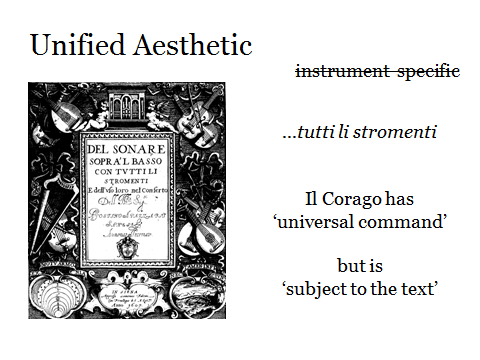
There is certainly much to be learnt from Lamothe’s approach, to which we should add information specifically about theatrical dancing, in particular the Preface to Cavalieri Anima e Corpo (1600) here  and the anonymous c1630 treatise Il Corago (edited by Fabbri & Pompilio here). Both recommend that a ballo should be choreographed by an expert dancing-master, both mention specific dance-steps, continenze, gagliarda, canario that we see also in choregraphies for social dancing.

Il corago

Theatrical Dances

Cavalieri identifies slow steps such as riverenze, continenze and other passi gravi which are performed by the whole company con gravita. He suggests that singers might dance with instruments in their hands, and reminds us of his famous all-singing, all-dancing finale to the 1589 Florentine Intermedi, the Ballo del Gran Duca. But he distinguishes these slow, walking steps from the kind of ballo saltato (jumping steps) with gagliarda, canario, capriole (capers) etc, that would be performed by dance soloists (either two or four, depending on the size of the stage) without singing.

Listen to a duet version of Cavalieri’s Ballo del Gran Duca with Andrew Lawrence-King & Xavier Diaz Latorre here:


Monteverdi’s Balletto (Orfeo)


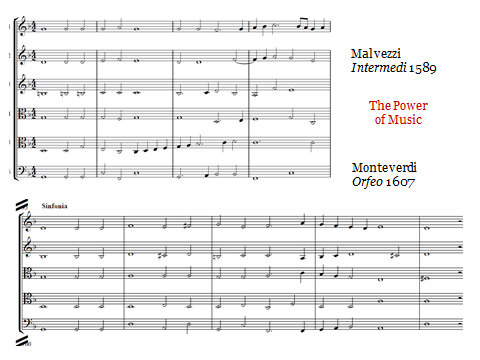
Lasciate i Monti scoring


The stage directions in the original print of Monteverdi’s Orfeo describe Lasciate i Monti as a balletto (diminuitive), and indeed it is small-scale compared to Cavalieri’s 1589 spectacular. It is shorter than many choregraphies for social dances. But nevertheless, the ensemble is larger than for Monteverdi’s Tirsi & Clori, designated a ballo.  Here, in Orfeo, we have 5 voices and 13 instruments. I will write about the instrumental ensemble in another post.

This balletto has three sections, in three time-signatures: C, 3/2, and 6/4.

Lasciate C

C: Lasciate i monti


Lasciate 3.2

3/2 Qui miri il Sole


Lasciate 6.4

6/4 Ritornello


Lamothe equates these with three movements commonly encountered in social dances: a opening section of riverenze, continenze and other passi gravi; a central gagliarda; a final salterello (jumping dance). The dotted rhythms of the final section of Lasciate i monti strongly suggest one particularly vigorous dance, the canario.

Galliard?

I agree with these identifications of the first and third sections. But I am not convinced that the central section is a gagliarda. It’s not a problem that the first phrase starts with an upbeat qui | miri il sole – Lamothe’s gagliarda example from Caroso does this.
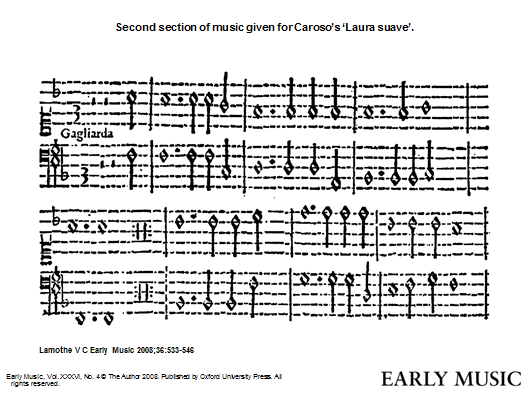
Caroso gagliarda

Caroso gagliarda


But Monteverdi chose to make every phrase start this way, even when the word-accents suggest something different vos- | tre carole. In contrast, galliard phrases normally start on the first beat of the bar, even if the second note takes the word accent.

My thoughts are winged incipit

Dowland Galliard: My thoughts are winged with hopes, my hopes with love,


As Lamothe writes, “Specific types of dances followed particular rhythmic patterns.”. “Each galliard step requires six counts”, including gettati in aria, throwing yourself into the air, on the fourth count.

But the phrasing of qui miri il sole consistently contradicts the phrasing of the galliard step. If Monteverdi had wanted a galliard here, he could have written it like this.

Qui miri galliard

How ‘Qui miri il Sole’ could have been a galliard


Not everything in 3/2 is a galliard. Many of Negri and Caroso’s social dances include movements in 3/2 that are not galliards. Cavalieri tells us that theatrical galliards are danced without singing.  I conclude that Monteverdi’s sung 3/2 movement, Qui miri il sole, is not a galliard.

Monteverdi’s balletto and Cavalieri’s ballo

As we try to identify the three sections of Monteverdi’s 1607 balletto, there is an excellent match with Cavalieri’s 1600 ballo, the grand finale of Anima e Corpo, This is a larger-scale piece, with six strophes and many singers (Cavalieri asks the whole cast, whether on or off-stage, to sing). But the essential structure is the same: C (sung, major mode); 3/2 (sung, minor mode); jumping dance (major mode, instrumental). The texts of both link the movement of celestial bodies to earthly dancing. Cavalieri’s central movement also begins before the beat, in this case with two upbeats – it too, is not a galliard.

Cavalieri’s galliard comes as the jumping dance at the end of the first strophe, with perfectly regular phrases beginning on the beat, and obvious galliard rhythm. And – just as we read in his Preface – after the second strophe, the final dance is varied: now it’s a canario, with dotted rhythms in 6/4, and beginning (like Monteverdi’s canario) after the downbeat. The even-numbered strophes of Cavalieri’s ballo exactly match Monteverdi’s balletto:

  1. C (sung, major mode, could be danced by singers, riverenze, continenze etc) This section is con gravita.
  2. 3/2 (sung, minor mode, starts with upbeat, could be danced by singers but not with jumping steps, definitely not a galliard)
  3. 6/4 (instrumental, major mode, starts after the downbeat, canario, vigorous dance for the dancing-masters)

Cavalieri’s ballo has six strophes, so this particular sequence of three movements comes three times. Monteverdi’s balletto seems also to come three times: the sequence is two iterations of the balletto , some dialogue, and a final reprise of the balletto.

Repeats?

One of the challenges in reconstructing choreographies of this period is figuring out the precise repeat schemes. Lamothe problematises the repeats of the various sections of Monteverdi’s balletto. The music of the C section is written out twice, with a new text the second time;  the 3/2 has the music written out only once, with two strophes of text underlayed; the 6/4 is written out twice, but when the whole ballo is reprised a few minutes later, the repeat of the final section is indicated by repeat marks.

Whilst period choreographies show many different repeat schemes for different dances, the ABC ABC form usually adopted for modern performances of  Lasciate is not typical of Negri and Caroso’s social dances. However, we’ve seen that Monteverdi’s balletto is closer to Cavalieri’s staged ballo than to social dances.

I agree with Lamothe that the question of repeats is problematic. There is much to be said for her suggestion of ABB*C.   (B* means the B music with a new text). The effect for the listener is logical, since Monteverdi’s music has writtten-out repeats for A and C sections, but not for B. So the listener (unaware of how the music was notated) would hear an effect of AA*BB*CC. (The C section is untexted, of course). If one agrees with this logic, then the reprise of the ballo (a few minutes later) could be taken the same way.

I recommend this solution. But I do not rule out (as Lamothe does) the ABC AB*C …. ABC that we hear in many performances today. Her example of a social dance by Caroso is an arrangement of Cavalieri’s Ballo del Gran Duca (1589). Tellingly, the original theatrical ballo and the social dance arrangement have different repeat schemes. Theatrical and social dances were related, but not identical.

Galliard tempi

Lamothe draws attention to particular features of the Galliard movement in social dances, in particular that it is often specifically marked as gagliarda. She suggests that this implies the tempo of the galliard could be specific to that dance (i.e. not in proportion), or variable. Certainly it is true that the physical demands of this jumping dance require that the dancing master has just the tempo he needs. In The Harp Consort, our standard operating procedure for galliards (when performed as a single item, i.e. not as part of a larger ballo ) is to allow the dancer to set the tempo.

Contrary to what one might at first suppose, a slow galliard is physically more demanding than a fast one. At a slow tempo, the dancer must remain in the air longer – this allows more time for capriole, leg-beats in the air – which inevitably requires a higher jump. So slow galliards are more ornamented (just as with musical ornamentation in madrigali passegiati, where a slower Tactus may be taken). And slower, ornamental galliards with their extreme physicality were particularly for men.

Lamothe cites Yvonne Kendall, a scholar of early dance and music, who “reminds us that … the rhythm associated with a particular dance may not be tied to a particular metre signature.” Monteverdi notates galliard sometimes in 3/2 minims (which I take to be tripla, i.e.   three minims to one tactus at about MM60). This is a fast tempo, and we find it for example in Ballo delle Ingrate, which was danced not by singers, nor by the dancing-masters, but by the aristocratic ladies of the court.
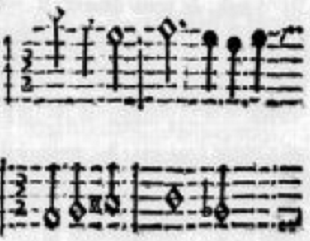
Ballo delle Ingrate gagliarda

Ballo delle Ingrate gagliarda


But in the ballo ‘De la bellezza le dovute lodi’ the galliard is in 3/2 semibreves (which I take to be sesquialtera, i.e. three semibreves to two tactus beats). This is a slow tempo, and is set to the words Ben fallo Alcide il forte referring to that mythical strongman, Hercules.
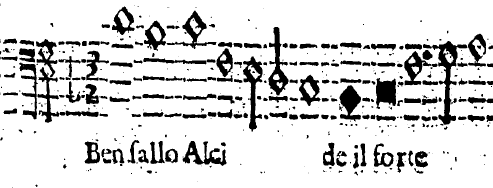
De la bellezza galliard (bass)

De la bellezza galliard (bass)


The agreement of fast/slow tempi with the physicality of fast/slow galliards and with texts associated with women/men seems to support my interpretation of proportions, in which the note-values (minims or semibreves) give us the information we need, to choose between tripla and sesquialtera proportions.
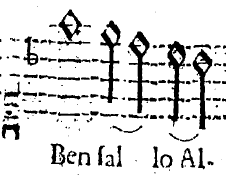
De la bellezza galliard (cantus 1)

De la bellezza galliard (cantus 1)


By the way,  in the cantus primus part for ‘De la bellezza’, there is no time-signature for that same galliard at Ben fallo Alcide. According to Roger Bowers’ theory, this would be a fatal error, a singer would not be able to interpret the notation. According to my theory, the absence of a time-signature is a minor problem; the time signature doesn’t tell the singer anything they didn’t already know.

"What do you make of it, Holmes?" "It is obviously an attempt to convey secret information."

“What do you make of it, Holmes?” “It is obviously an attempt to convey secret information.” “But what is the use of a cipher message without the cipher?”


Since dance movements in 3/2 may or may not be galliards, I suggest that the marking gagliarda in Caroso and Negri indicates not so much the tempo of the movement but rather the particular rhythmic pattern, the characteristic  ‘groove’ of this specific dance. Lamothe again: “specific types of dances followed particular rhythmic patterns.”

We see the same idea with her example from Caroso’s social dance, where the final jumping dance is specifically identified as a salterello. The fast tempo and dotted rhythms might otherwise have suggested a canario (although there are other rhythmic clues in Caroso’s salterello that would contradict an initial diagnosis of canario). 

Caroso saltarello

Caroso saltarello

Who were the dancers?

We should move away from the conventions of Grand Opera in the Romantic period, away from the modern categories of soloists, chorus and corps de ballet. The first ‘operas’ were performed with small casts, who doubled several roles. Soloists often sang as the chorus, too. Chorus members, even soloists might dance.

Lamothe takes into account Tim Carter’s calculations of a company of 9 or 10 singers, a typical size for early ‘opera’, that could have performed Orfeo. But there is strong argument that the first performance in 1607 involved only 8 singers, SSATTBB plus Francesco Rasi as Orfeo. Either way, the singers for the balletto will be mostly, if not entirely, one-to-a-part.

It is possible that singers might sing one-to-a-part and simultaneously dance. This was done by the three female soloists in the 1589 Ballo del Gran Duca – they even played instruments too! But castrato Giovanni Gualberto Magli, who sang three roles (plus chorus parts) in Orfeo, arrived in Mantua eight days before the performance, knowing only the Prologue, and much concerned about ‘so many notes’ that he had to learn. I find it implausible that he would have learnt a dance too, although period commentators report that he performed well when it came to the show.

Certainly, singers could not have sung Qui miri il Sole one-to-a-part and simultaneously danced a galliard, with its combination of three low jumps and one high jump every two seconds. (Try it for yourself!) At most, they could have done some passi gravi during this section. This supports my argument that this section is not a galliard. 

In Mantua in 1607, female courtiers were not allowed to appear on stage – that is why castrato Magli had to be brought in from Pisa. I assume that this prohibition would apply to dancing just as much as to singing. The courtly ladies who danced the Ballo delle Ingrate in 1608 (that year saw a change of policy, which also allowed La Florinda to sing the title role in Arianna), could not have represented the ninfe who are invited to leave the mountains and dance the balletto in 1607.

The most likely explanation is that the dancers were the court dancing-masters. On the model of social dances, they could have danced all three sections. Or ,on the model of Cavalieri’s theatrical ballo, the singers could have done simple movements (riverenze, continenze etc) in the slow C movement, and other passi gravi  in the sung 3/2 (but not a jumping galliard). The instrumental Ritornello then featured a jumping dance, almost certainly a canario, performed by the (male) court dancing masters. Maybe four, or perhaps just two of them, since the performing space for Orfeo was small, and there are already 13 musicians and 5 singers on stage.

One of the court castrati, Issachino Massarini, was also a dancing-master (though he was elderly by 1607). Lamothe speculates that this singer might have sung the role of Euridice, and also danced the balletto. In this interpretation, Rasi as Orfeo would also have to dance the balletto. I haven’t found anything about Rasi’s dancing skills (he was a singer, theorbo player and composer), but I’m sceptical that he would find dancing a vigorous canario the ideal preparation for his great song, Rosa del Ciel, which comes about half a minute afterwards, even if he was not needed for the chorus parts of the balletto. I also find it hard to believe that old Issachino would have managed the sequence of ballo choruses, galliard dancing, and Euridice’s recitative, followed by more chorus-singing, another galliard and the chorus Vieni Imeneo, all in the space of a few minutes.

Nevertheless, Lamothe’s suggestion reminds us that a male dancing master might have danced this balletto as a female character, just as the castrati singers sang female roles.

Another possibility is that some of the 13 on-stage instrumentalists could have danced and played – more plausibly in the passi gravi of the first two movements, than in the canario. But since Stephen Player of The Harp Consort has often played guitar whilst simultaneously dancing a canario, perhaps there was a dancing-master or two amongst Monteverdi’s players. Perhaps not the bass-violinist, harpsichordists or the harpist, but what about the three chitarrone-players? We do have period images of dancers with lutes and long-necked instruments.
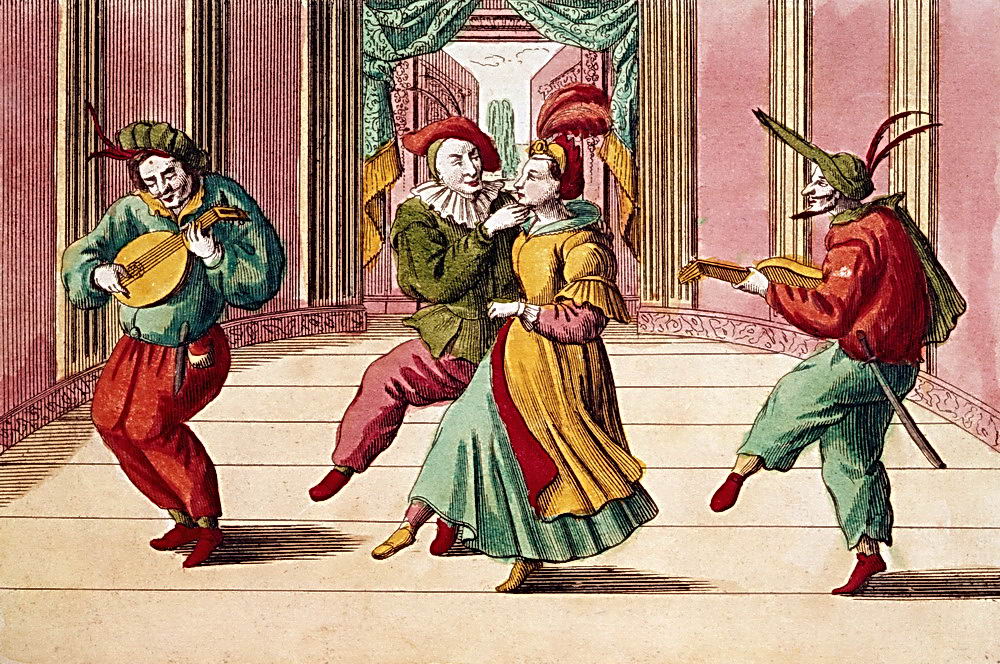
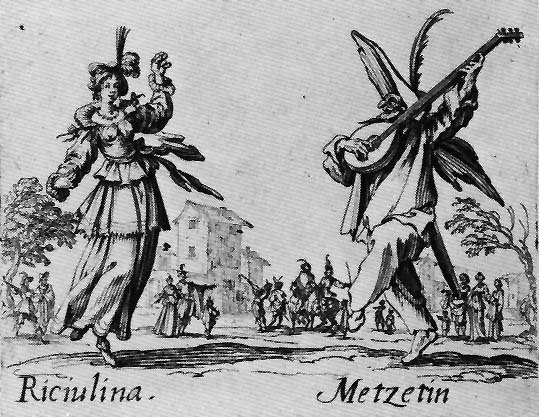
Eighteenth-century Engraving of Commedia dell'arte Actors on Stage


Riciulina and Metzetin


Consistency

Part of Lamothe’s argument is that Proportions might not apply to dancers. Dancers (and many conductors) are sometimes reluctant to struggle with the intellectual and practical challenges of Proportions, but period philosophy and historical musicology combine to emphasise that they are essential.

Ha, ha, keep time! How sour sweet music is / When time is broke and no proportion kept!

William Shakespeare Richard II (c1595) Act V scene v

To support the argument for inconsistency, Lamothe cites musicologist Jeffrey Kurtzman, who is certainly correct to draw attention to the complexity of evidence from period theorists. Working within the scholastic method, theorists had to reconcile the new practices of the 17th century – Monteverdi’s seconda prattica,  the novelty of continuo-notation and (I argue) a simplified use of proportional notation – with the conservative traditions of previous generations. As George Houle observes in Meter in Music 1600-1800, changing usages were fundamentally incompatible with older notation systems, and the theorists’ attempts to unite the irreconcilable were confused, confusing, and in vain.

I do not see that inconsistent realisations could work, in a period when there was often no rehearsal at all. And I do not agree with Bowers’ position, that musicians of Monteverdi’s generation were still putting into practice highly conservative, ‘medieval’ systems – Bowers’ theories are too complicated to work in real time, when sight-reading. Yes, something of the old ways was conserved in the notation, and period theorists struggled to make sense of this. But the actual Use had moved on, and (as just continuo notation replaced intabulated accompaniments) the practice (as opposed to the theory) of Proportions had been simplified, made more practical.

We can be sure that practising musicians found pragmatic solutions that worked, that provided consistent and unambiguous realisations of proportions for ensembles sight-reading together. For, unlike opera, most 17th-century ensemble performances had very little or no rehearsal. I argue:

Practical musicians must have found workable, consistent solutions.

You can examine my theory of proportions here.
Holmes theories

“The theories which I have expressed there, and which appear to you to be so chimerical, are really extremely practical — so practical that I depend upon them for my bread and cheese.”


In addition to arguing that period musicians realised Proportions consistently, I also reject the suggestion that 17th-century dancers had a different way of thinking. Such a divergence may happen today, but the familiar concept of the Renaissance Man reminds us that historically there was an aesthetic unity across many artistic disciplines, guided by high philosophy, i.e. period Science.

In Mantua, Massarini danced and sang; Rasi composed, sang and played theorbo; Monteverdi sang, composed and played the viol. Elsewhere we know of dancer/swordsmen, swordsman/vihuelists, and many dancing violinists, and continuo-playing singers.

It’s clear that there must have been a consistent approach across all these disciplines. We must therefore synthesise all the available information.

It is a capital mistake to theorize before one has data. Insensibly one begins to twist facts to suit theories, instead of theories to suit facts.

“It is a capital mistake to theorize before one has data. Insensibly one begins to twist facts to suit theories, instead of theories to suit facts.”


I suggest that the missing links in Lamothe’s and Bowers’ arguments about Lasciate i Monti are the links: the link from the previous speech, the link to the next speech. Their suggested metronome mark of approximately 50/60 as  the Tactus Aequalis is certainly highly plausible. And Bowers agrees that the notation implies the same Tactus for the whole opera:

There thus appears to be every indication of the prevalence of a single tempo for the entirety of these pages, the fundamental durations of the unblackened semibreve, minim and semiminim remaining constant throughout.

Houle goes further, showing  considerable evidence of the same Tactus for the entire repertory, within this period.

But this ‘single tempo for the entirety’ must be minim = approx 60, not semibreve.

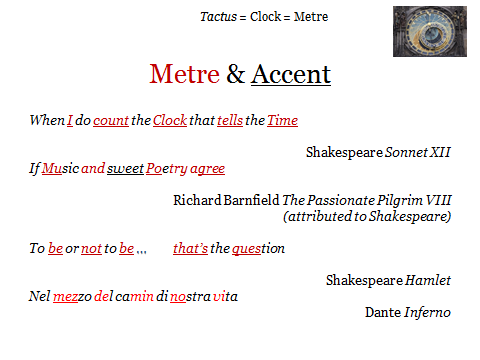
The confusion here is one that we find in period sources too, between Tactus (which strictly means the complete down-up movement) and Semi-Tactus (which is the proper name for the down-movement alone, or the up-movement alone). Many sources use the word Tactus for both, which leads to some theoretical confusion.

But in practice, there is no confusion. Just try the recitative Ma tu gentil cantor  that follows the first part of the balletto,  
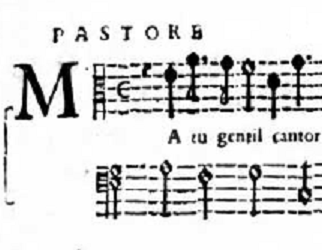
Minim = 60? Maybe. Semibreve = 60? Impossible!

Minim = 60? Maybe.
Semibreve = 60? Impossible!


or Euridice’s speech Io non diro qual sia before the reprise,

Minim = 60? Maybe. Semibreve = 60? Impossible!

Minim = 60? Maybe.
Semibreve = 60? Impossible!


or the chorus afterwards, Vieni Imeneo.
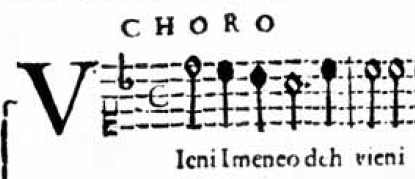
Minim = 60? Maybe. Semibreve = 60? Impossible!

Minim = 60? Maybe.
Semibreve = 60? Impossible!


All work well at around minim = 60, none could be imagined at semibreve = 60!


Chain Missing Link Question

When considering Proportions, Tactus supplies the missing link


So, according to the well-agreed principle that the whole work has a unified Tactus, around MM 60,  I’m convinced that the C section of  Lasciate goes at approximately minim = 60. This is slower than many modern performances, but corresponds to the period description of this kind of movement as con gravita, with passi gravi.

Combining Tactus & Proportions

And here is perhaps the most powerful tool for the scholar of Proportions. If we combine the period principle of Proportions with the period principle of Tactus, we can eliminate many theoretical options as impossible. Starting with minim ~ 60 for Lasciate i monti (unfamiliar to our modern ears but certainly possible), the big question is what proportional relationship to apply at Qui miri il sole.

Eliminating the impossible I – Sesquialtera

If we follow Bowers’ theory and apply Sesquialtera to Qui miri il Sole, we would have dotted semibreve (three minims) = 30, i.e. minim = 90. I find this too slow for Qui miri, but not necessarily impossible.  (Bowers himself arrives at a faster tempo, by applying Sesquialtera, but starting impossibly fast in the previous C section). But what about the Ritornello after the balletto reprise?

Minim = 90? Impossible!

Minim = 90? Impossible!


Or (killer example) the final Moresca at minim = 90? Impossible!
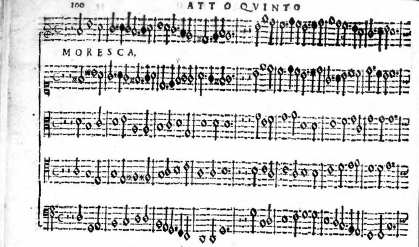
Moresca from Orfeo

Minim = 90? Impossible!


Eliminating the impossible II – Sextupla

Alternatively, if we apply the very fast (Sextupla) proportion to 3/2 Qui miri il Sole, we would get dotted semibreve (three minims) = 120..  I find this too fast, but not necessarily impossible. But now the 6/4 canario would be dotted minim (three crotchets) = 240. Impossible!

Dotted minim = 240? Impossible!

Dotted minim = 240? Impossible!


What remains?

My practical theory of proportions (here again) indicates Tripla, dotted semibreve = 60 for Qui miri il Sole. (This would work as a fast galliard tempo, but I don’t think this is relevant, since the movement is not a galliard.) Then the canario comes out at dotted minim = 120 (i.e. the same dotted semibreve = 60 as in the previous movement). This (as Latrophe agrees) is a good canario tempo.

As Sherlock Holmes said:

When you have eliminated the impossible, whatever remains, however improbable, must be the truth.

[Sir Arthur Conan Doyle, The Sign of the Four (1890), page 111]
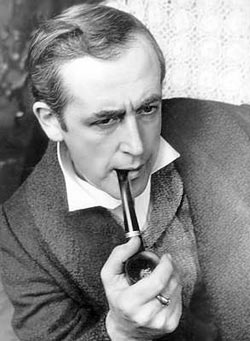
Livanov as Holmes

Holmes never said, “Elementary, my dear Watson”


I find this balletto an interesting and significant test-case, for which my theory of Proportions provides a plausible solution.

But I’m certainly not so arrogant as to insist that anyone else should accept my theory. And I’m just having some fun by quoting Conan Doyle, even if investigating period performance practice can be something like Holmes’ Detective Science. However, I do suggest that you might apply my methods to test your own theory of Proportions. A good theory should be consistent, unambiguous, and easily applied for quick decisions in the real world of practical music-making.

So, as Sherlock Holmes said on the next page of The Sign of the Four:

You know my methods, apply them!


Please join me on Facebook https://www.facebook.com/andrew.lawrenceking.9 and visit our website www.TheHarpConsort.com . Further details of original sources are on the website, click on “New Priorities in Historically Informed Performance”

Opera, orchestra, vocal & ensemble director and early harpist, Andrew Lawrence-King is director of The Harp Consort and of Il Corago, and Senior Visiting Research Fellow at the Australian Research Council Centre for the History of Emotions.

www.historyofemotions.org.au


Regina Cithararum – the Cloyne, or Dalway Harp

THE QUEEN OF HARPS 

Dalway

Ego sum Regina Cithararum (I am the Queen of Harps): so reads the inscription on the 1621 Cloyne Harp (also known as the Dalway fragments), which now belongs to the National Museum of Ireland, and is kept in store at Collins Barracks. In a seminar at Scoil na gCláirseach (the summer school of the Historical Harp Society of Ireland, more about Scoil here) last August, Simon Chadwick skillfully reviewed the state of research into chromatic Irish Harps, and Thomas Zapf demonstrated a prototype reconstruction of the Cloyne Harp, with a fine performance of Dowland’s “Lacrime”‘ pavan.

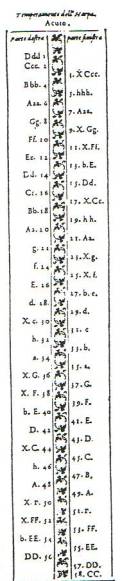
Period descriptions – Vincenzo Galilei Dialogo della Musica (Florence, 1581 here), Praetorius De Organographia (Wolfenbuttel, 1619 here) and the Talbot MS (Cambridge 1690s here) – make it clear that chromatic Irish harps did exist, but do not give us all the details we would like to have. Nevertheless it seems plausible that the typical layout of the strings was more-or-less similar to an Italian ‘arpa doppia’, with two or perhaps three rows of strings in the centre of the compass, and with the lowest octave or so in the bass “diatonic only”. [Of course, those bass strings can be re-tuned for each piece, just as is done for the bass strings on lutes]

Galilei arpa doppia

The Cloyne harp survives only partially: we have the beautifully made neck and part of the fore-pillar (the Dalway fragments), but the soundbox is missing. The neck has a short extra row of pegs in the centre of the compass. This extra row and the total number of strings strongly suggest some kind of chromatic stringing. Simon described various experimental reconstructions including Tim Hobrough’s (used extensively for performances and recordings in the 1990s and still going strong), two harps developed as part of Tristram Robson’s researches (the surviving second model kindly donated to the HHSI), a copy made by Evans & Flockhart for the National Museum of Ireland, and the most recent attempt, David Kortier’s prototype (played during the seminar by Thomas Zapf). 

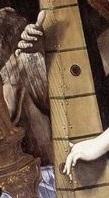
Dalway extra pegs

It was noted that many modern reproductions have exploded under the extreme tension of so many wire strings. Tristram’s first harp had to be rebuilt, Kortier’s prototype has a temporary repair to a deep split in the box, Evan’s & Flockhart’s also broke: otherwise Hobrough’s is the only reconstruction to have survived intact. Simon speculated that perhaps the soundbox of the original also exploded, which would explain why it is no longer with us today!

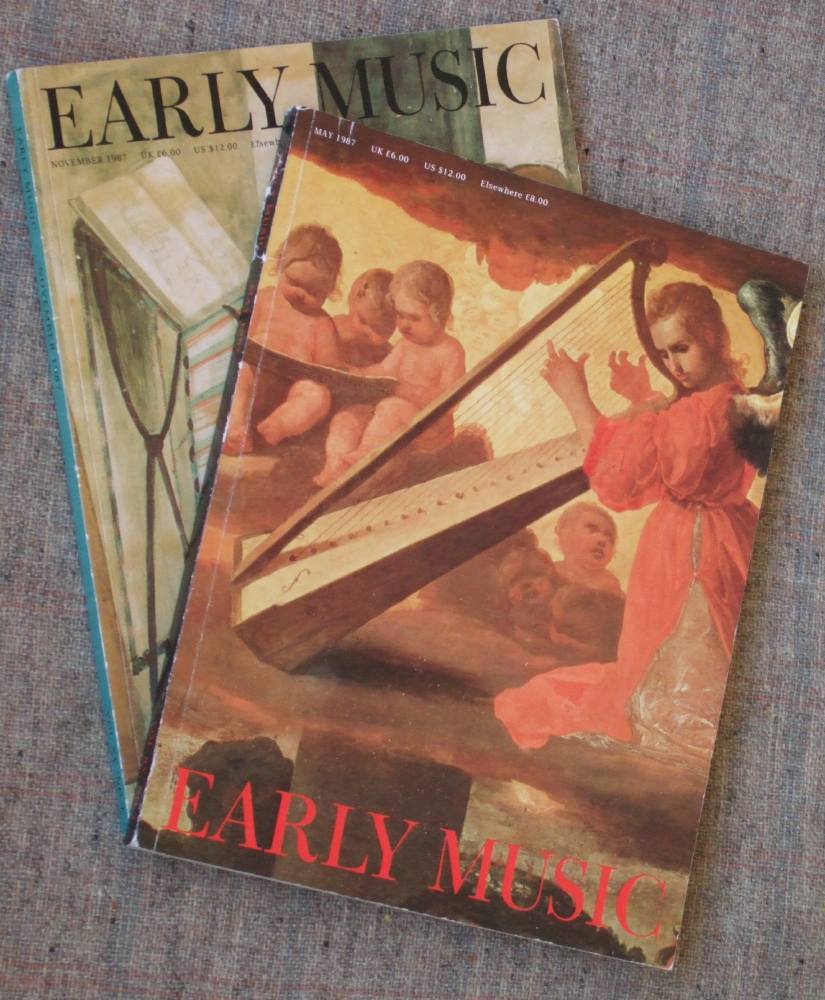
Early Music May 1987

Early Music Magazine May 1987 includes two articles about Chromatic Irish harps. Mike Billinge & Bonnie Shlajean showed how a multi-row layout (at the soundboard) can be achieved from a single-row line of pegs (at the neck). (I would add that the historical playing position (with the hands resting on the soundboard) implies that the string layout at the soundboard is all that matters for playability.)

Dalway-Hobrough layout


Peter Holman set out some of the evidence for the use of a chromatic Irish harp (rather than a gut-strung Italian or Spanish harp) in William Lawes’ music “for the Harp Consort.” Although some early harpists continue to promote gut-strung Italian triple harp for this repertoire, the academic consensus is that the case for Irish harp has been proven. ‘The triple harp idea does not hold up to scholarly scrutiny’, writes John Cunningham in ‘Some Consorts of Instruments are Sweeter than Others’: Further Light on the Harp of William Lawes’ Harp Consorts’, Galpin Society Journal,  41, April 2008, 147-76. See Cunningham’s book,  The Consort Music of William Lawes, 1602-1645, (Woodbridge, 2010) for more about the Harp Consorts. The best edition is Jane Achtman’s 2002 diploma thesis, published by PRB productions here in 2007 , even if her preface is now out-of-date (in an attempt to be even-handed, she discusses triple harp at length). You can hear one of the Pavans performed with Irish Harp on the recording Exquisite Consorts by The Harp Consort (available from Amazon here).

Exquisite Consorts CD

Reinhard Thym’s painting of musicians at the court of Christian IV in Denmark shows an Irish harp (we see the player’s hands resting on the soundboard, but we cannot see the string layout), lute, viol and flute. A lot of consort music from this court survives, in particular music by William Brade. In England, Thomas Bedoes played Irish harp amongst a large consort of plucked and bowed strings in Shirley’s 1634 masque The Triumph of Peace. You can hear another Pavan by Lawes performed with the line-up of the Thym painting on the recording Exquisite Consorts (here again) and English masque music with Irish harp on the Tragicomedia CD Orpheus I am.

Darby Scott and friends

Simon drew attention to two contributions to this growing body of research, coming from his work together with David Kortier and Thomas Zapf. A change in the angle of the neck and the spacing between the tuning pins seems to indicate the point at which the Cloyne harp’s basses went “diatonic only”. And the geometry of the string layout can be improved by taking the strings from the upper row of tuning pegs via the pegs of the lower row (using the lower row pegs as bridge pins). Very useful practical tips!

I have performed and recorded on the Hobrough reconstruction, performed on Tristram’s harp (there is a video, somewhere in the HHSI archives) and briefly played Kortier’s prototype. I suggest that there are three questions to be addressed: sound-quality, playability, and fidelity to the Cloyne as a (partially) surviving original).

SOUND QUALITY

Kortier’s harp has the best sound I’ve heard so far from a chromatic Irish harp, but his first sound-box exploded. I’m now planning to ask Katerina Antonenko to re-string my Hobrough reconstruction (which has a massive box modelled on the O’Fogarty harp) according to the new ideas that emerged since the mid-1990s, and to do some acoustic work on the box, to improve the sound.

PLAYABILITY

However, I consider Kortier’s prototype unplayable. Kudos to Thomas Zapf for getting through Lacrime, but he also admitted that the wild irregularity of the string-layout makes the instrument impractical for public performance. Tristam’s harp is a little better to play, but still very difficult to manage. After many experiments and repeated revisions of the string layout, my Hobrough is the most playable chromatic Irish harp I’ve seen. But it’s also not easy to play. I’m now planning to ask Katerina to make further adjustments to the layout, taking into account Simon’s ideas, and seeking to improve both sound and playability.

Dalway reconstruction by Hobrough 3

COPYING THE CLOYNE

The fragments of the Cloyne harp are vital information. It’s wonderful that we have these two pieces, although it’s frustrating not to know what was happening at the soundboard: this is where the string-layout really matters! It’s important to study these artefacts in great detail, and to extract as much information as we can from them. However, I don’t believe that the Cloyne is necessarily the perfect model for a chromatic Irish harp that would be suitable for the complex polyphonic music of the Danish court and/or William Lawes’ consorts. In order to explore these historical repertoires, performers need instruments that sound good and are fully playable. So we need to study the Dalway fragments, and build the information from them into reconstructions that are imaginatively redesigned to suit the music.

After all, that music is also historical information.But it comes from a different milieu. We might expect the Cloyne harp, Galilei’s Irish harp in Florence, and Praetorius’ German/Irish harp to be similar, but not identical to the chromatic Irish harps that were played in Copenhagen and London. Perhaps Talbot’s information might be more closely related, even though he is writing at the other end of the century.

So I hope that this seminar and my report her will stimulate further interest and experiment in this fascinating topic. Certainly, I’ve been inspired to tune up my Hobrough/Dalway/O’Fogarty monster again, and see what we might do with it next. When Tim made it, he included a surprise for me, an inscription that reads CITHARARUM REX REGINAM TANGET – Of harps, the King plays the Queen! 

Dalway-Hobrough detail


Please join me on Facebook https://www.facebook.com/andrew.lawrenceking.9 and visit our website www.TheHarpConsort.com .

Opera, orchestra, vocal & ensemble director and early harpist, Andrew Lawrence-King is director of The Harp Consort and of Il Corago, and Senior Visiting Research Fellow at the Australian Research Council Centre for the History of Emotions.

In Memoriam Pat O’Brien: Introduction to Italian Baroque harp

 In Memoriam

Pat O’Brien, lute and guitar guru, was also a charismatic influence on the revival of historical harps. In 1986 he contributed to the pioneering Early Harp conference in Basel, and over the next few years taught at the influential Bremen Harps & Lutes events. He was a founder member of The Harp Consort, appearing in many concerts and on the CDs Luz y Norte, Carolan’s Harp and Vivaldi’s Four Seasons. With the New York Continuo Collective he facilitated a creative dialogue between harpists, lutenists and singers. He also taught at the Julliard School.

Most of today’s leading early harpists and lutenists benefitted from Pat’s insightful and authoritative teaching. Many of us are privileged to have known him as a friend, a larger-than-life character whose powerful presence we sadly miss, even whilst the inspiration of his work lives on.

Pat thought a lot about Historical harp technique, and he and I discussed the subject at length over many years. This article owes much to his ideas, and is dedicated to his memory.

Pat O'Brien

INTRODUCTION TO ITALIAN BAROQUE HARP

Part I: History

This instrument is called in Italian arpa doppia, because it is very large [twice the size of the renaissance ‘gothic’ harps that preceded it], and because it has a low bass compass [as we also say ‘double-bass’, ‘double-bassoon’ for instruments with low bass notes]. It has more than one row of strings, providing strings for chromatic and diatonic notes.

Jacopo Peri

Jacopo Peri with a renaissance harp (1589)


The Barberini harp  (17th century)

The Barberini harp
(17th-century)


We see medium-size double-harps in Italy, with two rows of strings, around 1580. The ‘Este’ harp is typical, with the shape of a gothic harp, but rather larger size, and with two rows of strings.

Este harp


In the early 1600s, we see much larger harps with three rows of strings [two diatonic rows, chromatics in the middle row]. These are still called arpa doppia, or sometimes arpa a tre ordini [with three rows].


We do not know the details of the transformation from medium-size & 2 rows to large-size & 3 rows. There is comparable situation with our lack of detailed knowledge of the similar transformation of the renaissance lute to the baroque theorbo, which took place around the same time.

theorbo Confortini

The large 3-row harp was a highly successful design. It, was exported to France, Germany and England. It later interacted with Welsh harps to produce the Anglo-Welsh baroque triple harp [around 1700, more on Welsh harps here].

The primary function of the arpa doppia around 1600 was to accompany, in the new style of continuo. [More on continuo here.] The instrument is designed to play bass, with extreme low bass-notes easily available; and to play harmonies in the tenor/alto register. The playing position is optimised for this function.

In the painting,  Allegory of Music (above), the very large Barberini harp is shown leaning forwards (in contrast to the modern position with the instrument leant backwards). I’ve tried the Barberini position, and I find it plausible. I sometimes use a less extreme version of this position, with the harp leaning forwards just a little: the harp will not fall, because your hands are resting on the soundboard. Most 17th-century paintings show that harp was positioned approximately upright [where it balances], with the player on a chair of normal height.

The player is thus rather low, with the harp high above. If you turn to look at the strings, you will be looking at the “tuning A” [eg A 460/440/415, whatever]. Without turning, your normal focus is on the strings corresponding to the range of the bass-clef – the normal range of baroque bass-lines.

It is easy to reach forward and down with the left hand, to play the extreme bass notes close to the soundboard. It is more difficult to reach up and back with the right hand to play the high treble. This is consistent with the main role of the instrument, to play continuo.

Of course, players did take advantage of the solo possibilities of the arpa doppia. Monteverdi and Trabaci write solos that dramatically exploit the entire compass from d” to GGG, 4½ octaves, sometimes in a single phrase. But the normal 17th-century soprano range remains within the C1 soprano clef [a third below treble clef].

In 18th-century instrumental music, composers often write an octave higher than this. Thus some German 18th-century harps, known as Davidsharfe,  were medium-size with 2 rows [allowing easier access to the high notes]. Italianate triple harps were also played in Germany, and it is not known whether CPE Bach’s Sonata was intended for triple harp, single-action pedal harp, or perhaps even for 2 instruments (one plays the solo, the other realises the continuo). [You can read Mary Oleskiewicz’s article on CPE Bach’s sonatas here Mary Oleskiewicz on CPE Bach. See the first page of her edition here, and consult the complete edition here.]


The 18th-century Anglo-Welsh triple harp is very large, but has a different shape, with very long bass strings, but not extending above the player’s head and shoulders in the treble. Again, this allows easier access to the high notes. [More on Welsh triple harps here.]


Our Italian baroque harp, the 17th-century arpa doppia, is optimised for 17th-century music. It can play very chromatically, but within a narrow range of basic tonalities [a simple piece in a ‘bad’ key is very difficult]. The instrument is designed to play continuo accompaniments, and is also very suitable for 17th-century polyphonic music or for dramatic solos. This is precisely how it was used at the time: this is also the kind of published repertoire that survives.

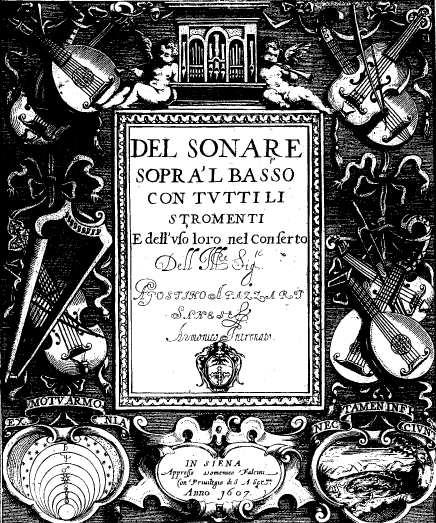
Agazzari frontispiece

Part II: Technique

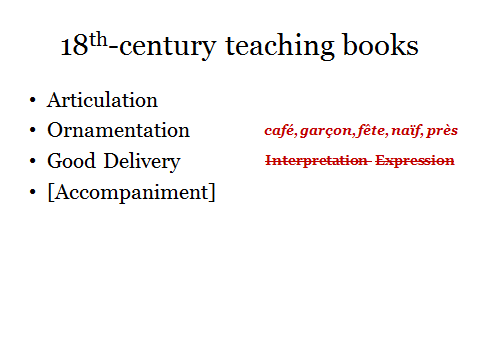
The modern binary of Technique/Interpretation is not the best way to consider how to play Early Music. Many teaching books from the baroque period [most famously the three great treatises: Quantz for flute (1752) here, CPE Bach for keyboard (1753 & 1762) here, , Leopold Mozart for violin (1787) here] share a common structure with three or four main sections.

18th-century teaching books

Much of what we would now describe as elementary technique is dealt with very quickly. Hold the instrument like this, play in time (read more about rhythm for Early Music here), and play in tune (for the period of the arpa doppia the default temperament is quarter-comma meantone).

After this short introduction, the first subject to be dealt with at length is Articulation. This means tonguing-syllables for wind instruments, bowing for violin, and fingering for keyboards and harps.  This section therefore links phrasing (especially short-term phrasing) to the basic technique of each instrument.

The second section teaches how to play ornaments (technique), and how to use them (intepretation). Often, certain ornaments are required for the sake of musical ‘grammar’, just as certain words require diacritical marks. What might seem to be a tiny mark, an optional extra, is an essential requirement if you ‘speak the language’ of a particular musical style.

The third section teaches Good Delivery. This is not quite the same as modern Interpretation. There is less emphasis on the performer’s Expression, or on translating the composition into some new form. Rather, the idea is to get the music across to the audience, clearly and effectively. The desired effect is muovere gli affetti to move [the audience’s] passions.

[Read more about How does it feel? A history of heaven, hearts and harps here.]

In this Introduction, I’ll follow the example of those historical teaching books, dealing quickly with the basic playing position, and spending more time considering Articulation, i.e. how musical phrasing (in period style) connects to historical technique (fingering).

2.1 Position

Find the balance-point of the harp, and bring yourself towards the instrument. You will need to sit well forward on the chair. Put your right leg forward, alongside the instrument. Draw your left foot back, so you have easy access to the extreme basses, playing the strings close to the soundboard.

Keep some weight on your feet. You can test this, by seeing if you can stand up without first adjusting your position. Stand up and sit down a few times, until you have found a seated position that still has your feet firmly on the ground.


Charles II, seated in typical 17th century manner. But I have flipped this image horizontally, in order to show the right leg extended, as needed for baroque harp.

Charles II, seated in typical 17th century manner. Note that I have flipped this image horizontally, in order to show the right leg extended, as needed for baroque harp.


For those interested in radical authenticity, you could experiment with having the instrument leaning forwards, held from falling by your hands resting on the soundboard (as we see with the Barberini harp, above.

For anyone coming from modern harp, you might need to remind yourself frequently to re-set the harp upright, since you’ll be used to its leaning backwards.

Your nose will be around the “tuning-A” string. You can easily see the bass-clef register. You can easily reach the extreme low strings. Don’t worry about the high trebles, you won’t need them yet.

It might feel strange to have the instrument ‘so high’: don’t worry! You might find it difficult to focus your eyes on so many strings: don’t look!

Zampieri 

You can watch the video here.

Introduction to Italian Baroque harp 1 Position

2.2 Hands – relaxed for delicate control

With the low-tension strings of an early harp, your fingers don’t need strength, as much as smooth relaxation and delicate control. Excess strength will tend to morph into unwanted tension in the hand. So it’s a useful exercise to re-calibrate the strength in your hands, especially if you are coming from higher-tension pedal harp.

gentle hands

You can do the following exercise with real water-bottles, but it’s even more effective if you just imagine the bottles, and let the learning go direct into your subconscious.


water bottles


1. Hold you hands out, palm upwards, and imagine that you are holding two large, 1-litre, plastic bottles, full of water. As the bottles lie horizontally in your hands, wrap your fingers gently around the bottles. Feel the cool touch of the plastic… are there drops of water on it? Use just enough strength to support the bottles.

2. Now pour out half of the water, and then hold the bottles again. Notice how much less effort is needed, now.

3. Now pour out the rest of the water, and hold just the empty bottles. Notice how your hands feel, now.

4. Turn your right hand so that the thumb is uppermost. Let your index finger wrap inwards a little more, and your little finger ease outwards a bit. Bring the middle and ring fingers close to each other.

Your hand will look like this:

Baroque hand

Default hand position from Burnett: The Art of Gesture

This position, with the fingers delicately curved, is the typical shape of a renaissance/baroque hand, that you will see in thousands of period paintings.

Charles II hands

The historical ideal of graceful posture was to have just enough strength in the hand to maintain an elegantly curved shape, but no excess tension. That’s an ideal starting point for historical harp-playing, too.

renaissance hands

Holding you hands out again, palm-up as before, bring your thumb into the palm, aiming towards the base of the little finger. (It varies from person to person how far the thumb wants to go. Just move it as much as is easy and comfortable for you). Then wrap your fingers around your thumb.

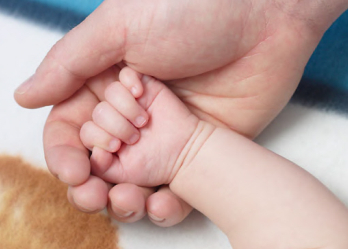
This is a basic human movement that we learn as tiny babies. Don’t think of it as a sophisticated “harp technique”, just keep the movement as easy and smooth as possible.

baby hands

As the last stage of this preparatory exercise, try bringing your thumb into your palm, and then wrapping the fingers around it, one by one: index, middle, ring, little. Gently, smoothly. Imagine your hands are moving through honey, not air, so that the movement is slow and sweet, like a slow-motion film.


1… 2… 3… 4… 5

Keep it simple!

2.3 Hands on harp

Place your hands on the harp, with the weight taken on the soundboard. Hold your fingers in a relaxed curve. As you move your fingers, let your hand remain still.

Hands on baroque harp

Place your hands on the harp, close to (but not touching) the strings. Repeat the wrap-around exercise.

This is especially valuable for modern harpists. Your long experience with the modern instrument has taught your hands an automatic response to being placed on a harp, i.e. to use your modern technique. So you have to give yourself time to learn another, different technique. At first, away from the harp; then on the harp, but not yet on the strings.

When you are comfortable with the wrap-around exercise, not touching the strings, take a short break. During a break like this, the learning you have done consciously is transferred to your unconscious mind.

Locking Attention


Now place your hands on the harp again, with your thumb and fingers on adjacent strings. Push gently on the strings, feel the contact. Rest your hand firmly on the soundboard, really take some weight down into the harp.

Now do the wrap-around exercise again, and let some sounds emerge from the strings. Move your fingers slowly. Focus on the smooth, easy movement, not on the resulting sound.

Most likely, the sound will be pleasant, but rather soft. To get more sound, apply more pressure on the strings, but keep the finger-movement slow.

To improve your sound, apply even more pressure, but keep the finger-movement slow. Let your fingers move through the complete range of movement, slowly. Don’t explode off the string: let your finger (or thumb) move slowly and smoothly.

More pressure. And slower. 

2.4 On the strings

It’s important to position your fingers accurately on the strings. The position is different from that for modern harp.

Place your fingers on the strings, not behind the strings. Your fingers are on the strings, and as you play, they slide across the strings. They slide slowly, with smooth pressure. The secret is to find this controlled sliding, like a violin bow sliding across the strings with enough pressure to make a sound, and with slow speed to sustain the sound.

Your fingers are on the strings applying pressure, not behind the strings and pulling. Here is an easy test for the correct finger-position:

1. Place your fingers on the strings in your best historical-harp position.

2. Push on the strings. Push firmly, and observe what happens.

If your fingers are correctly placed on the strings, you will be able to push the entire harp sideways.

If your fingers are behind the strings, when you push strongly, your fingers will slip between the strings. Whoops! Use this feedback to adjust your finger-position, and try again.

To begin with, you will need to remind yourself frequently of the basics:

  1. Rest your hands on the harp.
  2. Keep your hands still whilst your fingers move.
  3. Fingers on the strings, not behind.
  4. Slow, and with pressure.

Where does all this come from? It’s a mixture of historical information, information from historical keyboard & lute-playing (many ideas from Pat O’ Brien), and my personal experience. Period paintings and study of historical gesture shows us basic positions; lute-playing shows how to be on the string (it’s the only way to play both strings of a double course simultaneously); period violin technique shows the importance of slow, smooth pressure; keyboard, harp and lute techniques show us how to relate finger-movements to the period principle of Good and Bad notes.

2.5 Fingering

Now that you can move the fingers well, which finger should you use for which note? Period fingering systems copy the patterns of speech, so that you can play your Italian harp with an Italian accent.

Around the year 1600, Italian texts have mostly two- or three-syllable words, with a characteristic pattern of accented/unaccented syllables. The historical terms for these syllables are Good and Bad (or sometimes, Long and Short). When composers set such texts, they put a Good note on each Good syllable.

Articulation Good & Bad syllables

[You can read more about historical articulation, The Good, the Bad & the Early Music Phrase here.]

For Italian harp, thumb and middle finger are good. Index finger is bad. Patterns of two or three fingers are usually sufficient for melodies, corresponding to the two or three syllables of the most frequently encountered words.

Period melodies often move stepwise (a jump might indicate the separation between one phrase and the next). So it’s useful to practise the basic fingering for scales:

Upwards: 3 2 3 2 3 2 3 2 ….. and 1 at the top.

Downwards: 1 2 1 2 1 2 ….. and 3 at the bottom. Pass the thumb underneath the fingers.

A good exercise is to play a scale up and down across and octave and one note. Listen for the characteristic sound of Good & Bad notes, like Frank Sinatra’s dooby-dooby-doo.

Helpful Hints:

On the upward scale, place two fingers (3 & 2), play two notes (with your hand still), now slide your hand, and only then replace your fingers on the next two strings. Don’t let your fingers “look for the strings”. Rather, let your hand slide up the harp just the correct distance, so that when you put your fingers onto the strings again, they are in exactly the right place.

On the downward scale, let your thumb move directly from playing one string to resting on its next string (i.e. thumb jumps down a third). The index plays after your thumb has already crossed underneath. This disadvantages the index finger, helping to produce the Bad effect that we want. To keep your hand in contact with the soundboard, you need to slide your index finger down the string (towards the soundboard) as you go along.

When you come to a chromatic note, you might need to adjust the fingering. Often 2, or thumb, will be needed, regardless of the good/bad rule. Get back to good/bad as soon as you can.

E.g. D major ascending: 32 2(f#)2 32 2(c#)2

Period Principles

The principles of historic fingering are very simple.

  1. Put a Good finger on a Good note, a Bad finger on a Bad note. (If you are not sure about the notes, sing the melody Frank Sinatra-style, to dooby-dooby-doo. The doo is Good, the by is Bad. If you are still uncertain, try to reverse the Sinatra syllables: you’ll quickly convince yourself which way round is best.)
  2. Obey this principle, even when it makes the fingering complicated or awkward. Difficult fingering is better than bad phrasing!
  3. If you have a piece of stepwise movement, go up with 3 2 and down with 1 2. 
  4. When choosing between 1 or 3, put any movement of the hand where you logically want a jump or break in the music. Fingering and phrasing are totally united.

Chromatic notes

To reach a chromatic note in the inner row with the thumb, push the lower adjacent diatonic note aside and lean your thumb on this string whilst you play the chromatic. The thumb ends up hooked around this diatonic string.


E.g. to play F# with the thumb, push aside and lean on the F-natural, play F#, end up hooked around F-natural.


To reach a chromatic note in the inner row with a finger, push the upper adjacent diatonic note aside and lean your finger on this string whilst you play the chromatic. The finger ends up hooked around this diatonic string.


E.g. to play F# with a finger, push aside and lean on the G, play F#, end up hooked around G.


You cannot lift your hands up and away from the harp at the end of the note: your thumb or finger is still hooked around a string! This necessity confirms the ‘hands on the harp’ position we notice in period paintings, and which we studied earlier.

The secret to playing the chromatic notes confidently, accurately, without extraneous noises, and with a good sound, is that you leave the finger or thumb hooked into the middle row, after sounding the string.

And of course, Slow. With smooth Pressure. And your hands stay still, resting on the harp.

It’s a useful exercise to practise scales in difficult keys, and also chromatic scales.

Chords

It is difficult at first to coordinate the finger-movements when some notes of the chord are chromatic, others diatonic. Practise each note in turn to perfect the movement, before trying to synchronise the whole chord.

Try all the major and minor triads, in both friendly and un-friendly tonalities!

See the video on basic technique – fingering, chromatics, chords – here.

Introduction to Italian Baroque harp 2 Basic Technique

For a normal “good-note” chord, arpeggiate in both hands approximately simultaneously. Play “bad-note” chords unarpeggiated.

For a long arpeggio, play a low-octave bass note alone, then arpeggiate left hand then right. Play the bass-note on the beat (not before).

Continuo-playing requires sophisticated use of chord and arpeggios – this is just a beginning.

Harmonies

The first step is to learn good positions for the basic major and minor chords. Here are some guide-lines:


  • Third at the top, and/or doubled sounds good
  • Compact position (hands not separated, perhaps even overlapping) is good
  • Treat “tuning-A” as the upper limit for chords
  • Don’t use thirds in the bass below tenor-C, they are too ‘growly’
  • Try for big chords, at least 3 or 4 notes in each hand.


Introduction to continuo for Italian harp 1 Good & Bad

More about Continuo in a later posting, and forthcoming video series.


Tuning

Two tunings were in general use in the 17th-century: with Bb in the diatonic row [historically more common] and with B-natural [my own usual tuning]. Scordatura was frequently used.

ALK with Rainer Thurau's "Zampieri" Italian baroque harp

ALK with Rainer Thurau’s “Zampieri” Italian baroque harp


On my harp, the ‘extra black notes’ between E & F and between B & C are used for enharmonics. This is typical of 17th-century practice: in the 16th century, these strings were tuned to important notes like D and A, for additional resonance.


The standard tuning of my harp is (from the bass upwards):


Left hand row:

FFF GGG AAA BBBb CC DD EE FF GG AA BB          etc       to g’


Middle row:

CC# EEb DD# FF# GG# BBb AA# C# Eb D# F# G# Bb A# c#     etc       to c”#


Right hand row:

FF GG AA BB C D E F G A B c d e f g a                                               etc       to c” d” eb

I keep my harp in quarter-comma meantone (details in another posting)

Pat O'Brien, ALK & other founder-members of The Harp Consort, at the recording sessions of Luz y Norte in 1994.

Pat O’Brien, ALK & other founder-members of The Harp Consort, at the recording sessions of Luz y Norte in 1994.


Please join me on Facebook https://www.facebook.com/andrew.lawrenceking.9 and visit our website www.TheHarpConsort.com .

Opera, orchestra, vocal & ensemble director and early harpist, Andrew Lawrence-King is director of The Harp Consort and of Il Corago, and Senior Visiting Research Fellow at the Australian Research Council Centre for the History of Emotions.
Historical technique for Early Irish Harps

As interest in and knowledge about Historical Irish Harps (aka Early Gaelic Harps) grows, as well-made and fine-sounding instruments become increasingly available, as insights into historical styles and period aesthetics are sharpened and shared, it’s high time to consider how we might recover historical playing techniques. We have a good model of how to do this work of re-discovery in the revival of period techniques for other historical instruments: harpsichord, viola da gamba, recorder, baroque violin and European Early Harps. The modern revival of those early instruments has many decades more experience than we have with Early Irish harps, so we would be wise to take whatever we can from the hard work they already put in. As Isaac Newton wrote in 1676, we can see further “by standing on the shoulders of giants”.

Standing on the shoulders of giants

Where to look?

So what sources of information are available to us?

  1. Period information specifically related to the Early Irish Harp (music including technical instructions, treatises with technical information, iconography etc)
  2. Other sources of period information (other harps, similar instruments, other instruments and voice, literature etc)
  3. Personal experience of modern experts

We need to synthesise all the available information, examining each source for its merits, and weighing one piece of evidence against another. Apparent contradictions should alert us to the need for further investigation, and/or reconsideration. And – most importantly – our approach should prioritise those various sources of information in the order I’ve given.

For example, whatever opinions you might read in my blog are less significant than hard information you find in historical sources. Doh! Of course! And the same goes for any modern writer’s (or musician’s) opinions. So the challenge goes out to everyone, anyone with any interest in the subject, to find pieces of evidence that might challenge the accepted view. After all, knowledge only advances when someone dares to challenge what the previous authorities declared as indubitable fact!

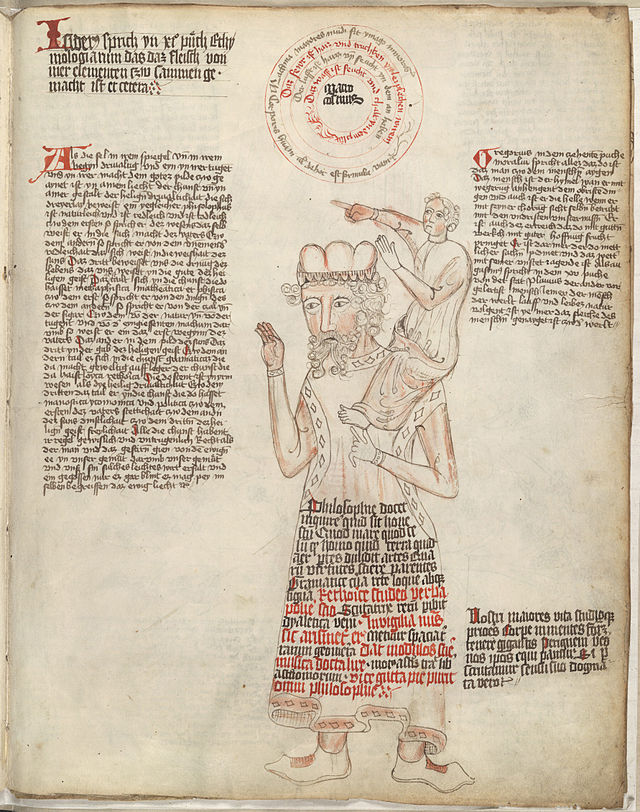
Galileo and the Philosophers

Galileo and the Philosophers

What can we expect to see?

So as we put this evidence-based approach to work, what can we expect to see? The revival of other early instruments shows us that

4.  Historical techniques are different from 20th-century techniques

5.  Historical techniques vary from one historical period to another

6.  Historical techniques have consistent principles from one instrument/voice to another, within the same period

7.  Historical techniques differ from one place to another, not according to geography, but according to schools of influence


That last point is especially important. Within the same period, we do see significant differences in techniques from one place to another. These differences do not respect national boundaries, but are associated with shared aesthetics, cultural communication. So in the late 17th century, the musical aesthetics of the French style influenced many other countries: in Ireland, Carolan wrote Minuets. Technical methods followed the same routes as the aesthetic styles – if you want to play in French style, you’ll need French technique. Thus Muffat’s comments (in Florilegium, 1698, available, but not free, here) on the violin style of Lully made French violin technique available to musicians in the German-speaking countries who wanted to play in the French style.

Meanwhile Italian musicians brought Italian violin technique to Germany, too. By the mid-18th century, violin technique in Germany was a complex mix of French and Italian influences, described in detail in Leopold Mozart’s Violinschule (1787) here.

Similarly, Carolan’s contemporaries noticed how he brought the fashionable early 18th-century Italian style into his music. We can clearly trace in 18th-century Scots and Irish music three schools of influence: an ancient layer of Gaelic tradition (most visible in the gapped scales and characteristic ornaments); a 17th-century layer of French style (especially dance rhythms); a surface layer of Italian fashion (virtuosity and drama).

Available Evidence

So keeping in mind the principles of Where to Look and the guide of What we can Expect to See, what can we observe about period techniques for Early Irish Harps?

1a Music

There is very little (if any) music, let alone music annotated with technical instructions, for historical Irish Harp, that survives as a reliable indication of how the old harpers actually played.. Much of the repertoire remained in the aural tradition for centuries, and most of the publications of harp music were intended (and therefore, we may presume, adapted) for other instruments. Around 1800, Bunting includes some technical instructions in his published arrangements, but the technical information has to be assessed carefully since the music itself is heavily adapted. Luckily, we also have Bunting’s MS notebooks, which record the various stages of his work from field recording (noting down a tune as sung, played on fiddle, or played on the harp) through the process of adaptation and arrangement to the final published version. These notebooks include a few hints on technique, but fall way short of what we might wish for (detailed fingerings for an entire tune, for example). 18th-century prints are also one step removed from the harp itself, and do not include technical information. We find harp music in 17th-century lute tablatures, but these supply very little technical information.

1b Treatises

We don’t have Carolan’s Recipe for the Harp, more’s the pity! In fact, we have almost no period technical information for historical Irish Harp. Bunting’s publications and note-books give us some information on treble-hand ornaments and bass-hand chords.

What we do have is an 18th-century tradition of the first tunes that were taught to students of the Irish harp. Simon Chadwick discusses three such tunes and gives his suggestions for a technical approach in his book Progressive Lessons for Early Gaelic Harp, read more here.

Chadwick Progressive Lessons

You can see Bunting’s manuscript sketch of the Second Tune Burns March here  (The crossing out is Bunting’s mark that he has transferred the material to the next stage of adaptation and arrangement).

Burns March Bunting MS


The final arrangement for pianoforte is in his 1809 publication.


Burns March Bunting 1809

Comparing these two versions, there is plenty of room for speculation and debate as to which elements of detail seen in the final publication are genuine memories of Denis O’Hampsey’s performance on Irish harp, and which are Bunting’s own adaptations for a pianoforte publication. For example, the published version suggests how the notes might be divided between the two hands, and gives a lot of information about sustained and damped notes, all of which is consistent with other information this period. But the pianoforte arrangement also features extreme dynamics and rallentando, which contradict the information Bunting himself provides, that the old harpers played “briskly” and avoided the “sentimentality” of the 19th-century pianoforte style. However, the publication’s over-dotting of the long notes in bars one and two, and the slur indication, both serve to emphasise the difference between long/resonant and short/damped. This  is consistent with the principle of Good and Bad notes that we find throughout European music in the three centuries or more before 1800 (see below).

But we don’t know what kind of fingering system was used. Simon Chadwick’s realisation has something of medieval Ap Huw, something of 20th-century Crossed Hands. It does not look like the Good/Bad fingerings we see for many European instruments in the 16th/17th centuries, nor like the 18th-century approach we see in European treatises (German Essays and French Methods). With Simon’s book, as with Bunting’s output, the reader must decide for themselves how to separate historical information from editorial adaptation. With all due academic propriety, Simon makes your task easier, by giving you access to Bunting’s versions so that you can make your own comparison.

The fact that we know what were the First Tunes to be learnt in the early 18th century is a wonderful piece of information. Unfortunately, any modern interpretation of that information is working at several removes from what the old harpists actually played. We should synthesise the information hinted at in these First Tunes with what we know more surely from other sources.

1c Iconography

There are lots of period images, which give us plenty of suggestions for the basic posture, position of the hands etc. Surviving instruments also preserve signs of wear and tear, indicating how they were used by historical players.

aoneill


Carolan with small harp

2a Other Early Harps

We have a lot of period information and modern expertise to draw on. The ‘schools of influence’ concept can help us apply French and Italian techniques to Irish harp.

2b Related Early Instruments

We have a huge amount of period information and modern expertise to draw on. We can learn from historical Irish pipers and fiddlers. And we can learn from all the European instruments and voice treatises. If we look for the common ground, we can see strong consistent messages from all these sources, that we can confidently apply to Irish harp.

2c Other period sources

We have Irish texts to show us the characteristic phrasing of Irish song melodies. We can learn from any musical instrument, and from period literature and philosophy. There is a bottomless well of period information from Ireland and the rest of Europe, all of which we might usefully examine for possible relevance to Irish harp technique.

3 Modern expertise

If there is a current consensus, it is based largely on modern expertise. This is a valuable source of shared knowledge, but we must bear in mind that 20th-century wire-strung techniques were developed to play the repertoire as it was understood in the 20th century, in the way it was played in the 20th century, with the instruments that were available in the 20th century. Modern wire-strung technique therefore focuses on how to play the jigs and reels of modern tradition; how to play fast and loud in the modern manner; how to play evenly and smoothly in the modern style; how to control the excessive treble resonance of 20th-century steel-strung harps.

Coupled hands Heymann

Ann Heymann’s (2001) Coupled Hands technique makes it easier to play wide-ranging fast tunes by using both hands for the melody. It is available here.


Intro to wire-strung harp

This modern tutor, edited by Bill Taylor and Barnaby Brown, features contributions from Ann Heymann, Javier Sanz and Bill Taylor, and is available here.

Weighing the evidence

4.  Historical techniques are different from 20th-century techniques

20th-century techniques evolved to deal with particular challenges. Historical techniques evolved to deal with different challenges: how to play the historical repertoire of a particular period; with the slow steady beat of historical Tactus; with the short-term phrasing contrasts of period style; how to create the rich bass resonance that was so admired from the middle ages onwards, on thick brass strings.

Therefore, we can confidently expect that period techniques for historical Irish Harps will be quite different from 20th-century wire-strung methods.

5.  Historical techniques vary from one historical period to another

This makes our task with the Irish Harp even more complex. We have so little information, and the information we do have is from around 1800. When we look at the music itself, we see that music from Carolan’s time changed considerably as it was passed around by aural transmission during the 18th century. During the 1840s, William Forde collected many variants of older tunes, and some of these variants show extreme differences. More about the Forde MS here. During the 18th century, the old nail-technique was almost entirely abandoned.

We must assume that period techniques changed, in line with the music itself. Parallel changes in techniques for other harps, for other instruments, and the changing demands of the music can suggest what changes might have happened when.

Nevertheless, there are certain fundamental principles that are common to a wide range of early techniques (various instruments across a wide chronological period). It is reasonable to apply these fundamental principles of early techniques to Irish harp. And frankly, given the lack of other evidence, we have no alternative!

6.  Historical techniques have consistent principles from one instrument/voice to another, within the same period

This encourages us to seek out those fundamental principles, and apply them.

7.  Historical techniques differ from one place to another, not according to geography, but according to schools of influence

So we can look for help for the Irish harp from 15th/16th-century Welsh traditions (e.g. Ap Huw MS, read more here); from 17th-century French sources; from mid-18th-century German sources that describe the ‘international’ mix of Italian and French styles, from late 18th-century French sources that describe the harp techniques brought to England and Ireland around 1800.

These patterns of influence suggest strong parallels between the chronological development of Irish harp techniques and the big story of technical changes in Europe for all kinds of instruments.

All this encourages us to examine the fundamental principles of historical techniques (for any instrument, anywhere in Europe), and experiment with how to apply them to historical Irish harps, playing historical repertoire in a historical style.

Here are some provisional pointers.

Position

Period images show us that

  • The player sits with one leg more extended than the other
  • The harp is positioned with the top of the box more-or-less under the player’s chin.
  • The hands rest on the soundbox

All this is consistent with period posture when sitting in any situation, and with the wear-marks from the player’s hands resting on the soundbox of the 15th-century Trinity harp.

My personal experience is that it helps to rest the hands on the soundbox firmly: this allows the fingers to be relaxed and move freely. I counterbalance the pressure of a finger on a string with increased pressure of the hand on the soundbox. This passes the physical sensation of playing down through the body in a chain of actions/reactions, finger on string, hand on harp, harp on shoulder, shoulders supported by spine, sitting well-balanced on the chair, sensing the connection to the floor in your feet. This proprioceptive chain creates the sensation that you play a note with your entire body, and that you are simultaneously balanced, centred and connected to the earth.

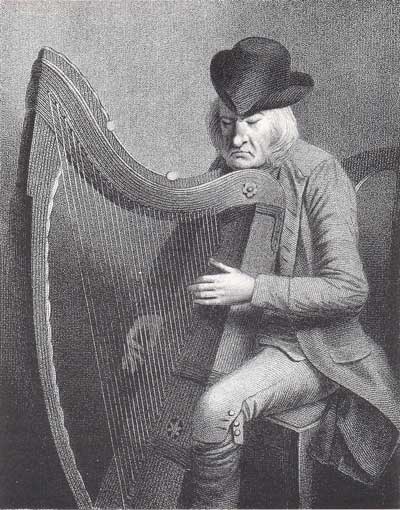
Hempson

Which hand to use?

  • One hand plays the treble, the other hand plays the bass.
  • The hands are usually widely separated.
  • The left hand plays the treble.

Images and surviving music support the historical division of roles between the hands – one hand plays the treble, the other hand plays the bass. This is consistent from Ap Huw to Bunting. Bunting mentions hand-crossing as a special effect, used very sparingly. This is consistent with techniques for other harps and keyboards in this period.

There is no historical support for, and considerable period evidence to contradict, the 20th-century technique of  Crossed (Linked or Coupled) hands. That is a modern technique, evolved to deal with the modern challenge of playing the modern repertoire in the modern style.

For the Irish harp, period sources show a strong preference for left hand in the treble, right hand in the bass. Modern players may have good reasons for preferring right hand in the treble. This is a matter of personal choice, it makes no difference to the sound (if you set up your instrument in accordance with your choice of treble hand). The days are long past, when we thought it was acceptable to force people to change their natural handedness.

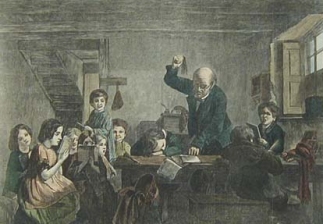
Brutal attempts to suppress left-handedness in the past.

Brutal attempts to suppress left-handedness in the past.

See my video lesson 1: Position here.

Introduction to Early Irish harp 1 Position

How to move your fingers

Accumulated experience and period evidence for other early instruments teaches us

  • The hand is relaxed, with the fingers and thumb gently curved
  • The fingers rest on the strings and ‘slide’ across the strings, rather than ‘pulling’ or ‘plucking’ from behind the strings
  • The finger-stroke is slow
  • There is a wide range of movement for a long note, a small movement for a short note
  • Increased volume comes from pressure on the string, not from speed of movement.
  • The movement is similar to giving a shoulder rub, to massaging the scalp when washing your hair, to kneading dough for bread-making

These fundamentals are common to any instrument with low tension strings. There is no significant difference whether one plays with fingertips or with nails. However, there is a historical change around 1800, as string tension increases greatly and the period aesthetic moves away from Rhetoric to 19th-century Romanticism.

These fundamentals are very different from the technique of modern classical (or modern ‘Celtic’) harp. 20th-century instruments are different, 20th-century aesthetics are different: it is to be expected that 20th-century techniques will also be different.

ALK video coming soon!

Introduction to Early Irish harp 2 Finger-movement

Which finger to use

This is the element of technique that changed the most, as we see from parallel developments in European harps and related instruments.

Across a wide period, and across many different instruments, teaching books have a consistent structure. More about period teaching books, here. There is a short introduction, which could be summarised as “hold the instrument this way up, this is where the notes are, play in tune, play in time”. Then the book considers three main topics:

  1. Short-term phrasing (what early musicians call Articulation). This is created by  tonguing patterns for flutes, bowing rules for violins, and fingerings for harps, keyboards etc. More about phrasing here.
  2.  Ornamentation (more about Irish harp ornaments here)
  3. Good Delivery (period style, what modern musicians would call Interpretation)

Some books have a fourth section, about Accompaniment. (Continuo, in the baroque period).

The short-term phrasing patterns of Articulation change, and the fingering/tonguing/bowing techniques change accordingly, during the period of the Early Irish harp.

Medieval

If medieval Irish harp-playing was similar to the Welsh styles we see in the Ap Huw MS (more about Ap Huw here), then the music was ornamental, rather than melodic/syllabic. Finger patterns were evolved to produce crisp ornaments, that could be played fast and with certain notes damped for the sake of clarity. The hand is fairly static. We see the remnants of this technical approach in the ornament fingerings given by Bunting.

Just as “classical” early Irish poetry is not constructed according to the accentual metres of European poetry (and Carolan’s easy-listening song lyrics), so the medieval technique of the Ap Huw style does not correspond to the Good/Bad notes principle of later music.

Renaissance & Early Baroque

16th and 17th music has melodies that relate closely to song-melodies. The tunes are therefore syllabic (you can set a text to the tune, with one, two or more notes to each syllable). Just as period poetry has accented and unaccented syllables, so early music has Good and Bad notes, which are played with Good and Bad fingers.  The rule is simple, a Good finger for a Good note, a Bad finger for a Bad note.

The question, which finger is which? Different techniques (various instruments, various periods, various places) make different choices: we may conclude that it doesn’t so much matter which choice you make, but it does matter to make some choice). I speculate that earlier Irish harp techniques might have concentrated on three fingers (index Good, middle Bad, ring Good) with the thumb kept for ornaments. Later Irish harp techniques were probably similar to European harps (thumb Good, index Bad, middle Good).

European historical techniques for harps with the hands close to the soundboard cross the thumb under the fingers. Irish harps were played with the hands close to the soundboard.

Melodies in this period tend to move step-wise, with little fragments of scales upwards and downwards. European historical techniques for harps with the hands close to the soundboard go upwards 32 32 32 and downwards 12 12 12. This works well on Irish harps, remembering that many intervals of a third are not true “jumps” but rather Gaelic gapped scales.

ALK video coming soon!

Introduction to Early Irish harp 3 Good & Bad

Late Baroque and Classical

There is a significant change in aesthetic and techniques during the 18th century, which is clearly established by the time of the three great mid-century treatises: Quantz for flute (1752) here, CPE Bach for keyboard (1753 & 1762) here, , Leopold Mozart for violin (1787) here. The same approach is seen in late 18th-century French harp treatises, read more here.

European 18th-century harp technique works very well for 18th-century Irish music on historical Irish harp.

This was the period during which Irish harpists abandoned use of fingernails. Playing with nails in the older tradition, I find it easier to play thumb-under. If you play with the finger pads as was the incoming fashion, you might well use the thumb-over position described in the late-century French sources.

My advice to students about thumb-under/thumb-over is that it doesn’t really matter much which you use. But you really need to choose: if your thumb can’t decide whether to go over or under, and ends up striking against the index finger, the result is disastrous! Just choose.

Late 18th-century fingerings stretch out the hand to help cover wide-ranging tunes and bigger leaps. The fourth, even fifth, finger comes into use. These fingerings respond to the challenges of the 18th-century repertoire, and I find that they work even for the jigs and reels of the later tradition.

These fingering are convenient to use, they make difficult melodies possible. But they do not create the Good/Bad phrasing, that is still part of the style even in the late 18th and early 19th centuries. If you use this kind of technique, you have to create the Good and Bad notes for yourself. The three great treatises make it clear that the concept of Good & Bad notes still applies, even during the later 18th century when the technical methods have moved on.

Meyer title page001


ALK video coming soon!

Introduction to Early Irish harp 4 18th-century fingerings


Which technique shall I learn?

My advice would be:

  • If you have the time and patience, learn the appropriate technique for the period of the music you are playing.
  • The best way to sensitise your ears to the sound of Good/Bad phrasing is to experiment with the 16th/17th century Good/Bad fingerings.
  • If you are going to learn just one technique for Historical Irish Harps, learn the late-18th century French technique, here.


ALK video coming soon!

Introduction to Early Irish harp 5 Comparing fingerings circa 1700


Helpful Hints

Don’t worry about left-hand treble or right-hand treble. Just choose.

Don’t worry about thumb-under or thumb-over. Just choose.

Don’t worry too much about damping. Play Good and Bad notes, and listen. Damp anything that continues to annoy you!

20th-century wire-strung methods have instilled a terror of resonance, and an instinct to damp everything. This results in a negative mind-set, where the rich resonance of the historical Irish harp is choked, and players are inhibited from creating any sound at all. Learn to love that wonderful deep bass, thick brass, resonance. Make your melodies as clear as they need to be with selective damping, but let your harp’s voice be heard.

Thinking too much about damping is like driving with one foot on the accelerator, the other foot on the brake. You won’t get anywhere. The resultant sound is rather like John Major’s infamous locked throat voice-production (have a good laugh, here)

More about selective damping, in a later post.

Meanwhile, if you have some historical evidence to add to this, or contradict my suggestions, I would love to hear your comments!

fingernails


Please join me on Facebook https://www.facebook.com/andrew.lawrenceking.9 and visit our website www.TheHarpConsort.com .

Opera, orchestra, vocal & ensemble director and early harpist, Andrew Lawrence-King is director of The Harp Consort and of Il Corago, and Senior Visiting Research Fellow at the Australian Research Council Centre for the History of Emotions.
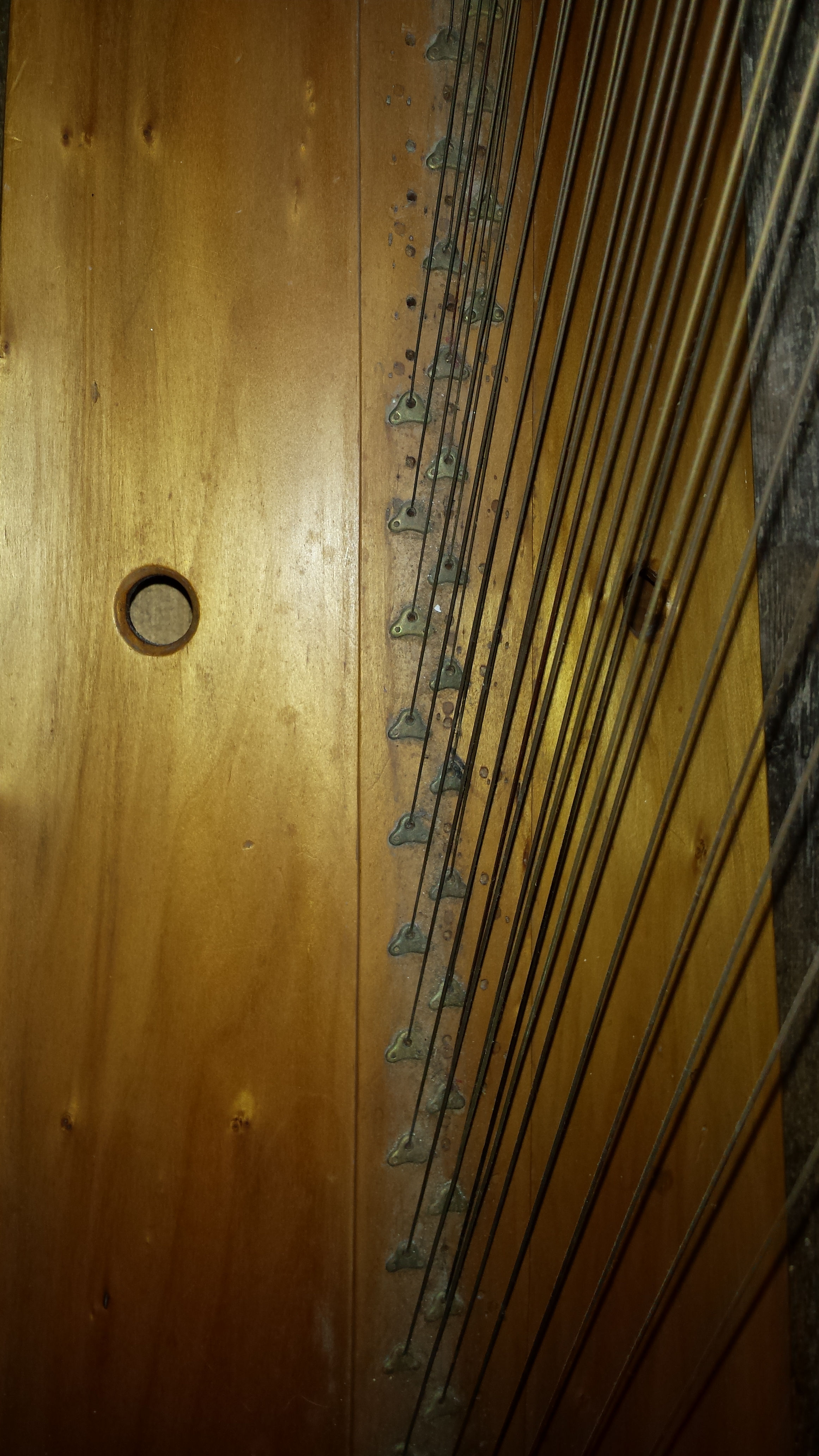
Precision tuning & Early Irish harps

Pythagoras tuning

This post is my summary of (and comments on) a paper by Paul Dooley, given at Scoil na gCláirseach, the summer school of the Historical Harp Society of Ireland, on 14th August 2014. More about Scoil na gCláirseach here.

Summary of Paul’s presentation

1. Once you allow for the historical tuning with two Gs (the ‘sisters’), the earliest surviving Irish harps (Trinity & Queen Mary) have string lengths that fit well with a theoretical ideal for minimising inharmonicity throughout most of the compass, but the basses are considerably shortened. This corresponds very closely to a surviving early Neapolitan spinet. The implication is that these harps could be tuned very accurately. More about suviving Irish harps here.

Trinity

ALK comments:

The modern re-discovery of Early Irish harps is following a trajectory that was seen with other Early Instruments during the 20th century. Many mid-20th century harpsichords were markedly different from period instruments, owing more to a 20th-century piano tradition than to historical information; nowadays there is a wide range of well-made, historically appropriate harpsichords to choose from. The accumulation of shared knowledge amongst players and makers of Early Irish harp has now reached a point where well-made, historically appropriate instruments are available, and players can reasonably expect their instruments to do the job they were originally intended to do.

In the 1960s and 1970s, mainstream musicians often accused early musicians of being out of tune and technically insecure: not without cause! But the improvement in standards of instrument-building and playing during the 1980s allowed audiences to expect the best early music to be at least as well in tune and technically competent as any other professional performance. Early Irish harp is not easy to play nor to tune, and the modern performing tradition has a shorter history, and a smaller number of players than (for example) harpsichord, recorder or viola da gamba (these three instruments were established in German Music High-Schools many decades ago, there is still no full-time course in Historical Irish harp at any conservatoire). So it is inevitable that technical standards in Irish harp are still in the development phase: we are still in the exciting pioneer-days, living out the initial, steeply-rising section of the learning curve.

There were two further developments in Early Instruments during the last decades of the millenium. Players not only improved their technical control, they also aligned that technique itself ever closer with historical information. This is the next challenge for players of early Irish harp, to forge techniques that are not only effective, but also genuinely historical, evidence-based. 

Meanwhile, practices of tuning in 20th century Early Music also became influenced by historical information.  But what does it mean to be “in tune”? As for any element of performance practice, the answer depends on the period, aesthetic culture and repertoire being played. The mainstream standard is Equal Temperament, a compromise that is acceptable in every tonality, but which is also flawed throughout. There are ‘standard operating procedures’ in today’s Early Music, which do not necessarily correspond to historical information: for example, there is a strong tendency to use Vallotti’s 1779 temperament for music of much earlier periods. The Anti-Vallotti facebook group, here,  will give you an idea of the passionate debates aroused by such topics. The whole subject is much debated, sometimes with fairly complicated mathematics, and even a thoroughly practical approach requires a clear understanding of the function of various intervals in the music being performed, and the aural skills to tune accurately. 

Harmony of the Spheres and intervals

It is a fact of acoustics, which can be verified mathematically, that one cannot have all the intervals in the chromatic scale perfectly in tune, pure. Equal Temperament spreads out the impurities evenly across the whole scale. Historical temperaments choose purity in certain areas, at the cost of impurity elsewhere. The practical solution is to make sure that the impurities are hidden where they will not create a problem. Medieval temperaments favoured fifths (making the thirds out of tune), Renaissance temperaments narrow (‘temper’) the fifths to make the major thirds pure. 18th-century temperaments use a variety of pure and impure fifths and thirds to make some tonalities better than others.

Most Irish harps are essentially diatonic, so we are restricted to a narrow range of tonalities. This favours temperament choices that make the accessible tonalities especially in-tune, since the inevitable impurities can be hidden away in areas of the chromatic compass that are inaccessible to the instrument. Such temperaments, with many pure intervals, sound especially good in the long sustain and enormous resonance of historical Irish harps. So here is another challenge for today’s players, to experiment with appropriate historical temperaments, especially temperaments that have many pure intervals.

In short – there is room to raise our standards of technique and tuning, and to make our approach to both more historical. We should explore temperaments that have many pure intervals (in contrast to Equal Temperament, in which every interval is impure).

Paul’s presentation continues

2. Experiments with period wire-making techniques showed (by high-tech metallurgical analysis) that very high levels of purity could be obtained, even with a ‘low-tech’ set-up, and that the annealing process (for drawing thick to medium-thin strings) also improves inharmonicity.The implication is that early wire strings could be tuned very accurately.

Rose wires

ALK comments:

In the last 30 years, there has been a considerable accumulation of knowledge and experience, and a resulting improvement in standards of wire strings. Well-constructed instruments can withstand the tension of thick brass strings (clearly specified in 17th and 18th century sources). Ann Heyman, Simon Chadwick and others (including Tim Hobrough and me) have experimented successfully with precious metal strings (hinted at in earlier sources). It is much easier to tune an Irish harp, well strung to today’s standards, than it was with the strings of the 1980s.

However, I would still say that I find it harder and slower to tune my Irish harps than the gut-strung instruments, harpsichords, organs and regals that I also tune frequently. Perhaps there are further improvements to be made in manufacture and selection of wire strings, but a more significant improvement might come from building harps from hard wood and not from willow. The debate about willow is only just begun, but my hunch is that when we have more data, we will see that willow was more of a traditional assumption than a historical choice. Until recently, we harpists have admired willow for its ability to bend under the tension of all those wire strings, but we also have to admit that this same bendiness plays havoc with our attempts to tune precisely. Most makers of other instruments (i.e. not Irish harps) admire woods that do not bend so much, and surely we harpists would be happy to tune a more stable instrument!

As late as the mid-1990s, I considered that the margin of error when tuning an Irish harp was too great to make quarter-comma Meantone (the typical temperament of the 16th and 17th centuries) practicable. Quarter-comma Meantone sounds wonderful when tuned accurately, but if a major third is just a tiny bit too narrow it sounds awful. The 5ths of quarter-comma meantone are described in period sources as “as narrow as can be accepted” – and yes, if they get any narrower, they do indeed sound unacceptable. Quarter-comma Meantone is a high-risk tuning strategy: it sounds great until you get it wrong, and then it sounds terrible!

But with the improved strings and stringing setups available today, I can confidently tune quarter-comma meantone on my baroque Irish harp, and I use a variety of pure-interval tunings on my 15th-century “Queen Mary” copy, depending on repertoire.

Queen Mary Harp

Meanwhile, I was impressed with the high standards of metallurgical purity Paul obtained with his home-made strings. As he commented, low-tech manufacturing was measured with high-tech sophistication to reveal remarkable consistency. On the other hand, trace amounts of certain “impurities” in metal strings can produce useful properties in terms of strength, density and tone-colour. We should not assume that chemical purity was necessarily the goal: carefully controlled impurity could be desirable. But Paul’s experimental demonstration shows that we can reasonably assume string-makers of earlier times were able to make wire with just the chemical composition and physical properties that they wanted. In earlier times, good strings might have been better than the strings available to us today.

Paul’s presentation concludes


3. Looking at the Ap Huw MS, Paul suggests that what seems to be a collection of scordatura tunings (e.g. pentatonic scales etc) is actually a collection of temperaments, in which the default Pythagorean (pure fourths and fifths) is adjusted to produce good major thirds where needed for certain pieces, or even good minor thirds where needed for other pieces. 

And he demonstrated this, with two very accurately tuned harps.

Ap Huw MS

ALK comments:

This is a very plausible suggestion, and the musical results were most convincing. The idea is entirely consistent with what we know of the development of temperaments in renaissance Europe, gradually shifting from late medieval Pythagorean to early baroque Meantone.  Adjusted Pythagorean (with some good thirds) was a step along this path, during the period (1340-1500) of the pieces transcribed into the Ap Huw MS (circa 1613). Such tunings especially suit harps with their many open strings, waiting to resonate in sympathy with any pure interval sounded on the instrument.  Although the Ap Huw MS is associated with the gut- (or horsehair) strung Welsh harp, there is a general consensus that it is closely related to period practices in Ireland, and I would agree with Paul that these temperaments are perfectly suited to Irish harp. Indeed, the wire strings have even more resonance, so that the resonance effects of pure intervals are even more marked on the Irish harp.

For Ap Huw specialists, the next step is to try all the surviving pieces according to Paul’s interpretation of the temperament instructions. But the application of Paul’s ideas can be much wider, if we understand the underlying principles and put them to work in any repertoire that we play on Irish harps.

Principal #1

As we tune an Irish harp for a piece, or a set of pieces, we are not only choosing the notes we need (F natural or F sharp is the most frequently encountered choice); we are also adjusting the temperament, optimising the tuning for the particular intervals that structure in the music we are about to play.


Principal #2

The resonance of the harp, especially the Irish harp, encourages us to use pure intervals for the most important harmonies.

In later repertoires (e.g. Carolan, circa 1700) the music often ranges freely through the available harmonies. For example, the famous prelude Feaghan Geleas (Try if it’s in tune) has harmonies of G major, A minor, E minor, and D. The period aesthetic favours pure thirds, so we will have to temper the fifths in order to get so many different chords all sounding good. I would suggest quarter-comma Meantone.

Principal #3

The limited scale of the Irish harp (not all chromatics are available), and/or the restricted choice of harmonies in Irish music mean that we can hide impurities where they will not be heard.


Earlier repertoires, and some conservative, ‘traditional’ pieces from later sources use a more restricted harmonic palette. So-called “double-tonic” tunes (and many Ap Huw pieces) have only two chords. For example, the Gypsy Lilt (from the early 17th-century Rowallan lute MS, though the piece itself might be even older) has two harmonies, which we can play on the Irish harp as D major and C major (you have to tune F# in the high octave, F natural in the bass). We could tune D-A as a pure fifth, and D-F# as a pure mheajor third, to give us a pure triad. Mmm…. lovely! And we can tune C-G as a pure fifth, and C-E as a pure major third, and we have another pure triad. Mmm, again!

Now we have to decide how to connect those two triads. There is a clue in the music: the C major chord often has the A in it. So we could make A-E a pure fourth. Now everything sounds really good. There are some pretty bad intervals in this temperament (D-G is horrible) but that interval is not heard in this piece.

The piece has two more notes that appear only infrequently: B and F natural (in the bass only, the treble has F#). These notes function as a dissonant appoggiatura to the C major harmony, resolving onto C and G. We could create these notes from pure major thirds (G-B, F-A) or from pure fifths (E-B, C-F): either option creates the same result. F natural and B create a dissonance in any temperament. But when we play those two dissonant notes together with C (which clashes against the B), and then resolve onto a pure triad (with a pure added sixth, C major plus A), there is a very strong contrast of dissonance/consonance.

Dissonances resolving onto consonances are one of the main expressive devices of renaissance music. Temperaments with pure thirds are typical of the late renaissance, temperaments with pure fifths AND pure thirds are typical of the early renaissance, and might have been preserved in conservative traditions. Such temperaments work particularly well on harps, especially Irish harps. Paul Dooley’s paper links period instruments, historical string-making techniques and the Ap Huw MS to suggest tunings for Irish harp that are fully consistent with renaissance musical developments in the Europe.

The academic ideas fit together really well. So let’s get our Irish harps, and try some high precision, high purity historical tunings!

Paul Dooley

[Paul Dooley]

PS

If you are not accustomed to historical temperaments, here are my tips for getting started.

1. Get a good tuner. I recommend ClearTune, available as an inexpensive App for any Smart Phone.

2. Try quarter-comma Meantone, to get your ears accustomed to the sound of pure major thirds.

3.  If you want to experiment with the kind of temperaments Paul suggests for Ap Huw (and I recommend for any double-tonic pieces), first look at the music to identify the structural harmonies. These will usually be two triads, for example G-B-D and A-C-E. You can tune each of these two triads with a good major third AND a good fifth. Then you must decide how to link the two triads, by choosing an interval with one note from each triad to tune pure (for example E-B).

4. Now you need some simple arithmetic, in order to construct a table of “plus and minus” for each note. You’ll see that your tuner has an indication of cents (one hundredths of an equal temperament semitone).

ClearTune

5. Here is the vital information. Compared to your tuner’s standard equal temperament, a pure fifth is 2 cents wider; a pure fourth is 2 cents narrower; a pure major third is 14 cents narrower. (Yes, now you see that equal temperament is impure throughout!).

6. So let’s construct the temperament for my imaginary example, a double-tonic piece on G major and A minor. We tend to start building a temperament from A = O (no plus, no minus). A-E will be a pure fifth, so E=+2. C-E will be a pure major third, so C=+16. That’s the A minor triad done.

Next we link to the other triad: E-B  will be a pure fifth, so B=+4.

Now we construct the G triad: G-B will be a pure major third, so G=+18.  And G-D will be a pure fifth, so D=+20.

Finally, if you want F#, make it a major third with D, so F#=+6.

It’s convenient to write all this into a table for tuning an Irish harp from the sisters Gs:

G=+18,   A=0,   B=+4,   C=+16,   D=+20,   E=+2,   F#=+6

Notice that D-A will sound terrible, but there are no D chords in this double-tonic piece. (If there are three chords or more, you will need quarter-comma Meantone instead).

7.  Now you’re ready to tune. Set your tuner to equal temperament, and tune each note plus or minus so many cents, according to your table.

Play your piece, and enjoy all those pure intervals. Mmm, lovely!

Harmony of the Spheres Fludd


Please join me on Facebook https://www.facebook.com/andrew.lawrenceking.9 and visit our website www.TheHarpConsort.com .

Opera, orchestra, vocal & ensemble director and early harpist, Andrew Lawrence-King is director of The Harp Consort and of Il Corago, and Senior Visiting Research Fellow at the Australian Research Council Centre for the History of Emotions.

How did it feel? A History of Heaven, Hearts & Harps

HISTORY OF EMOTIONS

We can imagine a time-travelling Arts journalist asking: “You just heard the first opera… you played continuo next to Claudio Monteverdi… you fought a duel  with Rudolfo Capo Ferro… you danced with Louis XIV … you acted for William Shakespeare … you went drinking with Henry Purcell … you built a pendulum clock according to Galileo’s theories … you can see with your own eyes that the sun goes around the earth… Domenichino Zampieri made you a harp with three rows of strings… How did it feel?”


How did it feel


This question – easy to ask, but rich in potential for surprising answers and further, more profound investigations – might well be the unofficial motto of the Australian Research Council’s Centre for the History of Emotions. From nodes at major universities and conservatories across Australia, in research and performance projects around the world, and across a wide range of humanities disciplines, CHE’s investigators not only look at Emotions in History, but also use Emotions studies as a lens by which to view a broad field of historical themes, and to understand how Emotions and History continue to Shape the Modern.

I am a Senior Visiting Research Fellow for the Centre, attached to the University of Western Australia, and this post was first presented at a joint event of the World Harp Congress and the Centre for the History of Emotions in Sydney,  Australia in July 2014.

CHEWHC Sydney 2014 logo


At the beginning of the baroque, around the year 1600, the period aim to muovere gli affetti – move the passions – gives us confidence that Emotions studies are historically appropriate, as we try to understand the role of the harp within the music and culture of the time.

So whose passions are we trying to move? Simply to ask the question re-locates the focus onto the audience, a much-needed counter-balance to the academic tradition of studying composers and works, and to the conservatoire habit of concentrating on what performers do.

Audience Studies are a vital new area of musicological investigation – what makes music meaningful for the listener? How can we attract new listeners? Why are we losing touch with some listeners?  I’m privileged to collaborate on such research with Prof John Sloboda at the Guildhall School of Music & Drama. And studies of Historical Audiences are an important part of our work at CHE, led by Dr Penelope Woods.

theatre-palais-cardinal Louis XIII

EARLY MUSIC & THE HARP

This harp-flavoured post introduces some general ideas concerning Early Music, and connects these ideas to the aesthetics of two particular cultures: Italy around 1600, the period of Monteverdi’s first opera, Orfeo, in which the harp plays a major solo, as well as within the continuo ensemble; and the late 18th-century, where we have the Mozart Concerto for traverse flute and single-action harp, and CPE Bach’s Sonata (it’s debated whether this is for Italian triple harp or French single-action harp). Orfeo, CPE Bach, Mozart

One of my tasks here is to do some myth-busting, correcting some favourite misunderstandings of what Early Music is about, and pointing out some alarming discrepancies between what we see in historical sources and the standard operating procedures of today’s Early Music. So I have some images to help identify a popular myth, and to show when we’ve bust it. But since I wasn’t quite sure what a myth should look like, and I didn’t want to start exploding sacred cows, I’ve chosen the metaphor of Vampires, both modern and pseudo-old, which (like mistaken ideas) hang around half-dead, until someone arrives to slay them.  And according to the principles of the baroque opera stage, the good guys will be on my right, the bad guys on my left.

myth busting

And I have this genuinely 17th-century image to draw your attention to important historical information that you might want to follow up for yourselves later. You can read more on my website: www.TheHarpConsort.com  as well as elsewhere in this blog.

Attentionem poscit and art


Right side… Good Doggy.

Not Authentic

Over the last half-century, recording companies helped to create an audience for Early Music by promoting performances that were advertised as “on authentic instruments”, “on period (or original) instruments”. Of course, this was just a shorthand way to label what was meant to be a fundamentally different approach to music-making, but it left a misleading impression that the instruments themselves, whether original or modern reproductions in period style, were the most important ingredient for achieving Authenticity.

HIP not Authentic

Nowadays, we tend not to use the A-word, since we all recognise that complete historical Authenticity is impossible. And taking the other meaning of that word, Authentic in the sense of true to one’s personal beliefs, we also recognise that every musician assembles their musical identity from many influences, that historical information as well as inspiring teaching or convincing performance can shape what each of us feels to be “true” to our personal values. So let’s leave behind us the rather negative concept of Authentic Instruments, and use the modern phrase, Historically Informed Performance, abbreviated as HIP. After all, the only alternative to being Historically Informed is to be Historically Uninformed!

A more recent attempt to describe what we mean by Early Music (that term is still frequently used, informally and amongst performers, but its more hip to say “HIP” in academic circles), was that the musicians would seek to respect ‘the composer’s intentions’. This phrase has also been rejected, because it plays into the old-fashioned, Romantic idea of idolising the Master Composer, and because baroque composers didn’t want you to play what they wrote. Like a modern singer-song-writer, or a jazz-composer, baroque composers expected you to take their idea and make it your own, with improvised variations, your own touches of arrangement, even wholesale re-writing.

Respecting the composer's intentions

LOOKING BACKWARDS THROUGH HISTORY?

Looking backwards through history

Another, more subtle danger is that we find ourselves looking back into the past, from our modern perspective. The recent past (that fun CD released last year) looms large; close behind are ghostly shadows of our early musical education, and of the education that shaped our first teachers. We might be smart enough to avert our gaze from all those Romantic geniuses who clog the middle distance, and there at the far end of a dark tunnel we can just make out Mozart, Handel, Bach and (very far off now) Monteverdi. The problem here is that we are looking the wrong way down a telescope – the object of our study appears very distant and small – and we are looking the wrong way through time.

The way to understand Monteverdi is not via Mozart, Handel and Bach. Even if we know those later guys better, Monteverdi didn’t know them at all. We need to approach Monteverdi from inside the culture of his own time, not looking backwards into the past, but looking around us in his historical present.  We need to look sideways, not only at the harp, but at other kinds of music, at other performing arts, at literature and paintings, at period science, at dancing and swordsmanship. To understand his culture fully, we need to start a bit earlier – perhaps with the generation of his teachers – and move forwards through time with him. Then we might have a better idea of “how does it feel”.

Looking sideways inside history


Otherwise, if we view old music only from our modern perspective, we may end up trying to squeeze an ancient culture into an utterly different framework, a round peg into a square hole.

As we begin to read what period writers themselves considered important, we quickly realise that our modern concepts of Technique and Interpretation, and of Conservatoire teaching in general are inappropriate. But much of the discussion amongst today’s Early Musicians is also dominated by topics that are hardly mentioned by 17th-century writers. The pages of Early Music Magazine, and online discussion groups give a lot of space to arguments about pitch, temperament and vibrato.

Today's priorities


But there is nothing about any of these subjects in the most important documents describing the performance practices of the early seicento: the preface to the first opera, Cavalieri’s Anima e Corpo (1600), the preface to the second opera, Peri’s Euridice (also 1600), Caccini’s Le Nuove Musiche (1601), Viadana’s figured-bass motets of 1602, Monteverdi’s Orfeo and Agazzari’s guide to continuo-playing, Dal Sonare Sopra’l Basso (both 1607) and the preface to Gagliano’s Dafne (1608), Monteverdi’s Vesperae (1610), his prefaces to Combattimento and the Lamento della Ninfa (1636), Shakespeare’s advice to the players in Hamlet (1600) and the anonymous circa-1630 guide for a music-theatre’s artistic director, Il Corago.

Sources circa 1600


Meanwhile, we know that renaissance courtiers spent several hours every day for most of their lives, practising dancing and training with swords. If we want to know how did that feel, how such training affects posture, musculature, and modes of thought, we can read and try out the recommendations of the Book of the Courtier, Castiglione’s Il Cortegiano (1528 and many reprints across 20 European cities and six languages, it was one of the most widely-read books of the time), Negri’s dance-treatises (1602 & 1604) and Capo Ferro’s Gran Simulacro of the Art of Swordfighting (1610).

Sources circa 1600 list

FALSE FRIENDS

The past is a foreign country Hartley and Howard

When learning a foreign language, we have to take care with so-called ‘false friends’, words that sound familiar but have quite a different meaning in the other language. For example, if you are new to Australia, it might help you to to know that a hot Barbie is not a blonde doll.Smiley

So it is with the language of the past – familiar-sounding words mean something quite different, and we need to understand a different set of assumptions.

Hexachord


There were only six notes in the 17th-century scale, the Hexachord, so that ascending above A-la imposes a choice between B- fa and B-mi. This choice is guided by different rules in different periods, and it’s often left to the performer to make an appropriate decision: the notation may leave the question open. We absolutely cannot assume that What You See Is What  You Get. The meaning of the notation itself has changed, over the centuries.

And when we move out from tiny details to the big picture, we see utterly different use of language, showing that the underlying assumptions are also utterly different. Around the year 1600, what is Music? First, and most importantly, it was the Music of the Spheres, musica mondana, the perfect music made by the movement of the stars and planets as they danced in their circular orbits around the earth, turned by the motion of the highest sphere, the primum mobile. This is the music of the cosmos, turned by the hand of God. Secondly, we have musica humana, the harmonious nature of the human body. Last of all comes musica instrumentalis, actual sounds made down here on earth, with our voices and harps.

Three kinds of Music

Some other 17-century ‘false friends’ to beware of are Harmony (which just means, organised sound; the most significant organisation is usually rhythmic rather than chordal harmony in the modern sense); and  Tempo (which just means time, measured in semibreves, whole notes, which last about two seconds).

False friends

ASSUMPTIONS

So much for language. Let’s explore some basic assumptions.

What is important? In his  Preface to Le Nuove Musiche (the book containing that famous song, Amarilli mia bella), Caccini prioritises Text and Rhythm, with Sound last of all. And not the other way around! This contrasts strongly with modern conservatoire teaching, which focusses on sound-production, and even with the concentration of today’s Early Music Movement on vibrato, pitch and temperament, certainly with the tendency to focus on ‘original instruments’. All those questions of Sound came “last of all” to the 17th-century mind. Rather, they were thinking about Text and Rhythm.

Text, Rhythm and Sound

Who is important? We should try to clear from our minds the Romantic image of the genius performer, expressing his (and in the 19th-century it was mostly his) sublime emotions in front of the reverent, silent audience of nobodies, sitting in the dark, worshipping at the temple of culture. 17th-century music privileges the Audience. As La Musica says at the very beginning of Monteverdi’s Orfeo, “I’ve come from by beloved Permesso to you, great heroes, noble race of Kings, to narrate whose fame even heavenly praise would not reach the truth, since your reputation is so high”. Only in verse two does she introduce herself, “I am Music”.

Audience, not Performer

What is music for? As a Rhetorical Art, music seeks to persuade the mind, delight the senses, and move the emotions. The period language muovere gli affetti, to move the passions, reminds us that multiple, contrasting emotions are at play – not just the intensification of a single emotion, as in Romantic music. The audience’s feelings are engaged by the movement of the passions. And so we performers might well want to explore a History of Emotions.

Docere Delectare Movere

RHYTHM

So let’s consider those historical priorities of Text and Rhythm. I’ll come to Text in due course, but in order to understand musical Rhythm, we first have to ask What is Time?  Our assumption today is that musical rhythm sits, with various degrees of freedom, within Time itself, which is Absolute. We can measure this Time rather accurately, with our digital watches, and we can impose it on our music with metronomes, although we feel that the higher art is to bend time into something more ‘musical’, with rubato. All of that is an essentially 20th-century view of Time, even though it has now been updated by Einstein’s relativity,. But that 20th-century view is utterly irrelevant to the period before Isaac Newton.

What is Time

17th-century Time is cosmic, measured by the perfect, but very slow-moving, clock of the sun and stars. Time is human, measured by the body-rhythm of our pulse or heartbeat, at about one per second when we are relaxed. In the lowest, practical sense, Time is measured by Music, since around the year 1600 a minim (half-note) is one second, as close as human beings can make it.

The best clocks could just about count the seconds. So when Galileo discovered the pendulum effect, observing a swinging chandelier in Pisa Cathedral, he checked it against his own pulse. When he needed split-second timing, to measure the acceleration due to gravity, he used the highest precision timing system in the known world: music. He got his lute-player to play fast variations (divisions, as they were called back then), which literally divided up the minims/seconds into crotches, quavers and semi-quavers, giving him precision measurement down to 1/8 of a second.

You can try the experiment for yourself in an online simulation, here.

What is Time

Just as the movement of the cosmos is driven by the most divine, outermost, slowest sphere, so musical time is organised by a constant slow beat, and the faster notes fit inside this. So baroque musical rhythm is defined by Tactus, a slow steady beat, like a perfect clock, like the clock of the cosmos, or the steady beat of the human pulse.  If your pulse falters, you are sick: if your heart stops, the music also dies.

Guidar il tempo

But early 17th-century sources describe certain, highly specific ways to Drive the Time in passionate music. This is dangerous stuff – if you lose control of the Time Chariot, the sun will crash into the sea. But just as you can raise your pulse rate by exercise or emotion, or lower it by relaxation (adagio means ‘at ease’, ‘take it easy’), so Frescobaldi (1615) explains how to change the time between sections in different rhythms, or how to suspend the beat in the air, momentarily. And Caccini talks about sprezzatura, nonchalant or ‘cool’ rhythm, in which the singer floats freely above a steady tactus in the continuo bass.

Music of this period was not conducted, although we often see conductors in today’s Early Music. That is a gross anachronism. Agazzari and Il Corago tell us clearly that the entire ensemble is guided by the continuo, Dowland tells us that it is Tactus itself that “directs a song in measure”. Peri expects that singers will “dance to the rhythm of the bass”, so for recitative (where speech-like rhythms are needed on the level of individual syllables) he reduces the continuo activity to semibreves and minims, just enough to maintain the Tactus.

Continuo not conductor

One of the consequences of this historical view of Time, of organising Rhythm by the slow count of Tactus, is that melodies have to fit inside the tactus. And it’s the accompaniment that maintains the Tactus. So accompanists do not follow soloists, rather soloists must fit with the accompaniment. Peri expects that singers will dance to the rhythm of the bass.

This is a big shock to modern classical musicians, and even today’s Early Musicians mostly ignore the clear historical evidence. Playing continuo today can be like a fairground game: you wait there with your triple harp or theorbo, until a little yellow duck (the tenor) waddles into your sights, and then you fire off a chord, and hope to hit him in root position.

Duck shoot

The take-home message is that music pre-1800 has a slow steady pulse (even if the actual notes are going fast), and the melody is guided by the bass. No rubato, no conductors.


 Tactus

TEXT

Agazzari writes that instruments should play with the affetto e somiglianza delle parole, with the emotion and the semblance of words. For singers, the sung text shows the emotional changes from one word to the next. Notice that, in this style, there are many different, changing, contrasted affetti. Frequently there is an abrupt change in text and music to the contrary emotion – an opposto – signalled by the word ma (but), or by images and gestures that point to opposite sides of the stage: here and there, heaven and hell, you and me.

Text and Rhythm

In this period, instrumental pieces are often taken from vocal originals. So we can take the emotional changes from the original words, just as Agazzari instructs. In a piece where there are no words, we can still recognise emotional changes from characteristic melodic figures, so that an early Sonata shows the same strong contrasts and abruptly changing opposti that we’ve learnt to expect in vocal music.

But what about Agazzari’s somiglianza, semblance of, similitude to words? To imitate on the harp the effect of speech, we need to think about the sound of language. In Italian, many common words have two syllables, accented-unaccented, or (in period terminology) Good-Bad: piano, forte, dolce, arpa, pasta, pizza, Roma. Three syllables can be accented Bad-Good-Bad allegro adagio sonata Caccini Firenze, Milano, spaghetti; or Good-Bad-Bad: table is tavola, the last one, ultimate, is ultimo, Claudio Monteverdi worked in Mantua.

Articulation Good & Bad syllables

These common words form the typical patterns of the language, two or three syllables, more or less alternating Good and Bad. Where the syllables are joined together, the join can be smooth with single consonants, as in the word legato, or it can be a bumpy join with a double consonant, as in the word staccato. And of course, the consonant that starts each syllable has its own colour su, giu (up & down), no, si (no & yes) ma (but). All of this joining and separating between syllables is what Early Musicians mean by ‘articulation’. Just we ‘articulate’ our words, in order to speak articulately, on an early instrument we ‘articulate’ the notes, in order to sound as if we are speaking.

So baroque harps, baroque flutes, baroque violins, harpsichords all aim to imitate the sound and emotions of speech. This fundamental consideration is much stronger than the subtle differences between one instrument and another. In this period, musical style and passionate rhetoric are not instrument-specific. That’s good news for us harpists, since much of our best-known early repertoire is shared with, or stolen from other instruments: the Luduvico fantasia was published for vihuela in imitation of the Spanish harp; Handel’s concerto was published for Organ, even if first played on Welsh harp; the CPE Bach sonata might have had a second instrument to play continuo, and we don’t know for sure which kind of harp he meant; the Mozart concerto is shared with the flute.

But in each of these periods, the local aesthetic is derived from text and vocal music, common to all instruments, and unified across all the arts.

Unified aesthetic

In contrast to a modern opera production, in which the text, the music and the staging tell three different stories, in baroque opera everything tells the same story, all directed by the artistic director Il Corago, who has ‘universal command’ over every element of the production, but who is subject to the structures, sounds and emotions of the poetic text.

THE TRUE ART

This unity of aesthetic means that baroque harpists can learn from other instruments, and that we can expect to find a high level of agreement about essential priorities as we compare different sources. In the second half of the 18th century, our guides to the CPE Bach sonata and Mozart concerto are the three great treatises of the 1750s, as well as the harp methods of the 1760s, 70s and 80s; their fundamental agreement far outweighs their subtle differences.

Of course, historical teaching books have plenty of detailed information to offer, but we can also come to understand the underlying assumptions of period aesthetics by studying the big picture of how writers organise their material, from Milán in the 16th century, and Ribayaz in the 17th; to Quantz, CPE Bach and Leopold Mozart in the mid-18th; Meyer, Cousineau and Ragué in the following decades. We can follow a chronological story, as the broad consensus gradually changes.

The True Art

All these writers deal very quickly with sound-production: hold the instrument the right way up, and tune it like this. Of course, there are further subtleties, but we won’t find them in period teaching books. We have to reverse-engineer the technical means from our knowledge of the aesthetic end-goals, from iconography, from information about other instruments etc.

Milan teaches how to compose renaissance polyphony, Ribayaz how to play baroque dances.

All the 18th-century books are structured in the same order, to teach Articulation, Ornamentation and Good Delivery.

18th-century teaching books

Articulation (as we have just seen) is how to make the instrument ‘speak’.

Ornamentation is not only decoration but also a kind of musical grammar, just as those funny marks on French words are not just typographic decoration, but a basic requirement of the language. café, garçon, fête, naïf, près. In language and in music, these small marks are mentally added even if the writer forgets them; they change the sound and the meaning.

Good Delivery is not quite the same as modern ‘interpretation’. A baroque musician is not an ‘interpreter’ who translates the music into a new language, or comes up with his own explanation of it. Rather, the baroque musician is like a fine speaker, who delivers poetic lines well, who communicates to an audience the sound of the words, the meaning of the words and the emotions of the words. The term Expression is another ‘false friend’: the performer’s aim is not to express his own emotions, but to convey the emotions of the music to the audience, just as an actor does not express his own feelings, but conveys to the audience the emotions of his character. Peri and Il Corago emphasise that baroque music is modelled on the speech of a fine actor.

Some baroque books include a section on accompaniment – filling out the left hand with improvised harmonies (Ribayaz) or improvising harmonies to accompany a soloist or orchestra (CPE Bach). In the CPE Bach sonata, the continuo might be realised by the same harpist who plays the right hand, or perhaps by a second instrument. We don’t know the composer’s original intention.

So let’s take the period organisation of Articulation, Ornamentation, Good Delivery and Continuo, and apply some of the detailed historical information to the baroque harp. Articulation is produced in different ways on different instruments – with tonguing syllables tiri liri or diddle diddle on the flute; with bow strokes on the violin; with choice of fingers on harps, lutes and keyboards – but the common aim is to imitate the sound of speech. So we need Good and Bad syllables, and for Monteverdi we need to link them in the patterns of typical Italian words piano, forte, dolce, pizza, pasta, arpa. Good links to Bad.

On the harp, we match Good and Bad syllables, Good and Bad notes, to Good and Bad fingers. For 17th-century Italian harp, 1 is Good, 2 is Bad, 3 is Good. Just as the word-accents mostly alternate Good and Bad, so the scale fingerings alternate. 3-2 ascending, and 1-2 descending. With this fingering, scales are not homogenous – dadadada – but are articulated. Think of Frank Sinatra – dooby-dooby-doo. The technical procedure matches the sound of the language also by joining together Good-Bad. Piano, forte, dolce, pizza, pasta.

The whole shape of the Early Music phrase is not like the long curved lines we see engraved into 19th-century scores. Rather it alternates Good and Bad, and has the principal accent almost at the end of the line.

To be or not to be, that’s the Question.

But the last syllable is unaccented, a Bad. This leads to a general practice in HIP of not arriving triumphantly on the last note, with a massive false accent. Rather, the assumption is that the last note is a Bad syllable, unaccented.

However, today’s Early Music performers mostly ignore clear period advice not to slow down or break before the last note. At cadences, we often hear a rallentando and a hesitation before the final note – whereas Caccini and many other 17th-century sources ask for ornaments to accelerate and run smoothly into the last, unaccented note.

Metre and Accent

Those most famous words of Shakespeare To  be or not to be, that’s the Question have a very similar pattern to the famous first line of Dante’s Inferno: Nel mezzo del camin di nostra vita. The subtle difference is that Italian has more two-syllable words joined Good-Bad mezzo, nostra, vita whereas English has many monosyllables grouped into iambics Bad-Good, to be / or not / to be. So we can play the harp in the historical accents of different languages. Monteverdi should sound Italian. Bach should sound German. But what about Mozart in Paris: does his music speak Italian, French or German?

We can play Continuo also with Good and Bad chords; more notes and a quick roll on the Good, fewer notes and plaque on the Bad. With carefully use of resonance and damping, we can join Good and Bad, Italian-style. Piano forte dolce pizza pasta  Or Bad-Good, to be / or not  / to be. This is how continuo-players can imitate the somiglianza, the semblance of words described by Agazzari.

In his theorbo-book, Kapsberger shows how to make the arpeggio commune – ‘default arpeggio’ across two beats. This is how continuo-players can maintain the Tactus, so that they direct the song in measure, as Agazzari and Dowland recommend.

Text and Rhythm work together in music in the same way that word-accent and metre do in poetry. Tactus corresponds to poetic metre, it is like a clock that counts the time steadily. The music itself follows the patterns of word accents, which may, or may not, coincide with the ticking of the tactus clock. Sometimes the Good syllables match the Tactus: “When /I do /count the /clock that /tells the /time“. But sometimes they are subtly syncopated: “If /Music /and sweet /Poe/try a/gree“. Similarly in baroque music: there is a steady count (the Tactus), but the accents don’t always fall on the downbeat.

Early Musicians are often asked to be ‘free from the tyranny of the bar-line’. This phrase is helpful, if we understand it to mean that the word-accent does not have to coincide with the first beat of the bar, i.e. with the Tactus beat. But some modern players think that they should completely ignore the Tactus and play in free rhythm. Period sources make it clear: the Tactus is kept, slow and steady, like an old clock; but you don’t necessarily put the word-accents on the Tactus beats. This concept, of measured rhythm and independent accents (rather than accentual rhythm), is perhaps the most significant difference between modern and pre-1800 approaches. You can read more in George Houle’s excellent survey of Performance, Perception and Notation 1600-1800, Metre in Music, here.

OTHER TECHNICAL QUESTIONS

Other technical questions are not answered in the teaching books, but have to be investigated through historical images, via other instruments, or reconstructed on a pragmatic basis, once we understand the end-goal. So we see that the historical position for the Italian triple harp is with the instrument high, the player seated low; the low-tension strings require less strength, more relaxation in the hand; the hands rest on the soundboard (surviving instruments show wear-marks), the thumb crosses underneath the fingers (as with the lute), the finger-strokes are slow.

ORNAMENTS

This is a huge subject, but the take-home message about 18th-century Ornaments comes from combining the information in Quantz’s CPE Bach’s and Leopold Mozart’s treatises. Play ornaments on the beat, with a long upper auxiliary, and with decrescendo (the so-called Abzug, phrasing off). On the harp, don’t try to make too many iterations, rather concentrate on being on the beat and getting that Abzug. There are fingerings for trills in the 18th-century harp methods.

You need the Abzug also for appoggiaturas; Leopold Mozart says that you should ‘ooze’ into the second note, hineinschleifen in the original German. The 18th-century harp methods also focus on the appoggiatura.


Ornaments


EMOTIONS

But in a historical style that does not rely on Rubato, constant Vibrato, constant Legato, nor Conductors, where can we find the Emotions?  Singers move the passions with the changing meaning of each word, alternating happy and sad, as Monteverdi’s La Musica explains:

I am Music: with my sweet phrases I can make tranquil any troubled heart;

And now with noble anger, now with Love, I can inflame the most frozen mind.

For sustaining instruments like the flute or violin, long notes are highly sensual, drawn-out with a slow bow or a languid breath, releasing the long suspense with a touch of vibrato at the end of the note. Whitney Houston demonstrates baroque long notes perfectly in And I will always love you, here.

But what about us harpists, with neither text nor sustain to play with? Quantz explains in detail the Good Delivery for dissonance and resolution. The dissonance is played loud, the resolution soft (another Abzug), and the more intense the dissonance, the louder it is played, and the softer the following resolution. On the harp, we can also move down even more près de la table to make a more painful sound on the dissonance, and then up the string for a soothing resolution. Most importantly, we can feel the effect of the dissonance as an increase in tension, with a relaxation at the resolution.

Where is the emotion

DREAM-TIME

Just before I finish, I’d like to let you know about a completely new area of research that is opening up right now, one that may revolutionise our ideas about Emotions in Music and in History, and about musical pedagogy for any repertoire.

Over the last twenty years, clinical and research psychologist Joe Griffin has developed a new theory of Dreams, which offers a convincing biological, evolutionary and psychological model, replacing the outworn ideas of Freud and Jung.

Dream Time


Griffin shows that Dreams are the mind’s way of dealing with those powerful emotions of the previous day which were not dealt with at the time. Dreams resolve unfulfilled expectations (whether good or bad). But what we experience in our dreams is not the actual situation that brought on the unresolved emotion; rather the dream is a metaphor, a mix of memories that matches the pattern of the unresolved situation.

Dreams operate in a particular mode of sleep, characterised by rapid eye movement. The dream state is therefore known as the REM-state. There are other altered states of consciousness that allow us to enter REM-state whilst we are awake, such as day-dreaming or hypnosis. Griffin calls the REM-state the Theatre of Dreams. A signal from the lower brain, a so-called PGO-spike, calls attention to the beginning of the dream.

Many musicians, sportsmen and women, creative writers and composers know the special state of consciousness known as Flow, or being ‘in the zone’. It’s that Zen thing. It’s related to Mindfulness. You’re relaxed, but wonderfully concentrated on the task at hand; you feel quietly confident that you can manage it, you feel calmly exhilarated at the challenge it presents to you; you don’t feel self-conscious, you are just ‘there’, in the moment, in the groove; in a certain way, Time seems to slow down, so that you can calmly take in all the incoming information, and calmly make an elegant decision and execute your reponse perfectly; your artistic intentions and your manual actions unite perfectly; you are working at high efficiency, but you could continue for hours without getting tired; you feel happy, even elated.

It’s a great feeling, and it is being in Flow that makes the difference between an elite performer, musician, martial arts practitioner or sportsman and one who is merely ok. It is being in Flow that can lift any of us beyond the limits of our normal abilities. There is exciting work going on in Hungary and Holland about teaching Flow to musicians. Not just Technique and Interpretation, but how to get into Flow.

My own research project hypothesises that Flow is another REM-state. I’m suggesting that such elements of Historically Informed Performance  as the slow, steady count of Tactus, a kind of meditation on rhythm, and baroque gesture with its frequent calls for attention, might function as gateways into Flow. And not only for the performer, but also for the audience. Specific features of baroque stage-practice – Historical Action – support the hypothesis that Baroque Operas (and Shakespeare’s dramas) are a Theatre of Flow, where performers and audiences share an REM-state, the mind’s Theatre of Dreams, in which emotions can be communicated powerfully through the metaphors of poetry and music.

REM-state allows us to reach something beyond our everyday experience – that spiritual dimension to art that every music-lover believes in, whatever we choose to call it. In 17th-century philosophy, music connects us humans to the cosmos. Many of you will know about so-called Dreamtime, in which indigenous Australians connect to their family’s homeland and traditional beliefs through a spiritual state of music, art and story-telling. The Star Wars idea of a Force that we all share, that we can all learn to use, is perhaps not so far off.

Super-human instruments

And it’s around the year 1600, just as opera is being invented, that we see the invention of larger-than-life, super-human instruments like the theorbo and arpa doppia, with super low-notes and uber-chromaticism. With such an instrument, a super-hero like Orpheus can travel to Hell and back, and use his super-powers to persuade Charon into a magic sleep – another REM-state, of course.

We could almost imagine Monteverdi’s T-shirt: my super-power is Flow, what’s yours?

My super-power is FLOW

CONCLUSION

Leaving aside these dreamy speculations, as we study the emotional language of historical music, we can view that history from the inside if we adopt period priorities and appreciate ‘foreign’ assumptions. We can consider what we would like the audience to receive, rather than what we performers want to send out. We can concentrate on Text and Rhythm, not Sound. We can search for the shared aesthetic that unifies many arts within one culture, one region, one period; as well as for the contrasts between one culture and another.

HIP summary

Our harps will speak eloquently, if we focus on short-term phrasing, two or three notes at a time, articulating them with Good and Bad, giving them the semblance and emotions of words. As harpists speaking the language of historical music, we are like actors playing a role, and like actors we want to present our lines with Good Delivery, which will include all the skills of Rhetoric and Historical Action: what we do with our bodies, hand gestures and facial expressions. One of the hot areas of current Early Music research is baroque gesture, or (as it was called at the time) historical Action.

The 17th-century writer John Bulwer quotes the great orator Quintilian, quoting Cicero, quoting the Greek rhetorician Demosthenes, who was asked: What are the three secrets of Good Delivery?

Demosthenes Cicero Quintilian


 What are the three secrets of Good Delivery?

Action! Action! Action!


Please join me on Facebook https://www.facebook.com/andrew.lawrenceking.9 and visit our website www.TheHarpConsort.com .

Opera, orchestra, vocal & ensemble director and early harpist, Andrew Lawrence-King is director of The Harp Consort and of Il Corago, and Senior Visiting Research Fellow at the Australian Research Council Centre for the History of Emotions.


Inexplicable Dumb-Shows & Noise? Languages of Emotion in Early Opera

These representations in music, a spectacle truly of princes and moreover most pleasing to all, as that in which is united every noble delight, such as the invention and disposition of the tale;

sententiousness, style, sweetness of rhyme;

art of music, concertos of voices and instruments, exquisiteness of song;

grace of dance and of gesture.

Landi "La Morte d'Orfeo" (1619) First Staged Production i Modern Times International Baroque Opera Studio (2013)

Landi “La Morte d’Orfeo” (1619) First Staged Production i Modern Times International Baroque Opera Studio (2013)

This paper was presented at a recent Collaboratory “Languages of Emotion”, organised by the Australian Research Council’s Centre for the History of Emotions. More about CHE here.

The earliest-surviving opera, Cavalieri’s Anima & Corpo (1600) has just notched up three seasons in repertoire at the Theatre Natalya Satz, Moscow (the original home of Peter and the Wolf) in Georgy Isaakian’s modern yet highly sympathetic production, which won the 2013 Golden Mask, Russia’s most prestigious music-theatre award. Over the years, new singers, musicians and continuo-players, even the Theatre’s brand-new Chorus have joined the show, so we have been constantly in rehearsal, continuously developing the performance.

Georgy Isaakian on Opera

Georgy Isaakian: Three “texts” to be delivered

 In a rehearsal break last year, Georgy commented to me that in opera, the libretto, the music and the stage production are each “texts” for the performers to deliver, each of which tells its own story. In the context of modern opera direction he is absolutely right. And we might paraphrase his comment for the purposes of this discussion, to claim that Text, Music and Action are each “languages of emotion”, “languages of performance”.

Il corago

But that 17th-century theatre director, Il Corago, would fundamentally disagree with the second part of Georgy’s remark, that Text, Music and Action each tell their own story. In the 17th-century productions, the same story was told simultaneously in all the languages of performance. Rather than any particular detail of historical accuracy, I would argue that it is this unity, this telling of the same story, that should today distinguish a historical production from a ‘modern’ one, and it is that simultaneity which will make a historical production a good one, in the sense of being effective for the audience.

 The imitation … must take into consideration only the present, not the past or the future, and consequently must emphasise the word, not the sense of the phrase.

Monteverdi Letter to Striggio 7 May 1627


Thus all the languages of emotion are aligned and synchronised in performance, like the co-ordinated pulse of a laser-beam, to move the passions muovere gli affetti of the audience. As composer, Monteverdi is praised for


adapting in such a way the musical notes to the words and to the passions that he who sings must laugh, weep, grow angry and grow pitying, and do all the rest that they command, with the listener no less led to the same impulse in the variety and force of the same pertubations.

Anon Argomento to Le Nozze d’Enea in Lavinia (c1640) cited in Tim Carter Monteverdi’s Musical Theatre

Note that it is the words, or perhaps even more fundamentally, the passions, that ‘command’. And notice the connection between ‘variety’ i.e. dramatic contrast and the emotional ‘force’ of the performance. In the Preface to Anima e Corpo, Cavalieri is particularly insistent on such variety, a crucial difference to the 19th-century approach of intensifying one particular emotion until the cathartic moment is reached.

It’s obvious that in good poetry, each particular image should create an appropriate metaphor for the underlying message. But the sound of the words too should be appropriate, as Dante observed as he descended into the last circle of Hell:

 If I had rhymes both rough and stridulous,

As were appropriate to the dismal hole

Down upon which thrust all the other rocks,

 I would press out the juice of my conception

More fully; but because I have them not,

Not without fear I bring myself to speak;


Actually, Dante manages quite well to find suitably “rough and stridulous”sounds, such as occe and uco:


S’io avessi le rime aspre e chiocce,

come si converrebbe al tristo buco

sovra ‘l qual pontan tutte l’altre rocce,

 io premerei di mio concetto il suco

più pienamente; ma perch’io non l’abbo,

non sanza tema a dicer mi conduco;

Dante Inferno 32

Dante Divine Comedy

Even in instrumental music, Agazzari requires instruments to imitate the emotion and semblance of words, imitatione dell’affetto e semiglianza delle parole. (More on Agazzari’s continuo treatise Del Sonare sopra’l  basso (1607) here).

Meanwhile, a singer’s acting also has to match the emotions:

 When she speaks of war she will have to imitate war; when of peace, peace; when of death, death; and so forth. And since the transformations take place in the shortest possible time, and the imitations as well – then whoever has to play this leading role, which moves us to laughter and to compassion, must be a woman capable of leaving aside all other imitations except the immediate one, which the word she utters will suggest to her.

 Monteverdi, ibid.

 As Shakespeare has Hamlet tell the Players, “Suit the Action to the Word”. And this will be matched in the music:

 [She must] be fearful and bold by turns, mastering completely her own gestures without fear or timidity, because I am aiming to have lively imitations of the music, gestures, and tempi represented behind the scene; … the shifts from vigorous, noisy harmonies to soft, sweet ones will take place quickly, so that the words will stand out very well.

 Monteverdi, Letter to Striggio 10 July 1627

 Text, Music and Action must be united:

 They make the steps and gestures/actions in the way that the speech expresses, nothing more nor less, observing these diligently in the timing, hits and steps, & the instrumentalists [observe] the aggressive and soft sounds; and the Text [observes] the words in time, pronounced in a manner that the three actions [fight, music, text] come to meet each other in a unified representation.

 Monteverdi, Preface to Combattimento 1636

 All of this proceeds from the Rhetorical principle of Decorum, that every element should be suitable, appropriate to its rhetorical purpose. As we already observed, the starting point is the emotions embedded in the Text. In a 17th-century opera house, there is a single artistic director, Il Corago, who has “universal command” over every aspect of production, but is ‘subject to the text’. The anonymous c1630 book Il Corago therefore devotes considerable attention to the requirements for a good libretto. Advising how to put on a good music-drama, Cavalieri’s Preface to Anima e Corpo similarly concentrates on the libretto, and we saw how Monteverdi carefully negotiates with his librettist, Striggio, in order to get a libretto that will give him the dramatic and musical opportunities he needs.

With the madrigalism, or ‘word-painting’ so typical of this period, composers ‘paint’ the emotion of a particular word, synchronising the musical effect with the text. This was one of the toughest challenges, as we translated the libretto of Anima e Corpo into Russian: we had to preserve the word-order of the original Italian, so that Cavalieri’s musical effects would still coincide with the correct word.

Caccini & Quintilian

I’ve written here  and here  about the importance of rhythm in 17th-century music. As Caccini writes in Le Nuove Musiche (1601), music consists of “Text and Rhythm, with Sound last of all.” But rhythm is also crucial for period gesture.

The thunderbolts of Demosthenes would not have such force but for the rhythm with which they are whirled and sped upon their way.

Quintilian, citing Cicero

 The motions of the body also have their own appropriate rhythms

Quintilian

 Demonsthenes, Cicero, Quintilian

Demonsthenes, Cicero, Quintilian

This rhythm is synchronised also with the words, and with the emotions themselves:

 The movement of the hand should begin and end with the thought that is expressed. Otherwise the gesture will anticipate or lag behind the voice, both of which produce an unpleasing effect.

Quintilian

 Action, Music and Text are not only unified, but also synchronised.

 Every gesture and every step should fall on the beat of the sound [i.e. music] and of the song [i.e. text].

Marco da Gagliano Preface to Dafne 1608

LANGUAGES OF EMOTION?

It’s tempting to go along with the idea that music is a language, “nature’s voice, through all the moving wood of creatures understood, the universal tongue to none of all its race unknown”, as Purcell’s St Cecilia Ode (1692) proclaims. Music does have a kind of grammar, with certain Parallels of fifths and octaves to be avoided, Cadences that function rather like punctuation, and Ordered Chunking of Preparation-Dissonance-Resolution that could be compared to sentence-order of subject-verb-object.  We can discern some meaning in the emotional contrasts of music, and particularly in the word-painting of 17th-century madrigalism, but we cannot translate precisely between music and text in the way we can between English and Italian.

In 1644, John Bulwer makes extravagant claims that gesture is a language. “This naturall language of the Hand” does have a “significant varietie of important motions” but it’s hard to find here any grammar, unless one counts the rule of avoiding the left hand (or at least favouring the right), in all but highly negative gestures. In L’arte dei Cenni (1616) Giovanni Bonifaccio similarly claims that the “visible speech” or “mute eloquence” of gestures (here not limited to the hand, but extended to the whole body from head to toe, not omitting “gestures of the genitalia” – you’ll have to read it for yourselves!) is a universal language.

Bulwer & Bonifaccio


The meanings of gesture are supposedly clear and universal, but in practice gestures are often incomprehensible – you might not recognise the gesture that “explains more subtill things” or another that “inculcates Logick, as with a horn” – or local. The street-theatre players with whom I appeared in a medieval show on tour around Greece found out the hard way that the friendly thumbs-up gesture with which they saluted the audience has a local meaning corresponding to the middle finger in other countries, or the V-sign in England.

3 Bulwer gestures

Even in their own period, Bulwer’s and Bonifaccio’s claims obviously fail. Yet there are so many close parallels in their work, that we might consider accepting the idea of a ‘universal language’, if we confine their ‘universe’ to the narrower domain of the Western European, Christian, educated, middle and upper social classes of their readership, who shared a common background of Biblical and Classical literature, whether they were English or Italian. After all, any language is only a language for those that understand it, otherwise it is just meaningless noise. And a meaningful word in one language may be just noise, or have a different, even an obscene meaning, in another. My favourite modern example is the Vauxhall car, the Nova, which sold very badly in Spain. In Spanish, no va, means “it doesn’t go”.

So, since we have seen that Music and Gesture are closely aligned with performed Texts, in particular with the Emotions of those Texts, let’s side-step any debate over “what is a language” and look at each of these ‘languages of performance” to see what they can say about Emotions in early opera. Can we ‘translate’ between them, perhaps not in quite the same way we can translate between English and Italian, but with sufficient precision to extract emotional meaning? As many CHE researchers have commented, Emotions studies are necessarily “messy”, and inherently holistic. We have already seen that Text, Music and Action are complexly interconnected. So performers must try to isolate particular elements that they can work on in rehearsal, and prioritise amongst all the possible options.

TEXT

  1. From the Text performers can extract factual information: Io la Musica son, I am Music. Da mio Permesso amato a voi ne vengo, I come to you from Permesso. Incliti eroi, sangue gentil de regi, the audience is honoured as famous heroes, noble blood of kings.
  2. The Text also gives cues for specific emotions: tranquillo calm, turbato agitated, nobil ira righteous anger, amore love, infiammar fired up, gelati menti frozen minds– all these in one four-line stanza.
  3. Text also shows the character of the speaker: “with this golden harp I’m accustomed to charm mortal ears, but with the heavenly lyre I can even involve your souls.” All these examples come from the Prologue to Monteverdi’s Orfeo (1607).

Information, Emotion and Character are the Rhetorical divisions of Logos, Pathos and Ethos, which correspond also to three 17th-century performance options.

  1. A text may be read appropriately, but without personal involvement, as a modern newsreader would adopt a suitable tone for a serious report, whilst preserving a proper professional detachment.
  2. A performer can invest more emotion in the delivery, in the manner of a fine poetry-reading, but without identifying themselves with the subject of the piece. So a woman might read a poem in the male voice, or a vocal ensemble perform an amorous madrigal.
  3. But around 1600 in both Italy and England, there is a fascination with the genere rappresentativo, with embodying a character in dramatic music, with what Shakespeare’s contemporaries called Personation.

But in whichever mode the performer communicates a Text, the movement of the passions that concerns us is from the text to the audience. It is not about performers expressing their own emotions – this is an essential difference from the romantic tradition – even if performers, like audiences, get swept along by the passions that are constantly on the move.

MUSIC

Music as Caccini tells us is Text, Rhythm and Sound. This sets the first priority as

  1. Articulation, the clear enunciation of the words by a singer who should

seek to chisel out the syllables so as to make the words well understood, and this is always the chief aim of the singer in every occasion of song, especially in reciting.  And be persuaded that the true delight arises from the understanding of the words.

 Marco da Gagliano, Preface to Dafne 1608

For an instrumentalist, Articulation means creating speech-like patterning by means of keyboard, harp or lute fingering; bowing on violins or viols; and tonguing on wind instruments. This creates Agazzari’s ‘semblance of words’, giving opportunity for the passions of the words to be imitated too.

2.  Rhythm in this period is structured around regular Tactus and mathematically precise Proportions, inside which the accented and unaccented syllables of renaissance poetry can be pronounced Long and Short. (These syllables are often referred to as Good/Bad, but Caccini and others refer to them as Long/Short. In spoken Italian, Good syllables are usually lengthened anyway).

3.  Period writers discuss the Sound of early opera as Harmony, in particular processes of dissonance and resolution, and Modulazione, the imitation of speech contours as the ‘melody’ for recitatives. In the Preface to Euridice, composer, harpist and tenor Jacopo Peri praises the emotional effectiveness of these speech-like elements, as opposed to the old-fashioned style of beautiful singing and elaborate ornamentation, as championed by soprano Vittoria Archilei.

Vibrato – the topic that dominates many discussions today – is simply not on the agenda of serious aesthetic debate: there are simple rules for applying it, just as there are for other types of ornament. At the end of a long Good note. That’s it, basta, The End.

Plain note (with messa da voce),  Waived note (with messa da voice and late-arriving vibrato) Trillo (with accelerating trill and diminuendo) Roger North (1695) cited in Greta Moens-Hanen  "Das Vibrato in der Musick des Barock"

Plain note (with messa da voce),
Waived note (with messa da voice and late-arriving vibrato)
Trillo (with accelerating trill and diminuendo)
Roger North (1695)
cited in Greta Moens-Hanen
Das Vibrato in der Musick des Barock

ACTION

We could similarly classify Action, perhaps from small to large, from

  1. what Bonifaccio calls cenni – outward and visible signs of inner passion, i.e. gestures, facial expressions, small movements;
  2. large-scale postures and movements of the whole body – positioning on stage, walking onto stage or around the stage, dance, sword-fighting, costumes; and
  3. stage sets, backdrops, lighting.

We’ve just presented Monteverdi’s 1610 Vespers, in a version strongly influenced by CHE research, and as the first-ever performance in Russia, and this brought to my attention that 17th-century religious liturgy also includes Action of all these classes.

Solemn Vespers


RHETORIC

Passions are Nature’s never-failing Rhetorick, and the only Orators that can master our Affections.

 The English Theophrastus (1708)

 As languages of performance, Text, Music and Action are governed by the canons of Rhetoric. As we consider the communication from performer to audience we are concerned not so much with Invention (even if performers in this period often improvised) and Arrangement, rather with Style, Memory and especially Delivery. From the perspective of a History of Emotions, we are less concerned with what is said, than with how you say it. After all, the meaning of bare words is only the tip of the emotional iceberg: “I just asked her what time dinner would be ready, and she flew into a rage”.

Simply moving the word accent, fundamentally changes the subtext:

“What are you doing?” [neutral] “What are you doing?” [you, not me] “What are you doing?” [don’t just think about it] “What are you doing?” [disbelief] “What are you doing?” [exasperation]. A musical setting might underline one or other choice. Thus in the opening speech of Act I of Orfeo, “in questo lieto e fortunato giorno“, Monteverdi underlines the emotional words ‘happy’ and ‘lucky’, rather than the neutral fact of ‘this day’.

In questo lieto

Gesture also underlines particular words and clarifies meaning. Alan Boegehold’s When a Gesture was expected provides “a selection of examples from Archaic and Classical Greek literature” of when a gap in the Text would have been filled by a Gesture. In seicento opera, Gesture is expected on many often-encountered words, especially on Deictics, pointing words. The frequent use of the most powerful deictics – Here! Now! Me! – in early opera points to the frequent and emotionally powerful use of Gesture, and suggests immediacy.

DEICTICS - pointing words "Here!" "Now!" "Me!" Pointing gestures: To show, indicates, refers to self

DEICTICS – pointing words “Here!” “Now!” “Me!”
Pointing gestures:
To show, indicates, refers to self


Other Gestures that might seem optional or unfamiliar to us would fit almost automatically into a 17th-century hand. “To be, or not to be, that’s the question” – the famous Words suit the Actions (less well-known today) of Bulwer’s “distinguish between contraries” and “pay attention”. To any gentleman of Shakespeare’s time, these movements are utterly familiar to the hand as a rapier swordsman’s disengage from quarta (Mercutio’s punto reverso) to  to seconda, followed by an attack in terza (Mercutio’s stoccata) – “a hit, a very papable hit”!

To be or not to be gestures

Traditionally, historical musicology has used Text to explain the Music set to it. Insights gleaned from such studies have informed today’s performers. In contrast, it has been widely assumed that we don’t know enough to attempt to reconstruct period Action, and/or that the attempt would be meaningless for a modern audience. I strongly disagree. We have lots of information, albeit as a series of stills. But study of period dance, and more recently of historical swordsmanship, can help us “join the dots”. But the difficulty is that putting your hand in the right place is not sufficient. Good gesture requires exquisite timing and powerful intention: otherwise the audience accurately read the performer’s real intention “to put my hand into the right place”. What is often missing from modern productions with ‘baroque gesture’ is the rich network of interconnections between gesture, music and text: audiences are therefore left unmoved by the emotions that should flow through those networked connections. What matters is not what you do with your hand, it’s what your hand “means to say”.

LANGUAGES OF EMOTIONS IN RECITATIVE

One particular result of my ‘Text, Rhythm, Action’ investigation within CHE’s Performance program has been to suggest a re-defining of Recitative, the musica recitativa of the first operas, not as ‘the boring bit in between the nice tunes’ but according to its literal meaning in Italian as “acted music”. (Read more here) In this new dramatic style, an  innovation around the year 1600, the composer uses musical notation to recreate the dramatic timing, rhythmic patterns and pitch contours of theatrical speech. Peri explains how to do this:

 I know similarly that in our speaking some tones are pitched in such a way that they could create music, and in the course of narration many other [tones] pass by, which are not pitched, until one returns to another [tone] suitable for movement of a new harmony …. And I made the Bass … according to the emotions, and kept it unmoving through the dissonances and through the correct consonances, until the tone of the speaker running through various notes, arrives at one which in ordinary speaking would be pitched, [this] opens the way to a new harmony;

Peri Preface to Euridice (1600)


This is just what we see in Monteverdi’s setting of in questo lieto e fortunato giorno.

 Il Corago emphasises that singers should vary their tone-colour, so that recitative sounds just like the speech of a fine actor, which – as Shakespeare agrees – was learnt by rote: “Speak the speech, I pray you, as I pronounced it to you”. Cavalieri and Il Corago emphasise variations in speech patterns, variations of pitch and syllabic lengths, just as we see in Cavalieri’s, Peri’s and Monteverdi’s notation of recitative. In Gibbons’ Cries of London, too, variety of pitch and syllable lengths in the persuasive calls of street sellers is contrasted with the dreary monotone of that 17th-century news-announcer, the Town Crier. Shakespeare similarly contrasts his ideal of declamation, speech rhythms that dance  “trippingly on the tongue” – with the Town Cryer’s habit to ‘mouth it’.

But within this essentially aural tradition of acting, there were strong conventions allowing less freedom than one might expect in the delivery of a particular line:

 In recitative… there is but one proper way of discoursing and giving the accents.

Samuel Pepys

Jacopo Peri, Samuel Pepys & the Town Crier

Jacopo Peri, Samuel Pepys & the Town Crier

Perhaps you remember James Alexander Gordon reading the classified football results “The best way to do it is to get the inflection right. If Arsenal have lost, I’m sorry for them. If Manchester have won, I’m happy for them. So it would go something like this: Arsenal 1, Manchester United 2. And so on, and so forth.” (See a video interview with JAG here).

If  baroque actors declaimed particular lines in a consistent manner, we should therefore expect corresponding consistency in 17th-century musical settings, and as part of my new CHE investigation into musical imagery, “Enargeia: Visions in Performance”, Katerina Antonenko and I have already begun to find supporting evidence.

For example, Monteverdi sets the word “Signor” with the same upward inflection, a rising minor third, as pronounced both by Poppea and (in Orfeo) by Proserpina. We can easily imagine that this follows a conventional speech pattern of courtly etiquette: “My Lord?” Signor?

Signor


It’s well known that the word sospiro (a sigh) is almost invariably associated with a short rest in the music. Less well known is that in 17th-century Italian, such short silences are not called pausa (this is the term for longer silences) but sospiro. Still less well-known is that 17th-century lovers sighed on the in-breath, Ah! not Ha! And Katerina has noticed that many sighs in Orfeo are associated with  the same pitch, around low F#.


When for you (Ah!) I sighed You (Ah!) sighed crying (Ah!) and sighing After a deep sigh (Ah!) she expired in my arms

When for you (Ah!) I sighed
You (Ah!) sighed
crying (Ah!) and sighing
After a deep sigh (Ah!) she expired in my arms

Note the link between inspiring the breath of emotion as Orfeo sighs for love, and expiring the breath of life, as Euridice dies. This breath is Pneuma, the renaissance spirit of passion. It is very likely that 17th-century actors (and singers) sighed (on the in-breath) audibly at such moments, though this is seldom done today.

EXCLAMATIONS: EMOTIONS WITHOUT TEXT

Exclamations – Ah! Oh! – are pure emotion, essentially without text. Around the year 1600, the exclamatione was a novel vocal technique, following the fashion for more emotional delivery. Caccini gives three ways to start a phrase: intonazione, messa da voce and most up to date and emotional, exclamatione.

Intonazione, Messa di voce, Exclamatione

Consistently, Monteverdi sets exclamatione to medium-high notes, D or E.

Tancredi in "Combattimento" Messaggiera in "Orfeo"

Tancredi in Combattimento
Messaggiera in Orfeo


Orfeo (2 examples) Euridice & Messaggiera in "Orfeo" Orfeo (3 examples) ALL from "Orfeo"

Orfeo (2 examples)
Euridice & Messaggiera
Orfeo (3 examples)
ALL from Orfeo


Another exclamation, ohime!  frequently combines medium high pitch, around D, with a falling  inflection, and dissonant harmony.

And Orfeo’s delivery of the word lasso (Alas, wretched me!) is similar to the Messagiera’s pronunciation of the feminine equivalent lassa.

Note that when several exclamations follow one another, the pitch of the note follows the rules of rhetoric, either building upwards, or (for three iterations) high, low, higher. The rhythm is syncopated, off the beat, showing that something is wrong. A bass-note from the continuo defines that beat…

Ohi… BASS-NOTE … me!

which might be reinforced by the actor changing his stance, even stamping his foot on that beat.

And pitch contour and rhythm combine perfectly with the appropriate gesture, throwing out the hand high, above the head for Ohi… and then returning it to the chest (perhaps even striking the chest audibly) at …me!

Exclamations


As Il Corago tells us, pitch contours communicate emotion very effectively. This is true even without words – think of mother/baby talk, or the BBC children’s series the Clangers, in which characters ‘spoke’ only with inflected whistling sounds, performed by leading comedic actors of the day, on swanee-whistles. (If you don’t know the Clangers, you can hear them here).

Quintilian agrees:

 The second essential is variety of tone, and it is in this tone that delivery really consists… Take as an example the opening of Cicero’s magnificent speech… Is it not clear that the orator has to change his tone almost at every stop?

GESTURE: EMOTIONS WITHOUT WORDS

Bulwer and Bonifaccio consider gestures to be wordless expressions of emotion:

Gesture, whereby the body, instructed by Nature, can emphatically vent, and communicate a thought, and in the propriety of its utterance expresse the silent agitations of the mind

Bulwer

And in Elizabethan times there was a fashion for silent pantomime, or Dumb Show. [See Dieter Mehl The Elizabethan Dumb Show: The History of a Dramatic Convention (1965)]. Some of Bulwer’s gestures can be confusingly similar:

"Munero" I give money to you "Demonstro non habere" I show I have nothing

“Munero” I give money
“Demonstro non habere” I show I have nothing


And Elizabethan Dumb Shows were, if not inexplicable, certainly hard to understand. So after the pantomime, the actors might re-enter, whilst someone explains what it all had meant:

 Sir John, once more bid your dumb-shows come in,

That, as they pass, I may explain them all.

 Munday’s Downfall of Robert, Earl of Huntington

So also in Shakespeare’s Hamlet, where after watching the Dumb Show, Ophelia asks: “What means this, my Lord”, and when the Prologue enters, she asks again: “Will he tell us what this show meant?”

SINFONIA: PICTURES WITHOUT TEXT

In Recitative, music imitates the declamatory rhythms and pitch-contours of dramatic speech. And in all kinds of music, composers used the technique of madrigalism to ‘paint the words’, so that the music creates a detailed sound-picture of the text. Ut pictura musica – music is like a picture. This extends even to instrumental music, labelled sinfonia or ritornello in early operas. Just as with spoken declamation, there were strong conventions at work.

One of the first conferences presented by CHE was on the Power of Music, which was a highly significant topic around the year 1600. Many of the early operas explore the Orpheus myth, in which the protagonist has the power to influence nature with his music (birds, animals even trees come to listen, stones weep), to persuade Hell, even to conquer death. This cosmic, super-natural, super-human power is related to the three-fold identity of Music as

  1. Musica Mondana – the Harmony of the Spheres, the perfect music created by the slow dance of the stars and planets
  2. Musica Humana – the harmonious nature of the human body
  3. Musica Instrumentalis  – actual music, played or sung

Three kinds of Music

Many philosophical concepts are depicted in musical ‘paintings’ of the Power of Music. Orpheus’ lyre (or his father, Apollo’s) is represented by an ensemble of bowed strings. The stability of the cosmos is reflected in root-position chords and simple harmonies – corresponding to the fundamental mathematical ratios that structure music itself, and were believed to describe the circular orbits of heavenly bodies. The ‘universal string’ is tuned of course to Gamut, low G, the lowest note of renaissance music theory (even if in actual practice, lower notes were frequently used). The benevolence of heaven is heard in the gentler sounds of the Soft Hexachord, of B-molle, i.e. G minor. The perfect movement of the heavens is a slow, formal dance. And ascending and descending scales represent in music the mathematical relationships between one Sphere and the next.

Two of the most famous soundscapes of the Power of Music, Malvezzi’s Sinfonia representing the Music of the Spheres in the first of the Florentine Intermedi (1589), and Monteverdi’s Sinfonia representing the power of Orpheus’ lyre to persuade Hell (the same Sinfonia is heard again in the last Act, when Apollo descends from heaven to rescue Orfeo from despair), show all these features:

  • string ensemble
  • root-position chords
  • G with a ‘key-signature’ of Bb
  • pavan rhythm
  • scales moving through the texture

Power of Music

UNITING THE LANGUAGES OF EMOTION

In spite of the possibilities of ambiguity in Dumb Shows, in Peindre et dire les passions (2007) Rouillé has convincingly used Gesture to identify the precise words, and hence the emotions, depicted in baroque paintings. She shows consistency of baroque Gesture between John Bulwer’s English diagrams and French paintings, e.g. the gesture for “Pay attention!”We can see similar matches between Bulwer’s English gestures and Bonifaccio’s Italian cenni, e.g. the sign to an audience for “Silence, I intend to speak”.

Gestures united

Musicologist Louise Stein has drawn attention to a strongly consistent dramatic style in Spanish theatrical laments. The heroine (such laments are always given to a female role, even though male roles were also acted by female actors) exclaiming on high notes, calls upon all nature to rescue her, and dividing the entire cosmos into related sets:

 Sovereign spheres, powerful gods; heaven, sun, moon, stars; rivers, streams, seas; mountains, peaks, cliffs; trees, flowers, plants; birds, fish and beasts; sympathise with me, have mercy on me… air, water, fire and earth!

 Calderón/Hidalgo Celos aun del aire matan (1660)

 We are currently working on a Russian translation of Celos for a production in Moscow, and with recent CHE findings fresh in my mind, I suddenly realised one more reason why this model of lament would be emotionally effective on stage – the conventions call for actors to point at what they speak about. So the actress exclaims and laments with many thrilling high notes and dramatic changes of register as the music ‘paints the words’, and simultaneously her gestures are equally powerful: hands sometimes raised high above the head, then swept dramatically downwards. Spanish Laments represent visual as well as musical exclamations.

Lament of Aura (Celos)

The only practical difficulty is that a few lines earlier, the goddess Diana (who is about to execute our heroine) has commanded: “Tie her to a tree trunk, with her hands behind her”. This would prevent the actress from gesturing at all. But as the Lament begins, the command has not yet been executed, as the Text reveals: “Tie her up, what are you waiting for”.  As any theatre producer knows, the spoken (or sung) text provides many details of Stage Directions.

This convention, that actors point at what they speak about, extends to poetic imagery which might be realised in stage scenery, or simply imagined by the actor. “To the hills and the vales, to the rocks and the mountains, to the musical groves, and the cool shady fountains” sing the Chorus in Purcell’s Dido & Aeneas. Singers would point out each feature, whether it is actually visible in the theatre or not, so that the audience ‘see it’, either in the ‘reality’ represented on stage or imagined, in the mind’s eye. In many early operas, poetic imagery in the libretto matches the real-life surroundings of the theatre, so that actors point outwards towards what they imagine, and the audience already knows, is actually there, outside in the real world.

BACK & FORTH

If we accept that Action and Music have at least some characteristics of language, then meaning must flow not only from, but also back to, the performed Text. ‘Suit the Action to the Word, and the Word to the Action.’  Meaning also flows to and fro between Music and Action, Music and Text.

Historically Informed performers usually work from the Text and seek to move the passions of their audiences. At first glance, problematising the language of historical Emotions threatens to saw off the branch we are sitting on. If we question the meanings of historical words of emotion, how can we understand the music attached to those word? But given the reversible flow of meaning between Text and Performance, perhaps Music and Action can contribute to the linguistic debate.

 FROM MUSIC BACK TO TEXT AND PASSION

In early music, well-understood historical principles of harmony (dissonance/resolution) and melody (hard/soft hexachords) allow us to assess objectively the intensity and character of an affective turn of phrase. If such an accento can be consistently linked to a passionate Word, we can reach a better understanding of that Word’s Emotional significance.

B natural, any sharps, and harmonies on the sharp side are associated with the Hard Hexachord, and therefore with hard emotions – dry Humours, Melancholic or Choleric. B flat, any flats, and harmonies on the flat side are associated with the Soft Hexachord, and therefore with soft emotions – wet Humours, Sanguine or Phlegmatic. So in his (Italian) Lament, Orfeo alternates between sadness in soft G minor and anger in hard A major. The most acute contrast of opposites comes at the words “on my troubles have pity”, moving from hard G# on mal to soft Bb on pietate, with an unsettling chromatic twist that matches the turn of the emotional screw.

S'hai del mio mal pietate

Investigation of musical emotions in standard repertoire has sometimes focussed on moments of particular intensity, thrilling, spine-chilling moments, the ‘tingle factor’. We have informally collected audience reports of such moments in early opera, and many of them are linked to a particular turn of harmony towards the soft hexachord. This corresponds to an emotional truism, that it’s not the hardest moments that make you cry, but the moment when amidst the toughness, you are offered a hint of sympathy. It’s the easing of the emotional pressure, the change of affetto, the move to the wet Humour that allows the tears to flow.

Particularly strong examples we’ve observed in 36 performances so far of Anima & Corpo are Anima’s last words (moving from hard G major to soft C minor), and the chorus at Corpo’s final exit (the body ages and dies, even though the soul is eternal), which moves even further from hard A major to the same soft C minor. This moment regularly reduces audiences and many of the company too to tears.

canti la lingua e le risponda il core

canti la lingua e le risponda il core

At this moment of emotion, the meaning of the words (shown here in the Russian edition and original Italian) is highly significant: “the tongue sings, and the heart responds”.

Another tear-jerker is the final scene of Monteverdi’s Combattimento: Clorinda’s dying words move from hard E major to soft D minor. “Heaven opens, I go… -that’s the moment – in peace”.


Heaven opens I go  [in peace]

Heaven opens, I go
[in peace]

At the conclusion of the CHE-supported performance in London there was a very extended silence, broken only by the sound of an audience member crying.

Musicologists have a good understanding of the relative intensity of particular harmonies, according to 17th-century conventions. So as we look at the harmonies a composer assigns to particular words of the text, we have a reliable impression of the emotional intensity, moment by moment, word by word. Analysing the harmonies of Cesare Morelli’s setting for Samuel Pepys of To be or not to be on a simple scale of 1-5 allows us to chart the emotional intensity during this famous speech. Morelli’s setting is thought to have been inspired by the declamation of Thomas Betterton.

Harmonic Tension in To be or not to be

Whilst it would be unrealistic to expect a perfect mapping of meaning, or even the kind of translations we can make between say Italian and English ,the transforming ‘languages’ of historically informed Performance might help shape a modern understanding of the Emotional Meaning of historical Words.

In future investigations, it would be interesting to study contrafacta, where a new text is set to existing music. What are the emotional parallels between the original and new texts? How do these ‘emotional synonyms’ translate the music’s language of emotion?

FROM GESTURE BACK TO PASSION

Gesture is both cause and result of emotion, creating a spiral of intensity.

These motions of the body cannot be done, unlesse the inward motions of the mind precede,

the same thing again being made externally visible,

that interiour invisible which caused them is increased,

and by this the affection of the heart, which preceded as the cause before the effect…. doth increase.

Bulwer

Gestures are preceded by emotion, and make that emotion outwardly visible. But that physical movement then increases the inward emotion. Modern scientific studies support the traditional belief of actors that Emotions work not only from inside outwards, from the performer’s intention to exterior display, but also ‘from outside inwards’. Paul Ekman has shown that accurately reproducing the changes in facial musculature associated with a particular emotion calls up that very emotion, without any other stimulus. If the hypothesis of ‘mirror neurons’ is believed, then here is a mechanism that might explains one mode by which audiences themselves feel the same emotions portrayed by the performers they are watching.

At a recent workshop on the Feldenkrais Method, I witnessed a very telling demonstration that physical processes (in this case, the precise position of one particular neck vertebra), vocal production and emotion are closely intertwined. After the therapist had showed the singer how to reposition her head over her spine, she sang again the song she had sung moments before: the sound was utterly different. The singer was shocked, re-started, and then burst into tears. The voice was resonating freely, the emotions were flowing freely. And an audience member commented that the phrase sung after physical repositioning also  communicated more emotion to listeners.

All of this fits perfectly with the renaissance theory of Pneuma, which links the mysterious Spirit of Passion (communicating emotion from performer to audience) with a flow of mystic energy in the body (rather like Oriental Chi) that promotes proprioception and relaxed movement. The same Pneuma is also associated with the divine energy of creation, the breath of life itself. The three-fold nature of Pneuma parallels the three kinds of Music.

006 3 kinds of Pneuma and of Music

We might therefore experiment with using historically informed Action, suited to a period Word, to re-create physical sensations, to re-embody and (in some way) ‘experience’ a historical Emotion.

DICTIONARIES OF LANGUAGES OF EMOTION

This brings me to the idea of Emotional Dictionaries, charts of Meanings between one discipline to another, an idea that regularly emerges in CHE discussions. For Historically Informed Performance, I think we need to compile dictionaries that function in the opposite direction to the historical sources: not from Gesture to Word (as Bulwer and Bonifaccio inform us), but from Word, or better still, from Passion to Gesture. This is the approach I’ve taken in my work-in-progress guide to Historical Action, which we continue to test and develop in CHE performance projects around the word.

Cross-connection dictionaries would be interesting too: from Gesture to Harmony, from Scenery to Heaxchord, and (for instrumentalists) from Music to Words. As you will remember, high D- low F# means “Ohime!”.

CONCLUSION

Below the tip of the Text iceberg lies the emotional subtext – this is what really concerns performers and – even more importantly – their audiences. It’s not what you say, it’s how you say it. It’s not the notated words and notes, but how you deliver them, with posture, gesture, and with variety of vocal colour. It’s not about where you put your hand, it’s what you mean to say with your gesture. It’s not about the sound, it’s about the pictures. It’s not about singing at the audience, but about telling them a story.

It’s about uniting and synchronising all the languages of emotion, putting Text and Music into Action. As Bulwer writes, quoting Quintilian quoting Cicero quoting Demosthenes:

 What are the three secrets of great delivery?

Action, Action, Action!

ALK TRA


Please join me on Facebook https://www.facebook.com/andrew.lawrenceking.9 and visit our website www.TheHarpConsort.com .

Opera, orchestra, vocal & ensemble director and early harpist, Andrew Lawrence-King is director of The Harp Consort and of Il Corago, and Senior Visiting Research Fellow at the Australian Research Council Centre for the History of Emotions.


Irish Harp Ornament of the Month #4: Striking Upwards

The Mountains of Morne lie ahead, it’s high time to Strike Upwards!

Mountains of Morne


The same combination of finger-movements that we learnt for the Long Shake here is just what we need for what Bunting calls Activity of finger ends, striking upwards. He gives the Irish name as Barlluith-beal-an-airdhe. 


Striking upwards


As with the Triple Shake here the finger-movements are a short segment of a Long Shake. But now the segment is slightly longer, and the sound that results is rather different. Here it is in modern notation (3 = middle finger, 2 = index etc).


Striking upwards ALK

Start as for a Long Shake with 3 2 4 2 (fingers 3 and 4 are both on the same string, in this case, F#).  Then instead of playing another note, just let finger 3 come to rest on that same (F#) string, damping it. Meanwhile, the finger-2 string (G) rings on. And that’s all there is to it!

WATCH THE VIDEO: Irish Harp Ornament #4 “Striking Upwards”

As with all ornaments, practise the finger-movements slowly, getting them perfectly right, before trying to speed them up. If you’ve followed the sequence of ornaments so far, you should find this one fairly straightforward to play. But its name hints at some subtle details of how and where it might be used.

Activity of the finger ends” is a strong indication that such quick notes are played with a small movement of the last joint of the finger, not with a large movement and not with the whole finger. Using just the smallest joint of the finger helps the movement be quick and light, and a short finger-stroke helps you get that finger back onto the string again sooner. All this works particularly well on metal strings and with fingernails: a small movement of the fingertip is enough to produce a crisp, clear sounding ornament.

Striking upwards” characterises this ornament as ‘upward’ – the ornament moves from low to higher. The main note is the last one, which is sustained (in this case, the final G). As for all ornaments of this period, the Striking Upwards should begin on the beat. A good way to be sure of this, is to make sure that the first note of the ornament coincides with the bass note. In this case, that would probably be a bass G, perhaps even a full chord of G major (Bunting’s full hand). This will produce a strong dissonance as the F# of the ornament clashes with the G in the bass. So this upwards ornament will strike firmly.

A good place to use this ornament is where the melody approaches a long note from below. For example, in the first tune of the main part of Bunting’s 1840 collection, Sit down under my protection the first two phrases both end this way. Here I’ve transposed Bunting’s arrangement into G major, simplified the accompaniment and – in the second line – added Striking Upwards:

Sit down under my protection

Probably one would choose to add this ornament only in one of these two Upward locations, but either is possible. And both produce a clash, a Strike of the ornamented melody against the bass.

One last comment. It is just possible that this ornament, played three times in succession, is what Bunting meant by his enigmatic Triple Shake. We don’t know for sure, because Bunting does not show the damping for his Triple Shake, and the one application of it in the whole of his output is problematic. In my interpretation of the Triple Shake here, it begins on the main note, like the other Shakes.

In contrast, Striking Upwards begins on the lower auxiliary, which is what produces the Striking effect. So Striking Upwards does not seem to belong to the category of Bunting’s Shakes. And the threefold dissonances of a triple Strike would be a departure from the harmonies that we see elsewhere in this repertoire. But there is certainly room for debate here: I look forwards to your comments.

Please join me on Facebook https://www.facebook.com/andrew.lawrenceking.9 and visit our website www.TheHarpConsort.com .

Opera, orchestra, vocal & ensemble director and early harpist, Andrew Lawrence-King is director of The Harp Consort and of Il Corago, and Senior Visiting Research Fellow at the Australian Research Council Centre for the History of Emotions.


The Triple, or Modern Welsh Harp

The Welsh Triple Harp is a national symbol, an icon of patriotic pride in the principality’s rich cultural heritage, associated with legends of the ancient druids and bards, and (from 1742 to the present day) with traditional Welsh music. But how Welsh are its origins?

In London, there seems to have been a burst of harp-related activity in the 1730s. Handel’s 1724 opera Giulio Cesare was revived in 1730 and 1732 with a new version of the harp Sinfonia, featuring higher, faster passage-work. The scene is highly dramatic:

S’apre il Parnasso, e vedesi in trono la Virtù, assistita dalle nove Muse

Cesare: Giulio, che miri? e quando
con abisso di luce
scesero i Numi in terra?

Parnassus opens to reveal Virtue enthroned, attended by the nine Muses.

Caesar: Julius, what do you see? And when
with a downpour of light
did the Gods descend to earth?

Handel’s masque Haman and Mordecai, first performed in 1718 and 1720 (probably at the Duke of Chandos’ house, Cannons), was revived in London in 1731 and reworked in the oratorio Esther in 1732; it too has a fast, high harp solo. The Israelites are first encouraged to “Tune your harps to cheerful strains”, and then to

Praise the Lord with cheerful noise,
Wake my glory, wake my lyre!
Praise the Lord each mortal voice,
Praise the Lord, ye heavenly choir!
Zion now her head shall raise:
Tune your harps to songs of praise.

According to Jeremy Barlow here, the 1732 performance was played by a Welsh harpist.

In 1732 and 1733, William Hogarth was painting the series A Rake’s Progress, which was engraved and widely published in print form a couple of years later, in 1735. The second scene shows the protagonist, Tom Rakewell together with masters of all the fashionable 18th-century arts: a dancing-master, a fencing-master, a quarter-staff instructor, a gardener, a soldier, a huntsman, a jockey and Handel himself at the harpsichord. But in the next image, the location has shifted downmarket to a notorious brothel, the Rose Tavern in Covent Garden. In the shadowy background, a harper is playing; his instrument boasts a spectacular carving, supposedly of King David playing the harp, at the top of the pillar.

Image

[By the way, this is the earliest image of a ‘Welsh Triple Harp’ that I know of. Can anyone suggest an earlier one?]

The earliest surviving instrument of this type is at London’s Victoria & Albert Museum. A label inside was ‘recently discovered’ in 1968. From this, we know the harp to be the work of “David Evans Instrument Maker, In Rose Court, near Rose Street, Covent Garden, London 1736”. According to the V&A catalogue entry (1998) for “this unusually splendid triple harp”:

The finial is now missing. The neck is richly carved and gilt. The belly is decorated with gilt scrollwork that is drawn with great freedom and charm… The post is japanned black with gilt chinoiserie subjects, now largely worn away.

Image

Since Evans’ workshop was so close to the Rose Tavern, it’s tempting to speculate that Hogarth’s painting shows an earlier example of his work. And might it even give us a clue to the finial that would originally have adorned the V&A harp?

It has been plausibly suggested that Evans’ ‘unusually splendid’ harp was built for William Powell, appointed harper to the Prince of Wales in 1736. In the same year, Powell played Handel’s Bb Major Concerto for Harp, Lute, Lyrachord and other instruments in the premiere of Alexander’s Feast. The concerto shows the ‘Power of Music’, championed by the character Timotheus, bard to Alexander the Great.

Timotheus placed on high
Amid the tuneful quire
With flying fingers touch’d the lyre:
The trembling notes ascend the sky
And heavenly joys inspire. 

Just as the sound of Timotheus’ ‘lyre’ did ‘ascend the sky’, Handel’s writing for harp shows high, fast figuration in the outer movements, and extreme high notes in the slow movement.

Alexander’s Feast was revived in 1739, which year also saw the premiere of  Handel’s Saul. In this dramatic and richly orchestrated score, David’s music soothes King Saul’s anger:

Fell rage and black despair possess’d
With horrid sway the monarch’s breast;
When David with celestial fire
Struck the sweet persuasive lyre:
Soft gliding down his ravish’d ears,
The healing sounds dispel his cares;
Despair and rage at once are gone,
And peace and hope resume the throne.

David’s ‘lyre’ is represented by a solo for unaccompanied harp. The music is slow, but once again in the high register.

Image

[John Parry, painted by his son William Parry c1770; harp by John Richards]

Half a century later, Edward Jones’ historical, literary and musical survey of the Relicks of the Welsh Bards (1784) characterises the type of instrument built by Evans and by John Richards (born in 1711, and thought to have studied with Evans) as the triple or modern Welsh harp. Its shape is distinctive: where the instrument rests against the player’s shoulder, it is relatively low (much lower than Italian triple harps of the previous century). This facilitates access to the highest strings, as needed for the virtuoso style of high, fast passage-work. But at the top of the pillar, the neck swoops upwards to the characteristic ‘high head’, providing long strings for a powerful bass. The frame and ribbed back are hardwood, the belly of soft pine or deal.

Image

The strings are arranged in three rows, divided like the black and white keys of a keyboard instrument. The two outside rows have the diatonic (white) notes, duplicated on each side for left and right hands. This duplication allows certain special effects, which became a cliché of Welsh harp variations. In between, the central row has the chromatic (black) notes. The player inserts a finger between two diatonic strings to reach the chromatic string in the central row.

Jones associates medieval literature and historical documents of bardic practices with the late-18th-century triple harp, although he admits that “some of its present appendages were probably the additions of the latter centuries”. An illustration on page 41 of Relicks and the frontispiece of Jones’ second volume, The Bardic Museum (1802), depict just such ‘modern Welsh’ harps, but the 1784 frontispiece shows quite a different instrument, an older form that is much more plausible as truly Welsh, and as a genuine Relick of previous centuries.

Image

[Welsh Triple, 1802]

Image

[Welsh Triple 1784]

Image

[Old Welsh harp, frontispiece to Relicks of the Welsh Bards]

At the end of the seventeenth century, a Cambridge professor, James Talbot, made extensive manuscript notes about various types of musical instruments, including Triple harps and old Welsh harps. He describes a single-row proper Welch harp with a box carved from a single piece of holly, and an oak back. He states that these old Welsh harps have brays or cogs, wooden pins at the belly, that touch the vibrating strings to make a nasal, buzzing sound. Strings fastened at the Belly by Brays instead of round Buttons which give it a jarry sound. Such bray pins were a typical feature of renaissance harps throughout Europe.

Somewhat confusingly, Talbot calls this Welch or Bray Harp the true English harp. But I suggest that we can understand this in a similar sense to harpist John Parry’s calling his 1742 compilation of Welsh airs Antient British music… retained by the Cambro-Britons (more particularly in North Wales). Talbot’s Bray Harp is a genuine relic, an ‘antient British’ harp retained particularly in Wales. Talbot’s nomenclature also serves to distinguish this old Welsh instrument from the wire-strung Irish harp, which he also describes. He also distinguishes between the jarring Welsh Bray Harp with its single-piece holly sound-box and a lute harp without brays, constructed in the newer English form with a ribbed back and soft-wood belly.

Still today, some writers suggest that the old Welsh Bray Harp ‘cross-bred’ with the 17th-century Italian triple harp (which certainly came to London) to produce the 18th-century Welsh triple harp. But there is no trace, no DNA of the old Welsh harp in Jones’ modern triple. No bray pins, no holly sound-box, no oak back, no carved sound-box. Expert opinion therefore accepts that the Triple Harp came to Britain in its Italian form, and was imported into Wales during the eighteenth century, where (thanks in part to Jones’ alluring mix of myth and history) it then became established as the national instrument.

It would indeed be a bitter pill to swallow for anyone with Welsh blood in their veins, if the national instrument were just a foreign import, with no true connection to earlier Welsh culture, let alone to the ancient Britons. But the 18th-century Welsh triple harp does show significant differences from 17th-century Italian harps, in particular its high-head shape and soft-wood belly.

These crucial changes are already in place at the end of the 17th century, and are detailed in Talbot’s descriptions (made with the help of a Mr Lewis) of Triple Harps. Talbot describes the three rows of brass tuning pins, with as many buttons in Belly (the corresponding string pegs at the soundboard). He specifies Air-wood (high-quality maple) for the ribbed back and Cullen cleft (deal) for the sound-board. In one table, he gives precise measurements for both high- and low-headed harps

For high headed Harp      

best length of Belly 3 ft 7 inches 4 lignes

Bow with head 6ft 3 inches

Length of Belly low head 3ft 2 inches

Bow with head 5ft 0 inches           

This gives ratios of the height of the top of the pillar (bow with head) to the length of the sound-board (Belly) of approximately 1.75 (high-headed) and > 1.5 (low-headed). A higher ratio means that the harp is higher-headed, that the instrument is comparatively lower at the player’s shoulder. A high ratio makes the high notes easier to play.

Note that even Talbot’s ‘low-headed’ harp, is definitely higher ratio than early 17th-century Italian harps. I estimate the ratio for the harp depicted by Zampieri as approximately 1.25. And the harp shown by Jones in 1802 is very high-headed indeed, with a ratio close to 2.

Image

[Domenico “Domenichino” Zampieri: King David playing the harp]

~ 1.25 Italian early 17th (Zampieri)
>1.5 English circa 1700 ‘low headed’ (Talbot’)
~1.75 English circa 1700 ‘high-headed’ (Talbot)
~1.9 Welsh 1802 ‘modern triple’ (Jones)

On the authority of Lewis, Talbot states that what he calls the English Triple Harp is seldom used in Consort, though capable of Thorough Bass; and (in another paragraph) that the Triple Harp is seldom used in Consort but generally alone. This is consistent with the change of shape: the earlier Italian triple is optimised for continuo-playing, whereas Talbot’s English Triple is lower at the shoulder, making it more suitable for solos with soprano-register melodies. As the repertoire tends more and more towards high, fast passage-work, even higher-headed shapes become more and more preferable.

Does all this spell disaster for the Welsh patriot? Was the instrument imported into Wales during the 18th century an English Triple Harp?

As we have already seen, it is difficult to disentangle English and Welch in Talbot’s manuscript notes. For him, the genuinely ancient proper Welch bray harp is also the true English harp. But he clearly distinguishes the old, single-strung holly and oak Welch instrument from the single-strung English or lute harp with maple ribs and a softwood soundboard. The three paragraphs on Triple, English Triple and Triple harps do not mention anything ‘Welsh’, or ‘Italian’. The three paragraphs on Welch, Welch or Bray and Welch harps do not mention triple stringing. And according to Rimmer’s commentary on Talbot here, no Welsh source mentions a triple harp in Wales, until the 18th century.

But both before and after Talbot’s time, many prominent harpists playing in London are Welsh. For the 17th century, Peter Holman has traced here a line of court harpists, showing a clear change from Irish to Welsh names. Before the Commonwealth, they play Irish harps, but at the Restoration in 1660 Charles Evans (a good Welsh surname) is appointed his Majesty’s harper for the Italian harp. The flurry of harp-related activity in the 1730s is linked to Welsh harpers (in particular, William Powell) and to the Welsh luthier David Evans. Around this time, Welsh nobility are enthusiastic patrons of music, notably the newly- created Duke of Chandos (James Brydges, until 1719 he was styled the Earl of Caernafon), Sir Watkin Williams-Wynn (patron of John Parry from 1734), and Frederick, Prince of Wales (who employed Powell from 1736 onwards).

[Duke of Chandos]

File:Sir Watkin Williams Wynn, 3rd Bt by Michael Dahl.jpg

[Sir Watkin Williams-Wynn]

[Frederick, Prince of Wales, at the cello]

To conclude, there was indeed a proper old Welch harp, but it had brays, was constructed in a different form and from other types of wood, and it was not triple. Jones’ (1784) modern Welsh harp had both similarities to, and differences from early 17th-century Italian triple harps. Crucial design changes were made during the late 17th century, so that for Talbot, the triple harp had been naturalised as English. Such triple harps made, played and funded by Welshmen came to new prominence in London in the 1730s.

In Britain, the 18th-century triple harp is certainly associated with 18th-century Welshmen. But before the mid-18th century, the triple harp was not particularly associated with older Welsh culture. It is not organologically related to the old Welsh bray harp. Its repertoire was in the fashionable Italian style championed by Handel himself. In his operas and oratorios, the triple harp represents Alexander the Great’s lyre, an Israelite harp, the Psalmist’s lyre or a vision of the Muses, but never anything Welsh.

The first printed publication of Welsh airs for the harp is Parry’s in 1742. Jones’ great flood of enthusiasm for Welsh culture and antiquarianism, attempting to link his modern triple harp to ancient bardic traditions, comes only in 1784.

So much for the instrument itself – more on its players and repertoires in a future posting.

[A painting by William Parry, from the collection of Sir Watkin Williams Wynn. John Parry plays the harp, his other son David holds a copy of Handel’s coronation anthem Zadok the Priest]

Please join me on Facebook https://www.facebook.com/andrew.lawrenceking.9 and visit our website www.TheHarpConsort.com .

Opera, orchestra, vocal & ensemble director and early harpist, Andrew Lawrence-King is director of The Harp Consort and of Il Corago, and Senior Visiting Research Fellow at the Australian Research Council Centre for the History of Emotions.
Irish Harp Ornament of the Month #3 – The Triple Shake

Welcome back after the winter break! As storms batter the western isles, what better time to sit indoors and practise Irish Harp ornaments? And what ornament could be more Gaelic-sounding than a Triple Shake, Tribhuilleach or creathadh coimh-mhear? And how could I possibly resist making it ornament #3?

Three-leafed clover

But at this point, I have to issue a warning. In the ornaments we’ve looked at so far, we’ve seen connections to (and differences from) European practice of the same period, and we’ve compared Bunting’s Table of Ornaments with the opportunities to use those ornaments in the pieces he prints later on. But there is no equivalent of this Triple Shake in European music, and (as we will see) our principal source, Bunting (1840) available here  is unsatisfactory.

So this wonderfully Gaelic ornament remains somewhat enigmatic, and the realisation I propose here is necessarily conjectural. I look forward to your comments and alternative suggestions.

Here is the information from Bunting’s Table of Ornaments (page 25).

Triple Shake Bunting

Remember that the period fingering notation uses + for the thumb, 1 for index finger, etc. (see Ornament #1 – The Long Shake). Although for several of the more complex ornaments Bunting gives information about stopping the sound, for this Triple Shake he does not. I believe this omission points us towards the solution I suggest at the end of this posting.

Bunting indicates opportunities for other Shakes frequently in the pieces he publishes, with the conventional Tr marking (from Italian trillo). Many of these opportunities are at Cadences (see Ornament #2 – The Cadential Shake). But there is only one appearance of the Triple Shake, on page 92 in the music section, in a piece Bunting describes as Cooee en Devenish or The Lamentation of Youths, composed by Harry Scott in 1603 for Hussey, Baron of Galtrim. According to the Bunting’s Preface p91, he noted down Cumha an Devenish from the playing of Dominic O’Donnell,  a harper from Foxford in County Mayo. Bunting wrote the music into his notebook BMS12 in 1811, and the transcription published in 1840 abounds with those peculiar graces of performance alluded to in the Table of Ornaments.

This Lamentation is similar to another circa-1600 piece, Cumha Caoine an Albanaigh or Scott’s Lamentation for Purcell, Baron of Loughmoe (the late 17th-century English composer, Henry Purcell was a distant relative) who died about 1599 (page 6 in Bunting’s music section). These Lamentations are highly significant in Bunting’s output for they are linked to traditional rituals of mourning (in particular, the imitation of keening, the crying or wailing for the dead) and seem to preserve many details of ornamentation from two centuries earlier.

In his transcriptions of the Lamentations, Bunting takes special care to notate many ornaments, labelling them with cross-references to his Table of Ornaments. But it is far from certain that the harpers shared his view that these pieces were special. Bunting writes that O’Donnell appeared totally unconscious of the art with which he was playing. My working hypothesis is that Bunting’s 1840 version of the Lamentation of Youths was deliberately created as an exemplar of how to apply ornaments.

Some of those ornaments might well have been played by O’Donell in 1811 (and noted in BMS 12), others might have been played, not noted at the time, but remembered and restored in later versions. But I suspect that Bunting might also have added some ornaments (not played by O’Donell), according to his best knowledge of how ornaments were used, in order to complete his exemplar. A full analysis is beyond the scope of this article, but would be a fascinating topic for discussion at Scoil na gCláirseach 13th-19th August 2014 (details here) We can also look forward to a forthcoming article from Ann Heyman on the two Lamentations.
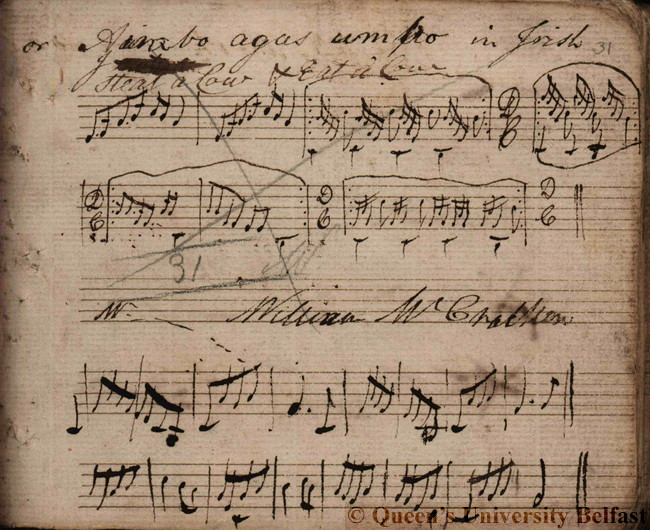
Meanwhile, there is plenty to think about in relation to the Triple Shake. Here it is, as Bunting applies it to the Lamentation of Youths.

Triple Shake in Lamentation of Youths

Bunting applies the Triple Shake in the position of a Cadential Shake. The underlying simple melody is falling from A to G, and the accompanying harmonies move conventionally from D major to G major. The rhythm of the Triple Shake corresponds to the Table of Ornaments, although the notes are three strings higher, A and B instead of F# and G. The fourth beat of the bar is filled in with an ornamental Turn, with a very Irish-sounding gap (the turn moves from G to E, omitting F#). So far, so good.
But now the problems start. If you play the Triple Shake with the fingering given in the Table of Ornaments, since there is no damping, both notes ring on. If anything, the B rings louder and longer, since it is written as a longer note, and the A will damped as you replace your finger ready to start the next element of the Triple Shake, or ready to start the final Turn. The resulting sound is messy and discordant, since the B does not fit well with the D major harmonies.

Simon Chadwick speculates that the Triple Shake is therefore an ornament on the note B, that begins on the lower auxiliary note of A. But this still leaves the problem that the B does not fit with the accompanying harmonies (proudly labelled as another piece of authentic detail Lancrodh or full hand.) And when we looked at the Cadential Shake, we saw that the Cadence with accented A falling to G is very typical.

And when we compare this one bar from the Lamentation of Youths to the remainder of Bunting’s output, an even more serious problem emerges. Not only is this the only example Bunting gives of a Triple Shake, but

There is no other opportunity to apply the Triple Shake like this, in the whole of Bunting’s output.

There are many opportunities for Cadential Shakes, but they are all much too short for the three-beat Triple Shake.

Meanwhile, there is something rather unsatisfactory about Bunting’s application of the three-beat Triple Shake to the four-beat A of his unique example in Lamentation of Youths. He has to fill up the missing beat with a Turn, but he told us in the Table of Ornaments that the old Irish harpers did not finish the shake with a turn, as in the mode adopted at present. 

My hypothesis is that in the enthusiasm to include lots of ornaments in a piece that seems to exemplify the circa-1600 style, the Triple Shake was applied in the wrong place. There is no place like this in the rest of the repertoire, and the Triple Shake doesn’t really fit, even here. Bunting’s limited understanding of the function of this particular Shake is also shown by the lack of information on damping.

But there is an opportunity for a Triple Shake that occurs many, many times in this repertoire. Many tunes repeat the final note, the tonic, three times.

Bunting’s first music examples are at page 15 of the Preface. The first phrase of the first piece ends with three Cs. The second phrase ends with three Bbs. The third phrase ends with three Gs, and is repeated. The next phrase ends with three Cs, and the final phrase repeats the second phrase, ending with three Bbs.

Triple Shake opportunities

The final phrases of both parts of the next tune end with three Gs. There are hundreds more examples, throughout the book. Indeed, this Triple Tonic is an instantly recognisable feature of Irish melodies.

So I suggest that we can apply the Triple Shake not to the penultimate note on the Dominant harmony (as for the Cadential Shake), but rather to the final note, the Triple Tonic.

All we need to do now, is to sort out the lack of damping in Bunting’s Table of Ornaments. Here is my solution, with modern notation (1 = thumb, 2 = index finger etc). I’ve chosen to put the Triple Shake on G, since we often play melodies in G major, because they suit the standard tuning of the historical Irish harp.

Triple Shake ALK

The finger-movements are like a small section of the Long Shake. After playing G A G quickly, the index finger drops silently onto the A, damping it so that the main note G rings on. That’s one element – play three elements to make a Triple Shake.

So now when you see a Triple Tonic, you can give it a twist with a Triple Shake …. Cheers!

Triple Tonic

Please join me on Facebook https://www.facebook.com/andrew.lawrenceking.9 and visit our website www.TheHarpConsort.com .

Opera, orchestra, vocal & ensemble director and early harpist, Andrew Lawrence-King is director of The Harp Consort and of Il Corago, and Senior Visiting Research Fellow at the Australian Research Council Centre for the History of Emotions.