Irish Harp Ornament of the Month #4: Striking Upwards

The Mountains of Morne lie ahead, it’s high time to Strike Upwards!

Mountains of Morne


The same combination of finger-movements that we learnt for the Long Shake here is just what we need for what Bunting calls Activity of finger ends, striking upwards. He gives the Irish name as Barlluith-beal-an-airdhe. 


Striking upwards


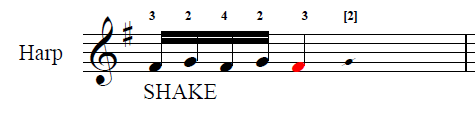
As with the Triple Shake here the finger-movements are a short segment of a Long Shake. But now the segment is slightly longer, and the sound that results is rather different. Here it is in modern notation (3 = middle finger, 2 = index etc).


Striking upwards ALK

Start as for a Long Shake with 3 2 4 2 (fingers 3 and 4 are both on the same string, in this case, F#).  Then instead of playing another note, just let finger 3 come to rest on that same (F#) string, damping it. Meanwhile, the finger-2 string (G) rings on. And that’s all there is to it!

WATCH THE VIDEO: Irish Harp Ornament #4 “Striking Upwards”

As with all ornaments, practise the finger-movements slowly, getting them perfectly right, before trying to speed them up. If you’ve followed the sequence of ornaments so far, you should find this one fairly straightforward to play. But its name hints at some subtle details of how and where it might be used.

Activity of the finger ends” is a strong indication that such quick notes are played with a small movement of the last joint of the finger, not with a large movement and not with the whole finger. Using just the smallest joint of the finger helps the movement be quick and light, and a short finger-stroke helps you get that finger back onto the string again sooner. All this works particularly well on metal strings and with fingernails: a small movement of the fingertip is enough to produce a crisp, clear sounding ornament.

Striking upwards” characterises this ornament as ‘upward’ – the ornament moves from low to higher. The main note is the last one, which is sustained (in this case, the final G). As for all ornaments of this period, the Striking Upwards should begin on the beat. A good way to be sure of this, is to make sure that the first note of the ornament coincides with the bass note. In this case, that would probably be a bass G, perhaps even a full chord of G major (Bunting’s full hand). This will produce a strong dissonance as the F# of the ornament clashes with the G in the bass. So this upwards ornament will strike firmly.

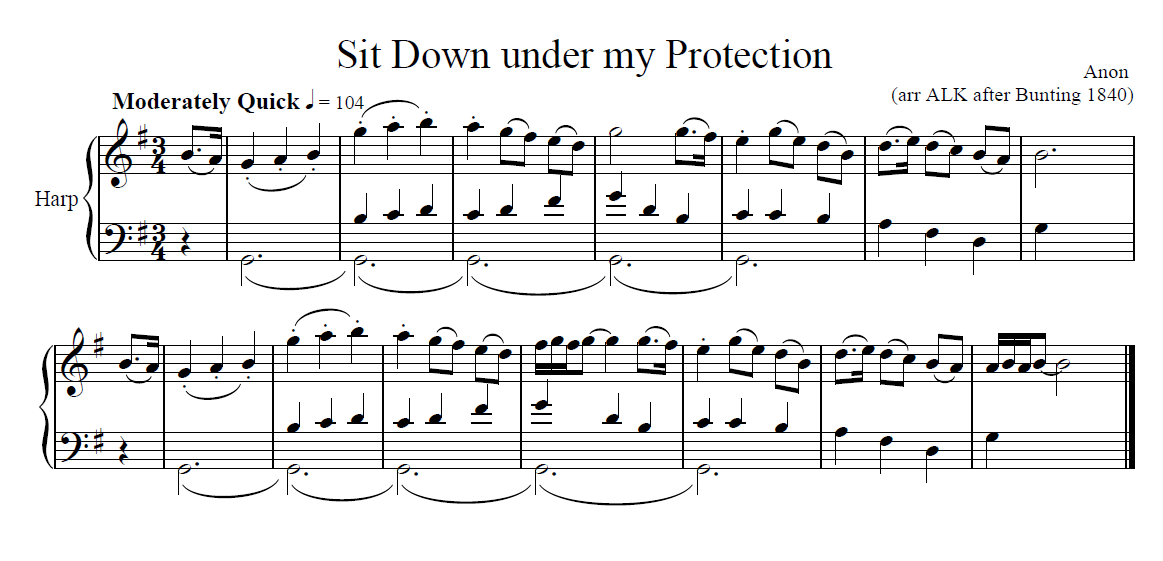
A good place to use this ornament is where the melody approaches a long note from below. For example, in the first tune of the main part of Bunting’s 1840 collection, Sit down under my protection the first two phrases both end this way. Here I’ve transposed Bunting’s arrangement into G major, simplified the accompaniment and – in the second line – added Striking Upwards:

Sit down under my protection

Probably one would choose to add this ornament only in one of these two Upward locations, but either is possible. And both produce a clash, a Strike of the ornamented melody against the bass.

One last comment. It is just possible that this ornament, played three times in succession, is what Bunting meant by his enigmatic Triple Shake. We don’t know for sure, because Bunting does not show the damping for his Triple Shake, and the one application of it in the whole of his output is problematic. In my interpretation of the Triple Shake here, it begins on the main note, like the other Shakes.

In contrast, Striking Upwards begins on the lower auxiliary, which is what produces the Striking effect. So Striking Upwards does not seem to belong to the category of Bunting’s Shakes. And the threefold dissonances of a triple Strike would be a departure from the harmonies that we see elsewhere in this repertoire. But there is certainly room for debate here: I look forwards to your comments.

Please join me on Facebook https://www.facebook.com/andrew.lawrenceking.9 and visit our website www.TheHarpConsort.com .

Opera, orchestra, vocal & ensemble director and early harpist, Andrew Lawrence-King is director of The Harp Consort and of Il Corago, and Senior Visiting Research Fellow at the Australian Research Council Centre for the History of Emotions.


The times they are a-changin’

We think that water has no taste, because we were born with it in our mouths.

Most performers of art-music, even many Early Music specialists, believe that the subtle manipulation of rhythm for expressive effect – so-called tempo rubato – is an essential element of fundamental musicianship. To play in strict time is derided as mechanical, the work of “a poor block-head who hammers away in strict time without … artistic expression”. Teachers are advised that “a Metronome is apt to kill the finer Time-sense implied by Rubato”. “Variations of Tempo, the ritardando, accelerando, and tempo rubato, are all legitimate aids demanded by Expression. […] use is determined by sound judgment and correct musicianly taste”. Control of Rubato lies with the conductor, or in chamber music, with the soloist. It is expected that the accompaniment will yield to the melody.

Image

But is Rubato really an Absolute, a fundamental quality of good musicianship that has never changed over the years? Scientific scepticism would encourage us to doubt this: after all, historical pitch standards, temperaments, tempi, and musical notation itself all show significant differences from current mainstream practice. Why should we expect Rubato alone not to have changed over the years?

Happily, solid evidence is available, from detailed analysis of historical gramophone recordings by elite performers throughout the 20th century. Much of our present knowledge comes from the wonderfully-named CHARM project in the UK (the Centre for the History and Analysis of Recorded Music, lots of materials available here), and Dorottya Fabian’s investigations into rhythm perception, expressiveness and emotion in music, and the Early Music movement & Bach performance, at the University of New South Wales in Australia.

[By the way, the current assumption that expressiveness is connected with Rubato is so strong, that I have suggested that researchers avoid the word ‘expressive’ in their questionnaires to listeners, since it will probably elicit responses about Rubato. A more searching set of questions might ask if the performance showed ‘signs of emotions’, whether the listener had detected the use of particular techniques (e.g. vibrato, rubato, tonal or dynamic contrasts) and (most tellingly) whether listeners themselves felt they had been touched by those emotions?]

Commenting on some results from the CHARM investigations at a recent conference of the Australian Centre for the History of Emotions, Nicholas Cook, 1684 Professor of Music at Cambridge University, described a significant change in the use of Rubato around the middle of the 20th century. Before the Second World War, performers followed what Prof Cook calls the ‘tent-pole’ model: the tempo slows down as the music approaches the important point, and speeds up again afterwards, just as the canvas of a tent rises to the point where the pole supports it, and then falls away again.

In the post-War period, a different model emerges, which I have christened the ‘tube-train’. Each phrase begins slowly, accelerates to the middle, and then slows again towards the end. The tracks for London’s Underground Railway, the ‘Tube’, descend out of each station, and ascend again to the next, to help trains accelerate away and slow down again.

There are some famous international Early Music ensembles that apply this Tube-Train Rubato to renaissance and baroque music. I speculate that this approach might be particularly favoured by directors whose formative years of high-level music education were in the 1950s.

Early Music ensembles with younger directors show other models of Rubato. The “Go-To” model, much in vogue amongst baroque orchestras in Germany and elsewhere is almost the opposite of the ‘Tent Pole’: the tempo accelerates towards the important point and dwells on this one note somewhat. This approach is associated with directorial comments and group discussion about ‘where does this phrase go to?’.

Another approach, which I’ve seen at work in renaissance polyphony, is what I call the “Smoothie”. Notated contrasts in note-values are reduced: long notes are cut short, short notes are taken more slowly. Or if the composer writes notes of equal length, the music generally slows down (from moderate tempo) or speeds up (from slow tempo, because the long notes are shortened). The Smoothie is sometimes the result of laziness in observing the written rhythms, or of sloppy bowing from string-players. But at higher levels, it is associated with performers who make sound-quality, fine tone-production, a high priority. Such performers elongate short notes, to make sure that even the little notes have the best possible sound quality.

Other genres of music favour different approaches. Most fans would agree that the emotional power of Heavy Rock is not lessened by that music’s strong rhythm in strict tempo. Mainstream jazz allows a degree of rhythmic flexibility (swing) within a steady underlying beat. In this style, soloists may float freely over a regular accompaniment in the rhythm section.

Such ‘cool rhythm’ might remind us of 19th-century descriptions of Chopin’s Rubato as “timeless melody over a timed bass”, which I shorten to TLM/TB. (I avoid terms like Chopinesque, since TLM/TB clearly pre-dates Chopin). In his book Stolen Time: The History of Rubato (Oxford 1996 details here) Richard Hudson “identifies and traces the development of two main types of rubato: an earlier one in which note values in a melody are altered while the accompaniment keeps strict time, and a later, more familiar, one in which the tempo of the entire musical substance fluctuates.”

Hudson’s book very usefully charts the recent history of Rubato, though his terminology of “Early Rubato” and “Late Rubato” has been criticised. I don’t claim that my own terminology is perfect, but to clarify my intentions, I will use the term ‘TLM/TB’ for melodic freedom controlled by a regular bass, keeping ‘Tempo Rubato’ for entirely Stolen Time. Notice Hudson’s characterisation of the ‘fluctuation of the entire musical substance’ in Tempo Rubato as ‘familiar’.

But what are the artistic and emotional results of this ‘fluctuation’ of musical Time? Assuming it is done deliberately and skillfully, what is its purpose? 

Tempo rubato softens the sharpness of lines, blunts the structural angles… idealises the rhythm…. It converts energy into languor, crispness into elasticity, steadiness into capriciousness.

Wait a moment! Shouldn’t this ring alarm-bells for Early Music performers? Surely baroque music should have clear lines, strong structures, energy and crispness!! Why should we want to soften, blunt, make rubbery, unsteady and capricious a Bach fugue, a Lully overture or a Palestrina mass??? Perhaps things might have been different, before the year 1800…

The past is a foreign country, they do things differently there.

L. P. Hartley The Go-Between (1953)

 At the very least, the blind assumption that Rubato is an unchanging, fundamental absolute is demonstrably unsound. Since we now know that our ‘familiar’ Tempo Rubato has a history of change across the 19th and 20th centuries, we should begin to enquire what approaches were taken to Tempo and Rhythm before 1800. But I’ll come to this Another Time.

Galileo and the Philosophers

.

PS

The three quotations in the first paragraph are from Constantin von Sternberg Tempo Rubato and other essays (c. 1920) available here; Tobias Matthay Musical interpretation: its laws and principles, and their application in teaching and performing (c. 1913) details here ; and W.E. Haslam Style in Singig (1911) here. The remarks that Tempo Rubato softens, blunts etc were made by Paderewski c. 1909, published here. All these are cited – together with the general opinions summarised by my first paragraph – in the Wikipedia article on Tempo Rubato here.

I present Wikipedia not as an academic authority, but as a reliable indication of the consensus view amongst its self-selecting editorial group. Wikipedia is also a powerful influence on students seeking basic information.

My claim is that Wikipedia’s presentation of Tempo Rubato,  with its bundle of early-20th-century citations (most of them pre-World War I), not only demonstrates the consensus view, but shows that consensus to be lacking in historical perspective (there is no suggestion that use of Rubato may be a changeable element of Period Performance Practice) and somewhat closed-minded (Chopin’s use of TLM/TB, also heard in 20th-century jazz, is rejected, even ridiculed).  Yet in ‘the free encyclopedia anyone can edit’ that consensus view remains unchallenged. The article has not changed significantly over the last three years (accessed March 2011 and February 2014). Elsewhere in Wikipedia, debates rage between standard repertoire musicians and Early Music specialists, articles are aggressively edited back and forth between opposing camps, and moderators are kept busy damping down the flame-wars.

But Tempo Rubato circa 1910 is accepted as a universal truth. No-one even cares enough to debate it, even though the arguments are fierce over a few Herz up and down in historical pitch, or even for a few cents this way or that in historical temperaments. Get the flavour from the FaceBook Anti-Vallotti page here.

All this supports my claim that most musicians, even many HIP specialists, consider Rubato to be an essential element of basic musicianship, in spite of clear evidence that it is a historical and cultural variable.

But I urge readers of this Blog NOT to go and edit Wiki’s Tempo Rubato. Let’s leave it there, as a gloriously fossilised dinosaur, and (more seriously) as an indicator of the consensus view, so that we can see if there is any change over the next three years!

fossil dinosaur

Please join me on Facebook https://www.facebook.com/andrew.lawrenceking.9 and visit our website www.TheHarpConsort.com .

Opera, orchestra, vocal & ensemble director and early harpist, Andrew Lawrence-King is director of The Harp Consort and of Il Corago, and Senior Visiting Research Fellow at the Australian Research Council Centre for the History of Emotions.


Sparrow-flavoured Soup – or What is Continuo?

Image

There are many possible routes towards an understanding of basso continuo. As an academic discipline, it’s often associated with the study of musical grammar, harmony and voice-leading: ‘Harmonise this chorale melody in the style of Johann Sebastian Bach’.

Some performers might – like me – have begun their study with the printed realisations in modern editions: thinning out rich, mid-20th-century piano parts; enriching minimalist sketches; adding some improvisatory touches and trying to filter out what is stylistically inappropriate.

Often the harpsichord is assumed to be the epitome of historical style, and the combination of cello and harpsichord to be the ideal mix of melodic bass and chordal harmony, perhaps with a double-bass to add gravity.

There is a strong modern tendency to think in terms of an ideal realisation, with the ‘correct’ harmonies. In this view, a perfect (in every way!) cadence should be figured 53 64 54 73 over the dominant – other options are seen as variants of this ‘standard’ harmonisation.

But a moment’s reflection will suggest that over some two centuries of the basso continuo age, the ideal of a ‘perfect’ realisation must have changed. Like any other aspect of performance practice, the aesthetics of Continuo must differ according to period and national style. C.P.E. Bach’s admirably detailed instructions do not apply to Peri, Johann Sebastian’s wonderful harmonies are no guide to Caccini, Rameau’s  aesthetic is not the same as Monteverdi’s.

And in Continuo studies as in any historical investigation, we must beware of teleology, of the dangers of ‘looking backwards into the past’. It is all too easy to approach the beginnings of Continuo via Bach, and to view both Bach and Monteverdi through the distorting lens of modern assumptions (whether in ‘common practice’ or ‘early music’).

So I suggest that it’s well worthwhile to start at the very beginning, and consider the earliest sources for Continuo. Those first treatises should be our guide for the early 17th century, and they should also be our starting point from which to follow a chronological path towards Corelli, Lully, Bach and beyond.

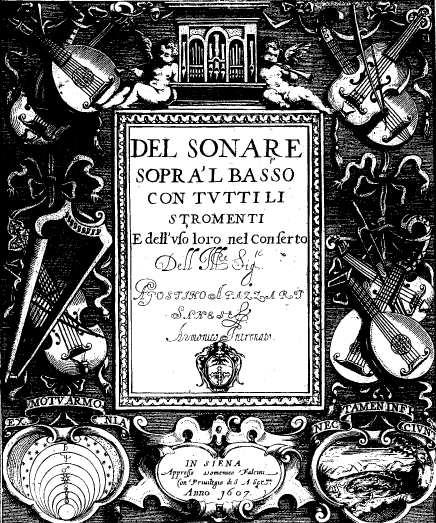
One of the most interesting early sources is Agostino’s Agazzari’s 1607 Del Sonare sopra’l basso con tutti li stromenti e dell’ uso loro nel Conserto (About playing from the basso part with all instruments, and about their use in ensemble). See my posting What is Music here for links to a facsimile, translations and commentaries.

The reference to uso shows that Agazzari’s intent is thoroughly practical. His treatise is not lost in the clouds of metaphysical speculation (Science), nor concerned about theoretical principles governing the Art of Music. And he doesn’t waste time expounding lots of rules for playing from unfigured bass, since composers often create surprising harmonies as they imitate the passions of particular words. Agazzari prefers to write in the figures as necessary, though he emphasises that all cadences, intermediate or final, end on a major chord. His focus is consistently on the practicalities of playing from a new notation (the basso, whether figured or not, now regarded as the best guide to the structure of the whole piece, rather than a score or intabulation).

Agazzari discusses in detail what each kind of instrument should do, and categorises his material in various different ways. He distinguishes between wind and string instruments.  Other than the organ, winds are excluded from delicate ensembles because they do not blend, though the trombone can serve as a low bass when only a small (4-foot) organ is available. Other wind instruments might be acceptable, if played expertly and dolce.

Amongst string instruments, he mentions those which are capable of perfetta armonia di parti (perfect structure of counterpoint – the word armonia means well-structured organisation, not just ‘harmony’): Organ, gravicembalo (large harpsichord with low basses), Lute and arpa doppia etc.

Other instruments can play harmonies (in the modern sense), but not fully correct counterpoint (not all the armonia, in the period sense): cittern, lirone, guitar. A third group of instruments offers fewer chordal (let alone contrapuntal) possibilities: Viola da gamba, violin, pandora etc.

Players are expected to have three separate but complementary skill-sets: a knowledge of armonia (counterpoint, rhythm and proportions, all the clefs, dissonance and resolution, when to play major/minor thirds or sixths etc); total familiarity with their instrument and with playing from score or intabulation; excellent aural skills and awareness of the movement of individual polyphonic voices.

Agazzari champions the practice of playing from the basso as useful in three ways: for the new style of singing dramatic music, lo stile moderno di cantar recitativo; as easier than reading, especially sight-reading, from a score or intabulation; and as a very concise and compact notational system.

But the most significant binary distinction he makes , one that he repeats several times within this short treatise, is to categorise what is played ‘on the basso’ as either Structure – fondamento ( a word that occurs 9 times) – or Decoration – ornamento (4 times). Meanwhile, we should note that the word continuo does not occur anywhere in this document.

Agazzari frames his entire discussion in these terms – Structure versus Decoration – introducing these two ordini (categories) at the very beginning of his argument. We should therefore be very careful to link each piece of advice to the relevant category. We should think too about how the various bi- and tri-partite categorisations mentioned above intersect with those most significant ordini of Structure and Decoration. And how does the concept of Continuo fit with all this?

Simply to pose this question points us towards the answer. The essential function of Continuo is fondamento: Structure (organ, harpsichord, theorbo, harp).

Meanwhile, the function of Decoration, ornamento, is condire – to spice up the ensemble with delicious tone-colours (lirone, cittern, guitar etc) or clever division-playing, scherzando e contrapontegiando (having fun and playing counterpoint, on lute, violin etc). Agazzari includes division-playing here for highly practical reasons: divisions can now be improvised whilst reading from the basso part, rather than from a score or intabulation.

Looking backwards into the past, we might be tempted to conflate these two functions, to imagine that Agazzari was writing about ‘two ways to play Continuo’. But his book is not called ‘How to play Continuo’, it’s ‘about playing from the basso’.

Moving chronologically forwards with Agazzari from the late 16th into the early 17th century, we can see that he is linking the uso moderno, a new use of notation (playing now from a basso, rather than a score or intabulation) to two distinct practices: structural accompaniment and fun decoration – scherzi. And he is very careful to keep the two practices distinct.

The structural foundation – Agazzari’s fondamento -is what we now call Continuo (organ, harpsichord, theorbo, harp).

Some instruments with interesting tone-colours (lirone, cittern, guitar etc) can play a chordal accompaniment (which we might well today call Continuo), but Agazzari does not class these as fondamento because they cannot play the actual basso. Nevertheless, we have clear evidence from other sources that such instruments were sometimes used as the sole accompaniment.

Otherwise, Decoration – ornamento – consists of division-playing. This ‘spice’ should of course be flavoursome and tasteful. And advanced division-playing even includes the invention of additional counterpoint. But it’s not Continuo.

Image

As Bernhard Lang (2003) comments here, Agazzari’s advice on ornamento-playing can be seen in the context of earlier division manuals by Ganassi (1535), Ortiz (1553) and dalla Casa (1584). Agazzari’s contribution is to compare the different division-playing styles of particular instruments, inviting them all, even violinists, to improvise whilst reading from the basso part.

The other job, Continuo-playing, is described in the other part of Del Sonare sopra’l basso, in the paragraphs referring to Structure, fondamento. As Agazzari reminds us, we should not confuse the two roles –

hanno diverso ufficio, e diversamente s’adoperano (they have different jobs, and are managed differently).

But all too often today, we hear Continuo-bands playing divisions, playing divisions simultaneously (but not quite together!) on several instruments, and playing divisions on fondamento instruments. We even hear Continuo competing with the singers or solo instruments in the treble register – precisely the zuppa e confusione, cosa dispiacevole (soup and confusion, a displeasing thing) that Agazzari warns against!

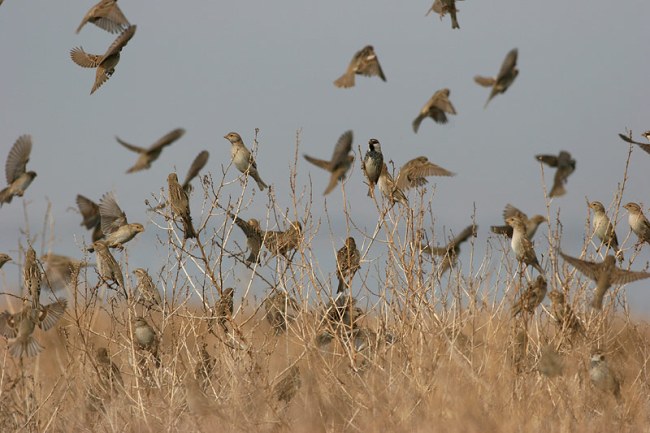
Even in division-playing, whenever several instruments play together, Agazzari tells us that they should take turns to add ornamento, one at a time. They should not compete ‘like sparrows, all at the same time: and let’s see who can shout the loudest’!

Lang also comments on the seicento trend for the fondamento to be less contrapuntal, more chordal, assembled vertically over the basso. And Agazzari leaves us in no doubt that in general, too much polyphonic complexity, too much concentration on contrapuntal imitation, is contrary to the new aesthetic:

By the rules of counterpoint these might be good compositions, but nevertheless by the rules of good and true Music they are vitiose –  vicious, faulty, sinful, defective, imperfect, false, corrupted, blemished, full of vice, unsound, crazy, and worm-eaten (according to Florio’s 1611 dictionary).

And that comes from not understanding the purpose and the job, from forever wanting merely to observe counterpoint and imitations of notes, rather than of the affetto (passion) and semblance of the words.

So with that stern warning and the condemnation of sparrow-flavoured soup ringing in your ears, I invite you to compare Agazzari’s point by point instructions for fondamento with what you hear, listening to Continuo in concerts and recordings today. Continuo-players, keyboardists especially, might like to compare Agazzari’s recipes with their own playing in early seicento repertoire.

  • The Continuo are those which guide and support the whole body of voices and instruments in the ensemble.
  • They are Organ, gravicembalo etc (and for smaller ensembles) Lute, Theorbo, Harp etc

The job of ‘guiding’ or ‘directing’ – guidare – reminds us of the crucial importance of rhythmic Structure. Rhythm is a significant element of 17th-century armonia, and Caccini makes it a priority, along with the Text.

Agazzari links ‘support’ to grave resonance and low-octave basses (see below).

  • When playing Continuo, you have to play very judiciously, watching out for the entire ensemble…
  • Playing the piece as straight and accurately as possible, not making passages or divisions, but helping with some low-octave bass notes, and avoiding the high register.

Many of the earliest figured-basses show exactly where the harmonies change over a sustained bass, by writing the rhythms of the harmony changes into the basso itself. (The repeated bass notes are then tied together, to show that they are not re-struck). Such precise notation, combined with Agazzari’s instruction not to ‘break’ a bass-note and with the growing seicento tendency to think vertically over the bass (rather than horizontally in counterpoint), suggests that Continuo-players should as far as possible avoid in their realisation any activity (especially harmony changes) that is faster-moving than the basso itself.

So if the basso moves in minims, say, your realisation should also move in minims, not in crotchets and quavers. In general, we expect the entire fondamento to reflect the rhythms of the basso, and typically to be less active than the composed contrapuntal parts.

  • Don’t double the soprano, don’t play divisions and ornaments in the high register…
  • But it’s good to play with great restraint (or perhaps, very compactly), and grave (low, weighty, serious: Florio  gives ‘grave, solemn, important).

Grave is also used to characterise the violone, which plays ‘as much as possible on the thick strings, often with low-octave basses’. The re-entrant tuning of the theorbo and the triple-stringing of Italian baroque harp allow compact chords, with a lot of supportive resonance all packed into the grave register: both instruments have low-octave basses, as does the gravicembalo (literally, grave-harpsichord).

Note Agazzari’s emphasis that the fondamento should play ‘very judiciously’, ‘with great restraint’. No chirping sparrows!

  • The Continuo holds the tenor – the underlying harmonic/rhythmic sequence, for example a ground bass (see Ortiz) and the armonia –the complete structure, both harmony and rhythm – ferma – firm, steady, fixed, sure (Florio).

In large ensembles, certain instruments have well-defined roles. When, for example, harpsichord and theorbo play together, it is the theorbo that should make some divisions (on the bass strings), whilst the harpsichord provides a fondamento grave. Agazzari’s advice is confirmed by the allocation of particular instruments to alternative bass-lines in scores by Landi, Veracini etc. The more complex basso is for lute, theorbo, or harp: the simplified part is the fondamento for harpsichord.

The role of the keyboard, whether organ or gravicembalo is entirely Structural. (Small spinetti might provide Decoration). Today, this custom is more honoured in the breach than in the observance !

Nowadays a lot of zuppa e confusione is created by inappropriately applying to Continuo-playing Agazzari’s suggestions for ornamento, whilst ignoring his warnings against chirping like competing sparrows. But his advice on fondamento is repeated in many other period sources, especially for musica recitativa, where it’s generally agreed the accompanist should play grave and not add ornaments.

Image

The frontispiece to Del sonare sopra’l basso illustrates tutti li stromenti, with the organ, Agazzari’s own instrument, enthroned above. In the Academy of the Intronati, Agazzari’s nickname was L’Armonico intronato (well-structured musical organisation, enthroned). Below two shields show the heavenly orbits, with the caption ex motu armonia (cosmic movement produces armonia) and what might be the infernal pit, with the caption nec tamen inficiunt (and, however, they don’t create chaos – literally ‘un-make’). 

So I give Agostino the last word:

 Just take this as it is, and forgive me for the lack of time to write more.

Please join me on Facebook https://www.facebook.com/andrew.lawrenceking.9 and visit our website www.TheHarpConsort.com . Further details of original sources are on the website, click on “New Priorities in Historically Informed Performance”

Opera, orchestra, vocal & ensemble director and early harpist, Andrew Lawrence-King is director of The Harp Consort and of Il Corago, and Senior Visiting Research Fellow at the Australian Research Council Centre for the History of Emotions.

www.historyofemotions.org.au

The Good, the Bad & the Early Music Phrase

The Good & the Bad

We all know what a musical phrase is. It corresponds to a sentence of prose, or a line of verse, and we see phrases marked with long, elegantly curved lines in beautifully engraved 19th & 20th-century editions. The phrase is arched, long, sustained, and essentially legato. It curves upwards to the middle, and then descends. We talk of “phrasing towards” a certain note, so that the phrase “moves”, and has a “goal” along the way. And when we come to the last phrase, the final note of a piece often represents a triumphant arrival, perhaps returning emphatically to the tonic, after explorations of other tonalities.

All this is taught in elementary music lessons, so that it becomes part of what we assume to be basic, ‘instinctive’ musicality. But …

The past is a foreign country – they do things differently there.

L.P. Hartley, The Go-Between, (1953)

Although the guiding principle of Early Music is awareness of various different historical aesthetics according to period and country, there are some general trends that distinguish the Rhetorical age (pre-18th century) from the Romantic and Modernist periods. For example, the relation between Rhythm and Emotion changes particularly sharply in the decades after 1800. Read more about this in Richard Hudson Stolen Time: The history of tempo rubato (1997).

The 19th/20th-century aesthetic encourages evenness, homogeneity, continuity during a long phrase. Consistently rich tone, even volume of sound, and continuous vibrato indicate depth of emotion, in the sense of a sustained level of intensity. The most powerful moments are the culmination of a gradual intensification of one particular emotion, to the point of cathartic release.

In that aesthetic, high artistry and nobility of purpose are indicated by bending the rhythm. Lively and steady rhythm is seen as ‘popular’, but inscrutable manipulation of rhythm casts the performer as a ‘Romantic genius’, expressing emotions beyond the understanding of the common herd. 

The Early Music phrase is different

The pre-18th century aesthetic encourages short-term contrasts within short phrases. Quality & volume of sound, vibrato and articulations, the passions themselves change from note to note. Emotion is conveyed by changing (not maintaining) passions (affetti). 

High artistry and nobility of purpose are indicated by the ability and determination to frame these passions within reliable rhythm. Musical polyphony and linguistic complexity are the main indicators along the spectrum from ‘popular’ to ‘high art’ music: composers and performers are equally at home anywhere along that spectrum. Reliable rhythm is one of the fundamental skills by which a performer speaks clearly and persuasively to an audience who are at the same, or higher, social level.

In this aesthetic, the musical phrase is an imitation of the human voice, speaking rhetorically in short sense-groups of a few words. Musical phrases are broken up into short ‘mini-phrases’, like an inspiring leader delivering a passionate speech to a large audience in a big hall, without microphone. In music, as in public speaking, the primary duty of the performer is to deliver the text clearly. Clear and varied articulations of vowels and consonants produce short-term contrasts and a mix of legato and staccato.

In rehearsals and lessons, many of today’s Early Musicians talk about phrases (or shorter musical figures) “going towards” a certain note. In performance, this is often associated with a subtle rubato that accelerates towards the phrase-middle, and then slows up. Some Early Music directors deliberately coach this particular rubato technique. (I have christened it ‘Tube-train rubato’ after the London Underground, where the tracks descend away from one station and ascend again to the next, in order to help trains accelerate and slow down as required).

But I see no evidence of the language of ‘going towards’ in period texts that analyse or teach music and poetry. Rather, there are frequent reminders to maintain the tempo without change. And Cambridge University’s recently completed CHARM project has shown by analysis of elite historic recordings that ‘Tube-train rubato’ emerges in the 1950s, replacing what Prof Nicholas Cook calls early-20th-century ‘Tent-pole rubato’, (slowing towards a meaningful note, then accelerating again, in the way that the canvas of a tent curves up towards the point where the tent–pole supports it, suspends there, and then falls away again).

So if historical sources do not discuss ‘going towards’ significant notes, ‘moving through’ the phrase, and other such indicators of rubato, what do they talk about? If musical time is regular, what else are we encouraged to vary during the phrase, to avoid monotony, and for the sake of expressive subtlety?

Good & Bad

A fundamental period assumption is that music is Rhetorical: it imitates the structures and devices of persuasive speech, in order to muovere gli affetti – to move the passions of the listeners. And if music is like speaking, then the structure of the musical phrase can be compared to contemporary poetry. Accented and unaccented notes correspond to the accented and unaccented syllables of verse: actually, in period sources, notes and syllables are referred to as Good & Bad, or Long & Short.

The regular metre of pre-1800 poetry is the underlying structure that corresponds to the regular Tactus pulse of period music. (See Andrew Lawrence-King Rhythm – what really counts? here). In poetry, Good syllables generally coincide with the underlying metrical structure, for example, in the iambic pentameter of Shakespeare’s (1609) sonnet:

When I do count the clock that tells the time.

But, as Patsy Rodenburg observes in Speaking Shakespeare (2002), ‘the pure regularity of such a line is relatively rare’. From line to line, word-accents and poetic metre sometimes coincide, but sometimes are in tension against each other, and this is what makes the difference between doggerel and fine poetry. Notice the subtle interplay of word-accents (underlined) and metre (bold) in Richard Barnfield’s line from The Passionate Pilgrim (1599)

 If Music and sweet Poetry agree.

Similarly in period music: individual word-accents may, or may not coincide with the underlying Tactus measure.

So monotony is avoided, the regularity of rhythm is varied, not with rubato, but with varying placement of Good and Bad notes, within a steady measure of time. Read more about the distinction between metre and accent in George Houle Metre in Music (2000).

Principal Accent

The metre of period poetry typically alternates Good and Bad syllables, with the most significant Good syllable (referred to in metrical analysis as the Principal Accent) at the end of the line, where the rhyme might occur. However, this Principal Accent is usually not the last syllable: typically the line ends with a Bad syllable.

To be or not to be, * that’s the Question.

Shakespeare Hamlet

Nel mezzo del cammin di nostra Vita

Dante Inferno

Even in these short examples, we see again that not every metrically ‘strong’ syllable necessarily has a Good word-accent. Metre and accent work together in independent counterpoint.

We also see that each language has its own patterns. English uses many monosyllables, Italian has many two-syllable words Good-Bad: piano, forte, mezzo, nostra, vita etc. [Cammin is a poetic shortening of cammino, which shares a typical tri-syllable pattern Bad-Good-Bad with allegro, adagio, sonata etc]

So now we can assemble the structure of a typical Early-Music phrase:

  • The Tactus is maintained with a slow, steady pulse
  • Individual notes contrast with one another in articulation, colour, volume & meaning.
  • Passions change rapidly – for example with dissonance/resolution.
  • Individual notes are Good or Bad, typically alternating Good/Bad and joined Good-to-Bad.
  • The Principal Accent is the last Good note.
  • Phrases typically end with a Bad note.
  • Complete phrases are separated into short ‘mini-phrases’.
  • Unity through the phrase comes from consistent Tactus and sustained thought, not from legato sound.

And in place of that long, elegantly curved phrase-line in thick steady black, we could envisage something more speech-like: fragmentary, multi-coloured, alternating, with its high point on the penultimate note.

 Early Music Phrase


The past is a foreign country; there is very little we can say about it until we have learned its language and understood its assumptions.

 Michael Howard ‘The lessons of history’ 1991

In my opening paragraph, I blithely assumed that a phrase corresponds to a sentence. But in period literature, a sentence (terminated by a full stop .) is often the length of a modern paragraph, containing a long succession of clauses punctuated by semi-colons ;. In spoken delivery, within each clause, a good orator would make gaps between each sense-group of a few words:

Speak the speech, * I pray you, * as I pronounced it to you, * trippingly on the tongue: * but * if you mouth it, * as many of your players do, * I had as lief * the town-crier spoke my lines.

Shakespeare Hamlet The Advice to the Players

So in Early Music we might expect to find that short ‘phrases’ corresponding not to sentences, but to short sense-groups, linked together by steady rhythm and continuity of thought into medium-length clauses. Clauses are then separated by cadences (which correspond to semicolons, rather than to full stops). Like semi-colons in period texts, cadences occur very frequently in 17th-century music, but they punctuate, rather than stopping the flow. Steady Tactus drives us over the momentary lull of each cadence, until we reach a full stop, which corresponds to the end of a section.

These are the hierarchical, Rhetorical structures of sentence construction and musical design which are carefully matched to each other in 17th-century madrigals, mass-settings and recitatives. The link between punctuation and musical construction is made explicit in a 17th-century poem in praise of composer Henry Lawes:

No pointing Comma, Colon, half so well

Renders the Breath of Sense; they cannot tell

The just Proportion how each word should go

To rise or fall, run swiftly or march slow.

Thou shew’st ‘tis Musick only must do this…

Henry Lawes

Please join me on Facebook https://www.facebook.com/andrew.lawrenceking.9 and visit our website http://www.TheHarpConsort.com .

Opera, orchestra, vocal & ensemble director and early harpist, Andrew Lawrence-King is director of The Harp Consort and of Il Corago, and Senior Visiting Research Fellow at the Australian Research Council Centre for the History of Emotions.

http://www.historyofemotions.org.au

Rhythm – what really counts?

Galileo Pendulum

Rhythm is the beating heart of music, from the powerful throb of heavy rock to the sensual swing of jazz and the ‘vacillating rhythm’ of romantic rubato. For many musicians and listeners today, the very word ‘expressive’ suggests rhythmic fluidity. Around the year 1600, John Dowland, William Shakespeare, and Giulio Caccini agree that rhythm is a high priority:

Music is nothing else than Text, and Rhythm, and Sound last of all. And not the other way around!

Caccini Le nuove musiche 1601/2

But what did 17th-century musicians mean by Rhythm? A rock drummer’s groove? A jazz singer’s swing? 20th-century rubato? Just as instruments, pitch and temperament, bowing styles and ornamentation all vary between different periods and repertoires, so the aesthetics of rhythm also show historical change.

This is a huge subject. Detailed investigation of attitudes to rhythm around 1600 are a major strand of our six-year Performance research program at the Australian Centre for the History of Emotions. Dance and Swordsmanship sources set the context for musical tempo. Frescobaldi, Caccini and Peri give us insights into Italian subtleties of rhythm. The very concept of Time itself must be studied, in order to understand how musicians were thinking in that pre-Newtonian age.

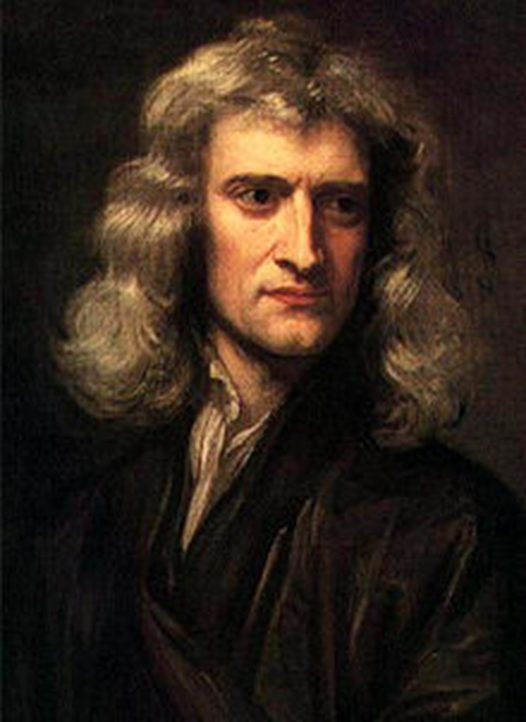
Isaac Newton

(Isaac Newton Philosophiae Naturalis Principia Mathematica 1687 sets out the concept of Absolute Time)

Nevertheless, the essential practicalities of period Rhythm are already well understood, although only partially applied in today’s Early Music performances. George Houle’s 1987 Meter in Music, 1600-1800 provides a summary of historical sources, setting the context for this period of fundamental change. 17th-century theorists and performers tried to reconcile incompatible elements: the old system of triple-time proportions and the newly fashionable French dances; the gradual shift from proportional signs to modern time-signatures; the persistent concept of a (more-or-less) fixed tempo ordinario and the proliferation of speed-modifying words, allegro, andante etc; the distinction between measured meter and modern accentual rhythm.

But what simple, practical guide-lines can we draw from all this?

As elementary music students, many of us were taught to manage difficult rhythms by counting the smallest note-values, adding these up to measure longer notes. Before 1800, the contrary held: musicians counted a long note-value, and divided this up to measure shorter notes. Purely mathematically, there should be no difference between the two approaches, but (since musicians are human), the practical results are measurably different. Even more importantly, the slow count feels different.

Around 1600, this slow count is called Tactus. Its slow constancy is an imitation of the perfect motion of the stars, whose circular orbits create the heavenly sounds of the Music of the Spheres. It is felt in the human body as the heart-beat and pulse, or measured as a walking step. In practical music-making, it can be shown by an up-and-down movement of the hand, or by a swinging pendulum.

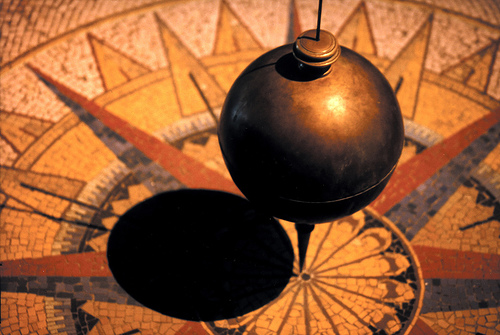
(Of course, 17th-century musicians did not have digital watches or metronomes, but Galileo had noted the pendulum effect around 1588, observing a swinging chandelier in Pisa cathedral – see illustration above. In another posting, I’ll report on some recent experiments with pendulum tactus.)

Around 1600, typically the Tactus will be on minims (half-notes), somewhere around MM60. Down for one second, Up for the next second. You create crotchets (quarter notes) by dividing each Down and each Up in two. “Down-and-Up-and.”

The simple, steady movement of the hand, Down-Up, makes it easy to manage changes of Proportion. Keep the hand movement the same, but now divide it into three beats on the Down, and another three on the Up: this gives Tripla. Making the Down long, and the Up short (whilst keeping the duration of the whole Down-Up cycle the same) gives Sesquialtera: two beats on Down, one on Up.

Grouping notes into phrases, and choosing where to place the accents is independent of Tactus. Tactus simply measures time. This is the crucial difference between early and modern attitudes to rhythm: Tactus and Accent are independent, whereas our modern Downbeat implies accentuation.

The independence of Tactus and Accent allowed 17th-century musicians to notate triple rhythm under what looks to us like a “common time time-signature” of C. Time is being measured by dividing the minim tactus into two crotchets, but the music is phrased in groups of three crotchets. Professional dancers do something similar today, counting everything in blocks of 8, so that a waltz is counted:

123/456/781/234/567/812/345/678

Before 1800, counting (i.e. measuring time) and accent are independent. They can coincide, but they don’t have to.

Tactus and Proportion were central concepts in period music-making.

Tactus directs a Song according to Measure.

John Dowland Micrologus (1609) translated from Ornithoparcus (1517).

Ha, ha, keep time! How sour sweet music is / When Time is broke, and no Proportion kept!

William Shakespeare Richard II Act V Scene v (c 1595)

In today’s Early Music, the acceptance of Tactus principles varies. Stronger principles are supported by academics more than they are applied by performers.

  • Slow count

This is widely accepted, and many performers work with and teach a slow count.

  • Proportions

Amongst academics, there is debate about precisely how to interpret Proportional changes, but the central concept of an underlying constant slow count is not contested. Amongst performers, adherence to Proportions is regarded as ‘hard-core’ HIP, and ‘too academic’ for some.

  • Consistent Tactus: a whole “Song according to Measure”

Though the period evidence supports this, very few performers are prepared to relinquish their romantic rubato.

  • “Tactus directs a Song”

In most modern performances, a conductor directs.

  • Soloists follow the accompaniment

Explicitly stated by Leopold Mozart (1756), clearly implied by Jacopo Peri (1600), and the basis of the entire period practice of Divisions, this is almost universally ignored today.

  • Rhythm in Recitative

Most singers today are astonished at the mere suggestion that Monteverdi might actually have meant something by all those complex rhythms that he forced his printers to set in type.

  • Tactus in Recitative

Very few performers have tried this. However, conductors in recitative are commonplace…

  • Consistent Tactus for a large-scale work

I was first introduced to this concept by Holger Eichhorn, director of the Berlin ensemble, Musicalische Compagney. Paradoxically, consistent Tactus often results in more contrast in what the listeners hear, since (without the discipline of Tactus) musicians tend to pick a slower tempo when the notes go fast, ironing out the composed contrasts. It is very rarely tried today.

  • Consistent Tactus for an entire repertoire, say all Caccini songs, or everything by Monteverdi.   

There is considerable evidence for this, and some academics argue for it. I know of only one other musician today who supports it in practice: continuo-guru Jesper Christensen.

At CHE, we are investigating Baroque Time, researching period Philosophy and the aesthetics of Rhythm, testing all our findings and hypotheses in experimental productions. Our six-year mission is to boldly go where 17th-century musicians have gone before, but few performers today have followed: we are applying all these Tactus principles in teaching, rehearsals and performance. So far, the results are academically and artistically convincing, with performers and (most importantly) audiences responding very positively.

You can see a video report of our Tactus-based production of Monteverdi’s Orfeo here.

But I’ll give the last word to John Dowland:

Above all things keep the equality of measure. For to sing without law and measure is an offence to God himself…

pendulum

Please join me on Facebook https://www.facebook.com/andrew.lawrenceking.9 and visit our website www.TheHarpConsort.com . Further details of original sources are on the website, click on “New Priorities in Historically Informed Performance”

Opera, orchestra, vocal & ensemble director and early harpist, Andrew Lawrence-King is director of The Harp Consort and of Il Corago, and Senior Visiting Research Fellow at the Australian Research Council Centre for the History of Emotions.

www.historyofemotions.org.au

The Long Shake (Irish Harp Ornament of the Month #1)

Barrluth

There is an accompanying video for this posting, here.

Ornaments are like spices in cookery. Even though they are small, they add a lot of flavour. The right ones are essential, for that authentic taste. But the wrong ones, or the right ones used badly, can spoil the whole dish, even when the main ingredients are good. Some you need to add from the start and bake slowly, others you can sprinkle on at the last minute.

The best way to get confident with ornaments is to learn one at a time. So at Scoil na gCláirseach, the summer school of the Historical Harp Society of Ireland, we came up with the idea of an Ornament of the Month. If you practise an ornament 2 or 3 times a week, by the end of a month you’ll be ready to move on to the next one. And by next summer, you will have a good collection of ornaments that you know how to play, and (even more important) that you know where to use.

Warning

The ornaments in this series (and especially their fingerings) are specific to Irish harp. European ornaments are sometimes different. Historical fingerings on other harps (in particular, French single-action harp of the same period) are different.

But these fingerings are suitable for neo-Irish (i.e. modern, ‘Celtic’ or ‘lever’) harps as well as Historical (wire-strung) Irish harps.

I focus on the 18th century: the music of O’Carolan, the harp-playing of Denis Hempson, the first printed publications of Irish music, the style of the last itinerant players as collected by Bunting and others around 1800.

Sources

Bunting’s table of ornaments with fingerings for Irish harp is the principal source for technical details. His transcriptions, and those by Ford, show how players of the time applied the ornaments to particular tunes.

From the end of the 17th century, we have tables of ornaments (from Playford & Purcell in England, D’Anglebert in France, and many others) which show strong correlations with what Bunting noted down a hundred years later, supporting the hypothesis that Irish 18th-century playing preserved features of earlier French style. Georg Muffat’s detailed analysis of how to apply French ornaments is also consistent with what we see in Irish sources. There are certain differences of course, and Bunting points these out: where relevant, I will repeat his warnings.

How to practise

As for any other technical skill, practise your ornaments at first very slowly. So slowly, that you get them absolutely correct, with no possibility of error. Once your fingers have learnt what to do, try a fast one: just launch yourself into it, and see how it flies.

Avoid practising at medium tempo, stumbling & correcting: if you repeat a mistake again and again, it will become permanent!

Practise slowly enough to be perfect … and then play fluently, without stopping.

The Long Shake

So, after all that preamble, here is the first Ornament of the Month, the Long Shake. It’s a good one to start with, because it teaches the fine control and finger-substitution that are needed for many other ornaments too. And there are many chances to use it in Irish tunes. Here it is:

Long Shake

If you are checking against your own copy of Bunting (and you should always check against original sources, if you possibly can!), you’ll notice that I have modernised the fingering notation to thumb=1, index=2, middle=3, ring=4, little finger=5.

Rest your treble hand on the harp, as seen in period images. This will steady your hand, so that your fingers can move lightly on the strings. Arrange fingers 3 and 4 to strike the same (main note) string. The index finger 2 strikes the upper note.

Use small finger motions for the fast notes of the Shake. Use a greater range of finger movement, and a slower movement, for a long note.

Once you have the basic action of the long shake going nicely, you can take just a few iterations to make a Shake that will fit into the rhythm of your tune.

Shake

Bunting does not specify any damping, but I suggest that at the end of this Shake, you let your index finger stop its (upper note) string, leaving the main note to sound alone. I show this with the small, crossed-out notehead on the upper note, the damping finger [2] in square brackets, and the main note that sounds on in red.

Notice that this Irish Shake (unlike its English and European cousins) begins on the main note, not the upper note. Also, there is no turn through the lower note at the end of the shake, it just stops.

Begin the Shake on the beat, not ahead of time. This is sometimes difficult for modern players, who have been taught to place ornaments ahead of the beat. Synchronise the first note of the ornament with your bass note, or with your tapping foot.

Bunting doesn’t say anything about this, but other 18th-century sources emphasise the importance of making the ornament start with a strong note, and end softly.

In general, on the beat, and loud-soft are good general guidelines for many ornaments.

That’s it: now it’s up to you to practise. Shake slow and perfect, or Shake speedily, flying fluently. Time spent now practising very slow and very perfect is an investment that will reward you handsomely later.

And in my next post, I’ll show you how you can take a tune and apply your well-practised Shake.

ALK Irish baroque

More about Scoil na gCláirseach here

Please join me on Facebook https://www.facebook.com/andrew.lawrenceking.9 and visit our website www.TheHarpConsort.com . Further details of original sources are on the website, click on “New Priorities in Historically Informed Performance”

Opera, orchestra, vocal & ensemble director and early harpist, Andrew Lawrence-King is director of The Harp Consort and of Il Corago, and Senior Visiting Research Fellow at the Australian Research Council Centre for the History of Emotions.

www.historyofemotions.org.au

What is Music?

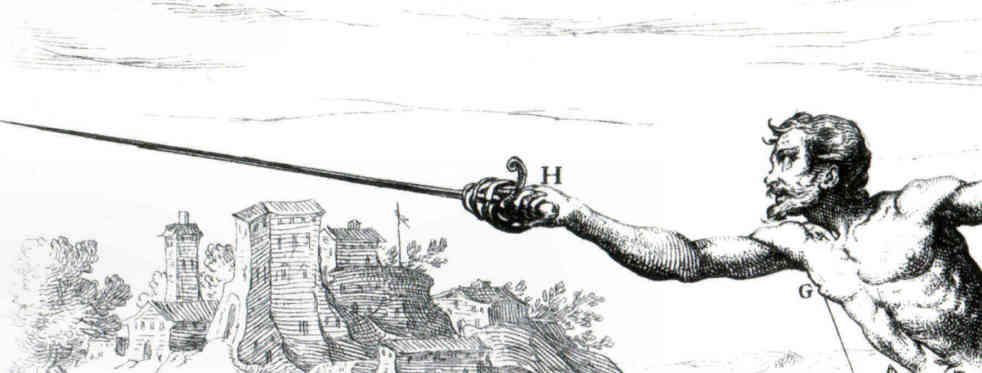
A Master of Arms, as the opening words of a discussion on early music, might seem inappropriate…

Agazzari dedication

What is Music? Is it an Art, a Science, a Practice, or just something that comes naturally? How would musicians have thought about this question in earlier periods? And how have the meanings of all these words changed over the years?

Nowadays, we admire a performance that strikes us as ‘natural’, and we shun ‘artificiality’. It’s assumed that a great Artist should not be subject to petty rules. And that the subtleties of Art transcend the limits of Science. In academic circles, Musicology (in German, Musikwissenschaft, music-science) outranks Performance Studies. And those who might wish to call themselves Artists are often looked down upon as mere Practitioners. So how did all this play out around the year 1600?

Agazzari’s treatise Del sonare sopra’l basso is one of the most-studied sources for early seicento performance practice. Many of us got to know it through Gloria Rose’s pioneering 1965 article, Agazarri and the Improvising Orchestra, but now both the original (Siena, 1607) and Bernhard Lang’s most helpful 2003 transcription (with parallel translations into English and German) are now available free online.

Original

Lang’s transcriptions

Rose’s commentary (fee or subscription to access)

Del sonare sopra’l basso is a key text that I shall certainly return to in future postings on the practical details of ensemble direction and continuo-playing. But first let’s look more closely at the preliminary dedication. It’s all too tempting to skip over this, in the rush to get to Agazzari’s main text, but it hints at answers to my question: What is Music? – answers that are significantly different from those most musicians would give today.

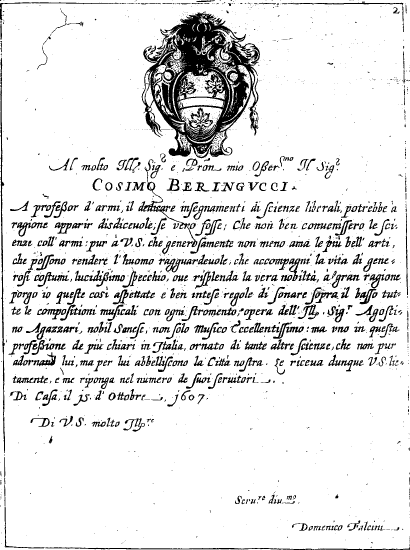
Agazzari’s treatise is dedicated to Cosimo Berlingucci, and the printer, Domenico Falcini, begins with the words A Professor d’armi

“A Master of Arms, as the dedicatee for teachings on liberal sciences, might well appear inappropriate – if it were true, that Sciences and Arms do not belong together.”

The myriad connections between early music and historical swordsmanship are a fascinating topic in themselves, but Falcini’s words strike to the heart of my question. He takes it for granted that music is one of the ‘liberal sciences’. His more subtle point is that Arms are also Science. Music and Arms are both scienze liberali, worthy to be studied by every free citizen.

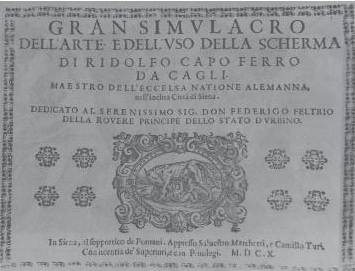
Just a few years later, in the same city of Siena, Ridolfo Capo Ferro published his Gran Simulacro dell’ Arte e dell Uso della Scherma (1610), one of the most famous  texts on period swordsmanship. Tom Leoni’s excellent 2011 English translation and commentary is currently out of print, but the original and Swanger & Wilson’s 1999 English translation are free to download:

Original

English

This ‘Great Representation… of Swordfighting’ refers to ‘the Art and Practice’, and although Capo Ferro does refer to the discipline as a Science, he formally defines it as “Art, and not Science”.  “The term Science, in its strict definition”, he explains, “treats of eternal and divine things that surpass human judgement.” Capo Ferro’s main purpose is to teach the Art and the Practice, not the Philosophy, of swordsmanship.

In modern terms, renaissance ‘Science’ includes Philosophy, Astro-Physics, Mathematics and Theology: Astrology and Alchemy also are not excluded. Returning to 17th-century ways of thinking, the Science of Geometry studies Number and Space. The higher Science of Astronomy unites the studies of Number, Space and Movement. Swordsmanship  and historical Dance are thus related to Astronomy, the study of the perfect movement of the heavenly spheres. As a Science, Music is only a little lower, combining the two disciplines of Number (pitch ratios and rhythmic subdivisions) and Movement (ie, Time).

capoferro title page

Capo Ferro also neatly summarises the period view of Nature, Art and Practice. “Art regulates Nature, and with the more secure guidance directs us by the infallible truth and by the organisation of its precepts to the true Science of our [discipline].” This places Nature, Art and Science in a hierarchy: Art is a means of organising Nature according to rational precepts, in order to approach the ‘eternal and divine’.

Capo Ferro is very clear about the relation between Art and Nature. Nature’s material receives the “ultimate form and perfection of Art”. “Art… in the guise of Architect, takes it [Nature] and makes some beautiful construction, and thus refines and sculpts… bringing it little by little to the summit of perfection.”

And what then is Art? “Art… is a system of perpetually true and well-organised precepts”. A renaissance ‘Art’ is thus a set of rules that bring disorderly nature towards heavenly perfection. But are such rule-sets really ‘perpetually true’?

I suggest that we can accept that they are perpetual, if we understand them not as abstract rules, “you must always do this”, but as precepts that guide Nature and your Practice towards the high perfection of a desired result. Different Arts will desire different results, and have different rules. Thus Capo Ferro’s set of rules still work very well indeed, providing that your intention is to defend yourself in a duel to the death with long, sharp rapiers. If you are trying to score points in a modern fencing competition using lightweight foils, without needing to kill your opponent, you need another set of rules.

Similarly, we can trust Agazzari’s rules if we are playing seicento music on early instruments, with the period intention of ‘moving the passions’ of our audience. But if we are playing say Romantic repertoire, with the 19th-century intention of expressing the performer’s genius and sublime depth of feeling, we probably need another set of rules.

Historical treatises on Swordsmanship also deal with down and dirty questions of uso, Practice, as opposed to Art. However well you understand the precepts of the Art as an intellectual construct, you still need to practice assiduously to acquire physical skills. Musicians can certainly relate to that.

And some of what one does in Practice falls a little short of the divine perfection that Art would have us aspire to. A swordsman might stab you with his dagger, rather than with his sword, the Queen of Weapons, if it would save his life. Continuo-players might accept less-than-perfect contrapuntal move, if it preserved their concentration on the vital priorities of text and rhythm. Many historical treatises leave space for practical subtleties which cannot be written down, within the limitations (and rules) of period notation.

Now we can understand how the word ‘artificial’, in its 17th-century sense of ‘full of Art’, is one of the highest compliments awarded to fine music, both in composition and performance. In the original sense, ‘artificial’ music takes something Natural, subjects it to the Precepts of that particular Art (since of course, Monteverdi’s Art is not quite the same as Purcell’s), in order to bring it as close as possible to the summit of heavenly perfection.

In this period view, Nature, Art, Practice and Science all have their place. But those philosophical terms, and their respective places in a hierarchical value-system, differ from our modern understanding. Is this just a quirky detail of historical philosophy, or might it change how we approach the Practice of playing old music today?

capo ferro lunge detail

Study the Art of Historical Swordsmanship here

Please join me on Facebook https://www.facebook.com/andrew.lawrenceking.9 and visit our website www.TheHarpConsort.com . Further details of original sources are on the website, click on “New Priorities in Historically Informed Performance”

Opera, orchestra, vocal & ensemble director and early harpist, Andrew Lawrence-King is director of The Harp Consort and of Il Corago, and Senior Visiting Research Fellow at the Australian Research Council Centre for the History of Emotions.

www.historyofemotions.org.au

Terms of Expression

I’m always intrigued by the differences between various languages, words that exist in one language, but not in another. For example, the German word konsequent does not have a direct equivalent in English. Consistent, self-consistent, responsible, reliable, accepting the future consequences of one’s present actions – these are some of the areas of meaning, but there is no single English word that fully conveys the significance konsequent has for German-speakers.

But in English we do have a word – inconsequent – that neatly conveys the opposite: ‘not connected or following logically”. I think the absence of an English word for the positive qualities of konsequent says something about the respective national characters!

Within one language, words also change their meanings with time. A favourite example is the Duke of Wellington’s comment after the battle of Waterloo in 1815: “It has been a damned nice thing”. Of course, he didn’t mean that it was a pleasant occasion, with a good time had by all, as ‘nice’ would suggest today. His next words clarify the period meaning: “the nearest-run thing you ever saw in your life”. The earlier meaning of ‘nice’ is preserved in the modern phrase ‘a nice distinction’ – a subtle, fine distinction.

Meanings that change over time and words that are missing from certain cultures warn us to be careful when considering how emotions might be expressed in music of the past. Most of today’s standard terms for musical expression – mezzo piano, legato, rubato etc – are not found in early 17th-century notation, and are not part of the artistic discourse of the time. We no longer think that this means Monteverdi’s music was performed without expressive subtlety: we’ve moved on from mid-20th century theories of Terassendynamik. But clearly, in the 17th-century expression was being notated and discussed in different terms.

One practical consequence of our Text, Rhythm, Action! research is that we try to use appropriate period vocabulary in rehearsal discussion and for coaching notes. Our intention is to match artistic priorities in rehearsal to those of the original performers. But this presents an immediate challenge: the word ‘expression’ itself is conspicuously absent from early texts. This certainly does not mean that Monteverdi’s  music was inexpressive: the primary aim of 17th-century music was muovere gli affetti, to move the passions. But we can draw some nice distinctions between ‘expressing emotion’ and ‘moving the passions’.

In both Italian and English versions, the 17th-century term for emotion is plural: affetti, passions. Rather than steadily intensifying one emotion, they wanted to move between contrasting passions. So modern-day performers and directors might find it more effective to work on emotional contrasts, rather than simply looking for more intensity.

And the phrase ‘moving the passions’ begs the question: whose passions? The audience’s, of course. This puts a completely different spin on the whole business of emotions in performance. The 17th-century priority is to move the audience’s passions, whereas the romantic & modern term ‘expression’ focusses on what the performer does. The period term directs our attention away from the process and towards the desired outcome.

At the end of century, the distinction is made explicit in Brady’s 1692 Ode to St Cecilia, set by Henry Purcell, who himself sang the counter-tenor aria. Music is ‘Nature’s voice’, the ‘mighty art … at once the passions to express and move’. Beyond  expressing your feelings, music’s primary aim is to move the audience’s passions.

This – as the Duke of Wellington might say – is a damned nice thing. It’s a subtle distinction, but it makes all the difference. Baroque music privileges the audience: it’s about moving their passions with ever-changing contrasts, not about a performer expressing his or her emotion.

Historically informed performance should encourage us to move beyond the selfishness of self-expression. Performers of baroque music, unlike Method actors, do not need to find their personal motivation before they can sing or play a certain phrase. It’s about the audience’s passions, not about your emotion.

And the clear structures of 17th-century texts and music are not some kind of obstacle threatening to block your personal involvement with the material – they are the elegantly designed framework, the beautifully crafted box in which to deliver passionate persuasion to your audience. In particular, performers should maintain the high priority of structured rhythm alongside the first priority of communicating the text and its passions to the audience.

If we take all this seriously, much of our rehearsal vocabulary and training commentary for early music should change. We should stop asking performers to ‘be more expressive’, and instead empower them to persuade their audience to feel the changing passions structured into the original work.

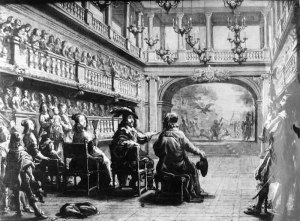
theatre-palais-cardinal Louis XIII

Please join me on Facebook https://www.facebook.com/andrew.lawrenceking.9 and visit our website www.TheHarpConsort.com . Further details of original sources are on the website, click on “New Priorities in Historically Informed Performance”

Opera, orchestra, vocal & ensemble director and early harpist, Andrew Lawrence-King is director of The Harp Consort and of Il Corago, and Senior Visiting Research Fellow at the Australian Research Council Centre for the History of Emotions.

www.historyofemotions.org.au
Music expresses emotions?

Il corago

Probably most musicians and music-lovers would agree that ‘music expresses emotions’, although each of these three words can be problematised: what kind of music? What do you mean by ‘express’? Whose emotions? What is emotion, anyway? And all of these three concepts – music, expression, emotion – change as we trace them back through history.

Early Music tends to concentrate on precise detail: should we play up or down a semitone from modern pitch, or in-between? Precisely how should we tune a harpsichord for Bach? Which violin-bow or oboe-reed should we use for Handel? These small details are significant – each one is a piece of jigsaw-puzzle which constructs your over-view of a particular repertoire and where it fits in history. But here, I want to ask the big questions, questions about ‘music’, ‘expression’ and ’emotions’, questions that are sometimes missed as we grapple with the minutiae of Historically Informed Performance.

For many musicians today, the first and most important means of ‘expression’ is rubato: vacillating rhythm, playing around with musical time.  Exchanges of views between ‘modern’ and ‘early’ performers tend to focus on vibrato. A blog-posting on early opera begins bravely by noting that audiences value “imagination, innovation, and musical, sensitive interpretations; not what kind of bow is in use”, but fades out with “everyone’s happy to get back to using vibrato now”. So are these today’s priorities for early music: rubato, vibrato and the performer’s happiness?

We know what the priorities were for music and performance at the beginning of the baroque, around the year 1600. According to Caccini’s Le Nuove Musiche (1601/2)

Music is nothing else than Text, and Rhythm, and Sound last of all. And not the other way around!

On performance, many writers, notably John Bulwer Chironomia (1644), cite Quintilian, Cicero and Demosthenes:

What are the three secrets of great performance: Action! Action! Action! 

And summarising the first two strophes of the Prologue to Monteverdi’s Orfeo (1607), one of the first ‘operas’:

Music comes to you, noble audience, whose importance is too high to be told, to move your hearts.

The historical priorities are Text, Rhythm, Action – and the audience’s emotions. Text (not vibrato), Rhythm (not rubato), Action for the Audience (not how the performers themselves feel).

I’ll try to keep these historical and inspiring priorities in mind as I continue to write, as well as in my research, performance and teaching.

Meanwhile, please join me on Facebook https://www.facebook.com/andrew.lawrenceking.9 and visit our website www.TheHarpConsort.com . Further details of original sources are on the website, click on “New Priorities in Historically Informed Performance”

Opera, orchestra, vocal & ensemble director and early harpist, Andrew Lawrence-King is director of The Harp Consort and of Il Corago, and Senior Visiting Research Fellow at the Australian Research Council Centre for the History of Emotions.

www.historyofemotions.org.au