Form, content & performance practice of Charpentier’s Messe de Minuit pour Noël & In Nativitatem H414
D’ Aquin A la venue de Noël (c1757)
Noëls
To the Christmas story of the Shepherds keeping watch in the fields, of Angels and of God made man, French Baroque composers brought the literary and operatic tradition of pastoral: of poet- ‘shepherds’ singing love-songs in a mythical landscape, of semi-divine Muses and of Apollo, father of Orpheus. And at Christmas-time there came to Parisian churches (and to the royal chapel in Versailles) also the music of real-world country-folk, the catchy ballad-tunes and vigorous dance-rhythms of popular noëls. Liturgical solemnity collided with popular enthusiasm, elite sophistication with rustic energy, royal splendour with heartfelt naivety; just as the Three Kings encountered the ox and ass in that Bethlehem stable.
Nicolas Gigault’s (1682) book of noëls for Organ presents typical features found also in later collections. Each piece is a variation-set in which the original melody is heard as a treble and bass duo, in variations with fast notes (doubles), reharmonised, in trios, in dialogue between contrasting timbres or registers, sometimes with an extended glissando-like rush upwards or downwards to the melody note, in the rich sound of the full organ, with echo effects, or with block contrasts imitating polychoral vocal music.
Keyboard noëls also imitated pastoral instruments: the fast beat of a small drum (tambourin) or the drone of a soft bagpipe (musette).
Tradition (and the church authorities) favoured a small selection of noëls, although sometimes a tune is given different words, or the same title is used for two different tunes. Gigault provides details of how to adapt his keyboard compositions for instrumental ensembles. He mentions that noëls were already being sung in church at Christmas time, and no doubt organists had begun to improvise on these melodies, just as they improvised or composed variations on plainchant melodies for Organ Masses. In an Organ Mass. singing and organ-playing alternated verse by verse, except for the Credo which would be entirely sung.
Charpentier
Although the precise dates are uncertain, in the early 1690s Charpentier, a profoundly devout Catholic, set noëls for instruments, and created a Messe de Minuit pour Noël (Midnight Mass for Christmas), setting the Ordinary of the Mass to noël-melodies for consort of voices and an orchestra of strings and flutes. Although this charming work has become famous as a unique combination of baroque folk-tunes and formal liturgy, it was perhaps less surprising to Charpentier’s congregation than to modern listeners.
Instrumental noëls were frequently heard in Parisian churches, and dramatised Christmas pastorales were enacted throughout the country. The titles of Charpentier’s noëls – very well-known to Parisian listeners – would encourage members of the Christmas congregation to identify themselves with the original recipients of the Angels message, to remember the Bible stories and religious doctrine expounded in subsequent verses of the noël text, and (like the antiphon of the day for a set psalm-text) to re-consider the fixed text of the Ordinary in a particular Christmas context.
Formally, Charpentier’s orchestra and vocal consort alternate according to the ecclesiastically approved model for an Organ Mass.
The organ in the Chapel of Versailles
Form: Organ Mass
Ceremonial regulations for the diocese of Paris (1662) prescribed nine alternating versets for the Kyrie, beginning with the organ. Charpentier’s Kyrie sets the noël-melody Joseph est bien marié (Joseph is well married) in turn for instruments, voices, and then organ. Solo voices begin the Christe to the tune of Or nous dites Marie (Now tell us, Mary), instruments follow with the longer tune Une jeune pucelle (A young virgin), which provides the remaining two versets. The second Kyrie suggests grandeur with fugues – imitative polyphony – developing the melody for two more versets, and – as ordained – the organ concludes.
Charpentier’s organ settings do not survive (they may well have been improvised). Jean François Dandrieu’s collection of organ-noëls, expanding his uncle Pierre’s (1714) book and published posthumously (1759) by his sister Jeanne Françoise, provide suitable models for Joseph and Une jeune pucelle, which work at Charpentier’s Kyrie tempo.
The Gloria has muted strings for ‘peace on earth’. After a dramatic pause, Laudamus te (we praise thee) bursts out with the exuberant tune Les bourgeois de Chastre (The townspeople of Châtres), switching at Quoniam tu solus sanctus (For you only are holy) to Ou s’en vont ces gais bergers (Where have the happy shepherds gone?), alternating phrases between singers and instruments as the final Amen approaches.
The entire text of the Credo is sung, beginning with appropriate solemnity: sonorous harmonies, a long bassline descent for ‘maker of heaven and earth’ and a dramatic pause. The doctrine of eternity and of the Christmas moment, ‘God of God, light of light…’ sparkles in the happy (guay) Tripla (fast triple metre) of Vous qui desirez sans fin (You who endlessly desire). The obligatory descending figures for descendit de coelis (he descended from heaven) are particularly beautiful and extended for this Christmas night, with Et incarnatus (And was made man) set in the slow triple-metre of Sesquialtera, a divine dance on the time-scale of all eternity.
After a ‘very long silence’ le jour solonnel de Noël (the solemn day of Christmas) arrives: notated differently from the other tunes and ornate with instrumental and vocal fugues. Tripla metre and rising lines for Et ascendit (And ascended…) contrast with another slow Sesquialtera ‘to judge the living and the dead’. A third folk-tune, that baroque top favourite A la venue de Noël (When Christmas comes) heralds the coming of the Holy Spirit. ‘One holy, catholic and apostolic church’ is a third Sesquialtera, and the finale has the expected fugues in vigorous rhythms.
As in an Organ Mass, the Offertory is not sung. Charpentier gives instruments the tune Laissez paitre vos betes (Leave your animals to graze). Just as the Shepherds must go to Bethlehem, so the congregation must leave behind everyday thoughts as they approach the altar.
Following faithfully the regulations for an Organ Mass, the Sanctus begins instrumentally, with full choir for Pleni (Heaven and Earth are full of your glory), and soloists for the fugues of the Benedictus. The robust rhythms and repeated short phrases of the Hosanna suggest the acclamations of the crowd in biblical Jerusalem, set in the style of noël refrains sung by congregations in Baroque Paris.
The final Agnus, instrumental-vocal-instrumental as in an Organ Mass, calls the faithful to communion at this special moment: A minuit fut fait un reveil (At midnight a cry was made). Christmas was one of the few occasions during the year when those attending Mass would also take Communion.
Charpentier Messe de Minuit
Content: Vernacular commentary on Latin liturgy
During the 16th century, the noël tradition supported one of the aims of Protestantism, making Bible stories and religious doctrine available to ordinary people, in their own language. Cast in metrical verse with the typical low-style features of strong rhythms, short lines and frequent rhymes, and set to catchy tunes and dance-melodies, noëls were easily remembered, enjoyable to sing, and quickly passed on through oral traditions and in such printed collections as La Grande Bible des Noëls (Orleans, 1554). Aboard French explorer of Canada, Jacques Cartier’s ship, Ça, Bergers, assemblons nous (So, Shepherds, let’s gather together) was sung on Christmas Day 1535.
The rhetorical messaging of Charpentier’s masterpiece goes far beyond the popular appeal of a few folk-tunes thrown into a mass setting. He responds to the liturgical text at every level from the doctrine of the Trinity and ceremonial regulations to choices of rhythmic metre and musical depiction of individual words. His selection of particular noëls with their well-known vernacular texts from amongst those traditionally approved, and subtle placement of these French citations in parallel to the Latin of the liturgy, create a personal, Christmastide commentary alongside the universality and constancy of the mass Ordinary.
Kyrie – Christe – Kyrie present Joseph (a human father), une jeune pucelle (a young maid, Mary) and then polyphony, the development of something divine from the virgin’s tune. In the Gloria, as soon as the Angels have announced ‘peace to men of goodwill’, the recipients of that peace are identified as Les bourgeois, ordinary townspeople who then sing praises, just as in real-world Paris. And where have the happy Shepherds (ces guays bergers) gone? To the Bethlehem stable of course, where they recognise (in the words of the liturgy) ‘the only holy one, the only Lord, the only Christ’.
For the Credo, strange harmonies (C natural in the tenor over F# in the bass) depict invisibilium (things invisible): the dissonance is increased by an ‘invisible’ Bb, the upper-note of the violin trill. A dramatic pause creates both clarity and suspense, before revealing unum Dominum, Jesum Christum (one Lord Jesus Christ) in robust rhythms, simple homophony and translucent C major. The noël text Vous qui desirez sans fin evokes real-world anticipation of the coming holiday, the historical time-span between Creation and Nativity, and religious longing for Salvation at the Second Coming. In all three contexts, there is ‘endless desire’ for the appearance of ‘God of God, Light of light, very God of very God’ (the liturgical text).
Charpentier’s most insightful commentary is to link la jour solomnel de Noël (the solemn day of Christmas) to the Crucifixion, a dark reminder (like the Three King’s myrrh) of the sombre destiny of the new-born Babe. Charpentier’s high-style fugues not only signal sacred profondity , but also produce cross-shaped melody-fragments, # marks for certain notes, and piercing dissonances of F# (durum) against Bb (mollis), as if of hard nails through soft skin.
This solemn moment is notated under a different mensuration mark – C rather than the usual ¢ – the only appearance in the whole Mass of this mark, with its associated tempo and rhythmic patterns. (See below for details.)
The second half of the same noël is sung to the text et resurrexit (and He rose again), presented in bold homophony and joyful harmonies, recalling the style of et in unum Dominum, before re-introducing intellectual fugues ‘according to the scriptures’. Indeed, the continuation of this noël weaves in the second, joyful part of the dark Crucifixion story, the story which ecclesiastical doctrine and Charpentier’s folk-music rhetoric link to the seriousness that underlies Christmas merriment.
Adoration of the Shepherds Reni (c1642)
Canticum: In Nativitatem H414 (1684)
There are several pieces by Charpentier with this title: this one has the famous song Salve puerule as its finale.
Having studied in Italy with Carissimi, Charpentier introduced sacred oratorios into France under the Latin denomination Canticum. This work’s anonymous libretto, perhaps by the composer himself, begins with a close paraphrase of the account in Luke’s gospel of the Angels and Shepherds. It ends with a beautiful song in sarabande dance-metre, representing the Shepherds’ adoration of the Holy Infant.
The formal structure matches perfectly with the material. After a a short instrumental Prélude, the evangelist-narrator – L’Historien – sets the scene. This soprano récit begins dramatically with an abrupt intake of breath and syncopation for the word frigidae, evoking the cold night, after which the static bass and slow, descending vocal line ‘immerse everyone in deep sleep’. Et ecce ‘And lo’… a second soprano appears heralding ‘the angel of the Lord’. Students of musical gesture will be interested to note that the melodic fragment for Et claritas Dei (and the glory of the Lord shone round about them) is the same as for descendit de caelis in the Messe de Minuet, composed up to a decade later.
The Angel’s words are set as an aria for solo soprano, punctuated by the violin duo. The first part repeats one short text, Nolite timere, pastores (Do not be afraid, Shepherds): the second delivers the remainder of the angelic message, repeating the final line Ite pastores et adorate (Go Shepherds, and adore him) with particularly beautiful writing for the three high parts and continuo bass.
The Shepherds say one to another ‘let us now go even unto Bethlehem’ in the form of an antiphonal chorus, 3 low voices and 3 high, led by a thrilling high, upward leap for the highest male voice, the haute-contre on the word surgamus (Let us arise!). Their questions, quid moramur? quid cunctamur? (Why wait? why delay?) are syncopated and upwardly inflected, as rhetoric requires. The opening bars become a rondeau refrain, a low-style feature appropriate to the lowly Shepherds, with the words usque Bethlehem (towards Bethlehem!) delivered by the full ensemble in the robust homophonic rhythms and simple harmonies that Charpentier uses for emphasis also in the Christmas Mass.
The Shepherds set off on their journey to a lively marche en rondeau. A bass récit continues the gospel narration of their arrival. As the librettist adds the traditional action of their kneeling to adore the Baby, two violins join in the appropriate descending motive, And although the libretto introduces the following song as inculto sed devoto carmine (uneducated, but devout), its text, melody, harmony and rhythm are exquisitely crafted to represent simple piety by means of the art that disguises art. Even the repeat scheme is subtly varied to keep listeners’ ears fresh.
No wonder this beautiful imitation of a folk-noël is frequently performed as an excerpt! But the whole oratorio is of equally high quality, appealing on first encounter, and full of subtle details that further listening.
Performance practice 1: French baroque Latin
It is well worth it for singers to adjust standard modern-day (usually italianate) Latin pronunciation to a period, Parisian delivery. Advice is available from Harold Copeman’s Singing in Latin (1992) ISBN 978-0951579824 and Singing Early Music (Indiana 2004) ISBN 978-0253210265. Although scholars debate some details, the most important differences in vowel and consonant values are generally agreed and not so hard to put into practice.
Some knowledge of the stress-patterns of French, and careful study of Charpentier’s word-setting, will aid a reconsideration of the question of Good and Bad syllables for Francophone Latin. Right from the outset, Charpentier seems to set Kirié and Christé, rather than accenting the first syllable as in italianate pronunciation. Eleison also seems to be accented on the final (nasalised) syllable.
Because this question of word-accentuation has such strong influence on musical phrasing, it is even more important than vowel- and consonant-values, but receives less (if any) attention in the Singing books above.
Duffin on Temperament (2008)
Performance practice 2: Temperament
Sixth-comma meantone.
Muffat (1698) warns followers of French style against too low a mi, too high a fa, suggesting that the shift from the pure major third of quarter-comma meantone to the slightly wider third of sixth-comma has already happened, smoothing melodies and improving the violin-band’s open fifths. For most instruments, meantones work in all tonalities, as long as you observe the difference between G# and Ab, etc.
Mean-tone, and not a circulating temperament.
Modern-day Early Music practice is for the keyboard player to choose, usually a circulating temperament, with various compromises for the black notes, with different widths for different fifths, and to force the orchestra and singers to do their best to match what feels like a random set of adjustments. This is one of the downsides to the immense contribution made to Early Music by keyboard-player/directors.
Ross Duffin’s (2008) argument is that most musicians only need to learn meantone (quarter-comma for early baroque, sixth-comma later), supported by Ibo Ortgies’ research indicating that other instruments should not attempt to match any bad compromises in the keyboard temperament.
Rather than asking violinists and singers to learn a zillion temperaments, the challenge is for keyboard players to find a temperament that works reasonably well for the repertoire at hand. When that temperament creates a problem, it is for the keyboard player to hide the problem somehow (miss out that note, have different enharmonics in different octaves, tweak the temperament, whatever), not for the orchestra to move away from their beautiful meantone!
Keyboard solos are a different question of course, but for most ensemble work, it can often work better to tune meantone with the most frequently encountered enharmonics, and work around the notes you don’t have, than to tune some circulating temperament that doesn’t match the orchestra anywhere. I also find variants of temperament ordinaire to be very effective in practice: tune meantone, and then temper just one or two black notes as needed, using them with discretion.
The Country-Dance Watteau (1706-1710)
Performance practice 3: What’s the Time to Beat?
A la venue de Noël… Christmas is coming, but how fast? Did Charpentier intend his liturgical Mass setting based on popular songs and country-dances to be performed fast and folky? Or slow and sacred? The argument below suggests that the answer might be “Yes”!
Charpentier’s teacher, Carissimi, suggested (see below) that musical tempo was not merely quantitative, some number of time to be counted, but rather a Quality of emotional experience, depending on how we count time. In search of that Quality of Baroque time, the remainder of this article dives deep into questions of historical tempo.
Even in today’s Early Music ensembles, tempo decisions are mostly made by the personal preference of a director and realised with modern-style conducting. Back then, tempo was notated by the composer and realised with Tactus-beating. The Tactus-beater was often a singer, since instrumentalists’ hands were already occupied.
Musicians – like car-drivers – don’t like being told how fast to go! So even amongst Early musicians, there is considerable resistance to the concept that baroque composers indicated the tempo they wanted, that it’s not the performer’s free choice. Of course, there are disagreements amongst scholars about the fine detail of particular notations. and some gaps in our understanding. But the fundamental principle is clear, there is a “correct” tempo, and the Historically Informed Performer’s job is to find it, not to invent their own.
The guiding principle of the research behind this article is that music notated the same way will be realised at the same tempo, throughout any given work, perhaps throughout an individual composer’s oeuvre, even across an entire repertoire. By considering theoretical explanations and very many practical examples of the same notation, the appropriate tempo gradually emerges with ever-increasing precision.
Persistance resistance to this concept, combined with the entrenched position of conducting within the music business, resulted during the 20th century in a roundabout approach to the study of historical notation of tempo, and (still today) in a lack of investigation of the practicalities of Tactus-beating.
During the 1980s and 1990s, great attention was paid by scholars and performers of early 17th-century Italian music (Monteverdi in particular) to questions of Proportions. In theory, Proportional notation establishes simple fixed ratios of speed between different mensural signs. Precisely how this was done changed from early to late 17th century, and again between 17th and 18th centuries; theory lagged behind practice; there were also differences between one country and another. Unsurprisingly, primary sources disagree and there is confusion about nomenclature.
During the 1980s, performers tended to treat all triple-metre proportions as fast Tripla – three triple beats in the time of one duple beat. The leading hypothesis of the 1990s was proposed by Prof Roger Bowers, who advocated interpreting Monteverdi’s mensuration marks highly conservatively, according to medieval rules.
Applying Bowers’ hypothesis, it can be difficult and time-consuming even for an academic expert to calculate the implied Proportion. Sometimes one needs to examine every part in the score, to be sure of the answer. Meanwhile, amongst performers, the trend was towards more frequent application of slow Sesquialtera proportion – three triple beats in the time of two duple beats.
I developed an alternative hypothesis in the mid-1990s, and have tested it against every example I have encountered since, including some famously challenging cases proposed by Bowers. I suggest that by the early 17th century, mensuration marks had lost their medieval meanings, and had become little more than elegant decoration, like the elaborate G that still forms our treble-clef sign 𝄞 today. Indeed, there are several examples of mensuration signs being omitted entirely (e.g. the final Moresca in Monteverdi’s Orfeo), without any loss of performers’ understanding of the notation.
In my hypothesis, Italian seicento Proportions are determined by note-values. For Monteverdi, three semibreves indicate slow Sesquilatera (corresponding to two duple minim beats); three minims indicate medium-fast Tripla (corresponding to one duple minim beat).
There’s also very fast Sesquialtera, six semi-minims (looking like crotchets) to one duple minim beat. And quantitatively, these three Proportions are the same. Once you know you are in triple metre, each particular note-value (semibreve, minim or semi-minim) has its own consistent duration, whether you are beating slow semibreves, medium-fast minims or very fast semi-minims. That quantative equality is accepted by Bowers, and confirmed by Carissimi (see below).
Determining Proportional changes according to note-values is quick and easy for performers. At the crucial moment, everyone instantly gets the same answer, even whilst sight-reading. And it can be done from any single part. This is essential, since we know that Monteverdi’s musicians often performed without rehearsal, and nearly always from individual part-books, not from score.
Tactus (c1600): concept, hand-beat, notation, Time itself
Incredible as it may seem, scholarly debates and rehearsal discussions about Proportions largely ignored the more fundamental question of the underlying duple beat, the Tactus. In Zacconi’s (1592/1596) analogy, Proportions are like the cog-wheels in a mechanical clock, taking the steady tick-tock of the pendulum beat, and converting it into various different speeds at fixed mathematical ratios. No matter how closely we examine the cog-wheels, we can’t understand the resulting movement unless we know how fast the pendulum ticks.
From Zacconi to Mersenne (1636), the Tactus beat (one-way, down or up) corresponds to one second of real-world Time. Not measured by machine – obviously they didn’t have digital metronomes, and when pendulum-based machines were developed (by Loulié, 1694) they mostly chose not to use them – but subtly perceived to the best of human ability, using skills developed over long experience. What is your best estimate of a one-second beat?
Inevitably, this perception of time is subjective, varying with mood, emotion, venue and occasion. As you move from an acoustically (and emotionally) dry rehearsal room to passionate performance in a baroque cathedral, your perception of “the same tempo” is likely to change, if it would be measured by some scientific gauge. But they didn’t measure that way and – in the age before Newton (Principia 1687) – they did not even share our concept of Absolute Time.
For them, there was no fixed time-scale against which movements could be measured. Their concept of Time was Aristotelean: Time does not exist of itself, it is dependent on movement. On the cosmic scale, Time is created by movement of the highest sphere, the Primum Mobile, turned by divine love. Musical time is created by the movement of the Tactus hand.
Dance to the Music of Time Poussin (c1635)
Battuta
Tactus is regular, solid, stable, firm… clear, sure, fearless, and without any pertubation. Zacconi (1596)
Meanwhile modern-day Early Music has paid very little attention to how Time-beating was done historically. Whilst our instrumentalists study the use of their historical instruments, most early music conductors do not follow historical practices of time-beating, neither applying the essential principles of Tactus, nor employing historical movements of the hand.
The fundamental duple beat was shown by down-up movement of a musician’s hand (there was no conductor in the modern sense). Instrumentalists could use their foot.
Zacconi equates (1) the concept of Tactus as a constant, slow, steady beat with (2) the physical action of beating time, battuta; with (3) the corresponding amount of musical notation, misura; and with (4) real-world Time itself, tempo. Under Monteverdi’s mensuration mark of C, Tactus (1) corresponds to (2) the complete down-up movement of the hand, to (3) a semibreve’s worth of written note-values, and (4) to 2 seconds of real-world Time.
For most modern-day musicians, a down-up beat of one second each way feels rather slow. For early musicians, there is a fundamental skill to be acquired, of finding and maintaining this slow, steady beat, whilst realising all the various rhythms notated within it. Renaissance and baroque sources make it clear that musicians also had a strong awareness of the steadiness of the complete down-up Tactus (approximately 2 seconds). And as we will soon see, sometimes that beat might be appreciably slower.
Improve your own Tactus skills
Around 1600, musicians acquired deep-rooted and subtle awareness of Tactus through long and constantly repeated practice. In elementary training, they would learn to beat Tactus consistently, and would use their own hand-beat to structure their study of smaller note-values and Proportional changes. Throughout their career, singers would prepare new repertoire by beating Tactus to control rhythm, and occasionally checking pitches with a small flute (compare and contrast a modern-day singer controlling pitches with a keyboard, and occasionally checking speed with a metronome).
In performance, ‘the person administering the Tactus’ (Zacconi’s form of words) would do their very best to give a steady and unperturbed beat, the same beat as in rehearsal, the same beat every day, the same beat for every piece, the same beat as everyone else, to the limits of human ability. This contrasts with modern-day conducting in general, and in particular with conductors’ wish to do something ‘special’ in performance, to do something spontaneously ‘different’ today, to do something different with this piece, to do something different from everyone else, etc.
Constant exposure to the same steady beat (to the limits of human perception) allowed musicians to expand their own perceptual limits, becoming very consistent and highly sensitive to tiny deviations from the ideal steadiness. Modern-day early musicians can imitate that historical experience by devoting hours (days, weeks… if we start as adults, we have a lot of catching-up to do!) to beating Tactus, beating Tactus whilst practising smaller note-values, beating Tactus whilst studying an individual line, beating Tactus whilst listening to or performing ensemble music. Observing a pendulum is also useful training.
Tactus-beating is an embodied skill: it’s ‘in your arm’, not just ‘in your head’. It’s a participatory experience: everyone needs to know how it feels. Tactus-led music-making is not controlled from the top (conductor or soloist) downwards, but is rooted in a lifetime of specific, shared involvement. In mixed ensembles, Tactus comes from the ‘grass-roots’ of the continuo upwards. (Agazzari 1607) Think of a jazz-band, guided by the rhythm-section.
Think of a jazz big band’s backing-singers (literally at the back, as we also see Tactus-beaters in Baroque paintings), waving their arms and clicking their fingers.They are certainly not conducting the band, but the physical action of their hand-beat is inseperable from the steady groove and subtle swing of the music, inseperable from their experience of ‘how the music feels’. For this reason, it’s worth experiencing the particular hand-position (palm outward), detailed movements (see below), and philosophical context (Music of the Spheres, Aristotelean Time) of Tactus, in order to appreciate the Quality of Baroque musical Time.
Zacconi also describes another mensuration mark, which he associated with old-fashioned religious music. Under ¢, each beat (down or up) corresponds to a semibreve. In theory, the various note-values would go by twice as fast, but in practice the beat itself is somewhat slower. Compared to the appoximate one second each way of C (i.e. 60 bpm), the slower beat for ¢ might be about 45 bpm. This practice re-emerges in a new context in Charpentier’s compositions (see below).
Even within one mensuration mark, the Tactus might vary subtly from one section to another, depending on the emotional affetto of the text, or the rhythmic structure of the musical activity. Frescobaldi gives detailed rules for how and when to do this (see below).
And in practice, triple-metre Proportions were not so strictly mathematical. In the early 17th century, there was a tendency to tweak the proportion to exaggerate contrasts. In the 18th century, the tendency was rather to reduce contrast. See Looking for a Good Time?
Gradually, during the mid-17th century – whilst Charpentier was studying in Italy – there was a change in the conventions of notating triple metre. The principles of Tactus and Proportions remained, but Monteverdi’s way of writing slow Sesquialtera with three semibreves fell out of use. Instead, three minims (usually under mensuration mark 32) came to represent Sesquialtera, and the notation for medium-fast Tripla became three crotchets (under mensuration mark 34 or 3). We see this change of notational conventions in process across the various publications of the singer-composer nun Isabella Leonarda:
In late-17th-century France, after Charpentier returned to Paris to work for Mlle de Guise, three duple mensuration marks were used: (from slow to fast) C, ¢ and 2. In theory, ¢ was twice as fast as C, and 2 was twice as fast again. In practice, the differences were less drastic, with ¢ and 2 considered equivalent to each other in some sources. And for some genres (overtures, preludes and symphonies) 2 would be slow, whereas in dances it was fast (Muffat 1695).
Hand-beats in France
The relationship between C and ¢ seems to have grown out of the Zacconian tradition (C minim ~ 60 bpm; ¢ counted in semibreves but with a slower Tactus, say semibreve ~ 45 bpm). The French kept the respective note-value durations but changed to a minim beat for ¢ mensuration: Zacconi’s Tactus of semibreve ~ 45 was realised with a minim-beat at minim ~ 90. Compared to the minim-beat of C (minim ~ 60), the French ¢ minim-beat is indeed faster, but not twice as fast.
And in this same period, the particularly strong connection between French music and dance led to an increased focus on the internal beats within the Tactus, at the level of dance-steps, e.g. crotchets in 3. This encouraged a tendency for metre-changes from duple to triple to preserve the duration of (say) crotchets, rather than to apply Proportion (by which the Tactus remains the same, and the duration of crotchets and other small note-values changes). Beating ¢ as minim ~ 90, they would feel (and make dance-steps on) crotchet ~ 180. Making a change to 3 (theoretically a Tripla proportion of C minim ~ 60), they would still feel and dance crotchet ~ 180.
Beyond the simple down-up Tactus beat, other ways of beating are described, facilitating this tendency to focus on more frequent internal beats rather than the slow count of Tactus. Following this gradual development through period sources is challenging. Aristotelean concepts applied by Zacconi (Tactus = the movement of the hand = musical notation = Time itself) were still embedded within musical terminology, even as actual practice had already begun to change.
French terminology
Zacconi’s constant Tactus and its identity with real-world Time faded into the background. In French musical terminology, temps is a beat, a movement of the hand (variable according to context) corresponding to a particular sub-division (determined by context) of the mesure (a certain duration of written note-values). The mesure is now shown in bars of regular length, that length chosen by the composer and corresponding to the mensuration mark (which looks to us increasingly like a modern time-signature).
The calibration of the hand-beat to written note-values is more complex. Battre (to beat) refers to the action of the hand-beat and also to the conceptual division of the mesure into internal beats (temps). Action and concept do not always match: depending on circumstances, not every temps receives a hand-beat.
At a subordinate rhythmic level within the beat (temps), conjunct notes written equally are performed inégal (unequally), usually long-short. The degree of inequality and the note-value to which it is applied depends on the mensuration mark, dance-genre, level of activity and other context, determined (as ever in French music) by good taste – le bon gout.
Jean Rousseau (1683) shows how to battre (feel the beat, and show it with the hand) for each mensuration mark, beating down (frappant) and up (levant) for durations specified as temps within the mesure. Depending on the mensuration mark, a mesure could contain one or more units of actual Time, and those Time-units could themselves be long. medium or short. Writing within a pre-Newtonian, Aristotelean concept of Time, musical theorists struggled to find any fixed scale of Absolute Time against which various types of musical beats might be measured.
Rousseau’s calibration of temps to actual Time uses descriptive words grave (very slow, profound), lent (slow), vite (fast) and léger (light). His ‘slow’ temps for the minim-beat in ¢, is probably around 90 bpm. That might indeed feel ‘slow’ for modern-day musicians, but it is significantly faster than Zacconi’s 60 bpm and 45 bpm Tactus movements.
Grassineau’s (1740) translation and expansion of Brossard (1703), approximates quavers in ¢ to the tick of a fine pocket watch. 5 ticks per second was typical, but in this period, better watches ticked faster. The range of 5-6 ticks per second suggests a ¢ minim-beat of 75-90 bpm, which Grassineau would halve for C and double for 2. Many 18th-century sources indicate beats based on a ‘pulse’ around 80 bpm.
Rousseau’s C
Rousseau’s detailed instructions for C reveal a new French practice very different from the old Italian Tactus = Time = minim = 1 second. He specifies that the C temps is grave (i.e. slower than his lent of around 90 bpm), so 1 second for each temps (60 bpm) is still plausible. But the mesure se bat (literally ‘is beaten’, here meaning ‘is understood conceptually’ or ‘is felt’) in four of these temps graves. This is crotchet ~ 60 bpm. Meanwhile Rousseau’s hand is down for 2 crotchet temps, up for the next 2, so that its movement is very slow indeed, minim ~ 30 bpm.
Inégalité is applied to semiquavers.
C for Charpentier – case studies
Much of Charpentier’s music in C seems to work very well at the older minim = 60 that he would have learned in Italy. For example, in the magnificent Offertoire for the consecration of a Bishop, Ecce sacerdos magnus H432, the words Invenit eum Dominus are set in C with music reminiscent of Monteverdi’s much-beloved Beatus vir (1641).
Probably composed around 1630, Monteverdi’s piece goes very nicely at the Tactus and Proportions we would expect: C minim ~ 60, later changing to triple-metre Sesquialtera semibreve ~ 90.
It seems plausible to take Charpentier’s C Invenit similarly at minim ~ 60.
Although a Rousseau-style, super-slow minim ~ 30 is not impossible for Invenit , this movement comes after 116 mesures of slow 2 (slow, because it starts as a Prélude, see Muffat’s remarks above), around minim ~ 45. After this, Invenit‘s Monteverdi-like music at a Monteverdian tempo brings an ideal contrast, rather than grinding down into even lower gear Rousseau-style.
Similarly for another movement notated in C mensuration. One of Charpentier’s many settings of Domine, salvum fac regem (Lord, save the King) H283, has four 4-voice ensembles (2 vocal choirs, 2 instrumental) combined over the Basse continue. It works very well realising its C mensuration at italianate minim = 60, but makes no sense at Rousseau’s minim = 30.
C for Christmas
But my experiments with this same italianate minim = 60 for the C movements of the Messe de Minuit (the Crucifixus) and In Nativitatem (the récits) felt rushed and unsuitable for the words. Singers (rightly) complained. Here Rousseau’s crotchet ~ 60 works much better.
So how should performers recognise which kind of C is required when, in Charpentier’s works?
Two meanings of C
Charpentier’s canticum (Oratorio) for the feast of Corpus Christi, Venite ad me H344 is consistent with the idea of two meanings for C, and indirectly supports the need to recognise genre distinctions. After 58 mesures of slow-dancing Sesquialtera 32 (minim ~ 90), it is not immediately apparent whether the next movement’s bass is active or récit-like, and the vocal line has both récit-style repeated notes and beautiful melodic touches.
The marking Lent (Slow) recognises that there is a a question to be resolved and provides the required information. Rousseau-style slow delivery is highly appropriate as the music proceeds, setting a highly-charged text that paraphrases John 10:11 (I am the good shepherd who gives his life for his sheep) and the most sacred words of the Prayer of Consecration (my Body and Blood).
After the return of the 32 refrain Venite ad me, the choir enters with long notes in 22 mensuration. Slow like a Prélude or fast like a dance? Charpentier avoids any ambiguity with the instruction A deux temps lentement (in two beats, slowly). This is perhaps around minim ~ 45, slow indeed, but not as slow as Rousseau’s grave C, shown by the hand at minim ~ 30 and felt as four crotchets.
C for Crucifixus
In the Messe de Minuet, although the bass-line of the Crucifixus is active, the texture is densely polyphonic, and the text is intensely solemn. In Peri’s (1600) words, this is clearly a ‘sad and serious matter’ in which the singers’ music should not ‘dance’.
And an analysis of contrasts of activity (as for Invenit above) here supports the Rousseau-style very slow beat. The Crucifixus is the only movement in C in the whole Mass: nearly everything else is in¢ or 3 which (see above) both produce the feeling of crotchet activity (and a syllable on each crotchet) around 180 per minute.
According to the old, italianate notation with C minim ~ 60, the quaver activity and quaver-syllables of the Crucifixus would come out around 240 per minute,faster than the surrounding movements and uncomfortably fast for performers. But realised according to Rousseau, quaver activity and syllables are around 120 per minute, slower than surrounding movements and appropriate for the text, though still tripping lightly enough to suit the folk-tune theme of Charpentier’s fugues. Meanwhile the hand-beat is very slow indeed, around 30 bpm, which transforms the noël‘s melody and associated words along with Charpentier’s polyphony into a unique moment of solemnity within the whole work.
Two meanings of Charpentier’s 3?
For both 2 and C, mensurations, it seems that Charpentier has two meanings available, slow or fast. The performer’s decision is not so much a choice, as an arrival at the correct understanding. Usually Charpentier’s meaning is obvious by considering genre distinctions, musical activity and text. Where doubt remains, instructions in French language confirm the composer’s intentions.
We have already noticed that Baroque theorists from Zacconi to Rousseau prefer qualitative words to quantitative numbers when describing musical time. It seems that Charpentier uses descriptive words to clarify symbols that could have different meanings in older Italian or newer French practices.
And perhaps there is a similar principle at work in one of the 3 sections of the Messe de Minuit. In the Credo, Charpentier marks Deum de deo to be performed Guay (literally ‘happy’, but like Italian allegro conventionally meaning ‘fast’). It is the only such marking in the whole Mass.
In Italy, 3 allegro would be understood as a subtle modification of the theoretical dotted minim = 60, implying crotchet > 180). But perhaps (as with 2 and C), Charpentier is using a descriptive word to indicate an entirely different realisation of the mensuration mark, taking the Tripla Proportion on the surrounding pulse of 90 bpm, resulting in crotchet ~ 270. This would be significantly faster.
Rousseau would notate this fast triple metre as 34, with three crotchet beats going faster than in 3. Indeed, he comments that these beats are too fast to be given with the hand, which therefore shows down for two beats and up for one. This is nevertheless a very energetic hand-movement, compared to the basic minim ~ 90 before and after.
Changes of Pace
17th-century music is often structured with several more or less contrasting sections within a larger whole, the end of each intermediate section usually indicated with a double-bar. Standard modern-day procedure, in early music and mainstream alike, is for the conductor to direct a rallentando into the final chord, allow it to be sustained (with or without an underlying beat, sensed or shown) and to show a cut-off. Then there will be one or more preparatory beats to show the new tempo of the next section. The cut-off itself can be one of those preparatory beats, and with a good conductor, the preparatory beats will be precisely equal to the desired new tempo. (The modern phenomenon of conducting ahead of the ensemble is beyond the scope of this article, but seems remote from any Baroque quality of time).
If there is a fermata mark 𝄐, this invites the conductor to sustain for longer and to de-emphasise any underlying beat.
Historical practices differ from this, and they also changed during the 17th century.
Monteverdi
From Zacconi (1596) to the anonymous Il Corago (c1630), musical theory, the science of Time, the philosophy of the Music of the Spheres, and performance practice all favour a steady Tactus beat that continues unchanged throughout the whole piece (for Il Corago an entire ‘opera’). The last note of each phrase, though notated long, would be sung short, creating frequent silences within the steady Tactus.
The mark 𝄐 indicates the end of something, but for Monteverdi it certainly does not imply an automatic sustaining of the note. Whilst the very last note of a piece might well be sustained, the default for intermediate phrase-endings is to shorten the final note, which will nearly always be a Bad syllable. [Doni 1641].
Cavalieri uses another mark 𝄋 at the end of almost every phrase, indicating that the silence resulting from shortening the final note gives an opportunity for rhetorical gesture. A longer note-value for the final note would still be pronounced short, leaving an even longer silence. Varied note-values for final notes in later operas suggest that composers varied the length of this dramatic silence, varying the theatrical ‘pacing’ of the dialogue.
The model for music-drama was the declamation of a fine actor in spoken theatre: the context for theatrical acting was the etiquette of conversation in polite society, famously documented in the Book of the Courtier.
Such operatic debates as the encounter between Nerone and Seneca in Monteverdi’s (1643) Poppea (Act I scene ix) are notated with sufficient time between speech and riposte for the audience to appreciate fully each rhetorical point, drama being heightened by the requirement to maintain the semblance of politeness whilst the emotions cook under the pressure of unrelenting Tactus. Modern directors are often tempted to crowd everything together in the search for raw excitement, losing contact with the fine detail of the text and the inexorable power of steady rhythm.
Il Corago discusses practical solutions for another frequently-encountered situation in music-theatre, when stage action requires more time than is available within the notated music. In this situation, one does not leave a silence. Rather, the Continuo repeats the harmony in Tactus rhythm (minims or semibreves). If it is known in advance that more than a second or two (i.e. one or two chords) will be needed, then a chord sequence can be played (for example a standard ground bass, or a harmonic progression from the work at hand).
For example, the presentation in score of Monteverdi’s Lamento della Ninfa (intended to be performed in theatrical style, with a soprano and three men embodying the character roles of the Nymph and three sympathetic Shepherds) allows the accompanying male trio to follow the soloist’s spontaneous dramatic timing. If she chooses to delay an entry, according the emotional ‘Tactus of the heart’ rather than the unchanging ‘Tactus of the hand’, the Continuo will make an extra reiteration of the ground bass, which the male trio will be able to follow from their score. If they had individual parts only, they would have no way of knowing what was happening: with the whole movement structured on a ground bass, their next entry would fit with the continuo bass, even if the soloist was meanwhile several seconds behind!
Contrariwise, some theatrical ritornelli could be realised as overlapping or ‘telescoped’: the ritornello starts simultaneously with the soloist’s final note (and/or vice versa) rather than a beat or two afterwards. This practice is especially associated with Prologues, and might be intended for the intermediate strophes of the La Musica prologue to Monteverdi’s Orfeo.
In all these situations, steady Tactus continues across the boundaries between musical sections, even across Proportional changes etc. Reading polyphony from individual parts, one does not know whether a change of Proportion will affect all the voices, some voices, or only your own part. So a new mensuration mark cannot be read as an automatic instruction to pause. Between musical sections, there may be silence or overlap, but the Tactus (in this period identified as Time itself) ticks on ‘without any pertubation’ (Zacconi 1596).
Frescobaldi (1615)
In the context of contrasting sections with diverse rhythmic structures (diversità di passi), found in ‘modern madrigals’ and imitated ‘with passionate vocal effects’ in his own Toccatas, Frescobaldi describes in careful detail how to ‘drive the Time’ (guidare il Tempo) ‘by means of the beat’ (per mezzo della battuta). From one section to another, the Tactus may be somewhat faster or slower ‘according to the passions or the sense of the words’. Between one section and the next, the Tactus-hand may hesitate in the air, prolonging the upbeat. The new section starts ‘resolutely’.
Rallentando is indicated where, towards the end of a section, the note-values become smaller and smaller. The modern habit of starting a section with semiquaver action slowly and then accelerating is specifically contradicted. After prolonging the upbeat, the new section starts ‘resolutely’.
Describing Lully’s string-playing style with a wealth of precise details, Muffat too emphasises the need to find the vrai mouvement at the beginning of each section and to maintain it consistently until the very end. This ‘true movement’ means more than just the speed, it implies also the ‘groove’ of each particular dance-type and the ‘swing’ of inégalité. (See below)
In Rousseau’s system, a change of mensuration will often imply change to several aspects of the organisation of musical time, both conceptual and practical. If we modern-day musicians want to understand how these changes felt to Charpentier’s musicians and their listeners, we need to study and experience each of these temporal variables, within the historical context of a fading tradition of unchanging Tactus, and amidst the Aristotelean imperative to create Time through movement.
In late 17th-century France, the central mensuration-mark was ¢, perceived as two slow (lent) beats, shown similarly by two beats down-up, all this at minim ~ 90, with inégalité applied to quavers. We can experience the physical feeling by trying this hand-beat, finding the speed and maintaining it as precisely as humanly possible: palm outwards, elegant hand-shape (fingers gently curved, middle fingers close together, index slightly extended, little finger slightly withdrawn, thumb relaxed), arm hinging at the elbow. The down-stroke hits (frappant) an imaginary stopping point, the up-stroke is free.
There was also awareness of the complete mesure, corresponding to the old slow Tactus ~ 45 bpm. But musical activity and syllables are usually at the level of crotchets (180), resulting in the traditional practice of dividing up a slow beat into smaller note-values. We can experience this by singing a few phrases, noticing how ever-changing patterns of text-led accentuations and articulations (where is the Good – accented or lengthened – syllable? How do consonants or word-breaks affect the smooth flow of sound?) interact with the steady beat.
Changing into 3, the perception is of three fast (léger) beats at 180, shown by two hand-movements that are unequal: down for two crotchets, up for one. Meanwhile the underlying sensation of time has changed to bar = 60 bpm. And the interaction of musical activity and syllables to the fast, unequal hand-beat is very lively and complex. Inégalité is still applied to quavers.
At the instant of change, the hand might hesitate on the up-beat (as Frescobaldi describes). Or perhaps the hand continues steadily, since the first down-beat of 3has the same duration as a down-beat in C, and the same awareness of crotchet activity.
What is sure, is that until we try out these changes of pace not only with historical quantities of beats per minute, but also with period qualities of physical movement and philosophical context, we have not truly experienced a French baroque connection. And if we disconnect from our individual and mutual sense of embodied rhythm (acquired through long participation in Tactus), allowing a conductor to drive his own Time, we become musical passengers when we should be beat-dancers.
Rousseau specifies that 32 is understood as three slow (lent) beats, shown as two hand-movements (down for two minims and up for one), corresponding to minim ~ 90. This produces a very particular effect at the moment of change from C, as the down-beat becomes twice as long, and the underlying sensation of time slows to bar = 30 bpm. Inégalité is now applied (subtly) to slow-moving crotchets.
Charpentier uses this measure for the three most sublime moments of his sacred text: Et incarnatus est; judicare vivos et mortuos; Et Unam Sanctam et Catholicam Ecclesiam. This last 32 continues, linking the Church to Baptism and the promise of the Resurrection of the Dead.
The first message of Charpentier’s Credo (Christmas leads to Crucifixion) is enveloped by his second commentary: the Christmas Babe is also the Judge and the Spirit that enlivens the Church’s faithful. Baptism is an entrée into the holy assemblée of the Church for the three-fold triple-metre sacred dance of Life and Death.
Tactus-beating in Heaven (Giovanni Maria Conti, Santa Croce, Parma, mid-17th century)
Charpentier’s 𝄐
For Rousseau, the sign 𝄐 gives the last note whatever value one wants. Charpentier uses this sign rarely, and seems to give it the older meaning of ‘something ends here’.
In the Messe de Minuit, there are only three occurences. The first, at the end of the Gloria, is helpful to performers, because this is the first time that the music actually stops. At the end of the Kyrie (with its unwritten organ solos) the liturgy continues immediately with the (also unwritten) intonation Gloria in excelsis Deo. The sign therefore seems to indicate that the music has stopped. But it would do no harm also to lengthen the final note, written as a ¢ semibreve.
In the Credo, the crucial words et homo factus est (and was made man) are sung three times, with notated silences before each repetition, and a 𝄐 mark on the very last note, a dotted semibreve in 32. There is also an instruction in French Faites icy un grand silence. The final note is already about two seconds long, and it might be sustained even longer. But Charpentier insists that performers ‘make here a great silence’, and the 𝄐 mark essentially warns everyone to stop.
In the Sanctus, there is a 𝄐 mark at the end of the Hosanna, combined with an apparently contradictory instruction Suivez immediatement (continue immediately). Indeed, the music does continue into the Benedictus (immediately, as liturgically required) without any change of mensuration, but with contrast of texture (soloists, less active figures and fugues). After this, the Hosanna is repeated dal segno, with 𝄐 indicating the fine. Again, it would do no harm to elongate the final note (a ¢ semibreve) but the primary purpose of the sign is to show the ending.
In the historical context where the last notes of each intermediate phrase are likely to be shortened, the effect of finality can usually be acheived by giving the very last note its full written length, without additional sustaining. And very long final notes with heroic cut-off would seem to be inextricably linked to the whims and gesturings of modern conductors!
Charpentier’s Jesuit church of St Louis & St Paul, Paris
Charpentier’s connections (1: Messe de Minuit)
Rather than write signs for elongated final notes, Charpentier uses empty bars and clear instructions to control silences and connections: Passez au second Christe (continue to the second Christe) after the first Christe (useful because the previous section was followed by an Organ solo); a bar of silence before Laudamus te, before Et in unum Dominum and after vivos et mortuos. Other changes of pace are overlapped, with the old phrase finishing once the new mensuration has already started: this specifies the connection precisely.
At the end of the Crucifixus, in slow C mensuration, the mensuration changes to ¢ for the final note (a semibreve), and immediately changes again to 3 for Et ascendit. This controls the duration of the change-over and also shows how to beat it. The slow section is felt in four one-second beats, but shown with two very slow beats to the bar. The last bar has two 90 bpm hand-beats and does not last as long as previous bars. Then the hand-beat changes again, and the activity increases sharply from equal quavers at 120 to crotchets at 180 and inégal quavers at 360.
Charpentier’s connections (2: In Nativitatem)
Our second Christmas case-study, In Nativitatem H414, has particularly interesting notations of connections. The opening Prélude in 3 begins conventionally with a sense of paired bars, but an irregular phrase-length results in the first strong cadence ending in bar 9. Conventional paired bars continue so that the ending at bar 29 feels like an “up-beat bar”, encouraging performers to continue directly into the following C récit. This connection is in theory Proportional, a whole bar (dotted minim) = 60bpm equivalent to the new crotchet beat. But the hand-beat would change hugely from unequal (minim+crotchet) at crotchet = 180 to equal minims = 30. However, there might be no beating during the instrumental section (players’ hands are already occupied), nor during the dramatic récit.
As the C récit shifts into the Angel’s 3 aria, the text suggests continuity. Charpentier’s notation is similar to the Crucifixus-Et resurrexit change in the Mass. There is the same mensuration change to ¢ for the final note (again a semibreve), implying a change to faster minim ~ 90 beat and a short-duration bar. But this time there is a 𝄐 mark as well. Most likely, this merely signals the end of the narrative récit, before a (third?) soprano takes on the role of the Angel. It seems unlikely that the carefully notated bar-notation and change of beat would be confounded by an arbitrary lengthening of a weak final syllable (previous bars make it clear that Charpentier accents the word angelus on the first syllable).
Again, in this dramatic genre, there might be no visible hand-beating, leaving the continuo to manage the metrical shift in the final bar of the duo-Evangelists and the following downbeat for the solo Angel.
The next change is unambiguously notated, with the last syllable of the Angel’s aria arriving on the downbeat of the Shepherds’ chorus, measured in ¢. Their music begins with a crotchet up-beat, as does the following March, with notation and dramaturgy alike strongly supporting continuity.
Especially if the March was enacted as a procession to the crib for the following scene, the beginning of the next récit may have been a fresh start after a short pause, rather than any strict observance of musical notation. The final bar of the ¢ March is incomplete (minim + crotchet), which makes sense given its upbeat crotchet start, but doesn’t show how to continue.
The C récit leads into a madrigalistic depiction of the Shepherds kneeling down, under mensuration mark ¢32. An academic medievalist might start frantic calculations of theoretical Proportions, but Charpentier’s marking is much more likely to be pragmatic. 32 identifies the measure-structure of three slow minims, and ¢ instructs the time-beater to revert from the super-slow minim = 30 of the récit to the standard minim ~ 90.
That minim beat continues into the next ¢ section, describing the Shepherds ‘naive but devoted song’, and the final change has the Evangelist’s last note measured in the 3 of the song itself, establishing the unequal minim+crotchet beat that will continue until the end of this beautiful sung-sarabande.
In the other pieces mentioned in this essay, Charpentier avoids 𝄐 marks (except for one very last note) and often notates continuity across mensuration changes, encouraging performers to keep the beat going even as it changes, as demanded by the Aristotelean philosophy of time created by movement.
Summary (Messe de Minuit)
Most of the Mass is notated in ¢. The greatest variety of mensuration marks comes in the Credo, the longest and only fully-sung movement, bringing structure and contrast to the narrative embedded in the text. This movement includes all mensurations found in the Mass, as summarised here:
And similarly wherever these mensurations appear in other movements.
Conclusion
I posed the question, whether Charpentier intended his Mass of noëls to be fast and folky, or slow and sacred. And now I can support my suggested answer, Yes.
Most of the Messe de Minuit is notated in ¢ mensuration, indicating minim ~ 90bpm, producing fast-moving surface activity and plenty of rustic energy. But the underlying quality of that hand-beat is a traditional awareness of the whole bar, the complete down-up movement of the hand, around 45 cycles per minute. For modern musicians, this feels very slow indeed.
Awareness of this slow pulse creates sacred solemnity, a connection with the perfect eternal movement of the stars in heaven, appropriate for one of the holiest Masses of the ecclesiastical year. Yet within that very slow measure, the music itself dances in popular rhythms and sparkles with fast-moving action. Charpentier’s much-loved Mass can feel both fast and slow simultaneously, exquisitely balancing joy and reverence.
And this special quality of time catches the Zeitgeist (literally, the spirit of Time) around the year 1700. As described by Carissimi, the mathematical Quantity of time, how long each note lasts, is one thing. But the spiritual and emotional Quality, how the music feels, can be very different, according to how we experience those note-lengths.
The triple-metres all agree with regard to quantity, division and proportion, as is easily understood, but in the slow or fast quality, known by the Italians as tempo and by the French as mouvement, they are utterly different. Carissimi Ars Cantandi (1696)
For Carissimi and his pupil Charpentier, musical tempo no longer means real-world Time (as it did for Zacconi a century earlier). Neither does it mean ‘speed’, as it does for musicians today. Around 1700, it meant the feeling of how the music goes, the groove, the swing, the entire emotional and embodied experience. This Quality is what Charpentier and his contemporaries meant by mouvement. This vrai mouvement, this true Quality of musical Time, is what this article has searched for.
Nevertheless, I have attempted to indicate some time-quantities, whilst emphasising that these are approximations. Especially in a reverberant acoustic, many of the theoretical 90 bpm realisations suggested above will come out in the mid-80s – this is supported by quantitative evidence from French baroque sources.
But, as I concluded a previous article on Quality Time (2015), the essential Quality of baroque Time emerges from the fact that baroque musicians did not use machines to determine time accurately, even when such machines became available. No matter how closely we investigate period sources, we cannot know the precise Quantity of baroque Time. And actually, we don’t want to, because to ask the question of Quantity doesn’t give us a useful answer. The objectively “right” metronome speed will still “feel wrong” if the subjective situation changes.
What we want is the Quality of time. And the essential point of this post is that the quality of Baroque time can only be experienced by creating time as they did: by beating in steady measure with specific hand-movements, informed by a tradition of constant Tactus, and with an innate sympathy for Aristotelean philosophy and the Music of the Spheres.
The theatrical style of Italian ‘new music’ c1600 is not loosely-written free rhythm. It is a precisely-notated imitation of rhetorical speech, specifically the spoken declamation of a fine actor, guided by the steady minim-beat of Tactus. [Peri 1600, Corago c1630].
This article summarises a 2025 view of Historical Performance Practice of ‘recitative’ in the first ‘operas’, citing period sources and with links to more detailed information. This topic has benefitted from significant recent research findings that might not yet have filtered through to Early Music practitioners: information trickles down even more slowly to theatrical performers.
So I apologise for re-stating what may be obvious to some readers. And I warmly welcome any corrections or comments from on-going research projects that I may not have seen.
The statements below are in-context citations from primary sources, concepts that I have tried and tested in real-life 21st-century ‘opera’ productions. There are links to articles examining complete texts of important sources.
Any secondary comments are identified as such. I also include short mnemonics or coaching mottos, frequently required in modern-day rehearsals.
Terminology
It is difficult to know what to call the stuff that the first ‘operas’ were mostly made on. Even the word opera itself was not yet applied in this context.
The English word recitative is unhelpful, being heavily loaded with 18th-century practices, not to mention 19th– and 20th-century distortions of those practices. The phrase musica recitativa was little used in early seicento Italy (the usual terms were derived from rappresentatione – a theatrical show. Monteverdi’s Orfeo was favola in musica, a story in music). Read more:
Then as now, recitare means ‘to act’. And ‘acted music’ musica recitativa, ‘show style’ (genere rappresentativo), theatrical solo music included a wide variety of diegetic songs, as well as the representation of speech and dialogue.
Read more about genres, sub-categories and why we should not call it ‘recitative’:
This article summarises period information on performance practice for dramatic monodies that are not song-like [Doni 1640], charting the common consensus in Italian sources from the first ‘operas’ [c1600] to the anonymous guide to musical theatre for an artistic director Il Corago [c1630].
Let the reader beware: although there is strong consensus amongst primary sources, standard modern-day practice is rather different!
Priorities
Music is text and rhythm, with sound last of all. And not the other way around! [Caccini 1601]
The Rhetorical aim muovere gli affetti (to move the passions) is more highly valued than merely dilettare, delighting or ‘tickling the ears’. [Caccini 1601, Striggio 1607, Corago c1630 etc]
Sound
Voice-production is less ‘sung’, almost speech-like. [Peri 1600, Caccini 1601]
There is considerable difference between Good and Bad syllables. Unimportant syllables are passed over so lightly, that one cannot really determine their pitch [Peri 1600].
There are large contrasts in tone-quality for emotional effect. Singers can learn this from actors/story-tellers [Corago c1630].
The singer’s rhythms and pitches imitate the delivery of a fine actor in the spoken theatre [Peri 1600, Corago c1630]. Not modern-day conversational Italian, but a historical, stylised, rhetorical delivery suitable for a hall seating up to a thousand, without amplification or supertitles, with actors representing idealised pastoral poets, passionate lovers, gods and other super-heroes. Try speaking aloud in such a hall, to discover how it works.
Amidst this speech-like delivery, the penultimate syllable of each phrase (i.e. the last Good syllable, the Principal Accent of the line of poetry) is sustained and really sung, in sharp contrast to the final, Bad syllable which is especially short and light [Doni Annotazioni 1640 page 362].
The final note of each phrase is conventionally written long, but it is barely pronounced. This leaves time for gesture [Cavalieri 1600] or stage movement [Gagliano 1608]. But the final syllable should not be dropped entirely (as it sometimes is in everyday speech) [Corago c1630].
Last note unaccented and short [ALK c1990]
The greatest emotional effect is produced by crescendo or decrescendo on a single note [Caccini 1601]. To understand how this works, try it in spoken delivery.
Ornamentation
Ornamentation is generally discouraged [all sources] for singers and continuo alike.
In particular, passaggi are not allowed in theatrical style because whilst they charm the ear, they do not move the passions. They are impressive, but not emotional. [Cavalieri 1600, Peri 1600, Corago c1630 etc].
That notorious ornament of the descending second ‘tenor cadence’ (up a fourth and down again) popular in the 1980s is no longer acceptable in polite society!
Even Caccini’s [1601] effetti (the single-note trillo, ‘beating in the throat’ double upper-note zimbelo, trill-and-turn gruppo) are used very sparingly: for the protagonist just three or four times in the entire opera, for supporting roles less [Cavalieri 1600].
I don’t know from whence came the current (2020s) fashion for a single upper-note flip (half a zimbelo?) on a minim-duration penultimate note, but it is far too frequently applied, judged by the rarity of the historical (double-flip) zimbelo or any other cadential ornament in period sources.
Doni’s recipe for the penultimate note is to sing it out, sustained and passionate.
In contrast to modern-day debates, vibrato is hardly mentioned in primary sources about ‘opera’ . As an ornament, it would be added in this style infrequently, towards the end of long notes.
Check whether your vibrato is appropriate by trying it in spoken delivery…
Passaggi
The following remarks are beyond the principal focus of this article, referring as they do to song-like solos.
Passaggi – although forbidden in speech-like solos – are appropriate for Arias and diegetic Songs. [Monteverdi 1624/1638, Corago c1630, Doni 1640]. In this context, they are applied in the middle of the phrase, and not to the penultimate note, which is sustained plain, or (infrequently) with an effetto. [Caccini 1601, Monteverdi 1609, 1610]
An aria passeggiata (e.g. Possente spirto in Monteverdi’s Orfeo) can certainly be taken with a slower Tactus (Banchieri 1605 “Signor Organista will wait”). That Tactus should then be maintained steadily.
Contrary to some modern-day opinions, period sources emphasise the important of steady (albeit slower) Tactus in passaggi. Frescobaldi (1615a) reminds us not to start so fast that we have to slow down for the difficult bits later on!
Read more here, keeping in mind that in theatrical music, passaggi are only for those occasional song-like moments, not for the main bulk of speech-like delivery.
Baroque rhythm is controlled by Tactus, a slow steady beat. Before the year 1800, there was no “conducting” as we understand it today, only Tactus-beating.
Tactus was compared to clockwork [Zacconi 1596], but was not measured by machine. Rather it was kept as accurately as humanly possible. The performer’s task was not to invent some personal interpretation, but rather to find and maintain the correct Tactus as accurately as possible.
Constant Tactus
In principle, Tactus is constant throughout a piece, a whole work, even an entire repertoire. In practice, it might change slightly according to circumstances (e.g. different acoustics), individual perceptions (how accurately can you recall a specific beat?), composers’ directions, or certain conventions of performer intervention (see below).
Tactus is regular, solid, stable, firm… clear, sure, fearless, and without any perturbation whatsoever. [Zacconi 1596]
Compare this to modern conducting…
Tactus (tatto a light touch) is identical to beat (battuta), measure (misura, note-values adding up to one Tactus-unit of rhythmic notation) and tempo (Time itself). [Zacconi 1596].
This is an unfamiliar concept for modern-day musicians. Seicento musical tempo is not the ‘speed’ of the music measured against Newton’s [1687] Absolute Time. Rather tempo, notated rhythms and the Tactus beat are identical aspects of Time itself, described by Aristotle [4th cent. BC] as created by Motion (the Tactus beat).
Watch this video about pre-Newtonian Time:
Aristotle’s time requires an Observer with a Soul – in this context, a musician. (Compare Schrödinger’s Cat). Many sources characterise Tactus as ‘the Soul of Music’ [Zacconi 1596]. Read more here:
Grant [2014] explains this as the “calibration” of musical notation and performance to real-world time. In theatrical solos written under the mensuration sign C (looks like modern-day common time) a minim’s worth of written music corresponds to one second of real-world time [Mersenne 1636], shown by the downbeat of the Tactus hand.
The next minim’s worth, another one second of time, is shown by the upbeat. Down-and-up corresponds to a semibreve, the fundamental two-second unit.
These seconds of time are not measured by machine, but are maintained as accurately as humanly possible, based on long experience from elementary training and throughout a musician’s career. The subjective feeling of constancy will inevitably be modified by external factors (acoustic, size of ensemble) and by individual psychology (mood, emotion, performance excitement).
It is not a problem if a certain Tactus-beater remembers the feeling of the one-second beat slightly differently. But to misunderstand the rhythmic notation would be disastrous! [Zacconi 1596]. And all this – especially the underlying concept that musical Tactus is Time itself – is very different from the modern-day notion of a conductor or singer choosing their own speed.
Just imagine: “Sorry I’m late for rehearsal, I thought my personal interpretation of 10am would be more expressive than everyone else’s way.” No, the task is to get it right, as best one humanly can.
According to the ancient doctrine of the Music of the Spheres, earthly music-making imitates the perfect music of the cosmos, mirrored in microcosm by the harmonious nature of the human being.
If your pulse stops, the music also dies. ALK (c2010)
Typically, Tactus-beating consists precisely of this simple, regular down-up movement, quite different from modern conducting. Since instrumentalists’ hands are already busy, Tactus was often administered by singers. Instrumentalists could use their feet. Tactus-beating was applied even in lute-song duos, but the Tactus-beater might not be visible to ensemble colleagues. (Compare jazz backing-singers clicking their fingers at the back of a Big Band).
In principle, even a full-length work would have the same steady down-and-up all the way through. [Corago c1630]
No conducting!
In practice, there was no Tactus-beating in theatrical music [Monteverdi 1619, Corago c1630]. Theatricality would be destroyed by singers on stage beating time when they were supposed to be representing dramatic characters; the audience would be distracted by the constant beat amongst the instrumentalists. However, the principal continuo player might give the start signal for an ensemble chorus. [Corago c1630]
The modern-day practice of a conductor using a harpsichord as an expensive music-stand is not supported by period evidence. [ALK c2020]
Tweaking the Tactus
Whilst most musical genres were subject to a fixed Tactus throughout, fashionable seicento compositions with passionate vocal effects and contrasting movements – toccatas and madrigals are specified, we can safely assume ‘opera’ too – were controlled and facilitated by a Tactus that could vary slightly, in specific situations [Frescobaldi 1615].
Each movement proceeds in regular Tactus, but when a movement ends with a formal cadence and the next movement has a contrasting passo (rhythmic structure, literally a pace or a dance-step, a metrical ‘foot’ in poetry) the Tactus can hesitate on the upstroke and restart slower or faster. Read more here:
Tactus-contrasts are linked to contrasts in musical activity, and to contrasting affekts. In early 17th-century music, these contrasts all work in the same direction. An agitated text will be set with shorter note-values, performed with a faster Tactus. This creates practical speed-limits: the extreme agitation of Monteverdi’s Combattimento is set with a syllable on each semiquaver: these notorious tongue-twisters can be performed only slightly faster than minim = 60. Read much more from Marincic, Dokter, Wentz et al. here:
Even when note-values are equal, good delivery of poetry requires contrast between Good and Bad syllables, also described as Long and Short [Caccini 1601].
As the intensity of passion rises, seicento composers write increasing contrasts of note-values.
The performer can alter note-values to achieve ‘more grace’. These alterations – within the steady Tactus – lead consistently to greater contrast between long and short note-values. [Caccini 1601]
Of course, it is demanding to deliver, even exaggerate, contrasting note-values within steady Tactus. But this is the secret of gratia and leggiadria. [Caccini 1601, Bovicelli 1594]. Learning how to do this in the ‘opera’ at hand is what rehearsal is for [Corago c1630].
Long notes long, short notes short. [ALK c2010]
Word-accents and Tactus
Good syllables often coincide with the Tactus beat, but not always. Tactus is a measure of Time, not an indication of accentuation. See Time, the Soul of Music and The Good, the Bad… (above).
The principle of avoiding ‘the tyranny of the downbeat’ familiar to us in renaissance polyphony still applies in early baroque monody. In dramatic monody as in polyphonic madrigals, singers’ parts are usually written without barlines. Barlines in tablatures and continuo short-scores are merely an aid to players’ understanding of vertical alignment. If there is barring in theatrical music, it is usually irregular.
Poetic accents, Good syllables, placed by the composer off the Tactus beat create a dramatic impression that something is wrong. Thus the opening of Act I of Monteverdi’s Orfeo (above) subtly undercuts the sung text with dramatic irony: ‘this happy and fortunate day’ may not be so lieto (happy, but off the beat) after all. The Shepherd doesn’t know, but the audience gets the message of Monteverdi’s subtext.
Who follows whom?
The continuo-instruments guide and direct the whole ensemble of instruments and voices. [Agazzari 1607].
Continuo directs ‘opera’ singers [Gagliano 1608, Corago c1630]. Difficult moments should be rehearsed repeatedly. But if – even after diligent rehearsal – something goes wrong in performance, Continuo-players should rescue the situation. [Corago c1630].
To make the music more beautiful, singers can always deliver an accented syllable late. The delay can be as much as a quarter-note (half a second). This applies to soft, gentle affekts, strong or aggressive words should not be delayed. But Tactus is maintained, it does not give way to the singer, who must re-unite with the Tactus within a couple of beats. [Zacconi 1596]
I call this the Ella Fitzgerald rule. It’s a like a slow ballad in jazz. Singers can sing off the beat, but they know where the beat is, the continuo (rhythm section) maintain the steady swing, and everyone joins up again after a while. Read more here:
Monteverdi often notates deliberate misalignment between soloist and continuo, showing how this “Ella Fitzgerald rule” works in practice, e.g. the opening of Nigra sum from the [1610] Vespers.
Free solo-singing over steady Tactus is probably what Caccini [1601] means by “senza misura – unmeasured – almost speaking with the previously mentioned sprezzatura – ‘cool’”. That previous mention of sprezzatura unambiguously refers to ‘cool’ voice-production: not fully ‘sung’, almost like speaking. More about sprezzatura here:
But there is a later, instrumental practice of senza misura (e.g.Froberger Lamentation). See Time, the Soul of Music (above). And an early seicento vocal notation of many syllables under a single long note-value, like chanting a psalm [Monteverdi 1610, psalm settings; and 1603, madrigal Sfogava; Landi 1619, an operatic lament].
So Caccini’s senza misura might possibly involve a temporary suspension of the Tactus beat. But, contrary to the “Ella Fitzgerald rule” which Zacconi says can always apply, actual senza misura is extremely rare. If Caccini applies it at all, it is only once in his whole book, for the duration of a few notated Tactus-units, and in response to an obvious prompt in the text.
Both the above articles were written before I found Zacconi’s description of the Ella Fitzgerald rule.
Dramatic pauses
Where stage action requires a pause, the continuo should maintain Tactus until the singer is ready. They do this by repeating a single chord, or (if it’s known in advance that more time is needed) a chord-sequence. [Corago c1630]. This practice of “vamp till ready” is described by Cavalieri [1600] and notated in Monteverdi’s Ulisse [c1640].
In Monteverdi’s Lamento della Ninfa [1623/1638], the soloist sings “in the time of the affection of the spirit, and not in that of the hand”. This is not about rubato, we know from Zacconi that singers can always deliver a note late, but the Tactus (the time of the hand) does not waver. This is about taking extra time for an emotional pause. In this piece, whenever the affetto encourages the soloist to take extra time before an entry, the continuo can fill in with an extra repeat of the ground bass. Read more here:
Singers should “chisel out the syllables” [Gagliano 1608]. In addition to correct pronunciation of vowels and consonants, contrasts should be clearly shown between Good and Bad syllables, also termed Long and Short [Caccini 1601]. Also single and double consonants.
Non-native speakers should be careful not to accent syllables by emphasising the initial consonant: they should rather give additional intensity and length to the vowel. English speakers should be careful not to signal emotion by elongating consonants (this is a serious fault in Italian pronunciation): they should rather prolong and add intensity to the vowel.
Singers should respond to contrasting affekts word by word [Monteverdi, letter to Striggio 1627]. Opposite affekts are often placed in close proximity [Cavalieri 1600].
A speech beginning with many syllables on a single note is a code for narration: let me tell you a story. [Doni 1640]
Prologues and gods may have a more solemn style with longer notes and more ‘singing’. [Doni 1640, Corago c1630]
The soft hexachord (with Bb) corresponds to softer affekts, the hard hexachord (with B natural) to harsher affekts.
Vocal pitches and rhythms imitate the declamation of an actor in the spoken theatre [Peri 1600, Corago c1630]. To understand how this works, try speaking the line, as if on stage in a big theatre, and bringing your pitch-contours and rhythms as close as possible towards the composer’s notation. You can assess the level of emotional intensity by seeing how much passion is needed to speak at the composer’s notated pitch-level.
Continuo
The continuo’s role is not to follow the singers (and certainly not to follow a conductor), but to support and guide by maintaining steady Tactus. [Gagliano 1608, Corago c1630].
Maintain Tactus even if the singer chooses to be off the beat, temporarily [Zacconi 1596, aka ‘the Ella Fitzgerald rule’].
The continuo should imitate the sound and the emotional meaning of the words [Agazzari 1607].
The emotional character of a speech is determined by the rhythms and harmonies of the bass. Sad or serious matters have the bass in long notes (minims, semibreves). In happy or lighter mood, short notes in the bass encourage the singer’s delivery to ‘dance’. [Peri 1600].
The realisation should not sub-divide the written note-values [Cavalieri 1600 etc]. This is both the usual prohibition against passaggi and also an instruction to preserve the written note-values of the bass, which determine the emotional character.
Organ, harpsichord, lirone, violone etc play fundamental realisations in long notes. Harps, theorbos etc play faster-moving bass-lines. [Agazzari 1607, Landi 1631].
Correct movement of inner voices is not important [Caccini 1601]. This is a warning against over-elaborate harmonies or over-polyphonic realisations: best practice is to play simple harmonies in homophonic chords vertically over the bass.
Use mostly root-position chords, change for 6 only according where the rules specify (later repertoires use 6 chords much more). Early seicento harmonies are bold and simple, and often a more active vocal line clashes against slow-moving continuo harmonies. [Peri 1600, Cavalieri 1600].
There is considerable evidence to suggest that the continuo was balanced to be softer to the audience’s ears than we hear in modern-day performances.
Similarly to the changes Frescobaldi describes for Tactus, continuo-scoring can change between sections that have emotional contrasts and different rhythmic structures. [Monteverdi 1609]
Continuo-players direct by playing clear rhythms, not by waving their hands. [Corago c1630].
A harpsichord is not an expensive music-stand for a wannabe conductor [ALK 2025].
Bowed melodic bass instruments usually do NOT play in speech-like music, and/or where the bass-line is not melodic. [Monteverdi 1609] Bass wind-instruments are extremely rare in this genre [Agazzari 1607].
The most common accompaniment is theorbo and organ [Monteverdi 1609 for opera], theorbo alone [Caccini 1601, for chamber songs], harp alone [Agazzari 1607 for small ensembles], organ alone [Viadana 1602 for church music, Monteverdi 1609 for special operatic moments].
Arpeggios start on the beat, not before. [Kapsberger 1604, Frescobaldi 1615, Piccinini 1623, etc etc] See also Agazzari’s [1607] warnings about ‘soup and confusion’.
Larger continuo ensembles are associated with concerted ensemble music. [Agazzari 1607, Monteverdi 1609, Landi 1631].
There is evidence for string consort accompaniment as an unusual special effect, written in by the composer [Monteverdi Combattimento 1624/1638. Also Arianna 1608 according to eye-witness accounts, but the string-parts do not survive]. Whilst string-ritornelli sometimes have to be supplied for Arias (e.g Cavailli, where upper strings are obviously required, but their parts don’t always survive), there is no justification for adding string accompaniments generally, and especially not to speeches.
As a rule of thumb, take treble A (‘tuning A’, 440, 465 Hz whatever) as the highest note for your realisations. Staying underneath the voice part often works well, doubling a simplified version of the voice part can work for organ, less well for plucked instruments. [ALK]
Gesture
Although the modern-day term is Baroque Gesture, period sources discuss full-body acting, including how and when to walk, facial expressions etc as well as hand gestures. [Cavalieri 1600, Monteverdi 1608, Gagliano 1608].
Gestures support the meaning, emotion and rhetoric of the text and are timed with the text. [Monteverdi 1624/1638, etc etc]
Gestures can look very beautiful, but should not be reduced to a ‘ballet of the hands’. They should support the text and help move the audience’s passions. A good rule of thumb is that if the audience become aware of your gesturing, you are doing it wrong!
Final notes (notated long but performed short) provide time for gesture between one phrase and the next. [Cavalieri 1600]
Similarly, the last note of a speech can be used to change position on the stage, for example in dialogues. This movement begins on the penultimate note (i.e. the last Good syllable) already. [Gagliano 1608]
There is a modern-day trend to link the period practice of physical, rhetorical gestures with what today’s practitioners call ‘musical gesture’. In standard Music Psychology, Musical Gesture refers to body movements made by performers, but in Early Music it describes the concept that particular melodic fragments might be played in a way that goes beyond the literal notation to create powerful emotional effect.
Such transformations are clearly described by Caccini [1601], placed in the context of underlying Tactus and consistently in the direction of exaggerating contrasts in written note-values. Certain fragments found in toccatas and early sonatas are similar to the effetti, vocal ornaments for emotional effect, described by Cavalieri [1600], Caccini [1601] and others.
But I am sceptical about any significant historical link between these effetti and rhetorical (i.e. text-based) hand-gestures. At worst, the whole concept might be just an excuse for modern players’ bad rhythm!
Conclusion
This article has set out technical information passed down to us from primary sources, how to perform speech-like dramatic monody by focussing on Text and Tactus.
The purpose of this style is not to tickle the ear, but to move the audience’s passions. Read more here:
The study of Historical Performance Practice is a fast-moving field. Much of what we thought was ‘authentic’ in the 1980s has been challenged by recent research. The conclusions I draw in this article will no doubt be revised in years to come, but I hope the collected citations will remain relevant and useful to readers and performers.
I give the last word to Monteverdi’s Shepherd (see above), as his ‘spoken’ words exhort the chorus to sing:
Let’s sing in such sweet turns of phrase, that our ensembles may be worthy of Orpheus! [Striggio, 1607]
R*C*T*T*V* 2025
Speech-like solos in early ‘opera’.
Terminology
It is difficult to know what to call the stuff that the first ‘operas’ were mostly made on. Even the word ‘opera’ itself was not yet applied in this context.
The English word recitative is heavily loaded with 18th-century practices, not to mention 19th– and 20th-century distortions of those practices. The phrase musica recitativa was little used in early seicento Italy (the usual terms were derived from rappresentatione – a theatrical show. Monteverdi’s Orfeo was favola in musica, a story in music).
Then as now, recitare means ‘to act’. And this ‘music for acting’, this ‘show style’ (genere rappresentativo), this theatrical solo music included a wide variety of diegetic songs, as well as the representation of speech and dialogue.
Read more about genres, sub-categories and why we should not call it ‘recitative’:
This article updates performance practice information for dramatic monodies that are not song-like [Doni 1640], charting the common consensus in Italian sources from the first ‘operas’ [c1600] to the anonymous guide to musical theatre for an artistic director Il Corago [c1630].
Although there is strong consensus amongst primary sources, standard modern-day practice is rather different!
The ‘new music’ c1600 is not loosely written free rhythm. It is a precisely notated imitation of the spoken declamation of a fine actor, guided by the steady minim-beat of Tactus. [Peri 1600, Corago c1630].
Priorities Music is text and rhythm, with sound last of all. And not the other way around! [Caccini 1601].
The Rhetorical aim muovere gli affetti (to move the passions) is more highly valued than merely delighting (dilettare) or ‘tickling the ears’. [Caccini 1601, Corago c1630 etc etc]
Sound
Voice-production is less ‘sung’, almost speech-like. [Peri 1600, Caccini 1601]
There is considerable difference between Good and Bad syllables, such that unimportant syllables are passed over so lightly one cannot really determine their pitch [Peri 1600].
There are large contrasts in tone-quality for emotional effect. Singers can learn this from actors/story-tellers [Corago c1630].
The singer’s rhythms and pitches imitate the delivery of a fine actor in the spoken theatre [Peri 1600, Corago c1630]. Not modern-day conversational Italian, but a historical, stylised, rhetorical delivery suitable for a hall seating up to a thousand, without amplification or supertitles, with actors representing idealised pastoral poets, passionate lovers, gods and other super-heroes. Try speaking aloud in such a hall, to discover how it works.
Amidst this speech-like delivery, the penultimate syllable (which will be Good, the principal accent of the line of poetry) of each phrase is sustained and sung, in sharp contrast to the final, Bad syllable which is especially short and light [Doni Annotazioni 1640 page 362].
The final note of each phrase is conventionally written long, but it is barely pronounced. This leaves time for gesture [Cavalieri 1600] or stage movement [Gagliano 1608]. But the final syllable should not be dropped entirely (as it sometimes is in everyday speech) [Corago c1630].
The greatest emotional effect is produced by crescendo or decrescendo on a single note [Caccini 1601]. To understand how this works, try it in spoken delivery.
Ornamentation Ornamentation is generally discouraged [all sources] for singers and continuo alike.
In particular, passaggi are not allowed in theatrical style because whilst they charm the ear, they do not move the passions. They are impressive, but not emotional. [Cavalieri 1600, Peri 1600, Corago c1630 etc].
That notorious ornament of the tenor cadence (up a fourth and down again) is no longer acceptable in polite society!
Even Caccini’s [1601] affetti (the single-note trillo, ‘beating in the throat’ double upper-note zimbelo, trill-and-turn gruppo) are used very sparingly: for the protagonist just three or four times in the entire opera, for supporting roles less [Cavalieri 1600].
The current fashion for half a zimbelo on the penultimate note is inaccurate and heavily overdone, compared to the rarity of the historical (double-beat) zimbelo or any other ornament in period sources.
Doni’s recipe for the penultimate note is to sing it out, sustained and passionate.
In contrast to modern-day debates, vibrato is hardly mentioned in primary sources. As an ornament, it would be added infrequently, towards the end of long notes. Check whether your vibrato is appropriate by trying it in spoken delivery…
Passaggi
The following remarks are strictly beyond the scope of this article, referring as they do to song-like solos.
Passaggi – although forbidden in speech-like solos – are appropriate for Arias and diegetic Songs. [Monteverdi 1624/1638, Corago c1630, Doni 1640]. In this context, they are applied in the middle of the phrase, but not to the penultimate note, which is sustained plain, or (infrequently) with an affetto. [Caccini 1601, Monteverdi 1609, 1610]
An aria passeggiata (e.g. Possente spirto in Monteverdi’s Orfeo) can certainly be taken with a slower Tactus (Banchieri 1605 “Signor Organista will wait”). That Tactus should then be maintained steadily. Read more here:
Baroque rhythm is controlled by Tactus, a slow steady beat. Before the year 1800, there was no “conducting” as we understand it today, only Tactus-beating.
Tactus was compared to clockwork [Zacconi 1596], but was not measured by machine. Rather it was kept as accurately as humanly possible. The performer’s task was not to invent some personal interpretation, but rather to find and maintain the correct Tactus as accurately as possible.
Constant Tactus
In principle, Tactus is constant throughout a piece, a whole work, even an entire repertoire. In practice, it might change slightly according to circumstances (e.g. different acoustics), individual perceptions (how accurately can you recall a specific beat?), composers’ directions, or certain conventions of performer intervention (see below).
Tactus is regular, solid, stable, firm… clear, sure, fearless, and without any perturbation whatsoever. [Zacconi 1596] Compare this to modern conducting…
Tactus (tatto a light touch) is identical to beat (battuta), measure (misura note-values adding up to one unit of rhythmic notation) and tempo (Time itself). [Zacconi 1596].
This is an unfamiliar concept for modern-day musicians. Seicento musical tempo is not the ‘speed’ of the music measured against Newton’s [1687] Absolute Time. Rather tempo, notated rhythms and the Tactus beat are identical aspects of Time itself, described by Aristotle [4th cent. BC] as created by Motion (the Tactus beat) and requiring an Observer with a Soul – in this context, a musician. (Compare Schrödinger’s Cat). Many sources characterise Tactus as ‘the Soul of Music’ [Zacconi 1596]. Read more here: https://andrewlawrenceking.com/2020/03/29/time-the-soul-of-music/
Grant [2014] explains this as the “calibration” of musical notation and performance to real-world time. In theatrical solos written under the mensuration sign C (looks like modern-day common time) a minim’s worth of written music corresponds to one second of real-world time [Mersenne 1636], shown by the downbeat of the Tactus hand. The next minim’s worth, another one second of time, is shown by the upbeat. Down-and-up corresponds to a semibreve, the fundamental unit.
Typically, Tactus-beating consists precisely of this simple, regular down-up movement, quite different from modern conducting. Since instrumentalists’ hands are already busy, Tactus was often administered by singers. Instrumentalists could use their foot. Tactus-beating was applied even in lute-song duos, but the Tactus-beater might not be visible to ensemble colleagues. (Compare jazz backing-singers clicking their fingers at the back of a Big Band). In principle, even a full-length work would have the same steady down-and-up all the way through. [Corago c1630]
No conducting
In practice, there was no Tactus-beating in theatrical music [Corago c1630]. Theatricality would be destroyed by singers beating time when they were supposed to be representing dramatic characters; the audience would be distracted by the constant beat amongst the instrumentalists. The principal continuo player might give the start signal for an ensemble chorus.
Tweaking the Tactus
Whilst most musical genres were subject to a fixed Tactus throughout, fashionable seicento compositions with passionate vocal effects and contrasting movements – toccatas and madrigals are specified, we can safely assume ‘opera’ too – were controlled and facilitated by a Tactus that could vary slightly, in specific situations [Frescobaldi 1615].
Each movement proceeds in regular Tactus, but when a movement ends with a formal cadence and the next movement has a contrasting passo (rhythmic structure, literally a pace or a dance-step, a metrical ‘foot’ in poetry) the Tactus can hesitate on the upstroke and restart slower or faster. Read more here: https://andrewlawrenceking.com/2015/10/23/frescobaldi-rules-ok/
Marincic [2019] cites many, many sources supporting the notion of ‘now quickly, now again slowly’.
Tactus-contrasts are linked to contrasts in musical activity, and to contrasting affekts. In early 17th-century music, these contrasts all work in the same direction. An agitated text will be set with shorter note-values, performed with a faster Tactus. This creates practical speed-limits: the extreme agitation of Monteverdi’s Combattimento is set with a syllable on each semiquaver: these notorious tongue-twisters can be performed only slightly faster than minim = 60. Read more here: https://andrewlawrenceking.com/2021/05/05/looking-for-a-good-time/
Contrasts within steady Tactus Even when note-values are equal, good delivery of poetry requires contrast between Good and Bad syllables, also described as Long and Short [Caccini 1601].
As the intensity of passion rises, seicento composers write increasing contrasts of note-values.
The performer can alter note-values to achieve ‘more grace’. These alterations – within the steady Tactus – lead consistently to greater contrast between long and short note-values. [Caccini 1601]
Word-accents and Tactus Good syllables often coincide with the Tactus beat, but not always. The principle of avoiding ‘the tyranny of the downbeat’ familiar from renaissance polyphony still applies in early baroque monody. In dramatic monody as in polyphonic madrigals, singers’ parts are written without barlines: continuo short-scores have barlines to aid players’ understanding of vertical alignment. If there is barring, it is usually irregular.
Poetic accents placed off the Tactus beat create the impression that something is wrong. Thus the opening of Act I of Monteverdi’s Orfeo subtly undercuts the sung text with dramatic irony: ‘this happy and fortunate day’ may not be so lieto (happy, but off the beat) after all. The Shepherd doesn’t know, but the audience understands.
Who follows whom? The continuo guide and direct the whole ensemble of instruments and voices. [Agazzari 1607].
Continuo directs the singers [Gagliano 1608, Corago c1630]. Difficult moments should be rehearsed repeatedly. But if – even after diligent rehearsal – something goes wrong in performance, Continuo-players should rescue the situation. [Corago c1630].
To make the music more beautiful, singers can always deliver an accented syllable late. The delay can be as much as a quarter-note (half a second). This applies to soft, gentle affekts, strong or aggressive words should not be delayed. But Tactus is maintained, it does not give way to the singer, who must re-unite with the Tactus within a couple of beats. [Zacconi 1596]
I call this the Ella Fitzgerald rule. It’s a like a slow ballad in jazz. Singers can sing off the beat, but they know where the beat is, the continuo (rhythm section) maintain the steady swing, and everyone joins up again after a while. Read more here:
Monteverdi often notates deliberate misalignment between soloist and continuo, showing how this “Ella Fitzgerald rule” works in practice, e.g. the opening of Nigra sum from the [1610] Vespers.
This free solo over steady Tactus is probably what Caccini [1601] means by “senza misura – unmeasured – almost speaking with the previously mentioned sprezzatura – ‘cool’”. That previous mention of sprezzatura unambiguously refers to ‘cool’ voice-production, not fully ‘sung’, almost like speaking.
But there is a later, instrumental practice of senza misura (e.g.Froberger Lamentation). And an early seicento vocal notation of many syllables under a single long note-value, like chanting a psalm [Monteverdi 1610, psalm settings; Landi 1619, an operatic lament].
So Caccini’s senza misura might possibly involve a temporary suspension of the Tactus beat. Note that he applies it only once in his whole book, for the duration of a few notated Tactus-units, and in response to an obvious prompt in the text. Contrary to the “Ella Fitzgerald rule” which Zacconi says can always apply, actual senza misura is extremely rare.
both written before I found Zacconi’s description of the Ella Fitzgerald rule.
Dramatic pauses Where stage action requires a pause, the continuo should maintain Tactus until the singer is ready. They do this by repeating a single chord, or (if it’s known in advance that more time is needed) a chord-sequence. [Corago c1630]. This practice of “vamp till ready” is described by Cavalieri [1600] and notated in Monteverdi’s Ulisse [c1640].
In Monteverdi’s Lamento della Ninfa [1623/1638], the soloist sings “in the time of the affection of the spirit, and not in that of the hand”. This is not about rubato, we know from Zacconi that singers can always deliver a note late, but the Tactus (the time of the hand) does not waver. This is about taking extra time for an emotional pause. In this piece, whenever the affetto encourages the soloist to take extra time before an entry, the continuo can fill in with an extra repeat of the ground bass. Read more here:
Singers should “chisel out the syllables” [Gagliano 1608]. In addition to correct pronunciation of vowels and consonants, contrasts should be clearly shown between Good and Bad syllables, also termed Long and Short [Caccini 1601]. Also single and double consonants.
Non-native speakers should be careful not to accent syllables by emphasising the initial consonant: they should rather give additional intensity and length to the vowel. English speakers should be careful not to signal emotion by elongating consonants (this is a serious fault in Italian pronunciation): they should rather prolong and add intensity to the vowel.
Singers should respond to contrasting affekts word by word [Monteverdi, letter to Striggio 1627]. Opposite affekts are often placed in close proximity [Cavalieri 1600].
A speech beginning with many syllables on a single note is a code for narration: let me tell you a story. [Doni 1640]
Prologues and gods may have a more solemn style with longer notes and more ‘singing’. [Doni 1640, Corago c1630]
The soft hexachord (with Bb) corresponds to softer affekts, the hard hexachord (with B natural) to harsher affekts.
Vocal pitches and rhythms imitate the declamation of an actor in the spoken theatre [Peri 1600, Corago c1630]. To understand how this works, try speaking the line, as if on stage in a big theatre, and bringing your pitch-contours and rhythms as close as possible towards the composer’s notation. You can assess the level of emotional intensity by seeing how much passion is needed, in order to speak at the composer’s notated pitch-level.
Continuo
The continuo’s role is not to follow the singers (and certainly not to follow a conductor), but to support and guide by maintaining steady Tactus. [Gagliano 1608, Corago c1630]. If a singer is uncertain, there should be more rehearsal [Corago c1630].
Maintain Tactus even if the singer chooses to be off the beat, temporarily [Zacconi 1596, aka ‘the Ella Fitzgerald rule’].
The continuo should imitate the sound and the emotional meaning of the words [Agazzari 1607].
The emotional character of a speech is determined by the rhythms and harmonies of the bass. Sad or serious matters have the bass in long notes (minims, semibreves). In happy or lighter mood, short notes in the bass encourage the singer’s delivery to ‘dance’. [Peri 1600].
The realisation should not sub-divide the written note-values [Cavalieri 1600 etc]. This is both the usual prohibition against passaggi and also an instruction to preserve the written note-values of the bass, which determine the emotional character.
Organ, harpsichord, lirone, violone etc play fundamental realisations in long notes. Harps, theorbos etc play faster-moving bass-lines. [Agazzari 1607, Landi 1631].
Correct movement of inner voices is not important [Caccini 1601]. This is a warning against over-polyphonic realisations and over-elaborate re-harmonisations. Best practice is to play simple harmonies in homophonic chords vertically over the bass.
Early seicento harmonies are bold and simple, and often a more active vocal line clashes against slow-moving continuo harmonies. [Peri 1600, Cavalieri 1600].
There is considerable evidence to suggest that the continuo was balanced to be softer to the audience’s ears than we hear in modern-day performances.
Similarly to the changes Frescobaldi describes for Tactus, continuo-scoring can change between sections that have emotional contrasts and different rhythmic structures. [Monteverdi 1609]
Continuo-players direct by playing clear rhythms, not by waving their hands. [Corago c1630].
A harpsichord is not an expensive music-stand for a wannabe conductor [ALK 2025].
Bowed melodic bass instruments usually do NOT play in speech-like music, and/or where the bass-line is not melodic. [Monteverdi 1609] Bass wind-instruments are extremely rare in this genre [Agazzari 1607]
The most common accompaniment is theorbo and organ [Monteverdi 1609 for opera], theorbo alone [Caccini 1601, for chamber songs], harp alone [Agazzari 1607 for small ensembles], organ alone [Viadana 1602 for church music, Monteverdi 1609 for special operatic moments].
Arpeggios start on the beat, not before. [Kapsberger 1604, Frescobaldi 1615, Piccinini 1623, etc etc]. See also Agazzari’s [1607] warning against ‘soup and confusion’:
Larger continuo ensembles are associated with concerted ensemble music. [Agazzari 1607, Monteverdi 1609, Landi 1631].
There is evidence for string consort accompaniment as an unusual special effect, written in by the composer [Monteverdi Combattimento 1624/1638, also Arianna 1608 according to eye-witness accounts, but the string-parts do not survive]. Whilst string-ritornelli often have to be supplied for arias (they are obviously required, but don’t always survive), there is no justification for adding string accompaniments to speeches generally.
As a rule of thumb, take treble A (‘tuning A’, 440, 465 Hz whatever) as the highest note for your realisations.
Gesture
Although the modern-day term is Baroque Gesture, period sources discuss full-body acting, including how and when to walk, facial expressions etc as well as hand gestures. [Cavalieri 1600, Monteverdi 1608, Gagliano 1608].
Gestures support the meaning, emotion and rhetoric of the text and are timed with the text. [Monteverdi 1624/1638, etc etc]
Gesture can look very beautiful, but should not be reduced to a ballet of the hands. They should support the text and help move the audience’s passions. A good rule of thumb is that if the audience become aware of your gesturing, you are doing it wrong!
Final notes notated long, but performed short, leave time for gesture between each phrase and the next. [Cavalieri 1600]
Similarly, the last note of a speech can be used to change position on the stage, for example in dialogues. This movement can begin on the penultimate note (i.e. the last Good syllable) already. [Gagliano 1608]
There is a modern-day trend to link the period practice of physical, rhetorical gestures with what today’s practitioners call ‘musical gesture’. In mainstream Music Psychology, Musical Gesture refers to body movements made by performers, but in Early Music it describes the concept that particular melodic fragments might be played in a way that goes beyond the literal notation to create powerful emotional effect.
Such transformations are clearly described by Caccini [1601], placed in the context of underlying Tactus and consistently in the direction of exaggerating contrasts in written note-values. Certain fragments found in toccatas and early sonatas are similar to the effetti, vocal ornaments for emotional effect, described by Cavalieri [1600], Caccini [1601] and others.
But I am sceptical about any significant historical link between these effetti and rhetorical (i.e. text-based) hand-gestures. At worst, the whole concept might be just an excuse for modern players’ bad rhythm!
Conclusion
This article has set out the technical information passed down to us from primary sources, how to perform speech-like dramatic monody by focussing on Text and Tactus.
The whole purpose of this style is not to tickle the ear, but to move the audience’s passions. Read more here:
The study of Historical Performance Practice is a fast-moving field. Much of what we thought was ‘authentic’ in the 1980s has been challenged by recent research. The conclusions I draw in this article will no doubt be revised in years to come, but I hope the citations will remain relevant and useful to readers and performers.
Let’s sing in such sweet turns of phrase, that our ensembles may be worthy of Orpheus! [Striggio, 1607]
The ‘enargetic’ approach to the arts may be described as rhetoric of presence and display, or aesthetics of evidence and imagination. Visual imagination plays a major role in the concepts of effect in oratory, poetry, and drama of … the Early Modern Age, above all in the works of William Shakespeare.
Heinrich F. Plett Enargeia in Classical Antiquity and the Early Modern Age: The Aesthetics of Evidence (Brill, Leiden 2012)
Alessandro Turchi ‘Bacchus & Ariadne’ (c1630).
Enargeia (Greek εναργεια, in Latin evidentia, in 17th-century English visions) is one of many artistic and performance concepts taken into 17th-century aesthetics from Classical Antiquity. It is of fundamental importance in the performing arts, but there has so far been almost no attempt to study its historical meaning in order to shape a modern approach to the practicalities in performance in Early Music and period drama.
As a literary device, Enargeia seeks to heighten emotional effect by intense, richly detailed visual description, so that the listener sees what is described, as if it is there, before their own eyes. Perhaps the best-known examples are Shakespeare’s detailed descriptions of imagined scenes, performed on the bare stage of the Globe Theatre. Enargetic writing is often introduced by the cernas (you see) formula – Behold! Ecce! Siehe! Ecco! – or by deictics – Here! There!
In music, Enargeia is realised by composers ‘painting the words’ with high notes for paradiso, low notes for inferno etc. Such ‘madrigalism’ is scorned by modern musicologists, but was fundamental to the period Art of composition: it is far more effective in performance, than on the page, especially when coupled to historical Action and baroque Gesture.
According to the anonymous (c1630) Il Coragohere, Enargeia is also expressed by the changing tone-colours of the singer or speaker, a subtlety difficult to acquire and easily lost, unless vocalising prioritises transmission of the text over beauty of sound, constant vibrato, or maximum volume.
Enargeia presents emotions as if in passionate story-telling, reminding us of the importance of narration and messenger-scenes in early opera, and of the original designation of Monteverdi’s Orfeo as favola in musica: a Story in Music. 17th-century libretti often link visual details of the imagined scene to actual sights close by the theatre, helping the audience make the visionary connection between art and reality.
Enargeia is central to the period theory of emotional communication. Visions are created in the audience’s minds by poetic imagery in the sung/spoken text, by watching an embodied performance, and by the visual spectacle of stage set and action. Meanwhile, music creates emotional sound-effects that underline those same Visions, articulating changes from one Vision to another.
It is these fleeting Visions in the minds of performers and audience alike that inspire changes in the balance of the Four Humours, producing the physical signs and feelings of emotion.
My investigation of Enargeia followed on from the previous project of Text, Rhythm, Action!, in which we studied the performance priorities of the period, priorities which differ sharply from those of today’s early music practitioners. That study redefined the practical processes of performance and revealed the fundamental importance of Visions.
This ongoing investigation of Enargeia looks beyond the act of performance itself to examine pre-performance processes of libretto-writing and musical composition (processes which in this repertoire are nevertheless shared with improvising performers), real-time synthesis of vision and performance, and postperformance outcomes, the effect of enargetic Visions on audiences.
Significant themes that have emerged are Mindfulness – the need for performers to remain ‘in the moment’, synchronising their reception of Visions from the Text with their projection of those Visions in Action, that synchronisation controlled by musical Rhythm – and Detail.
According to the Rhetorical requirement for Decorum, attention to detail and coherence of small detail with the ‘big picture’ are vital. This suggests a contrast between Romantic ‘artistry’ and Early Modern ‘Good Delivery’. In earlier repertoires new Art is created by passionate attention to small detail, rather than by a blinding flash of ‘genius’ or by some invented, foreign concept, applied with a broad brush.
Thus Leonardo da Vinci enargetically uses highly detailed observation and scientific investigation to produce utterly new concepts (e.g. helicopters) as well as emotionally powerful art (the Mona Lisa).
Many period texts link Enargeia (vivid description) with energia, the lively Spirit of passion, an animated energy that is transmitted especially from the performer’s eyes. Both energia and Enargeia associate passion in musical performance with inspirational vision.
As with Text, Rhythm, Action!, investigation of, training in, and performances using Enargeia – Visions in Performance are expected to reveal new insights not so much from the discovery of hitherto unknown source-material, but rather by close reading of known sources within the new contexts established by TRA and other recent research; by the thorough and uncompromising application of period philosophy to the practical necessities of rehearsal and performance; and by reflective analysis of the results.
My vision is to extend the concept of Historically Informed Performance beyond period instruments, techniques and performance styles, to encompass also the emotional framework within which the act of performance takes place, and within which an audience receives that performance.
In today’s Early Music, a musician might well play baroque violin with period technique and style, but within a 19th-century framework of emotional performance, in which the audience is expected to admire the performer’s ‘emotionality’ and ‘expressiveness’. In contrast, Enargeia offers us a detailed view of a period framework within which a performer’s emotions and their transmission are of less interest than the poet’s Visions and their reception, i.e. the audience’semotional reactions.
We musicians and musicologists need to re-focus our questions, away from self-centred “How did the performer do?”, and towards our audiences: “How did it feel to you?”.
My approach so far has been to investigate the historical theory of Enargeia, in order to develop rehearsal methodologies, workshopped with students and tested in professional productions of early music-drama with live audiences. As we progress, the focus is gradually shifting from experimental & educational projects to cutting-edge international-level professional productions of major repertoire in mainstream venues, a shift already accomplished in the context of Text, Rhythm, Action!, with award-winning results at international levels –read more here.
It also returns to some fundamental questions that I posed in my very first post for this series, back in 2013: Music expresses emotions?
As Historically Informed Performers, we may be teaching or coaching others, but we should all be perpetual students, for there are always new discoveries from period evidence, new challenges to our previous assumptions, new ways to apply the information we already have. Meanwhile our teachers are primary sources of all kinds, as well as modern-day musicians.
So here I widen the scope to include both sides of the teaching/learning process, whilst simultaneously focussing in on how the ideas in Dr Kageyama’s discussion might apply to the particular context of Early Music.
The Bullet-Proof Musician
Based in New York City, performance psychologist and Juilliard alumnus & faculty member Noa Kageyama teaches musicians how to beat performance anxiety and play their best under pressure through live classes, coachings, and an online home-study course.
I’ve followed his posts over several years, and I admire his evidence-based approach. Typically, he presents an expert and well-argued summary of one or more scientific studies, showing how they might be relevant to the real-life situations of music-students and teachers.
This is very similar to what I aim to do in my own articles, by presenting translations and discussions of historical sources, and showing how these can be applied in today’s Early Music. So I thank Dr Nageyama for all his contributions, especially the particular post under discussion here, and warmly recommendThe Bullet-Proof Musician to you.
Students were given a musical phrase to play, and then given coaching on how to make their performance more expressive. One approach was auditory, listening to a fine performance. Another approach was detailed, using written instructions, expressive markings in the score. The third approach was imaginative, suggesting an image or metaphor to shape the emotional Affekt.
All three strategies were successful. The auditory approach led to close imitation of the expert performance. Detailed instructions required more practice-time to be assimilated. Imagery led to significantly more expressive playing, which sometimes broke out of the accepted style-boundaries.
Dr Kageyama’s main conclusion was that an ‘artful mashup’ of all three strategies might work best. But please read his whole article, there’s more to it!
What is ‘Expressive’?
This question lurks behind Woody’s original study, and is briefly answered by Kagemaya as “measurable changes in dynamics, tempo, articulation”. My attempt at a short answer for HIP is here: Terms of Expression. In academic studies of listeners’ reactions to recorded performances, reported perceptions of “expressiveness” have often been linked to noticeable rubato. See for example the work of Dorottya Fabian.
In Early Music, we discuss emotional communication in terms of affetto, of frequent and highly contrasted changes in Affekt (this loan-word from German has subtly different shades of meaning in the academic contexts of HIP and Psychology: we won’t go there for now!).
We often cite the Rhetorical Aim of
muovere gli affetti
to ‘move the Passions’. It’s not just one emotion, it’s many different, strong passions. And they ‘move’, they shift frequently and significantly.
Most important of all, it is the listener’s passions that are to be moved. Performers might be emotionally hot, or cool and in control. This does not matter, though there is an increasing tendency to suggest more self-conscious performer-passion as the 18th-century progresses. For a thorough over-view of historical changes in the period Science of performer emotions see Roach The Player’s Passion (1993), very highly recommended.
Tears & Laughter
What matters is the audience’s response. So I would like to see more studies linked to Early Music repertoire that go beyond reported perceptions. Even the best reporter tends to confuse the performer’s signalling of ‘emotion’ [vibrato, rubato, body/head/hand-movements, facial expressions etc] with their own emotional response.
The historical test, familiar from many seicento reports, is whether audience members “laughed and cried”. Avoiding the subjectivity of reported perceptions, we could observe listeners’ physiological responses, tracking even short-duration, subtle reactions with a polygraph (aka lie-detector).
And there is a reminder here that we HIP -merchants should not be too deadly serious, we should not aim only for tears. Laughter is wanted too, and another Rhetorical Aim is to Delight the audience.
We could even link modern-day scientific observations to historical categories of emotion, by exploring the period concept of the Four Humours in modern-day performance, as experienced by listeners.
Read more about The Four Humours here: Emotions in Early Opera. And see project reports from my 5-year international program for Australian Centre for the History of Emotions: Text, Rhythm, Action. There are plenty of excellent research strands linking Early Music and Music Psychology, just waiting for investigators to follow up…
Three ways to learn: Listening
Each of Woody/Kageyama’s approaches has its equivalent in Historical Performance Practice studies. Many students and mature professionals are inspired by modern-day Early Music performances, live and recorded – this is the auditory approach, which tends to lead to close imitation. For Early Music, this raises the question of what we are imitating.
Since we don’t have Monteverdi’s or Bach’s own CDs, when we listen to fine performances we are dealing exclusively with secondary sources. Secondary sources can be illuminating, even inspiring, but we must test them rigorously against primary sources, against period evidence. Otherwise, there is a very real danger of 20th-century quirks being passed from one recording to another.
For example, the passaggio ristretto in Monteverdi’s (1624) Combattimento is very often performed staccato until the last phrase. But this is contradicted by the general rule that melodies moving by step tend to be legato. The staccato habit seems to have been picked up from a pioneering recording (Harnencourt perhaps?) and passed on through the generations, without further thought.
Nevertheless, we musicians are trained to listen and imitate, and we must find strategies that allow those aural skills to be applied, whilst staying closer to period sources. See my suggestions on how to Re-purpose Early Music skillsand, for example, Helen Robert’s marvellous Passaggi app for improvisation and ornamentation in HIP.
Detail
This is the ‘classic’ approach of our discipline of Historically Informed Performance. We take every possible tiny detail from period sources, and painstakingly apply it to our own playing/singing/directing. It’s rather like trying to assembe a jigsaw-puzzle, without knowing in advance what the complete picture will be. It certainly is time-consuming.
And in the area of emotional content, there is always the danger that this academic approach leaves us so much ‘in our heads’ that we lose touch with our hearts, and (more importantly) with our listeners’ hearts.
Nevertheless, a detailed, historical approach provides a much-needed corrective to the imitation of modern-day performances. And contrariwise, listening to well-informed performers helps ‘connect the dots’ of all the small details gleaned from period studies. But the overview we obtain from such listening is inevitably someone else’s modern-day perspective.
So is there a better way to rise above the nitty-gritty, and see the whole wood, not just the trees?
Pre-1800 Science of Emotions relies strongly on the theory of Visions expounded by Quintilian (1st cent.), whose writings on Rhetoric remained fundamental throughout the renaissance and baroque periods. Poetic imagery or a vivid metaphor in detailed verbal description (Enargeia, read more) creates an imaginary Vision in the listener’s mind, and it is this Vision that sends the Spirit of Passion (Energia) from the mind to the body, creating a physiological reaction (a smile, a frown, a blush, a chill, a tear, a laugh).
The interplay of psychological emotions and physiological reactions was understood within the period Science of the Four Humours. See againThe Player’s Passion.
Energia, the mind-body link, is also the lively Spirit of Passion that communicates emotion directly from performer to listener. So, especially in baroque opera, the listener gets bombarded by multiple rays of energia, from the words, the music, and the performer’s Action: their posture, movement, facial expressions and rhetorical gestures.
The concept of Enargeia implies that the metaphors and imagery are detailed, precise and accurate. The Rhetorical demand for Decorum requires all the various energetic elements to convey the same emotional information, down to the last enargetic detail. And our discipline of Historically Informed Performance challenges us to line-up all that emotional detail with period aesthetics and primary sources.
Music of the Spheres
This Aristotelean concept still held force in the 18th century. The perfect movement of the stars and planets creates a heavenly music – musica mondana – brought into sound by the Divine Hand. This ancient Science is reflected in microcosm by the harmonious nature of the human being – musica humana – and imitated in our everyday music-making – musica instrumentalis – both instrumental and vocal.
The cosmic, mystical aspect of music is itself a Vision, a metaphor for that ineffable beauty and profound significance that goes beyond quotidian concerns. However we might describe it, to be a musician is to believe that music is somehow special, with a significance beyond mere wood, strings, reeds, metal and organised noise.
In the 18th century and earlier, the Art of music was specified at the human level by detailed principles, complex sets of rules.
By long and painstaking study, musicians can find what Quantz, CPE Bach and others called the True Way to play in each of the many period and national styles of the past.
The technical management of sound was historically termed Use, the mechanical procedures that serve the higher purposes of period Art and ancient Science. Read more about historical Science, Art & Use here: What is Music?
Musical sounds that result from such beautiful visions, detailed study and sonic expertise are one outcome, but only within the lowest sphere of the cosmic hierarchy. Ultimately, we hope for our audiences not only to hear interesting sounds and appreciate fine details, but to be moved by music-borne visions.
These our actors, as I foretold you, were all spirits… We are such stuff as dreams are made on
Shakespeare The Tempest IV i (1611)
Last of All
There is a strong temptation for modern-day Early Musicians to begin with Sound. We love distinctive sound-worlds, that’s how many of us got into HIP in the first place. But in Le Nuove MusicheCaccini sets the period priorities as
Text and Rhythm, with Sound last of all. And not the other way around!
Caccini Le nuove musiche (1601)
The Music of the Spheres challenges us to seek a higher vision than mere sound.
So, whether we are instrumentalists or singers, we need to begin with inspiring imagery suggested by period texts. This is historical Science, the study of what is profound, cosmic, even divine (in whatever sense meaningful to us).
We should continue via the contrasts of tone-colour, dynamics, articulations and (especially) affetti required by each specific word or image. We should maintain a steady Tactus (see Tactus Workshopand search this blog for Tactus.) All this detail is Rhetorical Art.
And – last of all – we should experience – in real-world Use – the Sound that is produced by our detailed and imaginative historical work.
For HIP as for mainstream music-making, we need all three approaches. And for Early Music, we might do well to begin with Vision and Detail, and study Sound ‘last of all’.
This posts continues my study of a very particular repertoire featuring female composers, works by Milanese nuns in the mid/late 17th century. This investigation is associated with the performance projects of Kajsa Dahlbeck’s Earthly Angels ensemble (read more here), which are underpinned by Kajsa’s own research.
My previous article The Soul of Music in Women’s Hands discusses compositions by Isabella Leonarda (1620-1704). Now I turn my attention to Rosa Giancinta Badalla (c1660-c1710).
Badalla’s book of solo motets with continuo accompaniment, Motetti a voce sola (1684) – 10 for soprano, 2 for alto – contains pieces for Christmas, Easter, for any Saint’s day, and for the patron saint of her convent, Santa Radegunda. This fascinating collection has many interesting features for researchers and performers alike, and I’m looking forward to Kajsa’s forthcoming performances. In the meantime, this post takes Badalla’s publication as a case-study in the period notation of Tempo.
Context
The priorities of the early seicento were encapsulated by Caccini in Le Nuove Musiche (1601): “music is Text and Rhythm, with Sound last of all.” More on Caccini here. Considering rhythm, the role of the performer – all the way from the mid-16th century to the late 18th – is to find the ‘correct’ tempo, not to invent their own arbitrary speed.
During the long 17th-century, composers indicate rhythm and tempo with precise notations, and those notations change during the course of the century. Certain rhythmic freedoms are clearly described in the early seicento, notably by Caccini and Frescobaldi. Frescobaldi Rules OK here.
The performance context for rhythm – again, all the way from the mid-16th century to the late 18th – is defined by Tactus and Proportions. Tactus from 16th-18th centuries here.
The steady, slow duple beat of Tactus (around 1 beat per second) is like the pendulum of the clock, which drives the various cogs at different, but interlocked, speeds. Those cogs are the various Proportions of ternary measure.
The mathematical precision of this system is an earthly imitation of the perfect movement of the heavens, driven by the hand of God. Nevertheless, humanist music-making allowed subtle adjustments to the (theoretically ever-constant) Tactus, creating time-changes between contrasting sections – i.e. contrasting movements.
Tempo
Nowadays, we use the word tempo to mean the ‘speed’ of the music, how fast does it go. But circa 1600, tempo meant Time itself, the measurement of real-world time in seconds. And this is not Newton’s (1687) Absolute Time, it is Aristotelean Time, which does not flow of its own accord, but is dependent on movement, and upon an observing Soul. More on Aristotelean Time here.
Aristotelean Time calibrates the musical notation of the mensural system to the real world, so that the note-values on the page “come to life” with sound and duration. More about Time, the Soul of Music here.
The essential movement, without which Time cannot be counted, is provided by a human hand, imitating the hand of God to administer a constant, equal and unchanging beat – battuta – also known as the light touch of Tactus. Zacconi explains that misura, the measuring of music time in mensural notation, battuta, and Tactus are all the same thing, Time itself.
Singer (beating Tactus) and Theorbist (right hand at the bridge)
A century later, this has changed. Whilst note-values are still seen as Quantitatively precise, the subjective Quality of how the music feels is understood to be variable, and it is this emotional Quality that is now called tempo (or in French, mouvement). More about Quality Time here.
This first conceptual shift in the meaning of the word tempo – from real-world Time to emotional Quality – is happening during the period under discussion in this article.
The second paradigm shift – from Aristotelean to Newtonian Time – happens much later. Sustained, fierce resistance to Newton’s ideas prevented them becoming effective in music-making until probably the early 1900s. Newtonian Time is a pre-requisite for the modern concept of tempo as the ‘speed’ of music, since we need Absolute Time as a benchmark to measure variable speeds.
Notation
The late 17th century is a less familiar transitional phase between two contrasting notational systems that have been more intensively studied by modern-day researchers: the mensural marks of Monteverdi’s (and in Milan, Cima’s) generation; and the time signatures of Bach and Handel. This transition was gradual: some features of the mensural system were already obselete for Monteverdi; but the 16th-century concept of a ‘standard’ or ‘correct’ time – tempo ordinario or tempo giusto – remained in force throughout the 18th century.
Nevertheless, one crucial change can be seen in the nuns’ publications: that change is underway in Leonarda’s notations, and is complete in Badalla’s publication.
This change affects the notation of ternary meter. At the slow extreme, movements in three semibreves fall out of use: at the fast extreme, such markings as 3/8, 6/8 and 12/8 appear. Thus far, I have not seen the old and new notations appear simultaneously in a single work; and only once within a single publication.
Proportions
Monteverdi notates Proportions with what are undeniably mensuration marks, though much of their meaning has evaporated by the early 1600s. I have argued elsewhere that Roger Bowers’ theory that these marks retain their full and complex medieval significance is incompatible with the need for performers (working from part-books, and often with minimal or no rehearsal) to come to rapid and unanimous decisions at each change of Proportion.
Scholars agree that bar-lengths are arbitrary in this period. Note that in the 17th century battuta means ‘beat’, and not ‘bar’ as in modern Italian.
The key feature of Monteverdi’s Proportional notation is the choice of note-values. Three semibreves show the slowest Proportion (Sesquialtera); three minims show a medium-fast Proportion (Tripla); six semi-minims shows the very fast (Sestupla) Proportion. Read more about Monteverdi’s Proportions here.
Whatever Proportion is in use (and different voices may be in different meters and/or different mensuration marks), the duration of any particular note-value, a minim say, is the same in all Proportions. Carissimi (Ars Cantandi, 1696) puts it very simply: “the triple-metres all agree with regard to quantity, division and proportion, as is easily understood.” Bowers mentions this principle in passing but failed to follow up its implications.
Proportions are like the cog-wheels of a clock, regulated by the steady pendulum-like swing of Tactus. Once the Tactus is set (around minim = 1 second), there are only these three Proportions available: slow sesquialtera (3 semibreves in 2 tactus beats); medium-fast tripla (3 minims in 1 tactus beat); fast sestupla (6 semi-minims in 1 tactus beat). Any further multiples would be ridiculously slow or impossibly fast.
During the early seicento, composers increasingly used written instructions and/or such words as adagio, allegro, presto etc. to modify the basic information given by the note-values. Often, those modifiers exaggerate the contrast in activity already shown. Always, these modifiers indicate subtle gradations around a ‘ball-park’ tempo shown by the note-values.
Monteverdi’s notation
Triple Proportion uses mostly long note-values, which proceed proportionately faster than in duple time. So we recognise the final Moresca of Monteverdi’s Orfeo as Tripla Proportion (organised in units of three minims, structured as semibreve-minim), even though the ternary mensuration mark is missing. It would make no sense to play this in duple time at minim = 60.
Moresca from Orfeo (1609) “White notation”, mensuration mark missing
The note-values of ternary proportions can be written in ‘white notation’ or ‘black’.
Black proportional notation in Act II of Orfeo
Under a ternary mensuration mark, a white semibreve might sometimes be ‘perfected’ to be worth three minims. A black semibreve – a black blob – is always worth only two minims.
In white notation, a semi-minim might look like a ‘white quaver’, but more often it looks like a regular crotchet. In black notation, a black minim looks like a regular crotchet, and a black semi-minim looks like a regular quaver.
Sometimes black notation is introduced in the middle of a section of white notation. This can produce ambiguities: is this thing that looks like a regular crotchet, i.e. a blob with a stick, a ‘black minim’ or a ‘white semi-minim’? But – once you get used to the two notations – this is less confusing that it might seem at first.
Badalla’s notation
Moving on from Monteverdi and Cima to Badalla’s Motetti, we again see three sets of note-values for the three ternerary Proportions. But there has been a change. For Badalla, the alternative notations of ‘white’ and ‘black’ note-values have simplified into something that looks more like modern usage, though we still need to be careful in understanding the significance.
We can see this change in progess within Leonarda’s oeuvre: three old-style ‘black minims’ under a mensuration mark of 3 or 3/2 are replaced with (identical-looking) crotchets and a time signature of 3/4: this is the new-style Tripla.
In Badalla’s 1684 publication, the slowest ternary metre is now shown with three white minims and 3 or 3/2. This is the new notation for slow Sesquialtera: the old notation with three semibreves has fallen out of use. A new fast notation appears: six quavers with a time signature of 6/8. This is the new Sestupla.
Both Leonarda and Badalla use the mensuration mark 3 to indicate ternary Proportion in general. Since the choice of proportion is governed by note-values, this mark is not ambiguous.
Leonarda’s publications vary between old and new styles of notation. I have only seen one example of both notations within the same collection, and the two styles are never used in a single piece. Movements in three semibreves identify the old style, time signatures of 6/8 etc identify the old style. We need to know which style is at work, in order to understand the meaning of three minims (old-style Tripla, new- style Sesquialtera).
Tempo-modifying words
Any of these strict Proportions can be subtly altered by modifying words: adagio, risoluto, allegro, presto [from slow to fast]. And in a section notated in duple time, C, the Tactus can also be modified by these words. The effect of Proportional changes between duple and triple is often exaggerated: e.g. from standard C [ordinario] to 6/8 presto. Sometimes the contrast is reduced: .e.g from C [ordinario] to 3/4 adagio.
There can also be subtle changes whilst keeping the same mensuration, e.g. in C from ordinario to adagio and then back to risoluto.
I have not seen the terms giusto or ordinario in the nun’s repertoire. This is unsurprising: if we see C (or any other marking of time) without any modifying word, then the tempo should be ordinario, giusto (correct).
Following some temporary modification, a return to tempo ordinario is shown by plain C (or a proportional mark). In Badalla’s Tacete o la, Tacete it is not clear whether risoluto signifies here an entirely new ‘resolute’ feeling, or a return to what we would nowadays call tempo primo. I would suggest that it hardly matters in this case, since a risoluto delivery of the opening phrase would be perfectly appropriate.
The words giusto and ordinario are also rare in Handel’s ouevre, though he sometimes writes them (as a warning against excess, or in order to emphasise a return to normality after some dramatic extreme).
20th-century Ur-text editors often supply [Allegro] where a first movement has no modifying word: we can now understand that this is incorrect. The proper editorial comment would be [Tempo Ordinario] or [Tempo Giusto]. Allegro is not the default choice for an opening movement, rather it is somewhat faster than the usual ordinario.
Badalla uses modifiers with no change in mensuration, and to exaggerate contrast when the mensuration changes.Badalla uses modifiers to reduce contrast at a change in mensuration.
Handel’s notation
It’s generally agreed amongst specialist scholars investigating high baroque notation of tempo that 18th-century composers continued – even increased their ability – to indicate tempo as precisely as possible. See for example Julia Doktor’s Tempo & Tactus in the German Baroque here. Indeed, very fine details of subtle differences could be indicated, by combining three levels of gradation: coarse, medium and fine.
This fine-meshed array of possible tempi was calibrated to tempo ordinario (normal time). The alternative name of tempo giusto (correct time) reminds us that composers indicated the correct tempo, it is not the performer’s role to make arbitrary decisions. Nevertheless, tempo ordinario is not defined by any mechanical device, but by the subjective, human feeling for Time itself.
Handel’s Proportions
Proportions (3/2, 3/4, 6/8) define the broad parameters for relating one movement to another. A quaver in 6/8 is nominally twice as fast as a crotchet in 3/4, which in turn is twice as fast as a minim in 3/2. In practice however, those 6/8 quavers might be significantly faster than 3/4 crotchets, but not as much as twice the speed. Similarly 3/2 minims are significantly slower than 3/4 crotchets, but perhaps not as much as twice the duration.
C and C/ are similarly a 2:1 ratio in theory, but not so far apart in practice. If we consider the minim Tactus in C as the standard, then the semibreve Tactus in C/ can be somewhat slower.
Two opposing principles are at work. Smaller note-values are expected to have shorter duration, maintaining contrast. This principle tends to favour a slower beat if the Tactus is on a greater note-value.
Contrariwise, practical considerations discourage excessively slow tempi for long note-values, or exaggeratedly fast tempi for short note-values. So the Tactus beat might be slower, if there is a lot of surface activity in small note-values (reducing contrast).
These two opposing tendencies can be traced back to the early seicento. It seems the preference is to maintain or indeed exaggerate contrasts in surface activity at proportional changes, whilst taking a slower beat for a section with decorative passage-work, for practical convenience. Within each section, the Tactus is steady.
In theory, 18th-century Tripla Proportion still assumes constant Tactus, with C minim = 3/4 dotted minim. In practice, this sets up two alternative sets of Proportions, depending on whether the fundamental duple Tactus is based on C or C/.
In French-influenced music, a great variety of subtly different triple metre tempi are found, defined by dance-type. Each dance-type has its own mouvement, which specifies not only the speed of the Tactus beat, but also the rhythmic structure within that beat, and the emotional feeling associated with music and dance-steps.
Thus Tempo di Minuetto is poorly translated as ‘Minuet-speed’. Rather, the music should ‘move’ like a minuet, ‘swing’ like a minuet, ‘feel’ like a minuet. Carissimi’s declaration that tempo and mouvement convey the Quality of music must be linked to Muffat’s explanation, in Florilegium (1698) here, of vrai mouvement in Lully’s dance-music.
Handel’s Time Signatures
In the first half of the 18th century, variant time signatures within each Proportion give medium-level information. 3/8 goes faster than 6/8, which goes faster than 12/8.
Modifying words
The information given by time-signatures is thus already quite precise. And tempo-words give the last fine adjustment. Composers are able to show both clarity and subtlety in their markings.
There are two essential principles to guide modern performers towards late-17th- and 18th-century composers’ intended tempi.
1. The same notation [time signature and tempo word] implies the same tempo.
So we can compare similarly-notated movements, to find the speed that “works” for all of them
2. There is general agreement about the ORDER (slow to fast) of the various notations.
So we can rank the various movements in order, and compare near-neighbours to establish subtle differences.
The entire spectrum might be moved one way or another, according to the size of the ensemble, venue acoustic etc. But these two principles still hold. And, combined, they leave very little ‘wiggle room’, (especially in the 18th-century).
We can have a very good idea of composer’s wishes. We do NOT need to invent our own tempi.
WARNING!
Modern performers need to be aware of a crucial difference between our own ‘instinctive’ assumptions and baroque practice. We tend to look first at the tempo word, and take little notice of the time-signature as a source of tempo-information.
Baroque practice was the opposite: the time-signature gives the basic information, which is modified only in a subtle way by any tempo word. And that tempo word influences the character of the movement, more than the raw speed.
Badalla’s Time Signatures
Badalla’s use of proportions (the “denominator” of each time signature) and tempo-modifying words is clear. Her practice lies on the pathway from Monteverdi and Cima via Leonarda towards Handel.
But it is less certain how we should understand her use of variants (the ‘numerator’ of each time signature). These time signatures were not part of earlier practice, but we have a good understanding of how they are used by generations of composers following Leonarda and Badalla (see Handel’s Time Signatures above).
My suggestion for Badalla’s generation is based on the experience of studying this repertoire with actual, physical Tactus-beating. And I assume that late 17th-century practices are likely to represent a transition between early seicento and early 18th-century practices (each of which is better understood in current scholarship than the transition in-between them).
I suggest that Badalla’s 6/8 (standard Sestupla) could be beaten with a down-stroke on the down-beat of each 6/8 bar. This is approximately 1 down-beat per second at tempo ordinario.
In 3/8, the note-values have the same duration, but the beat is now a down-stroke on the down-beat of each 3/8 bar. This is a very fast (about 2 down-beats per second), vigorous beat, creating a very different feeling.
In 12/8, the note-values again have the same duration, but with a down-stroke on the down-beat of each 12/8 bar. This is a slow, steady beat (down for one second, up for one second).
Try beating each of these in turn – 6/8, 3/8, 12/8 – to appreciate the physicality of Tactus. Physical Tactus-beating produces strong contrasts in emotional Quality, even though a quaver has the same Quantitative duration in each case (as Carissimi tells us).
In theory, the note-values have exactly the same Quantity, only the Tactus beat and the subjective Quality changes. In practice, a very energetic 3/8 beat might produce a faster speed than the calm 12/8 beat. And over the years, this tendency would lead towards to the conventions that we observe in early-18th-century usage.
RHETORIC
This article has been concerned with rhythmic notation. But we should always keep in mind the other top priority of baroque music: Rhetoric, which in vocal music can be studied directly via the sung text. Even in instrumental music, the concept of music as a Rhetorical Art implies that we play as if there is a text being sung. .
Text defines articulations from syllable to syllable; and also affetti, emotions, from word to word; and the general mood from movement to movement. Thus Frescobaldi characterised his harpsichord Toccatas as having vocal affetti and a variety of movements, passi.
To find the affetto of an instrumental movement, Frescobaldi recommends that you play it through (at standard tempo), which will reveal the emotional character. This emotional character will then subtly adjust the standard speed in the appropriate direction. Tempo-modifying words work similarly, to adjust the basic significance of mensural notation. More on Frescobaldi here.
As we have seen, Badalla has at her command a sophisticated system of proportions, time-signatures and modifying words to indicate her intentions for tempo. As modern performers, we need to reconcile our understanding of the sung text with these details of musical notation.
We can assume that the composer has already responded to the affetto of the text, so that her tempo-indications can help us appreciate how she is responding to that text. Notations of tempo help us understand the emotional content.
We can also examine the affetto directly from the text in order to understand how the music, and our performance of it, might respond. This can guide us to changes of tone-colour, intensity etc, within the steady Tactus of each movement. It might even suggest moments where the singer is early or late on the beat, whilst the Tactus continues steadily. Read more about the baroque ‘Ella Fitzgerald rule’, here.
The text can also help us understand the tempo required for an entire movement, though we should not lightly abandon the composer’s own tempo-indications. If we think that the text requires a different tempo from that indicated by the musical notation, it is probably we who are wrong, rather than Badalla!
Word by word, movement by movement
Two techniques can help us avoid imposing our own preconceptions, in order to approach the text from a period perspective.
Word by word, the appropriate manner of performance is defined by the word itself. Amore does not imply singing piano, or slow, or legato: we should sing the word lovingly. Fuoco does not necessarily imply singing forte, or fast, or staccato: we should sing the word in a fiery manner.
We should avoid blurring meanings by substuting generalised musical instructions, rather we can take the word itself and turn it into a specific adverb, the precise way to sing this particular word.
Movement by movement, we can study frequently repeated and emotionally significant words, in order to determine which of the Four Humours is in play. This reveals subtle distinctions (love is Sanguine, desire is Choleric, unrequited love is Melancholy), and also gives general guidance to prevent us being misled by modern-day assumptions.
Leonarda’s dulcis flamma et ignis es (you [Jesus] are sweet flame and fire) might lull us into the expectation of a sweet, gentle mood, if we focus exclusively on the word dulcis, ‘sweet’. And certainly that individual word should be sung sweetly. But flamma and ignis clearly define the Choleric Humour, as the mood for this phrase and its repetitions as a whole.
17th-century music thrives on such short-term emotional contrasts dulcis flamma, whilst it is structured on the longer-term mood contrasts. This phrase is Choleric, but the movement (and the entire motet) ends in Sanguine hope, spes.
Summary
The baroque priorities of Rhetoric (i.e. text) and Rhythm were carefully observed and precisely notated by Badalla, as well as by previous and later generations, albeit in slightly different ways.
As performers, we do not have to summon up our own emotional response to the words nor choose our own tempo for the music. The text itself defines the emotions on both short and long-term levels, and the music notates the appropriate tempo.
The challenge, in this and all HIP music-making, is to understand historical information, rather than inventing our own ‘truth’!
‘All the World. For any Saint.’ THE END of Badalla’s (1684) Motetti
Altri canti d’Amor, tenero Arciero… di Marte io canto. Others sing of Love, the tender Archer… I sing of Mars!
Altri canti di Marte e di sua schiera… io canto amor. Others sing of Mars and of his army… I sing of Love!
set by Claudio Monteverdi
Others sing without Tactus…
ALK
Modern-day performances of the concerted madrigals of Monteverdi’s Eighth Book Madrigali Guerrieri ed Amorosi (1638) usually adopt one of two strategies: a modern onductor; or no conductor at all, perhaps with some leading from the first violin. Tempi are chosen at the performers’ whim. None of this corresponds to period practice.
This repertoire is precisely the ‘difficult’ genre of ‘modern madrigals’ discussed by Frescobaldi, where there are contrasting movements (passi) and passionate vocal effects. Frescobaldi Rules, OK? here.
In this period, rhythm was almost always directed by Tactus-beating from within the ensemble. The Tactus-beater is usually a singer, because instrumentalists’ hands are occupied.
Nevertheless continuo-players have the role of ‘guiding and supporting’ the entire ensemble of voices and instruments [Agazzari 1607, here]. And Frescobaldi’s rules – formulated for keyboard players – remind us that Tactus is present as a guiding concept even when it is not physically realised. Many sources recommend that instrumentalists beat Tactus with a foot.
All this matters because the sound and feeling of Tactus-led music-making are very different from modern conducting AND from modern-day chamber-music playing. Tactus-beating maintains a minim-pulse that is “regular, solid, stable, firm, clear, sure, fearless and without any perturbation.”
In contrast, most modern conductors make a free choice of which note-value to beat, and apply rallentando and other speed variations (deliberately, or otherwise!). The requirement to synchronise with a steady Tactus guards ensembles against rushing or dragging, and against the lurching changes associated with the oft-heard comment “this phrase goes towards such-and-such a note”. The concept of “goes towards” is not found in period sources: rather the Tactus is stable, and within that stable beat individual notes are Good or Bad, Long or Short. The Good, the Bad and the Early Music phrase, here.
So much for the canti senza gesto – the songs without action. But Monteverdi’s Book VIII also includes some ‘short episodes’ in genere rappresentativo, in show-style, in theatrical style. For those pieces, the convention was not to use any visible Tactus-beating, since the singers were representing dramatic characters. They might well use their hands to gesture expressively, but nobody beats time. This devolves the responsibility for time-keeping to the continuo, who in this style ‘rule’ or ‘regulate’ (reggono) ‘guide’ or ‘drive’ (guidano) the singers.
The genererappresentativo in Monteverdi’s Book VII Concerto (1619)
In all these pieces, in both chamber-music and dramatic genres, Monteverdi’s notation indicates a basic tempo which might be tweaked to exaggerate contrasts of affetto (mood, emotion) and of musical activity. This basic tempo is regulated by a fundamental Tactus in mensuration mark C of approximately minim = 60: a human (and therefore subjective) feeling for the misura of Time itself. The usual way to beat was simple: down for a minim, up for a minim.
Proportions
Altri canti d’amor is one of the few pieces to include all three triple-metre Proportions: slow Sesquialtera, medium-fast Tripla and fast Sestupla. As Carissimi observed, the note-values in each of these proportions have the same quantitative duration, but the emotional quality of the movement is very different. More on Quality Time here.
Sesquialtera Semibreve = 90 Movement based on semibreves
Others sing of love…
Tripla Dotted semibreve = 60 Movement based on minims
The proud choir…
Sestupla Dotted semibreve = 60 Movement based on semi-minims
The audacious battles…
Binary Tactus – ternary metre
Altri canti di Marte has a short section with an unusual notation that creates the impression of ternary metre, but in the steady speed and black notation of regular crotchets.
The triumphs of death…
The Tactus beat here is the standard down-up at minim = 60, but the word-accents do not coincide with the Tactus beats. Reading from unbarred part-books, singers are not threatened by the ‘tyranny of the bar-line’. Similarly in the choral recitation of Hor che ciel e la terra.
Now that heaven and earth and the wind are silent…
Another binary notation with ternary effect is seen in Act II of Orfeo. Again, the beat is the standard minim = 60, producing a slower movement than would result from Proportional notation.
Look, I really do return to you, dear woods and beloved shores…
Tweaking the Tactus
Frescobaldi recommends listening to the music (with the standard Tactus and Proportions) before deciding how to tweak the Tactus between sections, according to the emotional quality, or affetto. In Monteverdi’s madrigals, we can discern the intended affetto not only from the sound of the music, but also directly from the sung text.
Words with particular emotional content can help us position the affetto within the historical framework of the Four Humours: Sanguine (love, courage, hope, enjoyment of good things), Choleric (anger, desire), Melancholic (pensive, unlucky in love, sleepless, ‘the blues’), Phlegmatic (cold, damped-down, a ‘wet blanket’).
The composer will already have responded to the affetto, with appropriate melodies, harmonies and rhythms. Jacopo Peri explains that in dramatic monody, the affetto is composed into the continuo bass: the singer’s pitches and rhythms represent (in musical notation) the way this text would be declaimed by a fine actor in the spoken theatre. More on Peri here.
None of this is ‘improvisatory’: it is not a ‘sketch’ to be completed by the performer. Rather, the composer has written down in musical notation the period conventions of dramatic delivery. Monteverdi, ‘the divine Claudio’, was acknowledged by his contemporaries to be the master of moving the audience’s passions by his expressive harmonies and precisely notated rhythms. Much more about Monteverdi’s genius for word-setting and theatre in Tim Carter’s inspiring book on Monteverdi’s Musical Theatre, here.
Changing the Tactus according to the affetto
When we (as performers) respond to the affetto, we should expect to find ourselves adding to the contrasts that the composer has already written in. If the affetto of the text is agitated, the composer will have written fast notes, and we should perform these with a faster Tactus. If the affetto of the text is calm, the composer will have written slow notes, and we should perform these with a slower Tactus.
Even (especially) if the affetto is extreme, the change to the Tactus can only be small, since the composer will already have used extreme note-values, This famously agitated moment in Monteverdi’s Combattimento simply cannot be taken very much faster than standard Tactus, which is already 16 syllables per second!
Offence irrates anger into revenge….
So the performers’ tweaking of the Tactus is subtle, and should be percieved by the listener as an emotional change, rather than an alteration of tempo as such. These changes happen between contrasting movements – passi – section by section, not word by word.
The change of Tactus between sections is managed by means of the Tactus itself. Frescobaldi explains how: the Tactus hand is momentarily suspended on the upstroke, and then the new beat begins ‘resolutely’. No rallentando or accelerando, rather a decisive ‘gear-change’. Exciting, disturbing…. this is how to muovere gli affetti, move the listeners’ passions.
Change of affetto word by word
Zacconi explains how to manage changes of affetto for a particular word, within one movement, i.e. within a section at steady Tactus. The singer can delay the expressive syllable, but the Tactus (and the continuo) continue steadily. The singer should be back on track by the next Tactus beat. Read more about this c1600 ‘Ella Fitzgerald rule’ here.
A tender affetto is expressed with accenti (read more here). A robust affetto avoids acccenti, but might encourage passaggi (though not in theatrical music, where passaggi were generally discouraged). It is important to sing passaggi in tempo, i.e. according to Tactus. More on passaggi here.
Words full of expressive affetto can be ornamented with effetti: the single note trillo, an exclamatione (diminuendo-crescendo on a single note), a gruppo (two-note trill and turn). These ornaments are used sparingly in the theatrical style.
And we should avoid not only that ornament, but the entire modern-day habit of ornamenting the final cadence. What? Really? Yes, really! Read more here.
Caccini explains how to manage small notes within the steady Tactus: in syllabic melody, the good syllable is slightly longer, the bad syllable slightly shorter; in melismatic passaggi, long notes can be extra long, short notes exta short; ornaments accelerate from slow to fast. More on Caccini here.
Caccini also defines the priorities for music-making in this style: “text and rhythm, with sound last of all (and not the other way around!)”. So instead of obsessing over vibrato, pitch and temperament, let’s engage with the period priorities of text and rhythm. Read how Music expresses Emotions here.
My advice to modern-day rehearsal directors is to begin with the text, and coach performers to manage that text in Tactus-rhythm. When the music is difficult, follow Frescobaldi’s Rules, and use the omnipresent Tactus to facilitate the performance, tweaking that Tactus (subtly) when a new movement starts, when the mood (affetto) changes..
In a forthcoming series of short articles, I’ll apply that advice, i.e. these historical principles to some favourite Libro VIII Madrigals. LInks will be posted below.
When we study Ornamentation c1600, it is an over-simplification to view Divisions (also known as Diminutions, passaggi – replacing a long note, or a phrase in long notes with many short or very short notes) as ‘Renaissance’, Graces (effetti – trills etc applied to a single note) as ‘Baroque’. Caccini’s Le nuove musiche (1601) read more argues against pasaggi and in favour of effetti, but his written-out musical examples include substantial passaggi. Monteverdi’s (1607) Orfeo (see The Orfeo Pageby Il Corago) famously presents an aria passeggiata at the heart of the drama, when Orpheus attempts to persuade Caronte to grant him admission into Hell. Conversely, there are 16th-century indications of expressive vocal effects being applied to a single note (see Zacconi on the accento, here).
But it is useful – I would say, essential – to keep the distinction between these two types of Ornamentation constantly in mind. Divisions fulfilled one of the three aims of Rhetoric by delighting the ear – delectare. But they risked spoiling communication of the text – the aim of docere. And they were regarded as emotionally unpersuasive – ruining the aim of movere gli affeti (moving the emotions). Significantly, Caronte is ‘delighted’ by Orpheus’ passaggi, but is not moved to pity. Graces, (effetti, vocal special effects), were used sparingly, so as not to compromise transmission of the text. And effetti were so closely linked to emotions (affetti) that the two words came to used almost interchangably: effetti produce affetti. Only when we understand this difference between pasaggi and effetti can we make appropriate choices of when to apply each type (see Ornamenting Monteverdi here).
Too often, we attempt to add Ornamentation in rehearsal, a day or so before the performance, encouraged, guided or resrained by the Musical Director. But Divisions require specific techniques of execution, and skills of invention/application, which cannot be acquired in a few minutes of rehearsal time, with the whole ensemble sitting there waiting for you. You need to prepare in advance. And if you intend to improvise, even more advance preparation will be needed.
Studying Ornamentation by ear is certainly a valid historical approach – many period sources recommend this – but CDs are not primary sources. Learning from CDs carries a high risk of copying everyone else’s mistakes and misunderstandings. If you want to learn by ear, then record yourself (or a trusted teacher) performing examples from period treatises, and listen to those. And this is a good moment to recommend Helen Robert’s Passaggi App, which brings the historical method of aural study into the 21st century.
Certainly, you can only learn about Divisions by practising how to do them, in advance. This article introduces two essential late-16th-century sources, and summarises their approach.
Dalla Casa was a cornetto-player at St Mark’s, Venice. His (1584) Vero modo di diminuir(True Way to make Diminutions) focuses on wind instruments, but is also offered to keyboard- string- and bowed-string-players and to singers. A particular feature are settings for viola da gamba that move around within the polyphonic texture, ornamenting any of the voices or adding an extra voice., in a style called viola bastarda. Bovicelli was a boy-chorister and later sopranist at Milan Cathedral. HIs (1594) Regole, Passaggi (Rules, musical Divisions, Ornamented madrigals and motets) concentrates on vocal Divisions. The first part of his Rules deals with the sung text, often displacing syllables from the original underlay to make more graceful Divisions. The second part deals with the notes: the arrival on the written note is often delayed.
Dispositione – technique
Bovicelli does not offer any advice to help singers acquire the dispositione – what we would nowadays call ‘vocal technique’ required to execute these ornaments. For wind instruments, Dalla Casa describes and gives musical examples of various tonguing syllables, and modern-day singers might try these with the voice. Otherwise, the best period advice comes from Caccini, who identifies the single note trillo (speeding up from slow to fast) as the gateway to any kind of ornamentation.
I coach singers to put Caccini’s method into practice, by repeating the same note on the syllable a, going from slow to fast. We can understand his ribattere con la gola (literally, beating with the throat) as creating fast repetitions by relaxing the throat whilst maintaining steady support from the diaphragm. Don’t try to sing loud, but rather cultivate a feeling of fun – Bovicelli describes such fast singing as the Art of playing around with nature.
Once you can switch the fast notes on and off, on a single pitch, step two is to move the pitch up and down. And step three is to synchronise the changing pitches with the ‘beating’. This is the same challenge of synchronisation that awaits wind-players (fingers and tongue) or bowed strings (left and right hands).
Dalla Casa similarly leads his wind-players through divisions in crome – quavers (8 to the semibreve – whole-note beat), semicrome semiquavers (16), treplicate triplet semiquavers (24 to the semibreve) and quadruplicate (32). His ‘true way’ leads to Mixed Diminuitions applying all four note-values.
Both writers provide countless short examples of Divisions, taking long notes across each interval (second, third, fourth etc) upwards and downwards and dividing the first long note into many shorter notes. These short examples are to be learnt, applied and imitated, and the student can combine several of them to create longer divisions.
Dalla Casa: Example of semibreve ascending by step divided into semiquavers
Such combinations of many individual divisions are demonstrated in the books by ornamented settings of complete pieces, madrigals by Rore, motets by Palestrina and Vittoria. We are accustomed to hearing these sacred repertoires nowadays with the “pure lines”, extreme legato and stand-alone conductor of the 19th/20th-century aesthetic. Bovicelli refers to performing divisions not only as da concerto – as concert-pieces – but also da capella – in church. Just imagine the effect of this soprano-line in Palestrina’s Ave verum corpus…
Style in peformance
In Early Music studies, we try to avoid the modern binary of Technique/Interpretation. Nevertheless, these two sources offer valuable advice for good style in performance, discussed as portar la voce or portar la minuta – delivering (literally ‘carrying’) the voice, or the Division. Bovicelli’s Rules gives many specific style indications, all worth studying in detail. Dalla Casa’s Preface to his second book is short, just four paragraphs. The first paragraph offers his work to all kinds of musicians, and repeats his preference for Mixed Diminutions, and there is a paragraph each for the Viola da Gamba and the Human Voice.
The longest paragraph emphasises the importance of ‘Performing the Divisions in Tempo
Del portar la minuta a tempo.
Our modern-day understanding of tempo as the ‘speed of music’ differs from the period concept in which musical tempo means Time itself. Time is measured by a human estimate of how long one second lasts, it is notated by the written note-values within the duration of a semibreve, it is shown by the slow steady beat of Tactus. For Zacconi Time, Measure, Beat and Tactus (tempo, misura, battuta, tatto) are synonymous (read more here). Dalla Casa’s words and musical notation confirm a semibreve beat, notated with the mensuration mark C/.
For Zacconi, Time is the Soul of Music, and Dalla Casa gives tempo similar importance in his music of Divisions.
“About delivering the dimunition in time.
“I say it is a difficult thing to deliver the diminution in time, and this is the most important for everyone who follows this profession of making diminutions with all kinds of instruments. Therefore let each person take notice in their study to beat Tactus, and never to study without this regulation, and to accustom themselves to the beat; because doing otherwise would not be a good thing. And take notice of the four note-values, that the semiquaver (as is known) is performed twice as fast as the quaver, i.e. 16 to 8; the triplet-semiquavers – treplicate – are performed as 24 to 16, which is a third more than the semiquaver; and the demisemiquavers – quadruplicate – are performed still once again as fast, i.e. 32 to 24. Everyone should take note to accommodate themselves to the Tactus, and beat their diminution note by note; like this for those who play a wind instrument and also for those play keyboard instruments, and not to rush ahead as many wind-players do who make runs with a dead tongue (slurring), without tonguing the diminution, in order to make it easier; or those who cannot keep a brake on their tongue, as with reverse tonguing (see the Preface to Book 1) which is difficult to brake. Therefore let everyone beat the diminution note by note, and deliver the four note-values with their proper timing, if they want to do well.” [Dalla Casa]
Beating ‘note by note’ refers to the Tactus-value of the semibreve in the original composition: there is no suggestion of beating time for every 32nd note! Bovicelli also recommends nel Passeggiare star obligato al tempo giusto – to keep to the correct Time when making Divisions. Within the semibreve beat, quavers can be taken long-short:
Caccini (1601) suggests short-long:
Bovicelli shapes a long run of semiquavers elegantly, by sustaining the first note:
Hold the first note, then run!
In modern-day performances, we often hear the contrary, where performers rush the beginning of the division and then wait before moving to the next note. But Bovicelli mentions several times that it is more graceful to flow directly from the fast notes into the following principal note: often, he adjusts the underlay, or continues the run into medium-fast notes to get a smoother transition.
Another option is to hold the top note:
Sustained notes in the midst of short notes can be given a tremolo, marked as /\ :
The general tendency is for ornaments to go from slow to fast – this habit is instilled from the first exercise that Caccini teaches, and Bovicelli applies it to a two-note trill gropetto that crams in more and more little notes before arriving at the following principal note. The effect is that – as the notes go faster and faster – the subsequent arrival feels ‘delayed’ – rafrenato.
The much-desired quality of leggiadria (lightness) comes from the contrast of sustained long notes and lightly-touched short notes. We can summarise this principle as “long notes long, short notes short”.
“But in this, take note, that the more you hold the first note, and the second is faster, the more gracefulnessis given to the voice. This gracefulness cannot exist, if the notes all have the same value. For leggiadria of singing, as we said above, is nothing other than the varation of notes of greater and lesser value, as you will also see below.” [Bovicelli]
Caccini is guided by the same principles of gratia and leggiadria in his examples of rhythmic alteration within the steady Tactus.
Bovicelli requires that Diminutions suit the character of the words, whether bold or tender.
A
“Just as it would be most reprehensible for a composer, if the words are sad [this must be a typo for meste] , to set them with happy notes, or to set sad notes under happy words: similarly in singing we must as much as possible imitate the words: that is, sad words must not be decorated with Passaggi, but set (as we might say) with accenti and a tenderly emotional, lamenting voice; if the words are happy, use Passaggi, and give them extra vivacity, making varied notes (dotted notes, leaps, diverse note-values), as you see.” [Bovicelli]
Ave! means ‘Hail!’ – As a cathedral chorister, Bovicelli is probably thinking of the liturgical texts Ave Maria, gratia plena, or Ave verum corpus (see above).
Bovicelli’s linking of bold texts with passaggi, tender words with accenti is supported by Zacconi’s advice to avoid accenti where the words are powerful (read more here). And Bovicelli’s ’emotional voice’ voce flebile hints at Caccini’s oft-repeated recommendation of crescendo and/or diminuendo on a single note as the most effective way to convey emotions (read more here).
Zacconi explains that the expressive accento produces a delay in the arrival of the second note, but the Tactus itself (and therefore the accompaniment) is not altered (readmore here). And after being late on one beat, the singer is expected to be back on the beat for the next semibreve. Bovicelli and Monteverdi notate similar delays and anticipations for solo singers.. Their clear explanations and precise notation seem to clarify Caccini’s evocative but enigmatic use of the terms sprezzatura and senza misura which [in the context of expressive syllabic setting, as opposed to melismatic Divisions] he links also to a ‘cool’ style of voice-production, something ‘between singing and speaking’. Read more here.
In contrast to the soft flebile effect and ‘cool’ rhythm of accenti for tender words, Bovicelli characterises Passaggi as on the beat semibreve by semibreve, impressing the audience ‘stupendous’, ‘marvellous’ and ‘having fun’ scherzando. This is supported by Aggazari (1607), who describes two ways of improvising from a bass-line: his ‘fundamental’ style is continuo accompaniment, and he characterises the ‘ornamental’ style as ‘having fun and improvising counterpoint’. Read more here. In circa-1600 music-drama,an aria passeggiata (a strophic song over a ground bass, with elaborate passaggi) heralds the entrance of some god or mortal with superhuman powers: Caccini’s sorceress who makes the moon fall from the sky; Peri’s dolphin-riding super-hero-singer Arion (both in the 1589 Florentine Intermedi), Orpheus arriving at the gateway to Hell in Monteverdi’s Orfeo (1607).
Tactus for Divisions
It is clear that Divisions are not performed with the malleable tempo and vacillating rhythm of 20th-century rubato. Both Bovicelli and Dalla Casa insist on Tactus. Indeed Tactus is so essential that it is the only question of style in delivery (what we would nowadays call ‘interpretation’ as opposed to ‘technique’) that Dalla Casa addresses. Nevertheless, that Tactus might be faster or slower in particular circumstances. Whilst discussing disjunct quavers, Bovicelli informs us that the Tactus for passaggi was slower in a chamber performance – da concerto – than in church – da capella.
“… singing not in church, but in concert, where the Tactus should be slow.” [Bovicelli]
There are other period sources that indicate a slower-than-usual Tactus for passaggi. We gain a very different impression when we read their remarks, not in the context of 20th-century rubato, but in the light of Zacconi’s, Dalla Casa’s and Bovicelli’s insistence on Tactus. Read more in my next article: How il Signor Organista waits for il Cantate.
It’s one of the best-loved and most well-known pieces in the Early Music canon, but what would you focus on, if you were asked to direct it, with the first rehearsal starting in a few hours time?
The beginning of Handel’s ‘Messiah’
Finding myself in precisely this situation, I went to the autograph MS (here), in order to strip back all the accretions of generations of editors, and to check the original tempo markings: at the beginning of each movement, where there are any changes within a movement, and whether there is any fermata for a cadenza, or perhaps a final adagio [both these last surprisingly infrequent].
There are many movements of course, and Handel uses a large number of fine gradations of tempo-detail: andante larghetto, andante & andante allegro; allegro larghetto, allegro moderato, allegro.
This grand spectrum of tempo-marks is centred on tempo ordinario and time-signature C. There are cross-links to alla breve C/, and to triple 3/4, and 3/8, and to compound 6/8 and 12/8. In principle, we expect to find proportional relationships: smaller note-values indicate definitely faster tempi, so 3/8 is significantly faster than 3/4, perhaps twice as fast. Tempo-words might also produce a proportional change: in the Overture, allegro moderato might be twice as fast as the opening grave. But in practice more beats in the bar suggest a slightly slower tempo, so 12/8 is somewhat slower than 6/8. And subtle shifts in character or changes in articulation create small adjustments to mathematical proportions.
Given all this information, there is a simple, but surprisingly powerful performance-research technique: take all the markings, and assemble a list, in order from slowest to fastest. Handel uses so many different markings, that once you have them in order, there is not much ‘room for manouevre’ in deciding the actual tempo for each marking. Read more about Handel’s tempo-markings Of course, you may want to bias the whole spectrum to the slow end, or to the fast end, depending on performing forces and venue acoustics. See a recent international discussion about 18th-century tempi.
Most significant of all, and a good way to apply this research-technique in first rehearsal, are the groups of movements that have precisely the same combination of time-signature and tempo-word.
Messiah: movements in Allegro 3/4
Simply trying each of these movements, and searching for the tempo that “works” for all of them, produces some surprising results, surprises which clearly reflect Handel’s wishes.
Messiah: movements in Larghetto C“Comfort ye” shares its Larghetto C marking and repeated-note quavers with “Blessing and Honour” – implying the same speed!
So last night I made the ordered list, and this afternoon I compared several groups of movements that share the same combination of tempo-information.
Messiah tempo-markings ordered by speed from slow to fastMessiah tempo-markings continued
And now I’m off to first rehearsal. Where’s the dog?
18th-century rehearsal: continuo, soloists, on-lookers and a dog!
Published just before the year 1600, Luduvico Zacconi’s monumental treatise on Practical Music – Prattica di Musica (1592/1596) here – straddles the divide between the prima prattica of Palestrina’s renaissance polyphony and the emerging new style, Monteverdi’s seconda prattica of dramatic solo singing accompanied by basso continuo. The virtuoso singers of the first ‘operas’ of the early seicento – Jacopo Peri, Vittoria Archilei, Giulio Caccini, Francesco Rasi etc – were trained in the 16th-century traditions of eleborate ornamentation – passaggi – and of cantar con gratia (singing with grace; i.e. beautiful singing), a concept of vocal beauty described in detail by Zacconi.
A fundamental, but unwritten, element of beautiful singing, analysed by Zacconi and carried forward into dramatic monody, is a way of ‘adding beauty and decorum’ with certain ornaments ’caused by sustaining and delaying the voice’. Read more about Zacconi’s accento here
Whether in renaissance polyphony or in baroque monody, the fact that such frequent ‘delays’ were introduced by individual singers begs the question: how was ensemble-unity maintained? Nowadays, singers of Palestrina, Vittoria and Lassus are not permitted to decide for themselves when to add a beautiful delay to their particular voice-line, even if modern conductors sometimes slow down the whole ensemble (which is not what Zacconi describes).
Giovanni Pierluigi da Palestrina (c1525-1594)
Singers of Monteverdi often expect the continuo to follow their free rhythm, but this is contradicted explicitly by Agazzari(1607: continuo instruments ‘guide/drive’ the entire ensemble) & Gagliano (1608: continuo players rule/direct the singers), and implictly by Peri (1600) (more about Peri’s bass-lines here).
Claudio Monteverdi (1567-1643)
And Zacconi himself describes the Tactus as ‘regular, solid, stable, firm… clear, sure, fearless, and without any pertubation’. So how can we reconcile this steady beat (somewhere around 60 bpm) with the requirement for ‘beautiful delays’ from this or that singer?
Zacconi’s answer offers exciting new possibilites for renaissance polyphony and – hallelujah! – an end to the arguments between singers and continuo-players which have rumbled on for the last half-century of HIP Monteverdi, even to the point that some modern-day performers treat Rhythm and Rhetoric as the opposing horns of a dilemma.
Singers can sing off the beat
In Chapter XXXIII, concerned with delivering the Tactus, Zacconi confirms what we have already understood from his remarks on cantar con gratia, that singers can delay their pronunciation of a certain note, for the sake of vocal beauty, and that this is always a possibility. Discussing the accento, he warns singers not to delay too often, but the word sempre (always) in this chapter confirms that delays were nevertheless very frequently employed (see how and when to do this, here).
Tactus (and continuo) continue steadily
Zacconi instructs ‘the person delivering the Tactus’ clearly. Whatever delays the singers might introduce, the role of the Tactus-beater is to maintain the steady beat, and to bring the singers back onto that beat. In renaissance polyphony, the Tactus is delivered with an down-and-up movement of the hand. In baroque monody, there is no visual tactus-beating, and the role of maintaining Tactus, of guiding and directing the whole ensemble, is taken by the continuo.
We might think of this as the ‘Ella Fitzgerald rule’. Like the rhythm-section of a jazz-band, the role of the continuo is to maintain the steady swing, whilst the singer floats elegantly around the reliable beat.
There is more to it than this, of course. Frescobaldi describes how the beat itself can change, in specific situations, between sections of a piece (more Frescobaldi here). There may be reasons to take a generally slower Tactus, or to slow down the Tactus where there are elaborate passaggi. Caccini describes how singers can stylishly enhance rhythmic contrasts within the steady pulse of the Tactus (more Caccini here). Zacconi associates delays with gentle Affekts, and requires the singer to re-connect to the Tactus soon afterwards. Delays would seem to be associated with the Good syllable.
Chapter LXIII characterisescertain delays as a fundamental element of good singing, and chapter XXXIII specifies how to manage these delays within the steady swing of Tactus. Zacconi provides us with a penetrating insight into the general sound, the rhythmic feeling and the ensemble communication that operates throughout late renaissance and early baroque music-making.
Implications
Zacconi’s sound-world is very different from what we have become accustomed to in modern-day performances and recordings of circa 1600 repertoire. Polyphonic lines are not always vertically aligned – soloists might not be “together” with the continuo, a vocal ensemble might not pronounce consonants unanimously. But – like good jazz – it has a strong sense of swing, and everyone knows where the beat is, even if they choose not to be on it.
There are profound implications for continuo-playing. We have brought up a generation of continuo-players with two impressive, but un-historical skills: fitting-in discreetly with the results produced by a modern conductor, and following solo singers. We need to retrain continuo-players to show the Tactus boldly and clearly, and to guide and regulate, to maintain steady swing, whatever the singers might do over the top. In short, we need continuo-players to acquire the skills and habits of a good jazz rhythm-section. More about Monteverdi, Caccini and jazz here.
And to make this work, we probably need to remove that gross anachronism in today’s Early Music, the modern conductor. Otherwise, we might as well accompany Monteverdi on a Steinway piano.
Meanwhile, which renaissance vocal ensemble is ready to attempt Palestrina with passaggi and accenti, with beautiful delays AND with steady Tactus? I’m very eager to hear this.
Around the year 1600, singers were expected to deliver more than just the bare notes written by the composer. There was a well-established practice of dividing up long notes into elaborate swirls of short and very short notes – passaggi. The new aesthetic of solo song accompanied by a plucked instrument favoured short-range vocal effects – effetti – the one-note trillo, the two-note trill and turn grupetto etc. These effetti were intended to convey emotions – affetti – and were used sparingly: period sources show less frequent application of effetti than we hear in most modern-day performances. The change from old-style polyphony and passaggi to seconda prattica monody and effetti was gradual, so that these four categories overlapped considerably during the early seicento.
But in his (1596) Prattica di Musica (Libro Primo, Chapter LXIII) here Ludovico Zacconi describes in detail a way to ‘sing gracefully’ that is not merely an ornament, but rather an essential characteristic of fine vocal delivery. First he emphasises the importance of pronouncing the words schiette, intelligibile & chiare (cleanly, intelligibly and clearly), and intoning the musical notes accurately (giuste – in tune) and briskly (allegre), not forced or slow. Loud high notes should not be shouted; it’s better to take a high piano notes in falsetto (fingerle – fake them) than to strain. All this takes about a quarter-page.
The remainder of the chapter (more than 2 pages) is introduced as a detailed analysis of how to carry the voice across intervals of a third or more, a particular skill in repertoires that generally favours movement by step. Zacconi’s goal is the ‘grace and poise … demonstrated by the ability to perform effortlessly, and with agility, adding beauty and decorum.’ (si ricerca gratia & attitudine…quando in fare un attione dimostrano di farla senza fatica & all’ agilita, aggiungano le vaghezze e’l garbo).
‘This can be recognised as akin to the difference between seeing on horseback a Cavalier, a Capitan, or a ditch-digger and a porter; and with what ease an expert and fine standard-bearer handles, displays and moves the flag, compared to a shoe-maker. (In questo si conosce quanta differenza sia nel vedder star a cavallo un Cavaliere, un Capitano o un Zappaterra & un Facchino: & con quanta leggiadria tenghi in mano, spieghi e mova lo stendardo perito & buono Alfiero: che vedendola in mano a un Calzolaio…)
Highlight by delaying & sustaining
Intervals of a third or more ‘are delivered with certain accenti caused by some delays and sustaining of the voice’.
(Le dette figure s’accompagnano con alcuni accenti causati d’alcune rittardanze & sustentamenti di voce) The term accento does not mean ‘accent’ in the usual modern sense of a sharp, hard intensification of the start of a note – Zacconi is looking for a ‘beautiful… sweet’ effect, and his accento is not applied to strong, powerful texts. Nor is it a particular way of pronouncing words, a ‘foreign accent’. Nor does it mean the accented syllable of the word – the period terminology for this crucial concept is the Good or Long syllable. Nevertheless, we would expect to find the accento on a Good syllable.
Rather, accento means a “turn of phrase” in poetry or music, a brush-stroke in fine art, or a “highlight”. We recognise this meaning in the lines ‘O let me hear Thee speaking / in accents clear and still’ from an 1869 hymn by John E Bode. And we hear it also in the Prologue to Monteverdi’s (1607) Orfeo: ‘I am Music, who with sweet accents can make tranquil every troubled heart’. Io la Musica son, ch’ai dolci accenti so far tranquillo ogni turbato core.
Zacconi’s characterisation of the accento as a fundamental element of vocal delivery explains why scholars have struggled to understand it fully in studies of treatises on ornamentation. Bruce Dickey’s excellent survey of Italian ornamentation in The Performer’s Guide to 17th-century Music (1997) here admits that ‘the actual form of the accento is somewhat elusive’ but continues to give several illuminating examples from Zacconi, emphasising that the period intention is ‘rhythmically vague and subjective’. Zacconi’s description of ‘delays’ and ‘sustaining’ defines the essential nature of this practice, giving a broad hint that we should include such rhythmic subtleties in our realisations of accenti from ornamentation treatises.
Zacconi states explicitly that this accento is an unwritten obligation: ‘the composer who writes the notes is only concerned with managing those notes according to what is convenient for harmonious progressions; but the singer who delivers them is obliged to perform them with the voice and make them resound according to Nature and the decorum of the words’. Il cantore nel sumministrarle e obligato d’accompagnarle con la voce, & farle rissonar secondo la natura & la proprieta delle parole. We should expect to hear these accenti frequently across intervals of a third or more, even though we do not see any indication in the written composition. Although Zacconi warns against excess, and mentions particular words that are unsuitable for accenti, it is clear that they were used more often than not.
Actually, there are some notations of accento-like delays in dramatic monody, in the published scores of the first ‘operas’. And this customary practice from the 1590s would have been part of the training and vocal habitus of the singers who performed in genere rappresentativo (in theatrical style) during the following decades. ’17th-century ornamentation practice is a blending of traditional of traditional practices bequeathed from the 16th century and innovative techniques developed in connection with the new monodic singing style fashionable after the turn of the century.’ [Dickey 1997]
Although we can certainly apply accenti to early-17th-century dramatic monody, the context in which Zacconi writes is prima prattica polyphony.
Nowadays, the best-known ensembles for renaissance a capella polyphony – many of them English and strongly influenced by their singers’ training in Oxford & Cambridge college choirs – maintain an aesthetic of “pure vocal lines”, homogeneity and legato that has its origins in the late 19th century. We rarely hear Palestrina, Lassus or Victoria with florid divisions, and the highlighted delays of Zacconi’s accento are unfamiliar even to historically informed performers.
Even though he warns against excessive sustain, the subtle delaying effect that Zacconi finds so beautiful must also strike modern ensemble-directors with alarm: how can the singers keep together, if one or another part frequently sustains the written note to arrive late on the next one, and even ‘highlights’ this effect? The insistence on vertical alignment that has been a central tenet of modern-day Early Music (particularly amongst CD-producers) seems to be contradicted by this unwritten, but fundamental and obligatory element of period practice.
How to carry the voice
Since Zacconi’s context is vocal polyphony, it is well worth considering text (which he has emphasised in the previous paragraphs). In the transcriptions that follow, I have added a plausible text to Zacconi’s untexted examples. My assumption is that the note that takes the accento also carries a Good syllable. The shift in text-pronunciation produced by these accenti further highlights the effect of delaying.
We can expect that instrumentalists would have imitated singers in all these unwritten subtleties. ‘Singers… were the model for instrumentalists as well, who were to imitate the human voice as much as possible’. [Dickey 1997]
I have also added examples from Monteverdi’s (1607) Orfeo of written-out accento-like ornaments, and of situations when an accento might possibly be applied.
‘s (1607)
Subtleties
The accento is not applied to Ut-mi, nor between two hexachords sol-mi (e.g. G – B natural). But it can be applied to the major third fa-la (i.e. F-A, C-E, Bb-D, depending on which hexachords are available).
As Dickey (1997) remarks, the rising-third accento is similar to the intonazione on a good-syllable initial note, described by Caccini and notated by Cavalieri. In both practices, accento and intonazione, the central semiquaver is touched only very lightly.
Zacconi’s notated durations are approximate: the desired effect is ‘delightful and sweet’. The delay should not be excessive or heavy. The accento is subtle, beyond the limits of notation.
‘I’ve put a dotted quaver and semi-quaver so that singers see how to ascend; because there are some who – even though these beauties should seem natural – in pronouncing them, pronounce them so slow and late that by their languor they make a strange effect and do not give any good satisfaction to the ear. These are things that are difficult to demonstrate and make understood in writing. It’s necessary for the alert and diligent singer to adjust them according to what their own ears tell them is delivered well or badly.’
The accento should not be applied to every possible note.
‘This way of singing is a delightful and sweet way, and sweetness – although a friend to nature – is also cloying, and used too many times will produces disgust and boredom. Therefore it is not a good idea to use them always, in order to avoid giving listeners disgust and dissatisfaction.’
Accenti for seconds
Nevertheless, Zacconi moves on immediately to show how to apply accenti even to the the interval of a second, i.e. to notes that move by step! However, he rules out mi-fa and ut-re ascending, similarly avoiding fa-mi and re-ut descending.
My underlay is conjectural – other solutions are available! Where I have indicated alternative rhythms, the ideal may lie in subtlety of rhythm somewhere in-between the two notated versions.
Accenti for fourths & fifths
For wider intervals, Zacconi requires a different style. The running semiquaver in the middle of the previous examples only works if it runs to an adjacent note, not across a leap. Again, Zacconi struggles to describe in words the subtle effect that he intends: ‘the little notes in the middle are pronounced beautifully without making them resound like a real note.’ Nel mezzo pronuntiarli con la voce quelle vaghezze senza farle rissonar per figure.
Whilst the accento delays the composer’s second note, the whole thing (i.e. both written notes) fits into the regular Tactus. ‘From beginning to end, the notes do not have more duration than they normally require’. Dal principio al fine non habbiano piu valore di quello che per natura ricercano.
Zacconi adapts his running formula for a rising fourth to give an alternative for a rising second mi-fa.
Zacconi concludes: ‘All these examples can be adapted and used as models for further possibilites. But as I have said, it is difficult to make these things understood without a sung example. For this reason, I will skip many vague things that might be said around this subject to say only this: when the Singer hears the beauties of a performer (I’m not talking about gorgie and passaggi…) he should try to imitate them as far as possible.
‘Singers should be warned that in imitative polyphony- fughe or fantasie – one should not delay any note, so as not to break and spoil the well-ordered imitation. Rather one should sing on the beat – equale – without any ornamentation.
‘There are also some notes that for the sake of the words do not need any accento, but only their natural and lively force, as when one has to sing Intonuit de Celo Dominus; Clamavit; Fuor fuori Cavalieri uscite; Al arme al arme [God thundered from heaven; he cried out; Go out, go out Cavaliers; To arms, to arms] and many other things.The discreet and judicious singer must decide’
This should remind modern readers that the accento is not a sharp accent, nor bravura display, but a sweet and subtle beauty.
‘On the contrary, there are other words that from their own nature demand these beauties and these lovely accenti, as when one is to say Dolorem meum; misericordia mea; affanni e morte [my sadness, have mercy on me, sorrow and death]. Without any further sign to the singer, these indicate how they must be sung.’
This instruction reinforces the impression that accenti are used very frequently, even if not always.
Other ways to beautify
The accento gives a subtle, soft highlight by delaying the main note. Zacconi now considers how to enliven the written notes, with simple divisions, which do not require the full inventiveness and technical proficiency of more extended passaggi.
‘We can also break up the notes with vivacity and force, which makes a very grand good effect on the Music’.
My assumption would be that these divisions would usually produce no shift of word-underlay, and certainly not the delaying effect of the accento. But in Zacconi’s second example (four notes descending by step), a lively effect might be created by anticipating the new syllable, placing it on the previous short-note.
Zacconi comments that these are just a few examples, many others could be given. Nature itself is the best teacher, and this is just an ABC for beginners. But since some students leave school not knowing these beauties and these accenti, Zacconi wants to get a few things down on paper for those who don’t have any decorum, or any good way of singing. He writes them down, not because they should be notated, but so that they can be added with the voice.
‘Finally, I must say that masters who teach these accenti and beauties should be warned to control the scholar so that they do not apply them too often, as if they would be done always. Because just as too much sugar spoils a fine, delicate meal, similarly so much sweetness and beauty placed together produces boredom and disgust. And for this reason we add so many dissonances to the Music, just because they redouble the sweetness of the consonances.’
Significance
Published at the very moment that the Baroque aesthetic of dramatic monody and continuo emerges from renaissance polyphony, and positioned in this crucial treatise as the first step towards beautiful singing (with a quick reminder to take care of the text, not to shout, not to strain) this chapter has enormous significance for today’s Historically Informed Performance. But it has been almost totally forgotten.
Although Zacconi warns us not to use the accento on every possible occasion, and limits it to words that do not contradict its natural property of sweetness. it is clear that around the year 1600 it was used very frequently indeed. In training and in performance, our modern-day Early Music seems to have lost sight of this fundamental element of beautiful singing – and playing.
It is also clear that the essential features of the accento are sustain and delay, even in polyphonic music. So how is ensemble synchronicity to be managed, if any voice might introduce a delay on any note (even if not on every note)?
Zacconi’s answer to this practical question of timing calls for a revolution in our understanding of ensemble music-making in this period, and – at last! – an end to the early 21st-century struggle between proponents of rhythm and of rhetoric. See my next post.
After this article about a forgotten ornament, you might like to read about another ornament, that perhaps we wish we could forget. Yes, THAT ornament.
Of course, there are plenty of alternatives available from historical sources, but if we are looking for better cadential ornaments, might we be asking the wrong question? Read more about ornamenting Monteverdi here.

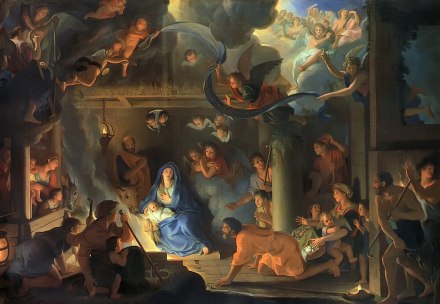
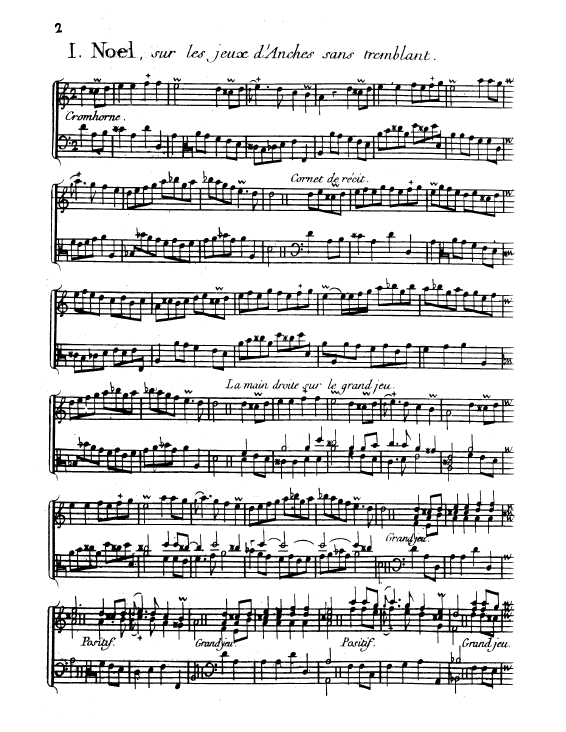
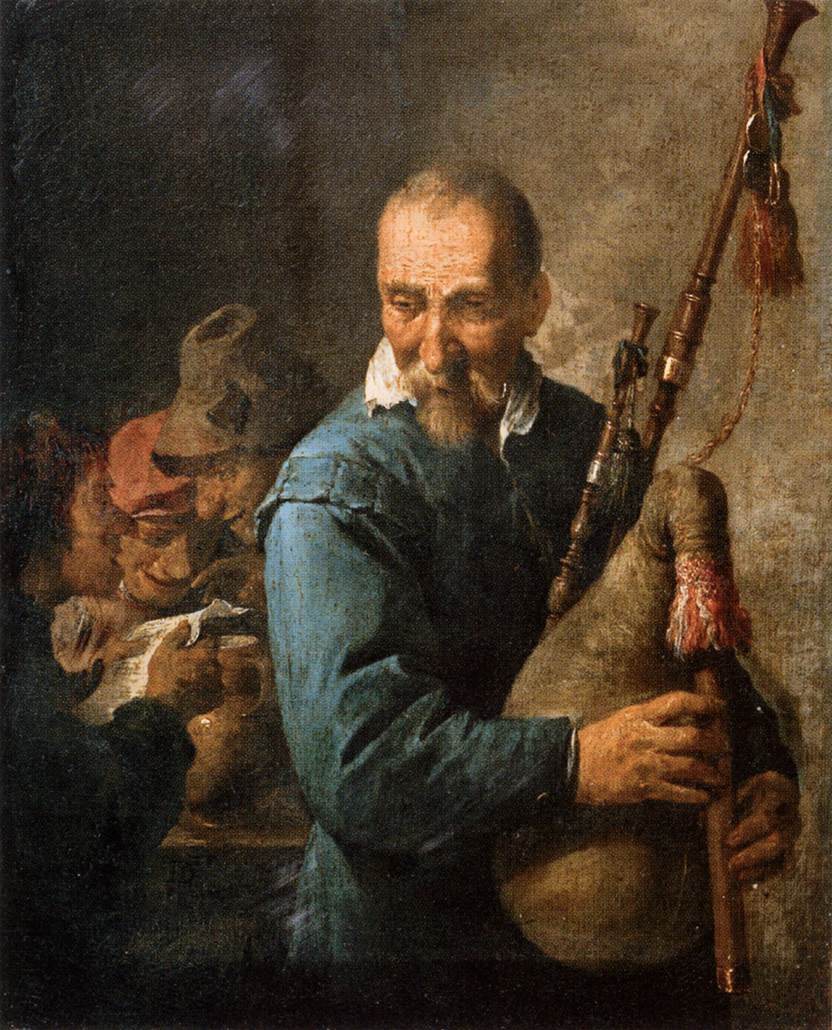
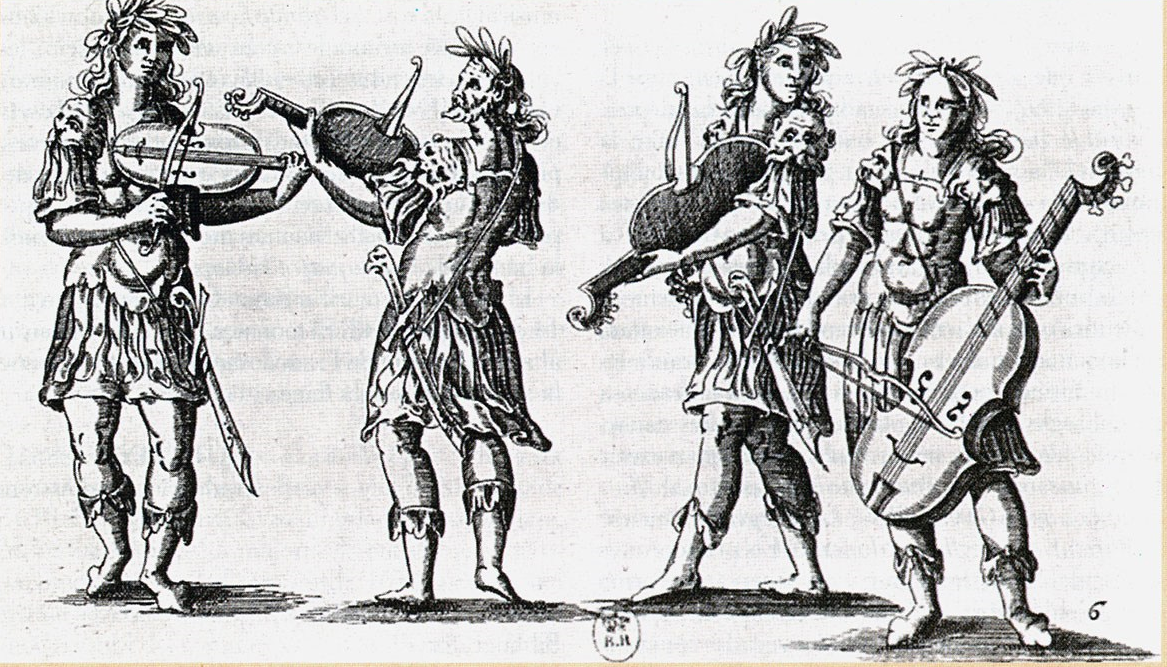
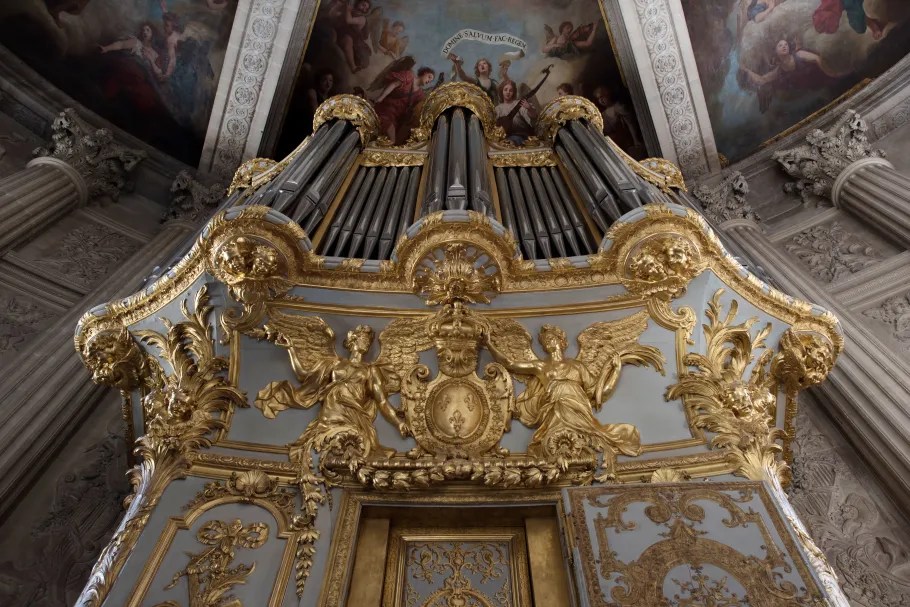
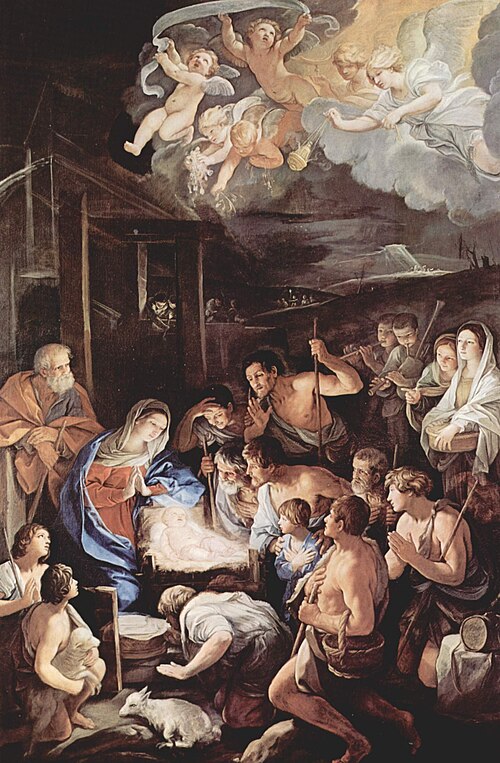
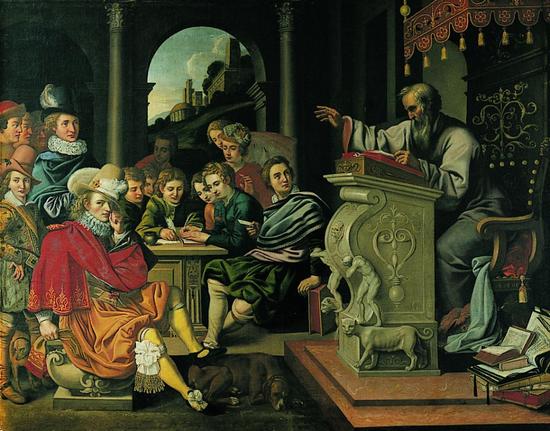
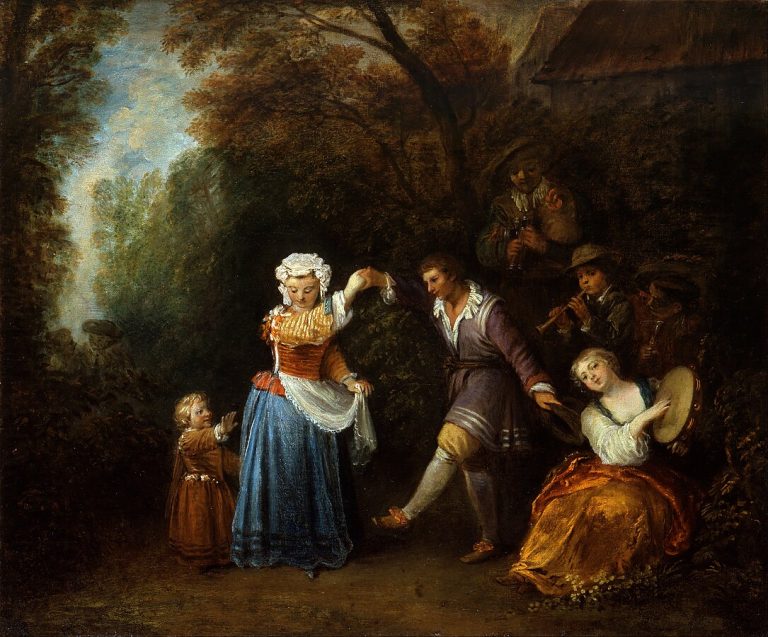
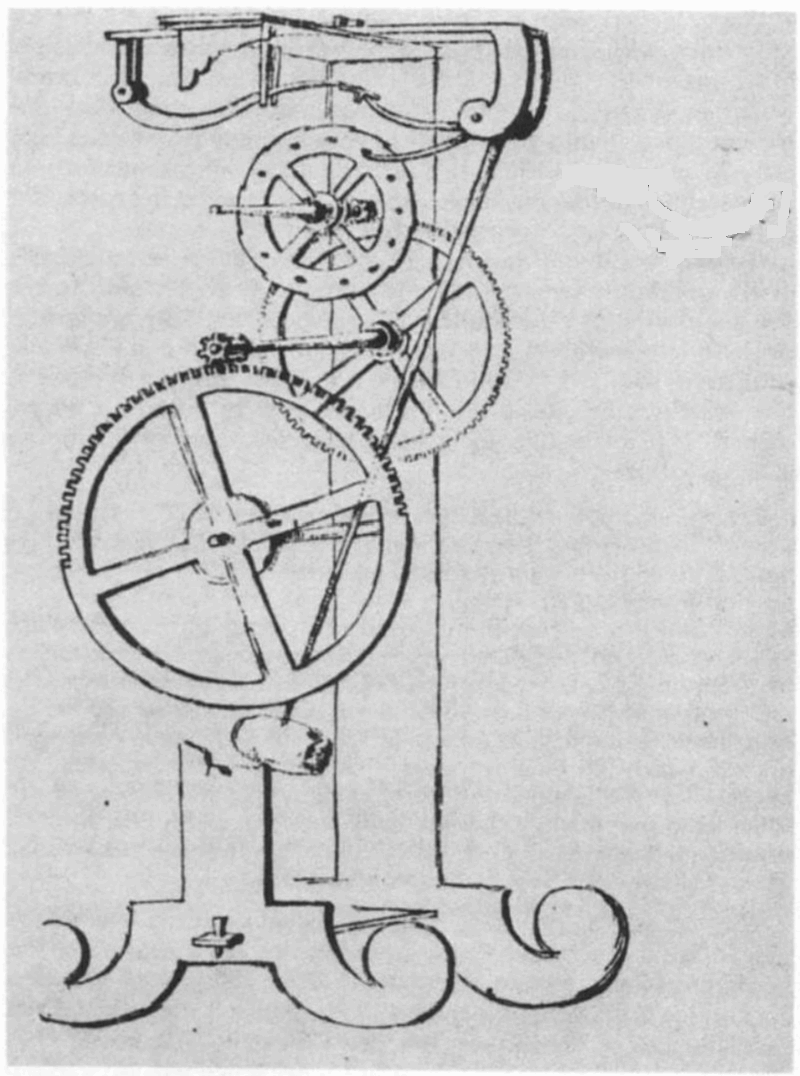
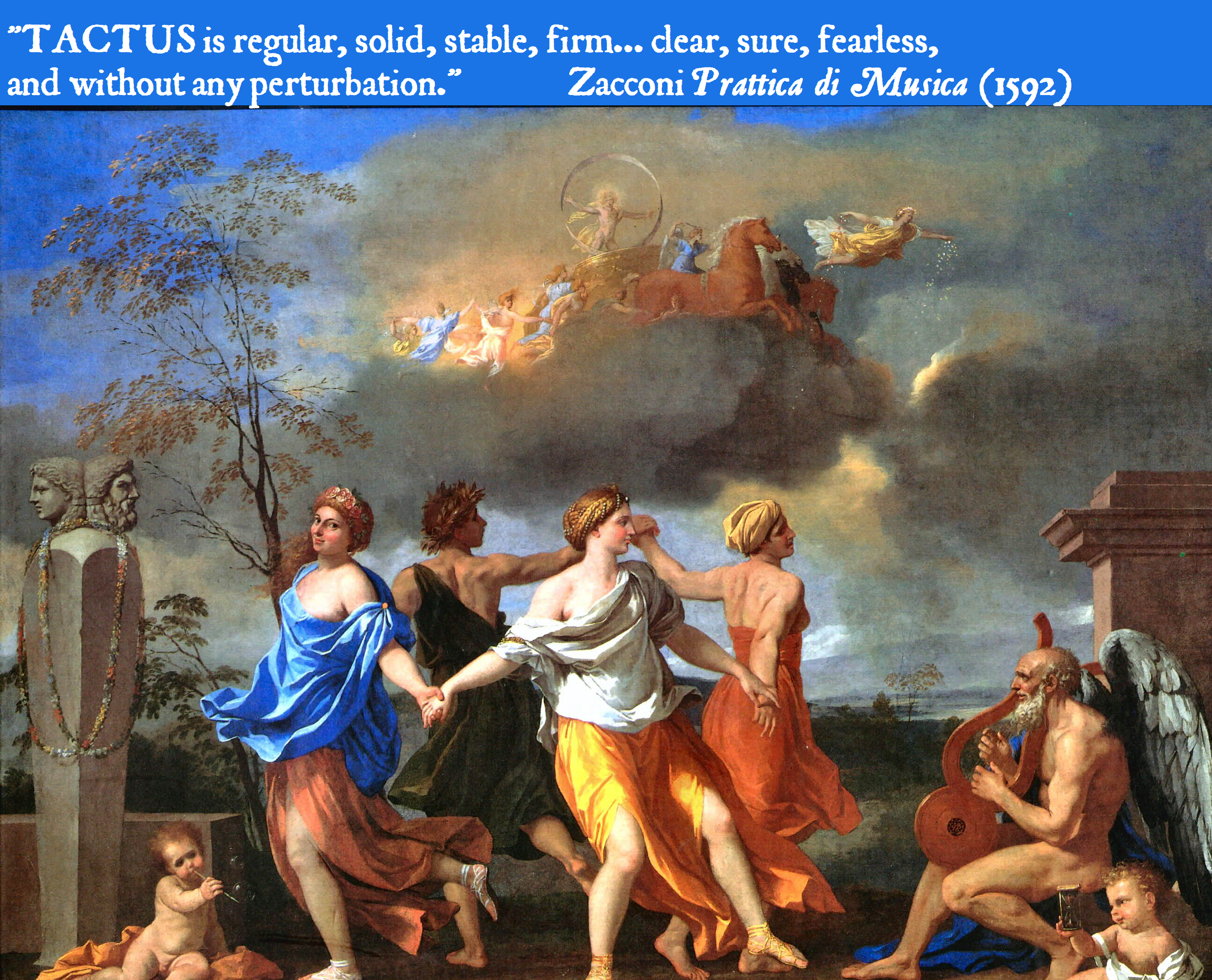
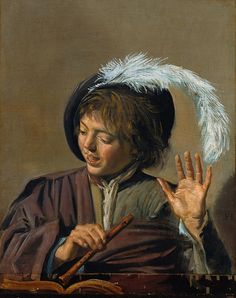

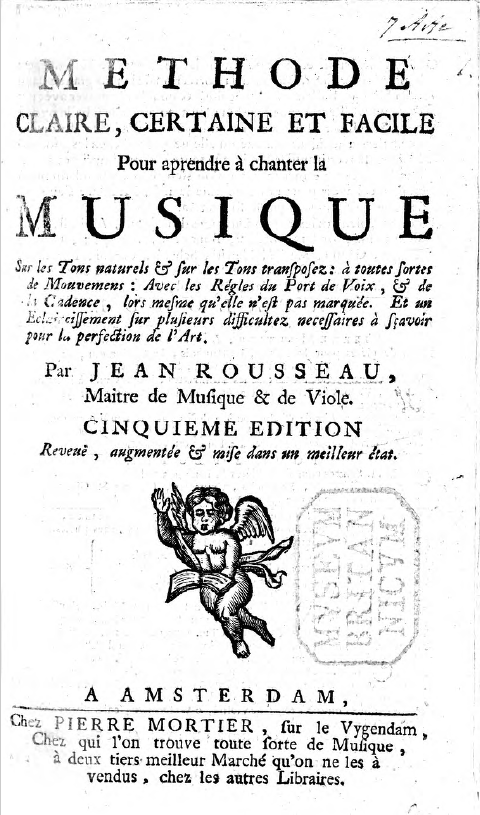
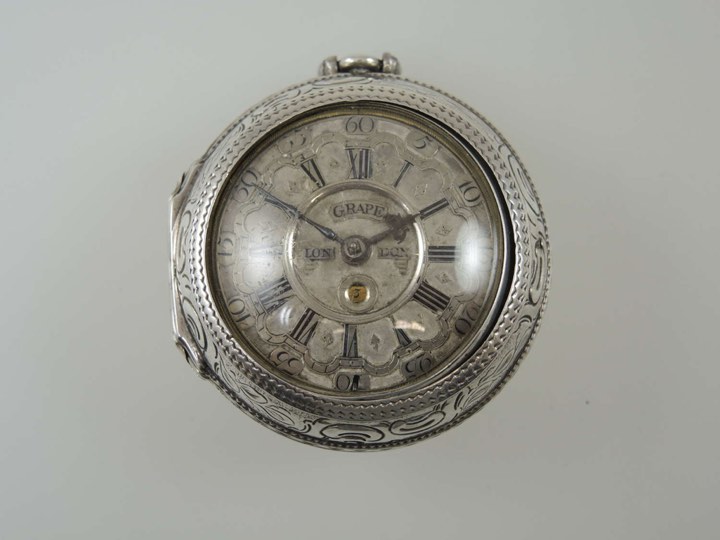
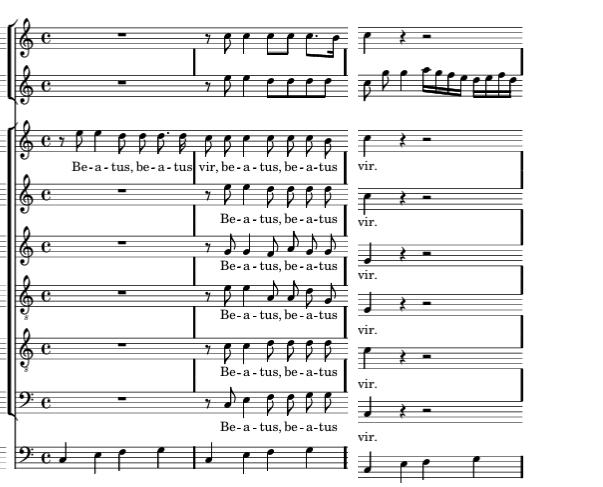
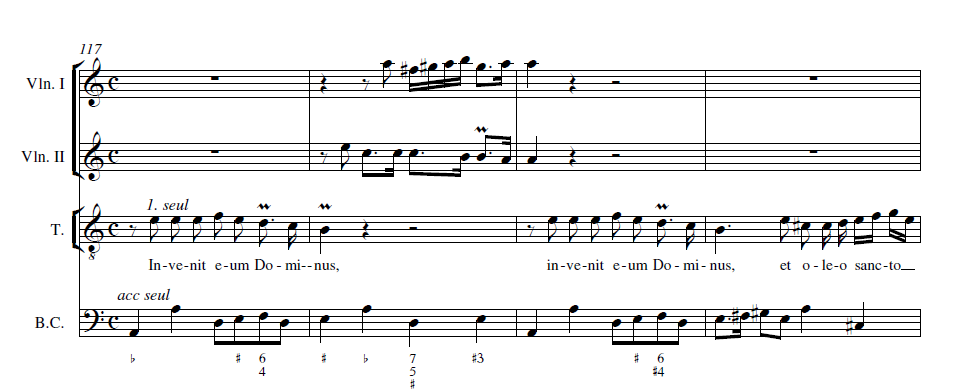
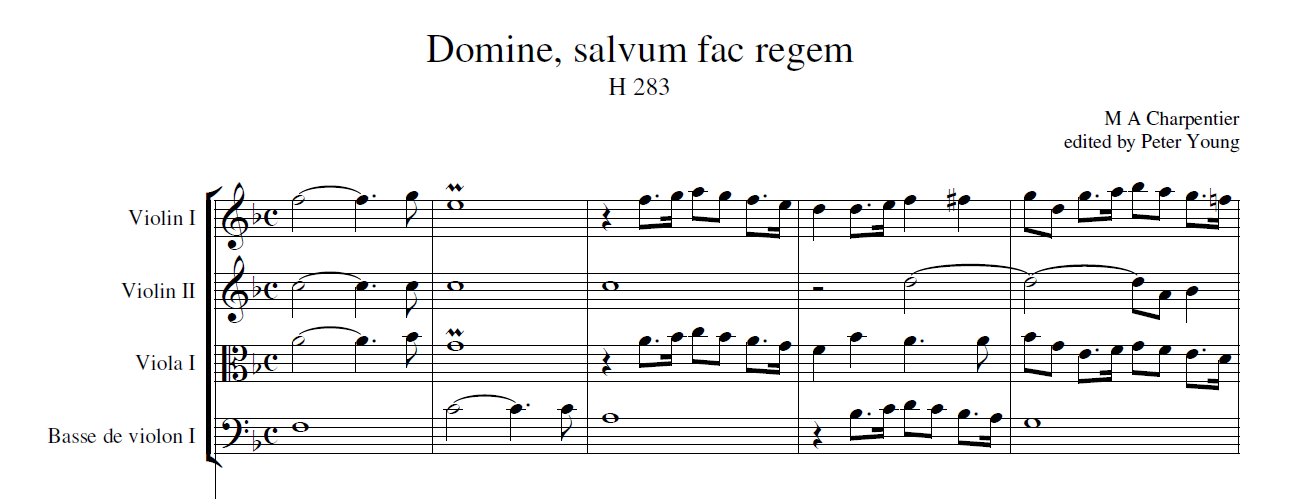
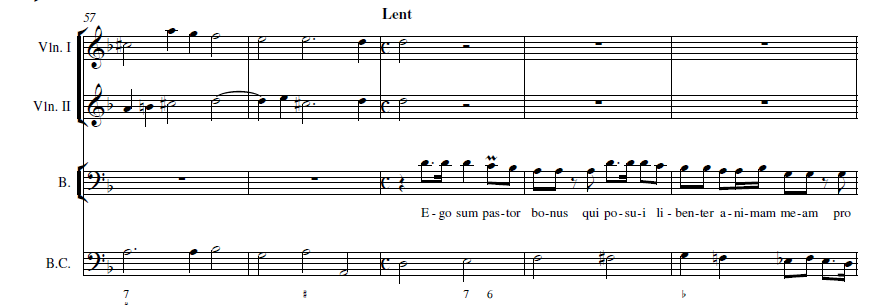
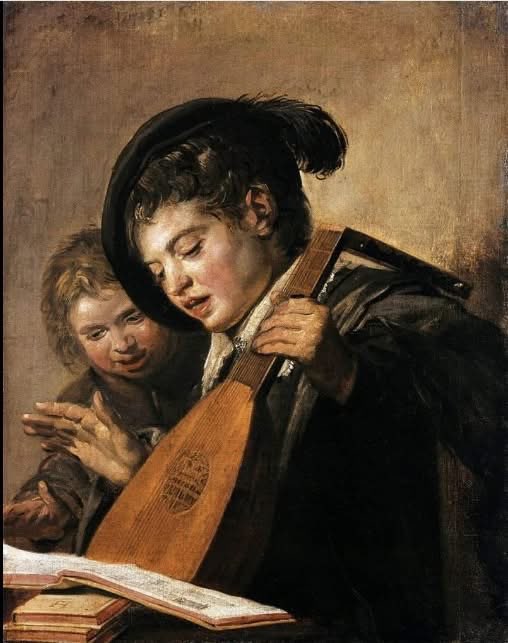
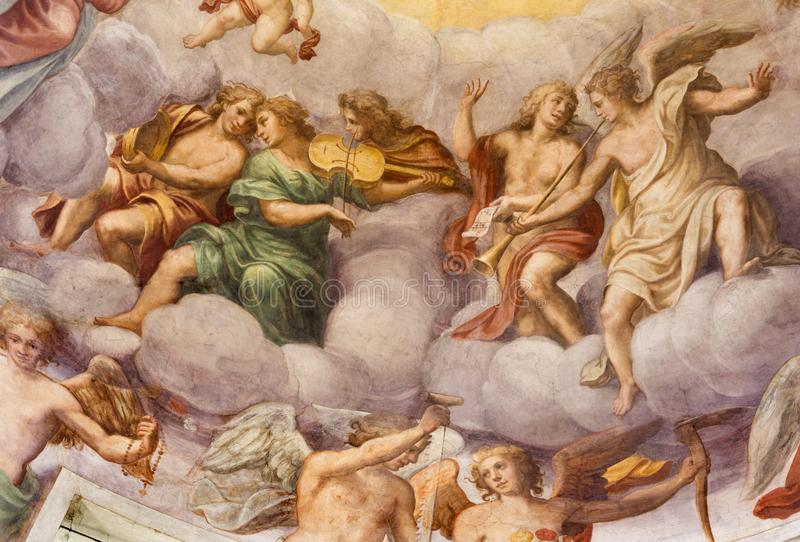
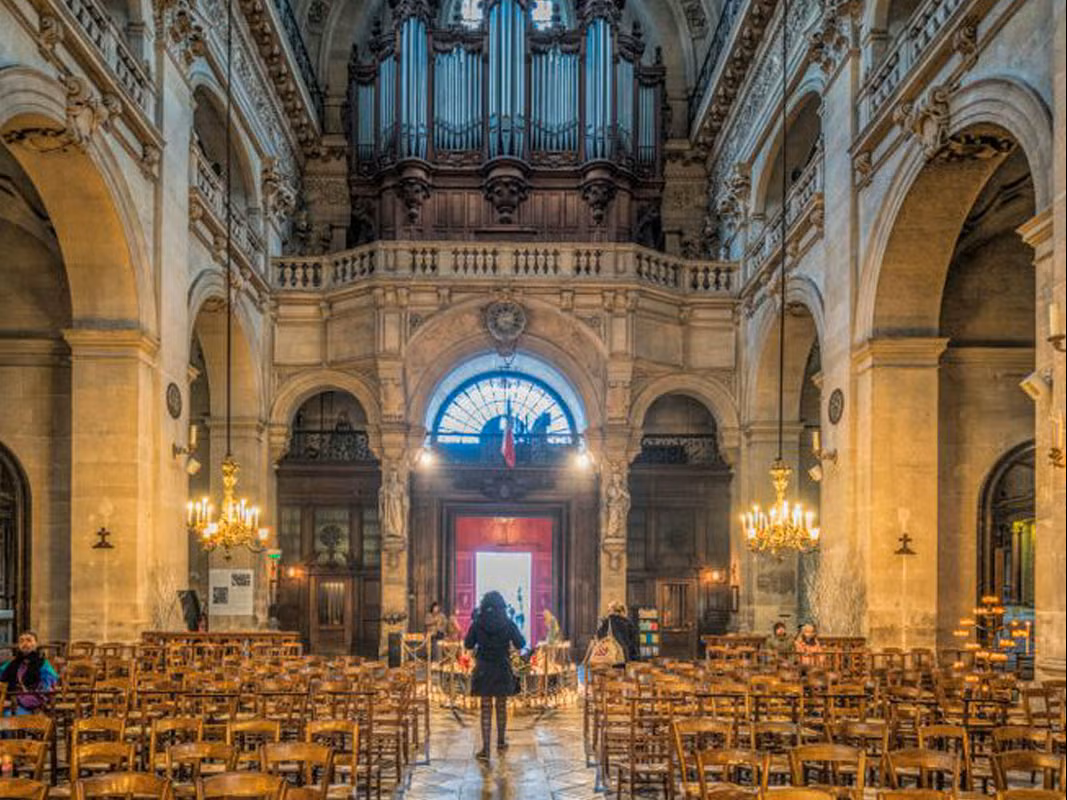

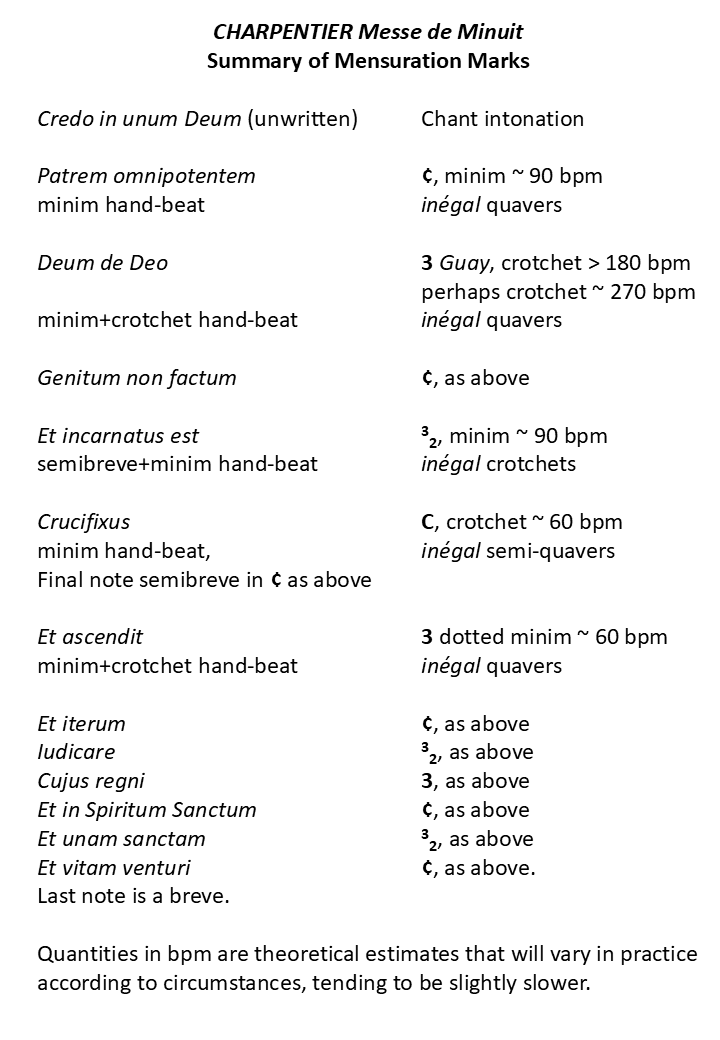


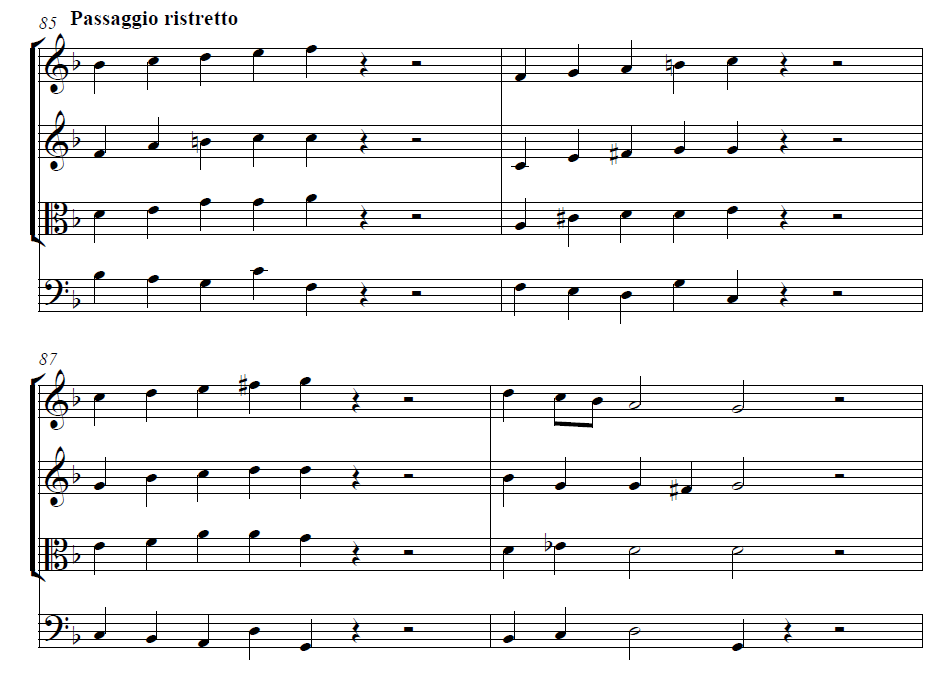




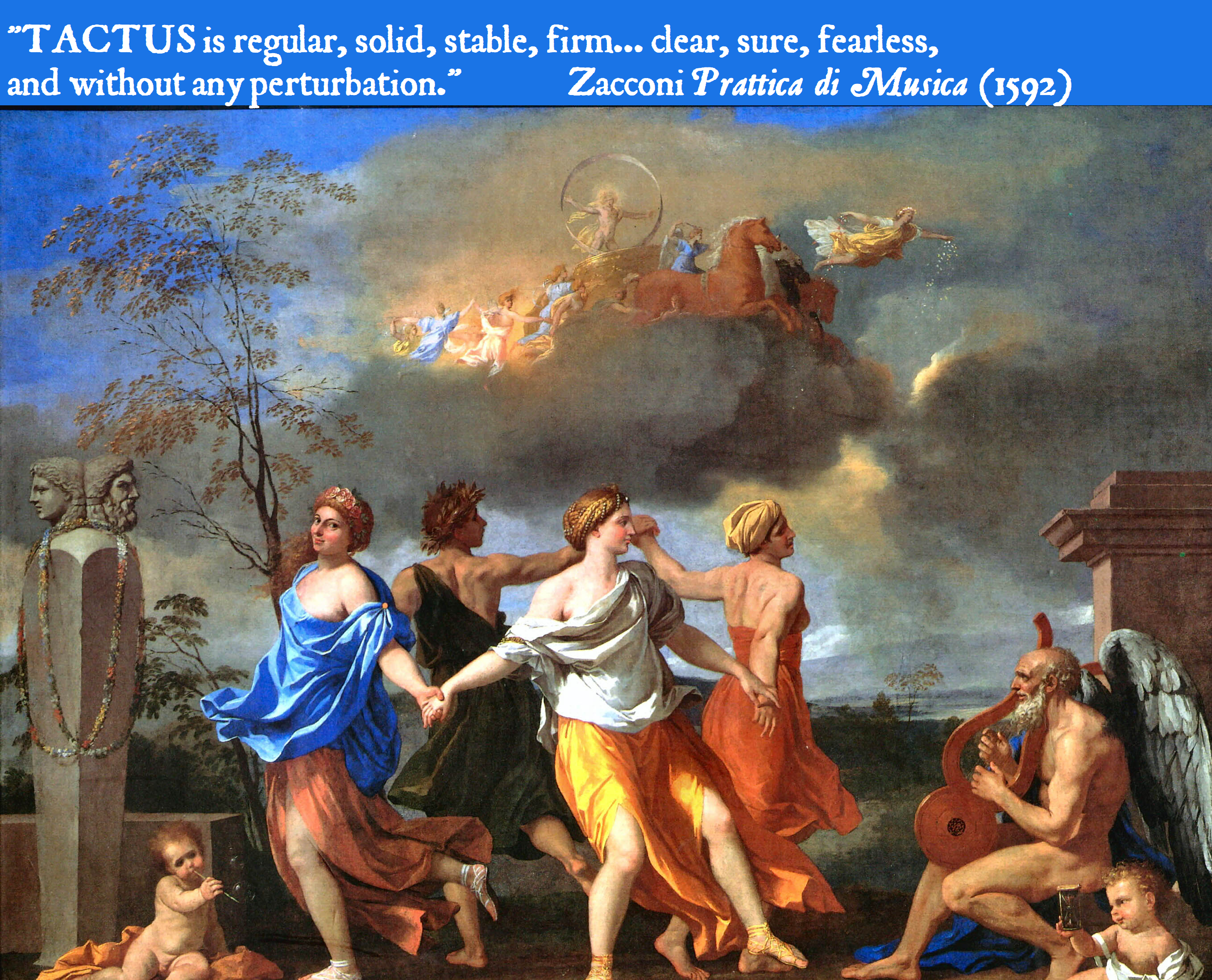


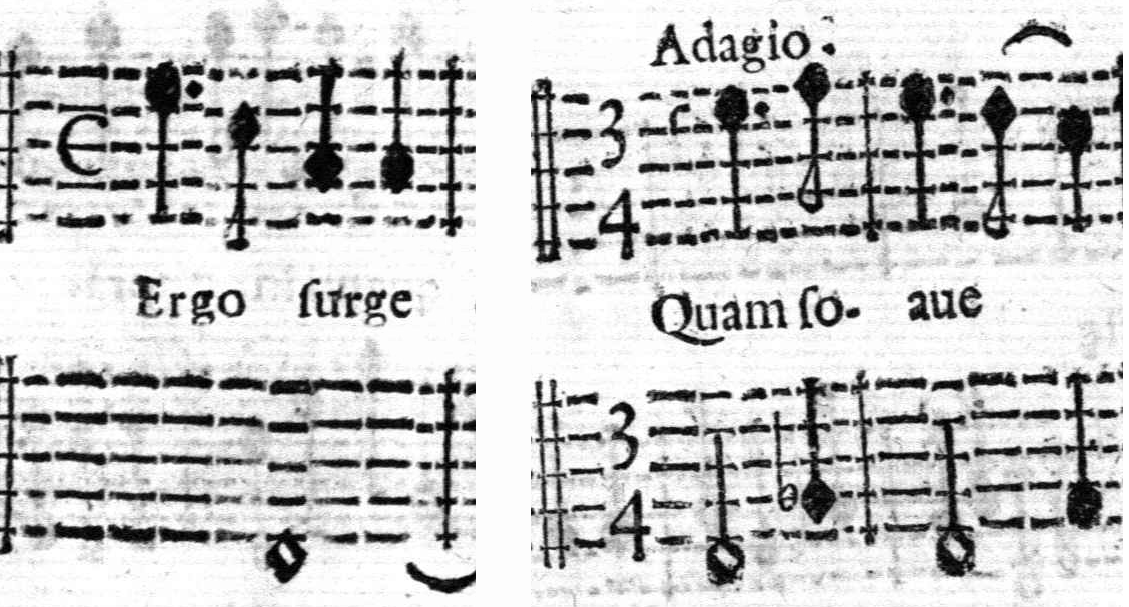


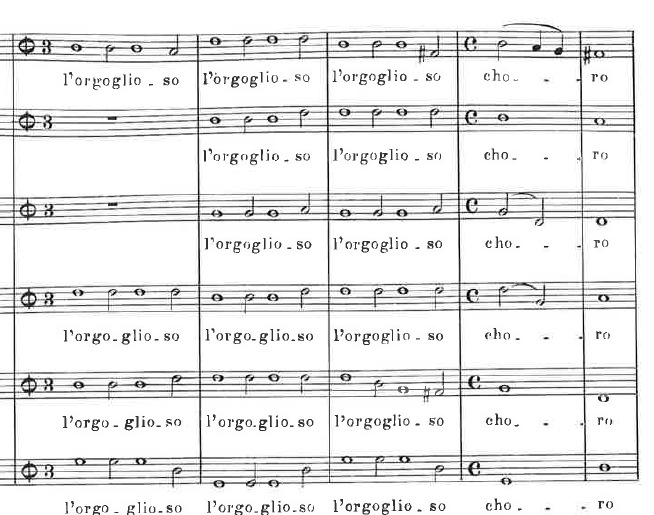





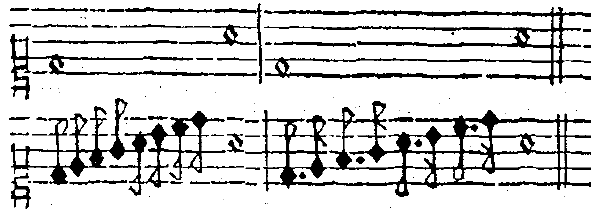


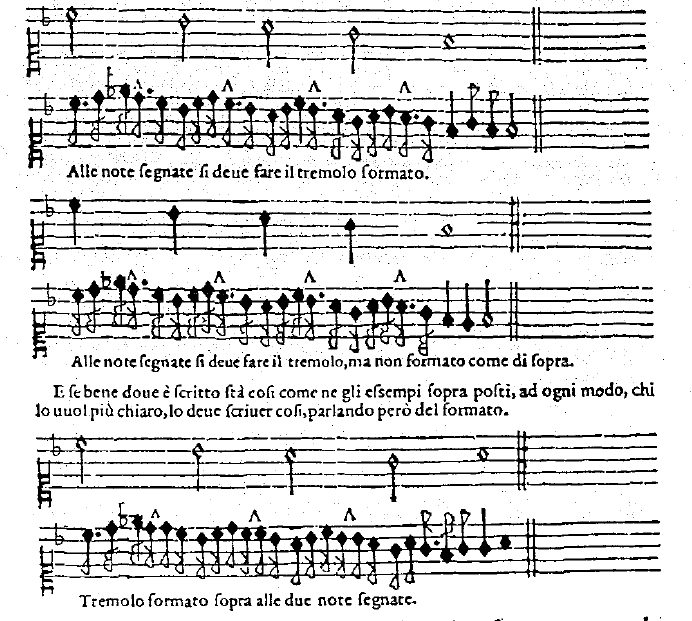


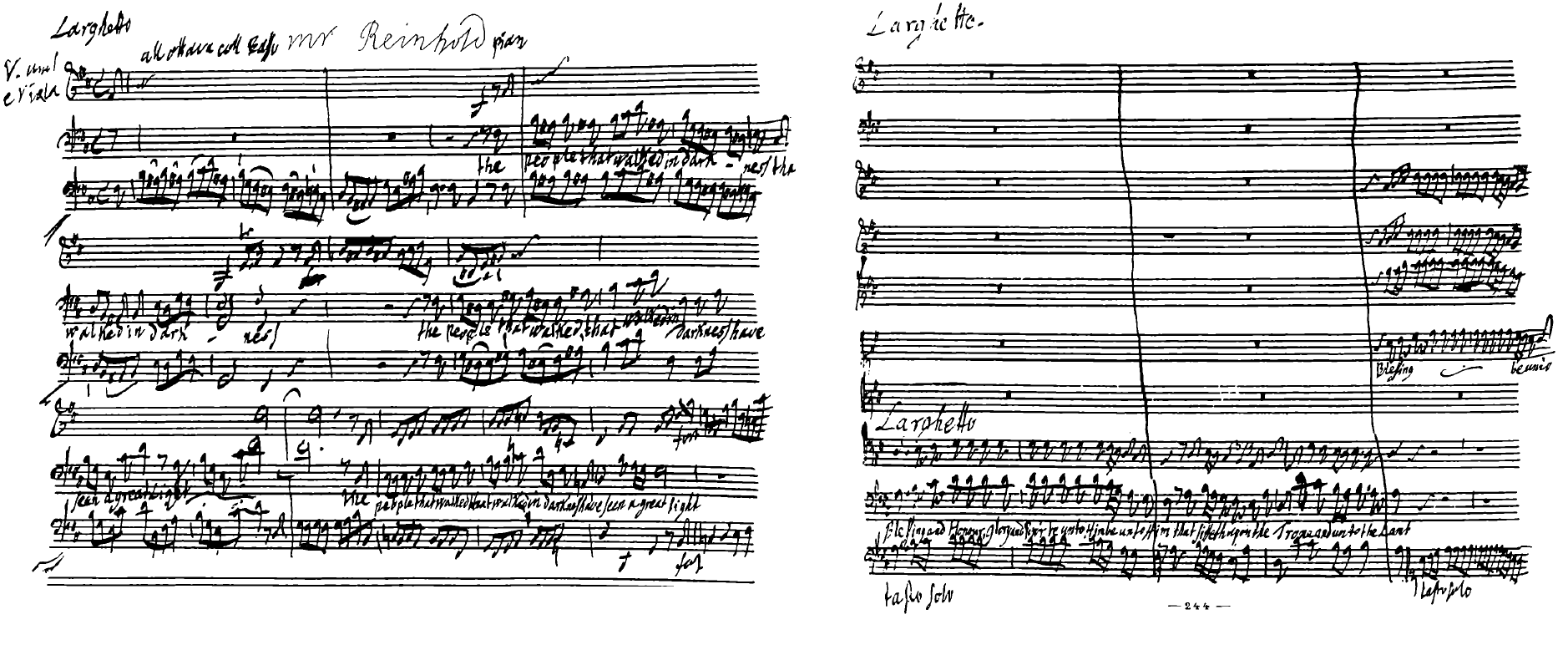



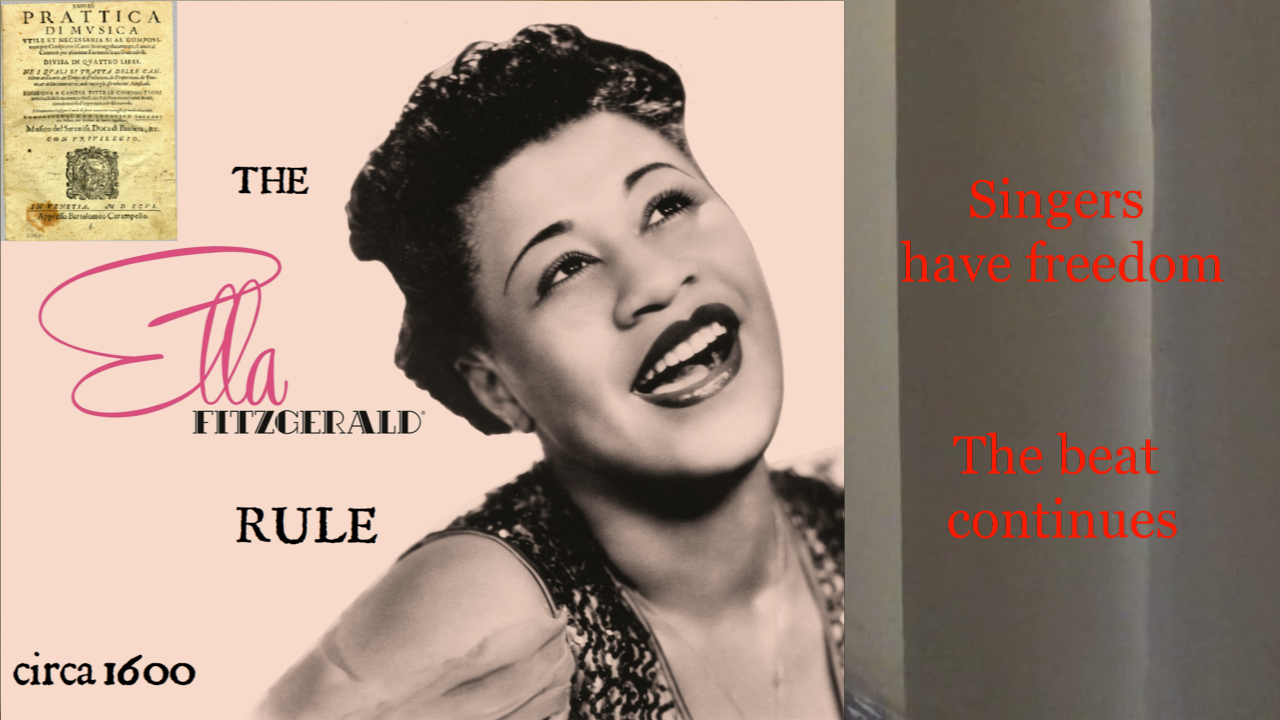


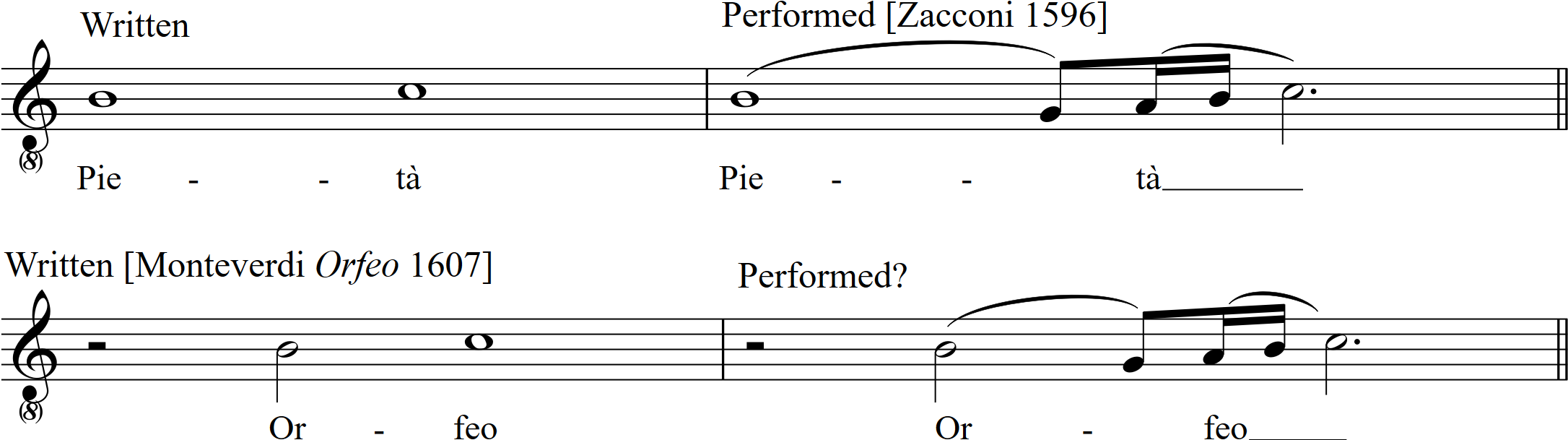


 Andrew Lawrence-King